
Nutrition
Series: Digestion of a 140-Kilogram Athlete - Episode 10: How to Build a High-Calorie Diet Without Turning Every Meal Into a Battle
September 11, 2026
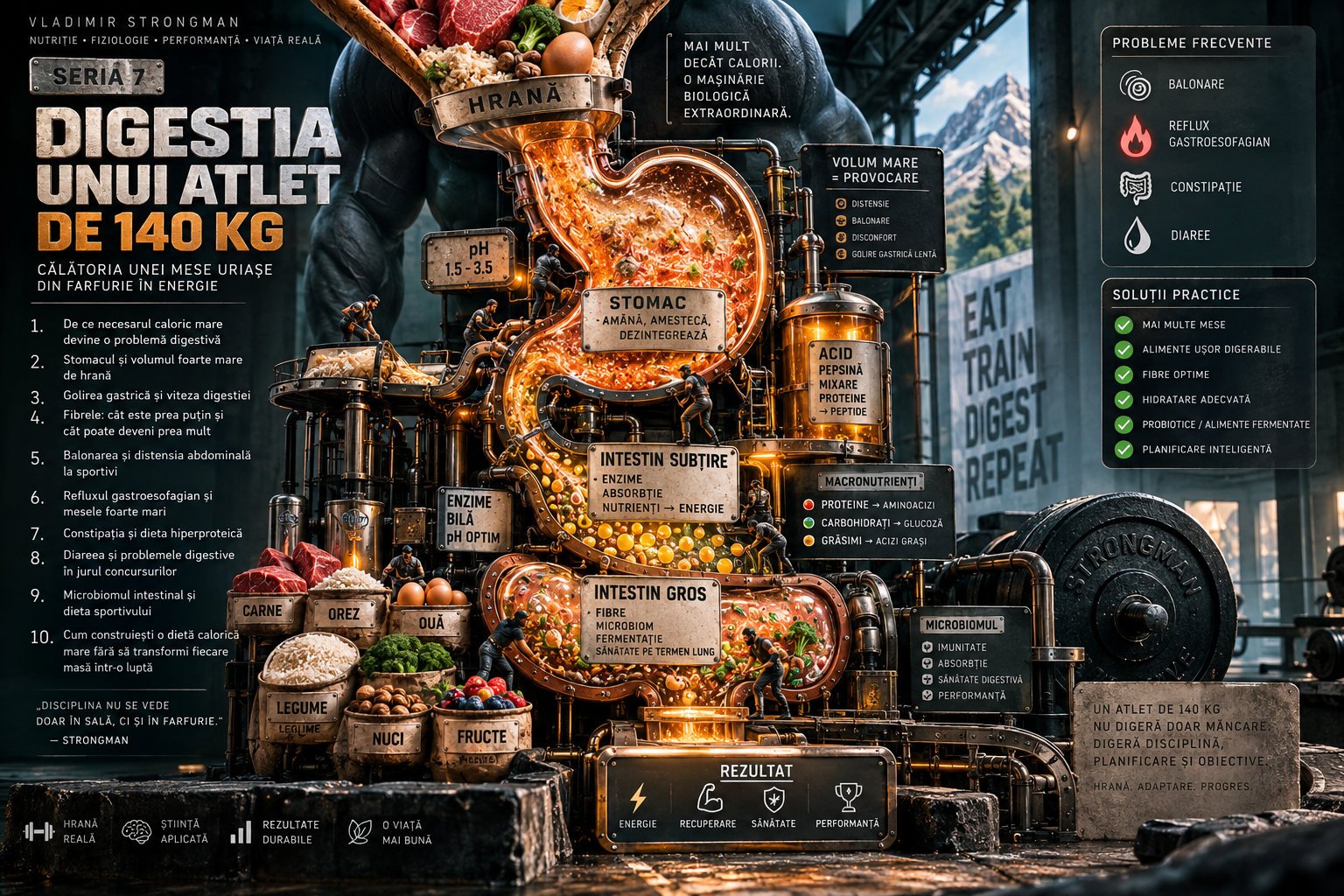
For a very heavy athlete a high calorie diet can become a second daily training session.
A good plan must be possible to eat digest and repeat every day.
The goal is enough energy for performance without permanent digestive discomfort.
1. Start from the real requirement
A large intake should be justified by body mass goals and training volume.
More calories do not automatically create more strength or better recovery.
2. Increase calories gradually
Large jumps in intake can suddenly add too much volume fat and fiber.
Small increases allow appetite and digestion to adapt with less disruption.
3. Energy density is the main tool
Energy dense foods raise calories without doubling the physical volume of a meal.
Oils dense dairy and nut butters can help when they are well tolerated.
4. Do not force all calories into three huge meals
Four or five moderate meals may reduce fullness and reflux in some athletes.
The right frequency reaches the target without making the athlete feel that eating never stops.
5. Build around foods you digest well
A predictable base of well tolerated foods reduces digestive surprises.
Variety still matters but it can be built around a stable foundation.
6. Texture can make large meals easier
Soft moist foods are often easier to eat in large amounts.
Well cooked rice mashed foods and sauces can reduce the effort of eating.
7. Liquid calories can support the plan
Milk drinkable yogurt and smoothies can add energy with less chewing.
They are useful tools but should not replace the entire solid diet.
8. Use fat for density without excess
Fat raises calories efficiently and reduces the food volume needed.
Very large amounts can slow gastric emptying and prolong fullness.
9. Protein should be sufficient not endless
Protein is essential but it is also highly satiating.
Once needs are covered extra energy may come more efficiently from carbohydrate and fat.
10. Carbohydrate can make a large intake easier
Rice pasta bread and cereals can provide useful training energy.
Not every source must be extremely high in fiber when food volume is already large.
11. Fiber must be dosed in context
Fiber supports bowel function and the microbiome but also increases bulk and satiety.
Spreading fiber across meals is often easier than concentrating it in one large meal.
12. Hydrate across the day
A very large drink beside a huge meal can increase fullness.
Fluids spread between meals can reduce gastric load while supporting hydration.
13. Control reflux through structure
Very large and very fatty meals can increase reflux in susceptible athletes.
Smaller portions and avoiding lying down after eating can reduce the problem.
14. Treat bloating with simple adjustments first
Large volume fiber and fermentable foods can increase gas and abdominal distension.
Reducing obvious triggers is more sensible than removing entire food groups without evidence.
15. Constipation is a signal that the plan needs adjustment
Low fiber and low fluid intake can appear easily in a diet dominated by dense foods.
Bowel function should be monitored as part of the plan instead of ignored until symptoms become severe.
16. Prepare meals in advance
A large diet becomes easier when food is prepared and portioned before hunger appears.
Frequent improvisation increases the risk of meals that are too heavy or calories that are missed.
17. Do not place the largest meal before training
Heavy bracing and a very full stomach are a poor combination for many athletes.
Before training use familiar meals with moderate volume and good digestibility.
18. Meals around training follow a different logic
Close to exercise digestibility may matter more than maximum nutrient density.
Simple carbohydrates and familiar foods can reduce nausea and excessive fullness.
19. Competition day is not the time for calorie records
Digestive comfort and usable energy matter more than a perfect daily calorie total during competition.
Small familiar portions reduce the chance that the stomach becomes the main opponent.
20. Repeatability is more valuable than perfection
A good diet can be repeated for months without consuming all of the athlete's mental energy.
A simpler sustainable plan often beats a perfect plan that works only on paper.
21. Monitor digestive signals
Appetite bowel function reflux and bloating provide useful feedback about tolerance.
Repeated symptoms should not be ignored simply because the calorie target is high.
22. Sleep and meal timing influence each other
A huge meal before bed may worsen reflux and fragment sleep.
Moving more calories earlier can help athletes who tolerate late meals poorly.
23. The diet must remain flexible
Work travel and training can change meal timing and meal size.
A robust plan offers equivalent alternatives and survives changes in the daily schedule.
24. Adjust the diet according to feedback
If a combination repeatedly causes nausea or reflux there is no benefit in forcing it.
Changing the food texture or timing may solve the problem without lowering calories.
25. Conclusion: a large diet should be easy to repeat
An effective high calorie diet combines enough energy with tolerable volume and predictable digestion.
If every meal is a battle the plan is not heroic. It is a plan that needs adjustment.
Selected bibliography
Thomas DT et al. Nutrition and Athletic Performance. Jeukendrup AE. Training the Gut for Athletes. Guyton and Hall. Textbook of Medical Physiology. Burke LM et al. Contemporary nutrition strategies for athletes.
More From The Journal

Training
The Science of Strongman Training - Episode X: Competition Programming
How to build a complete Strongman competition preparation block: calendar, events, volume, intensity, specificity, simulations, autoregulation, tapering and fatigue management.

Training
The Science of Strongman Training - Episode IX: Peaking
Peaking in Strongman: how to turn months of training into maximal competition performance by reducing fatigue, preserving adaptations and managing specificity.