
Pharmacology
How Do Anabolic Substances Work? - Episode 6: Testosterone Esterification and Why Different Forms Exist
September 7, 2026
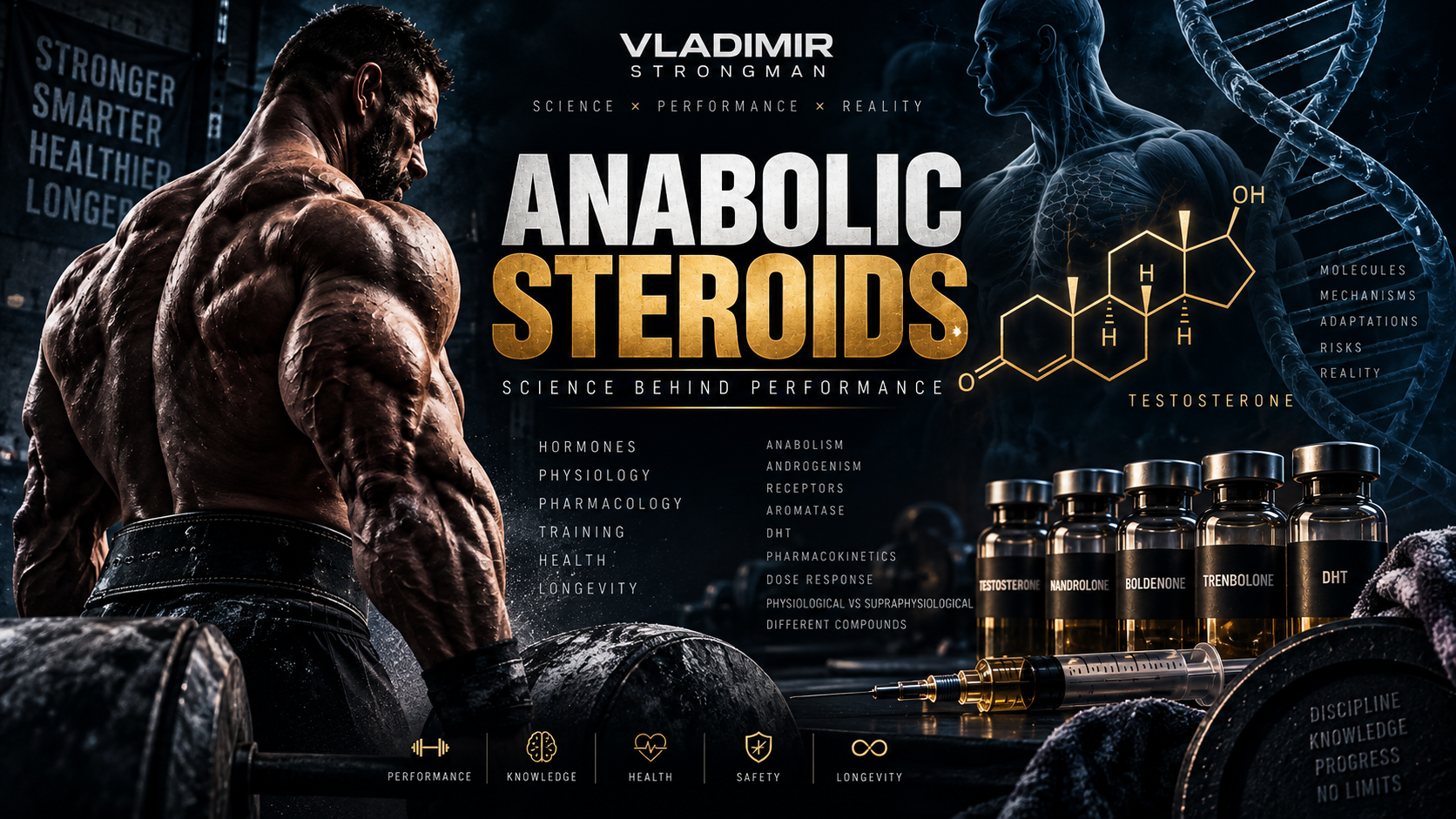
1. What exactly is testosterone esterification?
Testosterone esterification is a chemical modification in which an ester group is attached to the hydroxyl group at the 17 beta position of the testosterone molecule. The important point for the reader is not the chemical formula itself, but what the modification changes: it can alter the molecule's physicochemical properties and therefore how it is absorbed and released over time.
In other words, the destination does not necessarily change, but the journey does. This is one of the central ideas of androgen pharmacokinetics. Pharmacology literature shows that testosterone esterification increases lipophilicity and enables formulations with slower release, especially for injectable preparations.
2. Why not simply administer unesterified testosterone?
Unesterified testosterone has a very short duration when given parenterally. An injectable preparation of unesterified testosterone would be absorbed and cleared so quickly that it would be impractical for maintaining a therapeutic exposure. Modern formulations therefore use strategies that slow the entry of active hormone into the circulation.
Esterification is one such strategy. By converting testosterone into an ester form, the molecule becomes more suitable for an oily formulation and can form a depot after injection. The ester is then hydrolyzed, releasing unesterified testosterone for physiological action.
3. The ester is not a different receptor
A common misconception is that testosterone enanthate, cypionate, or undecanoate are completely different hormones at the androgen receptor. That is not the principle. The ester is primarily a pharmacokinetic modification. After hydrolysis, active testosterone is released.
The key difference between forms is therefore not that each has a different receptor, but that each can generate a different concentration-time curve. That exposure curve influences biological experience and the profile of adverse effects.
4. What does an injectable depot mean?
When a testosterone ester is formulated in an oily vehicle and administered intramuscularly or subcutaneously, the substance can remain temporarily in a local depot. From that depot, the ester leaves the injection site gradually and enters the circulation.
This introduces an important concept called rate-limited absorption. If release from the depot is slower than elimination from the body, the rate at which testosterone appears in blood is determined mainly by the depot rather than only by liver or kidney clearance. This is one reason the duration of some formulations exceeds the lifetime of unesterified testosterone.
5. Why do different esters last for different amounts of time?
Differences among esters arise from the physicochemical properties of the ester side chain and the way the preparation behaves within the local depot. In general, changing the ester chain can alter oil solubility, release rate, and therefore the pharmacokinetic profile of the testosterone produced.
This does not mean the ester chain alone explains every clinical difference. Formulation, site of administration, local blood flow, tissue properties, and the rate of hydrolysis also matter. Pharmacology rarely has one variable that explains everything.
6. Enanthate, cypionate, and undecanoate: three examples of the same principle
Testosterone enanthate, testosterone cypionate, and testosterone undecanoate are examples of esters used in different formulations. They are all designed to modify testosterone pharmacokinetics, but each has a different ester structure and therefore a different absorption and persistence profile.
It is not accurate to think of them as three hormones with completely different pharmacodynamic actions. It is more accurate to view them as three ways of delivering the same active hormone with different time profiles. This becomes important when discussing peaks, troughs, and stability.
7. Why does ester-chain length matter?
The ester chain changes molecular properties. In simplified terms, a longer chain changes lipophilicity and behavior in an oily vehicle. This can favor a more prolonged release profile.
That does not mean chain length alone predicts every clinical difference. Formulation, injection site, local tissue characteristics, and ester hydrolysis also contribute. Pharmacology is rarely a one-variable equation.
8. Active testosterone appears after hydrolysis
Testosterone esters are, in pharmacokinetic terms, delivery forms of active hormone. Esterases break the ester bond and release testosterone. This can occur after absorption from the depot and can influence how quickly unesterified hormone becomes available.
So when we say a preparation is testosterone enanthate, we are describing the chemical and pharmacokinetic form in which testosterone is delivered. The androgen receptor primarily encounters the testosterone released after this transformation.
9. Why does the same administered amount not mean the same exposure?
Because exposure depends on the molecule, formulation, route, and time. Even when two products ultimately deliver testosterone, they can have different bioavailability, absorption rates, and concentration-time curves.
In pharmacology, it is important to distinguish administered amount from systemic exposure. Cmax, Tmax, and AUC can tell different stories about two formulations containing the same active hormone.
10. Cmax and Tmax in real life
Cmax is the observed peak concentration, while Tmax is the time required to reach it. A formulation with rapid absorption may reach Cmax sooner, while a slow-release formulation may produce a more gradual rise.
For an athlete, these concepts explain why two forms of the same hormone can feel different even when the final active molecule is the same. The difference is not a testosterone that works and one that does not; it is a different exposure profile.
11. Half-life does not tell the whole story
Half-life is useful, but it can mislead when removed from context. With depot formulations, slow absorption can become the dominant process, leading to what pharmacologists call flip-flop kinetics. In that situation, what looks like slow elimination may largely reflect slow entry into circulation.
So when we hear that an ester has a certain half-life, the correct questions are: in what formulation, by what route, in which model, and for which component was it measured? Without context, the number can be overly simplistic.
12. Why longer-acting forms were developed
In medical therapy, one goal has been to reduce fluctuations and improve convenience. Longer-acting formulations can maintain concentrations within a therapeutic range for longer and reduce administration frequency.
Clinical reviews compare short-acting, transdermal, and long-acting injectable formulations partly from this perspective. Injectable testosterone undecanoate, for example, was developed to provide a more prolonged profile than traditional shorter-acting esters.
13. Why shorter-acting forms can produce larger fluctuations
If absorption from a depot is relatively rapid, testosterone concentration can rise more quickly after administration and then decline as hormone is eliminated. Repeated administration makes these curves overlap.
The result can be a sequence of peaks and declines. In replacement therapy, such fluctuations can matter for symptoms and tolerability, and development of longer-acting preparations has partly aimed to reduce this roller-coaster pattern.
14. Oral, injectable, and transdermal: same hormone, different route
Testosterone formulations differ not only by ester but also by route. An oral formulation has its own intestinal and hepatic pathway. An injectable formulation may use a depot. A transdermal formulation crosses the skin and bypasses much of the gastrointestinal and hepatic first-pass pathway.
This means the word testosterone alone does not describe pharmacokinetics. To understand exposure we need to know the chemical form, the formulation, and the route by which it reaches the body.
15. Oral testosterone undecanoate is a special example
Testosterone undecanoate has oral formulations that use its lipophilic properties to facilitate absorption, including lymphatic transport in some formulations. This can reduce the impact of hepatic first-pass metabolism compared with unesterified oral testosterone.
It is an excellent example of the same lesson: changing chemical form and formulation can dramatically change the pharmacokinetic path even when the final active hormone is testosterone.
16. Why does the liver matter in the esterification story?
The liver metabolizes testosterone and many of its metabolites. Some oral androgen forms were designed to resist hepatic first-pass metabolism for longer. This can increase oral bioavailability, but the structural modification can also have hepatic safety consequences.
So the chemistry that solves one pharmacokinetic problem can create another safety issue. In medicine, every pharmacological advantage has to be considered together with its trade-offs.
17. Esterification does not make testosterone intrinsically more anabolic
It is important not to confuse duration of action with anabolic potency. A slower-release ester is not automatically a more anabolic testosterone. Esterification primarily changes availability and timing of exposure.
If two formulations deliver active testosterone, the main distinction may be their concentration-time curve and how the body experiences that exposure. Pharmacodynamics and pharmacokinetics are connected, but they are not the same thing.
18. Why athletes hear different names for the same testosterone
Because products have brand names, chemical names, and ester names. An athlete may hear testosterone enanthate, cypionate, or undecanoate and assume these are three completely different hormones. Pharmacologically, it is more accurate to view them as different delivery forms of testosterone.
This distinction is also useful when reading laboratory reports or scientific literature. When the term testosterone ester appears, the key information is that the chemical form changes pharmacokinetics, not that the androgen receptor has become a different receptor.
19. Why can the administration site matter?
Absorption from a depot does not happen in a vacuum. Local blood flow, tissue properties, vehicle characteristics, and formulation volume can influence how quickly the substance leaves the administration site.
This is one reason a pharmacokinetic profile observed in a study should not automatically become a universal rule for every person and every formulation.
20. Why does a longer-acting formulation not necessarily mean a better one?
A longer duration can be useful in replacement therapy, but it comes with a trade-off: if an adverse reaction occurs, exposure does not disappear immediately. Some people may also prefer the flexibility of a shorter-acting formulation.
In medicine, formulation choice depends on indication, goals, tolerability, and patient characteristics, not on the simple idea that longer automatically means better.
21. Esterification and control of fluctuations
One goal of modern pharmacology is to control unnecessary concentration fluctuations. A very abrupt profile may create large differences between periods, while a well-designed formulation can provide a more uniform exposure.
This directly connects the episode to pharmacokinetics: it is not only how much testosterone is present, but also how quickly it arrives and how long it remains available.
22. How esterification connects to Episode 5
In the previous episode we followed ADME: absorption, distribution, metabolism, and elimination. Esterification is an almost perfect example of that model. We modify the molecule to control absorption, change distribution and persistence, and then the body hydrolyzes and metabolizes it.
That is why the ester should not be memorized as a list of names. It should be understood as a pharmacokinetic tool.
23. The ester and the androgen receptor work in two stages
The first stage is delivery. The ester affects how quickly testosterone becomes available. The second stage is action. Available testosterone enters tissues and can activate the androgen receptor or be converted locally into DHT or estradiol.
These two levels explain why a seemingly small chemical difference can create a visible pharmacokinetic difference without changing the androgen receptor itself.
24. What does a different form mean in pharmacology?
A different form can mean a different ester, a different formulation, or a different route of administration. All three can alter the pharmacokinetic path.
That is why a page about testosterone that only lists compound names is incomplete. For each form, we need to understand what changes in absorption, bioavailability, distribution, metabolism, and elimination.
25. What should not be confused: ester and anabolic effect
A longer ester, a longer exposure duration, and a different peak concentration do not automatically mean more muscle building. The anabolic effect depends on androgen signaling and physiological context, while esterification is primarily a delivery and timing issue.
In addition, supraphysiological androgen use is very different from medical therapy. Evidence obtained in hypogonadism treatment cannot automatically be transferred to much higher exposures or combinations of multiple AAS.
26. What does esterification teach us about medicinal chemistry?
Esterification is an elegant example of medicinal chemistry in practice: modify an existing molecule to change how it behaves in the body. You do not necessarily need to invent a new receptor. You can change time, solubility, and delivery.
The same principle appears throughout pharmacology. Chemical form is part of the therapy because the body does not see only which molecule is present; it also responds to the form in which that molecule was delivered.
27. Why pharmacokinetic analysis is more useful than online rankings
A ranking such as best ester for mass ignores the questions that matter. What route is being used? What is the absorption profile? How long does exposure last? Which metabolites appear? What systemic effects occur? What medical indication exists?
Once we ask those questions, the names become secondary. Instead of memorizing labels, we understand the mechanism.
28. Conclusion: the ester changes testosterone's journey
Testosterone esterification exists to modify the hormone's pharmacokinetic properties. It can change oil solubility, depot formation, and release rate, and after hydrolysis the active testosterone produces its usual physiological effects.
This explains why different testosterone forms exist. Not because the body needs different androgen receptors, but because pharmacology needs to control timing, distribution, and predictability of exposure. The next episode can use this map to explain how structural differences among other AAS change their pharmacological profiles.
Selected references
This episode draws on review articles and pharmacology literature covering testosterone esters, oral, transdermal, and injectable formulations, testosterone undecanoate pharmacokinetics, and principles of depot absorption. Sources include PubMed-indexed literature and clinical reviews of testosterone formulations.
More From The Journal

Training
The Science of Strongman Training - Episode X: Competition Programming
How to build a complete Strongman competition preparation block: calendar, events, volume, intensity, specificity, simulations, autoregulation, tapering and fatigue management.

Training
The Science of Strongman Training - Episode IX: Peaking
Peaking in Strongman: how to turn months of training into maximal competition performance by reducing fatigue, preserving adaptations and managing specificity.