
Pharmacology
How Do Anabolic Substances Work? - Episode 2: Testosterone as the Reference Molecule
September 7, 2026
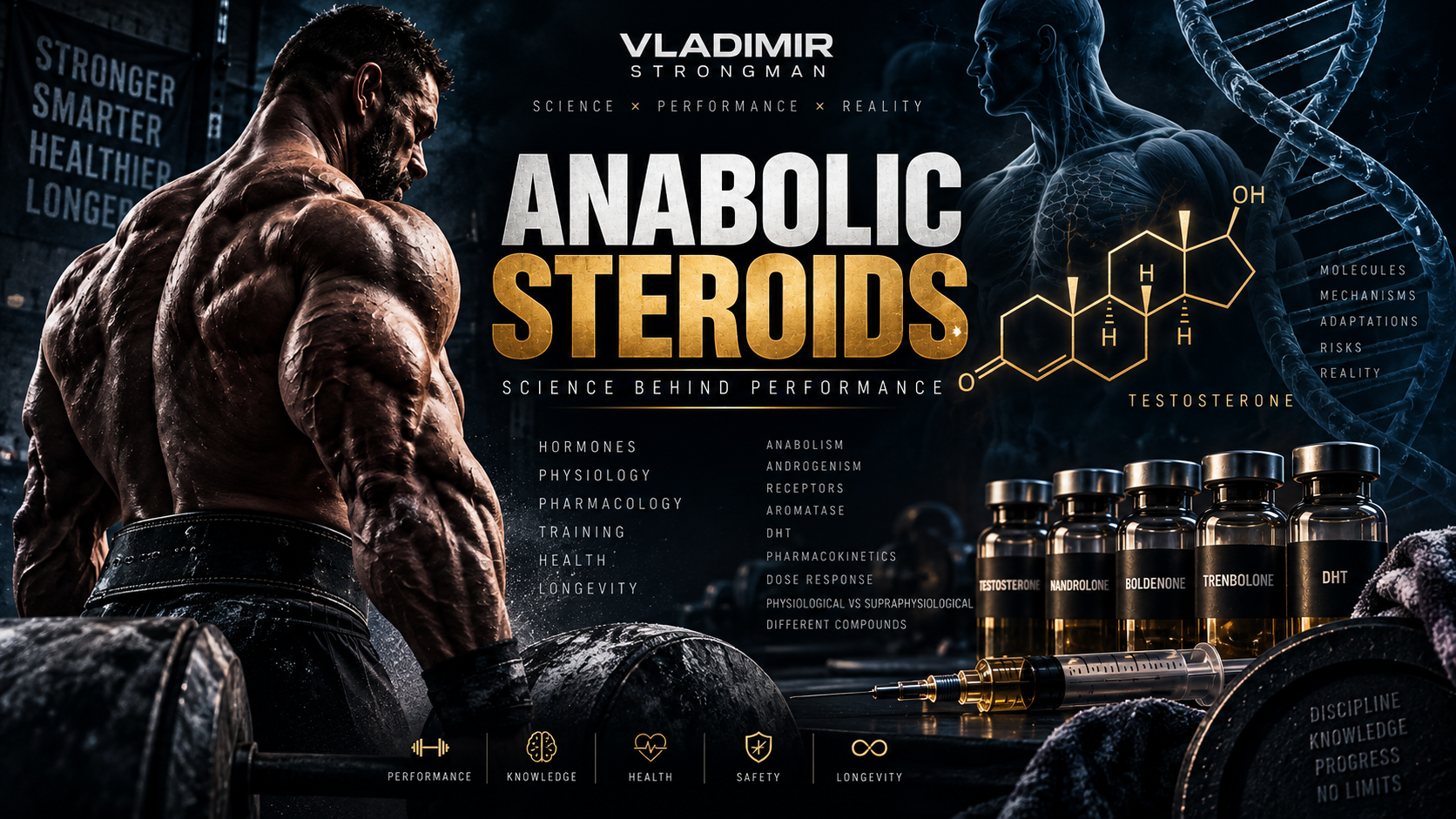
1. Why testosterone is the reference molecule
To understand anabolic-androgenic steroids, we need to start with testosterone. It is the biological and pharmacological reference against which many synthetic compounds are compared. It is not the only androgen in the body and not the only compound capable of activating the androgen receptor, but its place in human physiology makes it the logical starting point.
When we describe a steroid as more anabolic, more androgenic, more potent, or different in duration of action, the comparison only becomes meaningful when we know what has changed relative to testosterone. Without that foundation, compound names become labels and pharmacology turns into a collection of myths.
2. Testosterone is a steroid hormone
Testosterone belongs to the steroid hormones, a family of molecules derived from cholesterol. Its steroid structure allows it to cross cell membranes and interact with intracellular receptors. This distinguishes it from peptide hormones, which generally act through receptors located at the cell surface.
The structure is not an abstract chemistry detail. Relatively small changes to a steroid molecule can alter metabolism, half-life, formation of active metabolites, or the way its signal is perceived by different tissues.
3. Where testosterone comes from
In men, most circulating testosterone is produced by Leydig cells in the testes under control of the hypothalamic-pituitary-gonadal axis. The hypothalamus releases GnRH, the pituitary responds with LH and FSH, and LH stimulates Leydig cells to produce testosterone.
In women, testosterone is produced in smaller amounts by the ovaries and adrenal glands, and some also comes from peripheral conversion of other androgen precursors. Testosterone is therefore a physiological component of both sexes, although its levels and roles differ.
4. Testosterone does not simply circulate freely
In blood, testosterone exists in bound and free forms. Some is bound to SHBG, another portion to albumin, and a small fraction circulates freely. The balance among these forms influences hormone availability to tissues and explains why two people with the same total testosterone can have different biological contexts.
This distinction matters in endocrinology and in laboratory interpretation. Total testosterone is useful, but it does not by itself describe the entire hormonal exposure of tissues.
5. The androgen receptor is the center of the signal
Testosterone produces many of its effects through the androgen receptor. After entering the cell, the molecule can bind the receptor, and the resulting complex influences gene expression. In simple terms, testosterone is not just a substance traveling through blood. It is a signal capable of changing cell behavior.
The same principle underlies the action of many AAS. That is why understanding the androgen receptor is one of the keys to the entire series on performance pharmacology.
6. What happens after testosterone binds the androgen receptor
The androgen receptor belongs to the nuclear receptor family. After ligand binding, the receptor changes conformation and can interact with DNA together with other regulatory proteins. The result is altered transcription of selected genes and, subsequently, changes in protein production.
This pathway explains why androgen effects are not instantaneous and are not limited to one tissue. The biological response depends on the receptor, cofactors, enzymes, and the genetic program of the cell.
7. Why testosterone is a useful model for AAS
Many anabolic compounds were developed by modifying the structure of testosterone. Some changes were intended to alter metabolism, others duration of action, absorption, or tissue effects. Even when the result is a distinct molecule, the conceptual relationship to testosterone remains.
Testosterone therefore functions like an alphabet for androgen pharmacology. Once the basic rules are understood, it becomes easier to interpret why nandrolone, methandienone, oxandrolone, stanozolol, and other molecules have different profiles.
8. Testosterone can become DHT
In certain tissues, testosterone is converted to dihydrotestosterone, or DHT, by the enzyme 5-alpha-reductase. DHT binds the androgen receptor with high affinity and plays an important role in the physiology of the prostate, skin, and hair follicles.
This conversion shows why blood testosterone alone cannot describe androgen biology. The body transforms hormones locally, and tissue-specific metabolism can change the biological signal.
9. Testosterone can also become estradiol
Another important pathway is aromatization, through which testosterone is converted to estradiol. The reaction is mediated by aromatase, which is expressed in several tissues. Estradiol is not an irrelevant by-product and it is not a hormone exclusive to women. In men, it has important roles including bone metabolism and aspects of sexual function.
This conversion is one reason androgen pharmacology should be viewed as a network of interconnected hormones rather than as a single testosterone value.
10. Testosterone and the anabolic effect
In skeletal muscle, androgen signaling can support processes involved in protein synthesis and adaptation to resistance training. This contributes to increases in muscle mass and force potential when combined with mechanical loading and the resources required for recovery.
It is important to avoid the simplistic idea that testosterone is a muscle-growth switch. Adaptation is the result of interactions among training, nutrition, sleep, energy availability, genetics, and hormonal signaling.
11. Testosterone and the nervous system
Androgens also affect the central nervous system. Androgen receptors and androgen metabolites participate in processes that can influence neuronal function, mood, behavior, and reward signaling. These effects are another reason why androgens cannot be treated as hormones of muscle alone.
For an athlete, this matters because performance is more than muscular force. Motivation, sleep, impulsivity, and psychological state can directly affect training and competition.
12. Testosterone and red blood cells
Androgens stimulate erythropoiesis and can increase hemoglobin and hematocrit. This is one reason testosterone can change an athlete's hematologic profile independently of its effects on muscle mass.
In sport, a higher hemoglobin value should not automatically be treated as a pure advantage. An increase in red-cell mass can have implications for blood viscosity and should be interpreted within the broader cardiovascular profile.
13. Testosterone and sebaceous glands
Androgens can stimulate sebaceous gland activity. This contributes to classic androgen-related effects such as increased sebum production and worsening acne in susceptible individuals.
Again, an apparently small effect teaches an important pharmacological lesson: androgen receptors are present in multiple tissues, and the effect of a molecule is not limited to what the athlete is trying to achieve.
14. Testosterone, the prostate, and androgen-sensitive tissues
The prostate is androgen-sensitive tissue, and DHT plays an important role in its physiology. That is why evaluating the health of a man receiving testosterone therapy or exposed to androgens cannot be reduced to muscle mass or gym performance.
Clinical interpretation depends on age, symptoms, history, and medical context. There is no single laboratory test that completely describes androgen-related risk.
15. Testosterone and endocrine feedback
The endocrine system operates through negative feedback. When the body senses sufficient androgen signaling, the hypothalamus and pituitary reduce the signals that stimulate the testes. Exogenous testosterone can therefore increase circulating androgen levels while reducing endogenous production.
This apparent contradiction is fundamental. A high androgen concentration does not mean the hormonal axis is functioning better. Under some conditions it means the opposite: the body's own system is being suppressed.
16. Testosterone and fertility
Spermatogenesis depends on a tightly regulated local hormonal environment. When LH and FSH are suppressed by exogenous androgens, testosterone entering from outside cannot perfectly reproduce the physiological conditions inside the testis, and sperm production can fall substantially.
For this reason, testosterone should not be confused with a fertility treatment. In some contexts, exogenous testosterone can reduce fertility rather than improve it.
17. Testosterone and muscle mass: why context matters
The muscular response to androgens depends on multiple factors. An athlete who sleeps poorly, under-eats, or trains without appropriate progression does not automatically achieve optimal adaptation simply because androgen signaling is higher.
In Strongman, the problem is even more complex. Strength must be transferred to different objects, positions, and events, while additional body mass has to be managed through technique, mobility, and conditioning.
18. Testosterone and recovery
Androgens can alter some processes involved in recovery and body composition, but recovery is not a single phenomenon that can be measured by one variable. Sleep, autonomic function, inflammation, energy balance, injury, and total training load remain essential.
Saying that testosterone fixes everything is just as wrong as saying it has nothing to do with recovery. The reality is more nuanced and depends on context.
19. Why comparison with physiological testosterone can mislead
Physiological testosterone is produced in a controlled pattern and varies with time of day, sleep, age, energy availability, and health. Pharmacological exposure can change both the level and the duration of the androgen signal.
Therefore, the fact that a molecule is derived from testosterone does not automatically predict how it will behave in the body. Its pharmacological profile must be evaluated on its own.
20. Testosterone as a platform for chemical modification
Medicinal chemistry has used the testosterone structure as a starting point for developing compounds with different pharmacological properties. Structural changes can influence metabolic stability, absorption, distribution, and conversion into other metabolites.
But every pharmacological advantage exists in a context of trade-offs. A modification that prolongs action or changes bioavailability can also change the adverse-effect profile.
21. Testosterone esters and the idea of pharmacokinetics
Esterification is one strategy used to alter the pharmacokinetic properties of testosterone. It can influence release and the period during which the active hormone is available to the body.
The key concept is that two products leading to the same active molecule can create different exposure profiles. In pharmacology, the form and time course matter as much as the identity of the molecule.
22. Testosterone is not synonymous with safe
Because testosterone is naturally produced by the body, it can be tempting to assume that exogenous testosterone is inherently safe. That is a logical error. A physiological hormone can become harmful when it is delivered at a different amount, duration, or physiological context.
Safety depends on indication, exposure, monitoring, individual characteristics, and interaction with other drugs or medical conditions.
23. Testosterone in medical therapy and testosterone in performance use
In endocrinology, testosterone may be used for documented forms of hypogonadism. There is a therapeutic objective, diagnostic criteria, and monitoring. This is different from supraphysiological use intended to increase performance.
It is therefore important not to automatically transfer evidence from testosterone replacement therapy to settings where exposure is much higher or combined with other androgens.
24. What testosterone teaches us about other AAS
When we discuss compounds such as nandrolone, methandienone, stanozolol, or oxandrolone, the central question will always be the same: how do they differ from testosterone? What changes at the receptor, in metabolism, conversion, duration, and tissue effects?
This comparison method is more useful than online rankings such as the 'best for mass' or 'best for strength.' Real pharmacology begins with molecules and mechanisms, not slogans.
25. Conclusion
Testosterone is the reference molecule for understanding androgen pharmacology because it connects normal endocrine physiology with the broad family of anabolic-androgenic steroids. Through the androgen receptor, conversion to DHT and estradiol, and feedback on the endocrine axis, testosterone provides the basic map for what comes next.
In later episodes, this map will be used to explain individual compounds and the differences between them, without glorifying effects and without turning pharmacological information into use protocols.
Selected references
The scientific and medical literature used for this episode includes work in endocrinology, pharmacology, and sports medicine covering androgen receptor biology, testosterone physiology, conversion to DHT and estradiol, testosterone therapy, and systemic effects of AAS. Future episodes will continue to prioritize high-quality medical and scientific sources.
More From The Journal

Training
The Science of Strongman Training - Episode X: Competition Programming
How to build a complete Strongman competition preparation block: calendar, events, volume, intensity, specificity, simulations, autoregulation, tapering and fatigue management.

Training
The Science of Strongman Training - Episode IX: Peaking
Peaking in Strongman: how to turn months of training into maximal competition performance by reducing fatigue, preserving adaptations and managing specificity.