
Pharmacology
How Do Anabolic Substances Work? - Episode 10: Why the Same Class of Substances Can Produce Different Effects
September 7, 2026
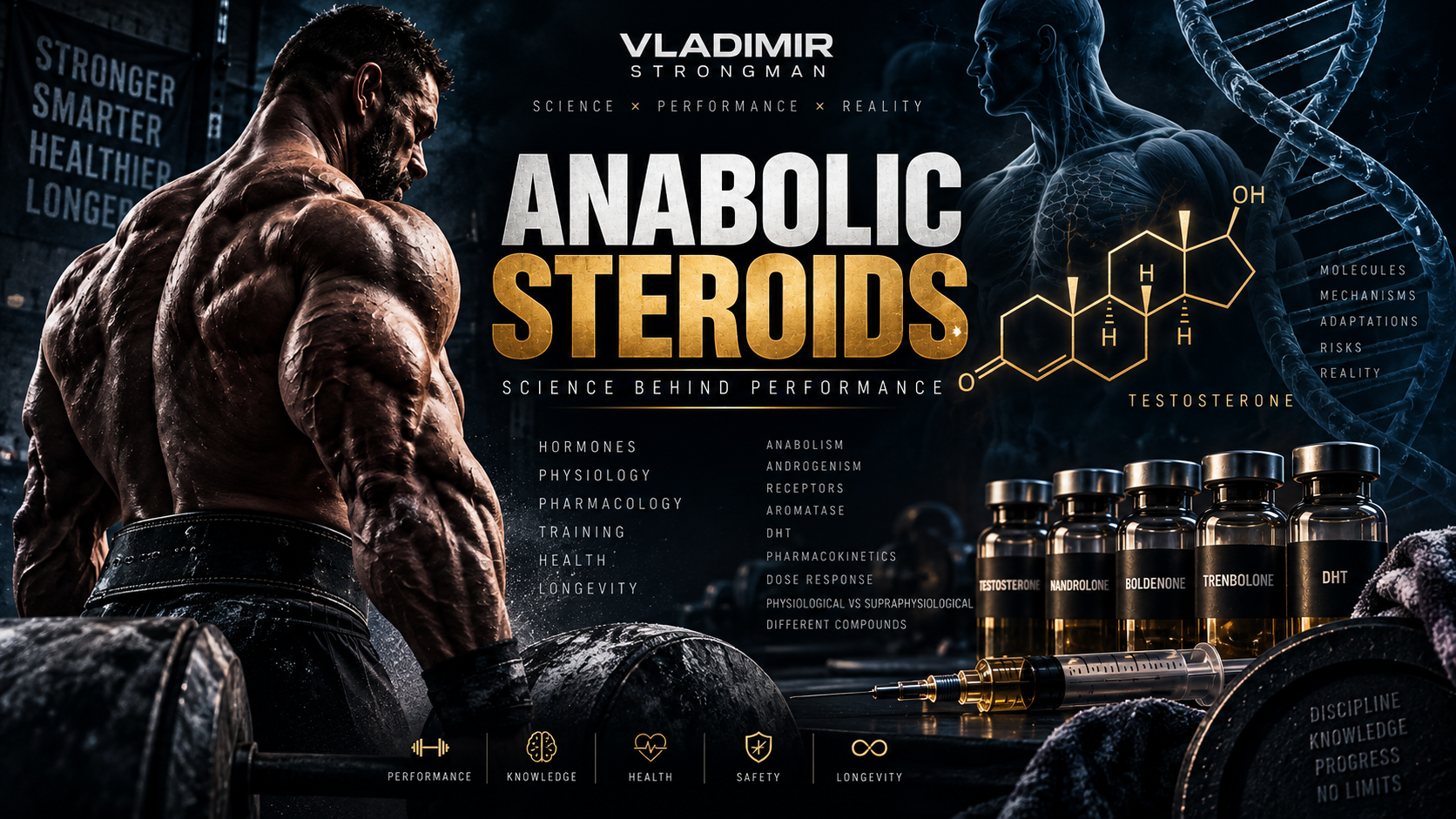
1. The central idea: pharmacological class alone does not dictate the effect
When we hear that two substances belong to the same class, it is tempting to assume that the body will treat them almost identically. Pharmacology does not work that simply. Belonging to the same class describes a family of shared properties, not perfect biological identity. Two related molecules may interact with the same receptor, yet have different affinities, produce different receptor conformations, and be transformed differently in tissues. On top of that, the concentration reaching each tissue depends on absorption, distribution, protein binding, metabolism, and elimination. The key principle is therefore this: the observed effect is produced by the encounter between molecule and organism, not by the class name on the label.
2. The same class means similarities, not equivalence
Testosterone and its androgenic derivatives can be grouped within a broad pharmacological family, but each molecule has its own structure. Small changes to the steroid scaffold can alter metabolic stability, androgen-receptor affinity, conversion to active or inactive metabolites, and duration of exposure. A chemical group added or removed can change how the body sees the molecule without eliminating the shared properties of the family.
3. First level of difference: molecular structure
The androgen receptor does not read a label saying “androgenic steroid.” It interacts with a particular molecular geometry. Structural changes can alter ligand affinity for the receptor and can change the receptor conformation. A 2026 review highlights ligand structure, the receptor ligand-binding domain, and coregulator recruitment as contributors to differences among related steroids in anabolic-androgenic and other biological effects. Much of the mechanistic evidence remains preclinical, so it should not be turned automatically into clinical or performance promises. citeturn423964search1
4. The androgen receptor is shared, but its response is not uniform
Many androgens exert their effects through the androgen receptor, yet the receptor operates in different cellular contexts. After ligand binding, the receptor complex can influence transcription of specific genes. Which genes are accessible and how strongly they respond depends on chromatin, transcription factors, regulatory elements, and coregulators. Research on androgen action shows that tissue specificity arises from multiple layers of regulation rather than a single molecular switch. citeturn423964search12turn423964search7
5. Same receptor, different cell, different biological program
Think of the receptor as the same key used in different buildings. The door mechanism may be related, but the rooms behind it are not identical. In muscle, a cell has one set of enzymes, cofactors, and genetic programs. In prostate, skin, or other androgen-responsive tissues, the molecular environment is different. This helps explain why one androgen may produce a relatively stronger effect in one tissue than in another.
6. Local metabolism can change the entire story
Some tissues transform androgens before the signal is relayed further. Testosterone can be converted by 5-alpha-reductase into dihydrotestosterone, which has higher affinity for the androgen receptor. Other metabolic pathways can reduce activity or generate metabolites with distinct properties. Thus, two molecules that look similar in blood can behave very differently at tissue level. Historical reviews of 19-nor androgens showed that differential tissue metabolism contributes to differences between myotropic and androgenic effects. citeturn423964search2turn423964search10
7. Metabolism is not only hepatic
When people hear “metabolism,” they often think immediately of the liver. For steroid hormones, metabolism can also be intracrine and tissue-based. A cell can locally transform a steroid into a compound with different activity. Circulating concentration therefore does not perfectly describe the signal received by every tissue. This difference between blood measurements and the tissue microenvironment is an important piece of the puzzle.
8. Aromatization can create a second hormonal signal
Testosterone is important not only as an androgen-receptor ligand. It can be converted by aromatase into estradiol. A molecule from an androgenic family can therefore generate a biological profile influenced by both androgenic and estrogenic signaling. Differences among molecules in this pathway can change the pattern of effects without making the androgen receptor the only actor.
9. DHT is an example of tissue-dependent biology
Conversion of testosterone to DHT is more relevant in some tissues than others because 5-alpha-reductase activity differs across tissues. The same circulating testosterone concentration therefore does not imply the same local DHT exposure in every organ. This is one reason why a simple relationship between “blood level” and “effect” can be misleading.
10. Pharmacokinetics changes the intensity and duration of the signal
Two substances may activate the same receptor, but one may produce higher plasma concentrations, another may sustain exposure longer, and a third may generate a different fluctuation pattern. Pharmacologically, what matters is not only “which substance,” but what concentration reaches where and for how long. Cmax, Tmax, area under the concentration-time curve, tissue distribution, and clearance all contribute to the final exposure profile.
11. Total exposure and peak exposure are not the same thing
Two exposure profiles can have similar overall exposure and still have very different shapes. A high peak followed by rapid decline is not biologically identical to a flatter, more sustained profile. Tissues can respond differently to signal duration, and receptor and transcriptional adaptations can be time dependent. Comparing substances only by a laboratory value or a supposed “power per milligram” therefore oversimplifies the problem.
12. Protein binding can change the available fraction
Circulating steroids can bind plasma proteins, and the free fraction is one important component of biological exposure. For testosterone, SHBG and albumin contribute to transport in circulation. Changes in these proteins can alter the relationship between total testosterone and the fraction available to tissues. Two people with the same total testosterone can therefore have different exposure contexts.
13. Pharmacodynamics adds the second axis: how the body responds
Pharmacokinetics asks what the body does to the molecule. Pharmacodynamics asks what the molecule does to the body. Even if two people reach similar concentrations, responses can differ because of receptor density, coregulators, metabolic state, tissue sensitivity, and adaptive processes. A review focused on receptor- and tissue-specific androgen action highlights exactly this network of determinants. citeturn423964search12
14. The receptor is not a simple on-off switch
Ligand binding does not guarantee an identical response every time. Receptor conformation can influence recruitment of different coregulators. This is one foundation for modern understanding of differential ligand effects. In androgen biology, current research discusses the interaction among ligand structure, the receptor ligand-binding domain, coregulators, and signaling pathways. citeturn423964search1turn423964search7
15. Genome and epigenome change the response
Cells do not start from a blank slate. Expression of the androgen receptor, steroid-metabolizing enzymes, transcription factors, and chromatin state can vary. As a result, the same molecule can activate gene sets that are not identical across tissues or individuals. Research on androgen-receptor cistromes and chromatin licensing factors shows how important the nuclear context is for androgen action. citeturn423964search12
16. Individual differences begin before any substance is considered
Two individuals can start with different endogenous testosterone, SHBG, body composition, energy availability, insulin sensitivity, sleep, inflammation, and training capacity. These variables change the biological environment in which an androgen acts. “Same substance, same effect” is therefore too rigid an assumption.
17. Dose can move the system into a different biological zone
The dose-response relationship can depend on which process is measured. In the classic study by Bhasin and colleagues, graded testosterone exposure in healthy young men was associated with dose-dependent increases in fat-free mass and changes in muscle size and strength, but also changes in hemoglobin, IGF-I, fat mass, and HDL. The authors also noted that different androgen-dependent processes did not all have identical dose-response relationships. citeturn423964search0
18. That means “more” is not a property of the class
A dose-response result for one process cannot be assumed to mean that every molecule in the family increases every effect at the same rate. Each substance has its own affinity, metabolism, and exposure profile. The same organism can also show different curves for muscle, erythropoiesis, lipids, skin, or the reproductive system.
19. Tissues can effectively “see” different molecules
If a steroid is converted to an active metabolite in a particular tissue, the local signaling profile changes. Some molecules undergo 5-alpha reduction, others do not. Some can aromatize, others cannot. Some are transformed into metabolites that retain androgenic activity, while others are inactivated more rapidly. Tissue metabolism is therefore a core part of pharmacology, not a secondary detail.
20. This is where tissue selectivity enters the picture
Selectivity means that a pharmacological signal can produce different effects in different tissues. Research on androgens and androgen-receptor modulators discusses the roles of tissue metabolism, coregulators, and signaling pathways in this differentiation. However, apparent selectivity in preclinical models does not necessarily translate into robust clinical selectivity in humans. citeturn423964search3turn423964search6
21. Why the same class can have different adverse-effect profiles
The same principles that explain differences in effects can explain differences in risk. A molecule can have a pharmacokinetic profile that favors certain exposures, be metabolized differently, and influence other endocrine or metabolic pathways. Reviews of anabolic androgenic steroid metabolism show that structural and metabolic changes create a wide range of metabolites, with implications for biological effects and anti-doping detection. citeturn423964search8
22. Muscle is not the whole organism
In sport, discussion often centers on mass and strength. Physiologically, androgens act across many systems. Dose-response studies have observed effects involving muscle mass, hemoglobin, IGF-I, fat mass, and HDL in parallel. A molecule therefore cannot be characterized accurately only by how “anabolic” it appears in one tissue. citeturn423964search0
23. A visible effect is not always the dominant effect
An athlete may notice increased body weight, training pump, or performance sooner than quieter changes elsewhere in the body. Some processes are easy to observe in the gym, while others require laboratory testing or medical monitoring. Subjective impressions of “how a substance worked” are therefore not a substitute for systemic assessment.
24. Same class, different response, different person
At least five levels can shift the final outcome: the molecule itself, pharmacokinetics, tissue metabolism, receptor pharmacodynamics, and the person’s baseline biology. Change any one of these levels and the observed phenotype can change.
25. Why claims like “X is N times more powerful” are fragile
Such claims usually leave “powerful” undefined: receptor affinity, anabolic effect in a model, change in a clinical endpoint, effective concentration, exposure duration, or outcome in a particular tissue. Without a defined endpoint and context, a seemingly precise number can be marketing rather than pharmacology.
26. What a strongman should remember
When comparing two molecules from the same family, do not ask only “which one is stronger?” A better question is: what is their structure, how are they absorbed, how long do they persist, what metabolites do they form, which tissues transform them, how do they interact with the androgen receptor, and what systemic effects can they produce? Only then does a meaningful biological comparison begin.
27. Connection to the previous episodes
Episode 5 on pharmacokinetics showed how absorption, distribution, metabolism, and elimination build the exposure profile. Episode 6 explained why esterification changes testosterone kinetics and duration. Episode 7 followed aromatase, DHT, and androgen metabolites, while Episode 9 separated physiologic from supraphysiologic exposure. Episode 10 connects those pieces: a molecule does not have an isolated effect, but a profile produced by the interaction between chemistry and biology.
28. Conclusion
The same pharmacological class can produce different effects because a class defines a family of similarities, not a predetermined outcome. Molecular structure influences the receptor. The receptor operates in a tissue context. Tissues modify molecules through local enzymes. Pharmacokinetics determines how much and how long the signal reaches its targets. Genetics, metabolic state, and adaptive responses influence the final outcome. Real pharmacology begins when we leave simplistic rankings behind and follow the full chain: molecule → exposure → tissue → receptor → signaling → response.
Selected sources
Bhasin S, Woodhouse L, Casaburi R, et al. Testosterone dose-response relationships in healthy young men. American Journal of Physiology-Endocrinology and Metabolism. 2001;281:E1172-E1181. citeturn423964search0
Wiacek M, Zubrzycki IZ. Anabolic-Androgenic Steroids Revisited: Structural Biology, Receptor Signaling, and Mechanisms of Anabolic-Androgenic Dissociation. International Journal of Molecular Sciences. 2026. citeturn423964search1
Determinants of Receptor- and Tissue-Specific Actions in Androgen Signaling. Review of receptor-specific and tissue-specific mechanisms of androgen action. citeturn423964search12
Sundaram K, Kumar N, Monder C, Bardin CW. Different patterns of metabolism determine the relative anabolic activity of 19-norandrogens. Journal of Steroid Biochemistry and Molecular Biology. 1995. citeturn423964search2
More From The Journal

Training
The Science of Strongman Training - Episode X: Competition Programming
How to build a complete Strongman competition preparation block: calendar, events, volume, intensity, specificity, simulations, autoregulation, tapering and fatigue management.

Training
The Science of Strongman Training - Episode IX: Peaking
Peaking in Strongman: how to turn months of training into maximal competition performance by reducing fatigue, preserving adaptations and managing specificity.