
Physiology
The Brain and Nervous System - Episode 9: Central Fatigue vs Peripheral Fatigue
September 6, 2026
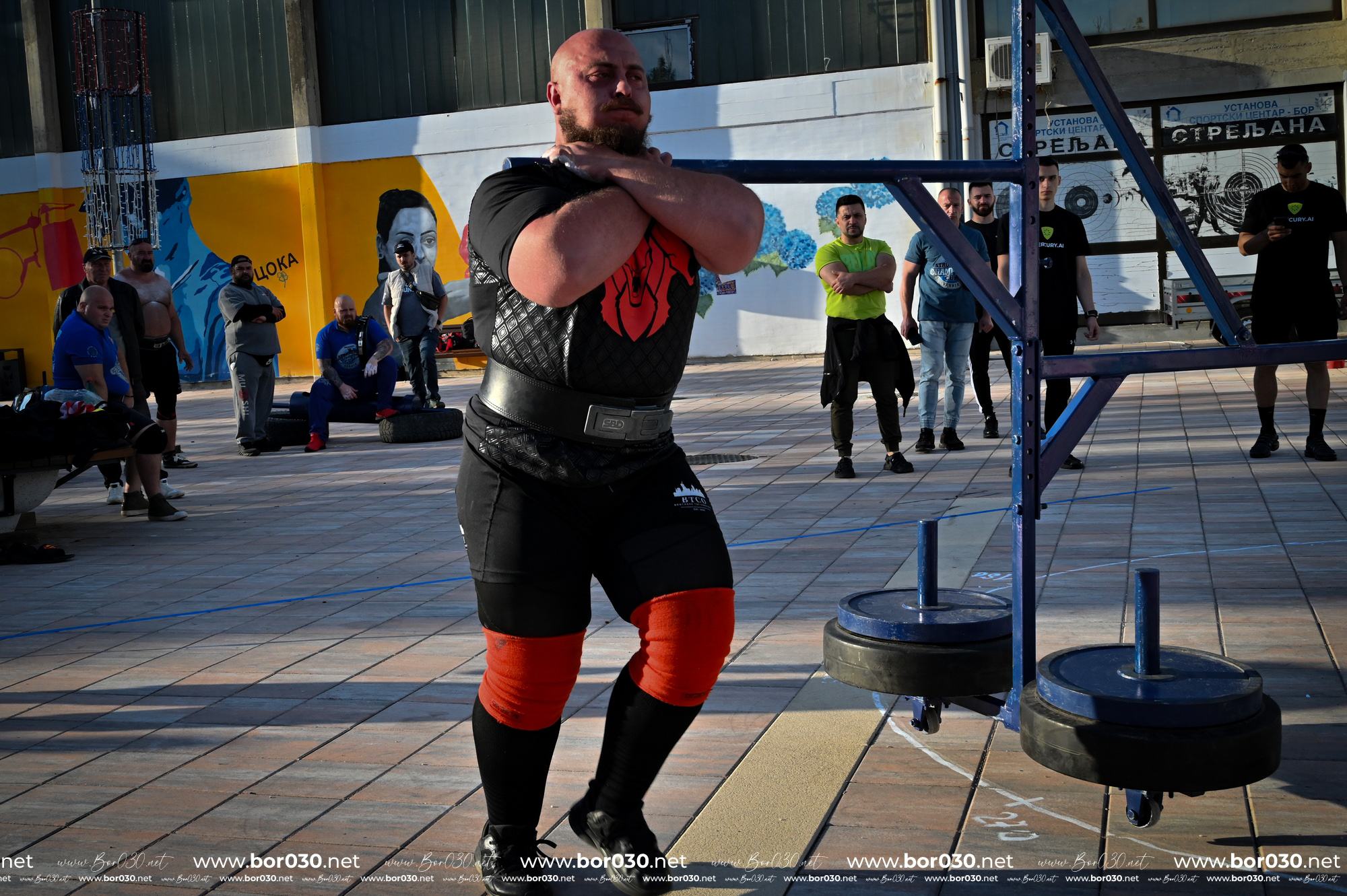
In Strongman, fatigue is not a single phenomenon and it does not occur in one place. After a heavy deadlift, a fast yoke, a long farmer’s walk, or a brutal medley, performance may fall because the muscle cannot produce the same force, because the nervous system cannot sustain the same voluntary drive, or because both processes overlap.
The terms central fatigue and peripheral fatigue help describe these components. They are useful because they distinguish processes occurring at different levels of the neuromuscular system. In real performance, however, the boundary is not a perfect line: the brain, spinal cord, nerves, and muscle continuously influence one another.
1. What is fatigue?
Fatigue can be described functionally as a reduction in the capacity to produce force or power, or to maintain the same level of performance during or after exercise. Importantly, reduced performance does not automatically mean tissue damage or total energy depletion.
In exercise physiology, fatigue is dynamic. It can change from one repetition to the next, appear faster in one muscle group than another, and be influenced by intensity, duration, temperature, hydration, energy availability, sleep, psychological stress, and the specific demands of the event.
2. Peripheral fatigue: what changes in muscle and at the neuromuscular junction?
Peripheral fatigue refers mainly to a reduced ability of the neuromuscular apparatus to translate neural input into mechanical force. It can involve processes from the neuromuscular junction to the muscle fiber membrane, excitation-contraction coupling, and the mechanisms through which the fiber generates tension.
During intense and repeated contractions, ionic, metabolic, and mechanical changes can reduce the efficiency of excitation-contraction coupling. When the contractile response of the fiber declines for the same neural activation, this is an example of a peripheral component of fatigue.
This does not mean that the muscle simply runs out of ATP. In most exercise situations, fatigue is more complex than a simple story of energy being gone. Substrate availability and use, ion concentrations, and the intracellular environment all change and can affect force production.
3. Why can the same neural command produce less force?
Muscle force results from the interaction of motor-unit recruitment, discharge rate, fiber length and velocity, and the ability of the contractile apparatus to respond. If one link becomes less effective, performance can fall even while the athlete is still trying to produce the same force.
During a long farmer’s walk, for example, the arms, shoulder girdle, trunk, and lower limbs are exposed to mechanical and metabolic stress at the same time. As the set continues, some muscles may become less able to produce tension at the same level of activation, changing posture and walking speed.
4. Central fatigue: what changes in the brain and spinal cord?
Central fatigue describes, broadly, a reduction in the capacity of the central nervous system to voluntarily activate muscle to the level that could be reached before exercise. It concerns motor drive and voluntary activation, not simply a brain that is “tired” in the everyday sense.
This component can involve changes at the level of cortical motor areas, spinal circuits, and processing of afferent information arriving from muscle and other tissues. The brain receives information about the state of the body and adjusts motor output according to context.
For that reason, central fatigue should not be imagined as an ON/OFF switch. In most situations it is a graded, task-dependent change influenced by the state of the organism.
5. The role of sensory afferents in central fatigue
Muscles and other tissues constantly send information to the nervous system. Muscle receptors, proprioceptive inputs, and nociceptive signals contribute to the brain’s internal picture of the effort. Information about tension, length, metabolic changes, and discomfort can influence motor output.
This is one reason why effort perception and performance are not identical. An athlete may perceive a set as extremely hard without every peripheral limit being reached at the same time, while in other situations the periphery can be deeply fatigued before the athlete experiences a dramatic loss of voluntary capacity.
6. Central fatigue is not located only in the brain
Voluntary motor output travels through a complex network. The motor cortex, subcortical structures, brainstem, and spinal cord all participate in movement. During fatigue, changes can occur at several levels, and their contribution depends on the type of exercise.
A very intense static task, a high-repetition set, and a multi-minute medley do not create identical fatigue profiles. Therefore there is no simple rule saying that “heavy effort is central and long effort is peripheral.”
7. Intensity and duration change the fatigue profile
Maximal and near-maximal efforts can produce rapid reductions in voluntary capacity and strongly stress the nervous system, while repeated and prolonged contractions create substantial metabolic and peripheral changes. Yet the two components frequently overlap.
In Strongman, this overlap is obvious. A near-maximal deadlift may last only a few seconds but requires extremely high voluntary activation. A 30-60 second carry lasts long enough for substantial peripheral changes while still demanding sustained motor drive under stress.
8. Central fatigue in the deadlift
In a heavy deadlift, the first limiting factor is not necessarily metabolic. The athlete must generate high force, trunk stiffness, intermuscular coordination, and precise timing at the same time. When voluntary activation or motor strategy changes under fatigue, force can fall before the muscle is fully depleted in a metabolic sense.
After several heavy sets, however, the hip extensors and trunk musculature can also accumulate substantial peripheral fatigue. Performance then reflects the combined contribution of remaining neural capacity and remaining contractile capacity.
9. Peripheral fatigue in the farmer’s walk and frame carry
During carries, muscles must generate force and maintain it through a repetitive sequence of steps. As peripheral fatigue rises, trunk position, shoulder-girdle stability, and stepping efficiency can change.
But the central component matters too. The athlete must keep applying force, adjust direction, and correct deviations. When speed drops and technique deteriorates, it is not accurate to assume that “the muscle gave out” without considering changes in motor output.
10. Log press: where coordination and fatigue meet
The log press requires force production from the legs and hips, transfer through the trunk, and overhead completion. As fatigue develops, the sequence can slow and the athlete may lose timing between body extension and arm action.
Part of the decline may be peripheral because muscular capacity is lower, while another part may be central because voluntary drive or coordination strategy changes. In a medley, the two can reinforce one another.
11. Fatigue during stone events
Atlas stones combine force, explosiveness, trunk rigidity, and precision. As the athlete approaches the limit, the problem may be an inability to produce enough force in the relevant muscles or an inability to voluntarily mobilize that force with the same efficiency.
The distinction is not always visible to an observer. A missed lift does not by itself reveal whether the main limitation was peripheral or central. Experimental methods such as neuromuscular stimulation and comparison of voluntary and evoked contractions are needed to investigate that distinction.
12. Why does bar speed drop?
A drop in velocity is a useful practical sign of fatigue, but it does not identify the mechanism on its own. Velocity depends on available force, neural activation, technique, and movement mechanics.
In a deadlift set, for example, two repetitions can use the same load but move at different speeds because of a combination of factors. Velocity loss is therefore an indicator of declining performance, not a direct and complete measure of “central fatigue.”
13. Why is it not useful to label every session as central or peripheral?
In the real organism, systems do not work in isolated compartments. Muscle activation produces sensory afferent input, that input influences the central nervous system, and central motor output in turn influences how much force is produced in the periphery.
It is therefore more accurate to discuss relative contributions. A session may have a dominant peripheral component in one muscle group and a more pronounced central component in whole-system motor control.
14. The role of local muscular fatigue
Local fatigue is especially important in Strongman because many events have highly specific loading distributions. Grip can fail before the legs, the trunk extensors before the quadriceps, or shoulder musculature before the posterior chain.
When one local link becomes limiting, the whole system may change strategy. The athlete modifies posture, speed, or range of motion to compensate. Those adjustments can redistribute stress to other segments.
15. Breathing, temperature, and the internal environment
During very long or dense efforts, systemic changes can contribute to reduced performance. Higher body temperature, dehydration, acid-base changes, and disturbed fluid-electrolyte balance can affect both muscle function and central control of exercise.
This is why fatigue should not be separated from physiological context. A medley performed in heat does not create the same stress profile as the same medley performed in a cool, well-ventilated environment.
16. Sleep and stress can change exercise tolerance
The state of the nervous system influences performance before the first set. Insufficient sleep, psychological stress, and incomplete recovery can alter effort perception, concentration, and readiness for intense voluntary activation.
This does not mean that every bad training day is automatically “central fatigue.” Performance is the product of many variables, and the term should be used precisely, especially outside the laboratory.
17. Motivation is not the same as neuromuscular capacity
A highly motivated athlete may try to produce maximal force, but effort alone does not guarantee that the neuromuscular system can deliver the same performance as in a fresh state. Conversely, low motivation can reduce performance without an equivalent peripheral limitation.
Research uses protocols that attempt to separate voluntary capacity from the peripheral response. In the gym, however, we cannot infer the exact mechanism simply from how “hard” a repetition feels.
18. How is central fatigue measured?
One experimental approach compares force or torque produced voluntarily with the response obtained when the nerve or muscle is externally stimulated. The difference provides information about how much contractile capacity can be accessed voluntarily.
These methods are useful in research but are not routine tools for most athletes. In practice, coaches use indirect signals such as slower velocity, technique breakdown, RPE, reduced performance, and recovery needs.
19. Why RPE does not separate central from peripheral fatigue
Rating of perceived exertion measures the subjective experience of effort. It is extremely useful, but it does not identify where the limiting factor is. An RPE of 9 can occur with local muscular limitation, high cardiovascular strain, or a context in which central state and psychological stress contribute strongly.
20. What happens in the final repetitions?
Near the limit, motor strategy can change. Some motor units may be recruited more strongly, discharge rates may change, and muscle may produce less force at the same level of activation. At the same time, the brain may alter motor output in response to afferent signals from the body.
The result is an interaction. The final failed repetition should not automatically be assigned to one mechanism.
21. Motor-unit recruitment under fatigue
During fatigue, the nervous system can alter recruitment and discharge rate to compensate for declining contractile capacity. This strategy may preserve force for a period, but the neural and metabolic cost of maintaining performance may rise.
For Strongman, this matters in events where force must be sustained under load for tens of seconds. It is not enough for an athlete to produce maximal force once; the athlete must also manage the capacity to sustain or repeat force.
22. Coactivation can increase the cost of effort
When technique deteriorates, coactivation of agonists and antagonists may increase. This can help stability, but it can also increase neuromuscular demands and the energetic cost of movement.
In a fatiguing carry, for example, excessive bracing may temporarily help control but can become disproportionately costly and accelerate performance loss.
23. Fatigue and technique
Fatigue changes technique not only because the muscle becomes weak. Timing, proprioception, postural control, speed, and segmental relationships all change. The athlete may move from an efficient strategy to a more costly one.
In technical events, this degradation can become the main limit even before raw strength disappears completely.
24. What does this mean for training programming?
Rather than trying to avoid all central or peripheral fatigue, programming should control the dose and type of stress. The coach needs to know when the goal is maximal force production and when the goal is repeated-effort tolerance.
Maximal-strength sessions, high-volume work, carries, medleys, and metabolic conditioning create different stress profiles. Their order, frequency, and spacing should reflect those demands.
25. Why a deload can restore performance
Temporarily reducing training volume can allow recovery of some neuromuscular components and restore performance. Not all aspects of fatigue disappear at the same rate, and the response varies between athletes.
An effective deload is therefore not simply “an easy week.” It is a dosing intervention intended to reduce stress enough for performance to return without losing the relevant adaptations.
26. Sleep, nutrition, and hydration
Recovery between sessions depends on more than local muscular rest. Sleep supports nervous-system function, food intake provides substrates for recovery and adaptation, and hydration supports physiological function, especially in heat and prolonged exercise.
27. How can an athlete notice the difference in practice?
An athlete cannot make an exact diagnosis during training, but can identify patterns. If maximal strength falls rapidly, velocity is unusually low, technique breaks down, and effort feels disproportionately high, it is reasonable to reduce the dose and avoid unnecessary fatigue accumulation.
It is more useful to look at these signals together than to decide that “today I have central fatigue” or “today I have only peripheral fatigue.”
28. What signals can be useful in Strongman?
Performance with standardized loads, movement velocity, repetitions achieved at a fixed load, RPE, technical quality, and recovery time are useful practical indicators. Together, they can show whether an athlete is tolerating the current training dose.
29. The myth that central fatigue means the CNS is “depleted”
The central nervous system is not a tank that simply runs empty. Central fatigue is a functional description of reduced capacity to generate or sustain motor drive and should be interpreted in context.
30. The myth that lactic acid causes fatigue
Lactate cannot explain fatigue by itself. Lactate production is part of a complex metabolic system, and acute effects on performance are more nuanced than the old story that “acid fills the muscle.”
31. Strongman is a natural laboratory for fatigue
Strongman events combine maximal strength, power, repeated effort, loaded locomotion, isometric demands, and fatigue resistance. Rarely is one mechanism dominant across an entire competition.
An athlete may enter a medley with good central activation capacity but locally fatigued muscles. Or contractile capacity may remain relatively strong while performance falls because of combined central stress, pacing, discomfort, and impaired motor control.
32. Conclusion
Central and peripheral fatigue are two perspectives on the same complex problem: a reduced ability to produce performance. The peripheral component mainly concerns the capacity of the neuromuscular apparatus to produce force, while the central component mainly concerns voluntary drive and activation. In Strongman, the two almost always intersect.
For the athlete, the practical lesson matters more than the label. There is no need to guess the exact mechanism every day. The goal is to recognize falling performance, monitor useful signals, and adjust volume, intensity, and recovery before fatigue consistently exceeds adaptation.
Selected bibliography
1. Enoka RM, Duchateau J. Translating Fatigue to Human Performance. Medicine & Science in Sports & Exercise. 2016;48(11):2228-2238. DOI: 10.1249/MSS.0000000000000929.
2. Gandevia SC. Spinal and supraspinal factors in human muscle fatigue. Physiological Reviews. 2001;81(4):1725-1789. DOI: 10.1152/physrev.2001.81.4.1725.
3. Amann M, Dempsey JA. Locomotor muscle fatigue modifies central motor drive in healthy humans and imposes a limitation to exercise performance. Journal of Physiology. 2008;586(1):161-173. DOI: 10.1113/jphysiol.2007.142679.
4. Taylor JL, Amann M, Duchateau J, Meeusen R, Rice CL. Neural contributions to muscle fatigue: from the brain to the muscle and back again. Medicine & Science in Sports & Exercise. 2016;48(11):2294-2306. DOI: 10.1249/MSS.0000000000000923.
5. Allen DG, Lamb GD, Westerblad H. Skeletal muscle fatigue: cellular mechanisms. Physiological Reviews. 2008;88(1):287-332. DOI: 10.1152/physrev.00016.2007.
6. Place N, Yamada T, Bruton JD, Westerblad H. Muscle fatigue: from observations to underlying mechanisms. Journal of Muscle Research and Cell Motility. 2010;31:1-4.
7. Enoka RM, Duchateau J. Rate coding and the control of muscle force. Cold Spring Harbor Perspectives in Medicine. 2017;7(10):a029702. DOI: 10.1101/cshperspect.a029702.
Editorial note: central and peripheral fatigue are useful concepts, but they are not two fully separate compartments. Their relative contributions depend on the task, intensity, duration, methodology, and timing of assessment.
More From The Journal

Training
The Science of Strongman Training - Episode X: Competition Programming
How to build a complete Strongman competition preparation block: calendar, events, volume, intensity, specificity, simulations, autoregulation, tapering and fatigue management.

Training
The Science of Strongman Training - Episode IX: Peaking
Peaking in Strongman: how to turn months of training into maximal competition performance by reducing fatigue, preserving adaptations and managing specificity.