Physiology
The Brain and Nervous System - Episode 8: The Vestibular System and Stability
September 6, 2026
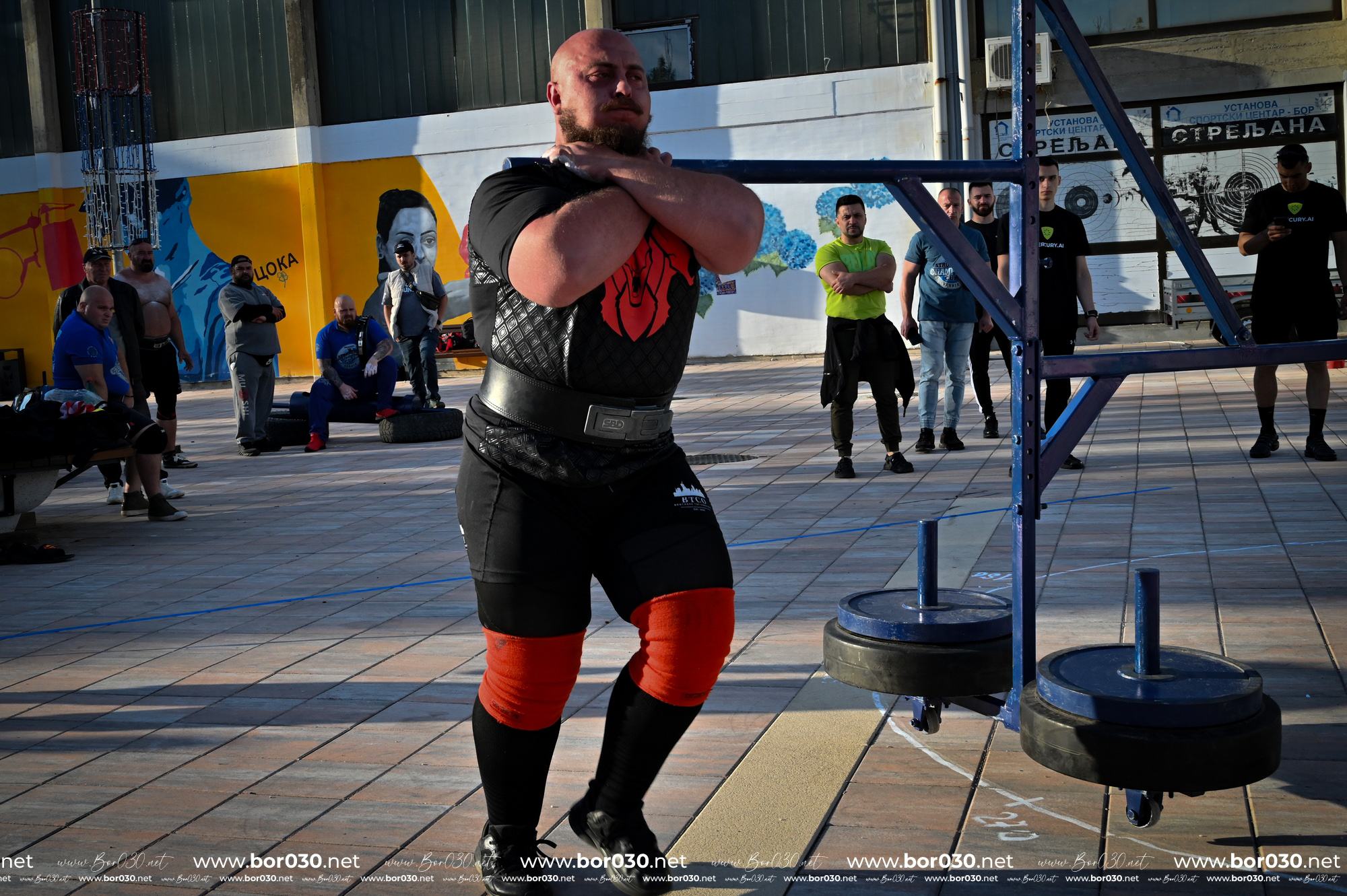
When a Strongman athlete walks under a heavy yoke, presses a log overhead, or rapidly changes body position during an event, the nervous system has to answer a deceptively simple question: where is the head, and in what direction is the whole body moving? An important part of the answer comes from the vestibular system, a set of inner-ear receptors that detect acceleration and head orientation and provide essential information for balance, visual stabilization, and movement control.
1. What is the vestibular system?
The vestibular system is the sensory component of the inner ear specialized for detecting head motion and orientation. It includes the semicircular canals, which respond mainly to angular acceleration, and the otolith organs, the utricle and saccule, which provide information about linear acceleration and the head’s relationship to gravity.
These structures do not keep balance by themselves. They send information to the spinal cord, brainstem, cerebellum, and cortex, where it is integrated with proprioceptive and visual information. The result is a continuously updated estimate of body orientation and movement.
2. Why does the head matter so much?
The head is a major reference point for sensory orientation. The retina must be stabilized during movement, head position influences how acceleration is interpreted, and many postural reflexes use information about head motion to organize responses in the trunk and limbs.
In Strongman, head position changes relative to the implement and posture. An Atlas stone raised to a platform, a log moved overhead, or a yoke that oscillates continuously changes the relationship among the head, trunk, and gravity.
3. Semicircular canals: detecting rotation
The semicircular canals are three structures oriented roughly in different planes. They contain endolymph and sensory receptors in the ampullae. When the head undergoes angular acceleration, inertia of the fluid produces relative motion that bends sensory hair cells and changes neural signaling.
The important point is that the vestibular system is especially sensitive to changes in motion, not a simple absolute angle in isolation. During an event, differences in head rotation can rapidly change vestibular signals and stabilizing responses.
4. Utricle and saccule: linear acceleration and gravity
The otolith organs, the utricle and saccule, contain sensory maculae covered by an otolithic membrane. Calcium carbonate crystals, called otoconia, increase the membrane’s inertia and allow the system to detect linear acceleration and components of head orientation relative to gravity.
For an athlete who accelerates with an implement, stops, starts again, or crosses a surface with small irregularities, these signals become relevant to postural control.
5. The vestibulo-ocular reflex: why does the image not run away?
One of the most important vestibular functions is the vestibulo-ocular reflex, or VOR. When the head rotates, the eyes are reflexively driven in the opposite direction to keep the visual scene relatively stable on the retina. Without this mechanism, vision would shift dramatically during movement.
In Strongman, gaze stabilization matters when the athlete moves quickly, changes direction, or controls a large implement. An unstable visual image can make environmental estimation and movement timing more difficult.
6. The vestibular system and the spinal cord
Vestibular signals reach the vestibular nuclei in the brainstem and influence vestibulospinal pathways. These pathways contribute to regulation of postural muscle activity, especially in muscles that help maintain head and trunk orientation.
This is one reason an athlete does not control posture through a single joint. The vestibular system contributes to organizing the whole-body response around head orientation and stability demands.
7. Vestibular and proprioceptive systems work together
The vestibular system does not replace proprioception. The two systems answer different but connected questions. Proprioception provides information about the position and movement of body segments, while the vestibular system provides crucial information about head motion and acceleration.
When these sources are coherent, control is easier. When they conflict, the brain has to decide how to combine them, and instability or disorientation can occur.
8. Vision completes the system
Vision provides information about the external environment and the movement of the body relative to it. The vestibular system provides information about head motion, while proprioception provides information about body state. The brain integrates these sources to build a useful model of movement.
During an event, these sources do not have equal weight at every moment. When vision is blocked by an implement, vestibular and proprioceptive information can become relatively more important. When terrain or visual orientation is unusual, their integration becomes even more demanding.
9. Yoke carry: a vestibular problem in motion
The yoke produces vertical and lateral oscillations, and the athlete must continue moving while the head and trunk are influenced by the load. The vestibular system detects changes in head acceleration and rotation, while proprioception provides information about limb position and body tension.
An experienced athlete does not wait for the yoke to create a large deviation before responding. The strategy is largely anticipatory but is continuously updated by sensory feedback.
10. Farmer’s walk: orientation, rhythm, and stability
During a farmer’s walk, the implements pull downward and can induce small lateral perturbations. The athlete maintains travel direction by combining information from the feet, trunk, eyes, and vestibular system.
If gaze remains stable, walking can be controlled more efficiently. If there is a sudden perturbation of the head, the VOR and postural reflexes help reduce the error between desired and actual orientation.
11. Log press: the head as an orientation reference
In a log press, the implement moves from in front of the body toward overhead, while posture changes as the system’s center of mass rises. The head must remain sufficiently stable for gaze and spatial orientation to stay useful.
Trunk extension and flexion also change the relationship among vestibular, proprioceptive, and visual signals. Efficient technique does not „turn off” the vestibular system; it uses it within a broader postural control strategy.
12. Atlas stone: when the implement changes the sensory field
During an Atlas stone lift, the object can block the view of the trunk and arms. At the same time, the athlete changes trunk flexion and extension and moves the object along a path that must be controlled without constant visual reference.
This is where sensory redundancy becomes obvious. The brain can use vestibular, proprioceptive, and tactile signals to maintain a functional estimate of orientation even when vision is partly hidden.
13. Why can dizziness appear when systems disagree?
The brain does not receive one perfect source of truth. If vestibular, visual, and proprioceptive information do not match, the system has to resolve the conflict. Such sensory conflicts can produce sensations of instability, disorientation, or nausea in some contexts.
This helps explain why feeling unbalanced does not automatically mean there is a problem only in the feet or ankles. Balance is a distributed control problem.
14. Stability does not mean stillness
A stable body is one that can maintain a useful relationship with the task while moving. In Strongman, stability is dynamic: a step shifts the center of mass, the implement oscillates, and the nervous system continuously adjusts muscle activity.
The vestibular system contributes because it provides information about head motion and relationships with acceleration and gravity. It does not ask the body to freeze; it helps the body remain oriented while moving.
15. Anticipation and correction after perturbation
Postural control combines anticipatory mechanisms with feedback. Before movement, the brain can prepare muscle activation. After movement begins, sensory signals show how well the actual result matches the plan.
In a yoke carry, this sequence is clear. The step is prepared, the implement moves, vestibular signals detect head motion, proprioception detects segment changes, and the system adjusts tension and trajectory.
16. What happens with fatigue?
Fatigue can make control less precise. Steps may become more variable, reactions less consistent, and the athlete may use stiffening strategies that alter movement efficiency.
In a medley, accumulating fatigue can change the relationship between what the athlete predicts and what actually happens. Vestibular and postural control therefore need to be considered in event-specific conditions, not only while the athlete is completely fresh.
17. Why can some rapid movements feel chaotic?
When the head moves rapidly, vestibular and visual systems have to process rapid changes while proprioception tracks segmental changes. If these streams become highly variable, the subjective sensation can feel chaotic even when the athlete remains upright.
Experience helps through repeated exposure to the context. The nervous system learns which types of perturbation are normal for the task and which deviations require larger correction.
18. How can vestibular control be trained?
There is no universal exercise that „activates the vestibular system.” It is active continuously. What can be trained is the ability to integrate vestibular information with the demands of a specific movement.
For Strongman, this can mean controlled carries, walking under load, rhythm changes, transitions between positions, and progressive exposure to perturbations specific to the event. The goal is task-relevant control, not instability for its own sake.
19. Why are unstable surfaces not mandatory?
Very unstable surfaces can increase certain balance demands, but they do not automatically reproduce the problem of a Strongman event. A heavy yoke, frame carry, or log has different mass distribution, inertia, and force requirements.
For transfer, the training stimulus should preserve as much of the problem as possible that the athlete must solve in competition.
20. The relationship between head orientation and force production
Force production is not isolated from body orientation. Head and trunk position change the sensory information available and can influence postural strategy. In heavy tasks, the nervous system must maintain enough stability for force transmission without unnecessarily blocking movement.
In a log press, for example, the athlete must allow the log to move and permit the required extension while maintaining enough orientation to control the implement. The vestibular system contributes to this equation.
21. When vestibular control becomes limiting
Under normal health conditions, the vestibular system works continuously without being consciously noticed. Problems arise when the information is altered, conflicting, or mismatched to the task. Dizziness, oscillopsia, or difficulty orienting can occur in such circumstances.
For an athlete, unusual or persistent symptoms during training should not be treated as a simple lack of „balance.” They can require medical evaluation, especially when they begin suddenly, recur, or are accompanied by other neurological symptoms.
22. What does the vestibular system teach us about performance?
Performance is not only the result of muscles producing force. The athlete must know where the body is, in which direction it is moving, and how much the mechanical situation has changed. The vestibular system provides an essential piece of that problem.
In Strongman, this becomes very visible because events combine large loads, movement, oscillations, and rapid changes of position. Control of the head and body orientation can separate raw force that is difficult to direct from efficient execution.
23. Conclusion
The vestibular system is a sensory system in the inner ear that detects head rotation, linear acceleration, and relationships with gravity. It does not work alone and is not synonymous with balance. Vestibular information is combined with proprioception and vision to build a useful estimate of orientation and movement.
For Strongman, this integration is fundamental. Yoke carries, farmer’s walks, log presses, and Atlas stone work require not only strength but also the ability to remain oriented, stabilize gaze, and adjust posture when the implement moves. Stability does not mean becoming rigid. It means remaining sufficiently oriented and controlled for force to be used where it matters.
References
1. Cullen KE. The vestibular system: multimodal integration and multimodal sensorimotor processing. Nature Reviews Neuroscience. 2012;13:419-432. DOI: 10.1038/nrn3219.
2. Goldberg JM, Wilson VJ, Cullen KE, et al. The Vestibular System: A Sixth Sense. Oxford University Press. 2012.
3. Angelaki DE, Cullen KE. Self-motion sensing in mammals: vestibular and multisensory contributions to vestibular perception. Neuron. 2008;58(5):645-656. DOI: 10.1016/j.neuron.2008.05.007.
4. Proske U, Gandevia SC. The proprioceptive senses: their roles in signaling body shape, body position and movement, and muscle force. Physiological Reviews. 2012;92(4):1651-1697. DOI: 10.1152/physrev.00048.2011.
5. Horak FB. Postural orientation and equilibrium: what do we need to know about neural control of balance to prevent falls? Ageing and Ageing. 2006;35 Suppl 2:ii7-ii11.
6. Mergner T, Rosemeier T. Interaction of vestibular, somatosensory and visual inputs in postural control. In: vestibular and sensorimotor control literature.
Editorial note: the vestibular system is not an „on/off balance switch.” Postural performance emerges from integrating vestibular, proprioceptive, and visual information and using those sources in the context of the task.
More From The Journal
Training
The Science of Strongman Training - Episode X: Competition Programming
How to build a complete Strongman competition preparation block: calendar, events, volume, intensity, specificity, simulations, autoregulation, tapering and fatigue management.
Training
The Science of Strongman Training - Episode IX: Peaking
Peaking in Strongman: how to turn months of training into maximal competition performance by reducing fatigue, preserving adaptations and managing specificity.