
Physiology
The Brain and Nervous System - Episode 7: Proprioception: How the Body Knows Where It Is
September 6, 2026
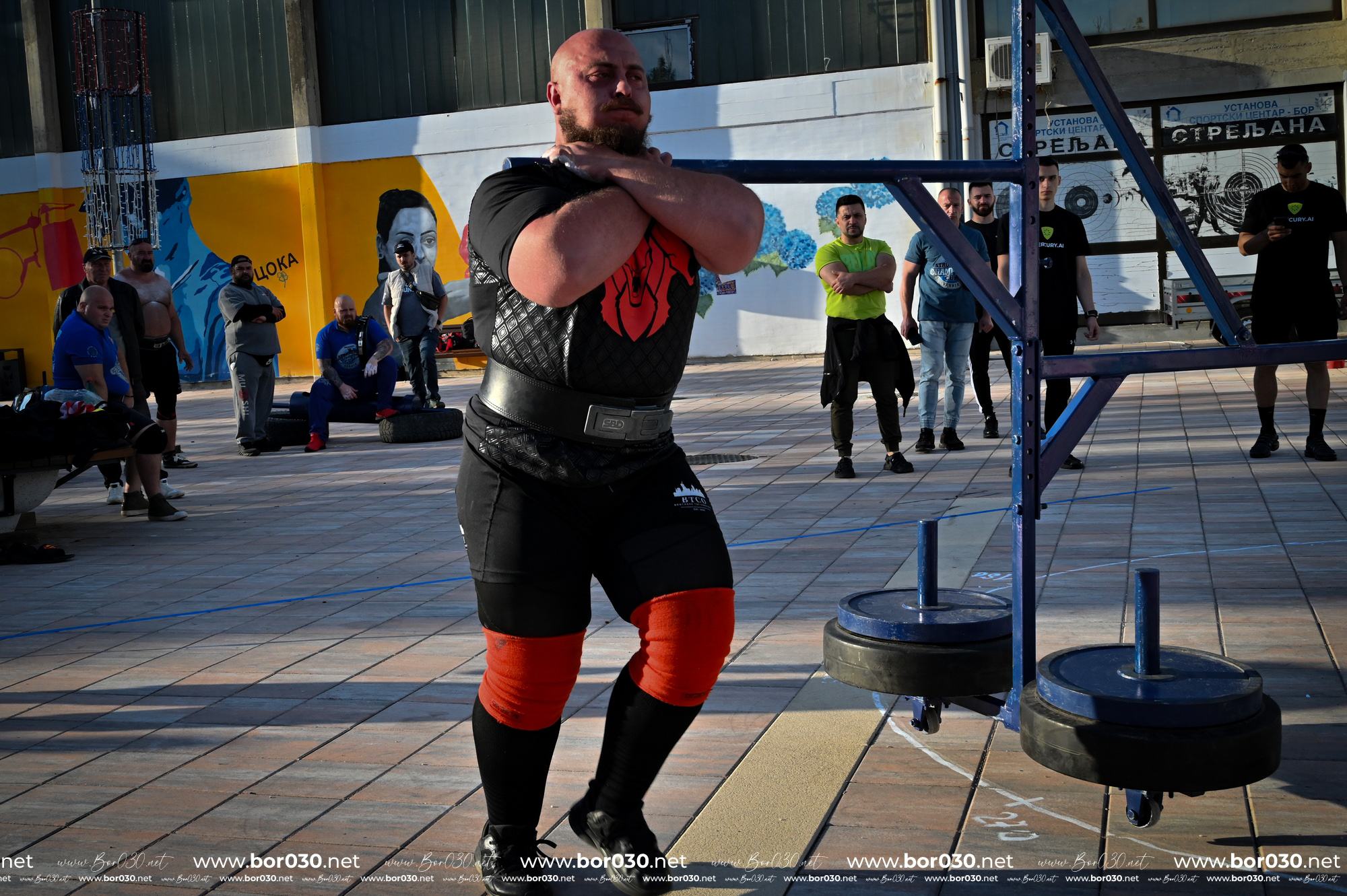
When an athlete performs a deadlift without constantly watching the feet, carries a bulky object that blocks part of the visual field, or takes repeated steps under a heavy yoke, the body must continuously know where it is. There is no internal screen showing the exact position of every knee, hip, or shoulder. Instead, the nervous system builds and updates an estimate of body position and movement using information from muscles, tendons, joints, skin, the vestibular system, and vision. This capacity is known as proprioception.
1. What is proprioception?
Proprioception is the ability of the nervous system to use sensory signals arising within the body to estimate the position, movement, and mechanical state of body segments. It is not a single sense with a single receptor. It is better understood as the result of integrating multiple information sources.
Muscle spindles provide information about muscle length and changes in length. Golgi tendon organs contribute information about tension in the muscle-tendon unit. Cutaneous and joint receptors add information about contact, pressure, and joint movement, while the vestibular system informs the brain about head orientation and acceleration. Vision complements these signals by describing the external environment and the body's relationship to it.
2. Why does the body not need to see every joint?
In everyday life, we can move an arm or leg without continuously watching that segment. This demonstrates that visual information is not the only route by which the brain estimates position. Proprioceptive signals allow movement to be controlled even when vision is incomplete or unavailable.
For a Strongman athlete, the advantage is obvious. During a farmer’s walk, the hands are occupied and visual attention can be directed forward. During a yoke carry, the load and trunk position limit visual information about the lower limbs. During an Atlas stone lift, the object itself can block the view of the hands and trunk. Control remains possible because the brain receives information from inside the body and combines it with vision.
3. The muscle spindle: the sensor of length change
The muscle spindle is a specialized receptor located inside skeletal muscle. It contains intrafusal fibers and sensory endings that detect changes in muscle length and stretch dynamics. Group Ia afferents are highly sensitive to rapid changes, while group II afferents make an important contribution to information about muscle length.
During movement, these signals do not simply say that a muscle is „long” or „short.” They provide dynamic information that can be used to detect change, the rate of change, and the relationship between the current movement and the motor strategy.
Gamma motor activity helps regulate spindle sensitivity while the muscle is contracting. This alpha-gamma coactivation helps keep the spindle informative throughout movement rather than only before movement begins.
4. Golgi tendon organs: information about force and tension
Golgi tendon organs are located in the muscle-tendon region and respond to mechanical loading transmitted through tendons. Group Ib afferents enter spinal and supraspinal circuits that can influence motor neuron activity and force distribution.
It is important not to turn this receptor into an overly simple story about a „brake” that automatically shuts a muscle down when the load becomes too heavy. Its real function is more complex and context-dependent. Information about tension is part of a control network that helps regulate force, stability, and coordination.
5. Joint and skin receptors: the pieces we often forget
Proprioception does not belong exclusively to muscle receptors. Receptors around joints and in the skin contribute to information about position and contact. Pressure under the foot, skin stretch, and mechanical changes around a joint can influence how the nervous system interprets posture and movement.
This matters in Strongman because contact with the implement is part of the task. The handle of a frame, the surface of a stone, or the pressure of a log against the body changes the sensory input. The athlete does not „feel only the weight”; the brain receives a package of mechanical signals that must be integrated.
6. Proprioception is not the same as balance
Balance is a broader problem than proprioception. To orient the body, the nervous system combines proprioceptive, vestibular, and visual information. You can have useful proprioceptive information and still have a balance problem if other sensory sources or integration mechanisms are impaired.
In a carry, for example, the body uses pressure information from the feet and input from the lower limbs, but also head orientation and visual information about the direction of travel. No single source is sufficient in every situation.
7. How does proprioceptive information reach the brain?
Proprioceptive signals travel through afferent pathways into the spinal cord and onward to supraspinal structures. A major fraction of this information reaches the cerebellum through spinocerebellar pathways, contributing to movement calibration and regulation. Other information reaches the cortex and contributes to conscious awareness of body position.
This is why proprioception can have both conscious and implicit components. We do not have to verbalize „my knee is at 42 degrees” for the nervous system to use that information to control movement.
8. The cerebellum: the movement comparator
The cerebellum is important for coordination, timing, and error correction. One central idea is that the nervous system can compare what was intended with what actually happened and use the difference to adjust movement.
In a sport with variable tasks, this calibration is extremely important. An athlete who knows from experience how a yoke at a given load „feels” can better anticipate step rhythm and amplitude, then modify the response when the implement behaves differently than expected.
9. The brain does not read sensory signals one by one
A naive model would be that the brain receives one signal from a spindle, one from a tendon, and one from the skin, then adds them like points in a spreadsheet. In reality, the nervous system interprets multiple sensory streams together according to context, experience, goals, and physiological state.
The same sensory information can mean something different in a static posture than during rapid movement. A certain level of tension may be normal during a deadlift but become highly relevant when the athlete is trying to stabilize an object that is moving laterally.
10. The body's internal model
To control movement, the brain must estimate the state of the body even when sensory information is delayed or incomplete. Motor control therefore uses both feedback and prediction. In other words, the system does not always wait for perfect information before acting.
Before lifting a stone, the athlete estimates its weight, position, and likely path. After movement starts, proprioceptive and visual feedback update that estimate. If the object behaves differently than predicted, the plan is corrected.
11. How does proprioception contribute to the deadlift?
During a deadlift, proprioception helps the nervous system monitor the relationship among trunk, pelvis, knees, feet, and bar. The athlete does not need to visually track every segment. Internal information supports adjustments to tension and position during the lift.
If the bar begins to drift away from the body, the resulting mechanical change can be detected through changes in tension and segment position. The correction may be rapid and partly automatic. Proprioception does not „keep the back straight” by itself; it supplies information that the motor system can use to regulate the action.
12. Yoke carry: proprioception under continuous perturbation
The yoke creates a special sensory problem. The load is large, the system's center of mass changes with every step, and oscillations can create rapid shifts in pressure and tension.
To improve, the athlete develops a predictable relationship among step rhythm, trunk tension, and implement response. Repeated practice gives the nervous system better predictive models. Over time, adjustments become less conscious and more efficient.
13. Farmer’s walk and control without direct visual monitoring
During a farmer’s walk, the hands are occupied, the implements can restrict the view of the limbs, and every step slightly changes pelvic and trunk position. Proprioception allows the system to continue moving without constantly watching the feet.
That is why an experienced athlete can appear to „walk naturally” under load. Behind that naturalness are hundreds or thousands of cycles of feedback and correction. Automatization does not mean absence of control; it means control is distributed across circuits that no longer require conscious attention at every step.
14. Atlas stone and hidden visual information
During an Atlas stone lift, the object can block the view of the hands and abdomen during parts of the movement. The athlete uses contact, tension, and position information to keep the object on a useful path.
This is part of why the object can feel as though it „settles” into a particular position. It is not a mysterious intuition, but the result of learning relationships between sensory signals and mechanical outcomes.
15. Why experienced athletes detect small differences
Experience does not turn proprioception into a perfect instrument. It improves the ability to interpret sensory patterns quickly in the context of a specific task. An experienced athlete may notice that the same event „feels” different when the center of mass, contact surface, speed, or implement stiffness has changed.
This also matters for regulating effort. The sensation of heaviness is influenced by force, speed, acceleration, position, and context. It is not an exact measurement of kilograms, but an estimate constructed from multiple signals.
16. Fatigue changes the internal map
As fatigue develops, the relationship between sensory input and motor output can change. Movement may become more variable, timing less precise, and co-contraction strategies may shift.
That is why an athlete may feel that the same implement „moves differently” at the end of a medley than at the beginning even though its mass is unchanged. The muscle is not the only thing that is fatigued. The control system is operating in a different physiological state and must interpret sensory information differently.
17. Pain and proprioception
Pain can change how a movement is controlled, but pain is not simply a „negative proprioceptive signal.” It is a distinct system that can interact with proprioception and motor strategies.
In practice, an athlete with pain may change amplitude, speed, force distribution, or the level of co-contraction. Sometimes the strategy is protective; at other times it becomes unnecessarily costly. Interpretation should consider context and progression rather than the simple idea that pain „switches proprioception off.”
18. Can proprioception be trained?
Yes, but the wording matters. There is no single exercise that „turns on” proprioception. Training can improve perception and use of sensory information in specific contexts, especially through repeated tasks in which position, rhythm, perturbation, and feedback must be controlled.
For Strongman, useful options include carry variations, tempo changes, pauses in key positions, walking with different loads, rhythm changes, and exercises that require a consistent movement path. The goal is not to destabilize the athlete for its own sake, but to provide enough information and variation for the control system to learn.
19. Why highly unstable exercises are not a universal solution
Training on highly unstable surfaces can increase certain balance and control demands, but it should not be confused with automatically improving Strongman performance. If the goal is to control a heavy yoke, there must be enough exposure to a heavy yoke and to the specific mechanics of walking under load.
The principle is transfer. A sensory stimulus is useful to the extent that it develops a capacity relevant to the final task.
20. How is proprioception linked to technique?
Technique can be viewed as a motor solution stabilized through repetition and feedback. The more accurately a movement is repeated under relevant conditions, the more opportunities the nervous system has to link positions, sensations, and outcomes.
This does not mean that „feeling” is sufficient. Proprioception provides information, but technique emerges from the cooperation of planning, execution, feedback, motor learning, strength, and the mechanical conditions of the task.
21. What happens when proprioceptive information is reduced?
When proprioception is severely impaired, movement control can become much more dependent on vision and internal predictions. Movements may become slower, hesitant, and harder to stabilize without visual information.
Neurological observations of this kind show how valuable internal body information normally is. Under ordinary conditions, the brain can update body position quickly with almost no conscious effort.
22. Proprioception, speed, and responses to perturbation
The faster a perturbation occurs, the more important it becomes to use control pathways that do not depend entirely on conscious processing. Proprioceptive information can contribute to rapid responses and regulation of muscular stiffness.
When a yoke suddenly tilts to one side, the athlete has no time to verbalize each correction. The system detects the change and adapts muscle activity. Task-specific experience helps make that loop more effective.
23. Why does control become more automatic with experience?
A beginner has to attend to many separate elements: foot position, breathing, implement path, trunk tension, and rhythm. As learning progresses, these elements become integrated into a more automated motor pattern.
Automation does not mean that proprioception disappears. It means sensory information can be used efficiently without continuously consuming conscious attention.
24. Can proprioception be „fooled”?
Yes. The nervous system does not directly measure body position with a ruler. It estimates body state from imperfect information. When sensory sources conflict, the brain can generate inaccurate perceptions or state estimates.
In sport, this means subjective sensation should not automatically be treated as mechanical truth. An athlete may feel that a movement is perfect even though the implement has drifted several centimeters from the desired path. Video feedback, velocity measurements, or coaching observation can add information.
25. How do we use this information in Strongman training?
The first principle is specificity. If you want better control in the yoke, train control while walking under load. If you want more precise stone execution, repeat lifting and placing the object in relevant contexts. If you want stability in the log press, develop both the required strength and the specific control of transitions.
The second principle is controlled variation. Small changes in load, rhythm, height, distance, or surface can require the control system to update its internal model without turning every training session into chaos.
The third principle is feedback quality. Video, timing, movement velocity, and technical observation can complement internal sensation and reveal where an athlete's estimate differs from the mechanical reality.
26. What does proprioception teach us about strength?
Strength is not only a number produced by muscle. To use force effectively, the nervous system has to know roughly where the body is, how the implement is moving, and how quickly the mechanical situation is changing.
That makes proprioception an important component of Strongman performance. An athlete can have a high capacity to produce force, yet if that force cannot be directed and adjusted relative to the body and the implement, part of that potential is lost.
27. Conclusion
The body „knows where it is” not because a single receptor reports its position, but because the nervous system continuously combines information about muscle length, tension, pressure, contact, joint movement, head orientation, and the relationship with the environment. Proprioception is the result of this integration.
In Strongman, this internal map becomes critical when the body must produce large forces while the implement perturbs posture, vision is limited, and time for correction is short. Deadlifts, yokes, farmer’s walks, frame carries, log presses, and stone work all demand a combination of anticipation and feedback.
The key message is simple: proprioception is not a mysterious sense separate from the rest of the nervous system. It is one of the mechanisms through which the brain continuously builds an updated estimate of body state and uses it to turn intention into controlled movement.
References
1. Proske U, Gandevia SC. The proprioceptive senses: their roles in signaling body shape, body position and movement, and muscle force. Physiological Reviews. 2012;92(4):1651-1697. DOI: 10.1152/physrev.00048.2011.
2. Matthews PBC. Proprioceptors and their contribution to somatosensory control of movement. Reviews of muscle spindle physiology, proprioceptive feedback, and motor control.
3. Nielsen JB, Sinkjær T. Afferent feedback in the control of human motor function. Acta Physiologica Scandinavica. 2002;176(1):1-14.
4. Azim E, Seki K. Gain control in the spinal cord. Nature Reviews Neuroscience. 2019;20:742-755.
5. Heckman CJ, Enoka RM. Motor unit. Comprehensive Physiology. 2012;2(4):2629-2682. DOI: 10.1002/cphy.c100087.
6. Enoka RM, Duchateau J. Rate coding and the control of muscle force. Cold Spring Harbor Perspectives in Medicine. 2017;7(10):a029702. DOI: 10.1101/cshperspect.a029702.
7. Škarabot J, Brownstein CG, Casolo A, Del Vecchio A, Ansdell P. The knowns and unknowns of neural adaptations to resistance training. European Journal of Applied Physiology. 2021;121:675-685. DOI: 10.1007/s00421-020-04567-3.
Editorial note: proprioception is an integrated, context-dependent system. Terms such as „sense of position” are useful descriptions, but the real mechanisms involve multiple sensory sources, neural pathways, and internal models of body state.
More From The Journal
Training
The Science of Strongman Training - Episode X: Competition Programming
How to build a complete Strongman competition preparation block: calendar, events, volume, intensity, specificity, simulations, autoregulation, tapering and fatigue management.
Training
The Science of Strongman Training - Episode IX: Peaking
Peaking in Strongman: how to turn months of training into maximal competition performance by reducing fatigue, preserving adaptations and managing specificity.