
Physiology
The Brain and Nervous System - Episode 6: Reflexes and Movement Control
September 6, 2026
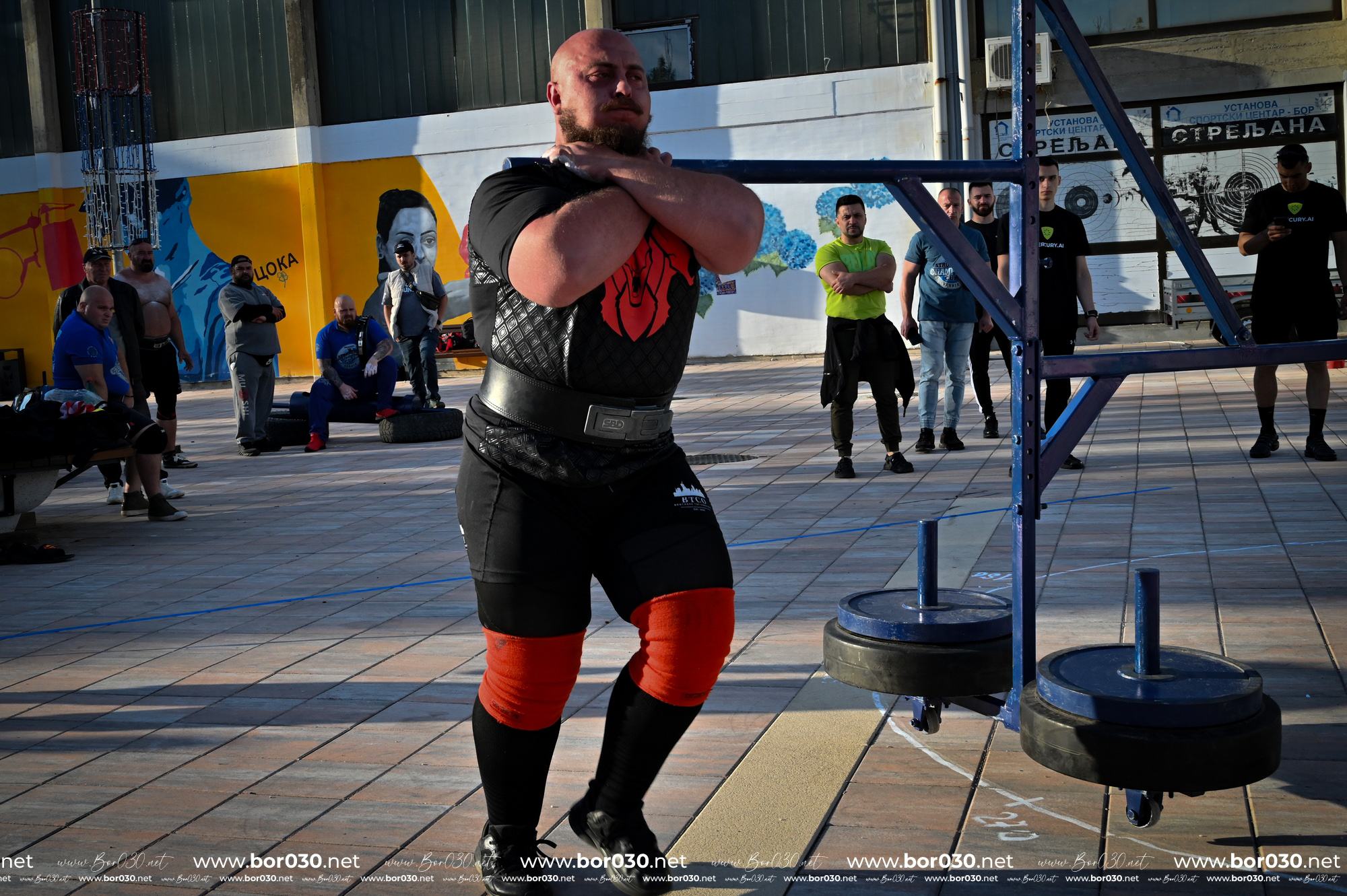
Movement control does not begin when the brain simply „presses a button” to contract a muscle, and it does not end when a motor command reaches the muscle. Every repetition is a continuous dialogue between the brain, spinal cord, muscles, tendons, joints, skin, and the mechanical environment in which the body is trying to produce force. Reflexes are one essential part of that dialogue. They can regulate muscle length, joint stability, posture, and responses to perturbations, while supraspinal systems define the goal, strategy, and context of movement.
1. What is a reflex, really?
A reflex is an organized neural response that can occur without every stage being consciously decided. That does not mean „automatic and separate from the brain.” Some reflexes are integrated largely within the spinal cord, others are strongly modulated by supraspinal structures, and the final response depends on the organism’s state, task, and context.
In practice, a reflex can be viewed as a control loop. There is a stimulus, a sensory receptor, an afferent pathway carrying information, neural circuits processing it, and an efferent pathway that changes muscle activity. The spinal cord can perform part of this integration very rapidly, but the response is influenced by descending commands and expectations about movement.
2. The reflex arc: the path of information
The classic reflex arc includes the sensory receptor, afferent neuron, one or more synapses, motor neuron, and muscular effector. In a simple spinal reflex, the initial response does not need to travel first to the cortex. This saves time and allows rapid reactions to mechanical changes.
Real reflexes, however, are not rigid wiring. Spinal interneurons can facilitate or inhibit signals, and descending pathways from the brain can change reflex gain. Therefore, the same muscle stretch can produce different responses depending on position, contraction level, fatigue, and task demands.
3. The stretch reflex and the muscle spindle
Muscle spindles are sensory receptors located within skeletal muscle and specialized for detecting changes in muscle length and stretch dynamics. Group Ia afferents are very fast and respond especially to rapid changes in length, while group II afferents contribute more to information about static length. This information supports postural and movement control.
When a muscle is stretched rapidly, spindle afferents can increase activity in motor neurons supplying that muscle and contribute to a reflex contraction. This is one reason the neuromuscular system can respond quickly to a perturbation without the athlete consciously constructing every micro-correction.
In athletic movement, the key point is not the reflex alone but how the reflex is integrated with voluntary intent. Muscle spindle sensitivity is influenced by gamma motor activity, helping preserve receptor responsiveness during contraction. This allows the system to keep receiving information about length changes while the muscle is producing force.
4. Reciprocal inhibition and freeing the movement
Efficient joint movement does not only require activation of the agonist. The antagonist must also be regulated so that it does not unnecessarily oppose the motion. In some spinal circuits, sensory input from one muscle can facilitate the agonist and inhibit the antagonist through interneurons. This is known as reciprocal inhibition.
In Strongman, this becomes relevant when an athlete needs to accelerate a load, change body position, or transition rapidly between phases of an event. Good control does not mean an absence of co-contraction; it means appropriate dosing. Sometimes co-contraction improves stability, while excessive co-contraction can slow movement.
5. Tension feedback and Golgi tendon organs
Golgi tendon organs provide information related to mechanical tension in the muscle-tendon unit. Their group Ib afferents enter spinal and supraspinal circuits that contribute to force regulation and limb mechanics. The old model in which the Golgi tendon organ acts as a simple „switch” that shuts down a muscle when the load becomes too heavy is too simplistic.
Depending on the task, Ib afferent activity can contribute to excitation or inhibition of motor neurons and influence force distribution. In a Strongman event, force feedback is better understood as part of a control system that maintains mechanical regulation, not as a fixed limit imposed by one receptor.
6. Proprioception: the body knows where it is
Proprioception is the ability of the nervous system to use information from within the body to estimate the position, movement, and mechanical state of body segments. Muscle spindles and Golgi tendon organs are important, but they do not work alone. Receptors in the skin and joints, along with vestibular information, contribute to the same control problem.
During a yoke carry, for example, the athlete cannot constantly see the exact position of every joint. The nervous system combines vision, foot pressure, hip and trunk information, muscle signals, and vestibular input into a functional estimate of position and movement.
7. The spinal cord is not just a cable
The spinal cord contains neural networks capable of combining sensory information with descending commands, regulating reflexes, and coordinating multiple muscle groups. Some spinal networks can generate movement patterns, while sensory information continuously adjusts them.
This matters for strength because a powerful contraction is not produced by the motor cortex alone. Spinal control, interneurons, motor neurons, and sensory feedback all contribute to how effectively intention becomes mechanical action.
8. Postural reflexes and trunk stability
Before and during a heavy lift, the body has to control the trunk. Stability is not a static „lock,” but the result of continuous regulation of muscle activity based on sensory information. Small shifts in the center of mass, changes in foot pressure, and movement of the load continuously generate signals that can modify motor output.
In the deadlift, this helps the athlete preserve the relationship between pelvis, trunk, and bar. In a log press, postural control must allow force transfer from the lower body while stabilizing the load overhead. In both cases, reflexes and sensory feedback support control, but they do not replace technique.
9. Fast reflexes, slow control, and anticipation
Movement control is built from loops operating on different time scales. Some reflex responses can emerge very quickly, while conscious cortical corrections are slower. The nervous system combines these levels with anticipatory mechanisms so that the body does not wait for an error to fully develop before correcting it.
When an athlete prepares to lift a stone, the body does not wait for the stone to move before organizing its strategy. Initial position, breathing, trunk tension, and muscle activation are established before the main phase. Sensory feedback then adjusts the strategy as the load produces real mechanical changes.
10. Reflexes and rapid changes of direction
When the direction of force changes rapidly, the neuromuscular system must detect stretch, displacement, and changing load. Reflex responses can contribute to control of stiffness and stabilization, especially when the perturbation is faster than can be handled through a detailed voluntary command.
During carries and medleys, every step slightly changes load distribution. An experienced athlete does not consciously decide every step. The pattern is automated, while sensory feedback keeps the system within a useful stability window under load.
11. What happens when reflexes are modulated by fatigue?
Fatigue affects more than the muscle’s ability to produce force. It also changes how the nervous system processes and uses sensory feedback. As demand rises, control can become less precise, co-contraction strategies may change, and errors in position or timing can increase.
In a medley, early repetitions may look almost identical to fresh performance, yet after fatigue accumulates, small delays in postural correction can become visible. This is why control should not be studied only when the athlete is fresh. Task-specific fatigue matters.
12. Pain, protection, and movement change
Pain and reflexes are not the same phenomenon, but they can influence each other. A painful stimulus can produce rapid motor responses, while persistent pain can alter movement strategy and the distribution of muscle activity. The body is not trying to execute a perfect technique in the abstract; it is managing a task in the context of the information available.
This helps explain why a person in pain may change the path, rhythm, or co-contraction of a movement. Not every change is inherently „wrong”, but a strategy that remains altered for too long can become inefficient. Interpretation must consider cause, duration, intensity, and context.
13. The cerebellum and movement calibration
The cerebellum receives information about what the nervous system intends to do and what actually happens in the body. Comparing these signals is essential for movement accuracy and motor learning. The cerebellum is not merely a „balance center”; it is important for timing, coordination, and error correction.
In Strongman, the difference between controlled and chaotic execution becomes visible when the athlete must match force direction, rhythm, and body position at the same time. With experience, the system can detect and correct errors without turning every adjustment into a conscious process.
14. Does motor learning change reflexes?
Training does not „reprogram” reflexes like software with one switch. It changes properties of the neuromuscular system and the way sensory signals are used. Adaptations can occur at cortical, spinal, muscular, and sensory levels. Some responses become more effective in specific tasks, while transfer to very different contexts may remain limited.
That is why an athlete can become highly skilled at controlling one event without automatically developing the same precision in a completely different task. Proprioception and motor learning contain context-dependent components. Specific practice remains essential.
15. What does good control mean in the deadlift?
A heavy deadlift is not only a contest between the extensors and the load on the bar. The athlete must regulate bar position, trunk stiffness, foot pressure, hip position, and extension speed at the same time. Sensory feedback provides data about changes in body position, and the motor system adjusts activity to preserve an efficient strategy.
When the bar drifts away from the body, the mechanical demand can change and the athlete has to correct. A response that is too slow can cause positional loss; an excessive response can create unnecessary stiffness. High performance emerges from anticipation, feedback, and force dosing.
16. Log press, yoke, and frame carry: three different sensory problems
The log press requires control of a load that strongly changes trunk and arm mechanics as it rises. The yoke introduces a large external load that perturbs posture with every step. The frame carry requires control of an object that limits visual and mechanical freedom of the arms. In all three events, reflexes and proprioception contribute to stabilizing the system, but each task requires a specific strategy.
An important principle is that stability and mobility are not absolute opposites. A strong athlete must allow the movement required at certain joints while limiting unnecessary movement at others. The nervous system distributes stiffness according to the goal.
17. How can reflex and sensory control be trained?
It is not realistic to „train a reflex” in isolation and then assume the whole system will automatically become better. A more useful approach is to train tasks that challenge position control, reactions to perturbations, coordination under load, and error detection.
For Strongman, useful examples include controlled carries, yoke variations, tempo lifting, pauses in key positions, changes of rhythm, and technique practice under moderate fatigue. Highly unstable balance exercises can have value for specific objectives, but they should not be treated as substitutes for specific exposure to heavy and stable event demands.
18. Why „feeling the weight” is not magic
Experienced athletes sometimes describe a feeling that they „know” how heavy a load is without measuring it. This skill may reflect repeated integration of proprioceptive, visual, cutaneous, and motor signals. The brain learns statistical relationships between effort, displacement, velocity, and outcome.
That is why an experienced athlete can detect seemingly small differences between two objects or attempts. Yet perceived effort is not a perfect measurement of objective force. Emotion, fatigue, and context can alter the sensation.
19. What happens when sensory feedback is reduced?
When proprioceptive information is severely reduced, movement control becomes much more dependent on vision and internal prediction. Even under normal conditions, vision is not available with equal quality during every phase of a Strongman event. This highlights the importance of combining multiple information sources.
In training, temporarily reducing one sensory input can sometimes be a teaching tool, but it should be used carefully. The goal is not to make movement unnecessarily difficult; it is to improve the ability to use the information that remains relevant to the task.
20. The link between reflexes, technique, and performance
High-level technique can be viewed as a control strategy that combines anticipation and feedback. Reflexes provide rapid responses to perturbations, supraspinal systems define goals and sequences, and muscles and connective tissues turn those commands into movement.
In competition, small differences in control can become large differences in time or repetitions. A more efficient path, faster stabilization after a step, and better adjustment of the center of mass can reduce mechanical losses without necessarily increasing maximal force.
21. What does the science teach us about reflexes and strength?
The first lesson is that reflexes are not the enemy of strength. They are part of the infrastructure through which the nervous system controls a complex mechanical system. The second is that sensory receptors do not operate in isolation, but in a network in which information is combined, filtered, and modulated. The third is that training can change this network, but effects are task- and context-dependent.
For Strongman, the practical conclusion is straightforward: performance depends not only on how much force you can produce, but also on how well you can direct, stabilize, and correct that force in real time. Reflexes and proprioception contribute directly to that problem.
22. Conclusion
Reflexes are among the fastest components of motor control, but they are not a primitive system separate from the rest of the brain. Muscle spindles, Golgi tendon organs, cutaneous and joint receptors, spinal circuits, cerebellum, and cortex cooperate to turn information about the body and environment into movement.
In Strongman, this architecture becomes visible under loads that perturb posture, rapidly change force distribution, and require the athlete to solve mechanical problems in a short time. Superior movement control does not mean being strong alone; it means using force precisely, responding to perturbations, and preserving efficiency when conditions change.
References
1. Proske U, Gandevia SC. The proprioceptive senses: their roles in signaling body shape, body position and movement, and muscle force. Physiological Reviews. 2012;92(4):1651-1697. DOI: 10.1152/physrev.00048.2011.
2. Matthews PBC. Proprioceptors and their contribution to control of movement. Classical and modern literature on muscle spindle physiology and reflex control.
3. McComas AJ. Human neuromuscular adaptations that accompany changes in muscle strength. Medicine and Science in Sports and Exercise. 1994;26(12):1498-1506.
4. Henneman E, Somjen G, Carpenter DO. Functional significance of cell size in spinal motoneurons. Journal of Neurophysiology. 1965;28:560-580.
5. Nielsen JB, Sinkjær T. Afferent feedback in the control of human motor function. Acta Physiologica Scandinavica. 2002;176(1):1-14.
6. Azim E, Seki K. Gain control in the spinal cord. Nature Reviews Neuroscience. 2019;20:742-755.
7. Heckman CJ, Enoka RM. Motor unit. Comprehensive Physiology. 2012;2(4):2629-2682. DOI: 10.1002/cphy.c100087.
8. Enoka RM, Duchateau J. Rate coding and the control of muscle force. Cold Spring Harbor Perspectives in Medicine. 2017;7(10):a029702. DOI: 10.1101/cshperspect.a029702.
9. Gallina A, Cesari P, Mingolla E. Sensory feedback and the dynamic control of movement. Contemporary review literature on proprioceptive feedback and motor control.
10. Škarabot J, Brownstein CG, Casolo A, Del Vecchio A, Ansdell P. The knowns and unknowns of neural adaptations to resistance training. European Journal of Applied Physiology. 2021;121:675-685. DOI: 10.1007/s00421-020-04567-3.
Editorial note: reflexes, proprioception, and motor control are context-dependent systems. Simple models such as „one receptor = one response” are useful for teaching, but they do not fully describe human movement control during real performance conditions.
More From The Journal
Training
The Science of Strongman Training - Episode X: Competition Programming
How to build a complete Strongman competition preparation block: calendar, events, volume, intensity, specificity, simulations, autoregulation, tapering and fatigue management.
Training
The Science of Strongman Training - Episode IX: Peaking
Peaking in Strongman: how to turn months of training into maximal competition performance by reducing fatigue, preserving adaptations and managing specificity.