
Physiology
The Brain and Nervous System - Episode 5: Neural Inhibition and Protective Mechanisms
September 6, 2026
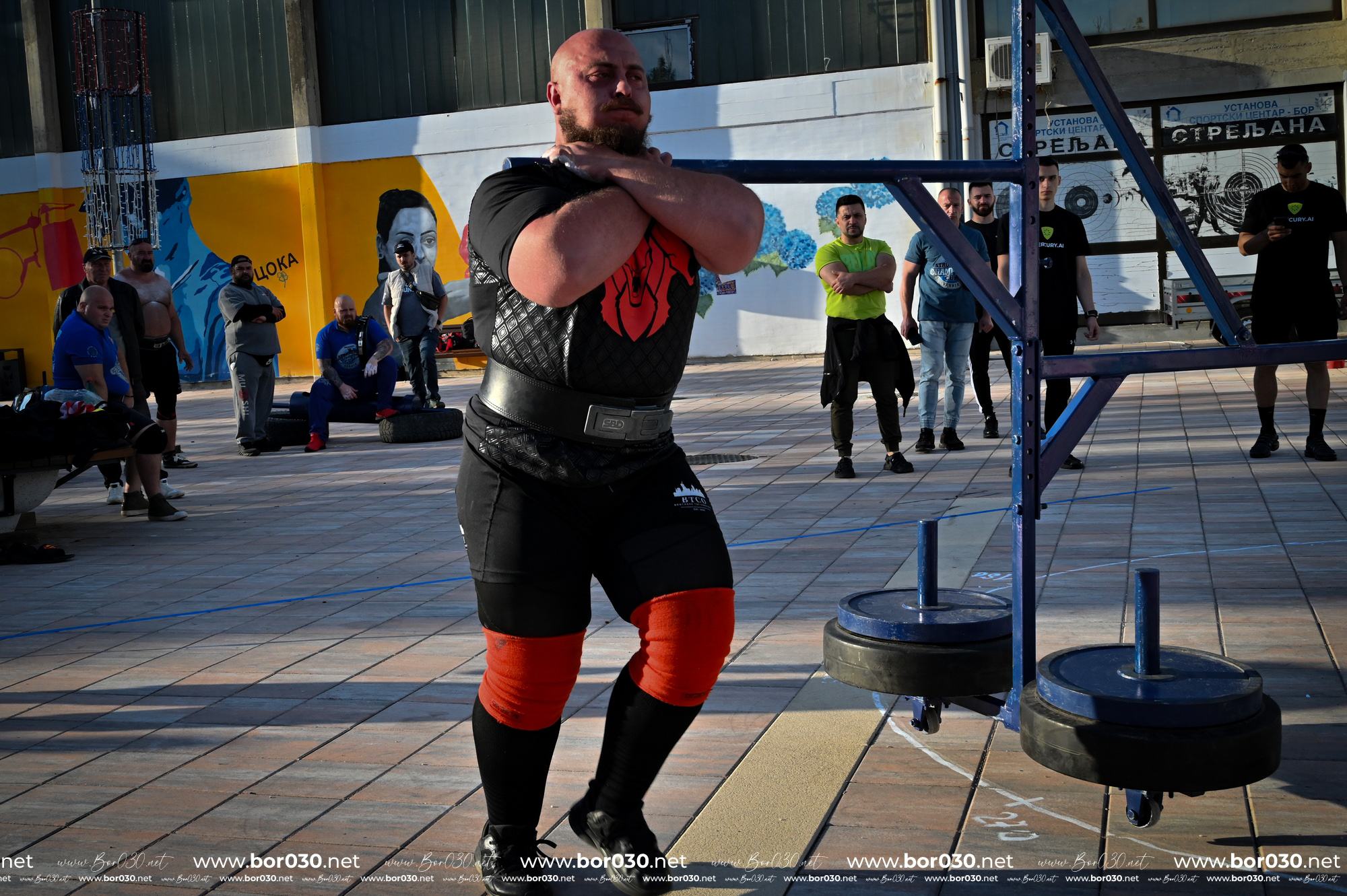
Introduction: the nervous system does not only create force, it regulates it
Across the first four episodes, we followed the pathway from the brain to the motor unit, recruitment, discharge frequency, and coordination between muscles. The next step is more subtle: what happens when the nervous system does not allow the body to express all the force that the musculature could produce under certain conditions? This is where neural inhibition, sensory feedback, pain, stability, and protective mechanisms enter the picture.
In gym language, these ideas are sometimes reduced to the claim that the brain simply applies a brake so the athlete does not tear a muscle. Human physiology is more complicated. The nervous system continuously receives information from muscles, tendons, joints, and surrounding tissues and adjusts motor output. Sometimes a force limitation has a neural component. At other times, the dominant cause is peripheral, biomechanical, metabolic, or pain related.
For a Strongman athlete, the distinction matters. The competitor needs to understand when a limitation is genuine force capacity, when technique is reducing force expression, and when fatigue, pain, or instability are changing motor output. Training should not be about tricking an imaginary safety system. It should build a neuromuscular system that can manage high effort intelligently.
1. What does neural inhibition mean?
Neural inhibition can be described broadly as a reduction in motor activation caused by inhibitory influences within the nervous system. During movement, motor neurons receive excitatory and inhibitory input at the same time. The final balance contributes to the level of motor command reaching the muscles.
This is not one single mechanism. It can involve spinal circuits, interneurons, sensory feedback, supraspinal control, and responses to pain or perceived threat. The term therefore needs precision and should not be used as a universal explanation for every strength plateau.
2. Why does the body need protective mechanisms?
The neuromuscular system is not designed only for maximal force output. It must support movement, stability, and adaptation while avoiding unnecessary exposure of tissues to excessive stress. Sensory feedback helps the brain and spinal cord detect changes in tension, length, position, and loading.
In an unexpected situation, a change in joint position or a painful stimulus can alter muscle recruitment rapidly. Functionally, this is useful: movement has to change when conditions become unstable or potentially harmful.
3. Golgi tendon organs and reflex control
Golgi tendon organs are sensory receptors involved in detecting tension. Their information reaches the nervous system through sensory pathways and contributes to regulation of motor activity. In real physiology, the relationship between tension and inhibition is dynamic and context dependent.
The old simplified picture in which Golgi tendon organs simply sense a heavy load and immediately switch the muscle off is misleading. Their role is better understood as part of a feedback network that helps the nervous system calibrate force and stability.
4. Muscle spindles and length control
Muscle spindles provide information about muscle length and changes in length. These signals contribute to spinal reflexes and to the adjustment of tone and position. In a heavy lift, rapid changes in muscle length can influence motor output even when the athlete is not consciously aware of the process.
For Strongman, this becomes especially relevant in movements where the center of mass can shift quickly, such as stone loading, a log clean, or an unstable carry. The nervous system must detect and correct changes before they become major technical errors.
5. Autogenic inhibition and the practical picture
The term autogenic inhibition is used to describe situations in which sensory feedback from a muscle or tendon influences activation of that muscle. In strength training, however, it is not appropriate to assume that there is a rigid brake constantly limiting maximal effort.
Neural behavior adapts to the task and to experience. A trained athlete can learn to generate force under conditions that feel highly demanding to a novice. This does not mean protective receptors disappear. It means the overall system has become better at interpreting and managing the incoming information.
6. Pain and reduced force production
Pain can clearly alter motor activation, but the relationship is not simple. Pain may reduce voluntary force production or change movement strategy. At the same time, large differences can exist between pain intensity and actual performance. Pain is a complex experience and is not a direct meter of tissue damage or neural activation.
In Strongman, pain during an event can immediately change force distribution. The athlete may alter trunk position, range of motion, rhythm, or support. Sometimes that is a useful protective strategy. In other cases, compensation may increase stress elsewhere.
7. Inhibition after injury
After an injury or joint inflammation, activation of a muscle can remain reduced even when the athlete attempts a maximal contraction. This phenomenon is often discussed as arthrogenic muscle inhibition and illustrates how strongly sensory information can influence voluntary motor output.
Importantly, not every persistent deficit after injury should be blamed on the central nervous system. Muscle loss, altered tissue properties, pain, fear of movement, and technical deficits can all contribute. Good rehabilitation needs to address the whole system.
8. Joint stability and neural control
An unstable joint changes the motor problem. Muscles must produce not only movement force but also control force. If the nervous system detects instability or an unpredictable trajectory, it can redistribute activation among muscles.
This is obvious in overhead events and carries. Part of performance comes from keeping the implement on a controllable trajectory. Uncoordinated maximal force can be less useful than slightly lower force that is properly stabilized.
9. Fear, anticipation, and inhibition
The brain processes more than mechanical information. It also integrates expectation and prior experience. An athlete who has previously lost control of a very heavy implement may approach a later attempt with more hesitation and a different motor strategy.
This does not mean fear simply switches the nerves off. It is more accurate to say that cognitive state influences how movement is planned and executed. Confidence in technique and progressive exposure to difficult tasks can help normalize the motor strategy.
10. Why protective mechanisms cannot simply be removed
A goal such as disabling all nervous-system brakes is both physiologically and practically misguided. Protection is not a separate enemy of performance. It is part of normal movement control.
A high-performing system does not ignore feedback. It uses feedback more effectively. As experience and physical capacity increase, a task that once produced strong defensive responses can become familiar. That can permit better force expression without assuming that protective signals have been eliminated.
11. Neural inhibition and “hidden strength”
The phrase “hidden strength” is useful only as a metaphor. There are situations in which voluntary force is lower than force that can be elicited experimentally by external stimulation, showing that voluntary activation can have limits.
That difference should not be interpreted as a secret reserve that can be unlocked by a trick. Voluntary capacity depends on training, motivation, pain, position, familiarity with the task, and the measurement method. In normal training, progress comes from developing the whole system.
12. What happens during a maximal Strongman effort?
During a maximal attempt, the demand for motor output rises. The nervous system combines motor-unit recruitment with rate coding and intermuscular coordination. At the same time, sensory feedback monitors position, tension, and stability.
If position becomes critical, pain appears, or the implement behaves unexpectedly, motor strategy can change. This is one reason the same load can feel manageable on one day and impossible on another without a major change in muscle mass.
13. Protective mechanisms during carries
During a yoke or frame carry, the implement can oscillate around the athlete. The nervous system must continuously correct the steps and tension. If the oscillation exceeds the athlete's control capacity, the athlete may instinctively slow down to regain stability.
This slowdown can look like a loss of strength, but sometimes it is a control strategy. A shorter step or a repositioning can allow the athlete to continue. Performance does not mean ignoring error signals. It means integrating them without losing the motor objective.
14. Protective mechanisms during overhead events
In overhead events, shoulder and trunk stability are especially important. An unstable position can increase coactivation and alter the implement path. If the athlete loses the base, the nervous system must rapidly redistribute activation to prevent a fall or failed lockout.
That is why overhead strength should be paired with technique and control. More strength is not enough if the final position cannot be stabilized.
15. Why progressive exposure changes the neural response
When a task is novel, the nervous system has to solve more unknowns. With practice, feedback becomes more predictable and movement can become more stable. This learning reduces unnecessary variability and allows resources to be allocated more effectively.
In Strongman, progressive exposure to competition-like implements and loads can reduce mechanical surprise. The athlete does not become immune to stress, but becomes more competent at interpreting it. That is one foundation of task-specific adaptation.
16. Neural inhibition and fatigue
As fatigue accumulates, the ability to maintain motor output and coordination can decline. It is incorrect, however, to call every performance drop “central inhibition.” Fatigue is multifactorial, and peripheral and central changes influence one another.
In a medley, for example, declining speed can reflect altered contractility, energy availability, pain, metabolite accumulation, respiratory strain, and changes in motor drive. A serious analysis should leave room for all of these mechanisms.
17. How training can improve force expression without ignoring protection
The first strategy is building a base of strength and tissue capacity that can tolerate the target load. The second is enough technical practice for the movement to become predictable. The third is progressive increases in load and complexity.
The fourth strategy is fatigue management. A tired athlete may interpret sensory feedback differently and lose fine control. The fifth is monitoring pain and symptoms that indicate a task can no longer be performed with reasonable quality.
18. What a Strongman should not do
The athlete should not chase the idea that intense pain must be ignored to “turn off” inhibition. The athlete should not interpret every bad day as a central nervous system problem. And repeated maximal attempts should not become a permanent test of courage.
Intelligent protection is compatible with performance. An experienced athlete knows when to push, when to adjust technique, and when to stop a set that has become low quality.
19. Conclusion
Neural inhibition is not one secret brake hiding huge percentages of strength. It is a label for a group of inhibitory and regulatory influences that are part of motor control. Feedback from tendons, muscles, and joints, pain, stability, experience, and fatigue can all change how the nervous system permits or limits force expression.
For Strongman, protective mechanisms do not need to be defeated. They need to be understood. A well-trained athlete develops the ability to produce force, coordinate it, and interpret the feedback that appears during effort. Maximal performance is the result of a system that knows not only how to accelerate, but how to regulate.
True neural adaptation does not mean loss of protection. It means better control, greater predictability, and the ability to express the right amount of force for the right task at the right moment.
Scientific bibliography
1. Heckman CJ, Enoka RM. Motor unit. Comprehensive Physiology. 2012;2(4):2629-2682. DOI: 10.1002/cphy.c100087.
2. Enoka RM, Duchateau J. Rate coding and the control of muscle force. Cold Spring Harbor Perspectives in Medicine. 2017;7(10):a029702. DOI: 10.1101/cshperspect.a029702.
3. Proske U, Gandevia SC. The proprioceptive senses: their roles in signaling body shape, body position and movement, and muscle force. Physiological Reviews. 2012;92(4):1651-1697. DOI: 10.1152/physrev.00048.2011.
4. Rice DA, McNair PJ. Quadriceps arthrogenic muscle inhibition: neural mechanisms and treatment perspectives. Seminars in Arthritis and Rheumatism. 2010;40(3):250-266. DOI: 10.1016/j.semarthrit.2009.10.001.
5. Hodges PW, Tucker K. Moving differently in pain: a new theory to explain the adaptation to pain. Pain. 2011;152(3 Suppl):S90-S98. DOI: 10.1016/j.pain.2010.10.020.
6. Gabriel DA, Kamen G, Frost G. Neural adaptations to resistive exercise: mechanisms and recommendations for training practices. Sports Medicine. 2006;36(2):133-149. DOI: 10.2165/00007256-200636020-00004.
7. Škarabot J, Brownstein CG, Casolo A, Del Vecchio A, Ansdell P. The knowns and unknowns of neural adaptations to resistance training. European Journal of Applied Physiology. 2021;121:675-685. DOI: 10.1007/s00421-020-04567-3.
Editorial note: neural inhibition and protective mechanisms are context dependent, and the literature does not support a single central “brake” that can be switched off by a simple technique. The article distinguishes established mechanisms from simplified explanations common in gym culture.
More From The Journal

Training
The Science of Strongman Training - Episode X: Competition Programming
How to build a complete Strongman competition preparation block: calendar, events, volume, intensity, specificity, simulations, autoregulation, tapering and fatigue management.
Training
The Science of Strongman Training - Episode IX: Peaking
Peaking in Strongman: how to turn months of training into maximal competition performance by reducing fatigue, preserving adaptations and managing specificity.