
Physiology
The Brain and Nervous System - Episode 2: Motor Units and Muscle Recruitment
September 5, 2026
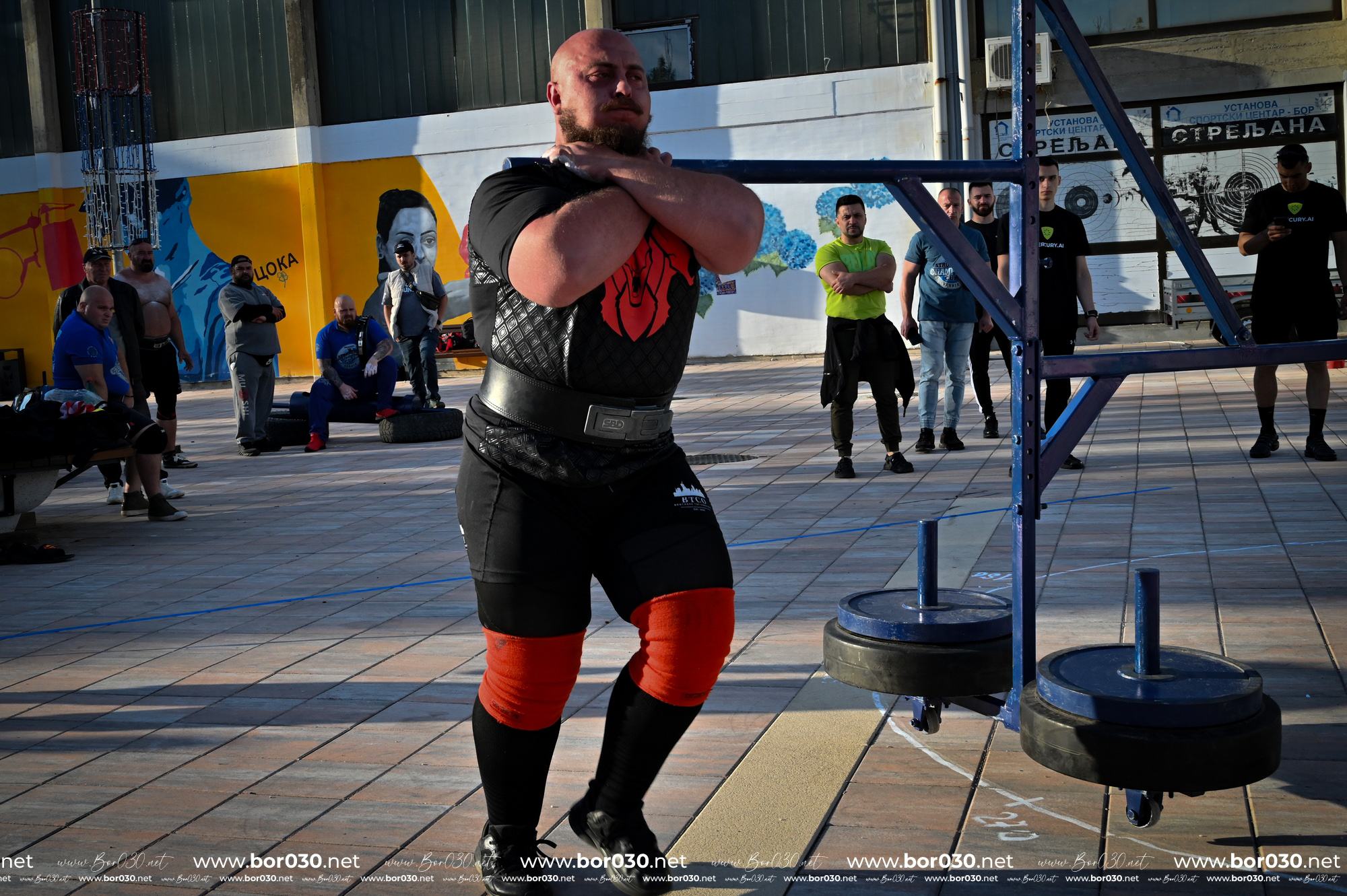
Introduction: force begins before the implement moves
In Strongman, what we see on the outside is only the final link in a much longer neuromuscular process. Before an athlete lifts a stone, accelerates a frame carry, or locks an axle overhead, the nervous system must turn intention into an organized motor command. Muscle does not decide by itself how much force to produce. The brain and spinal cord select and modulate the activity of large numbers of motor neurons, and each motor neuron controls a group of muscle fibers. This relationship forms the basis of the motor unit and is central to understanding strength.
A competition result, such as a near-maximal deadlift or a maximal overhead effort, cannot be explained by muscle size alone. Two athletes with similar muscular dimensions may perform differently because they differ in motor-unit recruitment, discharge rate, intermuscular coordination, technique, and the ability to maintain neural output under fatigue.
1. What is a motor unit?
A motor unit consists of a motor neuron and all of the muscle fibers it innervates. During voluntary contraction, the electrical signal reaches the motor neuron, travels along its axon to the neuromuscular junctions, and causes the associated fibers to generate tension. All fibers within a motor unit are activated in broadly synchronized fashion because they respond to the same motor neuron.
The concept matters because the nervous system does not command every muscle fiber individually. It operates through groups of fibers organized into motor units. Total force can be adjusted through two major mechanisms: recruiting more motor units and increasing the frequency at which active motor neurons discharge, a process known as rate coding.
2. The alpha motor neuron, the peripheral command point
The alpha motor neuron is one of the final links in the nervous system pathway controlling skeletal muscle contraction. It receives excitatory and inhibitory influences from spinal and supraspinal circuits and, when its threshold is reached, generates action potentials. These travel toward the muscle fibers and trigger contraction.
During a maximal effort there is no single command equivalent to “turn the muscle on.” The nervous system continually adjusts how many motor units are active, how frequently each one discharges, and how they are coordinated. Strength performance is therefore better understood as a problem of neural control than as a simple problem of muscle size.
3. The size principle and recruitment order
One of the most influential observations in neurophysiology is the size principle described by Elwood Henneman. Under ordinary conditions, motor units are recruited in an order related to their physiological properties, with smaller motor neurons generally recruited before larger ones. This arrangement allows force to increase progressively and with relatively fine control.
In practical terms, when you lift a light load, the nervous system does not need the full motor capacity of the muscle. As force demand rises, additional units are recruited, including larger and generally faster units. The shorthand “small then large” is useful but should not be treated as an absolute rule for every task. Real behavior depends on the task, joint position, movement speed, sensory feedback, and the exact mechanical demands.
4. Recruitment is a continuum, not a switch
In training language, recruitment is sometimes discussed too simply. There is no single switch in which a muscle moves from completely inactive to fully active. Recruitment changes progressively with force demand and biomechanical context. When the load is light, the number of active units can be relatively small. As the demand rises, the neural drive may increase substantially.
This explains why a maximal attempt, a moderate load lifted with maximal intent, and a set taken close to voluntary failure can have different neural profiles even when the external load seems similar. The weight on the bar does not tell the whole story about neural demand.
5. Rate coding: how often a motor unit discharges
Once a motor unit is recruited, its force contribution is not fixed. The motor neuron can increase the frequency of action potentials, and successive twitches overlap. As the interval between impulses becomes shorter, the fibers have less time to relax completely and total tension can rise. This process is essential for producing high force and finely controlling intensity.
Rate coding becomes particularly important as the athlete approaches high force levels. At lower intensities, recruitment can explain a large share of force variation. At high intensities, once many units are already active, increases in discharge rate help drive total force toward very high levels.
6. Slow and fast motor units
Muscle fibers associated with different motor units vary in contractile and metabolic properties. Slow units tend to be more fatigue resistant and are well suited to producing lower force over longer periods. Fast units can develop force and power rapidly, although some types are more fatigue sensitive. Human muscle is better described as a continuum of properties than as two completely separate categories.
For Strongman, this diversity matters because the sport combines explosive efforts, isometric holds, repeated work, carries, and events that create both local and central fatigue. A successful athlete must be able to mobilize motor units with different profiles depending on the event.
7. Movement speed and the intention to accelerate
The nervous system responds not only to external load but also to motor intention and the speed that can be achieved. A moderate load lifted with the intention of accelerating it as hard as possible can place different demands on the neuromuscular system than the same load lifted deliberately slowly. In sport, speed and intent are therefore training variables rather than mere consequences of load.
This has implications for speed work and dynamic-effort variations. In Strongman, maximal acceleration intent can be useful when the athlete must express force rapidly, for example during a log clean, the initiation of a competition deadlift, or the first steps of a carry. The benefit should not be confused with the idea that any light load perfectly reproduces a maximal effort.
8. Intermuscular coordination: recruitment is only the beginning
A strong lift requires several muscle groups to cooperate. Powerful hip extension is of limited value if trunk rigidity is lost. Strong shoulders and triceps are less useful if trunk position is unstable. The nervous system therefore has to coordinate not only how many motor units are active but also the timing and interaction of different muscles.
Intermuscular coordination develops through specific practice. An athlete may possess enough muscular force for an event but still lose performance because the sequencing of movement, breathing, bracing, transitions, and force direction is inefficient.
9. Motor-unit synchrony: useful, but not magical
In certain contexts, synchronization of motor-unit activity can influence force production and control. However, the popular claim that more synchrony automatically means more strength is too simplistic. The neuromuscular system has to balance force, precision, and stability. Synchrony is one feature of neural control and changes according to the task and training status.
10. What happens during a maximal effort?
Immediately before a maximal attempt, the brain generates a motor command that must activate enough musculature to meet the mechanical demand of the task. As the athlete tries to accelerate the implement, sensory feedback from the muscles and joints is continuously integrated. The result is an ongoing adjustment of motor output.
An attempt can fail even when the athlete appears to have enough muscle. Causes can include loss of effective biomechanics, reduced trunk rigidity, pain-related inhibition, accumulated fatigue, or a motor command that cannot sustain the required output. In Strongman, where many events combine strength and stability under stress, these interactions become especially visible.
11. Fatigue changes recruitment and discharge rate
As a muscle fatigues, maintaining the same force may require changes in recruitment and discharge behavior. Additional motor units may be recruited to compensate for reduced contribution from other units, and discharge rate may shift. These mechanisms help sustain force for a time, but they cannot indefinitely overcome metabolic and contractile changes produced by fatigue.
For a competitor, the practical lesson is important: a very long set may show many repetitions, while the quality of neural output and the mechanics of each repetition are already declining. In competition, where every second matters, the ability to maintain efficient recruitment without technical breakdown may be more important than simply tolerating muscular discomfort.
12. Neural adaptation to strength training
Early strength gains from resistance training are not explained by hypertrophy alone. During the first weeks and months, the nervous system can become more effective at activating muscle and coordinating movement. Research has described changes in neural excitability, motor-unit behavior, voluntary control, and cortical and spinal organization.
However, neural adaptation should not be treated as a simple increase in “nervous-system strength.” It is more accurate to describe a reorganization and optimization of motor control relative to the trained task. Specificity matters: improving one movement does not guarantee the same improvement in every other movement.
13. Why specificity is enormous in Strongman
The nervous system learns patterns. A conventional squat can build general strength, but it does not automatically reproduce the motor strategy required for a sandbag to shoulder. A conventional deadlift can transfer partly to an axle deadlift, but hand position, implement diameter, stiffness, and body path can change the demands. The more technical and unusual the event, the more important specific practice becomes.
Specificity does not mean general exercises are useless. They can build muscle, force capacity, and tolerance to loading. But complete transfer requires enough exposure to the exact event pattern for the nervous system to learn it.
14. Motor units and static events
In a static hold, the implement does not move, but motor units remain active. To maintain the required force, the nervous system continuously adjusts motor-unit activity. Depending on the load and duration, patterns of changing contribution across units may help delay fatigue.
Farmer's hold, Hercules hold, and other isometric events can therefore be extremely demanding even without visible movement. The athlete must maintain joint position, breathing, and continuous tension. Preparation should include both maximal strength and the ability to preserve motor control over time.
15. Recruitment during heavy carries
Carries demand a rare combination of force production and locomotion. With every step, the nervous system must regulate the muscles of the lower limbs, trunk, shoulder girdle, and grip. The demands differ from those of an isolated repetition because the base of support changes continuously and the object's center of mass may be unstable.
An athlete with excellent static strength can still be limited in a carry because intermuscular coordination and tolerance to oscillations are underdeveloped. Again, the nervous system must turn available strength into an efficient motor strategy.
16. Recruitment in explosive movements
Explosive movements require force to be developed within a short time window. Maximal strength alone is not enough; the athlete must mobilize that strength quickly. Rate of force development is influenced by rapid motor-unit recruitment, discharge behavior, contractile properties, and whole-chain coordination.
In practice, this supports forms of training with explosive intent, throws, jumps, or implement variations when they fit the athlete. The goal is not to make every movement maximally fast, but to improve the ability to develop and apply force quickly.
17. Proprioception and sensory feedback
Motor units do not operate in isolation. The nervous system continuously receives information from muscle spindles, Golgi tendon organs, joint receptors, and other sensory sources. These signals provide information about muscle length, tension, position, and movement and help regulate motor output.
In an event with an irregular implement, sensory feedback becomes particularly valuable. The athlete can automatically adjust position, grip pressure, and tension distribution without consciously calculating every micro-movement. A large part of advanced technique is therefore the result of motor automation.
18. Pain, fear, and limits to effort
Voluntary drive is not the only factor determining how much force can be produced. Pain, anticipated pain, stress, lack of confidence in a position, and prior experience can alter motor behavior. This does not mean that the nervous system mechanically “switches off” at one fixed force level. Rather, performance is shaped by the integration of sensory and cognitive information.
In Strongman, where implements are often heavy, large, and unpredictable, confidence in technique has practical value. Repeated controlled exposure to movement patterns can reduce hesitation and allow a greater share of existing strength capacity to be expressed.
19. How training changes motor-unit behavior
Resistance training can alter motor-unit discharge properties and the way units are recruited during a task. Human studies have reported changes in firing rate, recruitment behavior, and other markers of neuromuscular control. However, findings are not identical across studies and depend on training history, protocol, muscle, and measurement method.
For coaches and athletes, the most robust conclusion is that the neuromuscular system adapts to the demands it receives repeatedly. The more specific the goal, the more the specific stimulus needs to appear often enough for learning and consolidation.
20. Translating theory into Strongman programming
A strength-focused program should combine several kinds of neural demand. Maximal strength requires exposure to heavy loads and stable technique. Power and speed require high intent and resistances that permit acceleration. Event capacity requires repeated practice of exact competition patterns. Local endurance and fatigue management require controlled and progressive volume.
A good program therefore does not obsess over a single variable. You can increase deadlift strength and still lose points in a medley if transitions, grip, or the ability to maintain neural output after the first event have been neglected.
21. Practical examples
Example 1: near-maximal deadlift. The main demand is high force production. Motor-unit recruitment and discharge rate become crucial, while technique must allow force to transfer through the trunk and limbs. Repetitions are few, and effort quality is the priority.
Example 2: heavy yoke carry. In addition to strength, postural control and efficient stepping are required. An athlete may have strong extensors, but if step rhythm and trunk stiffness are poor, the implement oscillates unnecessarily and energy is lost.
Example 3: log press for repetitions. As fatigue develops, maintaining effective discharge behavior and coordinating the legs, trunk, and arms become limiting factors. Repeated technique can reduce the neural cost of each repetition and help preserve rhythm.
22. Common mistakes in interpreting recruitment
The first mistake is claiming that a light load can never recruit large motor units. Near voluntary failure, the force demands placed on active fibers and the need to maintain output can lead to additional recruitment. Context matters more than slogans.
The second mistake is assuming that a neural adaptation can be isolated completely. In reality, strength, hypertrophy, coordination, technique, and fatigue tolerance interact. Real training produces overlapping adaptations.
The third mistake is using “central nervous system” as a universal explanation for every bad training day. Fatigue can arise from multiple peripheral and central sources, and performance reflects their interaction. A serious explanation should distinguish mechanisms instead of placing everything under one label.
23. How an athlete can optimize force expression
The first step is to reduce unnecessary variability. A repeated technical pattern performed under controlled conditions allows the nervous system to automate basic components. The second step is to dose intensity intelligently. Maximal attempts are useful, but too many can increase fatigue and reduce quality.
The third step is to develop speed where the event requires it. A strong but slow athlete may lose the advantage in events where time is decisive. The fourth step is to rehearse competition sequences specifically so that motor units and intermuscular coordination are trained in the real context.
24. Conclusion
Motor units are one of the most important bridges between the brain and the force we see on the competition floor. Strength does not appear simply because a muscle is large. It appears when the nervous system can recruit enough motor units, regulate their discharge rate, and coordinate the entire muscular chain in time.
For Strongman, the lesson is straightforward: strength development must include the development of force expression. That means technique, specificity, heavy efforts, explosive work, control under fatigue, and enough exposure to real events. The nervous system is not a simple cable sending one command. It is an adaptive control system that adjusts force output to the task, feedback, and experience.
Scientific bibliography
1. Henneman E. The size-principle: a deterministic output emerges from a set of probabilistic connections. Journal of Experimental Biology. 1985;115:105-112. DOI: 10.1242/jeb.115.1.105.
2. Heckman CJ, Enoka RM. Motor unit. Comprehensive Physiology. 2012;2(4):2629-2682. DOI: 10.1002/cphy.c100087.
3. Enoka RM, Duchateau J. Rate coding and the control of muscle force. Cold Spring Harbor Perspectives in Medicine. 2017;7(10):a029702. DOI: 10.1101/cshperspect.a029702.
4. Duchateau J, Semmler JG, Enoka RM. Training adaptations in the behavior of human motor units. Journal of Applied Physiology. 2006;101(6):1766-1775. DOI: 10.1152/japplphysiol.00543.2006.
5. Gabriel DA, Kamen G, Frost G. Neural adaptations to resistive exercise: mechanisms and recommendations for training practices. Sports Medicine. 2006;36(2):133-149. DOI: 10.2165/00007256-200636020-00004.
6. Škarabot J, Brownstein CG, Casolo A, Del Vecchio A, Ansdell P. The knowns and unknowns of neural adaptations to resistance training. European Journal of Applied Physiology. 2021;121:675-685. DOI: 10.1007/s00421-020-04567-3.
7. Siddique U, Rahman S, Frazer AK, Pearce AJ, Howatson G, Kidgell DJ. Determining the Sites of Neural Adaptations to Resistance Training: A Systematic Review and Meta-analysis. Sports Medicine. 2020;50(6):1107-1128. DOI: 10.1007/s40279-020-01258-z.
8. Elgueta-Cancino E, Evans E, Martinez-Valdes E, Falla D. The Effect of Resistance Training on Motor Unit Firing Properties: A Systematic Review and Meta-Analysis. Frontiers in Physiology. 2022;13:817631. DOI: 10.3389/fphys.2022.817631.
9. Griffin L, Cafarelli E. Resistance training: cortical, spinal, and motor unit adaptations. Canadian Journal of Applied Physiology. 2005;30(3):328-340. DOI: 10.1139/h05-125.
10. Lecce E, Amoruso P, Felici F, Bazzucchi I. Resistance training-induced adaptations in the neuromuscular system: Physiological mechanisms and implications for human performance. The Journal of Physiology. 2026. DOI: 10.1113/JP289716.
More From The Journal

Training
The Science of Strongman Training - Episode X: Competition Programming
How to build a complete Strongman competition preparation block: calendar, events, volume, intensity, specificity, simulations, autoregulation, tapering and fatigue management.
Training
The Science of Strongman Training - Episode IX: Peaking
Peaking in Strongman: how to turn months of training into maximal competition performance by reducing fatigue, preserving adaptations and managing specificity.