
Physiology
The Brain and Nervous System - Episode 10: What Happens to the Nervous System After Maximal Effort
September 6, 2026
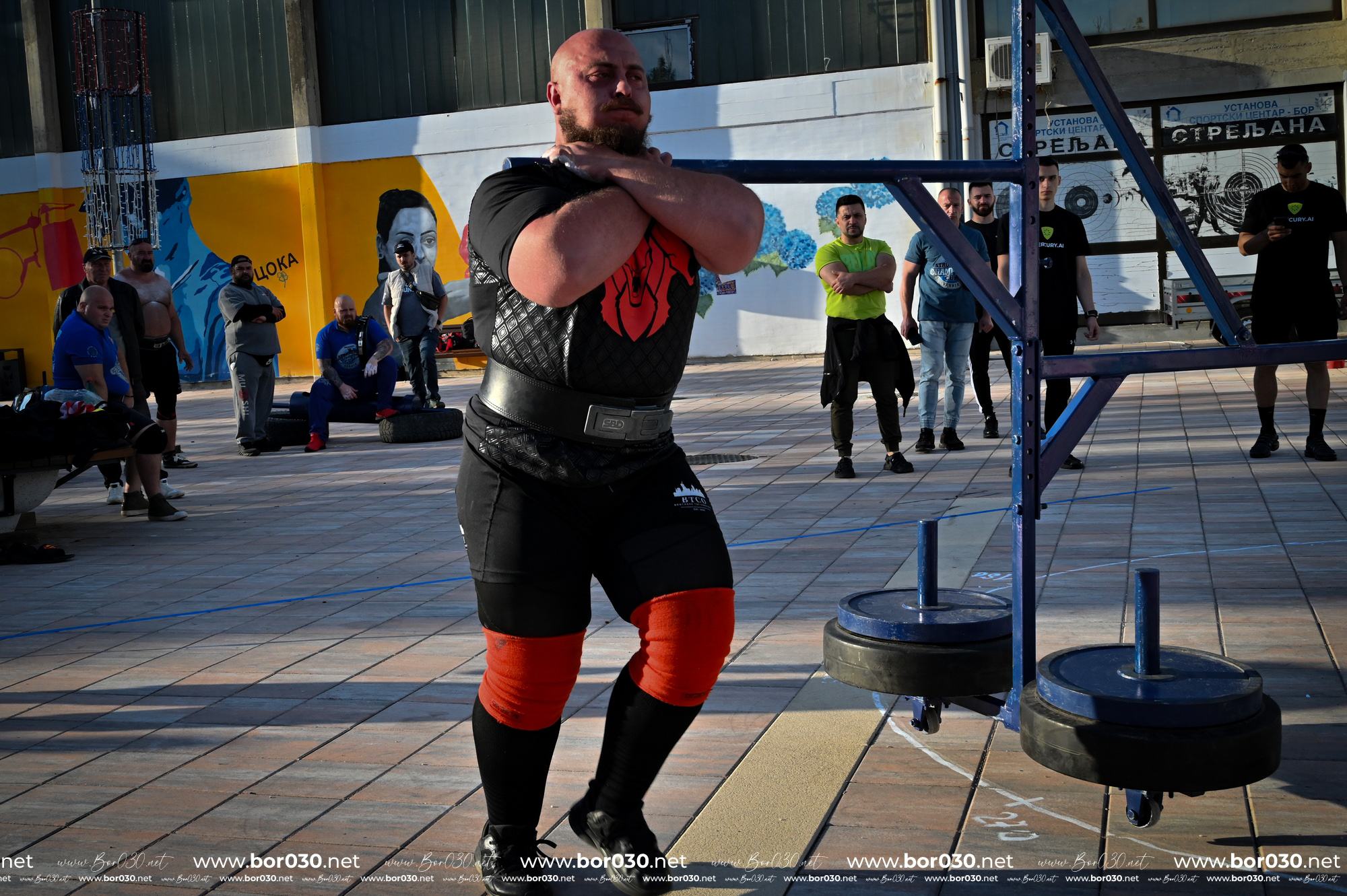
A maximal effort does not end when the bar is dropped. For the nervous system, that moment is the beginning of a period in which motor activation, sensory feedback, cardiovascular control, effort perception, and recovery processes are being recalibrated.
In Strongman, a near-maximal deadlift, a very heavy overhead press, or a maximal strength event creates a neuromuscular demand that differs from a long set. After the effort, the system does not simply switch off. It moves through a series of changes influenced by intensity, duration, technique, context, and accumulated fatigue.
1. What does maximal effort really mean?
A maximal effort can mean a voluntary contraction very close to capacity, an attempt with a very heavy load, or an action in which the athlete mobilizes extremely high levels of force and attention. The term does not describe one single physiological stress.
In a maximal deadlift, for example, the actual time under tension may be short, but the demands for motor-unit recruitment, discharge rate, trunk rigidity, and intermuscular coordination are very high.
2. What happens immediately after the maximal attempt?
Immediately after exercise, motor activity does not return instantly to resting levels. Breathing, heart rate, blood pressure, sympathetic activity, and blood flow remain altered for a period. At the same time, the nervous system receives a large amount of information from muscles, joints, and the cardiovascular system.
This is a transition between maximal stress and physiological restoration. It should not be confused with the idea that the “CNS gets discharged” and is then left empty.
3. Voluntary activation may remain reduced
After intense exercise, the ability to voluntarily activate muscle can be temporarily reduced. In research, this can be assessed by comparing voluntary force with responses evoked by external stimulation.
The magnitude and duration of this change depend on the exercise. There is no universal time after which the “nervous system is recovered,” because recovery is task-specific and individual.
4. The motor cortex does not enter a simple “pause”
After a maximal attempt, the motor cortex continues to participate in movement regulation and behavior. Brain activity is adjusted according to information about the state of the body and what needs to happen next.
If a second heavy attempt follows, the system must combine information from the previous effort with anticipation of the next action. This is one reason performance on a second attempt can be affected even when the athlete feels respiratorily recovered.
5. The spinal cord and neural excitability
Motor control does not end at the cortex. Spinal circuits contribute to transmitting and modulating the signal to motor neurons. After demanding exercise, the excitability of some circuits can be temporarily altered, and this change may contribute to reduced performance.
In addition, sensory feedback from the periphery can modify how the nervous system regulates motor output. What happens in muscle and what happens in the central nervous system therefore remain tightly linked.
6. Proprioception after maximal effort
After extreme effort, proprioceptive information can become less precise or harder to integrate, especially when muscular fatigue is present. This does not mean the athlete “loses proprioception”; rather, the relationship between sensory signals and motor control can change.
In Strongman, this matters when several events are scheduled on the same day. After a heavy carry, the body may need time for postural control and fine coordination to stabilize before the next event.
7. Why does a maximal effort feel like being “drained”?
Many athletes describe a feeling of being drained, mentally tired, or unable to reproduce maximal intensity immediately after a heavy attempt. The experience is real, but it does not mean a mysterious tank of “neural energy” has been emptied.
Effort perception, sympathetic activation, intense concentration, sensory feedback, and neuromuscular changes can all contribute to the experience.
8. Catecholamines and the stress response
Maximal exercise activates physiological stress systems, including sympathetic activity and catecholaminergic responses. Adrenaline and noradrenaline help mobilize resources for exercise and contribute to associated cardiovascular and metabolic changes.
After the effort ends, these systems do not stop instantly. The return toward baseline is part of post-exercise recovery.
9. Why can heart rate stay elevated after the weight is down?
Heart rate and ventilation can remain elevated for a period after exercise because the body must restore homeostasis. Tissue oxygen delivery, heat dissipation, and regulation of circulation are part of this transition.
This cardiovascular recovery can influence readiness for the next effort even when the muscles feel recovered.
10. Maximal effort versus repeated maximal efforts
One maximal attempt and a sequence of maximal attempts are not the same situation. After the first attempt, an athlete may have enough force for another try but not necessarily the same combination of activation, coordination, stability, and motor confidence.
When attempts are very close together, central and peripheral components of fatigue can overlap.
11. After a maximal deadlift
After a maximal deadlift, the hip and trunk extensors can show peripheral fatigue, while voluntary activation and coordination can also be affected. If the next event is fast or highly technical, this combination may matter more than soreness alone.
That is why an athlete may say “I feel fine” and still fail to produce the same speed or precision in the next event.
12. After a maximal overhead effort
In a log press or another heavy overhead event, the demand includes the trunk, shoulder girdle, and lower limbs, along with major stabilization and orientation requirements. After the effort, fine control of position can temporarily become less efficient.
This becomes relevant when a competition schedules a maximal-strength event followed by one that requires speed or loaded locomotion.
13. Why can technique look different after a maximal effort?
When fatigue changes recruitment, coordination, and sensory feedback, movement strategy can change. The athlete may use more bracing, alter range of motion, or slow certain phases.
In complex events, a small coordination change can have a disproportionately large effect on the result.
14. Neural recovery is not the same as disappearance of muscle soreness
Post-exercise muscle soreness and recovery of neuromuscular performance are different phenomena. An athlete can have little soreness and still not be fully recovered for maximal effort.
Conversely, muscle soreness can persist without a proportional reduction in every aspect of performance.
15. The first minutes after maximal effort
During the first minutes, physiological priorities include restoring breathing and circulation, dissipating heat, and progressively returning toward equilibrium. Practically, it is normal for an athlete to need time before attempting another extreme effort.
The appropriate rest interval should not be chosen from heart rate alone or subjective feeling alone. The event context and the goal of the session matter.
16. The first hours after maximal effort
During the following hours, the body continues to adjust neuromuscular function, metabolism, and autonomic control. Some components normalize relatively quickly, while others can require more time.
For this reason, two identical sessions on consecutive days are not necessarily equivalent even when the athlete no longer feels the acute effects of the previous effort.
17. Sleep after maximal effort
Sleep is an important part of recovery after intense exercise. There is not, however, a single “neural window” in which the nervous system is completely repaired. Recovery is distributed over time and influenced by total training load, stress, and physiological context.
For a Strongman athlete, good sleep between two heavy sessions may matter more than searching for a supplement that supposedly “refills the CNS.”
18. Nutrition and energy availability
The nervous system and muscle require energy substrates to function and adapt. After maximal effort, adequate nutrition supports whole-body recovery, even though there is no specific food that directly “reloads neurons” after a heavy repetition.
In Strongman, insufficient energy intake can become especially relevant when total work is high and competitions or training blocks span multiple days.
19. Hydration and the nervous system
Dehydration and electrolyte losses can affect exercise tolerance and can alter both muscle function and cardiovascular responses. In heat, these effects can become more pronounced.
Therefore, recovery after a maximal attempt in a cool gym and after a maximal attempt during a hot competition should not be treated as identical situations.
20. Why is there no simple “48-72 hours for the CNS” rule?
The idea that a heavy effort “fatigues the CNS for exactly 48-72 hours” is too simplistic. Different recovery components have different time courses, and the magnitude of the response depends on exercise selection, volume, intensity, muscle group, training status, and context.
Sometimes performance can return quickly. In other cases, accumulating several hard sessions can keep performance depressed for longer.
21. What happens if you max out again too soon?
If another maximal effort is introduced before enough recovery has occurred, movement quality, speed, or force production may decline. The issue is not necessarily that the “CNS is fried,” but that the neuromuscular system is not operating at its usual level.
Repeatedly training in this state can increase recovery cost and reduce training quality.
22. What does this look like in Strongman?
In competition, the time between events becomes part of physiology. After a maximal event, the athlete must regain motor control, reduce acute stress, and prepare for a different type of demand.
A competitor who manages the transition between events well may preserve execution quality better than one who treats every event as a completely isolated effort.
23. Between events: breathing, posture, and focus
After a maximal event, recovery can begin with gradually reducing acute activation and controlling breathing. Body position, hydration, and reducing unnecessary stimulation can help the athlete move into a more appropriate state for the next task.
These practices do not instantly “repair the CNS,” but they can support overall recovery and behavioral control.
24. Why can motivation drop after maximal effort?
A very demanding attempt can strongly tax attention, anticipation, and motor control. Once the task is over, the shift toward a less activated state can be experienced as a sudden drop in mental energy.
This experience should not automatically be interpreted as pathological nervous-system dysfunction. It can be part of the transition from extreme effort to recovery.
25. Practical signs that you are not ready yet
In practice, signs such as an unusual drop in speed, unstable technique, difficulty creating tension, a warm-up that feels unusually heavy, or performance below your normal level may suggest that another maximal attempt is not appropriate yet.
None of these signals alone measures “CNS fatigue.” They become useful through tracking individual patterns.
26. Why autoregulation is smarter than a rigid calendar
A program may say Friday is maximal day, but the athlete can arrive Friday in a different state than expected. Autoregulation allows load to be adjusted according to actual performance.
In Strongman, this flexibility matters because competition events do not all stress the same components of the neuromuscular system.
27. What does full recovery mean?
Full recovery does not mean heart rate is perfectly normal, there is no effort sensation, and the athlete has zero soreness. It means the functions relevant to the next task have recovered enough to permit safe, high-quality performance.
For a maximal deadlift, the relevant criteria can differ from those for a loaded medley.
28. What can support recovery?
Adequate sleep, adequate energy intake, hydration, load management, and well-planned sequencing of training sessions are the fundamentals. There is no need to treat the nervous system as a mysterious object that requires a secret “reset” protocol.
Recovery is physiology, not alchemy.
29. Maximal effort and adaptation
High loading creates stress, but it also provides a stimulus for adaptation. After recovery, the neuromuscular system can become more efficient at motor-unit recruitment, intermuscular coordination, and execution of the specific task.
The goal of training is not to eliminate all fatigue, but to dose stress so that recovery permits adaptation.
30. When fatigue becomes a warning signal
An isolated drop in performance after a hard session is normal. A persistent pattern of declining strength, poor recovery between sessions, sleep disturbance, disproportionate changes in effort perception, or unusual symptoms deserves closer evaluation and, when appropriate, discussion with a medical professional.
31. Conclusion
After maximal effort, the nervous system does not “shut down,” nor is it left with a mysterious reserve of neural energy. A complex transition occurs in which voluntary activation, central and spinal circuits, sensory feedback, autonomic control, and effort perception are recalibrated.
In Strongman, this matters because a competition is a sequence of demands rather than a set of completely independent events. Understanding nervous-system recovery means viewing performance as a continuous process, monitoring useful signals, and dosing effort according to what the athlete can actually produce.
Selected bibliography
1. Gandevia SC. Spinal and supraspinal factors in human muscle fatigue. Physiological Reviews. 2001;81(4):1725-1789. DOI: 10.1152/physrev.2001.81.4.1725.
2. Enoka RM, Duchateau J. Translating Fatigue to Human Performance. Medicine & Science in Sports & Exercise. 2016;48(11):2228-2238. DOI: 10.1249/MSS.0000000000000929.
3. Taylor JL, Amann M, Duchateau J, Meeusen R, Rice CL. Neural contributions to muscle fatigue: from the brain to the muscle and back again. Medicine & Science in Sports & Exercise. 2016;48(11):2294-2306. DOI: 10.1249/MSS.0000000000000923.
4. Amann M, Dempsey JA. Locomotor muscle fatigue modifies central motor drive in healthy humans and imposes a limitation to exercise performance. Journal of Physiology. 2008;586(1):161-173. DOI: 10.1113/jphysiol.2007.142679.
5. Allen DG, Lamb GD, Westerblad H. Skeletal muscle fatigue: cellular mechanisms. Physiological Reviews. 2008;88(1):287-332. DOI: 10.1152/physrev.00016.2007.
6. Proske U, Gandevia SC. The proprioceptive senses: their roles in signaling body shape, body position and movement, and muscle force. Physiological Reviews. 2012;92(4):1651-1697. DOI: 10.1152/physrev.00048.2011.
7. Škarabot J, Brownstein CG, Casolo A, Del Vecchio A, Ansdell P. The knowns and unknowns of neural adaptations to resistance training. European Journal of Applied Physiology. 2021;121:675-685. DOI: 10.1007/s00421-020-04567-3.
Editorial note: recovery of the nervous system after maximal effort is task- and individual-dependent. There is no evidence for a universal rule that the “CNS is fatigued for 48-72 hours” after every heavy effort.
More From The Journal

Training
The Science of Strongman Training - Episode X: Competition Programming
How to build a complete Strongman competition preparation block: calendar, events, volume, intensity, specificity, simulations, autoregulation, tapering and fatigue management.
Training
The Science of Strongman Training - Episode IX: Peaking
Peaking in Strongman: how to turn months of training into maximal competition performance by reducing fatigue, preserving adaptations and managing specificity.