
Pharmacology
Series: The Real Cost: The Body After Pharmacology - Episode 8: The Brain, Mood and Psychological Effects
September 8, 2026
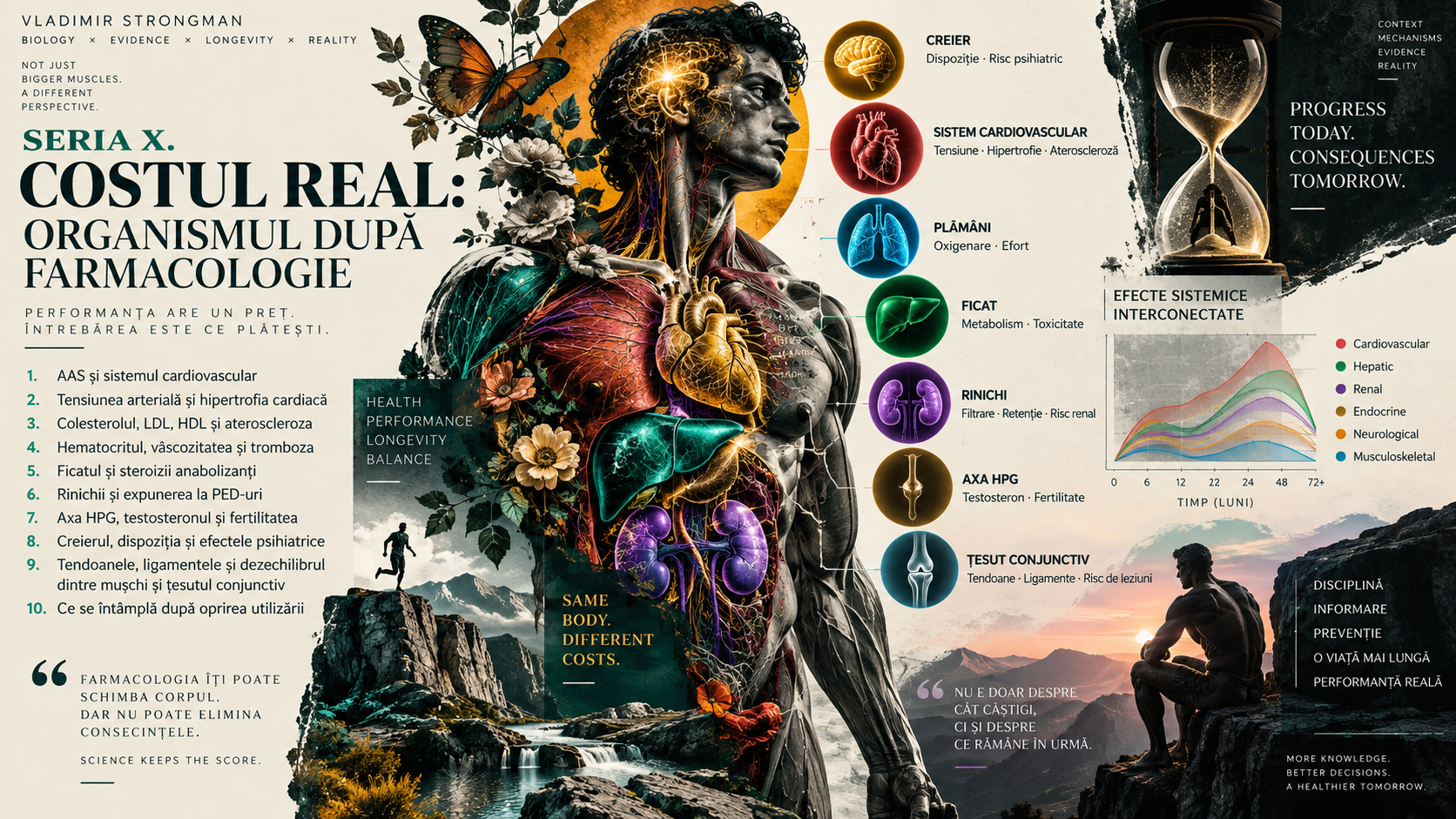
When the psychological cost of performance pharmacology is discussed, the conversation often swings between extremes. Reality is more nuanced: the brain responds to hormones, sleep, stress, stimulants, social context and each individual's psychological history.
AAS and other PEDs can influence mood, arousal, impulsivity, anxiety and sleep. Effects vary widely between people, and sometimes changes are noticed first by partners, family or colleagues rather than by the exposed athlete.
This episode reviews mechanisms and clinical observations without turning information into a remote diagnosis. The goal is to separate what is well established, what is plausible and what remains difficult to disentangle from the other pressures of an athlete's life.
1. The brain is sensitive to hormones
Androgens do not act only on muscle and reproductive organs. Androgen receptors are present in brain regions involved in motivation, emotion, social behaviour and stress responses, so androgen signalling can have effects far beyond peripheral tissues.
2. Androgen receptors are present in the central nervous system
Androgen receptors are found in areas including the hypothalamus, amygdala and cortex. The cerebral response is not identical to the muscular response, and the final effect depends on the molecule, metabolites, receptor sensitivity and neuroendocrine context.
3. Testosterone is not simply an aggression hormone
The popular link between testosterone and aggression oversimplifies biology. Androgens may influence competition, status and responses to challenge, but behaviour emerges from the interaction of biology, personality, environment and social norms.
4. Neurotransmitters are part of the equation
Dopamine, serotonin, noradrenaline and GABA contribute to mood, reward, inhibitory control and arousal. AAS exposure may interact indirectly with these systems, helping explain why psychological responses differ so much between individuals.
5. Dopamine and the reward system
Visible progress, increased strength and competitive validation can become powerful rewards. When repeatedly associated with pharmacology, the substance may be experienced not merely as a tool but as part of the athlete's sense of control over performance.
6. Serotonin and impulse control
Serotonin participates in mood regulation and inhibitory control. Experimental models suggest interactions between androgens and serotonergic circuits, but human effects are heterogeneous and do not allow behaviour to be predicted from one hormonal variable.
7. Noradrenaline and arousal
High arousal can feel like energy and focus. Combined with stimulants, sleep loss and stress, the same activation can shift toward restlessness, irritability, hypervigilance and difficulty relaxing.
8. GABA and the brain's braking system
The brain depends on balance between excitatory and inhibitory systems. Poor sleep, stress and drug combinations can reduce the margin of inhibitory control, making responses faster and less filtered.
9. Mood can rise, but it can also fall
Some users describe greater energy and confidence, while others experience irritability, anxiety or emotional instability. In the same person, the pattern can change over time as sleep, stress and total exposure change.
10. Excessive activation can resemble hypomania
Clinical literature describes episodes of excessive activation in susceptible individuals, with reduced need for sleep, rapid speech, overconfidence and unusual risk taking. Such symptoms require clinical assessment rather than casual labels.
11. Irritability is not the same as aggression
Being easier to annoy, more impatient or more reactive does not automatically mean violence. Irritability can also occur with anxiety, depression, sleep deprivation, overreaching, pain or stimulant use.
12. The myth of roid rage
The phrase is media-friendly but scientifically crude. Studies show substantial individual variation, while severe behavioural effects appear concentrated in a minority and are influenced by pre-existing vulnerability and context.
13. Anxiety can increase
Palpitations, stimulants, poor sleep and constant performance pressure can feed anxiety. A state initially interpreted as energy may eventually become insomnia, internal tension or persistent difficulty switching off.
14. Panic symptoms can be amplified
Tachycardia, tremor and rapid breathing can occur during intense sympathetic activation. In a vulnerable person, catastrophic interpretation of these sensations can contribute to panic episodes.
15. Sleep is a major mediator
Poor sleep increases irritability, weakens executive control and amplifies emotional reactivity. If AAS, stimulants, sleep apnoea or training schedules fragment sleep, psychological effects may emerge without one simple direct mechanism.
16. Sleep apnoea can mimic psychiatric symptoms
Intermittent hypoxia and repeated micro-arousals can cause sleepiness, concentration problems, irritability and depressive symptoms. In strength sports, this may coexist with high body mass and pharmacological exposure.
17. Stimulants can change the picture
Large amounts of caffeine and other stimulants can increase anxiety, insomnia and impulsivity. In polypharmacy, assigning a psychological change to one compound is difficult, and the combined effect may matter more than any single drug name.
18. Impulsivity and risk assessment
Higher arousal, overconfidence and weaker inhibitory control can alter decisions. In sport this may mean poorly chosen attempts, ignoring pain or accepting risks the same athlete would judge differently in a more stable state.
19. Confidence can become overconfidence
Performance gains can realistically change perceived ability, but they can also encourage overestimation of control. The distinction matters when errors can produce injury, conflict or risky financial and social decisions.
20. Aggression is context-dependent
Competition, conflict, alcohol, sleep deprivation and personality traits all affect the probability of aggressive behaviour. Biology can influence the threshold of reactivity, but it does not mechanically dictate conduct.
21. Baseline personality matters
A person with high impulsivity, low frustration tolerance or a history of conflict may respond differently from someone with stronger self-control and stable social support. Pharmacology acts on top of an already existing psychological terrain.
22. Psychiatric history changes vulnerability
A history of mood disorders, anxiety, psychotic episodes or problematic substance use can modify risk. It does not guarantee a particular outcome, but it increases the importance of careful clinical assessment and monitoring.
23. Polypharmacy complicates attribution
AAS, stimulants, thyroid hormones, diuretics, analgesics and other substances can produce overlapping effects on sleep, heart rate and mood. In that setting, saying one compound caused one symptom may be more certain than the evidence allows.
24. Alcohol can amplify disinhibition
Alcohol reduces inhibitory control and can intensify impulsivity, conflict and poor decision-making. Combined with already increased arousal or irritability, it can create a much riskier behavioural context.
25. Chronic pain affects mood
Strength athletes commonly accumulate pain and injuries. Persistent pain worsens sleep, stress tolerance and mood, while analgesics or forced reductions in training can add further psychological variables.
26. Body image can become a vulnerability
For some athletes, gaining muscle does not eliminate body dissatisfaction but continually moves the standard. Pharmacology may then become linked to maintaining an acceptable self-image rather than simply improving performance.
27. Muscle dysmorphia is not simple vanity
Muscle dysmorphia involves disproportionate concern about not being sufficiently large or muscular. It can affect eating, relationships and training and may support continued drug use despite mounting consequences.
28. Athletic identity can become too narrow
If most personal value is tied to strength, bodyweight, ranking and appearance, a drop in performance can feel like a loss of identity. This becomes especially relevant during injury or after pharmacological exposure ends.
29. Psychological dependence can exist without classic intoxication
AAS do not produce the same immediate intoxication pattern as many other drugs, but dependence-like behaviour can still occur. Continued use despite harm, difficulty stopping and feeling unable to perform or function without pharmacology are relevant signs.
30. The psychological definition of normal can shift
After a period of unusually high strength, recovery and energy, ordinary physiology may feel like loss rather than normality. That altered reference point can drive frustration and return to use.
31. The period after cessation can be difficult
Reduced endogenous androgen levels, some loss of performance, libido changes and fatigue may occur together. For some people this period is associated with depressed mood, low motivation and social withdrawal.
32. Depression after cessation should not be dismissed
Depressive symptoms may arise in the context of post-exposure hypogonadism, but psychological and social factors also matter. Persistent marked sadness, anhedonia, isolation or impaired functioning deserves medical and psychological assessment.
33. Anhedonia changes the relationship with training
Anhedonia is a reduced capacity to feel pleasure. An athlete may continue training mechanically but without the satisfaction, motivation and anticipation of reward previously associated with it.
34. Libido and mood influence each other
Changes in libido can affect self-esteem and relationships, while relationship stress can worsen mood in return. Hormonal and psychological mechanisms frequently overlap.
35. Cognitive effects are harder to measure
Memory, attention and executive function are influenced by sleep, anxiety, depression, age and other substances. Some studies of long-term users report cognitive differences, but direct causality remains difficult to isolate.
36. Executive functions are central to self-control
Planning, inhibition, mental flexibility and consequence evaluation depend on prefrontal networks. Sleep deprivation and excessive arousal can temporarily reduce these functions even without structural brain injury.
37. Working memory can suffer through fatigue
Intense training combined with fragmented sleep and stress can reduce working memory and sustained attention. Athletes may describe this as brain fog even when the cause is multifactorial.
38. Competitive stress is a multiplier
Rankings, travel, sleep loss and injuries increase psychological load. Pharmacology is layered on top of this background, so changes around competition cannot automatically be assigned to one molecule.
39. Cortisol and the stress axis matter
The hypothalamic-pituitary-adrenal axis participates in the stress response. Androgens, sleep, calorie restriction and stimulants can influence this system, making mood the product of a broader hormonal network.
40. Calorie restriction can mimic PED-related psychological effects
Severe energy restriction can increase irritability, food preoccupation, fatigue and sleep disturbance. During aggressive weight manipulation, this factor may be as important as pharmacological exposure.
41. Dehydration and electrolyte imbalance can affect mental clarity
Large fluid and electrolyte losses can cause headache, fatigue, concentration problems and irritability. During preparation or competition, these symptoms can be mistaken for direct psychiatric effects of pharmacology.
42. Hypoglycaemia can change behaviour
Significant falls in blood glucose can cause tremor, sweating, irritability, confusion and poor concentration. In athletes aggressively manipulating diet or metabolism, this should be separated from a purely psychiatric explanation.
43. Thyroid hormones can alter mental state
Excess thyroid hormone can produce restlessness, palpitations, insomnia and anxiety. In polypharmacy, these effects may overlap with those of androgens and stimulants and greatly complicate interpretation.
44. Estradiol is relevant to the brain as well
Estradiol has roles in brain function, libido and mood. Both very high and excessively suppressed levels can coincide with unpleasant symptoms, making simplistic ideas about estrogen biologically misleading.
45. Prolactin may enter the differential diagnosis
Elevated prolactin can influence libido, sexual function and general wellbeing. It does not automatically explain mood changes, but it may be one component of an endocrine picture that deserves assessment when symptoms persist.
46. Post-exposure hypogonadism can affect mood
After AAS cessation, endogenous testosterone may remain low for a period. Fatigue, reduced libido, loss of performance and depressive symptoms can overlap, while duration and severity vary substantially between individuals.
47. Hormonal recovery and psychological recovery are not identical
Normalisation of laboratory values does not guarantee immediate recovery of mood, motivation or sleep. The brain, routines, relationships and perception of performance may recalibrate on a different timeline.
48. Relationships can be an early indicator
Partners, family or colleagues may notice more conflict, isolation, irritability or sleep change before the athlete considers it a problem. Repeated feedback from several sources deserves attention.
49. Good performance does not exclude psychological distress
A person may continue lifting heavily, working and competing while anxiety, insomnia or depression worsens. Athletic function alone is not a sufficient test of psychological health.
50. Strength can hide vulnerability
In sporting cultures centred on toughness, psychological symptoms may be hidden to avoid stigma. Seeking help for insomnia, anxiety or depression is fully compatible with being a strength athlete.
51. Mood tracking can be more useful than retrospective memory
Simple logs of sleep, mood, anxiety and irritability can reveal trends that memory misses. They are not diagnostic tools, but they can help identify progressive change and support a more concrete clinical conversation.
52. Blood tests do not measure mental health
Testosterone, estradiol, prolactin, thyroid hormones and metabolic markers can clarify context, but no laboratory test directly measures anxiety, depression or impulse control. Clinical assessment remains essential.
53. Psychological screening can identify useful signals
Validated questionnaires for depression, anxiety, sleep or problematic substance use can provide structure, but results require context. They do not replace a clinical interview and should not become rigid self-diagnosis.
54. Psychotherapy is compatible with high performance
Psychological interventions can help with anxiety, impulsivity, insomnia, body image and transitions after stopping use. The goal is not moral judgement but better control and fewer behaviours that damage the athlete's life.
55. Psychiatric assessment is sometimes necessary
Severe depression, mania, psychosis, disabling anxiety or obvious loss of behavioural control require medical evaluation. PED exposure should be disclosed honestly because it can change the differential diagnosis and management.
56. Confidentiality makes real help easier
Athletes may avoid consultation because they expect judgement. A confidential, factual clinical relationship increases the chance that clinicians receive the information needed to assess risk accurately.
57. Strongman adds its own psychological load
Frequent competition, travel, high body mass, injuries and the need for maximal arousal before events create an intense psychological environment. Pharmacology can amplify or complicate it, but does not explain it alone.
58. Competition does not make harmful behaviour normal
Irritability, insomnia or impulsivity occurring during hard preparation are not automatically acceptable. When they affect relationships, work, safety or judgement, the cost has already moved beyond the gym.
59. Warning signs deserve serious attention
Severe sleep loss, behavioural disorganisation, intense suspiciousness, psychotic symptoms, profound depression, uncontrolled aggression or rapid deterioration in functioning justify prompt medical assessment. These situations are not appropriate for self-experimentation.
60. Conclusion: the brain can pay a cost the mirror does not show
Psychological effects of AAS and PEDs are real but variable. They cannot be reduced to aggression, nor dismissed because many users appear functional. Mood, sleep, impulse control, identity and the period after cessation all belong to the total cost of pharmacology.
The first key point is that there is no single psychological profile of an AAS user. Effects depend on the person, exposure, polypharmacy, sleep, stress, history and social context.
The second point is that irritability and aggression are not synonyms. Greater reactivity can exist without violence, and behaviour still reflects biological, psychological and social control.
The third point is that sleep, stimulants, sleep apnoea, calorie restriction and competitive stress are major mediators. What appears to be a direct androgen effect may actually arise from a network of factors.
The fourth point is that the post-cessation period deserves as much attention as active use. Hormonal suppression, loss of performance and shifts in athletic identity can coincide and create real psychological vulnerability.
Finally, psychological health cannot be inferred from how strong, productive or functional an athlete appears. Some problems develop quietly in the background, and early recognition is a form of control rather than weakness.
Sources and recommended reading
1. Pope HG Jr, Wood RI, Rogol A, Nyberg F, Bowers L, Bhasin S. Adverse health consequences of performance-enhancing drugs: an Endocrine Society scientific statement. Endocrine Reviews.
2. Kanayama G, Hudson JI, Pope HG Jr. Long-term psychiatric and medical consequences of anabolic-androgenic steroid abuse. Drug and Alcohol Dependence.
3. Pope HG Jr, Kouri EM, Hudson JI. Effects of supraphysiologic doses of testosterone on mood and aggression in normal men: a randomized controlled trial. Archives of General Psychiatry.
4. Piacentino D et al. Anabolic-androgenic steroid use and psychopathology in athletes: a systematic review. Current Neuropharmacology.
5. Oberlander JG, Henderson LP. The Sturm und Drang of anabolic steroid use: angst, anxiety, and aggression. Trends in Neurosciences.
6. Wood RI. Anabolic-androgenic steroid dependence? Insights from animals and humans. Frontiers in Neuroendocrinology.
7. Kanayama G et al. Anabolic-androgenic steroid dependence: an emerging disorder. Addiction.
8. American Psychiatric Association. Diagnostic and Statistical Manual of Mental Disorders, text revision, for the clinical framework of mood, anxiety and substance-related disorders.
9. Sleep-medicine literature on obstructive sleep apnoea, intermittent hypoxia, cognition and mood in adults.
10. Sports-medicine and endocrine literature on post-AAS hypogonadism, body image, muscle dysmorphia and recovery after cessation.
Editorial note: this article is educational and does not establish individual diagnoses. Severe psychological symptoms, rapid behavioural change or major deterioration in functioning require assessment by qualified professionals, with honest disclosure of AAS, PED and other substance exposure.
More From The Journal

Training
The Science of Strongman Training - Episode X: Competition Programming
How to build a complete Strongman competition preparation block: calendar, events, volume, intensity, specificity, simulations, autoregulation, tapering and fatigue management.

Training
The Science of Strongman Training - Episode IX: Peaking
Peaking in Strongman: how to turn months of training into maximal competition performance by reducing fatigue, preserving adaptations and managing specificity.