
Pharmacology
Series: The Real Cost: The Body After Pharmacology - Episode 6: The Kidneys and PED Exposure
September 8, 2026
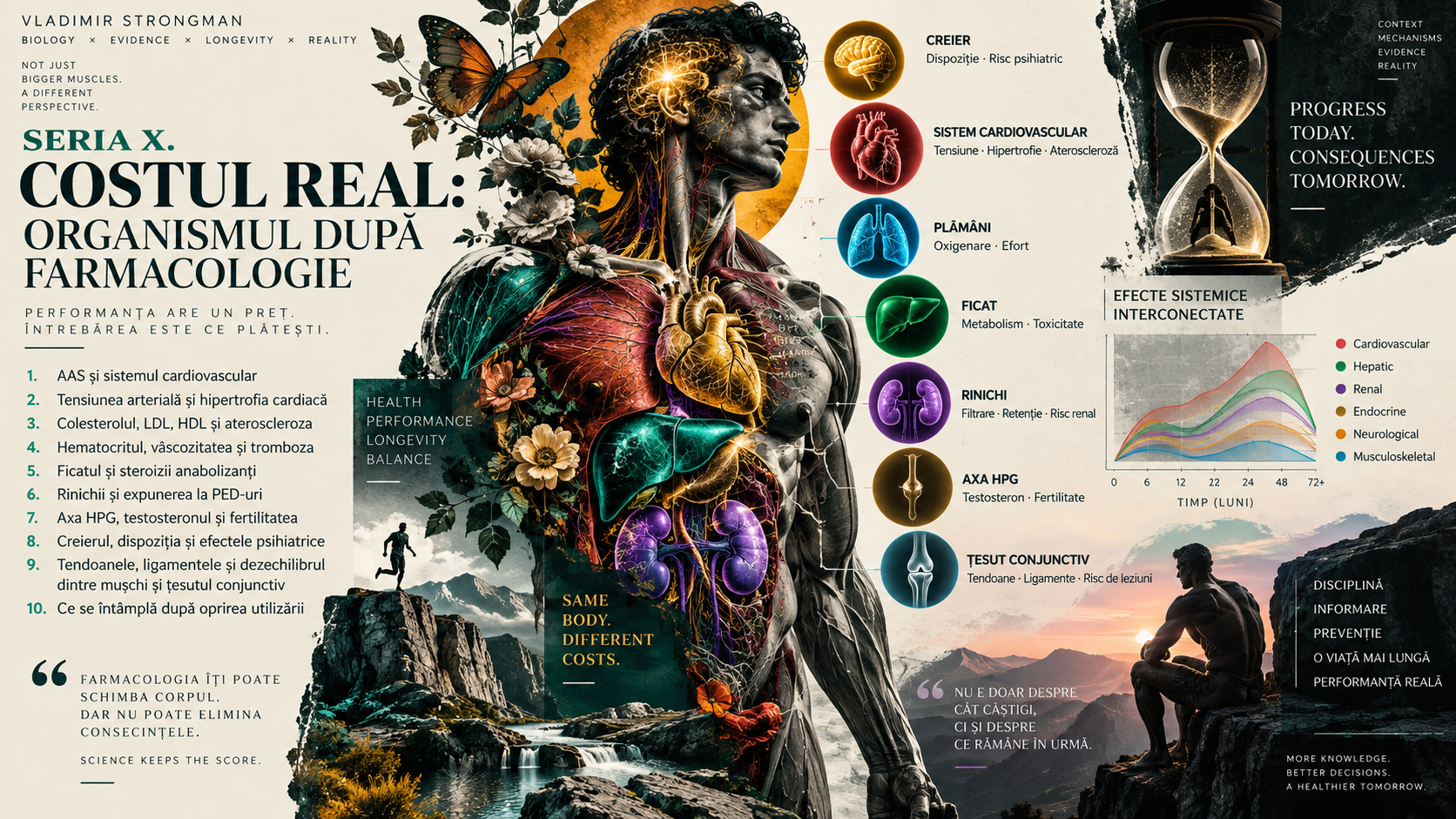
The kidneys are not simple filters. They regulate water, sodium, potassium, acid-base balance, blood pressure, erythropoietin production and the elimination of many metabolites. In a body exposed to PEDs, these functions can be affected directly or through changes in the heart, vessels, liver and metabolism.
In strength athletes, interpretation is difficult because large muscle mass, creatine, hard training and high protein intake can alter laboratory markers without necessarily indicating kidney disease. The problem begins when apparently benign explanations hide hypertension, albuminuria, glomerular injury or repeated episodes of acute kidney injury.
This episode does not turn one creatinine value into a diagnosis. The goal is to show how context should be read: laboratory trends, urine, blood pressure, hydration, pharmacological exposure and clinical signs must be considered together.
1. The kidneys continuously filter blood
A substantial portion of cardiac output reaches the kidneys each minute. The glomeruli filter plasma, while renal tubules selectively recover water and substances the body needs. Injury can occur at glomerular, tubular, vascular or interstitial level, and each pattern can leave a different laboratory signature.
2. The glomerulus is the gateway to filtration
The glomerulus functions under pressure. When intraglomerular pressure stays too high for years, the filtration barrier can become more permeable and albumin may begin to appear in urine. Hypertension, obesity, hyperfiltration and some pharmacological exposures can all push the system in this direction.
3. Creatinine is an imperfect marker
Creatinine comes from muscle creatine metabolism and is eliminated mainly through the kidneys. When filtration falls, creatinine tends to rise, but its level also depends on muscle mass, diet, hydration and exercise. In a strongman athlete, isolated interpretation can therefore be misleading.
4. Large muscle mass changes the baseline
An athlete weighing 130-150 kg with substantial lean mass generally produces more creatinine than a smaller sedentary person. Standard equations were derived from broad populations and can underestimate filtration in people far outside average body composition. This is a limitation of interpretation, not proof that the kidneys are healthy.
5. Creatine can alter serum creatinine
Creatine supplementation may modestly increase serum creatinine by increasing precursor availability without necessarily reducing filtration. However, a persistent upward trend accompanied by albuminuria or other abnormalities should not automatically be blamed on supplementation.
6. eGFR is an estimate, not a direct measurement
eGFR converts creatinine and other variables into an estimate of glomerular filtration. At extremes of muscle mass, precision can fall. The trend over time and agreement with other markers are often more informative than one isolated number.
7. Cystatin C adds a second perspective
Cystatin C is less dependent on muscle mass than creatinine and can be useful when an athlete is far outside the body-composition range of the general population. It is not perfect either, but comparing creatinine-based and cystatin C-based estimates can clarify ambiguous situations.
8. Urinalysis can reveal what blood tests miss
Blood results can remain close to normal in early kidney disease. Urine may show protein, blood, glucose or other abnormalities that guide further evaluation. In kidney assessment, urinalysis is not an accessory test but a central part of the picture.
9. Albuminuria is an important signal
Albumin is a protein that normally remains in the bloodstream. Persistent appearance in urine can indicate damage to the glomerular filtration barrier and is associated with renal and cardiovascular risk. Very intense exercise can transiently increase albumin excretion, so context and repeat testing matter.
10. Proteinuria should not be ignored
Persistent proteinuria may indicate abnormal stress on the renal filter. Clinical series of bodybuilders using AAS have described focal segmental glomerulosclerosis in a context where large body mass, hypertension and hyperfiltration may contribute alongside pharmacological exposure.
11. The urine albumin-to-creatinine ratio is practical
The urine albumin-to-creatinine ratio can provide a useful estimate without a 24-hour collection in many situations. If abnormal, it should be interpreted in context and confirmed appropriately because exercise, fever and dehydration can cause transient changes.
12. Blood pressure is a major bridge to kidney disease
Hypertension damages small vessels and glomeruli, while kidney disease can in turn raise blood pressure. A vicious cycle can develop. PEDs that promote sodium retention, sympathetic activation or increased body mass may amplify this relationship.
13. The renin-angiotensin-aldosterone system controls pressure and sodium
The kidney actively participates in blood-pressure control through the renin-angiotensin-aldosterone system. Chronic activation can promote vasoconstriction, sodium retention and increased intraglomerular pressure. The kidney is therefore not only a victim of hypertension but also an active participant in its regulation.
14. Intraglomerular pressure matters
Efficient filtration requires pressure, but persistent excess can damage glomerular capillaries. A kidney may appear to filter extremely well for a period precisely because it is operating under increased pressure. Early hyperfunction should not be confused with protection.
15. Hyperfiltration can precede decline
In some metabolic and haemodynamic states, the kidneys filter above the usual range. In the short term this can look like high capacity, but chronic hyperfiltration may increase glomerular stress. Albuminuria and progressive nephron loss can follow later.
16. Very large body mass increases renal workload
A very large body has greater metabolic and haemodynamic demands. The kidneys must handle more flow, more metabolic products and often a higher food intake. In strength athletes, body mass is an important variable even before pharmacology enters the picture.
17. Dietary protein is not automatically nephrotoxic
In people with healthy kidneys, high protein intake should not be simplistically equated with renal failure. The situation changes when kidney disease, albuminuria or problematic hyperfiltration is present. Protein intake should be discussed in relation to actual renal status rather than gym folklore.
18. AAS may affect the kidneys mainly through indirect pathways
For AAS, much of the renal risk likely operates through hypertension, increased body mass, metabolic changes, sodium retention and interaction with other drugs. Experimental and clinical observations also suggest more direct renal effects, but the human picture is complex and rarely reducible to a single compound.
19. Androgen receptors are present in renal tissue
Renal tissue responds to hormonal signals, including androgens. Research suggests mechanisms through which supraphysiological androgen exposure may influence inflammation, oxidative stress and renal remodelling. In real users, however, these effects overlap with many haemodynamic factors.
20. Focal segmental glomerulosclerosis has been described in bodybuilders
Clinical series have reported focal segmental glomerulosclerosis in bodybuilders with AAS exposure, proteinuria and very large body mass. These observations do not prove that AAS are the sole cause, but they show how extreme strength-sport phenotypes can combine hyperfiltration, hypertension and pharmacological exposure into a vulnerable renal pattern.
21. Hypertension and AAS can push in the same direction
If AAS exposure raises blood pressure, the kidney microcirculation is exposed to higher pressure over time. The risk is not only the arm-cuff reading but the repeated stress on glomeruli. Blood-pressure control is therefore central to renal risk assessment.
22. Hematocrit and viscosity can influence perfusion
Higher hematocrit changes blood rheology. It does not automatically cause renal ischemia, but when combined with dehydration, hypertension and vascular dysfunction it can reduce the safety margin of renal perfusion. This is where the previous episode and the renal story intersect.
23. Dehydration reduces renal blood flow
When plasma volume falls, the body prioritizes maintenance of pressure and perfusion to vital organs. Renal blood flow can decrease and filtration may fall transiently. Combined with heat, intense exertion or nephrotoxic drugs, this can progress to acute kidney injury.
24. Heat amplifies renal stress
Competition in hot conditions increases sweating, fluid loss and redistribution of blood flow toward the skin. If the athlete starts dehydrated or uses substances that alter thermoregulation and blood pressure, the kidneys operate with less reserve.
25. Diuretics can turn a small problem into a large one
Diuretics increase the loss of water and electrolytes. In sport, their use alongside sweating, reduced food intake or repeated exertion can produce hypovolemia and sodium or potassium disturbances. The kidney sits at the center of this equation, and poorly managed combinations can become dangerous.
26. Stimulants can raise pressure and temperature
Sympathomimetic stimulants can raise heart rate, blood pressure and heat production. Their renal effect is often indirect through vasoconstriction, dehydration and the ability to continue exertion beyond normal fatigue signals. Risk increases when several stimulatory agents are combined.
27. NSAIDs are an often-forgotten piece
Strength athletes sometimes use nonsteroidal anti-inflammatory drugs for pain and injuries. These drugs can reduce prostaglandin-mediated support of renal blood flow, especially when circulating volume is already low. Dehydration plus NSAIDs is a classic setup for acute renal stress.
28. Self-medicating blood-pressure treatment can complicate the picture
Antihypertensive medication can be essential when prescribed appropriately, but self-adjustment in a dehydrated athlete or someone with unstable renal function can create problems. Treatment decisions should be medical and guided by pressure, electrolytes and kidney function.
29. GH and IGF-1 can alter renal haemodynamics
The GH/IGF-1 axis influences growth and metabolism in many tissues, including the kidney. Excess exposure can be associated with sodium retention and changes in filtration. In a setting of large body mass and hypertension, these effects should be viewed together rather than in isolation.
30. Glucose and insulin connect metabolism to the kidneys
Chronic hyperglycaemia and insulin resistance can produce hyperfiltration and eventually glomerular injury. PEDs that worsen glucose control or insulin sensitivity can add a metabolic pathway of renal stress, especially in susceptible individuals.
31. Rhabdomyolysis can become a renal emergency
Rhabdomyolysis is severe muscle breakdown with major release of intracellular contents into the bloodstream. Extreme exertion, heat, trauma and some substances can contribute. The kidneys are especially vulnerable to myoglobin and to the combination of pigment load, dehydration and electrolyte disturbance.
32. Myoglobin can injure renal tubules
Myoglobin released from muscle can be filtered in large amounts and contribute to tubular obstruction, oxidative stress and renal vasoconstriction. Very dark urine after extreme exertion, especially with disproportionate weakness or muscle pain, warrants medical evaluation.
33. High CK does not automatically mean rhabdomyolysis
Creatine kinase can rise dramatically after heavy training, particularly in strength athletes. Rhabdomyolysis is not diagnosed from CK alone but from clinical context, symptoms, urine, electrolytes and renal function. Once again, the whole picture matters more than one number.
34. Acute kidney injury can develop quickly
AKI can evolve over hours or days because of reduced perfusion, toxicity, obstruction or intrinsic renal injury. In sport, the combination of extreme effort, heat, dehydration, NSAIDs and polypharmacy is often more relevant than searching for one dramatic cause.
35. Repeated AKI episodes can leave lasting damage
An acute kidney injury episode that appears to resolve is not always consequence-free. Recurrent AKI is associated with a higher later risk of chronic kidney disease. For athletes who repeatedly recreate the same dehydration and pharmacological stress, history matters.
36. Kidney stones have their own context
Nephrolithiasis is not an inevitable consequence of PED use, but repeated dehydration, diet, sodium intake and some metabolic disturbances can favor stone formation. Severe flank pain, visible blood in urine or urinary obstruction requires evaluation rather than guesswork.
37. Uric acid is another metabolic piece
Uric acid can rise with high purine intake, cell turnover, metabolic syndrome or reduced renal function. Hyperuricaemia alone does not define kidney disease, but it can accompany a metabolic profile that deserves attention.
38. The kidneys control sodium and potassium
Sodium influences extracellular volume and blood pressure, while potassium is essential for neuromuscular function and cardiac electrical stability. Diuretics, dehydration, kidney disease and some medications can destabilize these concentrations. Severe disturbances are medical problems, not preparation details.
39. Hyperkalaemia can be dangerous
When the kidneys cannot eliminate potassium efficiently, or when severe muscle breakdown releases large intracellular loads, serum potassium can rise. High values can disturb cardiac conduction and require urgent assessment. Symptoms may be limited before risk becomes serious.
40. Hypokalaemia can occur in the opposite direction
Excess potassium loss, for example with some diuretics or substantial sweating in certain contexts, can produce weakness, cramps and arrhythmias. Empirical electrolyte management can make matters worse because supplementation without testing does not automatically address the cause.
41. Edema does not automatically mean kidney failure
Fluid retention can have hormonal, cardiovascular, renal or medication-related causes. In PED users, edema may reflect sodium retention without true renal failure, but the meaning changes when it appears with hypertension, reduced filtration or proteinuria.
42. Sleep apnea can stress the kidneys through hypoxia and pressure
Obstructive sleep apnea is common in people with thick necks, large body mass and loud snoring. Repeated hypoxia and sympathetic activation promote hypertension and may amplify renal stress. In strength sports this is an often-overlooked link.
43. The heart and kidneys form a shared axis
When cardiac output falls or venous pressures rise, renal perfusion and sodium excretion can deteriorate. Conversely, kidney disease can worsen hypertension and cardiac workload. The cost of PED exposure does not respect organ boundaries.
44. The liver and kidneys meet in metabolism and elimination
The liver transforms many compounds and the kidneys eliminate some of their metabolites. Severe liver dysfunction can alter circulating volume and renal perfusion, while renal failure can change the elimination of some substances. Polypharmacy makes these interactions harder to predict.
45. Polypharmacy multiplies uncertainty
AAS, stimulants, diuretics, painkillers, antihypertensives and supplements used together can create effects that are more than simple additions. Some reduce plasma volume, others increase pressure, and others alter electrolytes. As the stack becomes more complex, blaming one agent becomes less realistic.
46. Contaminated products add an unquantifiable risk
Unregulated products may contain concentrations different from the label, unexpected drugs or contaminants. From a renal perspective, this uncertainty complicates both prevention and diagnosis. Being marketed as a supplement does not guarantee purity or safety.
47. Infections can mimic or worsen renal problems
Fever, systemic infection and gastroenteritis can cause dehydration and temporary reductions in filtration. In an athlete who continues hard training and pharmacological exposure during illness, risk can increase. Recent acute events belong in the interpretation of renal tests.
48. Renal ultrasound answers structural questions
Ultrasound can assess kidney size, urinary tract dilation, cysts and other structural abnormalities. It does not measure renal function by itself, but it complements laboratory data when disease or obstruction is suspected.
49. The creatinine trend matters more than one snapshot
A creatinine level that remains stable for years in a consistent anthropometric context means something different from a progressive rise. To see the trend, testing should be compared under similar conditions and interpreted alongside urine findings and blood pressure.
50. eGFR should also be followed as a trend
A single eGFR estimate can be noisy in a very muscular athlete. Repeated decline over time, especially when combined with albuminuria or hypertension, is much more meaningful. Trends can reveal deterioration before symptoms become obvious.
51. Albuminuria trends are equally important
Albuminuria after a very hard workout can be transient. Persistence across properly collected repeat samples changes the level of concern. A kidney that leaks albumin consistently tells a different story from a one-day fluctuation.
52. Home blood pressure adds context
Repeated measurements performed correctly can reveal hypertension that a single visit misses. For the kidneys, daily pressure exposure matters more than an occasional reading. An appropriately sized cuff remains essential in very large strength athletes.
53. Some warning signs should never be negotiated
Marked reduction in urine output, major edema, very dark urine after severe exertion, visible blood in urine, profound weakness, persistent vomiting or confusion require medical assessment. In these situations, continuing to train is not a meaningful test of toughness.
54. Stopping exposure can improve some parameters
If blood pressure, fluid retention or haemodynamic changes are linked to pharmacological exposure, reducing or stopping that exposure may improve the renal environment. The degree of recovery depends on whether structural injury has occurred and how long the exposure lasted.
55. Reversibility is not guaranteed
Lost nephrons are not easily replaced. Fibrosis and glomerulosclerosis can remain even after the aggressor disappears. Prevention and early recognition are therefore more valuable than assuming the body will always recover after cessation.
56. Heavy training can distort laboratory testing
Intense training can raise creatinine and CK and can cause transient proteinuria. For longitudinal monitoring, collection conditions should be standardized as much as possible and communicated to the clinician. Otherwise, training-related variation can be mistaken for disease-related change.
57. Competition day compresses several risk factors
A single competition day can include heat, sweating, stimulants, anti-inflammatory drugs, irregular meals, psychological stress and maximal events. The kidneys must maintain perfusion and electrolyte balance while the rest of the body demands resources. Acute competition conditions can be very different from a laboratory day.
58. Strongman creates a distinctive renal workload
Large body mass, extreme arterial pressures during lifts, repeated high-intensity effort and competition logistics create a profile different from recreational sport. This does not mean strongman inevitably causes kidney disease, but monitoring should reflect the physiology of the sport.
59. One laboratory result cannot establish the cause
Elevated creatinine may reflect muscle mass, dehydration or reduced filtration. Proteinuria may be transient or persistent. Diagnosis comes from integrating history, clinical examination, repeat testing and, when necessary, nephrology investigations.
60. Conclusion: the kidneys often pay for the sum of stresses
PED exposure does not produce one single pattern of kidney injury and does not affect every user in the same way. Real risk is built from the interaction of pressure, body mass, metabolism, hydration, medications and individual vulnerability. The kidney is where many of these costs converge.
The first key point is that very muscular athletes need context-specific interpretation. Creatinine and eGFR can mislead when muscle mass, creatine use, exercise and hydration are ignored. Cystatin C and urine testing can add information that materially changes the picture.
The second key point is that blood pressure and albuminuria are major bridges between pharmacology and kidney disease. An athlete can feel entirely well while glomerular pressure and urinary albumin loss increase slowly. Absence of symptoms is not absence of pathology.
The third point is that acute and chronic risk are different. Dehydration, heat, NSAIDs and rhabdomyolysis can cause acute injury, while hypertension, hyperfiltration and glomerulosclerosis develop over months or years. The same athlete can be exposed to both types of risk at once.
The fourth point is that polypharmacy makes simple explanations dangerous. There is not always a single responsible compound when blood pressure, glucose, electrolytes and plasma volume are changing together. The body responds to the whole pharmacological and physiological environment.
Ultimately, useful renal monitoring follows trends and relationships rather than isolated numbers. A profile combining kidney-function estimates, urine testing and blood pressure can identify problems earlier and better distinguish athletic physiology from signs of disease.
Sources and recommended reading
1. KDIGO. Clinical Practice Guideline for the Evaluation and Management of Chronic Kidney Disease. Core guidance for eGFR, albuminuria, classification and monitoring.
2. National Kidney Foundation. Resources on creatinine, cystatin C, urine albumin-to-creatinine ratio and interpretation of kidney function.
3. Herlitz LC et al. Development of focal segmental glomerulosclerosis after anabolic steroid abuse. American Journal of Kidney Diseases. An important clinical series in bodybuilders.
4. Sports nephrology literature on creatinine and limitations of eGFR equations in people with exceptionally high muscle mass.
5. Reviews of renal effects associated with anabolic-androgenic steroids, including hypertension, oxidative stress, glomerulosclerosis and metabolic interactions.
6. Literature on exercise-associated acute kidney injury involving dehydration, heat stress and rhabdomyolysis in athletes.
7. Medical consensus literature on rhabdomyolysis and the roles of CK, myoglobin, electrolytes, renal function and clinical context.
8. Pharmacology literature on NSAIDs and acute kidney injury risk during hypovolemia or reduced renal perfusion.
9. Studies of the GH/IGF-1 axis, sodium retention and renal haemodynamic changes in states of hormonal excess.
10. Reviews of obstructive sleep apnea, hypertension and chronic kidney disease relevant to athletes with very large body mass.
Editorial note: this material is educational and does not provide PED-use protocols or self-medication regimens. Persistent renal abnormalities, proteinuria, electrolyte disturbances or acute symptoms require medical evaluation because interpretation depends on the individual clinical context.
More From The Journal

Training
The Science of Strongman Training - Episode X: Competition Programming
How to build a complete Strongman competition preparation block: calendar, events, volume, intensity, specificity, simulations, autoregulation, tapering and fatigue management.

Training
The Science of Strongman Training - Episode IX: Peaking
Peaking in Strongman: how to turn months of training into maximal competition performance by reducing fatigue, preserving adaptations and managing specificity.