
Pharmacology
Series: The Real Cost: The Body After Pharmacology - Episode 5: The Liver and Anabolic Steroids
September 8, 2026
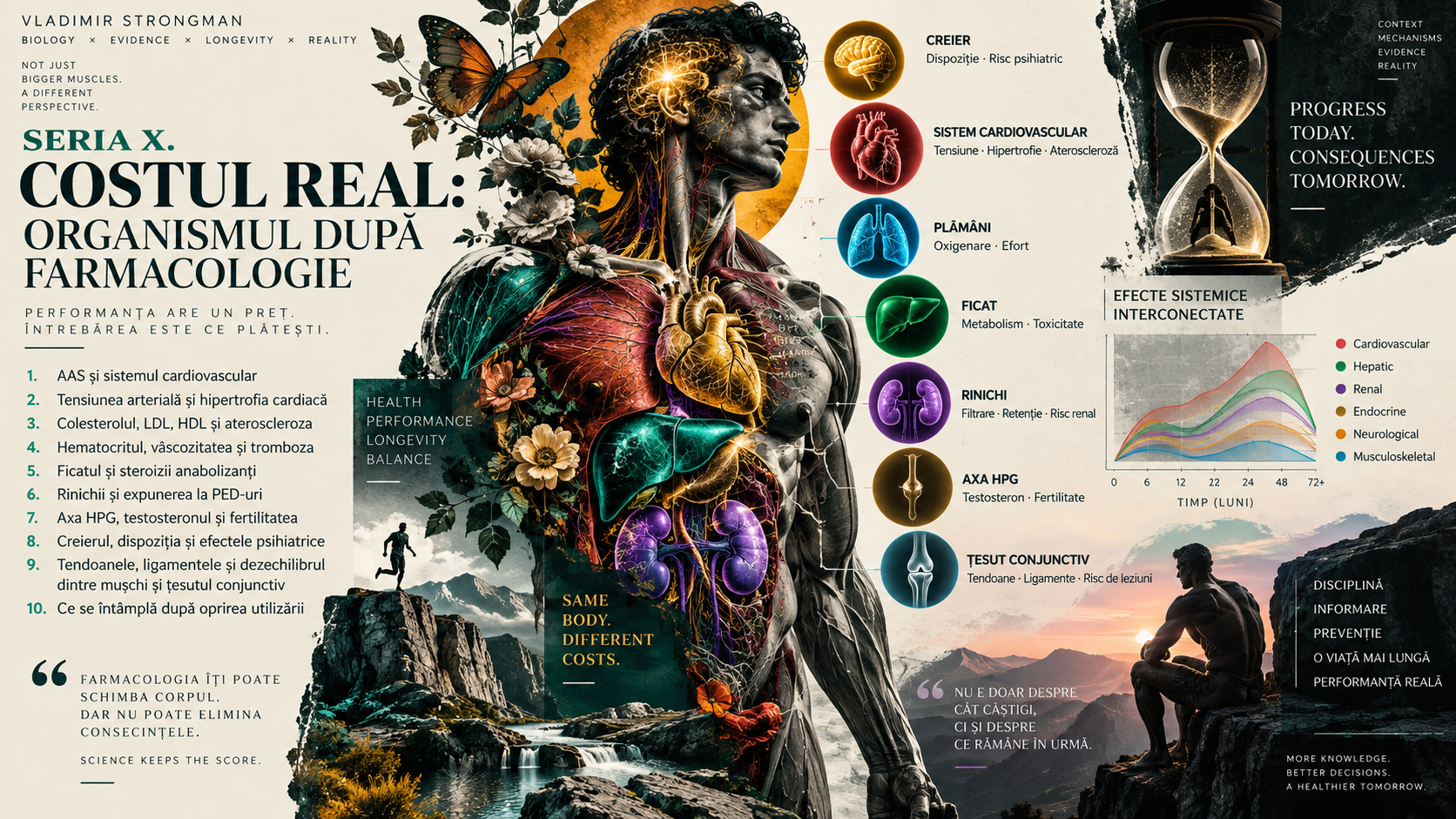
The liver is one of the first organs mentioned when anabolic-androgenic steroids are discussed, yet the conversation is often reduced to a single idea: “they raise your liver enzymes.” Reality is more complex. The liver metabolizes hormones, drugs, bile acids, lipids and numerous foreign compounds, and some forms of AAS can disturb these processes in ways that a single blood test cannot capture.
In particular, 17α-alkylated derivatives have a well-documented relationship with drug-induced liver injury and a characteristic form of cholestasis, as well as rare complications such as hepatic peliosis and liver tumors. At the same time, hard training can raise AST and ALT through skeletal muscle damage, so laboratory interpretation in strength athletes must be contextual rather than automatic.
This episode is not a guide to using AAS and not a list of “liver support” products. Its purpose is to explain what can go wrong, how laboratory signals differ from clinical liver injury, how polypharmacy changes the picture and why normalization of enzymes does not automatically prove that the liver is free of structural consequences.
1. The liver is not merely a filter for “toxins”
The liver is a metabolic laboratory. It produces plasma proteins, synthesizes and exports lipoproteins, transforms hormones, manages glycogen, participates in coagulation and makes bile needed for fat digestion. When pharmacology disrupts the liver, consequences may appear in several systems at once rather than only as elevated enzymes.
2. What happens to AAS after they enter the body
After absorption, androgen molecules undergo enzymatic transformations that alter activity and facilitate elimination. The liver is one of the major centers of this metabolism. Molecular structure influences how rapidly a steroid is metabolized, how long it remains active and what kind of stress it may exert on hepatocytes and bile transport.
3. First-pass metabolism matters
Orally administered compounds travel through the portal circulation to the liver before fully entering systemic circulation. This first pass creates substantial hepatic exposure. Some molecules are chemically modified specifically to resist rapid hepatic breakdown, and the same property that makes them orally active can increase metabolic pressure on the liver.
4. What 17α-alkylation means
17α-alkylation is a structural modification that prevents rapid hepatic metabolism of certain steroids and allows them to remain active after oral administration. Pharmacologically, this is effective. Hepatically, however, this class is much more clearly associated with cholestasis and other forms of liver injury than unmodified testosterone.
5. Injectable does not automatically mean “liver-free”
An injectable compound avoids the immediate first pass, but it is still metabolized in the body, including by the liver. Classic cholestatic injury is more strongly linked to 17α-alkylated agents, yet injectables may affect liver health indirectly through lipids, insulin resistance, blood pressure, polypharmacy and prolonged androgen exposure. “Not oral” does not mean “the liver is irrelevant.”
6. ALT: useful, but not a complete map
ALT is more concentrated in the liver than AST and is commonly used as a marker of hepatocellular injury. An elevation signals that context must be understood, but by itself it does not identify the cause or define severity. Medications, infections, fatty liver, alcohol and many other conditions can alter ALT.
7. AST does not belong exclusively to the liver
AST is also found in skeletal muscle. After brutal training, a strongman competition or substantial muscle damage, AST can rise even when the liver is not the main source. Interpreting AST together with CK, training history and other liver markers is therefore far more informative than reading one number in isolation.
8. GGT adds context
GGT is especially useful in the context of cholestasis and exposure to certain substances or alcohol. It is not perfectly specific, but when AST and ALT rise after exercise, a normal GGT may influence interpretation. Conversely, a pattern with elevated GGT and alkaline phosphatase shifts attention toward the biliary system and other hepatobiliary causes.
9. Alkaline phosphatase and the biliary tree
Alkaline phosphatase may come from the liver but also from bone. In athletes, context is again essential. In cholestasis, the combination of alkaline phosphatase, GGT, bilirubin and symptoms is more informative than one isolated value. Ultrasound may become important to exclude mechanical obstruction.
10. Bilirubin tells a different story
Elevated bilirubin can result from different mechanisms, from hemolysis and Gilbert syndrome to cholestasis or liver disease. In cholestatic injury associated with some AAS, bilirubin can become very high even when ALT and alkaline phosphatase do not look dramatic. This mismatch can falsely suggest that the problem is minor.
11. Cholestasis is the classic signature of some oral AAS
Cholestasis means that bile formation or bile flow is impaired. Androgenic steroids, particularly 17α-alkylated agents, can cause a distinctive form sometimes called bland cholestasis, in which jaundice and itching may be striking while hepatocellular inflammation and necrosis are relatively limited. Clinical severity cannot be inferred from transaminases alone.
12. Itching, dark urine and jaundice matter
Severe itching, yellowing of the skin or eyes and very dark urine may appear with cholestasis and require medical assessment. These symptoms are not “normal side effects” of a pharmacological phase. They can persist for weeks or months even after the triggering agent is removed.
13. Bile acids become part of the problem
Bile is not merely a digestive fluid. Bile acids are biologically active molecules, and their movement through hepatocytes is tightly controlled. If transporters are disrupted, biliary compounds may accumulate and create symptoms and cellular stress. Some proposed mechanisms of androgen-related cholestasis involve precisely this disturbance of bile transport.
14. Hepatic peliosis: rare, but real
Hepatic peliosis consists of blood-filled cavities developing within liver tissue. It has been associated with androgenic steroid exposure and may be discovered incidentally or become dangerous if bleeding occurs. It is rare, but it illustrates why “my enzymes are fine” cannot exclude every form of structural liver damage.
15. Hepatic adenoma
Hepatic adenoma is a benign liver tumor that can occur in certain hormonal and drug-related contexts. Long-term androgen exposure is a recognized association. “Benign” does not mean harmless: some adenomas can bleed, rupture or require specialist evaluation depending on their size and characteristics.
16. Hepatocellular carcinoma is rare, but not impossible
Malignant liver tumors associated with androgens are rare compared with other complications, but they have been described after prolonged exposure. Risk cannot be estimated from a single laboratory value and should not be confused with the idea that every user will develop cancer. The accurate message is that chronic exposure may produce structural consequences beyond transient enzyme changes.
17. Oxidative stress
Experimental models and clinical observations suggest that AAS may alter the balance between reactive species and antioxidant defenses within hepatocytes. Oxidative stress is not a universal explanation for all injury, but it can contribute to cellular dysfunction, inflammation and greater vulnerability to additional metabolic insults.
18. Hepatic mitochondria and energy metabolism
Hepatocytes depend on mitochondria for fatty-acid oxidation, ATP production and many biosynthetic processes. When mitochondrial function is disturbed, lipids may accumulate and cellular stress may increase. In practice, the liver of an AAS user may be influenced simultaneously by hormones, a hypercaloric diet, alcohol, medications and insulin resistance.
19. Inflammation does not have to be dramatic
Some forms of liver injury cause intense inflammation, while others do not. Androgen-related cholestasis may show relatively little inflammation compared with the severity of jaundice. The absence of a massive ALT elevation therefore does not exclude a serious problem. Biochemical pattern, bilirubin, symptoms and imaging must be interpreted together.
20. Fibrosis reflects repeated injury
Liver fibrosis is the excessive accumulation of scar tissue after repeated or persistent injury. AAS are not the only possible cause, but they may enter a broader picture together with fatty liver, alcohol and other drugs. Advanced fibrosis changes the architecture of the organ and cannot be inferred from transaminases alone.
21. Fatty liver and AAS should not be viewed separately
Hepatic steatosis is commonly linked to energy surplus, visceral obesity, insulin resistance and dyslipidemia. A large strength athlete may have metabolic and pharmacological risk factors at the same time. The liver is therefore exposed to several overlapping signals rather than one isolated stressor.
22. Insulin resistance changes the hepatic environment
When tissues become less sensitive to insulin, fatty-acid flux toward the liver and hepatic lipid synthesis may increase. This mechanism is central to metabolic dysfunction-associated steatotic liver disease. Pharmacology that alters body weight, appetite, glucose control or fat distribution can therefore influence the liver indirectly.
23. Very high body mass is a separate factor
In strongman, high body mass can be useful for performance, but not all mass is metabolically neutral. Visceral fat, sleep apnea and insulin resistance may add hepatic stress independently of AAS. When these elements coexist, total risk cannot be explained by the name of a single compound.
24. Alcohol adds an avoidable insult
Alcohol can cause steatosis, inflammation and liver injury through its own mechanisms. Combining it with potentially hepatotoxic pharmacology adds another burden the liver must process at the same time. There is no biological mechanism by which the liver neatly separates these insults.
25. Acetaminophen and other medications matter
Strength athletes may use painkillers, anti-inflammatory drugs, antibiotics or other medications during hard training and competition periods. Some have hepatotoxic potential or relevant metabolic interactions. A complete exposure history is essential when liver tests become abnormal; blaming everything on one AAS can miss the true cause.
26. Supplements can complicate diagnosis
Products bought online or supplements with uncertain labeling may contain undeclared ingredients. Reports of supplement-related liver injury have included “muscle building” products adulterated with steroid compounds. When the true composition is unknown, identifying the cause of liver injury becomes more difficult.
27. Polypharmacy turns risk into an equation
When multiple AAS, stimulants, pain medications, diuretics, supplements and alcohol are combined, there is no longer a single risk factor. The liver metabolizes a network of compounds and interactions may be difficult to predict. The more complex the stack of exposures, the harder it becomes to identify what produced a clinical change.
28. Stanozolol and cholestasis
Stanozolol is one of the 17α-alkylated compounds described in the literature on androgen-related cholestasis. The important point is the class mechanism, not a ranking of “toxicity.” Individual risk depends on exposure, susceptibility, comorbidities and other agents used at the same time.
29. Oxymetholone and methandienone are not exceptions
Oxymetholone and methandienone belong to the family of oral steroids chemically modified to remain active after oral administration. That same chemistry explains why hepatic caution is justified. The fact that a compound has existed for decades does not make it biologically familiar or harmless.
30. Oxandrolone is not “liver harmless”
Oxandrolone is sometimes informally described as a “mild” oral steroid. That label can create false reassurance. It remains a 17α-alkylated androgen, and hepatic and lipid effects remain relevant. “Less aggressive” in one context should not be translated into “risk-free.”
31. Methyltestosterone illustrates the class problem
Methyltestosterone is a classic oral 17α-alkylated androgen associated with cholestasis. It illustrates how a chemical modification introduced for oral bioavailability also changes the safety profile. Pharmacology does not provide advantages without biological tradeoffs.
32. Injectables may affect the liver indirectly
Even without direct cholestatic injury, androgen exposure that worsens dyslipidemia, blood pressure, insulin resistance or body mass can influence liver health. The liver is integrated into whole-body metabolism. A rigid division between “hepatotoxic” and “completely liver-neutral” oversimplifies biology.
33. The liver controls part of lipid metabolism
The liver synthesizes, remodels and clears lipoproteins. Therefore, the HDL, LDL and triglyceride changes discussed in the previous episode are also connected to hepatic function. AAS can modify enzymes involved in this metabolism, linking cardiovascular and hepatic consequences.
34. Low HDL can be a hepatic fingerprint of pharmacology
Some androgens, especially certain oral compounds, can strongly alter HDL metabolism through hepatic enzymes such as hepatic lipase. This does not prove liver injury in the classical sense, but it demonstrates that the liver is responding pharmacologically even when transaminases remain normal.
35. The liver produces coagulation factors
Many coagulation proteins are synthesized by the liver. In advanced liver disease, the balance of coagulation may become profoundly disturbed. This is different from the elevated hematocrit discussed in episode 4 and illustrates how many systems ultimately depend on hepatic function.
36. Albumin reflects synthetic function, not acute toxicity
Albumin is produced by the liver, but it changes slowly and is influenced by nutrition, inflammation and other diseases. In acute liver injury, albumin may remain normal. A normal value does not exclude cholestasis, and a low value does not prove that AAS are the cause.
37. INR matters when synthetic function is impaired
INR can reflect the liver's capacity to synthesize clotting factors, although anticoagulants and vitamin K deficiency can also alter it. In suspected severe liver injury, an elevated INR is more concerning than an isolated transaminase because it may indicate loss of synthetic function.
38. Ammonia is not a screening test for the otherwise healthy user
Ammonia becomes relevant in contexts such as liver failure and hepatic encephalopathy, not as a routine test for every strength athlete using AAS. Ordering sophisticated tests without an indication can generate more confusion than information. Evaluation should be guided by symptoms, exposure history and the pattern of standard laboratory markers.
39. CK may explain part of an athlete's transaminase elevation
Creatine kinase rises with skeletal muscle injury and can help interpret simultaneous AST and ALT elevations after training. A very high CK in the context of hard lifting makes a muscular contribution plausible. It still does not automatically exclude liver disease, especially when bilirubin, GGT or symptoms are abnormal.
40. Ultrasound is a useful window, not an absolute verdict
Ultrasound can identify steatosis, dilation of bile ducts, masses and gross structural changes. It does not detect every form of injury and does not measure fibrosis perfectly. It is useful as part of an evaluation when laboratory findings or symptoms suggest a problem that cannot be explained biochemically alone.
41. Elastography estimates liver stiffness
Elastography is used to estimate fibrosis noninvasively by measuring liver stiffness. Inflammation and other conditions may alter the result, so interpretation remains clinical. For a strength athlete with cumulative metabolic and pharmacological factors, it may provide information that transaminases alone cannot.
42. CT and MRI answer specific structural questions
Computed tomography and magnetic resonance imaging can better characterize nodules, tumors, bleeding and other structural abnormalities. They are not routine screening tests for every AAS user, but they become important when ultrasound or the clinical picture raises a specific concern.
43. A useful liver panel means more than AST and ALT
Depending on context, evaluation may include AST, ALT, GGT, alkaline phosphatase, total and direct bilirubin, albumin and INR, alongside blood count, creatinine, lipids and metabolic parameters. The goal is not to collect numbers but to recognize a coherent physiological pattern.
44. Hepatocellular and cholestatic injury look different
Hepatocellular injury is dominated by transaminase elevation, whereas cholestatic injury places more emphasis on alkaline phosphatase, bilirubin and impaired bile flow. Mixed patterns also occur. 17α-alkylated AAS are notable for the possibility of marked jaundice that appears disproportionate to transaminase elevation.
45. The R ratio helps clinicians classify DILI
In drug-induced liver injury, the R ratio uses ALT and alkaline phosphatase relative to their upper limits of normal to describe a hepatocellular, cholestatic or mixed pattern. It is a classification tool, not a self-diagnostic shortcut, and it does not identify the responsible substance by itself.
46. Jaundice should not be postponed
Yellowing of the eyes or skin, especially with dark urine, itching, nausea or unusual fatigue, warrants prompt medical evaluation. In the setting of pharmacological exposure, assuming that it will simply pass may delay diagnosis of cholestatic injury or another hepatobiliary disorder.
47. Pale stools can signal reduced bile reaching the intestine
Bile contributes to normal stool color. Very pale stools together with jaundice and dark urine can suggest a significant disturbance of bile flow. It is a simple clinical sign that can be more meaningful than obsessing over one laboratory number.
48. Right upper abdominal pain has many causes
Pain under the right costal margin can arise from the liver, gallbladder, muscles, ribs or other structures. In strongman athletes, musculoskeletal causes are common, but they should not be assumed automatically when jaundice, fever, nausea or abnormal liver tests coexist.
49. Liver injury can be asymptomatic
The liver has considerable functional reserve, and many problems evolve without pain or obvious symptoms. Feeling well does not guarantee the absence of metabolic or structural change. This is why relying exclusively on subjective wellbeing can miss silent disease.
50. Removing the agent may permit recovery, but there is no universal clock
Many biochemical abnormalities may improve after the cause is removed, but the speed varies. Androgen-related cholestasis can persist well after cessation, while structural lesions follow their own course. The statement that the liver “always regenerates” is only partly true; regenerative capacity does not erase every type of injury.
51. Normal enzymes do not erase history
AST and ALT may return to normal after cessation or a break from hard training. That is reassuring, but it does not prove that cholestasis, steatosis, fibrosis or a focal lesion never occurred. Biochemical markers and organ structure answer different questions.
52. Cholestasis may recover slowly
Documented cases of androgen-associated cholestasis show that itching and elevated bilirubin can persist after exposure stops. Slow recovery does not automatically mean progression to liver failure, but it can be severe enough to require prolonged medical follow-up.
53. Tumors and focal lesions do not vanish from the equation when ALT normalizes
A liver tumor or vascular lesion can exist with relatively normal enzymes. A long exposure history combined with suspicious symptoms or imaging findings therefore requires separate evaluation. Blood tests are not an anatomical scan of the liver.
54. Strongman adds its own metabolic context
Strongman combines high body mass, high caloric intake, competition periods, travel, musculoskeletal pain and sometimes complex pharmacology. Each element may alter laboratory tests or add hepatic risk. Proper interpretation must consider the athlete's entire environment rather than one isolated variable.
55. Dehydration can distort the picture
After competition, dehydration may concentrate some laboratory values and coexist with intense muscle work, heat and unusual food intake. Tests obtained immediately after such a context should not be interpreted as though they came from an ordinary rest day.
56. Extreme diets can change the liver independently of AAS
Periods of very high caloric surplus and rapid weight loss can alter fatty-acid flux and hepatic metabolism. An athlete who changes diet abruptly before or after competition may develop metabolic shifts that overlap with pharmacological effects. Laboratory findings should be interpreted against that timeline.
57. “Liver support” does not turn risky exposure into safe exposure
Supplements marketed for “liver protection” are often treated as a pharmacological safety belt. Evidence does not support the idea that such products can reliably neutralize cholestasis, peliosis or tumor risk associated with androgens. Removing or reducing the harmful exposure is fundamentally different from adding another supplement.
58. Antioxidants do not solve every mechanism of hepatotoxicity
Even if oxidative stress contributes to some forms of injury, AAS hepatotoxicity also involves bile transport, gene regulation, lipid metabolism and structural changes. Reducing a complex problem to “more antioxidants” ignores major mechanisms and may create false confidence.
59. Medical evaluation is more useful than self-diagnosis
When jaundice, intense itching, dark urine, pale stools, significant abdominal pain, persistent vomiting, confusion or unusual bleeding occur, the issue is no longer about training optimization. A truthful history of every substance used gives the clinician the information needed to investigate accurately.
60. Conclusion: the liver is not invincible because it can regenerate
The liver has remarkable adaptive and regenerative capacity, but this does not make it immune. AAS, particularly certain oral 17α-alkylated agents, can produce a spectrum ranging from biochemical changes to cholestasis, peliosis and rare tumors. Real risk emerges from the molecule, duration, individual susceptibility and the entire metabolic and pharmacological context.
The first key point is that AST and ALT are not synonyms for “liver status.” They are injury markers and, in strength athletes, can be influenced by skeletal muscle. Bilirubin, GGT, alkaline phosphatase, synthetic function, symptoms and imaging complete the picture.
The second key point is that androgen-related hepatotoxicity has a distinctive profile. C-17α alkylation, which permits oral activity for several steroids, is closely linked to characteristic cholestasis. Severe jaundice may occur even when transaminases do not look dramatically elevated.
The third point is that an athlete's liver does not live in an isolated laboratory. Body mass, diet, alcohol, insulin resistance, pain medications, supplements, polypharmacy and training intensity may all change the same clinical picture. Risk is the sum of context, not merely the name of one compound.
The fourth point is that biochemical recovery is not the same as erasing every consequence. Enzymes may normalize while a focal lesion, fibrosis or a history of cholestasis remains relevant. Proper monitoring must answer both functional and structural questions.
Finally, the idea of “liver protection” should not be used to cosmetically reframe risky exposure. No supplement can turn hepatotoxic pharmacology into a risk-free intervention. Understanding mechanisms, recognizing symptoms and obtaining medical evaluation are more valuable than marketing promises.
Sources and recommended reading
1. National Institute of Diabetes and Digestive and Kidney Diseases. LiverTox: Androgenic Steroids. Clinical overview of cholestasis, hepatic peliosis and tumors associated with androgen exposure.
2. European Association for the Study of the Liver. EASL Clinical Practice Guidelines: Drug-induced liver injury. Framework for evaluating and classifying drug-induced hepatic injury.
3. Petrovic A et al. Anabolic androgenic steroid-induced liver injury: An update. Review of mechanisms and clinical manifestations of AAS hepatotoxicity.
4. Björnsson ES and colleagues. Drug-Induced Liver Injury Network literature on liver injury associated with bodybuilding products and anabolic steroids.
5. Adverse Effects of Anabolic Androgenic Steroid Abuse in Athletes and Physically Active Individuals: A Systematic Review and Meta-Analysis, 2025. Aggregated evidence including changes in AST and ALT.
6. EASL-EASD-EASO Clinical Practice Guidelines on the management of metabolic dysfunction-associated steatotic liver disease, 2024. Context for steatosis, insulin resistance and fibrosis.
7. American College of Gastroenterology guidelines and consensus documents on abnormal liver chemistries and drug-induced liver injury.
8. Clinical literature on AST and ALT elevation after intense muscular exercise and the role of CK in differentiating muscular from hepatic sources.
9. Hepatology reviews on hepatic adenoma, peliosis and liver tumors associated with long-term androgen exposure.
10. Sports-medicine literature on polypharmacy, adulterated supplements and interpretation of liver biomarkers in strength athletes.
Editorial note: educational material, not a recommendation for AAS use and not a substitute for medical care. Jaundice, severe itching, very dark urine, significant abdominal pain, confusion or signs of abnormal bleeding warrant prompt medical evaluation.
More From The Journal

Training
The Science of Strongman Training - Episode X: Competition Programming
How to build a complete Strongman competition preparation block: calendar, events, volume, intensity, specificity, simulations, autoregulation, tapering and fatigue management.

Training
The Science of Strongman Training - Episode IX: Peaking
Peaking in Strongman: how to turn months of training into maximal competition performance by reducing fatigue, preserving adaptations and managing specificity.