
Physiology
The Endocrinology of Strongman: Hormones That Influence Mass, Strength and Recovery - Episode 4: Cortisol and the Stress Response
September 6, 2026
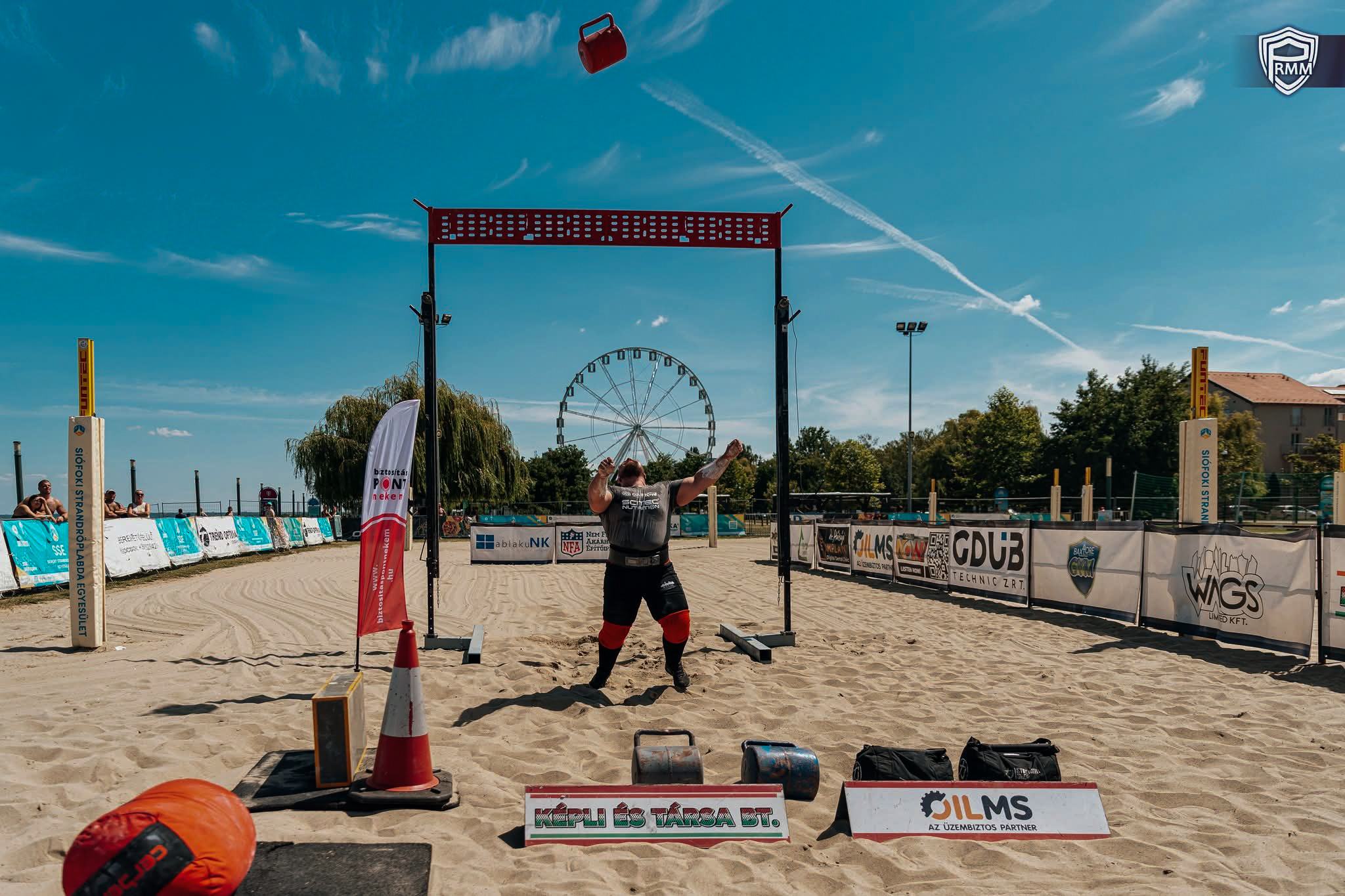
Episode 4: Cortisol and the Stress Response
In Strongman, stress is not limited to pre-competition nerves. The body has to manage very heavy loads, intense muscle contractions, repeated efforts, heat, travel, sleep loss, competitive pressure, and energy availability. Cortisol is one of the major endocrine components of this stress response.
Cortisol is a glucocorticoid produced by the adrenal cortex. It helps the body mobilize resources when demand rises. The problem is not that cortisol exists or rises during stress. The problem is confusing a normal transient response with a permanent state, or using a single laboratory value to explain everything.
1. The hypothalamic-pituitary-adrenal axis
The classic stress response is organized through the HPA axis. The hypothalamus releases CRH, the pituitary responds with ACTH, and ACTH stimulates the adrenal cortex to produce and release cortisol. Cortisol then feeds back negatively to reduce hypothalamic and pituitary stimulation.
This loop allows a response to rise and then be restrained. During a heavy event the goal is not to keep cortisol as low as possible, but to raise it enough to meet demand and then return toward the usual physiological state.
2. Cortisol follows a daily rhythm
Cortisol is not constant across the day. Secretion follows a circadian pattern, so sampling time matters. Morning cortisol, the cortisol awakening response, and evening levels cannot be interpreted as though they were the same measurement.
Sleep restriction, schedule changes, nighttime light exposure, psychological stress, and exercise can all influence this pattern. Comparisons between samples therefore require attention to collection time and context.
3. What happens during a hard session
Exercise is a controlled stressor. A difficult session can activate the sympathetic nervous system and the HPA axis, and ACTH and cortisol may rise. Intensity, duration, muscle mass involved, work density, and the athlete’s fitness level all affect the response.
In resistance exercise, the response should not be treated as a score of training quality. A higher post-exercise cortisol value does not automatically mean a better workout, and a small response does not automatically mean a poor workout.
4. Cortisol helps regulate energy availability
A major function of glucocorticoids is helping the body keep fuel available. Cortisol supports processes that increase glucose availability and influences protein and lipid metabolism. During hard exercise, this can contribute to maintaining homeostasis.
That same biology becomes problematic when demand stays high while energy intake fails to cover the cost. In that setting, the whole endocrine system should be considered rather than a single hormone in isolation.
5. Cortisol and muscle protein
Glucocorticoids can, in some contexts, promote protein breakdown and redistribution of substrates toward energy production. This is one reason chronic excessive glucocorticoid exposure differs fundamentally from the transient physiological increase that accompanies exercise.
For an athlete, the difference between an acute response and chronic exposure is essential. A temporary rise after training is part of the training stress response. Persistent dysregulation, especially in a clinical context, is a different problem.
6. Cortisol does not “eat muscle” after every workout
One of fitness culture’s favorite simplifications is that any cortisol rise immediately destroys muscle. Physiology is more nuanced. Training adaptation comes from the interaction of mechanical loading, cellular signaling, energy availability, dietary protein, sleep, and endocrine responses.
7. Cortisol, adrenaline, and the sympathetic nervous system
The stress response does not belong to cortisol alone. Catecholamines, especially adrenaline and noradrenaline, rise rapidly and prepare the body for action. Heart rate, blood pressure, blood flow, and fuel mobilization change together.
In a Strongman event, this integration is obvious. The psychological stress of the attempt, muscular effort, and cardiovascular demand overlap, so the body responds to one complex event rather than a single isolated stimulus.
8. The acute response can be useful
A temporary cortisol rise helps mobilize resources required to meet an acute demand. Recovery therefore should not be framed as preventing every cortisol increase. The goal is to allow the system to settle back toward its normal physiological pattern after the stressor ends.
9. Repeated training changes the response
Trained athletes can show different endocrine responses from untrained people. Adaptation to stress can change the magnitude of the acute response, and the same absolute session may represent a smaller relative challenge for a well-trained athlete.
This is one reason comparisons between different athletes are weak. Cortisol should not be interpreted without relative workload, training status, and recent history.
10. Volume and intensity matter
The response to exercise depends on how hard and how much the athlete works. A short, very heavy session, a high-volume session with short rest, and a competition day can produce different endocrine profiles.
11. Strongman: why the context is special
Strongman combines maximal-strength events, metabolic efforts, carries, lifts, and repeated exposure across an event schedule. A competition day may involve several stress exposures in a short period, alongside emotional load and the need to perform repeatedly.
As a result, recovery between events and between days becomes part of stress management. Hydration, adequate food, sleep, and sensible volume management matter more than trying to manipulate one hormone in isolation.
12. Cortisol and sleep
Sleep and the HPA axis influence one another. Sleep restriction can alter cortisol rhythms and stress responses, while high stress can make sleep more difficult. For a strength athlete, this feedback loop can affect recovery, alertness, and tolerance of training.
13. Cortisol and energy intake
Low energy availability is not merely a calorie problem. When the body senses insufficient energy availability, several endocrine systems adapt to protect essential functions. Psychological stress, high training volume, and inadequate fuel can add to the overall burden.
In this setting, an isolated cortisol measurement may be less informative than the complete picture: performance, body mass, sleep, appetite, mood, resting measures, recovery, and other clinical data.
14. Cortisol and muscle recovery
Recovery is not just the repair of muscle fibers. It is the restoration of the systems that allow repeated performance: the nervous system, energy reserves, fluid balance, connective tissues, sleep, and endocrine regulation.
Cortisol is part of this network, but it cannot by itself determine whether an athlete is recovered.
15. Cortisol as a marker of excessive stress
It is tempting to use a simple rule: high cortisol equals overtraining. The evidence does not support that shortcut. Stress responses vary, and research in highly stressed or overtrained athletes has found altered HPA patterns, including reduced responses to standardized exercise in some cases.
Overtraining syndrome is a complex performance and health problem, and it cannot be reduced to one hormone value.
16. Physical stress and psychological stress are not identical
The HPA axis responds to both physical and psychological stressors. An important competition can combine both. That is why the endocrine response on competition day may differ from the response to a routine gym session, even if the physical tasks appear similar.
17. Cortisol and immunity
Glucocorticoids influence immune activity and inflammation. This is part of the body’s regulatory response, but chronic excessive glucocorticoid exposure has different consequences from a transient physiological increase.
18. Cortisol and connective tissue
Tendons, ligaments, and other connective tissues often adapt more slowly than the nervous system and sometimes more slowly than muscle. Under chronic stress and excessive glucocorticoid exposure, connective-tissue biology can be affected, which matters in sports built around high loads.
19. Cortisol and performance
There is no cortisol level that guarantees good performance. Strength is the result of a network of factors: muscle cross-sectional area, motor-unit recruitment, technique, leverage, coordination, experience, and current recovery state.
Cortisol contributes to substrate availability and stress regulation, but it is not a strength on-switch.
20. Why “keeping cortisol low” is the wrong goal
A physiological hormone should not be suppressed simply because it rises during stress. Cortisol is necessary for normal function, and absence of adequate cortisol would be incompatible with health. The goal is appropriate regulation, not elimination.
21. What can raise cortisol in a Strongman athlete
Hard training is only one factor. Sleep loss, psychological stress, travel, time-zone changes, energy restriction, illness, pain, and competitive pressure can all contribute. An athlete therefore cannot automatically assign a hormonal change to the most recent workout.
22. What can change stress responses
Exercise adaptation can change the response to a standardized stressor over time. Regular physical activity is generally associated with better stress regulation, but effects depend on dose, intensity, context, and the individual.
23. Cortisol and testosterone
The popularity of the cortisol-to-testosterone ratio comes from the idea that one catabolic and one anabolic hormone form a single training-status score. In reality, the relationship is far more complex. The two systems have different roles and respond to multiple variables.
A ratio calculated from two measurements cannot replace clinical assessment or performance data. Especially in sport, using it as a magic score is not justified.
24. Cortisol and the reproductive axis
Chronic stress and inadequate energy availability can influence reproductive-axis function. This interaction is one of the links between stress endocrinology and the testosterone and estrogen systems discussed in earlier episodes.
25. What happens after exercise
Recovery begins when the exercise bout ends. HPA-axis activity changes over time as the body moves from mobilization toward restoration and adaptation. If the next hard exposure arrives too soon and too often, total stress can rise even when each individual session appears reasonable.
26. When cortisol becomes a medical problem
Abnormal cortisol levels can occur in endocrine disease and during glucocorticoid medication use. These conditions must be distinguished from the normal variation produced by circadian rhythm, exercise, and everyday stress.
Persistent findings such as unusual weight changes, hypertension, muscle weakness, or metabolic and endocrine symptoms warrant medical evaluation rather than internet interpretation of one laboratory value.
27. How cortisol is measured
Cortisol can be assessed in blood, saliva, or urine depending on the clinical question. Each method has advantages and limitations. Sampling time, stress around the collection, medications, and laboratory protocol affect the result.
28. Why one measurement is weak for training monitoring
One result cannot tell you whether an athlete is overreached, recovered, or ready to compete. For sport monitoring, trends and combinations of performance, training load, sleep, perceived exertion, and symptoms are generally more informative.
29. What good adaptation means
Adaptation does not mean the absence of stress. It means the organism can respond to stress and recover from it. Over time, the same workload can represent a smaller relative cost, allowing the athlete to tolerate more work without accumulating the same physiological burden.
30. How cortisol should be viewed in Strongman
Cortisol should be viewed as part of a regulatory system. It is not a “bad hormone,” not a perfect marker of catabolism, and not a direct measure of training quality.
The better question is not “How do I lower cortisol?” but “How do I manage total stress so that the endocrine response remains adaptive?” That means sensible programming, sufficient nutrition, sleep, and recovery.
31. Conclusion
Cortisol is one of the body’s major coordinators of the stress response. In Strongman, it helps manage the energetic and physiological demands of hard exercise, but it must be interpreted within the broader endocrine network and total stress load. An acute rise after exercise is different from chronic glucocorticoid exposure, and neither should be judged by a single number.
For strength athletes, the goal is not to eliminate cortisol. The goal is to create a system in which the training stimulus is large enough to promote adaptation and recovery is sufficient to allow the athlete to return stronger. That is the difference between stress that builds capacity and stress that exceeds the ability to adapt.
Selected bibliography
1. Hackney AC, Walz EA. Literature on the endocrine system and exercise-related stress responses.
2. Duclos M, Tabarin A. “Exercise and the stress system.” Literature on HPA-axis responses to exercise and training.
3. Hill EE, Zack E, Battaglini C, Viru M, Viru A, Hackney AC. “Exercise and circulating cortisol levels: The intensity threshold effect.” Journal of Endocrinological Investigation. 2008.
4. Ihalainen JK, et al. Literature on endocrine responses to resistance exercise and training stress.
5. Puterman E, Epel E. Literature on physical activity, stress regulation and HPA-axis adaptation.
6. Li X, Huang J, Zhu F. “The Optimal Exercise Modality and Dose for Cortisol Reduction in Psychological Distress: A Systematic Review and Network Meta-Analysis.” Sports. 2025;13(12):415. DOI: 10.3390/sports13120415.
7. “The effects of acute exercise on stress reactivity assessed via a multidimensional approach: a systematic review.” Journal of Behavioral Medicine. 2024;47(4):545-565. DOI: 10.1007/s10865-024-00470-w.
8. “Physical activity and cortisol regulation: A meta-analysis.” Biological Psychology. 2023. DOI: 10.1016/j.biopsycho.2023.108548.
9. “Endocrine responses of the stress system to different types of exercise.” Reviews in Endocrine and Metabolic Disorders. 2022. DOI: 10.1007/s11154-022-09758-1.
10. “The overtraining syndrome in athletes: a stress-related disorder.” Literature on HPA-axis alterations and overtraining.
More From The Journal

Training
The Science of Strongman Training - Episode X: Competition Programming
How to build a complete Strongman competition preparation block: calendar, events, volume, intensity, specificity, simulations, autoregulation, tapering and fatigue management.

Training
The Science of Strongman Training - Episode IX: Peaking
Peaking in Strongman: how to turn months of training into maximal competition performance by reducing fatigue, preserving adaptations and managing specificity.