
Sports Performance
Series: THE BODY UNDER EXTREME CONDITIONS: ENVIRONMENT AND PERFORMANCE IN STRONGMAN - Episode 6: Altitude, Hypoxia and Their Effects on Strongman Performance
October 14, 2026
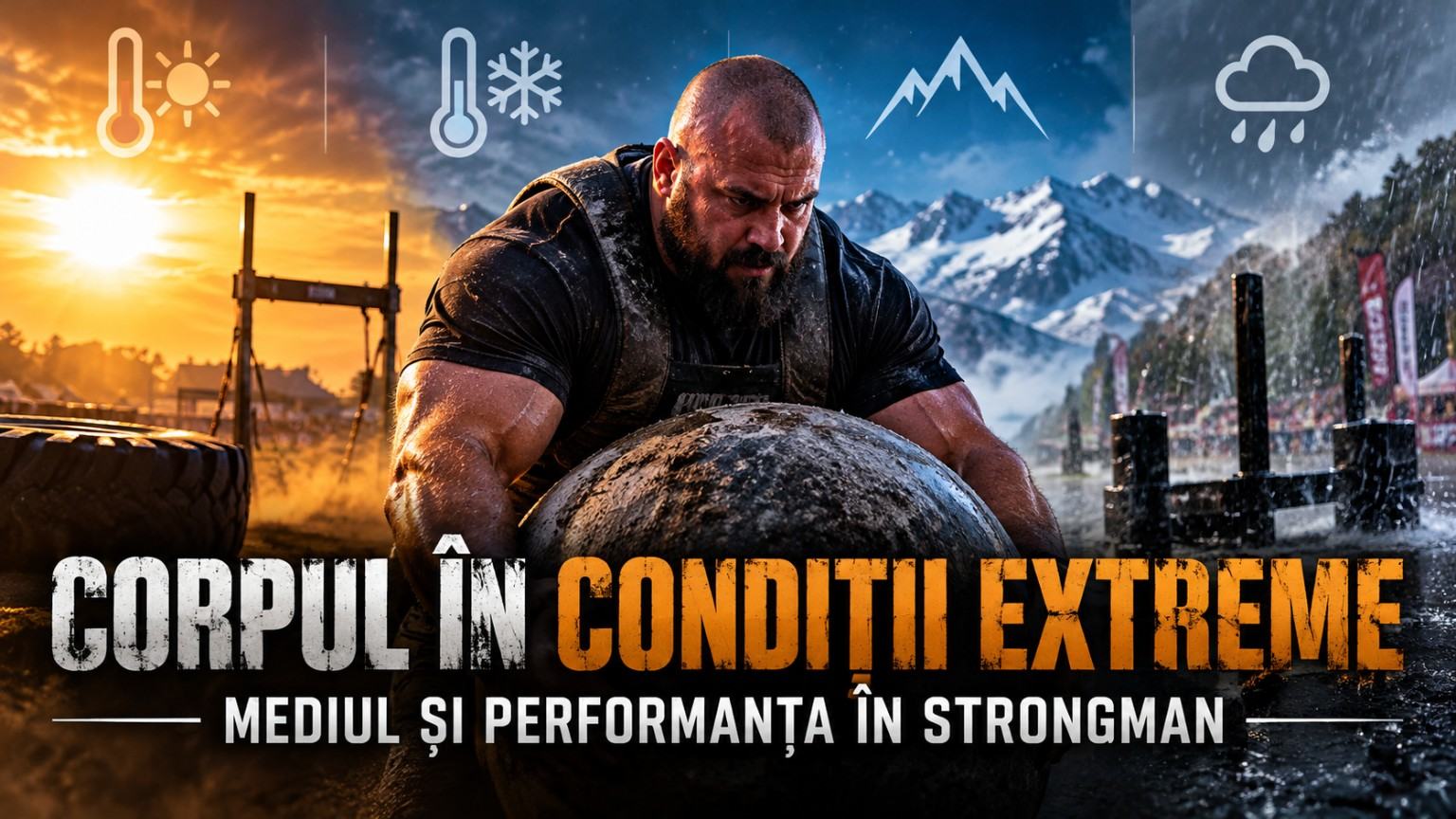
An athlete may lift the same bar in a sea-level gym and at a mountain venue, yet the body performing the movement is not necessarily operating under identical conditions. At altitude, atmospheric pressure falls, reducing the partial pressure of inspired oxygen. The fraction of oxygen in ordinary air remains close to 20.9%, but each breath involves a lower total gas pressure. This difference can influence blood oxygenation, breathing, cardiovascular strain and exercise tolerance. In strongman, an event may last seconds while the complete competition occupies much of a day, so altitude effects should not be presented as an identical reduction across all performances. A maximal attempt, a twenty-metre carry and a repeated loading Medley face different constraints. Understanding their interaction with oxygen availability is more useful than claiming that altitude automatically weakens every lift by the same amount.
Episode six of 'The Body Under Extreme Conditions: Environment and Performance in Strongman' examines altitude, hypoxia and human adaptation from the first minutes of exposure through longer acclimatisation. It explains the difference between actual altitude and simulated hypoxia, between oxygen saturation measured by a pulse oximeter and effective oxygen delivery to tissues, and between rapid haemoconcentration and the progressive increase in haemoglobin mass. We consider maximal strength, power, repetitions, recovery and sleep. Throughout, established mechanisms in exercise physiology are distinguished from claims that have not been tested directly in strongman competition. This distinction matters because the sport combines extraordinary loading with very different event durations and large variations in venue conditions.
The International Olympic Committee's 2012 consensus in the British Journal of Sports Medicine explains that altitude can increase physiological strain and alter athletic performance, with outcomes depending on discipline, exposure and individual adaptation. Recent resistance-exercise research in hypoxia, including the 2024 review by Allsopp and colleagues, reflects interest in possible strength and hypertrophy benefits but does not establish consensus that hypoxic training is superior to ordinary resistance exercise. This boundary is essential. Studies involving runners, cyclists or circuit-training participants cannot automatically predict kilograms lost from a Deadlift. They may generate useful hypotheses and general safety considerations, but conclusions must remain proportional to the evidence. Scientific precision strengthens practical preparation rather than reducing its value.
Altitude also presents medical risks that should not be confused with ordinary exercise fatigue. At sufficiently high exposure, particularly after rapid ascent, headache, nausea, sleep disruption and other features of acute mountain sickness may develop. Some forms are uncommon but serious and require urgent medical assessment and appropriate descent or oxygen according to qualified guidance. The CDC Yellow Book describes the relevance of ascent rate and sleeping altitude. Exceptional muscular strength does not automatically protect against hypoxia. A well-trained competitor may still experience an adverse individual response, and competition must not take priority over health. Recognising symptoms and planning travel are as important as understanding exercise mechanisms.
We discuss realistic scenarios: a competitor travelling from Bucharest to a mountain contest, arriving shortly before the start and facing Deadlift, Log Press, Yoke, Farmer's Walk and Loading Medley. Travel, sleep, temperature, humidity, food and time for acclimatisation complicate interpretation without justifying invented results or individual percentages. The article serves experienced athletes and readers interested in physiology. It does not recommend extreme hypoxic exposure as a shortcut to progress and cannot replace medical advice, particularly for people with cardiovascular, respiratory or sleep-related concerns. The goal is rigorous, accessible scientific understanding that supports practical decisions in real sporting conditions.
1. Altitude fundamentals: barometric pressure, oxygen and hypoxia
Altitude is a location's elevation above sea level, but its physiological consequences do not arise from vertical distance alone. The decisive environmental change for oxygenation is declining barometric pressure as elevation increases. The oxygen fraction of ordinary air stays close to 20.9%, while its partial pressure falls along with total pressure. Each breath therefore provides a lower pressure gradient for oxygen transfer from alveoli into blood. For strongman this physical explanation is more useful than the popular claim that mountains contain a smaller percentage of oxygen. Atmospheric composition remains broadly similar, but physiological availability can decline. This distinction matters when comparing competition venues at different elevations. The implement remains heavy even when the environment changes.
Inspired oxygen partial pressure is not determined by ambient pressure alone because air becomes warmed and humidified inside the respiratory tract. Water vapour contributes to total gas pressure and is relevant to physiological calculations. Gas exchange with carbon dioxide further modifies conditions inside the alveoli. The body is not an engine in which oxygen delivery can be read directly from a smartphone altimeter. Ventilation, circulation, haemoglobin and individual characteristics determine tissue oxygen supply. Meaningful altitude analysis distinguishes external environment from the eventual effect on blood. Two athletes in the same mountain town can respond differently because of preparation and medical history. An environmental measurement starts the explanation rather than completes it.
Hypoxia refers to insufficient oxygen availability at tissue level relative to demand, although exercise literature also uses the term for exposure to breathing mixtures with reduced oxygen partial pressure. Hypoxaemia refers more specifically to reduced arterial oxygenation. This matters because a fingertip saturation reading does not describe exactly how much oxygen each muscle uses. A person can have a lower saturation at altitude without instantly developing severe functional impairment. Magnitude, duration and clinical circumstances shape interpretation. Converting any fall in saturation into a diagnosis is inappropriate, as is assuming identical strength outcomes among people with similar values. Exercise physiology requires a wider perspective. Performance reflects interactions between oxygen delivery and the task being attempted.
Real altitude combines lower barometric pressure with potentially colder air, intense solar radiation and changes in humidity or wind. Simulated hypoxia at sea level can lower the oxygen fraction of the inspired mixture while ambient pressure remains near normal. These situations are often called hypobaric and normobaric hypoxia. Similar oxygen partial pressures can produce overlapping responses without reproducing every feature of mountain conditions. For strongman, a session in a hypoxic room does not automatically recreate a mountain contest with cold, wind, awkward terrain and exhausting travel. Transfer of findings needs caution. The environment contains more variables than the gas mixture alone.
Altitude exposure does not begin at a magical threshold below which nothing changes and above which every performance collapses. Effects usually become more consequential as oxygen availability falls, but sensitivity varies across tasks and people. Labels such as low, moderate and high altitude are useful conventions rather than absolute biological borders. A very brief power event relies less on aerobic metabolism during execution than several minutes of sustained work. Yet athletes also warm up, recover between attempts and spend hours at the venue. A normal opening single does not demonstrate that the complete programme is unaffected. Total exposure matters alongside event duration. This is especially important when a championship extends through an entire day.
A common mistake is to transfer a percentage reduction in VO₂max directly to maximal strength. VO₂max describes maximal oxygen uptake and utilisation during progressive exercise, not the largest load someone can lift once. Altitude can reduce this aerobic indicator meaningfully, but the relationship with maximal Deadlift does not follow a direct numerical equation. Lower aerobic capacity does not automatically translate into a proportional loss of kilograms from the bar. Longer and repeated events may be more vulnerable to selected hypoxic effects. Scientific literature must be interpreted with that distinction in mind. Task specificity is indispensable when applying findings to strength sport.
Pressure and air density are not equivalent to tissue oxygenation, but density can also have mechanical effects in selected disciplines. In sprint running, thinner air can reduce aerodynamic drag and partly offset hypoxic costs at some durations. In strongman, massive implements and relatively low speeds make aerodynamic resistance unlikely to dominate times compared with traction, load and technique. It is nevertheless unnecessary to claim the effect is precisely zero without measurement. This example shows why transferring results between sports requires attention to mechanisms. Faster sprinting at elevation does not prove a heavier Yoke can be moved faster. Both physiology and mechanics differ.
Altitude is best understood first through declining oxygen partial pressure and then through individual physiological responses. Atmospheric oxygen fraction, arterial saturation, cardiac output and muscular oxygen availability describe different aspects. In strongman, these variables interact with intensity, duration, event order and competition conditions. Rigorous explanation does not claim identical effects across attempts. It separates demonstrated mechanisms from hypotheses requiring event-specific investigation. This physical and physiological foundation permits discussion of breathing, circulation and acclimatisation without treating thin mountain air as a mysterious force that automatically weakens every muscle.
2. The first minutes and hours: breathing, saturation and cardiovascular strain
On arrival at altitude, one of the earliest physiological responses is altered ventilation. Receptors responding to arterial oxygen stimulate increased breathing to support oxygenation under reduced inspired pressure. At moderate altitude this change may be subtle at rest and more evident during exertion. A strongman may notice faster breathing after familiar warm-ups without necessarily having an illness. However, unusually severe breathing difficulty, chest pain or major symptoms should not be dismissed as normal adaptation. Altitude, context and medical history matter. The body begins responding to the environment before an obvious change appears in the weight lifted. This is one reason why performance alone cannot serve as a complete marker of physiological strain.
Greater ventilation removes more carbon dioxide and may alter acid-base balance, initially tending towards respiratory alkalosis. The kidneys subsequently participate in compensation through changes in bicarbonate excretion. These processes unfold over different time scales and contribute to ventilatory acclimatisation. They do not justify claims that an alkaline drink or deliberate hyperventilation before lifting can safely accelerate adaptation. Uncontrolled breathing manoeuvres may cause dizziness and complicate exertion. Strongman's bracing strategies have specific mechanical purposes distinct from altitude-induced ventilatory changes. Confusing them can lead to poor advice. Understanding the underlying physiology should promote controlled preparation rather than last-minute experiments.
Peripheral oxygen saturation, often labelled SpO₂, may decline with elevation. Pulse oximeters offer a useful noninvasive estimate in some settings, but accuracy depends on peripheral perfusion, temperature, movement and device characteristics. Cold hands after a mountain contest can compromise readings, while one number is not a complete diagnosis. SpO₂ alone does not describe total oxygen transport because haemoglobin concentration and blood flow also matter. For athletes, oximetry can contribute contextual information but should not justify disregarding symptoms or continuing solely because a screen displays a seemingly acceptable value. Clinical assessment considers the person, not only the instrument. This is particularly important when the environment and exercise both affect peripheral circulation.
During acute altitude exposure, heart rate may increase at comparable workloads as the body adjusts circulatory responses to reduced oxygenation. Magnitude depends on elevation, intensity, fitness and acclimatisation. There is no basis for claiming an identical number of extra beats for every competitor or event. Heart rate during maximal Deadlift is also influenced by bracing, Valsalva and lifting-specific reactions. Wrist sensors may struggle during explosive movements. Cardiovascular strain should therefore be interpreted through the activity and the athlete's condition rather than one isolated reading. A higher pulse is an observation requiring context, not automatic proof of reduced strength.
Cardiac output describes how much blood the heart pumps per unit time and depends on heart rate and stroke volume. At altitude, the body may modify these variables while attempting to compensate for reduced oxygenation. These adjustments do not guarantee sea-level aerobic performance. Oxygen availability can become limiting during substantial or prolonged exertion. For strongman, the difference between seconds of force production and repeated recovery during breaks is relevant. Even when one single appears unaffected, recurring cardiovascular demands may alter exertion across the full competition. This possibility needs direct event-specific testing. It should be presented as a plausible interaction rather than a precise established loss in kilograms.
Higher pulse, faster breathing and increased perceived exertion can coexist without one exclusive explanation. Long travel, poor sleep, caffeine, competition anxiety and dehydration may contribute to similar observations. If a Log feels more difficult hours after arrival, arterial oxygen cannot automatically be assigned as the only cause. Coaches can consider acclimatisation and environment while continuing to examine technique and loading. Establishing causality requires controlled comparison. Real competitions usually provide incomplete observations. That limitation should lead to caution rather than overly confident physiological stories about an isolated result.
Acute hypoxia also affects cerebral circulation through interactions among oxygen, carbon dioxide and blood-flow regulation. Responses are complex, and headache or dizziness should not be assigned to one mechanism automatically. At sufficient elevation these symptoms may signal acute mountain sickness, particularly after ascent when nausea or fatigue also occurs. Other explanations include dehydration, low blood glucose or insufficient sleep. Confusion, loss of coordination or rapid deterioration require urgent medical attention. Safety takes priority over obtaining a perfect number from portable equipment. In mountain environments, recognising concerning patterns is more important than demonstrating toughness.
The first hours at altitude are an adjustment phase rather than a chance to prove maximum tolerance for discomfort. For important competition, arrival timing, progressive familiarisation and access to rest may matter. IOC guidance discusses arriving in advance at moderate elevation, while optimal duration varies across individuals and events. Athletes should not automatically turn their first day into an additional maximal training session when unusually strained. Preparation serves the objective of expressing strength on contest day. Observing symptoms and reducing unnecessary stress matter more than chasing the feeling of training in thin air.
3. Haemoglobin, iron, plasma volume and erythropoiesis
Most oxygen in blood travels bound to haemoglobin inside red cells, with a small fraction dissolved in plasma. When inspired oxygen pressure falls, haemoglobin saturation may decline, changing arterial oxygen content. Tissue delivery, however, depends on more than saturation. Total circulating haemoglobin, cardiac output and tissue extraction also matter. Large muscle mass and extraordinary absolute strength do not automatically protect a strongman against these constraints. Nor can lost Deadlift kilograms be calculated directly from a change in SpO₂. Physiological explanation must follow the complete chain of oxygen transport and use. Each link can influence the response differently under exercise and environmental stress.
During the first days at altitude, haemoglobin concentration can rise without an equivalent increase in total red-cell mass. Changes in plasma volume provide one explanation: reduced plasma volume makes blood relatively more concentrated. This haemoconcentration differs from erythropoiesis, the production of new erythrocytes, which requires longer. An elevated haemoglobin test shortly after arrival does not demonstrate rapid production of enough new blood cells for a lasting performance advantage. Concentration is easier to measure than total haemoglobin mass, encouraging confusion in sports discussions. Proper interpretation requires knowledge of exposure duration and fluid balance. Early measurements should not be confused with the outcome of a prolonged adaptation programme.
Erythropoietin, a hormone regulating red-cell production, can rise in response to hypoxic exposure. The initial hormonal response is not equivalent to a completed increase in red-cell mass. Haematological adaptation depends on exposure magnitude and duration, iron availability, health and individual variation. One night in a mountain town does not guarantee a meaningful increase in haemoglobin mass. Brief exposure inside a hypoxic room is not automatically equivalent to established programmes of sustained altitude residence and training. For strongman, aerobic adaptations may influence some aspects of preparation but should not be confused with directly increasing maximal force. The timeline of biology needs to match the timeline of the training claim.
Iron is essential for haemoglobin synthesis and several enzymes involved in metabolism. Its availability can matter when programmes aim for haematological adaptation to altitude. IOC guidance discusses assessing iron status ahead of planned exposure. This is not a recommendation for everyone to take iron supplements without testing. Excess can be harmful, while ferritin and related measures require interpretation in view of inflammation, training and medical context. For strongmen monitoring blood tests, confirmed deficiency differs fundamentally from simply wanting more red blood cells. Interventions should be clinically justified and compatible with sporting regulations. A biological pathway is not permission for unsupervised supplementation.
Altitude may alter plasma volume and fluid balance through diuresis and respiratory changes, although responses vary. Weight loss after arrival should not automatically be interpreted as beneficial blood adaptation. Travel, food, fluid intake and water losses may contribute. Higher haemoglobin concentration alone does not prove improved circulation or performance. Blood viscosity and cardiovascular regulation can introduce complex trade-offs, particularly with medical concerns. An athlete with abnormal haematological values should not automatically explain them away as altitude effects. Qualified medical assessment matters when results or symptoms are concerning. Body water and blood measurements need consistent interpretation.
Blood adaptations must also be linked to the sporting objective. A distance runner seeking greater oxygen transport addresses a different problem from a strongman performing one maximal single. Aerobic recovery may matter across repeated strongman events, but it does not demonstrate that more haemoglobin directly creates a Log Press record. Altitude research contains many aerobic measurements and comparatively few event-specific strongman assessments. That difference prevents indiscriminate transfer of benefits described in other sports. A documented biological mechanism can have different practical importance depending on the contest. Training priorities should follow the goal rather than the appeal of a physiological marker.
Haemoglobin concentration, haematocrit and red-cell counts require context. Dehydration, sampling timing, preceding exertion and altitude duration can affect common athlete-monitoring values. Elevated measurements can also reflect medical causes that should not be ignored. A general article cannot differentiate all possibilities or prescribe individual treatment. Competitors using hypoxic programmes or travelling frequently to mountains should discuss relevant tests with qualified professionals. Monitoring should support health and appropriate decisions rather than pushing every marker as high as possible. More is not always better. Reliable interpretation begins with understanding what was measured and why.
Blood adapts to altitude through processes operating on different timelines. Rapid plasma-volume changes, erythropoietin responses and actual red-cell production are not the same event. Iron matters, but unsupervised supplementation is not a universal strategy. For strongman, these mechanisms clarify environmental challenges and recovery without creating a formula for predicting loads. Performance requires task-specific evaluation including technique, duration and current condition. Sound haematological physiology explains adaptation and limitations rather than promising that a mountain stay automatically makes every competitor stronger.
4. Energy metabolism: ATP-PCr, glycolysis and oxygen dependence
Physical performance requires continual resynthesis of ATP, the molecule directly used by the contractile machinery. The body relies on several metabolic pathways, including the phosphagen system, glycolysis and oxidative processes. These operate simultaneously, while their relative contributions change with intensity and duration. During a maximal Deadlift lasting seconds, the ATP-phosphocreatine system has an important role. Longer events involve greater contributions from other pathways. Reduced oxygen availability at altitude therefore does not immediately stop force production. Muscle can generate intense tension using processes not directly dependent on oxygen at each moment. That does not make oxygen irrelevant to warming or recovery. Energy-system distinctions help explain why performance effects may differ across strongman events.
ATP-PCr can support brief explosive work, but its capacity is limited, while phosphocreatine restoration between efforts involves oxidative metabolism. This matters in strongman. The first attempt may rely substantially on immediately available resources, whereas later attempts follow breaks during which the body restores those resources. Altered oxygenation at altitude may influence selected recovery processes, but effects on actual competition records have not been quantified sufficiently. There is no sound basis for assigning the same precise extra recovery seconds to every athlete at a certain elevation. The repeated structure of a competition deserves separate analysis from one opening single. Recovery is a physiological activity even when the athlete is standing still.
Glycolysis permits relatively rapid ATP production through glucose metabolism and contributes substantially to many intense tasks of intermediate duration. A one-minute Loading Medley or Deadlift for Reps differs from a solitary heavy lift. Hypoxia can influence the balance of metabolic pathways according to intensity and adaptation. Heavy breathing does not mean a task has become completely anaerobic. Energy systems contribute together, while recovery between repetitions involves multiple processes. Practical analysis should examine actual work duration, stopping frequency and mechanical demands. One label cannot describe the entire event. This is why a simple category such as anaerobic strongman may be physiologically misleading.
Oxidative metabolism is essential for prolonged work and many aspects of recovery. Altitude can reduce maximal aerobic capacity, although effect magnitude depends on exposure and the athlete. Someone may preserve a single heavy lift while experiencing a greater cost from warming and repeated movement. That does not establish identical effects across all longer events. Truck Pull, fast Yoke and Sandbag Carry differ mechanically and in duration. Course conditions may also influence outcomes more than metabolic changes. Interpretation needs to combine physiology with event specifics. Broad findings from endurance studies provide a foundation but not a complete prediction.
Hypoxia can alter metabolite production and use, while lactate is often wrongly described as a toxin causing all fatigue. Lactate can be produced and used as an energy substrate, and its relationship with performance is complex. Altitude-related responses vary with exposure duration, exercise intensity and acclimatisation. One post-set measurement cannot identify the entire fatigue mechanism. In strongman, repetition slowing can also reflect neuromuscular or technical limitations. Modern research requires moving beyond single-cause explanations. Manipulating one biochemical value does not automatically improve strength. A useful explanation respects the interaction among energy production, neural control and mechanical execution.
Phosphocreatine restoration, carbohydrate availability, blood flow and oxygenation contribute to repeated-effort capacity. A contest with short breaks between objects could therefore respond differently to hypoxia from a single lift followed by long rest. This is a plausible research hypothesis, not proof that altitude removes a fixed number of repetitions. Useful studies would standardise loads and intervals, compare conditions and examine individual responses. Until then, coaches can apply task specificity: repeated events and carries require work-capacity preparation without sacrificing maximal-strength technique. The programme should reflect what athletes must actually do in competition. No isolated metabolic theory replaces that analysis.
Amplifying one acute metabolic pathway in hypoxia does not automatically produce superior adaptation. Experiments may demonstrate stronger immediate responses inside hypoxic chambers without proving larger long-term gains in strength or muscle mass. The 2024 review by Allsopp and colleagues identifies interesting acute responses while noting lack of consensus regarding overall effectiveness. In strongman, an environment that increases discomfort but lowers technical training quality may offer an unattractive compromise. Metabolic stimulus should be distinguished from sporting outcome. A programme succeeds through measurable progress and acceptable risk rather than breathlessness during sets. Training novelty alone is not evidence of superior results.
Altitude interacts with energy metabolism in a task-dependent manner. ATP-PCr, glycolytic and oxidative pathways do not operate as isolated switches; they contribute in shifting proportions. A brief maximum can differ from a long Medley, while between-attempt recovery is a separate concern. These mechanisms do not yield a universal equation converting elevation into kilograms lifted. Strongman research needs attention to duration, intensity, breaks and individual adaptation. Physiology explains why tasks may require different preparation without removing the roles of technique, training and competition organisation.
5. Maximal strength, power and what hypoxia research demonstrates
A common question is whether athletes lift fewer kilograms at altitude. Science cannot answer with one universal percentage because strength studies employ different tasks, populations and hypoxic procedures. Some measure one-repetition maxima, others repetition counts, bar velocity or acute responses to hypertrophy training. Oxygen partial pressure, exposure duration and rest intervals can alter outcomes. A very brief maximal effort does not have the same immediate aerobic requirement as sustained work. Claiming that 2,500 metres automatically reduces every Deadlift by ten kilograms would invent a relationship not established by the available evidence. An accurate conclusion starts by specifying what was measured. Task specificity matters more than a dramatic headline.
The 2024 narrative review by Allsopp, Britto, Wright and Deldicque in the Journal of Strength and Conditioning Research examines acute responses to resistance exercise in normobaric hypoxia. It identifies interesting physiological changes while emphasising that no consensus establishes hypoxia as superior for strength and hypertrophy development. Acute responses differ from long-term adaptations. A set creating greater metabolic strain does not automatically build more muscle over months, and greater discomfort does not prove a superior stimulus. In strongman, technical quality during heavy movements and recovery between sessions may matter more than environmental novelty. Progress must be assessed longitudinally rather than inferred from one difficult workout. This distinction also protects athletes from unnecessary experimental training practices.
A 2017 review of resistance training using hypoxic strategies likewise describes inconsistent findings for hypertrophy, strength and power. Some protocols appear promising, but differences in method, loading and training status limit confidence. Strongman progress is not measured through muscle size alone. Athletes must control unstable implements, execute unusual movements and transfer force between tasks. Even if a hypoxic protocol improves a standardised laboratory test, the same improvement cannot be assumed for Atlas Stones. Transfer needs verification rather than assumption. A programme undermining technique may carry hidden costs. Scientific interest does not remove the need for event-specific evidence.
Explosive power combines force with the velocity at which force is developed. In Log Press, Giant Dumbbell and some phases of Yoke, acceleration matters. Acute hypoxia may change selected physiological responses, while effects on power depend on effort duration and exposure. A jump test is not the same as pressing a 130-kilogram Log. Body mass, technique and contraction type limit direct numerical transfer. An athlete may maintain one very brief impulse while finding recovery between repetitions harder. This justifies examining tasks separately rather than claiming that hypoxia automatically enhances or destroys explosiveness. Testing should resemble the actual competition movement.
Maximal strength depends on neuromuscular activation, muscular capacity, tissue characteristics, specific preparation and the condition on testing day. Altitude adds physiological context without replacing those determinants. A missed Deadlift after mountain travel may involve poor sleep, unsuitable warming, psychological stress, different surfaces or excessive load selection. Without repeated controlled comparisons, failure cannot be assigned exclusively to hypoxia. Personal observations can generate useful coaching questions but are not experiments. Correlation between altitude and performance must be distinguished from causality. Good science permits several explanations to remain open until evidence separates them.
Hypoxic exposure may alter perceived effort. Familiar sets can feel more demanding when breathing accelerates or recovery seems inadequate. Perception is not a direct measure of maximal force. Training observations become more useful when compared with execution speed, technique and repetitions at matched loads. When an athlete feels unusually strained, the response need not be to turn discomfort into another target. Adjusting a session to preserve quality can be appropriate during initial exposure. The objective is measurable safe preparation rather than surviving the most hostile environment. Managing training load is part of expertise.
Some sports experience mechanical benefits from lower air density, while others face greater limitations from oxygen availability. Strongman uses massive implements at relatively low velocities, making aerodynamic drag small compared with mechanical forces. Even so, broad principles should not be stretched into untested assertions. A Truck Pull on asphalt differs from track sprinting. Relevant comparisons should standardise implements and courses. Altitude is one variable and cannot justify overlooking surface, rules or equipment. Mechanics and physiology must be analysed together. A change in competition time is rarely explained by weather alone.
The conclusion for strength and power is cautious. Hypoxia can alter exercise responses, but current evidence cannot produce universal predictions for strongman maximal records. Acute stress does not guarantee superior long-term adaptation, while evidence from neighbouring sports is not equivalent to direct competition testing. Athletes preparing at elevation should prioritise technical quality and suitable progression while monitoring individual tolerance. Organisers should document conditions transparently. Future research can clarify differences among singles, repetition sets and heavy carries. Until then, precision means resisting promises of automatic kilograms gained or lost.
6. Repetitions, carries and recovery: why event duration matters
Strongman competition is not one strength test but a sequence of efforts with different durations and demands. Maximal Deadlift lasts seconds, while Truck Pull, Loading Medley or repetition events require intense work over longer intervals. Reduced oxygen availability at altitude may affect these situations differently. Brief tasks rely strongly on immediate energetic resources, while continued or repeated exertion involves oxidative processes. There is no exact line separating anaerobic and aerobic strongman events. Metabolic pathways overlap and interact continuously. Duration is important but not the only determinant. Loading, technique and rest structure help define what the athlete experiences.
Log Press or Deadlift repetition events require maintaining technique under fatigue. When the aim is maximum repetitions within a time limit, incomplete recovery between attempts can become relevant. Hypoxia may increase selected metabolic and circulatory demands, but strongman-specific outcomes remain insufficiently established. There is no credible rule that each additional thousand metres automatically costs one repetition. Pacing, load and rest strategy are also important. Event-specific research would need standardised implements and repeated matched sessions. Otherwise, changes in repetition counts are difficult to interpret. A useful explanation starts with the complete event format.
Yoke Walk emphasises acceleration and trunk stability, with duration depending on load, distance and athlete ability. Very heavy slow Yoke can feel demanding even over a short course. Altitude might influence recovery between runs, but an identical numerical slowing cannot be assumed. Surface quality, sway and steps may strongly affect results. At mountain venues, footwear and terrain may matter more than aerodynamic resistance. Film and segment times can help identify mechanical causes. Physiological interpretation should follow accurate description of the task. The heavy apparatus does not respond to oxygen directly; the athlete does.
Farmer's Walk may be completed rapidly or include stops and restarts near an athlete's limit. The latter changes actual duration and local recovery demands. Grip can be limiting independently of whole-body oxygenation, especially with difficult handles or wet surfaces. Dropping an implement at altitude does not establish that hypoxia weakened the forearms. Traction, sway or technical errors may be responsible. Accumulated fatigue can nevertheless interact with the environment. Competent analysis keeps immediate local failure mechanisms distinct from general physiological state. These are related questions requiring different evidence.
Loading Medley involves repeated transitions and often lasts longer than one lift. Athletes accelerate, carry, lift and reposition objects, requiring skill and tolerance of sustained exertion. Hypoxia may influence metabolic demand and breathing sensations, but surfaces and handling times can be equally important. Future studies might compare segment times and technical errors under controlled oxygen conditions. At present, precise seconds added by altitude to a particular Medley cannot be stated responsibly. Education should identify plausible mechanisms and their limits rather than manufacture precision. A useful training strategy remains grounded in the actual implement sequence.
Recovery between events is active physiology even when the athlete sits still. Energy resources are restored, temperature regulated, blood redistributed and cardiovascular strain managed. At altitude, some athletes feel slower to recover, although sleep, food, travel and anxiety may also influence the sensation. Good plans consider breaks, fluid access and protected rest areas. When schedules change, repeated warm-ups add unnecessary fatigue. Organisers are responsible for clear timetables and suitable conditions. Not every recovery problem is an oxygen problem; some are logistical. Reducing avoidable stress is often more feasible than changing the environment itself.
Varied event order is a distinctive challenge in strongman. A maximal Deadlift may precede a heavy carry and then a repetition Log event, imposing different muscular and energetic demands. At altitude, cumulative effects are harder to isolate than in one laboratory test. A disappointing final event can involve fatigue, injury, food differences and weather. Recording times, event order and waiting intervals can generate hypotheses without proving causation. Stronger evidence would require repeated comparisons and control of loads, difficult but possible in applied research. Sport-specific investigation deserves development rather than reliance on anecdotes.
Duration and repeated exertion make altitude potentially more relevant to selected events than to one isolated maximal attempt. That does not mean every repetition event must decline or that singles are completely immune. Intensity, loading and individual response remain important. Coaches should prepare athletes for actual competition demands while avoiding needless reductions in technical quality. Researchers should design tests reflecting the character of implements. In both cases physiology should support interpretation rather than substitute for it. A nuanced answer is more useful than an invented percentage.
7. Acclimatisation: days, weeks, sleep and individual differences
Altitude acclimatisation describes physiological changes developing through repeated or continuous exposure to lower oxygen partial pressure. Some responses, including increased ventilation, begin quickly, while others require days or weeks. Adaptation does not make the body identical to its sea-level state; it may reduce strain and improve tolerance. For strongman, planning must consider both competition and preceding training. Someone arriving hours before the first event differs from an athlete who has spent several days at the venue elevation. Longer exposure still does not guarantee a better record. The outcome depends on task and individual response. Adaptation should be understood as a process rather than an on-off state.
The 2012 IOC consensus discusses arriving in advance and allowing acclimatisation for some events at moderate altitude, sometimes over approximately two weeks. This is broad guidance, not an identical requirement for every sport or exposure level. A strongman competing at modest elevation has different needs from an athlete completing prolonged exertion far higher. Early travel also entails cost, disruption and potentially reduced access to specialised equipment. Effective strategy weighs probable benefits against those costs. Sacrificing two weeks of technical training quality for an unproven maximal-strength advantage may be unwise. Preparation needs to serve the real competition rather than one physiological ideal.
Ventilatory acclimatisation involves progressive changes in responses to hypoxia involving peripheral receptors and central respiratory control. Kidneys contribute to acid-base adjustments, while breathing behaviour can change during activity and sleep. No simple breathing drill reproduces all these biological adaptations in one evening. Progressive exposure and controlled workload are more sensible than forced hyperventilation. Strongman bracing techniques also should not be turned into experimental hypoxia-acclimatisation procedures. Maximal lifting has specific respiratory mechanics, with safety taking precedence over the sensation of having trained the lungs in minutes. Biological changes require time and context.
Sleep may be disturbed at altitude, including through respiratory instability and periodic breathing. The 2024 review by Patrician, Anholm and Ainslie describes this phenomenon and its physiological complexity. For strongman, fragmented sleep may affect subjective readiness, attention and warm-up tolerance without reducing to muscle oxygen level during the lift. Athletes arriving one day before competition must also account for travel, unfamiliar accommodation and altered bedtime. Not every night of poor sleep at altitude is mountain sickness, but associated symptoms deserve attention. Recovery begins overnight, not only between events. Sleep quality is a performance variable with multiple determinants.
Individual variation is substantial. Two sea-level athletes of similar mass can respond differently after the same ascent. Previous altitude exposure, altitude-illness history, sleep, respiratory conditions and incompletely understood factors contribute. Excellent fitness does not guarantee protection against acute mountain sickness. Equally, every open-class strongman should not automatically be assumed to become ill. Risk assessment is individual. For high-altitude events, particularly after rapid ascent, personal history and medical planning deserve attention. Athletic reputation cannot override clinical warning signs. Tolerance cannot be inferred from the size of the weight someone can lift.
Acclimatisation involves more than changes in blood. Although erythropoiesis can matter after sufficient exposure, improvements in tolerance also involve ventilatory and circulatory responses. Athletes may feel better after several days without a major increase in total haemoglobin mass. Conversely, a higher concentration in blood tests does not guarantee faster between-set recovery. Symptoms and measurements require separate interpretation. Strongman-relevant observations may include sleep duration, warm-up tolerance and responses to comparable loads, without claiming that a training log provides diagnosis. Monitoring should guide programming and identify unusual changes rather than promote obsession with each variable.
A training plan might use less aggressive loading during initial exposure to observe tolerance, but this is not a universal prescription. When symptoms suggest altitude illness, assessment and preventing deterioration take priority over completing a rigid session. For healthy athletes, progression should suit event goals, stay duration and available resources. An unnecessary maximal attempt immediately after demanding ascent may add risk without benefit. Strongman technique with massive implements requires precision, making movement quality an important readiness indicator. Acclimatisation should support performance rather than become the main competition. Sound planning respects individual responses.
Time at altitude matters, but responses are neither identical nor instantaneous. Ventilatory changes, plasma-volume adjustments, sleep and potential haematological adaptation operate on different timelines. No fixed number of days guarantees a Deadlift gain. Planning should consider exact elevation, competition duration, athlete history and travel logistics. At high elevations, medical guidance about gradual ascent becomes especially important. Elsewhere, preserving training quality and reducing avoidable stress remain useful objectives. Acclimatisation is a biological adaptation rather than proof of willpower.
8. Live high, train low and hypoxic resistance training
Altitude-training strategies in endurance sport seek to exploit physiological adaptations, especially those related to oxygen transport and utilisation. Live high, train low involves residing in a hypoxic environment while performing some training at lower elevation where intensity may be easier to maintain. The concept may attract strongman athletes, but performance objectives differ. Increasing Deadlift maximum requires highly specific loading and execution; haematological advantages pursued by runners do not transfer automatically. Methods should be assessed through measured outcomes in comparable exercises rather than popularity elsewhere. The question is not whether a protocol sounds advanced but whether it helps the relevant athlete.
Hypoxic resistance training may use normobaric chambers, controlled breathing-gas systems or other specialised equipment. Some products marketed as altitude masks merely increase respiratory resistance without reproducing reduced oxygen partial pressure. This distinction is fundamental. Harder breathing does not automatically simulate altitude. Athletes should understand which variable a device changes, how it is measured and what risks may follow. Intense breathlessness is not proof of a useful hypertrophy stimulus. In strongman, equipment affecting breathing and trunk control deserves particular caution under heavy loads. Marketing vocabulary should not replace basic physical measurements.
Research on hypoxic resistance training is interesting but heterogeneous. Studies use different oxygen levels, loads, sets to failure, training volumes and participant backgrounds. Some report favourable adaptations, but reviews do not establish consistent superiority for strength and hypertrophy. This does not prove hypoxia has no effects; it means universal recommendations are unwarranted. Strongman athletes need to compare any added stimulus against reduced technical quality and accumulated fatigue. Progress in event-specific exercises under safe conditions remains the meaningful outcome. A difficult protocol is not necessarily superior to conventional resistance training. Training science should measure adaptation, not novelty.
Separating hypoxia effects from changes in training is a major methodological challenge. If one group reduces weights, alters rest or performs different repetition volumes, final differences may reflect multiple factors. Good studies attempt to control or justify these variables, but simple comparisons remain difficult. In strongman, familiarity with awkward implements and technique adds further complexity. Hypoxic training may change movement under load, influencing transfer validity. Research should include representative implement tests and safety monitoring rather than only metabolic markers. Methods have to match the sporting claim. An increase in one blood marker does not prove a faster Yoke.
The belief that greater stress automatically creates greater adaptation confuses discomfort with programme effectiveness. Hypoxia may increase internal strain at a given workload, but added stress can affect recovery and readiness for the next session. A strongman already performing substantial Squat, Deadlift, Press and carry volume does not need every available difficulty added to the schedule. Stimuli should be selected according to goals and tolerance. When hypoxia reduces technical quality or sleep, theoretical benefits may be outweighed by costs. Mature programming maximises useful sustainable adaptation rather than discomfort. This distinction is essential to serious performance development.
Simulated hypoxia is not equivalent to every challenge of mountain competition. Chambers may reproduce oxygen partial pressure without reproducing cold, sunlight, course surfaces or travel. Someone who trains in a controlled chamber can still face mechanical difficulties at the contest. Specificity includes implements and logistics. Many strongman competitions also occur at elevations too modest to justify expensive hypoxic equipment. Decisions should reflect actual destinations and evidence rather than commercial stories about a champion's secret method. Environmental preparation must address the conditions the athlete will truly encounter.
Qualified supervision and individual risk assessment matter for athletes exploring hypoxic methods. Cardiac, respiratory or sleep-related conditions may warrant medical consideration before planned exposure. Maximal lifting under reduced oxygenation should not be improvised when coordination errors could cause serious injury. There is no reason to provoke severe hypoxia to demonstrate mental toughness. Professional use requires measurable aims and clear procedures. Athletes must be able to stop when unusual symptoms emerge without pressure to finish. Safety is a prerequisite for responsible experimentation. It also protects training continuity.
Altitude and hypoxic training are scientifically interesting tools, not established shortcuts to strongman records. Live high, train low has a more extensive history in endurance than in extreme external loading. Resistance-training studies show mixed findings and protocol differences prevent universal conclusions. For strongman, specific training, progressive loading, technique and recovery remain firm priorities. Hypoxic exposure deserves consideration only when clear objectives and suitable resources exist, with evidence of added value over conventional practice. Unsupported promises of rapid strength increases should be rejected.
9. Sleep, periodic breathing and recovery in mountain environments
Sleep is central to recovery, and altitude can modify its duration and organisation. Hypoxic exposure affects breathing control, particularly overnight when voluntary regulation is different. Some people develop periodic breathing involving oscillations in ventilation and repeated changes or pauses. The literature does not describe this solely as a simple defect: some responses may be adaptive, yet sleep can become fragmented and less restorative. For strongman, where warm-ups and maximal exertion require attention and coordination, this deserves separate consideration from muscular oxygenation during a lift. An athlete may feel tired after a disturbed night without necessarily having acute mountain sickness. Recovery deserves its own physiological analysis.
The 2024 review by Patrician, Anholm and Ainslie examines periodic breathing at altitude and differences between recent visitors and adapted residents. It describes complex interactions involving chemoreflexes and oxygenation. Observing a breathing pause does not allow a teammate to diagnose a specific disorder, while a lack of obvious symptoms does not guarantee high-quality sleep. Medical investigation may be indicated for severe snoring, excessive sleepiness, witnessed pauses or other concerns. Sports education cannot replace diagnosis of sleep-related breathing conditions. Preparing for a contest means paying attention to rest and avoiding unnecessary exposure. Sleep-related changes should be taken seriously without assuming the same reaction in every athlete.
Very large athletes may face particular respiratory mechanics during sleep, but body mass alone does not diagnose obstructive sleep apnoea. Existing sleep disorders may need additional attention before altitude travel. Athletes using prescribed treatment for respiratory conditions should not alter or stop it without medical advice. Strongman's emphasis on extraordinary size must not encourage dismissal of daytime sleepiness or nocturnal symptoms. Performance also depends on recovery capacity. Responsible preparation may include attention to sleep quality, especially before substantial elevation exposure. A health concern should be evaluated rather than reframed as evidence of toughness.
Travel itself can disrupt sleep. Overnight departure, long transport, time-zone changes or late arrival can alter circadian rhythm independently of altitude. When an athlete reaches a mountain town after many hours in a car and then sleeps poorly, hypoxia cannot automatically be held solely responsible. Travel and environmental effects should be distinguished. Coaches can improve journey planning, evening meals and rest opportunities without sophisticated technology. Competitors need not try to replace missed sleep with ever-increasing stimulants. Organisational quality can influence readiness without changing venue elevation. This is an accessible and often neglected performance variable.
Mountain nights also introduce thermal issues through heating, ventilation and weather. Room temperature, humidity, noise and bedding affect recovery. A very warm hotel may cause discomfort even when outside air is cold. Night sweating does not automatically indicate a hypoxic mechanism. Environmental, nutritional and medical explanations may exist. Practical solutions begin with suitable accommodation and a schedule aligned with competition timing. Persistent problems deserve clinical consideration. Sleep is not a secondary variable in a sport requiring repeated recovery. Its value extends across the entire preparation cycle.
Insufficient sleep can affect mood, attention, motivation and perceived effort, sometimes even when a heavy single remains possible. During Loading Medley, tactical choices and transitions matter, so fatigue may contribute to errors without obvious maximal-strength loss. Attributing every mistake to a saturation reading would be excessive. Coaches can compare sleep, travel history and event circumstances while recognising uncertainty. A simple journal can help identify patterns without being a clinical test. Preserving recovery routines is a realistic intervention relevant beyond altitude. Good decisions account for multiple potential causes.
Medical practice uses selected medications for specific altitude-related conditions, but they should not automatically be promoted as ways to enhance strongman sleep. Drugs have adverse effects, interactions and potential anti-doping implications, and selection belongs with a clinician. Improvised sedatives or combinations before competition may affect alertness and coordination. Athletes handling enormous objects must treat neurological changes seriously. General education can describe mechanisms without prescribing individual altitude-sleep treatment. In many circumstances, travel and recovery planning form the foundation, with medical assessment when symptoms are significant.
Altitude can influence performance during hours when athletes lift nothing. Nocturnal breathing, sleep quality, travel and accommodation can shape competition-day condition. A missed record cannot automatically be assigned to one night of lower saturation, but ignoring recovery is also unwise. Strongman preparation needs realistic rest opportunities, suitable conditions and attention to unusual symptoms. Future research should examine altitude sleep and repeated strongman performance rather than only aerobic indicators. Until then, a basic principle remains: powerful athletes still require recovery.
10. Acute altitude illness and emergencies that cannot wait
Acute mountain sickness can develop after ascent, particularly when athletes reach sufficiently high elevation rapidly without enough adaptation time. Headache is commonly the central symptom, sometimes accompanied by nausea, poor appetite, fatigue or dizziness. The CDC Yellow Book describes onset several hours after arrival or during the first night, with individual variation. In strongman, symptoms may overlap with travel fatigue or difficult training. This requires caution. Not every mountain headache is acute mountain sickness, but a compatible worsening pattern must not be dismissed. Evaluation considers ascent history and symptoms together. Competition expectations should never take precedence over an unusual decline in health.
Risk depends on reached elevation, ascent rate, sleeping altitude and individual susceptibility. Excellent fitness does not guarantee protection, and success in high-level sport does not rule out symptoms. The 2024 Wilderness Medical Society guidelines emphasise gradual ascent and individual risk factors rather than an absolute threshold. For strongmen travelling quickly to mountain venues, journey planning may matter. Sleeping higher than the previous night changes exposure, and competition cannot override these mechanisms. A history of altitude illness makes pre-travel clinical advice especially relevant. Preparation is safer when decisions are made before departure.
High-altitude cerebral oedema is a severe neurological emergency that may involve confusion, altered behaviour and loss of coordination. Someone who cannot walk steadily or develops reduced consciousness after ascent should not be allowed to compete. Urgent medical help is necessary, while descent and oxygen are among the measures discussed in treatment guidelines according to resources. Simply providing energy drinks and waiting for the next event is inappropriate. Other conditions can mimic symptoms, making clinical assessment essential. In strongman, impaired coordination becomes exceptionally dangerous around massive implements. Medical safety must immediately override scoring considerations.
High-altitude pulmonary oedema is another serious emergency involving impaired gas exchange and potentially worsening respiratory symptoms. Disproportionate breathlessness, reduced exercise tolerance and other signs may be relevant, but diagnosis cannot be made from one pulse-oximeter value. Heavy breathing after exertion is not automatically pulmonary oedema. Unusual worsening, especially at rest, requires urgent assessment. A contest should not continue when a serious respiratory emergency is suspected. Medical management can involve oxygen, descent and specialist measures guided by clinical protocols. Treatments and medications should not be improvised from another athlete's supplies. Emergency plans must exist before they are needed.
Altitude illness cannot be diagnosed from an altimeter alone. Contemporary guidelines explain why one numeric threshold should not be used to exclude a clinically compatible problem. Symptoms can also resemble dehydration, low blood glucose, infection and other conditions. Coaches should recognise concerning changes and seek help rather than perform complex differential diagnosis. Athletes need to report symptoms without embarrassment. A culture equating medical withdrawal with weakness may delay intervention. In strongman, mechanical risk from heavy implements makes this especially harmful. Professional preparation includes clear stopping rules.
Prevention may include careful ascent planning and appropriate acclimatisation time according to destination and individual history. Clinical guidelines also discuss medications for selected circumstances, but these should not become universal strongman protocols. Selection, contraindications and adverse effects require professional assessment. Substance use may also carry anti-doping implications. Athletes should not copy another person's prescription merely because destinations appear similar. A moderate-altitude contest is not equivalent to a high-mountain expedition. Risk and intervention need to fit the real situation. The aim is responsible travel rather than pharmaceutical improvisation.
Supplemental oxygen may be part of medical management for certain altitude emergencies but must not be confused with commercially marketed cans promising instant energy. Small containers provide limited amounts and cannot replace needed treatment or descent. Oxygen does not automatically resolve an unknown symptom's cause. Athletes and organisers should know how to activate medical services and whether the venue is accessible. Remote locations may involve delayed response. Emergency planning belongs before competition, not after confusion or severe breathing difficulties begin. Availability of equipment is less important than a functioning plan with trained personnel.
Altitude can create real medical risks at sufficient exposure, and absolute strength provides no immunity. Post-ascent headache, digestive symptoms, neurological changes and unusual breathing problems require contextual interpretation. Confusion, impaired coordination and significant respiratory deterioration need urgent medical intervention. CDC and Wilderness Medical Society guidance offers evidence-based prevention and treatment frameworks without replacing personal assessment. Strongman coaches and organisers must respect medical authority when exertion becomes unsafe. No sporting result justifies turning a preventable emergency into tragedy.
11. Travelling to competition: fluids, nutrition and warm-ups at altitude
Preparation for a mountain contest begins before athletes see the platform. Travel can last many hours and alter sleep, food, fluid intake and fatigue. Someone departing overnight to arrive in the morning may begin competition in a different condition from ordinary training, independently of altitude. Moving directly into warm-ups then combines journey effects with lower oxygen pressure. Performance analysis must distinguish these variables. Not every missed mountain lift is caused by hypoxia. Sometimes travel scheduling has eliminated the recovery needed to express strength. Journey planning is therefore part of sporting preparation. It is a controllable factor even when atmospheric pressure is not.
Hydration at altitude deserves attention, but automatically drinking enormous volumes is unwarranted. Altered ventilation, dry air and kidney responses can affect fluid balance, yet actual losses differ with temperature, work and individual characteristics. During a six-hour contest, drinking should reflect familiar habits, food and access. Excess can be problematic just as substantial deficit can be. Every altitude headache should not be assumed to represent dehydration treatable through forced intake. Some symptoms require evaluation for mountain sickness or other conditions. Fluid balance is one element of the system rather than the entire system. Sound preparation avoids both neglect and exaggeration.
Travel and competition food influence energy availability and digestive comfort. Repeated events, carries and warm-ups involve different energy demands from one maximal single. Altitude can reduce appetite in some people at sufficient exposure, although not every mountain competitor experiences this. Large athletes needing considerable energy intake may struggle when only unfamiliar meals are available or when schedules prevent breaks. Simple rehearsed strategies are preferable to experimentation at finals. An enormous meal immediately before Deadlift can be uncomfortable at altitude just as at sea level. Nutritional planning should be practical and familiar.
Carbohydrates support glycogen restoration and many exercise demands, but no universal altitude diet guarantees maximal lifting. Digestive tolerance, event duration and athlete habits matter. Energy intake across the day may be especially relevant to Medley and repetition events compared with one single. Still, no exact change in finishing time can be assigned to one snack without data. Nutrition is one controllable factor alongside sleep and organisation. A plan should not attempt to compensate for absent acclimatisation with excessive sugar or caffeine. Each intervention needs a rationale and acceptable tolerance. Food supports preparation without creating certainty about rankings.
Warm-ups may feel more demanding at altitude, particularly after travel or poor sleep. Athletes need progression maintaining neuromuscular readiness without unnecessary fatigue. Repeated heavy sets because of delays can be costly even at sea level, and subjectively harder for some at elevation. Coaches need dependable event timing and communication with organisers. Rigid warming irrespective of delays, temperature or individual response is unhelpful. Movement quality and general condition offer cues for adjustment. Readiness matters more than completing an identical ritual under every circumstance.
Mountain weather adds stresses distinct from hypoxia. Cold air influences comfort and muscular warming, wind increases heat loss, and intense sunlight can affect uncovered venues. Athletes may need spare clothes and protected waiting space. Equipment must remain compatible with lifting and carrying safety. Bulky jackets may interfere with Yoke while unsuitable gloves can compromise Farmer's grip. Decisions depend on event rules and implements. Altitude, cold and traction are different problems that can interact. Solving one does not automatically resolve the others.
Organiser coordination matters particularly when events use temporary platforms or sloping terrain. Truck Pull results cannot be compared fairly without surface, gradient and vehicle-resistance information. At altitude these mechanical differences add to physiological ones. Athletes preparing only for thinner air may still be surprised by slippery courses or changed distances. Venue inspection, route familiarity and equipment checks are fundamental. Professional organisers should communicate changes and maintain comparable conditions. Contest quality depends on more than a spectacular mountain setting. Mechanical fairness and medical planning are both necessary.
Mountain travel involves a system of factors: transport, sleep, food, hydration, weather, warm-ups and implements. Effective plans reduce avoidable variation and allow adaptation time when relevant. They do not promise elimination of every hypoxic effect or treat supplements as substitutes for rest. In strongman, logistical choices may influence readiness as much as changes to one training session. Successful competition comes from preparation as a whole. Unusual medical symptoms require assessment regardless of how well other plans were organised.
12. Monitoring adaptation: SpO₂, heart rate, RPE and device limitations
Altitude monitoring can be useful when it answers clear questions: is the athlete tolerating exposure, do responses to comparable warm-ups change, and are concerning medical symptoms emerging? Sleep, perceived exertion, heart rate and sometimes peripheral oxygen saturation can contribute. No indicator independently explains a Deadlift result. Heart rate may increase at the same load without proportional reduction in maximal strength. Measurements also vary with fatigue, temperature and device quality. The goal is identifying relevant changes for preparation and safety, not collecting the greatest number of readings. Each indicator should have a defined purpose.
Pulse oximeters estimate peripheral haemoglobin saturation but can be limited by poor perfusion, movement, cold and device characteristics. At altitude these sources of error matter. Cold hands can yield readings differing from more suitable conditions, while symptoms must not be ignored. SpO₂ is one component of oxygen transport rather than a direct measure of muscular performance. A device cannot establish that an athlete with confusion or severe breathing problems is safe merely because the display appears acceptable. Concerning signs require medical assessment rather than repeated measurements in search of reassurance. Numbers should inform, not override, clinical judgement.
Heart rate can assist comparisons between similar workloads, but some wrist devices struggle during heavy lifting. Handle pressure, explosive movement and circulatory changes can affect readings. Cardiovascular response during braced Deadlift differs from steady aerobic activity. A high value does not automatically diagnose disease, and an ordinary value does not exclude all problems. Patterns from comparable sessions with recorded conditions are more informative. Coaches need to know what a watch can answer and when medical expertise becomes necessary. Context prevents both unnecessary alarm and false reassurance.
Rating of perceived exertion describes subjective difficulty. In strongman, it can complement load, speed and movement quality but is not an oxygen sensor. At altitude, breathing or sleep may make familiar sets feel harder without identical reduction in maximal force. Someone may also rate an effort manageable while showing clinically concerning signs. Consistent subjective reporting is useful but cannot replace technical observation or medical evaluation. Training plans must distinguish normal difficult work from dangerous deterioration. Coaches should not compress every sensation into one number. Meaningful decisions require several sources of information.
Optical devices marketed for local muscular oxygenation can provide interesting information under selected conditions, but interpretation in strongman is difficult. Tissue thickness, sensor position, movement and object contact may influence readings. One sensor does not describe every muscle involved in Yoke. Changing a local signal cannot by itself explain a missed attempt. Such technology can support validated research without becoming a self-diagnostic instrument. Athletes can train effectively without wearing many devices during sets. Complexity is not the same as accuracy.
Training logs remain accessible. Athletes can note approximate elevation, exposure duration, arrival time, sleep, weather and performance at comparable loads. Perceived exertion and recovery observations may reveal useful patterns. A log does not establish causality. A slower Farmer's Walk may involve technique, fatigue or changed surfaces. Records help formulate better questions rather than justify invented percentages. Formal research needs controlled protocols. For coaching, consistency and careful interpretation are often more valuable than measurement complexity.
Symptom evolution is an important safety signal. Post-ascent headache, nausea, dizziness or unusual breathing changes require context. Confusion, loss of coordination and substantially worsening breathlessness call for urgent medical assistance. No RPE score or application can independently decide that such a competitor should continue. Organisers need clear stopping procedures and qualified medical access. Professional monitoring combines observation, communication and intervention capability rather than merely owning gadgets. Safety must function even when technology is unavailable.
Monitoring should match the objective. At modest elevation, sleep and exertion observations may inform many sporting decisions. At substantial altitude or with concerning symptoms, clinical evaluation takes a central role. SpO₂, pulse and RPE are not interchangeable, and none independently predicts Log Press performance. Data become useful when related to load, technique and actual conditions. Athletes do not need a numerical explanation for every sensation but must know when signs exceed ordinary discomfort. That distinction separates useful monitoring from false confidence.
13. Hypothetical case: five strongman events at 2,400 metres
Imagine a hypothetical strongman contest held at approximately 2,400 metres with five events across six hours. One athlete normally trains near sea level and arrives in the mountain town on the afternoon before competition. Another reaches the venue several days earlier. This comparison is not an experiment and cannot predict the winner. Its purpose is to identify mechanisms worth observing: hypoxic exposure, sleep, travel, nutrition and event sequence. The programme includes maximal Deadlift, Log Press for Reps, Yoke Walk, Farmer's Walk and Loading Medley. Fair analysis must consider implements and venue conditions alongside elevation. Altitude is an important variable but not the only one. The case provides a framework for asking questions rather than invented numerical performance results.
During the preceding night, the first athlete feels travel fatigue and sleeps poorly. Periodic breathing related to altitude cannot be declared the sole explanation because long travel, unfamiliar accommodation and competition stress may contribute. The second athlete has a more stable routine after several days at the venue, but might also experience disturbed sleep. A journal could record arrival time, sleep duration and symptoms without treating those notes as diagnosis. Severe headache or unusual symptoms after ascent may warrant medical assessment. Competition never justifies ignoring signs compatible with acute mountain illness. Even before the first event, readiness reflects several interacting factors. The case illustrates why arrival timing is relevant without guaranteeing one athlete's victory.
Maximal Deadlift is the opening event. The competitors might produce similar results because a brief attempt strongly depends on force expression and technique. That is one possible outcome, not proof that hypoxia cannot influence singles. A missed lift requires analysis of load, initial bar velocity, body position and warm-up circumstances. Higher pulse or lower saturation does not independently establish the cause. A poor night may also alter perceived exertion. Coaches could record loads and subjective difficulty while keeping conclusions cautious. One isolated result cannot separate hypoxia completely from mechanics and fatigue. It would be misleading to assign a precise kilogram loss solely to venue elevation.
Log Press for Reps requires repeated force and breathing control between attempts. If one competitor slows earlier, possible explanations include local fatigue, pacing, energy availability and hypoxic strain. The number of repetitions lost to altitude cannot be calculated without comparable low-altitude testing. Video can show whether difficulty develops during the Clean, the drive or overhead lockout. Such technical information is not replaced by heart-rate measurement. Delays and additional warm-ups may also influence outcomes. Good analysis keeps every relevant factor visible. What appears to be an oxygen problem may partly be scheduling or execution. These distinctions inform practical adjustments for future contests.
Yoke Walk demands acceleration with a massive implement while maintaining trunk stability. A slightly sloping course or unfamiliar surface can change times independently of altitude. Professional organisers should provide comparable conditions and communicate changes. Competitors may simultaneously report different recovery sensations afterwards. Such observations deserve recording but do not allow direct calculation of muscular oxygen deficit. Segment times, stops, rest duration and weather would improve analysis. Strength, technique and environment need to be examined together. A mountain location adds context but cannot substitute for mechanical description of the carry. This approach supports both fairness and sound coaching.
Farmer's Walk emphasises secure handles and control of load sway. When a competitor drops an implement late in the run, local fatigue or a turning error may be responsible. Hypoxia should not be declared the cause without evidence. Accumulated work and insufficient sleep may nevertheless change general readiness. Grip can be assessed technically while fluid balance and recovery are managed separately. Cold hands or wet surfaces add traction issues. Compressing all these observations into one story about thin air would destroy useful information. Good preparation begins with understanding the actual phase of failure. A complete explanation may involve more than one variable.
The last event is a Loading Medley after approximately six hours of exposure and successive efforts. Cumulative strain may now be a plausible contributor to slower pacing, although the exact hypoxic share cannot be established. Food, fluids, sleep and event order remain relevant. An athlete may slow because of poor bag handling, a difficult surface or general fatigue. In research, transition-specific times would be more informative than final time alone. In coaching, the answer is not automatically a new drink or hypoxic device; better pacing and recovery preparation may help. Strongman cannot be reduced to one physiological mechanism. This case illustrates both the value and limits of applied inference.
Throughout the day, organisers influence strain through scheduling, protected waiting areas and communication. Long exposure to cold or sun adds stress independently of atmospheric pressure. Repeated warming after timetable changes consumes resources. Remote venues also require planned medical access. Confusion, impaired coordination or significant breathing difficulty demand stopping for assessment. That responsibility does not depend on standings. Extreme-environment competition can remain spectacular without treating avoidable danger as a legitimate test of strength. Organisational professionalism supports credible sporting results. The venue is part of the performance context.
Afterwards, a log can collect elevation, sleep, arrival timing, warm-up duration, nutrition and event outcomes. These observations can generate useful hypotheses for future travel but cannot prove that a particular acclimatisation interval produced a numerical advantage. Stronger comparisons would need repeated sessions, standardised equipment and appropriate risk oversight. What can be said is that altitude affects physiology while strongman success remains multifactorial. Understanding mechanisms helps teams prepare and recognise risks. It does not justify attributing every point difference directly to oxygen. Cautious interpretation offers more value than a dramatic unsupported number.
14. Evidence and research gaps specific to strongman
Altitude research is extensive in some domains and limited in others. Declining oxygen partial pressure, ventilatory changes, haematological adaptation and clinical risks of rapid ascent have substantial evidence. Endurance performance, VO₂max and altitude training also have extensive literatures. Direct experiments measuring maximal Deadlift, Yoke Walk, Atlas Stones or full strongman contests at controlled elevations are much less developed. This absence does not establish that altitude has no effect; it limits the precision of claims. Responsible articles should not convert aerobic physiology into a table of lifting records. It is better to identify mechanisms potentially relevant to each event and the experiments needed to test them. Good science begins with precise questions.
A useful design could compare the same athletes under different oxygen availability while matching loads, temperature, rest and event order as closely as possible. Maximal singles, repetitions and heavy carries should be analysed separately. Individual variability would still require suitable sample sizes and rigorous statistics. Recruiting many comparable elite strength athletes can be difficult. Repeated within-athlete research may therefore contribute, but should not be overstated. Acute reactions need to be distinguished from adaptation after weeks of training. A hypoxic programme cannot be declared superior simply because one test produces more lactate. Sporting outcomes must remain the decisive variables.
Standardising implements presents another challenge. Yokes can distribute mass differently, Farmer's handles vary and Atlas Stones have different textures. Even contests at identical elevations may be mechanically incomparable. Research would benefit from matched equipment, distances, courses and warm-up procedures. Such control requires resources but does not justify exposing participants to severe hypoxia or unsafe loads merely to create interesting data. Protocols need appropriate ethics and supervision. Information should be obtained without sacrificing participant health. Applied science must respect the inherent risk of extreme external loading. Methodological rigour and safety belong together.
Hypoxic resistance-exercise studies often measure hormones, saturation, lactate or molecular signals. Such observations can clarify mechanisms without directly demonstrating better competition outcomes. An acute biomarker change does not guarantee long-term adaptation. Different training volumes caused by the difficult environment further complicate interpretation. The 2024 Allsopp review discusses physiological interest alongside the lack of consensus on overall effectiveness. Future strongman studies should measure valid repetitions, carry times, maximal attempts and recovery. Only outcomes connected to the sport can establish the practical value of interventions. Mechanistic excitement is not a substitute for performance evidence.
Sleep and symptom monitoring can add perspective. Athletes training or competing at elevation are influenced outside active contractions. Recovery hours, food and travel stress are part of the context. Studies recording one short session may miss cumulative effects, while those measuring only final outcomes may confuse altitude with earlier fatigue. Broader designs could follow several days with repeated tests and documented environments. Researchers must respect consent and confidentiality, especially for medical information. In a relatively small sport, individuals may be identifiable even in limited datasets. Ethical rigour is a part of good research rather than an administrative extra.
Organisers can support observational research by publishing relevant competition conditions: elevation, temperature, surface, distance and event order. These data do not prove causation but enable fairer comparison and better hypotheses. With appropriate agreement, athletes and coaches can document arrival timing, sleep routines and warm-up responses. Every contest need not become an experiment, but transparency increases the educational value of results. A strongman platform could emphasise such documentation while clearly separating observation from speculation. Greater detail can improve future research questions. Data quality matters more than the number of dramatic claims.
Public communication often uses hypoxia to explain every kind of fatigue. Yet injuries, poor surfaces and unsuitable load selection can also produce disappointing results. The fact that altitude modifies oxygenation does not establish it as the dominant factor in one attempt. Likewise, a record achieved after altitude camp does not prove hypoxia caused the improvement while normal training continued. Causal claims require appropriate comparisons. Method popularity and athlete reputation cannot replace evidence. Credible sports education must resist convenient one-factor explanations. Precision enables better decisions.
Current evidence justifies attention to altitude but not universal rules about Deadlift kilograms lost or gained through hypoxic chambers. We know much about oxygen pressure and general adaptation, and less about transfer to strongman implements. Future research should test specific loads, repeated tasks, recovery and individual responses without needless hazards. Meanwhile, specific preparation, travel planning and symptom awareness remain rational, alongside medical limitations. Admitting uncertainty strengthens rather than weakens scientific writing. Athletes deserve verifiable explanations rather than impressive promises built on extrapolation.
15. Conclusions: strength in thin air and the limits of scientific evidence
Altitude changes the conditions under which the body receives and uses oxygen, but does not change strength through one simple equation. Declining barometric pressure reduces inspired oxygen partial pressure, while the body responds through respiratory, circulatory and sometimes haematological adaptation. Some responses occur within minutes, while others require days or weeks. Athletes lifting at low or moderate elevation may respond differently from people exposed to much greater heights. No universal threshold automatically turns every attempt into a predictable problem. For strongman, altitude is best considered as an environmental factor interacting with the task rather than a verdict on the number of kilograms on the bar. Responsible interpretation starts with mechanism and recognises individual variation.
A maximal Deadlift single differs from Log Press for Reps, Yoke Walk, Farmer's Walk and Loading Medley. Energy pathways and recovery requirements vary, so oxygen availability can matter differently across events. Direct research on complete strongman competitions at elevation remains limited, preventing precise claims that a certain altitude universally reduces or increases outcomes by a fixed percentage. We can examine established mechanisms while retaining the roles of technique, course surface, load and event order. Disappointing results may have multiple causes, while a mountain record does not prove hypoxia became an advantage. Precision is a condition of good sports education. Predictions should never look more certain than the underlying evidence.
Acclimatisation is a process rather than a trick. Some ventilatory adjustments develop relatively quickly, while haematological adaptation requires sufficient exposure and depends on iron availability and individual response. Sleep can change at elevation, and travel adds fatigue independently of hypoxia. For mountain competition, planning arrival, recovery and warm-ups may matter as much as selecting the final heavy training session. There is no evidence that every strongman needs an identical adaptation period. Decisions should reflect destination, event duration, personal history and available resources. Good preparation protects movement quality and avoids needless stress. The athlete's goal remains readiness for the actual contest.
Hypoxic training can create interesting physiological responses, but these do not automatically become superior strength or hypertrophy adaptations. Research reviews identify heterogeneous findings and no general consensus regarding advantages over conventional methods. In strongman, where technique with massive implements is central, increasing discomfort while reducing movement quality may be a poor compromise. A device is not valuable merely because it restricts breathing or is marketed as altitude training. Effectiveness requires relevant results and acceptable safety. Progressive loading, event-specific practice and recovery remain firm foundations. Additional methods must demonstrate added value rather than rely on dramatic reputation.
Health is a non-negotiable limit. Acute mountain sickness and its severe forms can arise at sufficiently high exposure, particularly after rapid ascent, including among very fit people. Headache and nausea after ascent require contextual interpretation, while confusion, loss of coordination or significant breathing problems demand urgent medical attention. Athletes should not try to correct every symptom with energy drinks, supplements or extra water. Organisers need functioning procedures and medical access, especially in remote locations. A contest can be difficult and spectacular without turning warning signs into a test of character. Sporting longevity matters more than one attempt.
Practically, useful steps are often the least dramatic: knowing venue elevation, planning travel, preserving sleep, ensuring suitable food and fluid access, adapting warm-ups and monitoring symptoms. Recording conditions can inform future comparisons without establishing causality by itself. Organisers who communicate schedules and provide protected rest areas can support performance without changing atmospheric pressure. Coaches who distinguish fatigue from technical errors choose better responses than those who blame every problem on hypoxia. Strongman preparation functions as a system, while environment is one component. Good decisions matter more than the number of gadgets employed.
The final message is to respect altitude rather than mythologise it. Mountain air changes physiology without automatically making every athlete weaker or stronger. Endurance evidence explains important mechanisms, but maximal lifting and heavy carries require their own research. Where data are absent, we can formulate hypotheses rather than numerical promises. Well-prepared strongmen can organise travel, recovery and contest strategy more intelligently by understanding these limits. The best performance does not come from ignoring extreme conditions. It emerges through integrating them into preparation with scientific discipline, practical judgement and concern for health. Strength remains the sporting objective, while physiology helps create conditions in which it can be expressed.
Bibliography and scientific sources
[1] Bergeron, M. F., Bahr, R., Bärtsch, P., et al. (2012). International Olympic Committee consensus statement on thermoregulatory and altitude challenges for high-level athletes. British Journal of Sports Medicine, 46(11), 770–779. DOI: 10.1136/bjsports-2012-091296. https://doi.org/10.1136/bjsports-2012-091296
[2] Allsopp, G. L., Britto, F. A., Wright, C. R., & Deldicque, L. (2024). The Effects of Normobaric Hypoxia on the Acute Physiological Responses to Resistance Training: A Narrative Review. Journal of Strength and Conditioning Research, 38(11), 2001–2011. DOI: 10.1519/JSC.0000000000004909. https://doi.org/10.1519/JSC.0000000000004909
[3] Feriche, B., García-Ramos, A., Morales-Artacho, A. J., & Padial, P. (2017). Resistance Training Using Different Hypoxic Training Strategies: a Basis for Hypertrophy and Muscle Power Development. Sports Medicine - Open, 3, 12. DOI: 10.1186/s40798-017-0078-z. https://doi.org/10.1186/s40798-017-0078-z
[4] Luks, A. M., Beidleman, B. A., Freer, L., et al. (2024). Wilderness Medical Society Clinical Practice Guidelines for the Prevention, Diagnosis, and Treatment of Acute Altitude Illness: 2024 Update. Wilderness & Environmental Medicine, 35(1 Suppl), 2S–19S. DOI: 10.1016/j.wem.2023.05.013. https://doi.org/10.1016/j.wem.2023.05.013
[5] Centers for Disease Control and Prevention (CDC). (2026 edition). Yellow Book: High-Altitude Travel and Altitude Illness. CDC. https://www.cdc.gov/yellow-book/hcp/environmental-hazards-risks/high-altitude-travel-and-altitude-illness.html
[6] Patrician, A., Anholm, J. D., & Ainslie, P. N. (2024). A narrative review of periodic breathing during sleep at high altitude: From acclimatizing lowlanders to adapted highlanders. The Journal of Physiology, 602(21), 5435–5448. DOI: 10.1113/JP285427. https://doi.org/10.1113/JP285427
[7] Płoszczyca, K., Langfort, J., & Czuba, M. (2018). The Effects of Altitude Training on Erythropoietic Response and Hematological Variables in Adult Athletes: A Narrative Review. Frontiers in Physiology, 9, 375. DOI: 10.3389/fphys.2018.00375. https://doi.org/10.3389/fphys.2018.00375
[8] Coppel, J., Hennis, P., Gilbert-Kawai, E., & Grocott, M. P. W. (2015). The physiological effects of hypobaric hypoxia versus normobaric hypoxia: a systematic review of crossover trials. Extreme Physiology & Medicine, 4, 2. DOI: 10.1186/s13728-014-0021-6. https://doi.org/10.1186/s13728-014-0021-6
[9] Hauser, A., Troesch, S., Steiner, T., et al. (2018). Do male athletes with already high initial haemoglobin mass benefit from 'live high–train low' altitude training? Experimental Physiology, 103(1), 68–76. DOI: 10.1113/EP086590. https://doi.org/10.1113/EP086590
[10] Heikura, I. A., Burke, L. M., Bergland, D., Uusitalo, A. L. T., Mero, A. A., & Stellingwerff, T. (2018). Impact of Energy Availability, Health, and Sex on Hemoglobin-Mass Responses Following Live-High-Train-High Altitude Training in Elite Female and Male Distance Athletes. International Journal of Sports Physiology and Performance, 13(8), 1090–1096. DOI: 10.1123/ijspp.2017-0547. https://doi.org/10.1123/ijspp.2017-0547
[11] Bailey, D. M., & Davies, B. (1997). Physiological implications of altitude training for endurance performance at sea level: a review. British Journal of Sports Medicine, 31(3), 183–190. DOI: 10.1136/bjsm.31.3.183. https://doi.org/10.1136/bjsm.31.3.183
[12] Ainslie, P. N., Lucas, S. J. E., & Burgess, K. R. (2013). Breathing and sleep at high altitude. Respiratory Physiology & Neurobiology, 188(3), 233–256. DOI: 10.1016/j.resp.2013.05.020. https://doi.org/10.1016/j.resp.2013.05.020
More From The Journal

Training
The Science of Strongman Training - Episode X: Competition Programming
How to build a complete Strongman competition preparation block: calendar, events, volume, intensity, specificity, simulations, autoregulation, tapering and fatigue management.

Training
The Science of Strongman Training - Episode IX: Peaking
Peaking in Strongman: how to turn months of training into maximal competition performance by reducing fatigue, preserving adaptations and managing specificity.