
Sports Performance
Series: THE BODY UNDER EXTREME CONDITIONS: ENVIRONMENT AND PERFORMANCE IN STRONGMAN - Episode 2: Maximal Effort in the Cold
October 14, 2026
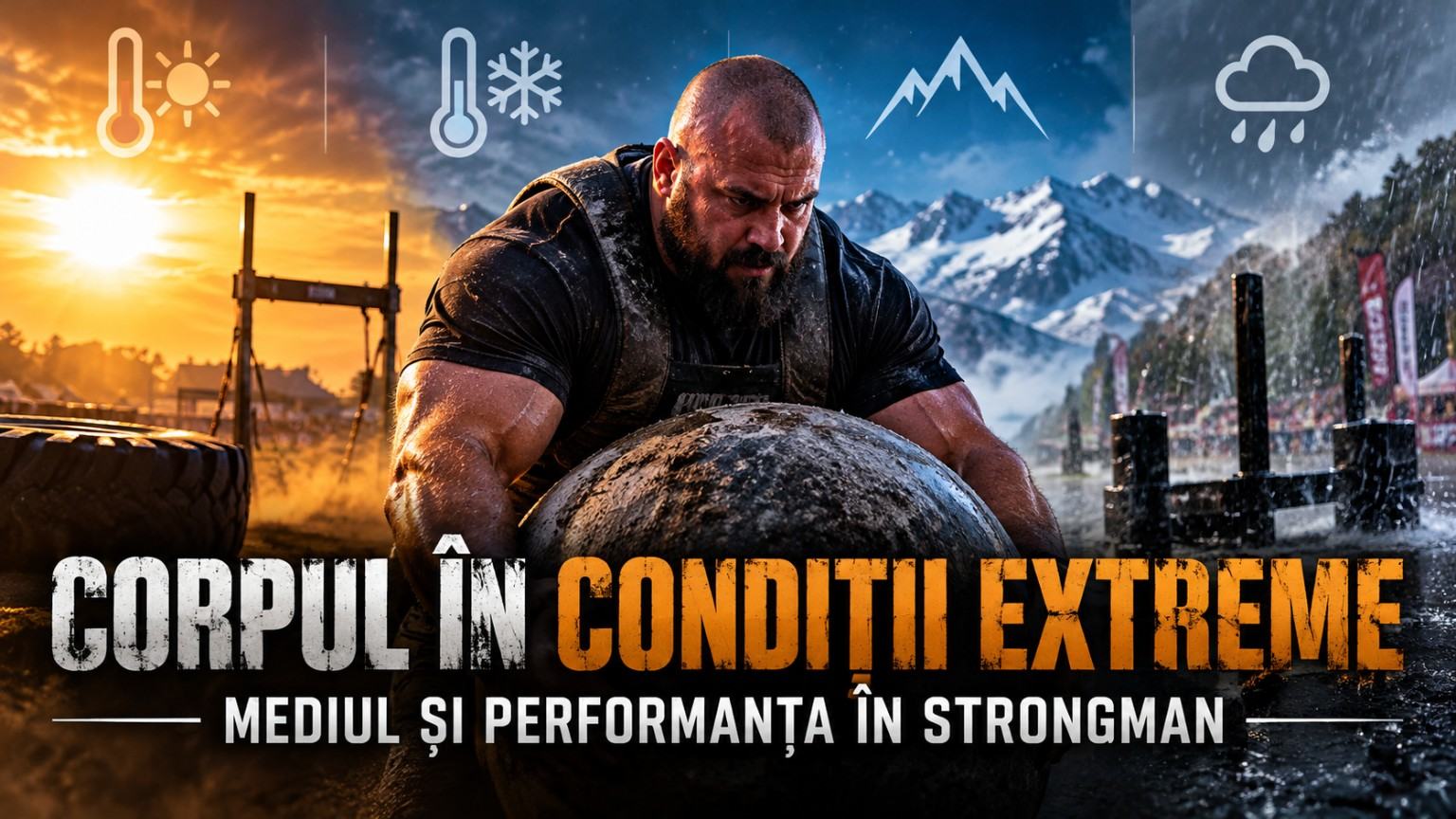
At a strongman competition, cold weather may look like a gentler opponent than extreme heat. A very large athlete accustomed to enormous weights might expect a benefit from cool air: less sweating, seemingly easier breathing and relief from the overheating familiar during summer contests. Reality is more complex. Muscle temperature is not the same as air temperature, and cold skin does not necessarily mean whole-body hypothermia. Before a Deadlift, Log Press or Yoke Walk, cold exposure may influence hand sensation, contraction speed, perceived stiffness, warm-up requirements and the quality of the waiting periods. Severe freezing conditions are not required for details to matter. Sometimes a meaningful difference in readiness begins during an apparently ordinary twenty-minute interval spent outdoors after warming up. The contest is shaped not only by what the athlete does under load, but also by what happens around it.
The scientific question is not whether cold invariably reduces strength, but which performance components are affected, through which mechanisms, after what exposure and under which conditions. Maximal isometric force, rate of force development, dynamic power, finger dexterity and repetition endurance are different outcomes. So are exposure to cold air, direct contact with a freezing implement, immersion in water and therapeutic cooling after training. Some influential experiments concerning cold were performed under conditions quite unlike a strongman contest. This episode examines what can responsibly be transferred, where direct research remains scarce and what practical recommendations can be developed without invented percentages or promises of invulnerability for heavyweight athletes. The objective is a disciplined account of applied physiology rather than a collection of winter-training slogans.
This article continues the series 'The Body Under Extreme Conditions: Environment and Performance in Strongman,' which began by examining high temperatures. The editorial approach remains the same: rigorous physiological explanation, substantial connected paragraphs, real event examples and an explicit distinction between direct evidence and reasoned extrapolation. Central sources include the American College of Sports Medicine's 2021 expert consensus on cold-weather exercise, reviews of temperature-dependent neuromuscular function and research into maintaining the benefits of warm-ups. We will not turn hypothermia risk into a dramatic story about every winter session, nor claim that a thermal garment automatically raises a Deadlift record. The purpose is to understand how an environmental condition changes the ability to express strength already developed through training.
1. What exercising in the cold means physiologically
The human body attempts to maintain deep-body temperature within a range compatible with normal organ function, while its surface responds continuously to the surrounding environment. In cold weather, skin blood vessels can constrict, reducing heat transfer to the exterior. This vasoconstriction partially protects core temperature, but hands and other peripheral regions may cool more quickly than the torso. Working muscles produce heat, while involuntary shivering can increase metabolic heat production. The exact response depends on clothing, wind, moisture, exposure duration, body size, exercise and individual characteristics. An athlete entering a cold arena from a warm room may initially notice only mild discomfort, but that feeling does not fully describe muscle temperature or the time remaining before the next attempt. The preparation strategy should therefore be based on exposure history as well as immediate sensations.
In ordinary language, cold may mean 8°C in driving rain or -10°C in dry, calm air. Physiologically, these situations are not equivalent. Wind accelerates surface heat exchange, while precipitation and damp clothing can substantially alter thermal losses. Contact with cold barbells, handles and platforms adds a local challenge, especially for the hands. These differences interact with exercise rhythm. A maximal attempt lasting only seconds may generate intense metabolic heat, yet the twenty-minute waiting period afterwards can allow peripheral tissues to cool. The official event time therefore does not capture the entire exposure relevant to performance. Time spent outdoors before, between and after attempts must be considered. Understanding the environment as a continuous exposure rather than a snapshot helps explain why athletes may feel prepared at the start and deteriorate later.
Thermoregulation depends on several pathways. Heat can be lost through radiation, convection, conduction and evaporation, with their relative importance changing as conditions change. On a windy platform, convection becomes prominent. When skin touches a cold metal implement, conduction may dominate locally. In rainy weather, soaked garments can lose much of their insulating effectiveness. Sweat matters even in winter. An athlete warming up intensely beneath several layers may become damp and then more vulnerable to cooling during a subsequent wait. Effective clothing therefore does not simply mean wearing as many layers as possible. It means managing exposure, accumulated moisture and the ability to add or remove layers without disrupting preparation. A practical clothing system must preserve movement and the secure handling of implements, not merely provide warmth while standing still.
Air temperature, skin temperature, muscle temperature and core temperature must be distinguished. An athlete may have very cold hands but a normal core temperature. In that case, gripping and technical control can suffer without generalised hypothermia. Conversely, prolonged demanding exposure can lower deep-body temperature and turn a performance problem into a medical one. Research indicates that reduced muscle temperature particularly affects some components of power and contraction speed. Yet every degree of air temperature cannot be converted into a percentage of weight lost from a lift. The distance between a wall thermometer and functioning muscle includes clothing, activity, circulation, time and measurement conditions. This distinction prevents a common error in superficial interpretations of cold-performance research. Muscle temperature is a physiological variable; weather temperature is an environmental one.
Autonomic responses to cold can influence perceived effort as well. An athlete may describe stiffer joints, slower fingers or unusual resistance during early warm-up repetitions. Some of these experiences correspond to measurable physiological changes, while others reflect expectation, prior experience and discomfort. Subjective sensation should neither be ignored nor treated as direct proof of a particular change in contractility. Rigorous comparisons would require tissue-temperature measurement, standardised loads and repeated movements under comparable conditions. In practice a coach can use athlete feedback to adjust the warm-up while keeping individual observation separate from general scientific conclusion. The goal is not to toughen the fingers through unnecessary exposure, but to allow the athlete to express strength efficiently without overlooking signs of excessive cooling.
Cold weather may feel welcome after a season of competitions in severe heat, and psychological comfort has legitimate value. However, feeling better in cool air does not prove that an athlete's mechanical power has increased. Moderately cool surroundings may support comfort during exertion, particularly for a large competitor, while very cold and windy conditions may cool the extremities and interfere with implement control. Equipment and work intensity determine much of the difference. The useful question therefore becomes how to preserve the benefits of thermal comfort without allowing muscle temperature and hand dexterity to fall before the event. The remainder of this article examines that challenge in the actual context of strongman disciplines, where force must be combined with speed, balance, grip and irregular intervals between attempts.
2. Muscle temperature, contraction and the nervous system
Muscle temperature changes the way the nervous system and muscle fibres generate movement. Within the fibre, contraction depends on electrical signalling, the release and reuptake of calcium ions, interactions among contractile proteins and continuous energy supply. Temperature affects the speed of several of these processes, and excessive cooling can slow them. In practice, a movement requiring rapid force development may be compromised before the athlete notices a dramatic reduction in the ability to sustain a slow contraction. This distinction explains why different strength tests do not respond identically to cold. For a strongman, the power required to accelerate a Yoke, lift a Stone or drive a Log overhead may have a different thermal sensitivity from a relatively static force test. Research in isolated tissue provides mechanisms, but applying those findings to competitive events requires care and attention to context.
Neuromuscular reviews describe how lower muscle temperature can slow nerve conduction and alter the mechanical characteristics of contraction and relaxation. However, the effects depend on the depth and method of cooling employed. A few minutes of exposure to cool air, prolonged cooling of one limb and a reduction in deep-body temperature are not equivalent interventions. When a study reports lower power following direct muscle cooling, its conclusion applies first to that protocol. It does not establish that every competition at 5°C causes the same loss regardless of clothing or warm-up duration. To translate evidence into useful decisions, readers should always ask how temperature was measured and which exercise was tested. This methodological discipline is especially valuable in strongman, where extrapolation from laboratory tasks is unavoidable but should never be hidden.
Tendons and other connective tissues store and transmit mechanical energy, and their behaviour may be influenced by temperature and loading history. It is tempting to claim that cold makes every tendon fragile and inevitably causes ruptures, but research does not support such deterministic language. Injury risk is multifactorial: unexpected loading, technical preparation, repeated exposures, recovery and surface conditions all contribute. On a cold morning, a progressive warm-up may improve movement tolerance without implying that every muscle is a rigid object needing to be thawed. Metaphors may help a general audience, but become misleading when mistaken for precise biological explanations. Preparation should be based on the athlete's real response, not on the myth of an unavoidable cold-induced injury. Protecting movement quality and managing load are more useful than fear-based rules.
The central nervous system also evaluates temperature, discomfort and the perceived cost of movement. Peripheral cooling may modify sensory feedback, while shivering can introduce involuntary muscular activity that interferes with delicate tasks. Intense muscular work, however, generates heat and may quickly change local conditions. This dynamic means that cold effects differ before, during and after an event. An athlete with numb fingers at the beginning of warming up may regain control as activity increases local temperature, then lose some of that control again during a long break. Merely labelling the day as cold does not describe functional condition at each attempt. Alternating periods of work and rest therefore become measurable elements of preparation. The same athlete may perform differently under the same ambient temperature depending on the preceding twenty minutes.
The relationship between muscle temperature and performance is task-dependent. Research syntheses have linked muscle warming to improvements in some short-duration performances and cold exposure to reduced expressions of power and speed. Yet laboratory figures are not universal coefficients for calculating a strongman record. They come from particular ranges of muscle temperature and specific experimental designs. Internal muscle temperature must not be confused with the temperature of the bar or the surrounding air. Knowing that an athlete commonly lifts 250 kilograms does not allow us to predict the result at 0°C from the forecast alone. The findings become useful when explaining why maintaining an adequate warm-up and limiting cooling between events are rational priorities. Their value lies in identifying mechanisms, not in making unsupported numerical promises.
Intermuscular coordination introduces another dimension. Complex movements demand synchronisation among multiple joints and muscle groups rather than simply producing peak tension in an isolated muscle. A Log Press requires load transfer, trunk stiffness and well-timed extension. A Yoke Walk depends on ongoing balance and control of oscillation. Even when a simple single-joint test shows small changes, a complex task may be influenced by peripheral sensation, foot control or reaction to a slippery surface. Conversely, a decline measured on laboratory apparatus does not guarantee an identical reduction in an event for which the athlete has exceptional technical skill. Physiology must be connected to biomechanics without reducing either domain to the other. The actual event determines which physiological changes matter in practice.
For training, these mechanisms suggest three broad priorities: sufficient active warming, maintenance of temperature during breaks and observation of hand function and complex movement quality. Every warm-up need not become an exhausting activation session. On the contrary, warming that creates excessive fatigue can compromise competition performance even if the athlete feels thermally comfortable. The ideal response balances neuromuscular preparedness against conservation of energy for the event. Research does not yet supply a precise algorithm for every strongman implement, but it provides good reasons not to wait motionless in damp clothing before an important attempt. This is relevant both to competitors managing personal readiness and to organisers deciding whether suitable waiting areas and reliable scheduling matter.
3. Isometric strength, dynamic power and maximal effort
A maximal strongman attempt may be brief without being physiologically simple. A near-limit Deadlift requires high tension, trunk stiffness and negotiation of a difficult part of the bar path. A Giant Dumbbell lift adds stabilisation and speed in transferring the implement. Laboratory tests do not always define performance in the same way. Maximal isometric force can be assessed without movement, whereas mechanical power depends on velocity and the resistance being displaced. Cold may influence these characteristics differently. A study identifying slower contraction does not directly establish an identical reduction in the heaviest possible Deadlift. The distinction has practical implications for selecting tests and interpreting results. An athlete may preserve the ability to hold high force while losing some of the speed needed for a technically demanding dynamic event.
Research reviews indicate that fast movements and dynamic power are often more vulnerable to muscular cooling than certain slow or isometric contractions. Proposed explanations include the temperature dependence of contractile processes and changes in nerve conduction. Outcomes nevertheless vary between protocols, and many experiments do not involve trained strongman athletes. Reduced muscle temperature produced through direct cooling is not equivalent to training in a cool park after ten minutes of activity. Near-maximal lifts also involve an individual's technical strategy, equipment and distinctive rest intervals. For general readers, the useful conclusion is to separate the speed of force development from absolute force without constructing a rigid hierarchy among events. The actual effect needs to be tested under relevant conditions.
An athlete may complete a heavy single that looks slower than usual without cold being the principal cause. Reduced bar speed may reflect lower muscle temperature, but also training fatigue, a different load choice, motivation or technical error. Conversely, a highly motivated competitor may achieve an excellent result on a cold day without disproving temperature physiology. Applied assessment benefits from standardised attempts under comparable conditions while recording warm-ups, outdoor exposure and movement velocity. Not every gym needs expensive sensors. Consistent video observations and notes about perceived exertion can provide useful clues. Such individual records do not, however, prove causation by themselves. Interpretation should remain cautious whenever several variables change together.
Repetition events introduce another interaction. A lengthy Log Press or Deadlift for Reps set produces metabolic heat that may reduce the initial sensation of cold, although the athlete could start with insufficiently prepared muscle. As the set continues, local fatigue and the rapid restoration of energy become more important. Cold may affect early repetitions differently from later ones, and good research should track performance across time rather than only reporting the final count. Missing one repetition could reflect warm-up quality, grip, rhythm or strategy. The claim that cold universally reduces muscular endurance is excessively broad. Certain submaximal tests produce more complex responses depending on contraction duration and actual tissue temperature. Event-specific testing is therefore more informative than extrapolating from one generic exercise.
Rate of force development describes how quickly muscular tension can increase. It is not the same as peak strength. In strongman, this characteristic supports acceleration of an implement and efficient use of momentum. Someone capable of pulling an extremely heavy load slowly may have a different profile from an athlete with exceptional explosive power. Cooling that reduces muscle temperature may modify the speed of contractile processes, although the magnitude depends on testing and exposure. Coaches should pay particular attention to preparing for fast events. This does not mean athletes should exhaust themselves through unnecessary jumping or explosive drills immediately before major attempts. Effective warming conserves energy while preparing the precise qualities required by the upcoming task.
Muscle-fibre differences are often invoked when explaining temperature effects. Fibres with faster contraction properties and those more involved in sustained activity have distinct physiological characteristics. Yet a strongman does not activate one isolated fibre category during a Farmer's Walk. Performance depends on motor-unit recruitment, posture, limiting body segments, joint movement and implement control. Findings concerning the temperature of isolated fibres or single muscles contribute to an explanation but do not provide a complete prediction. Attempts to label an athlete genetically resistant to cold from muscular appearance alone are not sufficiently supported for ordinary strongman practice. Repeated individual measurement and relevant preparation are more useful than sweeping claims about fibre types.
The point is not to deny that cold can influence strength, but to define the influence carefully. Reduced muscle temperature can impair particular outcomes, especially when movement speed and power matter. One ambient reading cannot predict the result of a strongman event. Moderately cool air may feel pleasant to a competitor working intensely, while the same conditions may leave the fingers of a motionless waiting athlete cold. Analysis must include preceding activity, intervals between exertions, warm-up duration and contraction type. Used in this manner, scientific research becomes a preparation tool rather than a collection of percentages removed from their original experimental context.
4. Effective warm-ups and preserving readiness before events
A warm-up is not a decorative ritual. Its purpose is to increase muscle temperature gradually, prepare motor control and move progressively towards event-specific demands. In cold conditions its importance may become more apparent because peripheral temperature begins lower and waiting periods encourage cooling. Nevertheless, no ideal duration applies to every athlete and weather condition. A competitor preparing for maximal Deadlift may need a progressive sequence of increasingly heavy attempts, whereas someone facing a Medley must also rehearse transitions between implements. Warming should create readiness without excessive fatigue. An excessively long sequence can compromise the event even when the athlete eventually feels very warm. The quality and timing of preparation are more important than its dramatic appearance.
Exercise physiology distinguishes active warming from passive temperature-maintenance methods. Active warming uses movement to produce heat and engage relevant coordination; passive strategies may involve insulating or heated clothing to limit subsequent cooling. They are not interchangeable. A thick jacket cannot fully reproduce the neuromuscular preparation of progressive sets with a barbell. Equally, repeating every heavy warm-up after a delay is not always the most economical solution. Research into passive maintenance following warm-up reports benefits in some power measures, but studies involved relatively small numbers and various sports. For strongman, maintaining temperature during the transition towards the platform is a reasonable practical hypothesis that needs adaptation to the particular event. The strategy is valuable only if it preserves readiness without interfering with movement or causing unnecessary fatigue.
A common scenario occurs when athletes are called to warm up and the start is delayed. In cold weather this produces a double challenge: muscular activity ceases to generate enough heat, and the physiological benefits of the completed warm-up may gradually fade. Waiting in a thin shirt beside the platform can cool the hands and limbs. Repeating every set from the beginning may accumulate fatigue. A flexible alternative includes extra clothing during the delay, the option of waiting in a protected area and a small amount of targeted reactivation before the attempt. Such plans should be rehearsed in training and adapted to the actual waiting period, not introduced for the first time at an important championship. Good preparation anticipates disruption rather than treating the official timetable as a guarantee.
Clothing intended to conserve heat must allow movement and secure handling of equipment. A bulky jacket may be useful during a break yet awkward if worn while checking position beneath a Yoke. Gloves can protect against cold while waiting, but rules and grip requirements may make them inappropriate during the event itself. Insulating trousers may preserve comfort in the lower limbs, but should not restrict mobility or interfere with contact against implements. Sophisticated products are not necessary for every situation. The practical principle is to use adaptable, dry and comfortable layers that can be removed quickly before execution. A well-organised support team saves time by simplifying those transitions rather than adding unnecessary complexity to an athlete's last minutes before a lift.
Before a very heavy attempt, specific warming can involve progressive repetitions that check bar path, trunk control and grip sensation. Each set need not approach maximal effort, because accumulated fatigue may eventually outweigh the benefit. The progression depends on the athlete and the event. Log Press preparation should include both the clean and the overhead movement, while Atlas Stones may require handling practice that general exercise cannot provide. In cold weather, rushed warming can leave an athlete feeling stiff, but chaotic excessive preparation can impose its own cost. A coach should observe movement speed, coordination and control rather than relying only on subjective warmth. Those indicators help decide whether the competitor is ready or whether a small adjustment is warranted.
Later in a contest, a different problem emerges. Muscles may be fatigued from earlier events while the extremities have cooled during lengthy periods of inactivity. Repeating the full morning warm-up could be unnecessary or excessively demanding, while going immediately to a heavy implement may be unwise. The solution is not a rigid formula but a compact routine tailored to current condition and event demands: regain useful warmth, test the specific movement and avoid sets without clear benefit. Accurate start-time communication and a sheltered preparation space make this easier. In outdoor competition, organisational quality can directly influence the efficiency with which athletes reach the start line. Physical preparation and logistics are not separate worlds.
The warm-up literature supports selected dynamic methods for strength and power, but provides no single proven routine for every strongman event in severe cold. Athlete experience and coaching observation can help fill the practical gap when described honestly as experience rather than a controlled experiment. A routine can be examined through standardised training tasks performed under similar conditions, with and without a proposed heat-maintenance intervention. Warm-up duration, time until the event, perceived exertion, ambient conditions and execution quality can be recorded. Such information does not create universal promises, but may improve individual preparation. In cold weather, the most effective warm-up is one whose benefits survive the waiting period.
5. Deadlift and Log Press in the cold: strength and technique
Maximal Deadlift provides a useful starting point because it distinguishes absolute force from very fast movement. The athlete must generate substantial tension over a short interval, stabilise the trunk and keep the bar on an efficient path. Cold may influence preparedness through muscular temperature, hand sensation and perceived stiffness during initial attempts, but no valid formula converts air temperature into a fixed kilogram loss. Successfully pulling a heavy bar at 2°C does not prove that cold improves performance, and missing an attempt does not prove that it reduced strength. Responsible analysis considers load, warm-up, equipment, waiting duration and the day's previous exertion. Cold may be an important variable without being the only variable. Technical readiness and the quality of the preceding hours often determine how environmental effects are expressed.
Cold metal introduces a challenge distinct from whole-body muscle temperature. Contact between palm and bar may change peripheral sensation, while moisture can affect traction. Some competitions permit straps, while others make unaided grip part of the event. The impact of cold hands therefore depends partly on competition rules. It would be wrong to explain every dropped bar through vasoconstriction or slowed peripheral nerve conduction. Bar diameter, knurling, chalk, skin condition and forearm fatigue are alternative explanations. A practical routine for maintaining hand warmth until shortly before an attempt can be evaluated safely without reliance on a particular commercial product. Observations should be connected to performance rather than comfort alone. Protecting grip is relevant, but the reason an attempt fails requires careful analysis.
A Deadlift suit, belt and other accessories can influence biomechanics as well as thermal comfort. Thick layers may insulate the torso yet trap sweat during warm-up; restrictive equipment may make adjustments awkward. Competitors should observe rules and avoid major equipment changes on competition day. Sometimes the simplest response is not a new suit but an extra layer worn only while waiting. Attempts are already demanding, and repeatedly adjusting equipment can introduce needless stress. A support team can prepare dry replacement garments, warm-up order, shelter access and a routine for removing layers promptly before the platform. The objective is reliable execution rather than elaborate preparation. Good logistical choices may have measurable value without requiring claims that any single accessory directly increases maximal strength.
Log Press introduces different demands. Cleaning the implement to the chest requires coordination of leg extension, trunk and arm positioning, followed by an overhead movement requiring force and speed. Muscular cooling may affect explosive components, but results still depend on familiarity with equipment and individual technique. The handle may be cold or damp, while ground conditions can affect stability. A maximal Log Press demands a different strategy from a sixty-second repetition event. In the first, maintaining readiness between attempts is central; in the second, handling longer work with minimal pauses adds complexity. Neither case can be reduced to the equation that lower air temperature must produce a specific reduction in lifted weight. Event format determines which temperature-dependent mechanisms are likely to matter.
A Log Press repetition set produces heat through muscular work, but that does not make outdoor cold irrelevant. A competitor may begin with cold fingers and insufficiently prepared shoulders, then experience respiratory strain or technical difficulty toward the end. Differences between early and late repetitions may reflect both spontaneous warming and accumulating fatigue, which are difficult to separate without measurements. Training can therefore employ reference sets conducted under comparable conditions while recording speed and execution quality. The final repetition count alone does not reveal whether the athlete lost strength, breathed inefficiently, paced poorly or suffered a grip problem. The explanation should respect the complexity of the task rather than treating every decline as a straightforward thermoregulatory effect.
Waiting periods between attempts are also important. At contests where Log weights increase across rounds, athletes may wait long enough to cool after an effective warm-up. When the start changes, adjustments should depend on the time remaining. Rewarming with heavy sets can create fatigue; completely passive waiting can erode thermal readiness. An individualised middle ground may combine insulating clothing with brief movements intended to maintain coordination. Direct evidence is insufficient to impose one number of warm-up sets on every athlete. Training consistency and personal observation are more valuable than mechanically copying a famous competitor's routine, particularly when body size, strength level and cold tolerance differ substantially.
For both Deadlift and Log Press, cold should be treated as an interacting factor rather than an automatic excuse. A poor result may require analysis of preparation, recovery and actual strength rather than weather alone. A good result may be achieved in cold conditions partly because the athlete managed warm-up successfully, without proving that the temperature is ideal for everyone. Future research comparing standardised loads and documented muscle temperatures across different body sizes and sexes would be valuable. Until then, the practical message remains cautious: retain useful warmth, protect the hands between attempts, conduct event-specific preparation and inspect technique before attributing every change to cold exposure.
6. Yoke, Farmers, Stones and Medleys: cold during moving events
Yoke Walk combines supporting strength, trunk stiffness, acceleration and step control. A twenty-metre run may seem too short for cold to matter, but posture depends on prior warm-up and the condition of the surface. In a cold arena, metal can be uncomfortable against the body, while extra clothing may change implement positioning. If the ground is wet or slippery, the problem becomes mechanical as well as neuromuscular. A slower time caused by cautious steps cannot be distinguished from reduced power using the finishing time alone. Video observations, step length, number of stops and course conditions can help. Event-specific research must account for these variables before attributing changes exclusively to air temperature. In moving events, environment acts on the route as well as on the athlete.
Farmer's Walk may be among the clearest examples of peripheral cold exposure. Metal handles rapidly produce a cold sensation in the palms, and dexterity and tactile feedback may influence grip. Yet strongman grip is not identical to a fine-finger-movement test. Holding massive loads also involves the forearms, shoulders, posture and overall effort tolerance. A study of precise hand movement in the cold cannot directly supply a percentage reduction in carry capacity. Nevertheless, it justifies attention to maintaining hand warmth before the event. Gloves worn during waiting, drying the hands, preparing chalk and inspecting handles are reasonable practical measures when allowed by the rules and implemented without hazardous improvisation. Grip deserves specific investigation because the hands are both sensory organs and the athlete's mechanical connection with the load.
Atlas Stones introduce a surface-temperature problem. Concrete and other stone materials may feel very cold, while traction depends on moisture and permitted gripping substances. Tacky, when authorised, may behave differently depending on its formulation and environment, but standardised evidence does not support claims that one temperature guarantees one level of effectiveness. Athletes should understand both the mechanics of securing the object and the materials permitted by organisers. Failure may result from insecure contact, poor trajectory or accumulated fatigue rather than cold alone. A dry stone and one covered in condensation may behave differently at identical air temperatures. As with other events, the state of the object and the physiological state of the competitor must be analysed separately before recommendations are made.
Sandbag Loading and carrying have different characteristics. Outer material may absorb water, while load distribution may shift during lifting. On a wet surface, athletes may be more cautious during acceleration or turns, losing seconds without a clear change in muscular strength. Damp clothing can increase discomfort during later breaks, while repeated bag contact may redistribute moisture across the athlete's equipment. These consequences are not identical to the body's biological response to cold, but they are part of winter competition. Performance analysis should therefore distinguish environmental effects on the body from effects on equipment and the course. Confusing them leads to unsuitable technical advice. A problem with a wet sandbag is not always solvable by adding another warm-up set.
Truck Pull can combine demanding traction with wind, rain, cold ground and relatively sustained contractions. Rolling resistance and surface characteristics are major determinants of difficulty independent of muscle temperature. Comparing pulls conducted on different asphalt cannot isolate a cold-weather effect. During prolonged strenuous work, however, breathing rapidly in cold dry air may become relevant for individuals susceptible to exercise-induced bronchoconstriction. Movement speed, harness, rope and repeated trunk contractions require preparation distinct from a maximal Deadlift single. For this event, environmental assessment should include athlete physiology as well as the vehicle and road surface. Reducing the entire outcome to air temperature ignores the mechanics of the task.
A Loading Medley illustrates combined demand. An athlete may alternate sandbags, stones, carries and loading without enough rest for complete energy recovery. Under cold conditions, the opening segments may depend partly on initial muscle temperature, while later performance is increasingly influenced by fatigue, transitions and breathing capacity. Rain or snow adds variables such as traction, object handling and visibility. These effects should not be assumed to add linearly. Preparation can include safe technical rehearsals and observation of coordination without making severe freezing exposure a mandatory character test. A well-maintained surface and clear object order may matter more than any special warming product. The goal is to prepare for the actual mechanical and environmental task.
These events demonstrate that strongman performance arises from interactions among athlete, implement and environment. Cold can influence physiology through circulation, nerve conduction and muscle temperature; equipment through surface temperature, moisture and traction; and the course through precipitation or ice. Rigorous analysis must identify where the problem originates before proposing an intervention. If the athlete loses time because the feet slip, extra warming cannot solve the entire issue. If hands become numb during waiting, changing the competition weight does not address the cause. Mature preparation begins with correct observation and follows with adjustments compatible with the rules and safety of competition.
7. Hands, tactile feedback and grip on cold implements
The palms provide the direct interface between athletes and many strongman implements. Unlike the large muscles of the trunk, hands can lose heat quickly under certain conditions, while peripheral circulation may be reduced through vasoconstriction. Cold fingers can change tactile sensation and the precision of control. These effects matter when finding the correct position on a Giant Dumbbell handle, securing a bar or managing a strap. The relationship, however, is not identical across every test. A study of fine dexterity may report changes without assessing weightlifting, while another may detect no significant effect after moderate exposure. Cold intensity, duration, glove design and actual skin temperature must be established before extrapolation. Cold hands should not be confused with generalised hypothermia. They represent a local functional challenge that can arise while deep-body temperature remains normal.
During Farmer's Walk, the connection with the handle operates under very heavy loads. Grip depends on muscular force, friction, handle geometry and the athlete's ability to control movement. Cold palms can produce uncertainty, while a damp handle changes friction independently of peripheral nerve activity. When straps are permitted, other factors may become limiting. A claim that cold reduces grip by one universal percentage is therefore unjustified. It is more useful to observe whether securing the load is difficult immediately, whether handles slip during a turn or whether implements are dropped after prolonged work. These observations separate friction problems from local fatigue and direct preparation towards plausible causes. Practical event analysis requires recognising that grip is simultaneously a muscular and mechanical phenomenon.
An important logistical detail is the interval between removing gloves and starting the event. Gloves worn to protect hands during waiting may be incompatible with competition rules, yet may help limit exposure before the attempt. If removed twenty minutes too early, much of the benefit may disappear. If kept until the final moment, the competitor needs a fast, reliable routine for preparing the hands and inspecting the implement. That routine should be rehearsed beforehand because not every glove or fabric works well, and moisture can create its own problems. The principle is not to buy the most expensive accessories, but to reduce unnecessary exposure. In a sport where dropping one implement can decide the rankings, small practical details warrant serious attention.
For Stones, bags and barrels, cold contact may involve a much larger surface than holding a handle. Forearms, chest and abdomen help control the object, while clothing may influence traction and thermal sensation. When a surface is wet, the athlete may lose control despite having sufficient general strength. Yet discomfort alone does not prove impaired contractile properties. A coach should examine whether the object was secured correctly, whether permitted gripping materials behaved as expected and whether the movement path remained efficient. Future research could separately evaluate hand temperature, surface moisture and results on a standardised event. Until then, equipment inspection and technical familiarity are robust interventions. The purpose is to identify the actual limiting factor rather than blame an abstract temperature effect.
Peripheral cooling may also alter position sense or the speed of fine adjustments, although findings are not uniform. An experiment involving healthy volunteers exposed to moderate temperatures may document reduced skin temperature without measurable deterioration of dexterity, depending on the test. More severe cooling can produce clearer functional impairment. Such variability is why individual experience cannot be converted into absolute rules. At competition, a grip-specific warm-up attempt may provide information more relevant to the athlete than a general threshold borrowed from another field. If intense numbness, pain or abnormal finger colour occurs, the issue is no longer exclusively competitive and may require medical assessment. Ignoring those signs for one additional attempt can create consequences disproportionate to any ranking gain.
Grip aids, including chalk and permitted Stone products, must be distinguished from muscular physiology. Temperature, moisture and surface texture may change their practical effectiveness. A dry rough implement and one covered in condensation can feel different even at identical air temperatures. The solution is not to trust a marketing claim that one product compensates for every gripping challenge. It is to check the rules, rehearse with comparable equipment and maintain a simple preparation routine. In a cold contest, the hand faces sensory, muscular and surface-related challenges simultaneously. Performance emerges at their intersection. A scientific explanation should preserve these components rather than treating gripping as a single isolated variable.
Protecting the hands is therefore more than a matter of comfort, but strategies must be assessed honestly. Gloves during breaks, limiting unnecessary metal contact, drying surfaces and completing a specific warm-up may be practically sound. They do not guarantee identical results for every competitor or explain every failure. The strongest evidence addresses general physiological mechanisms and particular dexterity tests; direct transfer to carrying implements weighing 100–150 kilograms per hand remains a question needing dedicated study. This limitation does not justify inaction. It justifies systematic evaluation of simple, safe interventions. Strongman needs a science of grip connected to actual implements rather than slogans about cold tolerance.
8. Wind, rain, moisture and equipment: the real competition environment
A weather-app temperature describes only part of the environment in which competition takes place. Wind may accelerate surface heat loss, precipitation can soak garments and contact with cold ground may alter thermal sensation in the feet. The wind-chill index is useful when assessing risk to exposed skin, but it is not the actual temperature of muscle and does not directly predict a Deadlift result. Athletes sometimes mistake a 'feels like' reading for a measure of body temperature. It is instead a meteorological estimate linked to heat exchange under specified conditions. For prevention, the information must be considered alongside exposure duration, clothing, moisture and individual condition. Weather data should inform planning without being treated as a substitute for observing athletes and the actual course.
Rain changes several variables simultaneously. Wet garments may provide less insulation, surfaces become slippery and painted or metal implements can lose traction. During Yoke Walk or Farmer's Walk, altered friction may demand a more cautious pace. If referees insist on continuing an event on dangerous ground, the issue becomes one of organisational safety rather than mere cold tolerance. Muscular strength cannot compensate for footwear losing purchase on ice. Organisers should inspect courses, remove hazards and establish criteria for changing, postponing or stopping an event. A professional contest does not turn accidental surface hazards into an arbitrary way of selecting the bravest athletes. Environmental difficulty is legitimate only when the conditions can be managed without unjustified danger.
Clothing for exertion in cold weather should be considered an adaptable system. Layers close to the skin help manage moisture; insulating layers reduce heat loss; an outer shell may protect against wind or precipitation. The exact combination depends on exposure and event demands, and equipment must comply with the rules. A heavyweight competitor may benefit from generous insulation while waiting but need unrestricted joint movement during a Clean or Log Press. A very stiff jacket worn to avoid cold may alter movement mechanics and create a new problem. The practical solution is to distinguish waiting clothes from competition attire, with a rapid, rehearsed transition. A simple system of layers can address several issues simultaneously without relying on elaborate technology or unfamiliar products.
Sweating during warm-up complicates clothing decisions. An athlete may keep all thick layers on during progressive sets, then stand motionless in damp material. As muscular activity falls, metabolic heat production declines and moisture can accelerate cooling. This is relevant even above freezing. Part of the plan should therefore concern changing or ventilating garments without sacrificing muscular preparedness. No single fabric magically solves every circumstance; controlling moisture and matching clothing to exposure duration matter most. Teams can prepare a dry replacement set and somewhere sheltered to change without prolonged exposure. This basic logistical preparation may improve comfort and readiness more reliably than improvisation immediately before an event.
Footwear is the physical interface between competitor and course. Traction, sole stiffness, stability and event compatibility may matter more than thermal comfort alone. Shoes appropriate for Deadlift may not be ideal on a route covered in water or snow. Conversely, choosing bulky insulated footwear can alter biomechanics and Yoke positioning. Decisions should be taken in advance, tested safely and aligned with competition rules. Changing shoes unexpectedly may affect distance from the bar, foot position and implement control. Weather adaptation should not undermine technical specificity already developed in training. It is usually better to prepare a tested alternative than to discover a new shoe's behaviour while carrying a maximal load.
Cold metal is an obvious concern, but materials conduct heat differently. Wood, steel, concrete, rubber and fabrics vary in conductivity, texture and response to moisture. The sensation in the hand depends both on material temperature and on how rapidly heat transfers. A steel handle and a concrete stone at identical temperatures are not necessarily equivalent contact experiences. Conditions can also change during competition: sunlight appears, condensation forms and implements are handled repeatedly. Inspection immediately before an event is useful precisely because a check conducted two hours earlier may no longer represent reality. Equipment maintenance and correct preparation belong to risk management. A problem observed at the implement does not automatically indicate a physiological problem in the athlete.
Weather assessment should lead to concrete decisions. When forecasts indicate freezing rain, strong wind or temperatures associated with increased cold-injury risk, organisers should do more than tell everyone to wear thick clothing. Sheltered waiting areas, proper warm-up space, schedule changes and explicit stopping criteria may be necessary. Competitors also need to report problems rather than conceal numbness or lost control because of competition pressure. Challenging environments can legitimately form part of sport, but avoidable hazards should not be confused with appropriate difficulty. Respect for strength and endurance is reflected in the quality of conditions offered to athletes as well as the weights they lift.
9. Circulation, blood pressure and breathing cold air
Cold triggers vascular responses that may change cardiovascular strain independently of the weight being lifted. Peripheral vasoconstriction limits heat loss but can increase vascular resistance and affect blood pressure. During near-maximal lifting, bracing and the Valsalva manoeuvre already create substantial transient pressure changes. These mechanisms may overlap, so competing in cold weather should not automatically be assumed easier on the circulation than competing in heat. Individual response depends on cardiovascular health, medication, effort intensity and exposure. Extraordinary strength does not provide immunity against hypertension or other problems. Athletes with relevant histories should seek appropriate medical assessment rather than rely on informal changing-room rules. The goal is not to make every cold-weather attempt sound dangerous, but to acknowledge interacting physiological demands.
Heart rate alone does not fully describe the response to cold. In some circumstances vasoconstriction and autonomic activity change pressure without a proportional pulse response; in others anxiety, caffeine and anticipation dominate heart rate. A watch displaying a precise number cannot separate these mechanisms. Optical sensors may also be less reliable with reduced peripheral circulation or intense movement. Symptom observation and medical history are therefore more important than isolated readings. Unusual chest pain, fainting or major breathing difficulties should not automatically be blamed on cold and managed by continuing a warm-up. Medical evaluation takes priority. Competition planning should recognise that impressive numerical tracking cannot replace competent assessment when concerning symptoms occur.
Cold air is often dry, and heavy breathing increases heat and moisture exchange through the airways. During Truck Pull or a Loading Medley, ventilation may rise substantially and susceptible individuals can develop manifestations consistent with exercise-induced bronchoconstriction. This is not equivalent to the ordinary sensation of cold air in the throat. Cough, wheezing and chest tightness may warrant specialist assessment; diagnosis relies on appropriate pulmonary-function testing rather than assumption alone. American Thoracic Society guidance discusses the role of preparatory warm-ups and, for people with exercise-induced bronchoconstriction, possible use of devices that warm and humidify inspired air. Such recommendations are clinical and should be interpreted according to the individual's condition and the planned activity.
An athlete without a known respiratory diagnosis may confuse normal exertional fatigue with bronchoconstriction. Conversely, someone repeatedly experiencing symptoms after exercise in cold air should not ignore them merely because all strongman competitors breathe heavily. Medical history, symptom characteristics and appropriate testing determine the distinction. It would be inappropriate to suggest universal medication doses or inhalation devices for winter events. Treatment depends on diagnosis and a clinician's advice. Coaches should focus on recognising unusual changes and avoiding pressure to continue when breathing is significantly impaired. Performance depends on respiratory function, and safeguarding that function is a legitimate element of preparation.
Masks, scarves and other face coverings can change the conditions of inspired air, but also affect comfort and breathing during exertion. Dedicated heat-and-moisture exchange devices may have a role for selected individuals, although ordinary fabrics are not equivalent and not every design is suitable for maximal exertion. Rules and the need to communicate with officials may also limit their use. Athletes should not experiment with restrictive accessories for the first time immediately before a maximal attempt. Those with a respiratory history need clinically appropriate guidance and controlled practice. Perceived comfort is useful information, not proof of medical efficacy. A responsible preparation plan separates a protective device's intended function from advertising claims.
Cold also affects circulation to the extremities. Pale or numb fingers can reflect ordinary vasoconstriction, but severe, painful, persistent or unusual changes may require assessment. Some individuals develop disproportionate vasospastic responses to cold. Hand appearance does not allow self-diagnosis. Recurrent problems should be discussed with a clinician, especially when they interfere with secure handling or cause pain. When hands are essential to the safety of Farmer's Walk, persistent numbness is more than a comfort problem. It may justify reconsidering an attempt. Maintaining safe manual function takes precedence over demonstrating tolerance of environmental discomfort.
The interaction among cold, circulation and respiration illustrates the importance of individual assessment. Not everyone exposed to the same temperature experiences the same blood-pressure change or breathing sensation. Professional competition should provide access to warming facilities and qualified personnel capable of assessing alarming signs. Coaches can adapt clothing and rest periods but cannot replace medical diagnosis. An athlete may possess remarkable strength alongside a cardiovascular or respiratory sensitivity deserving attention. Recognising this does not diminish athletic achievement; it makes it more sustainable. The entire body responds to cold, not only the muscles involved in a lift.
10. Hypothermia, frostbite and when exertion must stop
Hypothermia occurs when core temperature falls enough to impair normal physiological function. In sport, it must be distinguished from ordinary cold discomfort or isolated cooling of the hands. Signs may include shivering, impaired coordination, unusual behaviour and, in severe situations, altered consciousness. None should be dismissed casually at the edge of a platform, especially after prolonged exposure to wind, precipitation and wet clothing. An athlete may continue generating heat through exercise, but risk can increase when activity stops and adverse conditions persist. Recognising warning signs and obtaining medical support take priority over planning another attempt. ACSM guidance treats cold injuries as genuine risks requiring prevention and formal organisational procedures. The aim is not to alarm everyone training in winter, but to identify when routine discomfort may be developing into a medical problem.
Frostbite involves tissue injury after sufficiently severe cold exposure, with risk affected by wind and uncovered skin. Fingers, ears and other peripheral areas are vulnerable. It should not be confused with the temporary sensation of cold hands. Unusual colour changes, lost sensation, pain or subsequent skin lesions require appropriate assessment. Forcefully rubbing a potentially injured area or improvising rewarming without understanding the condition may introduce further problems. This article does not replace medical treatment protocols. For strongman, prevention begins by limiting prolonged contact with freezing metal and protecting extremities between events. Rules should not unnecessarily force competitors to remain uncovered before attempts when conditions increase risk. A properly managed warm-up and waiting environment is part of athlete protection.
Non-freezing cold injuries may also occur, particularly during prolonged exposure to cold, wet environments. They demonstrate why a temperature below zero is not the only risk criterion. A rainy, windy day with soaked shoes can become problematic even when the thermometer shows positive values. Coaches should observe exposure duration and clothing condition instead of relying solely on a forecast. During contests with breaks lasting many tens of minutes, an athlete may remain relatively inactive in clothing suited to exertion but inadequate for standing still. Dry replacement layers and access to shelter are therefore genuine preventive tools rather than luxury conveniences. Athlete health should not depend on last-minute improvisation.
Early warning signs can be mistaken for ordinary fatigue. A competitor becoming slow, inattentive or clumsy after several events may appear merely exhausted. After prolonged cold exposure, significant thermal strain should also be considered. Referees and coaches should not diagnose hypothermia independently, but they should stop exertion and seek assessment when concerning manifestations arise. Altered consciousness, confusion, loss of coordination or sudden deterioration warrant emergency evaluation. The argument that the athlete has only one more Stone to load becomes dangerous when symptoms suggest a medical issue. Rankings are not a triage criterion. A safe competition culture gives qualified personnel the authority to prioritise health regardless of how close a competitor is to finishing.
A contest's cold-weather medical plan should exist before spectators arrive. Responsible staff need access to weather information, routes for emergency services, sheltered areas and clearly defined authority for stopping events. A first-aid kit alone is insufficient without procedures and trained personnel. Communication with competitors matters just as much: rules should explain what happens when weather deteriorates and how athletes can obtain medical assessment. Strongman events often use temporary venues, making medical logistics especially important. Planning for cold injury deserves attention comparable to the installation of the implements themselves. A clear protocol can prevent a manageable incident from turning into a more serious emergency.
Neither acclimatisation nor large body mass guarantees absolute protection. Cold experience can alter some sensations and responses without eliminating the possibility of hypothermia or peripheral injury. Athletes may tolerate discomfort psychologically while continuing to lose heat under adverse conditions. Fatigue, recent illness and inadequate energy intake may further modify tolerance. Risk should not be assigned simplistically to one body-size category. The relevant assessment considers the person, environment and exposure duration alongside individual medical circumstances. If conditions become unsafe, organisers must be able to change or stop an event without turning athlete protection into an emotional negotiation with the crowd.
Preventing cold injury is more valuable than treating delayed complications. Protecting extremities during breaks, avoiding persistent wetness, providing access to warmth and maintaining a realistic schedule can reduce risk. None is a guarantee, but together they form a coherent management system. Alarming symptoms require professional intervention and ending the exposure. Athletes should know where medical personnel are located and which symptoms to report immediately. Strongman can value perseverance without promoting the denial of danger. Strength is the capacity to perform demanding events, not an obligation to ignore a medical problem. Respect for competition also means creating rules that allow athletes to return safely next season.
11. Hydration, nutrition and energy availability in cold weather
Thirst may be less noticeable on cold days than during summer, but that does not mean the body no longer needs fluid. Athletes continue to sweat during warm-ups and events, especially while wearing several insulating layers. Cold dry air may also increase respiratory water exchange when ventilation becomes high. Actual losses vary with exercise intensity, contest duration, moisture and individual characteristics. No universal hourly volume suits every strongman. Contemporary hydration guidance encourages starting adequately hydrated and adapting consumption to actual circumstances, avoiding both excessive deficit and unnecessary forced drinking. A cold contest is no reason to neglect fluids, but neither does every break require very large amounts of water. The objective is a workable balance that can be maintained throughout the day.
A competition containing several events may last six or eight hours even though actual exertion comes in brief episodes. Food and drink planning should account for starting times, protected rest areas and gastrointestinal tolerance. An athlete may perform maximal Deadlift in the morning and then wait a long time before a moving event. Without available food, energy availability and comfort may suffer; eating an enormous meal immediately before a Medley presents a different problem. The aim is a simple strategy rehearsed during preparation rather than an experiment with sophisticated supplements. Familiar snacks, accessible drinks and flexibility when delays occur can be more useful than a rigid protocol built around a starting time that later changes. Practicality is a scientific virtue when the real event is unpredictable.
Carbohydrates can support recovery and energy availability across demanding days, although precise needs depend on total duration and intensity. One maximal attempt should not be fuelled under exactly the same rules as prolonged endurance racing, and transferring quantities without context may be inappropriate. Strongman, however, accumulates repeated events, warm-ups, carrying and periods of stress, so whole-day nutrition matters. Cold exposure may add metabolic demands for thermoregulation in certain circumstances, particularly when shivering or prolonged exposure occurs. This does not automatically justify enormous increases in food intake for every winter session. The plan should be individualised and monitored without confusing feeling cold with a measurable fixed energy requirement. The goal is adequate availability rather than indiscriminate surplus.
Warm drinks and meals may improve comfort during breaks, and that practical advantage is real even though it does not demonstrate a direct increase in maximal strength. A warm beverage may encourage fluid intake, while a simple meal eaten in shelter can make the day easier to manage. Such measures cannot replace suitable clothing or treat a serious cold emergency. Drink temperature should not become a medical indicator of whether the body is adequately rewarmed. Someone experiencing confusion or severe deterioration needs assessment, not merely a very hot cup of tea. Separating comfort, treatment and demonstrated performance is a central principle of accessible scientific writing. Useful practical measures should be valued for what they actually achieve.
Caffeine and other stimulants require caution, especially among athletes with cardiovascular conditions, palpitations or individual sensitivity. A cold competition does not automatically justify larger doses to compensate for feeling sluggish. When insufficient warming or travel fatigue is the problem, pharmacological stimulation does not resolve its underlying cause. It would also be inaccurate to claim that every amount of caffeine prevents adaptation to cold. Effects depend on quantity, circumstances and the individual. Practical priorities include avoiding competition-day experiments, checking products for prohibited or undeclared ingredients and seeking medical guidance when relevant treatments or symptoms are present. Drinks and supplements should not be presented as replacements for training or medical supervision.
Hydration status is difficult to estimate using thirst or urine colour alone, as both indicators have limitations. Comparable pre- and post-session weighing can supply additional information about body-mass changes, although drink intake, food, clothing and urine output must be considered. Not every kilogram lost automatically represents water, and interpretation should be individualised. For very large athletes, absolute numbers can appear striking, but body weight alone does not justify huge fluid volumes. Excessive consumption may create risks, including electrolyte disturbances. The aim is an approach that helps competitors remain appropriately hydrated without introducing gastrointestinal distress or other problems immediately before lifting. A protocol should be rehearsed, realistic and compatible with the demands of the actual competition.
Good cold-weather nutrition aims for stability rather than spectacle. It involves familiar food, suitable drinks, appropriate storage and a flexible timetable. If intervals change, athletes should have alternatives and avoid both very long periods without intake and poorly timed oversized meals. Even an excellent nutrition protocol cannot compensate for an icy platform, inadequate warm-up or insufficient sleep. Understanding where nutrition fits within total preparation encourages more realistic decisions. Strongman athletes need to express strength across several successive events, not win a competition in supplement consumption. Food is a resource for activity and recovery rather than a universal remedy for every environmental challenge.
12. Cold adaptation, travel and competition preparation
Cold acclimation is more complex than the popular belief that repeated exposure automatically makes people stronger at low temperatures. The body may show certain adaptations to repeated cold, including changes in sensation, shivering responses or peripheral circulation depending on the protocol. Such adjustments are not equivalent to demonstrated improvements in maximal strongman strength. Research on cold adaptation and muscular performance is much less conclusive than the evidence for heat acclimatisation in selected exercise tasks. There is no justification for recommending severe exposures or extreme immersion solely to become stronger during winter. Preparation should reflect the actual competition environment while preserving the quality of sport-specific training. Discomfort endured is not itself an objective measure of useful adaptation.
An athlete living in a region with cold winters may experience a contest at 5°C differently from someone travelling from a warm climate. Yet that difference in comfort does not, by itself, establish who has the best muscle temperature at the start. Experience, clothing, outdoor waiting and warm-up duration remain essential. Coaches might use gradual exposure to cool conditions to check equipment and practise managing pauses without deliberately lowering core temperature. Athletes can develop logistical competence and familiarity even when exact physiological adaptations are not measured. Distinguishing practical learning from biological acclimation matters. One should not be presented as automatic proof of the other. Knowing how to prepare for an event is valuable without claiming that every exposure induces a measurable muscular advantage.
Cold-weather preparation must fit into an already demanding training programme. If the athlete has heavy Deadlift, Log Press and Yoke within the same week, adding intentionally very cold sessions may increase fatigue without clear benefit. Movement quality and recovery need protection. Every training session does not need to become a meteorological simulation. Technical work can remain in controlled conditions while selected activities safely rehearse outdoor equipment management. Decisions depend on competition proximity, access to shelter and the athlete's condition. During peaking, the priority is expressing fitness rather than accumulating exposures that compromise readiness. Climatic adaptation should not sabotage strength adaptation. Environmental preparation is a supporting element, not an alternative to doing the primary training well.
Travel can introduce variables absent from the training log. A long journey, sleep in an inadequately heated room and lack of dry replacement clothes can affect comfort and recovery before competition. A team arriving late after many hours of travel has less time to inspect the venue and organise equipment. These details matter without requiring dramatic changes in core temperature. Planning should include accommodation, transport, storage and access to food and drinks. A forgotten item, such as gloves for waiting periods or dry clothing, can become inconvenient on the day. Preventing such problems is easier than resolving them beside the platform. The purpose of logistics is to preserve the athlete's physical and mental resources for events that actually count.
The timetable influences preparation. If the first event begins at nine in the morning and the final event occurs in the afternoon, temperature and wind may change substantially. A plan based only on the morning forecast can become inadequate. Athletes and coaches should check updates and prepare alternative clothing and warm-up arrangements. Organisers must also communicate clearly. A changed starting time that forces repeated warm-ups may disturb readiness more than a small shift in air temperature. Professional organisation and climatic preparation therefore reinforce each other. Weather cannot be fully controlled, but some consequences of delays can be minimised through clear schedules and suitable waiting facilities.
Individual records can help build strategies. Preparation sessions may document weather, exposure duration, clothing, the number of warm-up sets and grip sensation before a standardised task. If one routine seems to preserve movement quality after a cold break, the observation deserves testing across further sessions. If it provides no benefit, it can be changed without drama. Not every intervention needs advanced equipment; consistent observations often matter more than one sophisticated measurement. Comparisons still require caution because recovery, motivation and loading differ. A good log does not turn personal experience into a universal law. It helps the athlete avoid repeating the same mistakes and enables gradual improvement in competition preparation.
Cold-weather preparation should build familiarity, organisation and maintenance of muscular function rather than glorify extreme exposure. Physiological adaptations may occur with repeated conditions, but available evidence does not justify a universal prescription to increase maximal strength in cold environments. Better support exists for protecting extremities, maintaining warm-ups and avoiding prolonged wetness. These measures are compatible with high-quality technical training and can be integrated without sacrificing recovery. An athlete who understands equipment, individual responses and the timetable has a genuine practical advantage without claiming invulnerability. Professional preparation involves reducing avoidable variables before a demanding effort whose outcome can never be reduced to weather alone.
13. Applied example: a strongman contest at 1°C
Consider a hypothetical contest held at 1°C in windy conditions on an outdoor platform. The programme includes maximal Deadlift, Yoke Walk, Log Press for repetitions, Farmer's Walk and Atlas Stones. An athlete arrives after a long journey and discovers that event times are unpredictable. Warming up completely every time an informal announcement is made may accumulate needless fatigue. Standing motionless for hours may erode muscular preparedness and peripheral hand function. The strategy begins with simple information: a confirmed timetable, a protected waiting area and communication procedures between athlete, coach and organiser. This is not an experiment proving a percentage change in performance. It demonstrates how thermal, logistical and technical variables meet in a realistic competition scenario. Intelligent management begins before the first implement is moved.
Before the opening event, the team checks footwear, platform condition and competition implements. Wet barbells or slippery ground should be reported rather than handled through unnecessary risk-taking. Deadlift preparation can begin in a sheltered area with event-specific progressions and a limited number of useful sets. Between sets, additional clothing may prevent excessive cooling while the athlete avoids sweating unnecessarily beneath overly thick layers. When the attempt arrives, removing waiting clothes should be rapid and familiar. Each detail seems small, but their combination may affect execution quality. An efficient team reduces last-minute decisions so the athlete can focus on technique. The objective is a repeatable system rather than dramatic improvisation around an approaching maximal lift.
After Deadlift, the athlete needs to recover without excessive cooling. They may be fatigued, sweaty and in need of dry clothing. Sitting on a cold bench in strong airflow can increase discomfort. Shelter and dry garments are simple solutions. Before Yoke Walk, the team can check movement and coordination without mechanically repeating the entire morning warm-up. If implement height or the course has changed, a technical inspection becomes a priority. Not every difficulty during acceleration indicates low muscle temperature: implement settings and surface conditions can alter execution just as much. Recognising that difference prevents the wrong intervention from being selected during competition. An athlete who understands the actual problem can prepare more effectively for the next event.
Farmer's Walk requires treating the hands as a technical resource. A competitor may wear gloves while waiting, remove them close to the start and follow the palm-preparation routine allowed by the rules. If metal handles are wet, the surface should be inspected and problems reported. Before a fast carry, confidence in footwear also matters. Extra warming cannot compensate for a course covered in ice. Safe decisions separate handle traction from hand temperature and shoe grip from leg strength. Once these variables are identified, the plan becomes less dramatic but more precise. Performance depends on the integrity of every mechanical connection. Training should reproduce relevant event characteristics without deliberately creating unsafe conditions.
For Log Press repetitions, the competitor must arrive warm enough for both the Clean and Press phases while retaining the energy needed for the set. In cold conditions early repetitions may feel slow if preparation was insufficient, while later difficulties may predominantly reflect fatigue. Instead of automatically blaming temperature for a declining rhythm, the coach observes transitions, elbow position, leg drive and breathing. Unusual respiratory symptoms shift priority from tactics to health evaluation. Between events, dry clothes and sheltered waiting help preserve reasonable conditions for the remaining competition. Across a long programme, a simple intervention consistently applied may be more valuable than a sophisticated method introduced too late.
With Atlas Stones, surface condition and grip are relevant independently of air temperature. Implements may be damp, and authorised gripping materials can behave differently. The athlete prepares positioning and inspects the object without improvising unauthorised heating devices or rule changes. If a surface creates risk, intervention belongs with the organiser. At the end of a long competition day, technique may be influenced by general fatigue, grip and coordination. One missed lift does not automatically demonstrate a cold-induced strength loss. A competition journal recording actual conditions and observed errors can improve later preparation. The important distinction is between correctable causes and unverified hypotheses. Accurate observation often produces more practical value than a convenient explanation invented after a poor result.
This scenario illustrates that competing in the cold primarily requires management of time, surfaces, equipment and physiological condition. Athletes cannot change the weather but can reduce needless exposure, preserve dry clothing and rehearse effective warm-up routines. Coaches can avoid excessive preparation and distinguish concerning symptoms from ordinary discomfort. Organisers can provide safe routes, shelter and clear scheduling. Each participant contributes from a different area of responsibility. None of these interventions guarantees records, but together they can create better conditions for expressing genuine strength. Mature preparation does not ignore external factors; it controls the ones that can reasonably be controlled.
14. Research evidence, limitations and common myths
Cold-performance evidence should be judged not only by how many studies exist, but by what they measured. Much experimental research uses cycling, running, jumping, isometric tests or local cooling protocols. Those models help explain mechanisms, yet none fully reproduces lifting a 150-kilogram Stone after four hours of waiting at a contest. A study can demonstrate reduced power following muscle cooling without predicting the seconds lost in Yoke Walk. Another may report altered dexterity without assessing the grip required to hold very heavy implements. This gap should not be hidden behind broad wording. In an article devoted to strongman, scientific integrity means identifying where evidence is strong and where application is based on reasonable but untested inference. A useful review helps readers understand both the findings and the uncertainty surrounding their transfer.
Laboratory outcomes depend on how investigators altered temperature. Cooling through water may produce heat transfer different from cold air, while whole-body exposure differs from cooling one limb. Intervention duration, clothing, preceding activity and participant fitness all change results. Automatic transfer of numerical findings is therefore problematic. If a study reports a particular percentage reduction in power at a certain muscle temperature, it cannot simply be applied to a competitor performing Log Press outdoors in December. Ambient temperature is not muscle-fibre temperature, and the event has its own biomechanics. Published numbers can guide hypotheses but cannot replace relevant measurement and fair comparisons. Precision of wording is especially important when numerical statements seem attractive to readers.
Participant characteristics matter. A healthy volunteer with little strength-sport experience may respond differently to a grip test from someone regularly carrying very heavy Farmer's Walk implements. Technique, effort tolerance, muscle development and task familiarity interact with temperature. Sex, age, body composition and medical history may also affect response without creating rigid categories. Studies involving small groups can identify important mechanisms but do not automatically provide precise individual predictions. In a relatively small sporting community such as strongman, future research could benefit from collaboration among organisers, coaches and athletes collecting standardised data. Scientific claims should remain proportional to the quality and relevance of available information.
An applied experiment should standardise loads, courses, implements, rest periods, footwear and, as far as possible, weather conditions. A twenty-metre Yoke Walk at fixed weight could be repeated across sessions with records of completion time, warm-up and environment. Even this design has limits because training fatigue and motivation vary. Proper investigation of muscle-temperature effects requires suitable measurement methods and research competence rather than an ambient thermometer alone. Personal observations can still help coaching without being presented as demonstrations of causality. The important question is what each type of data can actually answer and where uncertainty begins. Methodological rigour does not make coaching inflexible; it prevents convenient stories from being mistaken for reliable explanations.
Another danger is turning genuine comfort into universal advice. An athlete may report feeling better at 5°C than at 30°C. That experience is valid, but does not demonstrate that every muscle produces greater force at lower temperature. Someone may prefer cool weather psychologically and during exertion while still experiencing cold hands during breaks. Likewise, tolerating cold well does not guarantee protection from hypothermia or peripheral injuries. Correct interpretation separates thermal comfort, physiological measurement, sporting performance and medical safety. Those four dimensions can change in different directions. Combining them without distinction is a common problem in marketing and post-competition narratives. Good education makes the distinctions explicit.
Warm-up research offers a useful lesson. Evidence supports dynamic methods and preserving some of the thermal benefits between warming and performance. Yet the synthesised studies include different sports and tasks, and the transfer to maximal Deadlift or Log Press is less directly demonstrated. Rational recommendations therefore favour individual protocols and outcome evaluation rather than promises of records from one garment. Similarly, some peripheral-cooling studies report inconsistent dexterity outcomes, warranting cautious language. Good science does not require dismissing athlete experience; it requires critical comparison with measurements and the limits of published research. This approach is more useful to readers who genuinely want to improve preparation.
A strongman education platform can contribute to future research through consistent competition records. Date, location, temperature, wind, precipitation, event order, delays, results and safety incidents may be documented carefully. Every contest need not become a laboratory, and personal medical information must remain protected. Aggregating appropriate data can nevertheless produce meaningful questions. For example, researchers might examine whether delays during cold weather are associated with reduced results in explosive events, or whether sheltered waiting areas improve execution consistency. These are hypotheses, not established findings. Until direct studies become available, editorial responsibility means explaining exactly where evidence ends and interpretation begins.
15. Conclusions: cold changes how strength is expressed
Cold is not merely a number on a weather display, nor an opponent defeated solely through willpower. It influences the body's heat exchange, peripheral circulation, muscle temperature and contact with implements. Its effect on performance nevertheless depends on the task. Isometric force, dynamic power, movement speed and grip control do not necessarily respond identically to the same exposure. A maximal Deadlift lasting seconds is not equivalent to a long Loading Medley, while contact with freezing metal can introduce a different challenge from muscle cooling. Being very large and producing substantial heat during exertion does not automatically protect an athlete from loss of peripheral function during breaks. Serious preparation begins by identifying which of these factors is actually relevant.
The most robust practical principles are easy to state but require organisation: adequate active warming, preserving useful temperature between events, adaptable dry clothing, protecting hands and carefully checking competition surfaces. There is no need to use every available method or turn each contest into a laboratory. Interventions should address identified problems. If warming is insufficient, adjusting preparation may help. If the course is icy, the appropriate intervention concerns surface safety. If medically alarming symptoms emerge, exertion must stop and professional assessment takes priority. This distinction among performance, logistics and health is more valuable than promises that an accessory or universal protocol can solve every difficulty.
Research demonstrates credible mechanisms through which reduced muscle temperature can compromise selected force and power outcomes, particularly when speed matters. Direct evidence from classic strongman events is nevertheless too limited to assign precise kilogram or second losses to particular weather temperatures. Athlete experience can guide decisions and generate research questions, but it should be distinguished from experimental findings. A log of weather, warm-up and event results may gradually become useful. The more consistent the observations, the better coaches can separate organisational mistakes from genuine physiological limitations. Respect for science does not reduce strongman's complexity. It helps describe that complexity without exaggeration and supports more intelligent preparation.
This second episode continues the perspective established in the opening article on heat: environment is not merely the scenery around strength, but part of the conditions under which strength can be expressed. The next articles will explore humidity and thermoregulation, followed by dehydration, electrolytes, altitude, travel and multi-day competition. For now, the conclusion is that cold-weather performance requires combining strength with thermal preparation, technique and safe decisions. A strong athlete deserves conditions that allow genuine strength to be demonstrated without confusing tolerance of cold with denial of physiological limits.
Bibliography and scientific sources
[1] Castellani, J. W., Eglin, C. M., Ikäheimo, T. M., Montgomery, H., Paal, P., Tipton, M. J. (2021). ACSM Expert Consensus Statement: Injury Prevention and Exercise Performance during Cold-Weather Exercise. Current Sports Medicine Reports, 20(11), 594–607. DOI: 10.1249/JSR.0000000000000907. https://doi.org/10.1249/JSR.0000000000000907
[2] Gatterer, H., Dünnwald, T., Turner, R., Csapo, R., Schobersberger, W., Burtscher, M., Faulhaber, M., Kennedy, M. D. (2021). Practicing Sport in Cold Environments: Practical Recommendations to Improve Sport Performance and Reduce Negative Health Outcomes. International Journal of Environmental Research and Public Health, 18(18), 9700. DOI: 10.3390/ijerph18189700. https://doi.org/10.3390/ijerph18189700
[3] Racinais, S., Oksa, J. (2010). Temperature and neuromuscular function. Scandinavian Journal of Medicine & Science in Sports, 20(S3), 1–18. DOI: 10.1111/j.1600-0838.2010.01204.x. https://doi.org/10.1111/j.1600-0838.2010.01204.x
[4] Oksa, J. (2002). Neuromuscular performance limitations in cold. International Journal of Circumpolar Health, 61(2), 154–162. DOI: 10.3402/ijch.v61i2.17448. https://doi.org/10.3402/ijch.v61i2.17448
[5] Castellani, J. W., Tipton, M. J. (2016). Cold Stress Effects on Exposure Tolerance and Exercise Performance. Comprehensive Physiology, 6(1), 443–469. DOI: 10.1002/cphy.c140081. https://doi.org/10.1002/cphy.c140081
[6] Castellani, J. W., Young, A. J., Ducharme, M. B., Giesbrecht, G. G., Glickman, E., Sallis, R. E. (2006). American College of Sports Medicine position stand: prevention of cold injuries during exercise. Medicine & Science in Sports & Exercise, 38(11), 2012–2029. DOI: 10.1249/01.mss.0000241641.75101.64. https://doi.org/10.1249/01.mss.0000241641.75101.64
[7] Cowper, G., Goodall, S., Hicks, K., Burnie, L., Briggs, M. (2022). The impact of passive heat maintenance strategies between an active warm-up and performance: a systematic review and meta-analysis. BMC Sports Science, Medicine and Rehabilitation, 14, 154. DOI: 10.1186/s13102-022-00546-7. https://doi.org/10.1186/s13102-022-00546-7
[8] McCrary, J. M., Ackermann, B. J., Halaki, M. (2015). A systematic review of the effects of upper body warm-up on performance and injury. British Journal of Sports Medicine, 49(14), 935–942. DOI: 10.1136/bjsports-2014-094228. https://doi.org/10.1136/bjsports-2014-094228
[9] Bleakley, C. M., Costello, J. T., Glasgow, P. D. (2012). Should Athletes Return to Sport After Applying Ice? A Systematic Review of the Effect of Local Cooling on Functional Performance. Sports Medicine, 42(1), 69–87. DOI: 10.2165/11595970-000000000-00000. https://doi.org/10.2165/11595970-000000000-00000
[10] Parsons, J. P., Hallstrand, T. S., Mastronarde, J. G., et al. (2013). An Official American Thoracic Society Clinical Practice Guideline: Exercise-induced Bronchoconstriction. American Journal of Respiratory and Critical Care Medicine, 187(9), 1016–1027. DOI: 10.1164/rccm.201303-0437ST. https://doi.org/10.1164/rccm.201303-0437ST
[11] Cheung, S. S., Gagnon, D. D. (2026, accepted/in press). Cold affects physical performance through the neuromuscular system. Temperature. DOI: 10.1080/23328940.2026.2727827. https://doi.org/10.1080/23328940.2026.2727827
[12] Sawka, M. N., Burke, L. M., Eichner, E. R., Maughan, R. J., Montain, S. J., Stachenfeld, N. S. (2007). American College of Sports Medicine position stand: Exercise and fluid replacement. Medicine & Science in Sports & Exercise, 39(2), 377–390. DOI: 10.1249/mss.0b013e31802ca597. https://doi.org/10.1249/mss.0b013e31802ca597
More From The Journal

Training
The Science of Strongman Training - Episode X: Competition Programming
How to build a complete Strongman competition preparation block: calendar, events, volume, intensity, specificity, simulations, autoregulation, tapering and fatigue management.

Training
The Science of Strongman Training - Episode IX: Peaking
Peaking in Strongman: how to turn months of training into maximal competition performance by reducing fatigue, preserving adaptations and managing specificity.