
Sports Performance
Series: THE BODY UNDER EXTREME CONDITIONS: ENVIRONMENT AND PERFORMANCE IN STRONGMAN - Episode 1: Muscular Performance in High Temperatures
October 14, 2026
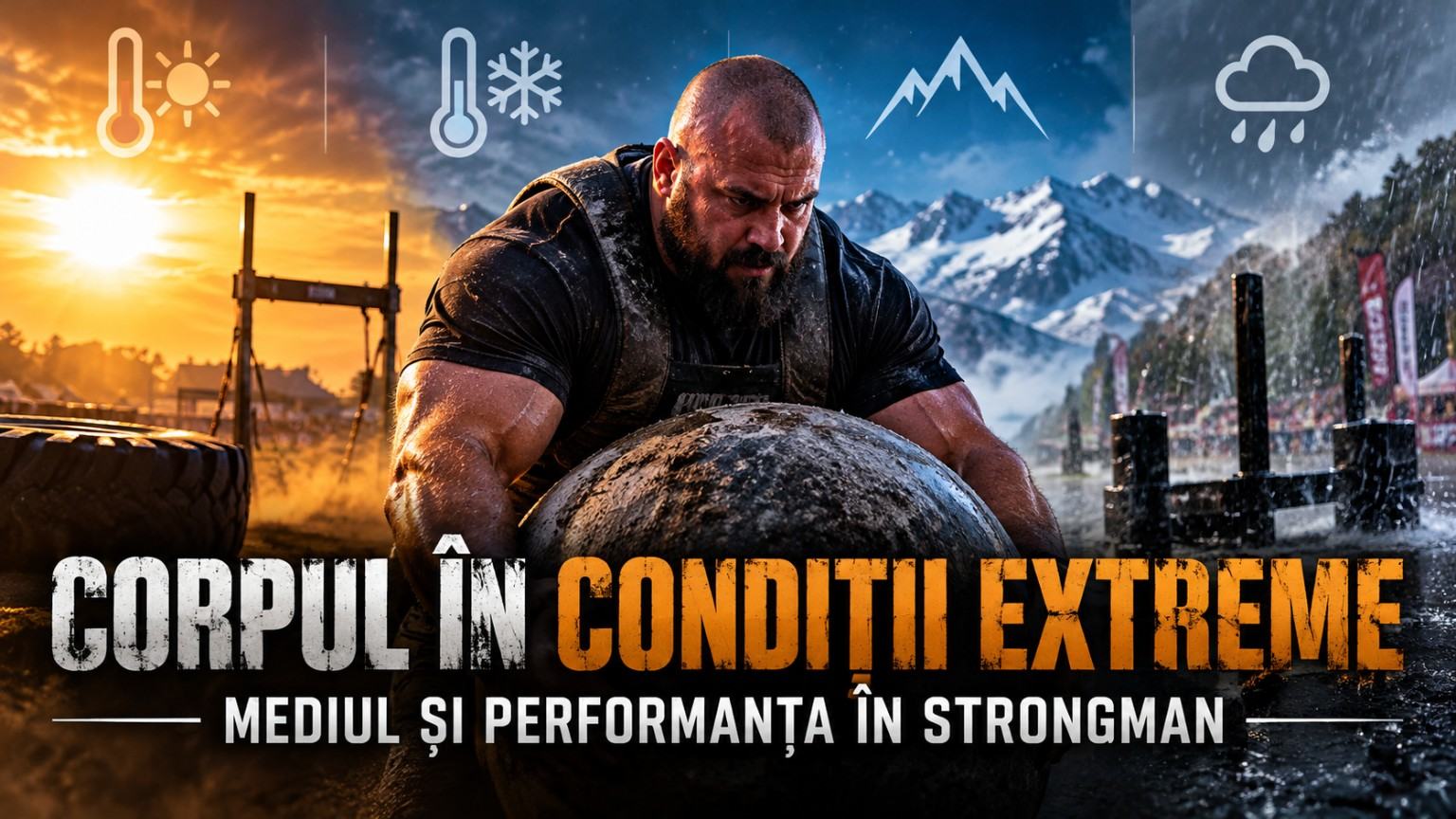
A strongman competition may be prepared for months in a temperature-controlled gym and decided over a few hours under direct sunlight. When an athlete steps into a Yoke Walk, attempts a maximal Deadlift, or repeatedly presses a Log, the body produces substantial heat. In hot surroundings, dissipating that heat becomes harder, while waiting between events, heavy equipment, limited shade, and repeated warm-ups add further strain. Performance is no longer determined only by the force the muscles can generate, but also by the whole body's capacity to sustain effort without dangerous heat accumulation.
Heat does not affect every event in the same way. A maximal lift lasting only seconds, a thirty-metre Farmer’s Walk, and a long Loading Medley place different demands on duration, pacing, and metabolism. Findings from runners and cyclists therefore cannot be transferred automatically to every strongman event. The general physiological mechanisms remain relevant, but the size of any effect on maximal strength, power, and technical precision must be assessed separately and with careful attention to the limitations of available evidence.
The series 'The Body Under Extreme Conditions: Environment and Performance in Strongman' explores what happens when competition moves beyond the laboratory into real-world heat, cold, humidity, dehydration, altitude, travel, difficult surfaces, and multi-day events. This opening episode investigates high temperatures, from the physiology of thermoregulation to practical decisions about preparation, event organisation, and athlete safety.
1. Muscles produce heat while producing force
Muscular contraction converts chemical energy into mechanical work and heat. Under ordinary conditions, the body limits temperature rise by directing blood towards the skin and allowing sweat to evaporate. As the environment grows hotter or more humid, the gap between heat production and heat loss may widen. The International Olympic Committee's consensus on sporting events in the heat emphasises that risk cannot be inferred from air temperature alone. Humidity, solar radiation, air movement, exercise intensity, clothing, and individual athlete characteristics all matter.
In strongman, body size, muscle mass, time spent resting between events, and protective equipment can influence heat strain. A very large athlete may generate considerable metabolic heat during exertion and, depending on body composition and environmental conditions, may find it harder to dissipate. However, body mass is not a diagnosis, and individual risk cannot be determined from weight alone. The nature of each event, acclimatisation, hydration status, and clinical signs matter far more than a simplistic label applied to large athletes.
2. Thermoregulation: how the body handles heat during competition
Body temperature is not a single number. Core temperature describes the thermal environment of deeper organs, while skin temperature responds quickly to air, sunlight, sweating and contact with surfaces. During exertion, muscle metabolism generates energy and heat; the circulation transfers part of that heat towards the skin, from which it can escape to the surroundings. For an athlete performing just one lift, the brief duration may limit the immediate rise in core temperature. Yet if the athlete has spent two hours in the sun, warmed up three times and waited beside scorching metal equipment, the lift is no longer performed from a thermally neutral starting point. The athlete approaches the bar with a physiological history, not a reset counter. This accumulation, often invisible in an event's official time, is why competition heat requires a broader perspective than a single laboratory set.
Four major processes govern heat exchange: radiation, convection, conduction and evaporation. Radiation may warm the athlete directly through sunlight even when the air temperature appears tolerable. Convection describes heat exchange with moving air; a breeze may help, although very hot airflow changes the balance. Conduction becomes relevant through contact with the ground, implements and heated materials. Evaporation of sweat is the crucial cooling mechanism in many hot sporting environments. A soaked shirt does not prove that cooling is effective. Sweat that drips away without evaporating represents lost water but not an equivalent quantity of heat removed. Consequently, two competitions conducted at identical air temperatures may impose remarkably different demands depending on humidity, solar exposure and ventilation. Understanding these routes of heat transfer makes practical solutions easier to identify and prevents an exclusive focus on the ordinary thermometer.
Radiant temperature is a particularly neglected detail. Two platforms can display the same thermometer reading while the shaded platform offers a different thermal load from an uncovered surface at midday. Shade does not eliminate metabolic heat or guarantee safety, but it reduces one component of thermal exposure. In strength sports, where rest intervals are lengthy and competitors frequently gather beside equipment, the design of waiting areas matters almost as much as the lifting platform. Placing benches under a ventilated canopy, providing drinking stations and maintaining access to a genuinely cooler room are not decorative conveniences. They can change the athlete's physiological condition before the next event. Coaches and organisers should address these considerations before the timetable and attempt order are finalised rather than improvising after athletes begin to show signs of distress.
At the neural level, the brain receives information about skin and body temperatures and integrates those signals with perceived effort. Feeling overwhelmed by heat may increase discomfort before core temperature enters a dangerous range; conversely, a highly motivated competitor may ignore important early warning signs. Thermal sensation, subjective tolerance and medical risk are related but distinct concepts. An athlete accustomed to summer events may report feeling comfortable in high temperatures, yet that report cannot replace appropriate oversight. Another athlete may experience marked discomfort without necessarily developing heat illness. Responsible assessment combines environmental conditions, work duration, individual history and observable symptoms. It should never rest on a display of toughness or the assumption that strong athletes are somehow protected against physiological limits.
Thermoregulation also creates a circulatory compromise. Blood must support working muscle while transporting heat to the skin. During very intense exercise these demands overlap with the need to maintain arterial pressure and organ perfusion. Sweating reduces available fluid volume if losses are not sufficiently replaced, potentially increasing cardiovascular strain. Thus, heavy breathing after a short event cannot always be attributed exclusively to the mechanical difficulty of the lift. Heart rate, cumulative temperature, recovery conditions and competition-related stress all contribute. At the same time, no simple equation converts air temperature into a guaranteed percentage loss of strength. The relationship depends on exercise duration, prior thermal load and the particular performance outcome being measured. Claims that every lift automatically becomes a fixed percentage harder at a particular ambient temperature are therefore scientifically indefensible.
Humidity primarily modifies evaporation. When the atmosphere is humid, additional water vapour escapes from the skin less readily and sweating may be less effective as a cooling mechanism. In dry air, evaporation may occur quickly and the athlete may underestimate fluid losses. This explains why a nearly dry shirt does not, by itself, confirm adequate hydration. Moderate airflow may improve evaporation, but a fan cannot replace proper heat-risk management or make severe heat harmless. Between events, a sensible strategy attempts to slow heat accumulation before it becomes a problem rather than correcting it desperately in the final two minutes. Passive waiting in the sun can cancel some of the benefit of muscular rest and effectively turn the supposed break into another stress exposure.
Scientific analysis should distinguish environmental heat stress from physiological heat strain. The first refers to external conditions challenging the body's heat balance; the second concerns the actual response, including temperature, sweating, heart rate and associated changes. A weather index never tells the whole story of one individual. A large strongman wearing thick protective equipment in full sun may respond differently from a lightly dressed volunteer standing in the same courtyard. Environmental measurement is therefore necessary, but not sufficient. The operational conclusion is straightforward: heat belongs inside the total competition workload alongside weights, distances, repetitions, rest periods and event order. Recognising this does not diminish the importance of strength. It means giving that strength a realistic opportunity to be expressed safely.
3. Cardiovascular strain, the nervous system and maximal effort
Major cardiovascular stress does not necessarily require prolonged exercise. Very heavy lifts can generate substantial transient changes in arterial pressure, particularly when a competitor braces the trunk through the Valsalva manoeuvre. On extremely hot days, these changes occur alongside thermoregulatory demands. Skin vasodilation facilitates heat loss but alters blood distribution; sweating gradually modifies fluid volume; and the autonomic nervous system coordinates these responses. This does not mean every maximal lift in hot weather is automatically dangerous. It means that risk cannot be assessed from the weight on the bar alone. A history of hypertension, cardiovascular disease, previous heat illness and symptoms on the day of competition requires individual medical consideration. Strongman is an impressive sport, but adaptations to strength training do not confer immunity against basic circulatory physiology. Medical safety and competitive ambition need not be opposing goals.
Heart rate normally rises during exercise. In the heat, a comparable workload may require a greater cardiac response as the body simultaneously supports skeletal muscle and skin circulation. If dehydration progresses, reduced plasma volume may diminish venous return and the amount of blood ejected per heartbeat. This is one mechanism by which cardiovascular strain can become disproportionate to the visible mechanical work. Yet a competitor's elevated heart rate while waiting for an attempt may also reflect anxiety, caffeine, poor sleep or anticipation. A single number from a wrist device cannot distinguish these causes. Interpretation requires context, comparison with individual baselines and assessment of symptoms. Wrist-based sensors may also be inaccurate during violent movement or when compressed by equipment. Measurements can support decisions, but should not become a substitute for observation and competent medical judgement.
Dizziness after a heavy lift may have several explanations, including rapid blood-pressure changes after Valsalva, orthostatic hypotension, dehydration, exhaustion or an evolving heat emergency. It is therefore unwise to assume automatically that a competitor lost balance merely because the lift was difficult. If dizziness is severe, recurrent or accompanied by confusion, chest pain, shortness of breath, fainting or other alarming manifestations, exercise should stop and medical evaluation should be sought. In competition the difficult decision is sometimes not to take another attempt. Points, spectators and the determination to finish can disguise the fact that clinical warning signs matter more than rankings. A healthy safety culture does not shame athletes who withdraw for medical reasons. It protects their prospects of competing again rather than making a single contest the price of long-term health.
Maximal lifts frequently involve powerful isometric contractions. Trunk bracing in Squat, Deadlift or Yoke alters breathing mechanics and venous flow, while tightly fitted equipment may increase thermal discomfort by limiting ventilation of the skin. Belts, suits, sleeves and thick clothing all have genuine biomechanical or competitive purposes, but may modify heat exchange. There is no scientific reason to discard equipment required for the safe performance of an event. There is, however, a clear rationale for shortening the time spent fully equipped between attempts and planning suitable changing and cooling areas. The useful question is not whether a belt somehow heats the entire body on its own. It is how much area is covered, how long the equipment remains in place and how this exposure interacts with the other conditions of the competition.
The central nervous system is not a simple remote control for muscles. During exercise it integrates information about pain, fatigue, temperature, breathing, balance and anticipated outcomes. Heat may influence perceived effort and an athlete's willingness to maintain intensity, particularly when exercise is sustained. Effects on voluntary muscle activation or a single attempt lasting seconds are considerably more dependent on the experimental protocol. It would not be rigorous to claim that warm air simply switches off the nervous system or invariably reduces strength through one universal mechanism. Research into hyperthermia, central fatigue and exercise offers plausible mechanisms rather than a rule for every strongman discipline. Since the sport brings together remarkably different physical challenges, any scientific account should preserve this nuance and distinguish demonstrated findings from hypotheses applied by analogy.
Breathing patterns also matter. An athlete finishing a Loading Medley may breathe rapidly, and heat discomfort can amplify the feeling of breathlessness. Meanwhile, a brief maximal lift relies on a different distribution of energy systems from a prolonged race. On an extremely hot day, these differences do not disappear. Instead they sit on top of the shared challenge of thermoregulation. Two events that feel equally difficult may produce different recovery patterns between attempts. A coaching consequence follows: rest periods should reflect both the duration and nature of work and the thermal exposure occurring outside the event. Repeated near-maximal warm-ups with no clear purpose may consume resources before an important lift even when the competitor believes the muscles have fully recovered. Intelligent preparation protects readiness rather than confusing frantic activity with better preparation.
Cardiovascular physiology helps explain why the minutes immediately after an event deserve attention. Abruptly stopping muscular contractions changes the contribution of the muscle pump to venous return. If an exhausted person remains motionless in oppressive heat, symptoms may become more pronounced. Reasonable measures include leaving direct sun, removing unnecessary equipment, gaining access to suitable fluids and evaluating any unusual symptoms. These are preventive organisational measures, not treatment for a medical emergency already in progress. Confusion, collapse or altered consciousness during exertion in hot conditions demands urgent medical action rather than merely suggesting ten minutes in the shade. Distinguishing preventive management from emergency treatment is among the most important responsibilities at a strength competition.
4. Maximal strength, power and fatigue: what science actually supports
The claim that high ambient temperature always reduces maximal strength is too simple. The relationship between temperature and muscle function is nonlinear and depends on which temperature we mean: local muscle temperature, core temperature, warm-up duration, accumulated fatigue or ambient conditions. A cold muscle may move slowly, and an appropriate warm-up can improve contractile properties and coordination. Yet useful warming is not the same as progressive hyperthermia and cardiovascular strain. Confusion arises when the valid observation that muscle tissue should be prepared for effort becomes the false assumption that increasingly hot weather automatically means greater strength. For a single Deadlift attempt after adequate rest, the direct effect of temperature may be smaller than for a prolonged event. Nevertheless, the wider context of the competition day can meaningfully change the result.
Maximal strength concerns the ability to overcome very heavy resistance, whereas power concerns how quickly mechanical work is produced. Local muscular endurance involves repeated contractions, while movement speed during a Carry adds balance, coordination and load control. These qualities do not respond identically to the same thermal challenge. Combining jump tests, short sprints and one-repetition lifts without distinction may hide precisely the differences that matter to strongman athletes. In this sport, performance results from an interaction among energy systems, biomechanics, technique and strategy. If an athlete loses several seconds during sandbag loading, accumulated heat is one possible contributor, but so are grip, object order, coordination and fatigue carried over from previous events. Clear causal explanations are harder than simple post-competition stories suggest.
Time under tension deserves particular attention. A single maximal attempt may last seconds, whereas a Log Press for repetitions or a Medley can involve a sequence of contractions approaching the event's time limit. Brief intervals between those efforts allow partial energy resynthesis and technical resetting. As the task continues, energy availability and fatigue tolerance become more relevant. Heat exposure may influence the ability to maintain the quality of these sequences without producing an equally obvious decline in the force of one isolated repetition. There is no need to invent a universal percentage loss in performance. For coaches, tracking implement speed, completion time and recovery between events is more informative than applying an arbitrary load reduction whenever the temperature rises.
Technical consistency is another vulnerable element. During a Yoke Walk, trunk stability and control of each step determine whether the load follows an efficient trajectory. During Farmer's Walk, breathing rhythm, grip and avoidance of unnecessary sway matter. With Atlas Stones, a large awkward object must be secured, lifted and transferred onto a platform in a demanding sequence. Even modest concentration errors, rushed preparation or additional fatigue can alter execution. Yet a plausible explanation should not be confused with a directly demonstrated result in event-specific studies. Experimental research on strongman is substantially more limited than evidence concerning endurance exercise. Any conclusions about heat-related losses of speed, precision or safety need to be presented without artificial certainty.
Discussion of muscle fibre types sometimes invites dramatic claims about different thermal responses among fast and slow fibres. Metabolism, neural control and temperature certainly interact with contractile function, but an actual competitor does not behave like an isolated fibre in a laboratory preparation. The event outcome depends on multiple muscle groups, perfusion, metabolite accumulation, technique and psychological readiness. Data from a small experiment conducted in a climate chamber cannot justify claims that all large, muscular competitors lose a particular proportion of their strength in the heat. Research should always be assessed by asking who participated, how long exposure lasted, whether participants were heat acclimatised and what specific performance outcome was measured. Good applied physiology respects these design details rather than treating every study headline as a universal law.
There is also a measurement problem: competitors do not attempt identical tasks under identical conditions. At a competition, athlete order, changing weights, waiting periods, refereeing decisions and rivals' tactics all vary. A lower result on a hot day may therefore have several explanations. If every event becomes slower, heat may be a credible contributor, but comparing outcomes still requires evidence rather than impressions alone. A coach can record ambient conditions, humidity, shade, total time on site, rest intervals, body mass changes and standardised event outcomes. Across repeated sessions, these measurements may build an individual profile considerably more useful than generic recommendations borrowed from a different athlete.
Protecting genuine power in strength sport also means protecting training quality. Heat acclimatisation should not turn every session into an attempt to survive. If technical sets are repeatedly compromised by thermal fatigue, the quality of the stimulus intended to develop strength may fall. Climatic adaptation and specific strongman skills can be dosed separately. Some sessions have a primarily mechanical and technical purpose; others may include carefully managed thermal exposure under suitable supervision. The exact approach depends on individual history, the target contest and risk assessment. There is a difference between training for hot conditions and treating heat as a permanent character test. The former is planning; the latter may simply accumulate unnecessary stress.
5. Event-by-event analysis: Deadlift, Log, Yoke, Farmers, Stones and Medleys
The maximal Deadlift is particularly vulnerable to misleading generalisation. The attempt is short and success depends strongly on force production and technical competence. A single repetition may not last long enough to accumulate the thermal burden seen during endurance racing. But a competition does not begin when the athlete first touches the bar. The competitor may already be overheated, underhydrated, uncomfortable and forced to repeat warm-ups because of delays. This context can change readiness for the decisive attempt. The correct interpretation is not that personal records become impossible during summer. It is that a brief maximal test is partially protected by its duration, not insulated from the thermal history of the competition day. Sun-heated metal implements and sweaty hands may also influence practical preparation and grip.
A Log Press for repetitions changes the problem. Each repetition requires transferring the load into pressing position, stabilising the trunk and extending the upper and lower limbs. Rest periods are short, and the athlete has to maintain rhythm without losing control. In extremely hot air, sweat, faster breathing and discomfort may add to event-specific fatigue. A maximal Log Press with separate attempts is not equivalent to a sixty- or ninety-second repetition event. A thoughtful coach records rep count, intervals between attempts and deterioration of technique rather than noting nominal weight alone. A training programme dominated by singles may underestimate the physiological cost of repeated execution in difficult thermal conditions. The event format is therefore fundamental to any discussion of heat effects.
Yoke Walk adds a further challenge: the entire implement must be carried, and virtually every step requires adjustments in balance and trunk stiffness. A very short race can be dominated by acceleration and control, whereas a longer course requires maintaining speed despite developing fatigue. Heat may become relevant through prior thermal strain, sweating beneath protective equipment and inadequate recovery between runs. Thermal conditions should not, however, be confused with terrain. A hot, slippery or uneven platform independently changes biomechanics. For rigorous comparisons, research would need to standardise distance, load, surface, event order and rest duration. In real competitions, precisely these variables often differ. Recording them consistently is therefore essential before blaming a slower time on environmental heat.
Farmer's Walk has a particular profile because grip often becomes the limiting factor. Wet palms, chalk application, handle geometry and metal temperature are practically relevant, although not all have been directly studied in strongman experiments. A competitor dropping an implement may have an adhesion problem, a coordination issue or local forearm fatigue rather than a general loss of muscular strength caused by heat. Courses also vary in length and may require turns. Every change of direction imposes a demand that cannot be reduced to grip strength alone. Preparation for Farmer's Walk in hot weather should therefore include realistic technical practice and an equipment routine tested in advance, without turning hazardous heat exposure into an end in itself. Separate mechanical and environmental causes before choosing an intervention.
Atlas Stones, Sandbag Loading and related events combine muscular work with close physical contact against large objects. Stones, bags and barrels may absorb sunlight, gripping materials may behave differently and prolonged skin contact can cause additional discomfort. These details should be treated as surface and technique problems, not proof that heat inevitably destroys performance. Organisers can reduce time spent with sensitive implements unprotected in direct sun, manage access to gripping materials and check platforms for hazards. For athletes, movement sequence, arm positioning and pacing between objects remain crucial. If weather changes grip or the order of execution, the strategy may need adjustment, while basic safety criteria must remain unchanged. Event-specific equipment considerations belong inside any realistic hot-weather preparation plan.
Truck Pull and similar dragging events introduce an interesting situation. Metabolic demand may be considerable, effort can last longer, and the athlete works outdoors on a surface with its own characteristics. In addition to air temperature and solar radiation, the result depends on rolling resistance, slope, friction, tyres, harness and rope configuration. These variables can create performance differences exceeding any independent temperature effect. Nevertheless, thermoregulation cannot be ignored during sustained pulling. Rather than treating a Truck Pull as identical to a sprint, it is better to examine actual duration, pauses, contraction patterns and the event's metabolic limitations. This turns the analysis into applied physiology rather than an easy verdict about weather. Coaches should resist using a single result as proof of the efficiency or failure of any heat intervention.
A Medley is arguably among the event formats most exposed to accumulated fatigue and heat because it requires several movements without complete recovery. Carrying, loading and short accelerations may stress different body segments while drawing on the same overall capacity to tolerate work. In hot conditions, accelerating too early may impose a greater cost on the final objects, while loss of technical precision may create additional errors. No cycling study can tell us precisely how many seconds a strongman will lose at 35°C. We can, however, develop testable hypotheses by tracking segment times, handling errors, recovery periods and responses to cooling during standardised training. This is how an evidence base specific to the sport can gradually emerge.
6. Dehydration, sodium and nutrition during competition
Dehydration should be understood as a change in the body's available water, not simply the feeling of thirst. During exercise in hot conditions, sweating can markedly increase fluid losses. When these exceed intake, plasma volume may fall and temperature regulation becomes more demanding. Guidance from the American College of Sports Medicine and the International Olympic Committee generally advocates beginning competition adequately hydrated and limiting excessive fluid loss without compulsively replacing every millilitre in real time. A loss of around two per cent of body mass is often used as a practical reference point in research on exercise in the heat, not as a magical boundary between normality and danger for every individual. In strongman, an entire competition day may involve hours of waiting with continuing sweat production even between events.
Sweat rates are not uniform. Sports medicine research documents large differences according to body size, work intensity, acclimatisation, humidity, clothing and individual predisposition. Consequently, a universal instruction to drink a fixed volume each hour may leave one athlete substantially underhydrated and encourage unnecessary or excessive intake in another. A practical way to estimate fluid losses is to weigh before and after a representative training session while accounting for drinks consumed and any urine passed. Measurements should be made under comparable conditions, and wet clothing should not distort the result. The objective is to build an individual profile rather than obtain one permanently correct number. A short gym workout in cool air does not accurately predict sweating during a six-hour outdoor competition in direct sunlight.
For a very heavy athlete, absolute numbers can be misleading. Two per cent of a 140-kilogram athlete's mass is 2.8 kilograms, but it should not be assumed that every change represents water or that the athlete can safely drink the corresponding quantity immediately. Food intake, evaporation, urination and ordinary mass fluctuation also matter during an event. Body-mass tracking should be considered alongside thirst, urine colour, general wellbeing and the recent history of heat exposure. Large body size does not automatically justify enormous quantities of fluid or electrolytes. Individualised recommendations are preferable, while athletes with cardiovascular, kidney or other medical conditions require specific clinical advice. Maintaining hydration is a matter of balance, not of maximising fluid intake at any cost.
Sodium is the major electrolyte lost in significant amounts in sweat, although sweat composition varies greatly. Salt marks on clothing may suggest substantial losses without providing an accurate quantitative assessment. During prolonged exercise, electrolyte-containing drinks and ordinary meals may help replace losses, but supplementation should not be arbitrary. Excessive consumption of low-sodium fluids can contribute to exercise-associated hyponatraemia, a potentially serious condition involving a reduced blood sodium concentration. Symptoms may overlap with other disorders seen during competition, making professional assessment essential. Neither dehydration nor water overload is a performance strategy. The idea that very large competitors should force down fluid until they are uncomfortably full is misguided and can create risks of its own.
Sodium concentration is not the only consideration. Drink taste, temperature, gastrointestinal tolerance and actual access to fluids all influence how much an athlete consumes. At competitions with scheduling delays, beverages may sit in the sun for hours and become less appealing. Cool drinks can improve comfort, but they should not be confused with adequate treatment for a heat emergency. Between events, moderate repeated intake adapted to thirst and a tested plan may be more realistic than rapidly consuming a huge volume. If an athlete develops nausea, vomiting, confusion or an inability to drink, forced oral fluid administration is not an appropriate solution and medical evaluation becomes important. Practical hydration guidance must remain connected to the athlete's clinical condition rather than being applied mechanically.
Carbohydrate availability also matters over long competition days. Maximal Deadlifts do not require fuelling in precisely the same manner as ultramarathons, but a strongman contest may last many hours and involve several demanding events. A tolerated pre-event meal, suitable snacks and appropriate drinks can support energy availability when rest intervals are unpredictable. Heat may reduce appetite and make large meals difficult to tolerate. Competition day is a poor time to test an unfamiliar concentrated product, an excessive caffeine dose or a complex supplement combination. Such experiments may introduce gastrointestinal distress when the body needs stability. Nutrition and hydration plans should be rehearsed in training, tailored to the event and evaluated without miraculous promises.
Ultimately, hydration for a strongman competing in severe heat cannot be reduced to a recommendation about litres per day. It requires realistic estimation of losses, assessment of digestive tolerance, access to appropriate drinks, nutrition compatible with event duration and monitoring for warning signs. The best protocol is simple enough to follow while the athlete is tired, sweaty and under time pressure. It should remain flexible in response to humidity, sunshine, sweating and the competition schedule, but not change arbitrarily at the last minute. When symptoms are inconsistent with ordinary recovery, medical assessment takes precedence over calculations about fluid volume. This is the difference between a rational sporting strategy and hoping that every problem can be solved with another bottle.
7. Heat acclimatisation: adaptation, timing and limits
Heat acclimatisation is the process by which repeated exercise exposures in hot environments produce adaptations that can reduce physiological strain at a given workload. It is neither a one-day trick nor merely an exercise in tolerating discomfort. Reported adaptations include changes in sweating responses, improved cardiovascular stability, plasma volume expansion and lower temperature and heart-rate responses during standardised work. The magnitude and speed of these adjustments depend on the protocol, fitness and exposure history. International consensus statements describe early responses within days, substantial adaptation after roughly a week and further benefits with appropriately managed exposure over one to two weeks. Most direct evidence for performance improvements comes from endurance exercise, however. It supports preparation for hot competitions without demonstrating a fixed percentage increase in a strongman's maximal Deadlift.
A useful terminological distinction exists between natural heat acclimatisation and acclimation achieved under controlled conditions. In practice the terms are sometimes used interchangeably, but the distinction helps interpret experimental protocols. Outdoor training involves sunshine, wind, humidity and daily fluctuations that a climate chamber may control differently. Neither environment automatically guarantees an ideal response. An athlete scheduled to compete early in summer might introduce gradual exposures before travelling, but should not automatically turn every heavy training session into an exercise in extreme temperatures. Thermal exposure can be partly separated from maximal technical work so that quality of event preparation remains the priority. Planning is individual, and a history of heat illness, relevant medication or medical conditions can require contraindication screening or specialist oversight.
A conceptual plan begins by reviewing the remaining time before competition, the expected climate and the athlete's current tolerance of warm conditions. Instead of abruptly undertaking a long session under blazing sun, exposures can be introduced progressively using controllable activity and readily available opportunities to stop. Increased thermal stress should not be piled arbitrarily on top of major increases in training volume, maximal attempts or inadequate sleep. If the athlete is already peaking, heat exposure should be reconciled with the need to reduce fatigue. IOC guidance also describes earlier acclimatisation, followed by maintenance exposures and brief reacclimatisation before competition. There is no universal schedule that can be transferred unchanged between a 70-kilogram athlete and a strongman weighing more than 140 kilograms without considering the specific circumstances.
Individual responses may be assessed by repeating standardised, moderately intense workloads in comparable conditions and observing symptoms, heart rate, sweating and perceived exertion. Becoming psychologically more comfortable in the heat may be valuable, but does not by itself demonstrate cardiovascular adaptation. Likewise, producing more sweat is not automatically a negative sign. During acclimatisation sweating may begin sooner and help thermal dissipation. Core temperature measurement requires specialised methods and should not be improvised by untrained coaches. For most teams, a journal recording exposure, weather, heart rate during comparable work, body-mass changes and symptoms offers a practical, if incomplete, foundation. The desired progress is a greater ability to tolerate equivalent work efficiently, not a personal record for discomfort endured.
Accumulating adaptation and fatigue at the same time is a central challenge before competition. When an athlete adds severe heat exposure at the end of a week containing heavy Deadlifts, Yoke and Log Press, the additional burden may interfere with recovery. The body does not classify muscular and thermal fatigue into separate compartments merely because the coach records them under different headings. An effective strategy considers sleep, nighttime temperatures, opportunities to cool after training and the travel days still ahead. A competitor unable to sleep in an overheated room may recover poorly even if every exposure session was executed as planned. The schedule should protect eventual performance rather than maximise time spent in hostile conditions. This is particularly important when training loads remain high close to competition.
Heat adaptations also require maintenance. After exposures stop, some benefits may decay; the rate of loss and subsequent reacclimatisation depends on the athlete and the protocol. One hot training session a month before competition does not justify assuming that complete adaptation will persist. Conversely, uncontrolled exposures right until the last day may add needless fatigue. Choosing an acclimatisation window should account for travel, equipment, accommodation and the probable start time of events. A team working with a stable schedule can manage the transition better than one discovering shortly beforehand that a contest has been moved into the hottest part of the day. This illustrates the direct connection between physiology and competition organisation.
Acclimatisation is not a certificate of invulnerability. An adapted athlete can still develop heat illness, particularly in the presence of exceptional exertion, recent infection, sleep loss, dehydration or severe weather. Having competed repeatedly during summer does not entitle anyone to ignore warning signs. Adaptation reduces average strain for certain tasks but does not remove physiological limits. A sound plan therefore includes not only repeated exposure but stopping criteria, access to cooling, a route to medical assessment and procedures for deciding whether to participate when conditions deteriorate. Combining preparation with caution is more valuable for a long sporting career than stories about records achieved despite an unprotected heatwave.
8. Cooling before and between events
Pre-cooling attempts to reduce thermal load before exercise begins. Experimental studies have assessed cold-water immersion, specialised cooling vests, cold drinks, crushed ice and combinations of these approaches. Meta-analyses report benefits for some forms of exercise in the heat, especially prolonged and intermittent work. Those outcomes cannot be transferred automatically to a maximal lift lasting only seconds. For strongman, the challenge is to lower whole-body overheating without compromising the muscular temperature required for rapid force production. The intervention should be evaluated through actual event outcomes rather than how dramatic the cold sensation feels. A protocol beneficial to distance runners may be uncomfortable or counterproductive immediately before a maximal Deadlift or Log Press.
Muscular warming and general cooling are not contradictory ideas. An athlete needs tissue prepared for effort without accumulating unnecessary heat throughout the hour preceding an attempt. Some studies suggest that aggressive pre-cooling can be less favourable before certain sprint tasks than before endurance efforts. Between-event measures may therefore prioritise reducing overall heat exposure and solar radiation, while specific warm-ups remain close to the competition attempt. There is no single template for every event because a short Yoke Walk and a long Medley differ in energy demand, speed and fatigue tolerance. The approach should be rehearsed during training and evaluated according to the athlete's own response to environmental conditions. Keeping a practical balance matters more than maximising the number of cooling techniques used.
Cooling between efforts, sometimes termed per-cooling, has obvious practical applications during contests lasting many hours. An athlete can spend breaks in shade and a ventilated area, avoiding direct solar radiation and prolonged standing next to sun-heated equipment. Cooling vests and cold textiles may help under some conditions, but the evidence does not justify promises of specific percentage gains in Farmer's Walk or Atlas Stones. When a break extends beyond half an hour, reducing exposure may be more valuable than a sophisticated intervention used only during the final minute. A realistic strategy prioritises comfort, safety, practicality and maintaining technical readiness. The same method may feel different to athletes of different body sizes and heat tolerances.
Fans may help by moving air and encouraging evaporation, but their effectiveness depends on environmental temperature and humidity, skin wetness and clothing. In extremely hot conditions, airflow alone does not guarantee reduced heat strain. Shade limits radiant heating but may be insufficient inside a closed canopy without ventilation. Organisers should provide genuinely functional recovery areas rather than a tent that merely looks attractive in photographs. A reasonably cool space with access to fluids and an opportunity to remove equipment temporarily may be a more robust intervention than an expensive collection of gadgets. Outdoor competition experience highlights the practical importance of these intervals, although precisely quantifying their impact on each strongman event remains a research challenge.
Cold drinks may increase comfort and make fluids easier to consume, but swallowing ice should not be assumed to transform performance automatically. Ice-slurry research reports findings that depend on protocol and exercise type. Some benefits concern thermal sensation, others changes in heat balance, but not every experiment shows similar gains. Gastrointestinal tolerance is essential in strongman: rapidly drinking a large volume can cause nausea or fullness just before a heavy lift. Potential interventions should be rehearsed during preparation rather than introduced for the first time at a championship. Very cold drinks are an option, not an obligation. Adequate hydration, avoiding excess and ensuring reliable access to fluids are more fundamental objectives.
Cold-water immersion needs to be distinguished by its purpose. Used preventively before exercise, it can modify body and muscle temperatures in ways that may or may not suit the upcoming task. In medical settings, rapid cooling has an essential role in the management of serious heat emergencies under protocols delivered by qualified personnel. These situations must not be confused. It would be unwise for a competitor to perform an extreme cooling procedure immediately before Log Press if it interferes with the necessary warm-up merely because someone said that cold is beneficial. Equally, an athlete showing signs of serious heat illness must not be treated as someone who simply needs a few minutes to relax. The purpose and clinical context determine which intervention is appropriate.
In practice, effective cooling is rarely dramatic. It involves limiting direct sunlight exposure, moving to a suitable rest area, adjusting equipment between events, providing tolerable drinks and conducting an efficient event-specific warm-up before the next attempt. A cool towel may improve comfort without guaranteeing a personal record, while a specialised vest may benefit some athletes without becoming essential for everyone. Research reviews show that effects depend on exercise format and direct validation in strongman remains limited. The responsible conclusion is not to discard all techniques, but to choose them according to a clearly defined objective: reducing thermal strain, supporting a particular event or responding medically to an emergency. Each purpose has its own criteria.
9. Temperature, humidity, WBGT and competition risk
Air temperature is necessary information, but insufficient for assessing the risk of an outdoor contest. An event held at 32°C under direct sunlight may impose a different challenge from one conducted at the same temperature in shade. Humidity, wind, solar radiation and exposure duration alter heat balance. This is why many sporting organisations use the wet-bulb globe temperature index, or WBGT, which attempts to integrate several environmental components into an estimate of heat stress. The IOC consensus describes both its usefulness and its limitations. No single WBGT value predicts identical outcomes for a runner, a competitor wearing heavy clothing and a strongman performing maximal repetitions followed by long breaks. The index must be incorporated into an assessment of the sport and the individual rather than turned into a universal verdict.
Competition conditions cannot be assessed adequately from a screenshot of a weather forecast. Weather-app data come from monitoring stations and models, while the actual platform may have different sunlight exposure and airflow. Black asphalt, concrete surfaces, radiation-reflecting walls and the absence of vegetation can alter the venue's microclimate. When events occupy separate areas, a Farmer's Walk course may be fully exposed while Deadlift takes place beneath a roof. Organisers should not disregard these differences. Correct on-site measurements repeated at appropriate intervals provide more useful information than simply knowing the forecast from the morning. Duration is another major factor: conditions at nine o'clock need not resemble those at two in the afternoon. An event plan based only on morning weather can become misleading as the day progresses.
A competition timetable developed without regard for changing weather can unnecessarily amplify athletes' exposure. If the longest events are scheduled during peak heat and delays extend waiting time under direct sun, the physiological cost may rise substantially. Rescheduling, adding breaks or temporarily suspending activity is not an organisational failure when conditions warrant precaution. Such decisions should rely on safety policies established in advance rather than solely on crowd reactions. Organisers need a designated person who tracks weather and communicates changes promptly. Athletes should receive timely information to adjust warm-ups, meals and hydration. Without communication, even a well-intended schedule change can produce additional strain by forcing repeated preparation or extending exposure near the platform.
An environmental heat index should not be confused with the athlete's core temperature. A weather device measures external conditions, not the individual's circulatory or neurological response. Someone exhausted, recently febrile or inadequately acclimatised may encounter problems at a lower environmental load than another competitor. Conversely, an adapted athlete may tolerate certain conditions better without becoming invulnerable. Appropriate assessment considers individual risk factors and observable signs rather than superficial comparisons. Particularly in strength sports, where psychological toughness features prominently in the culture, athletes need permission to report feeling unwell without being mocked. Communicating symptoms can protect a career and, in extreme circumstances, save a life. A responsible team treats those reports as information rather than disloyalty to the event.
Electronic monitoring devices have limitations. Watches that estimate skin temperature, heart rate or stress may flag changes but cannot diagnose a heat emergency on their own. Sensors can be affected by sweating, device position, movement and ambient conditions. Accurate measurement of core temperature in research or medical settings requires appropriate methods and competent personnel. An organiser relying exclusively on the numbers displayed by athletes' wristbands may miss clinically important signs. Equally, impressive-looking figures on an electronic screen cannot be interpreted without knowing what the device actually measures. Technology should supplement evaluation, not replace a team trained to recognise dangerous conditions. Context and symptom assessment remain more important than the marketing claims attached to a particular wearable.
The difference between indoor preparation and outdoor competition particularly complicates the interpretation of data. In the laboratory, exercise intensity, temperature and airflow can be tightly controlled. In competition, spectators, shifting event order, implements with variable temperatures and long inactive periods introduce additional influences. Applied research should therefore combine standardised measurements with field observations without assuming that these sources are interchangeable. A competition log might include the hour of each event, local temperature, humidity, shade, total duration, organisational problems and athlete responses. Even if this work never becomes a published scientific paper, such documentation can help coaches distinguish recurring patterns from retrospective impressions. It provides a more realistic basis for planning future competitions held in similar conditions.
Ultimately, weather assessment must lead to decisions. When the data indicate increased risk, the response cannot consist only of a vague instruction for everyone to drink more water. Organisers may need to modify the schedule, limit exposure during waiting periods, provide additional shade, ensure cooling access and arrange suitable medical capacity. These measures cannot be replaced with a warning poster at the entrance. At the same time, an index alone cannot explain performance, which must also be interpreted in relation to event demands. A professional contest integrates meteorology, physiology, logistics and sports medicine into one decision-making system. When that integration is missing, athletes are forced to manage individually risks that better organisation could often reduce much more efficiently.
10. Exertional heat illness: recognition, prevention and responsibility
Exertional heat illness covers several conditions that should not be confused. Athletes may experience muscle cramps, heat exhaustion, collapse or severe forms involving central nervous system dysfunction. The presence of symptoms in hot weather cannot be diagnosed reliably through informal conversation or teammates' impressions. Exertional heat stroke in particular is an emergency in which neurological impairment and markedly elevated core temperature demand rapid medical attention. An athlete can continue sweating even during severe heat illness; dry skin is not an obligatory sign. The popular belief that a competitor is safe as long as sweating continues may therefore be dangerous. In sports where toughness is highly valued, early symptoms may be minimised by the athlete or surrounding team. Clear protocols and properly prepared personnel are essential.
Heat exhaustion may involve marked weakness, dizziness, nausea, headache and inability to continue activity. These symptoms overlap with dehydration, low blood pressure and other conditions, including disorders not directly caused by environmental temperature. It is unsafe to decide at the edge of the platform that someone is merely having a bad day. Competition stopping criteria should be conservative when new or worrying symptoms appear. Loss of coordination, unusual behaviour, confusion or collapse requires urgent medical assessment and activation of appropriate emergency services. Attempting to complete one additional event before evaluation may worsen the situation. Competitive results must become secondary to health in these circumstances. That principle does not change with the prestige of a contest or the amount of prize money involved.
NATA and IOC guidance stresses early recognition and genuine response capacity for heat illness. An organiser cannot treat a medical emergency as an impossibility merely because participants are mature, trained and strong. Medical planning must take place before the start, with defined responsibilities, emergency-service access and resources appropriate to the expected conditions. When serious heat illness is suspected, qualified personnel should apply relevant emergency assessment, cooling and treatment protocols without unnecessary delay. This article does not replace clinical training and does not encourage spectators to improvise medical procedures. Coaches and teammates can play a critical role by recognising danger, stopping exertion and requesting appropriate help. They should not be forced to choose between following the competition programme and protecting a vulnerable participant.
Risk signals must not be interpreted solely from the outdoor temperature. Exertional heat illness can sometimes develop even under conditions that do not appear extreme, particularly when exercise intensity is high or additional risk factors exist. Recent infection, fever, incomplete recovery, poor sleep and previous exposure may modify tolerance. Other circumstances warrant professional medical consideration, including treatments or diseases affecting circulation and fluid regulation. Coaches should not attempt to diagnose these conditions independently, but they can refuse to continue a training session when alarming manifestations appear. Such an approach is especially important for competitors who conceal symptoms because they fear missing a rare opportunity to compete.
Muscle cramps illustrate how easily interpretation can become oversimplified. Sporting culture frequently attributes them exclusively to insufficient salt or water, whereas the literature describes a more complex picture that includes neuromuscular fatigue. An athlete developing cramps at the end of a Medley should not automatically receive very large electrolyte doses without considering the circumstances. Exercise duration, event-specific conditioning, individual history, hydration and associated symptoms all matter. When the presentation differs from an ordinary muscular episode, medical evaluation is important. Excessive simplification can delay recognition of a real problem. The coaching lesson is to consider the person and sequence of events rather than reducing every symptom to one presumed nutritional deficiency.
Safety has a psychological dimension. During competition teammates shout encouragement, spectators react to attempts and athletes may feel that withdrawal would represent personal failure. An effective medical protocol must function independently of that pressure. Referees, organisers and medical staff should know who has the authority to stop activity for athlete protection. In a professional system, a medically justified withdrawal should not be negotiated according to the standings. This rule does not erase athletes' autonomy in ordinary decisions. It recognises that emergencies cannot be refereed as disputes about points. Explaining these principles beforehand makes them easier to uphold when someone genuinely needs help. The strongest expression of professionalism may be the willingness to stop a contest rather than insist on continuing.
Prevention is more valuable than crisis management. Appropriate acclimatisation, individual hydration plans, access to shade, thoughtful scheduling and observation of symptoms may reduce certain risks without eliminating them completely. Organisers should prepare for worsening weather or an athlete becoming unable to continue. Competitors, meanwhile, need to understand that confusion, collapse or sudden deterioration in general condition is not a test of willpower. It is a medical problem. Strongman culture can continue to value perseverance, effort and performance while also respecting physiology and individual limits. The best competitions are not those where nobody asks for help, but those where help exists and works when required.
11. Scheduling, warm-ups and logistics during a hot competition
A strongman competition is a sequence of small decisions rather than merely an inventory of weights. Athletes need to know their event order, likely rest time, available waiting areas, access to shade and how much time remains for warming up. On hot days, this structure directly influences total exposure. An unstable schedule may force repeated warm-ups, extended periods wearing a belt and fluid consumption without knowing when exertion will begin. Rather than improvising every decision, the team can prepare a flexible timetable that accounts for delays. There should be a distinction between physical preparation genuinely needed before an event and activity that consumes energy without benefit. Waiting can look like rest, but under direct sunlight it becomes part of the physiological workload.
Warm-up strategy is particularly important. In a cool gym, an athlete may have ample time to work gradually through increasing weights. At an outdoor arena, maintaining adequate preparation without excessive thermal exposure becomes a practical challenge. The goal is to achieve sufficient muscle temperature and coordination with a volume that does not produce needless fatigue. When the start time changes, repeating every early warm-up set is not necessarily required; the decision depends on delay length, event type and individual response. Too little preparation can damage technical execution, but an extremely long warm-up can consume energy and add thermal stress. An experienced team therefore prepares alternatives rather than one rigid ritual that must be followed regardless of changing conditions.
Pacing decisions differ between events in which athletes control effort distribution and those limited by the number of repetitions or a strict time cap. During a Medley, the first objects may be handled at a pace that initially feels sustainable but compromises the final transports. In severe heat, perceived effort may climb faster and an athlete needs to understand the optimal distribution of work. Inside a maximal single repetition, pacing has limited meaning, although it matters greatly for warm-up planning and intervals between attempts. This contrast shows why a single tactical recommendation cannot serve every event. Strongman performance does not follow one energy-system model or one competition strategy. The relevant decisions are shaped by event structure and by the athlete's condition on that particular day.
For international competitions, arrival time, vehicle air conditioning, sleep, food access and hotel-room conditions become components of preparation. A long journey in a poorly cooled vehicle may impose thermal strain before the athlete even sees the platform. Extremely hot nights can disrupt sleep, while accumulating sleep debt may impair the ability to tolerate the following day's demands. There is no need to invent a spectacular new mechanism: sleep, nutrition, hydration and schedule stability are already important to performance. Teams treating logistics only as transport to the venue miss opportunities to control exposures that provide no useful adaptation. In the days preceding competition, a sensible accommodation decision may be more valuable than another recovery accessory.
Organisers should tell competitors what drinking water, rest areas, scheduling arrangements and weather procedures will be available. For international athletes, uncertainty can make it difficult to transport adequate supplies or plan meals. Publishing clear information before a contest makes the event fairer by reducing the advantage held by those already familiar with local arrangements. This does not mean every competitor's experience can be made identical at every moment. It means reducing uncontrolled variables unrelated to strength and technique. The resulting rankings are more credible when differences primarily reflect competitive performance rather than each athlete's ability to guess schedule changes. Professional communication is an important component of professional sporting conditions.
For contests lasting many hours, nutrition planning needs options for unexpected delays. Certain foods may be well tolerated two hours before exertion yet feel uncomfortable immediately after a demanding event in hot conditions. Portion size, texture and food temperature may matter. A team can prepare several familiar, simple alternatives rather than imposing one menu regardless of start times. Rest periods may similarly need adjustment when the programme becomes compressed. Flexibility does not mean disorder. It means knowing the priorities: balanced hydration, tolerated food, rest, event-specific warming and attention to symptoms. A prepared athlete does not need complicated rituals, but decisions that remain easy to implement under pressure.
From a performance perspective, competition planning in the heat can be understood as conservation of resources. Every needless exposure, repeated warm-up, hour without shade and poorly timed meal adds to the day's cost. None is necessarily decisive by itself, yet their sum may change how the athlete approaches the final event. A mature strategy does not promise to remove every difficulty. It identifies burdens that the team can reduce without changing the athletic character of the contest. In this sense, logistics becomes an extension of training programming: invisible preparation that allows strength to be expressed at the right moment.
12. Psychology of effort in the heat
Temperature can influence the athlete's psychological experience. Thermal sensation, irritability, perceived fatigue and the ability to sustain attention may become relevant during a long competition day. A physically prepared athlete can approach the first event highly motivated and reach the final challenge in a state of discomfort that alters risk assessment. This does not mean that a particular temperature automatically destroys concentration. It means that information processing and self-control occur inside a strained organism rather than independently of it. For a competitor who must follow refereeing instructions, coordinate footsteps and remember the sequence of a Medley, decision quality may be as important as the expression of strength. Mental preparation for challenging environments should therefore complement physiological strategies, not be presented as their replacement.
One mistake in strength-sport culture is treating every discomfort as a character test. Sometimes continuing when exercise feels unpleasant is a legitimate skill developed through training. But not every bodily warning should be ignored. There is a fundamental difference between tolerating heavy breathing after a Medley and continuing despite confusion or collapse. The first may be an ordinary component of competition; the second may indicate medical danger. Mature mental strategies include recognising personal limits and communicating them. Athletes do not become less competitive by learning to distinguish normal exertional discomfort from concerning symptoms. On the contrary, the skill may prevent an impulsive decision that brings a competition or season to an abrupt end.
Pre-attempt routines can be simplified during severe heat. A competitor who spends five minutes in direct sun mentally rehearsing every detail may discover that the usual ceremony produces more discomfort than clarity. The objective is not to eliminate mental preparation but to preserve the elements that genuinely support execution. A technical cue, a brief equipment check and a clear plan for the start may suffice for an experienced athlete. These adjustments should nevertheless be rehearsed rather than imposed spontaneously before a record attempt. The effective routine supports attention and control without adding needless exposure. In hot conditions, intelligent psychological preparation saves not only time but also physiological resources.
Social pressure matters when athletes compete before a community that knows them. Strongman spectators admire efforts pushed towards the limit, and the atmosphere can turn an attempt into a memorable moment. The same atmosphere can make it harder to seek medical help or acknowledge that another attempt is no longer safe. The coach's role is to provide an external perspective and reduce the effect of momentary emotion on decisions. Teams can agree in advance how symptoms will be communicated and who may recommend stopping an event. No dramatic speech is needed, just a clear rule accepted before competition. When a difficult moment arrives, prior agreement is much more valuable than negotiations conducted under pressure from the crowd.
Perceptual fatigue can complicate pacing in events with variable intensity. An athlete might feel that the first carry is harder than usual and accelerate to compensate for a presumed loss of time. That acceleration may in fact consume resources and damage execution during the final stage. In other situations, heat discomfort may encourage an excessively slow start even though muscular capacity remains adequate. Tactical adjustment cannot be reduced either to ignoring sensations or accepting every sensation uncritically. Athletes need training data and knowledge of their individual tolerance. Repeated practice with comparable events helps them distinguish familiar discomfort from an unusual deterioration in their capacity to perform.
Sleep and psychosocial stress may interact with heat before competition. A night in an overheated room, a long journey or an organisational disagreement can amplify irritability and feelings of fatigue. These influences rarely appear in competition rankings, yet they are genuine contextual factors. A team watching only training numbers may overlook worsening recovery conditions. A simple journal covering sleep duration, perceived rest quality and morning symptoms can assist interpretation. Such data remain subjective and should be treated as clues rather than diagnoses. They become more useful when compared against the same athlete's ordinary values and the other variables observed during competition week.
Overall, psychological adaptation to hot conditions cannot replace hydration, cooling or acclimatisation. It can help athletes use those measures effectively. Someone who recognises discomfort, communicates clearly and follows a previously rehearsed plan may respond better when the schedule changes. A calm coach who avoids turning every problem into a battle of pride preserves mental resources for decisive moments. The ideal behaviour is neither fearlessness nor symptom denial, but the ability to distinguish normal sporting difficulty from circumstances requiring a change of strategy. This is competitive maturity rather than a weakening of the spirit of strongman.
13. Individual variation and medical factors
Bodies differ, and the same environmental temperature can produce markedly different responses. Body mass, surface area, body composition, aerobic fitness, acclimatisation, age and medical history all influence heat tolerance. For strongman, substantial muscle mass can support extraordinary mechanical work while also producing considerable metabolic heat during exertion. The relationship between heat-producing mass and heat-dissipating surface area does not necessarily become more favourable as an athlete grows heavier. Yet body weight alone cannot classify individual risk. One 150-kilogram competitor may have a different history of heat adaptation and cardiovascular health from another athlete with the same mass. A useful assessment begins with the individual rather than with an assumption about every person in a particular weight category.
Aerobic fitness should not be treated as the enemy of maximal strength. Strongman primarily requires force and power, but general conditioning can contribute to tolerating repeated events and recovering between tasks. This does not mean every strongman should add enormous amounts of running or sacrifice sport-specific training. It means that the capacity to sustain accumulated work deserves careful development and monitoring. Certain cardiovascular adaptations may support stability during thermal stress, but cannot guarantee protection from heat illness. The conversation should move beyond the false choice between being extremely strong and maintaining performance quality across a competition day. Effective preparation reflects the precise combination of demands likely to be encountered.
Individual circumstances that merit added caution include recent illness, fever, incomplete recovery, poorly controlled hypertension, cardiovascular or kidney disease and a history of heat illness. Some medications can influence sweating, circulation or fluid balance, so risk assessment may require discussion with a clinician. Athletes should not independently stop prescribed treatments merely to compete in hot weather. Neither a coach nor an organiser can construct a universal safe protocol from a few numbers on a scale. When a competitor notices unusual symptoms during competition week, the appropriate response is suitable evaluation rather than arbitrarily increasing stimulants or fluid volumes. Long-term protection relies on individual medical judgement and preparation.
Stimulants can complicate interpretation. Caffeine is commonly used in sport because of potential effects on alertness and selected performance outcomes, but large amounts may cause palpitations, agitation or gastrointestinal discomfort in some individuals. In hot conditions, such manifestations can become harder to distinguish from other stress-related symptoms, while combining several products can increase unpredictability. This does not justify claiming that every use of caffeine causes dangerous dehydration, but neither does it support ever-larger doses as a rational strategy. In a lengthy competition, previously established tolerance and avoiding experiments matter more than pursuing a dramatic stimulation effect. Supplements cannot replace adequate sleep, proper acclimatisation or a competition schedule that protects athletes from needless sun exposure.
Substances used to modify performance and body composition may introduce additional risks that should not be handled casually. Some products can influence blood pressure, heart rhythm, fluid balance or other factors relevant to heat tolerance. An individual's risk cannot be accurately estimated from appearance or an incomplete list of substances, and the discussion should not become an administration protocol. Medical assessment, openness with qualified healthcare professionals and compliance with anti-doping regulations are essential. Athletes with unexplained symptoms should not assume that nutritional supplements provide protection. In strongman, as in every sport involving substantial cardiovascular demand, safety is not a decorative addition to preparation.
Differences among athletes also include competition experience. Someone who frequently competes outdoors may better understand logistics, changing surfaces and personal responses throughout a long day. This practical knowledge is valuable, but can be misleading if based on a small number of observations without measurement. A good result in hot conditions does not demonstrate immunity to thermal strain, just as a poor result does not by itself prove a direct heat effect. Experience should be compared with data about weather, hydration, event order, sleep and recovery patterns. The more carefully an individual profile is documented, the more precise future decisions can become. Personal experience contributes to evidence-informed preparation when it is examined critically rather than treated as infallible.
Individualised preparation should also extend to the roles within the support team. The coach monitors technique and workload, medical staff assess clinical condition, organisers manage the venue and timetable, and athletes communicate subjective experience. Errors arise when people unjustifiably exceed their expertise: coaches make diagnoses, organisers minimise symptoms or competitors treat gadget readings as medical verdicts. Coherent collaboration reduces these risks. At a professional event, nobody should have to guess alone what fever, confusion or unexpected deterioration might mean. Individualisation is not a commercial slogan; it results from genuine communication between people with complementary responsibilities and information.
14. What research shows and what remains unproven
A central issue in reading the literature is distinguishing direct evidence from reasonable extrapolation. There are strong medical consensus statements concerning thermal strain, acclimatisation, hydration and recognition of heat illness. Meta-analyses evaluate cooling strategies for certain exercise formats. In contrast, intervention studies directly comparing strongman athletes' Deadlift, Yoke, Farmer's Walk and Atlas Stone performances under several climatic conditions are much less common. This imbalance should be acknowledged. It does not weaken the article; it establishes what can confidently be stated. We can explain how the body dissipates heat and why a long competition may impose additional strain. We cannot declare, without data, that a particular temperature automatically reduces a Deadlift record by five or ten per cent.
A persuasive strongman study would clearly define participants, events and the environment. It would be useful to know body mass, sex, age, competition standard, acclimatisation history, recent training and relevant medical conditions. Load, rest duration, surface, equipment, fuelling and testing time should then be standardised as far as possible. Without such control, performance differences could be incorrectly attributed to temperature. At the same time, excessively strict controls may reduce the relevance of a study to real competitions. Combining carefully designed experiments with observational field data may therefore be more productive than choosing one model exclusively. High-quality research reports both what it observed and what its design cannot demonstrate.
The outcome being measured also matters. Higher skin temperature, elevated heart rate or altered perceived exertion is not the same thing as a reduction in competitive performance. These variables may sometimes change without a clear difference in repetitions or completion time. On other occasions, an athlete may finish more slowly even when measured physiological changes are not striking. Intermediate variables help propose mechanisms but cannot replace sporting results. In strongman, a good study should include movement times, valid repetitions, technical errors, recovery between events and relevant safety incidents. Only then can we investigate not merely how the body responds, but whether that response actually changes competition outcomes.
The belief that heavy sweating necessarily demonstrates poor conditioning is false in that form. Sweating responses differ naturally among individuals and can change through acclimatisation. Wet clothing also does not reveal how much heat was effectively removed. The opposite myth, that more sweating automatically proves superior adaptation, is equally unsupported. Interpretation depends on temperature, humidity, covered skin area, heat production and cardiovascular response. For a competitor, noticing more sweat than usual may justify evaluating fluid losses, not automatically taking large electrolyte doses. Sweating is a regulatory mechanism, not a separate competition in which the athlete with the wettest shirt wins.
Another myth is that every heat-related problem can be solved with cold water. Hydration matters, but cannot substitute for reducing environmental exposure, adapting appropriately or obtaining medical care for serious symptoms. Similarly, the claim that expensive cooling vests inevitably increase maximal strength exceeds available evidence. An intervention may improve comfort or specific performance outcomes under selected protocols without becoming a universal remedy. Good analysis separates physiological effects, clinical outcomes and marketing. If a method reduces perceived effort, that is one result. If it promises a higher maximal Deadlift, that different claim requires different evidence. Quietly changing the objective halfway through the argument is a recurring mistake in commercial presentation.
Correlation must not be confused with causation. If an athlete finishes lower in the standings during a heatwave, weather may contribute but is not necessarily the sole explanation. The same athlete might be fatigued after travel, carrying a minor injury or facing different refereeing standards. Testing the independent effect of heat would require comparable conditions across multiple contests or standardised sessions. Personal experience should not be discarded because it provides valuable research questions. It should, however, be interpreted carefully. Repeated, documented observations may generate useful practical evidence, whereas one isolated memory should not become a biological law. Separating what we know, what we suspect and what remains unknown is essential for the credibility of a platform devoted to strongman.
Responsible applied research does not need to offer false certainty to appear useful. Sometimes the most important information is that sufficient event-specific studies do not yet exist. Rather than filling gaps with invented percentages, we can propose measurements and observation protocols for the future. A community of athletes systematically documenting competition conditions and performance can eventually generate more relevant knowledge than one repeating slogans about heat and willpower. The purpose of science is not to force every sporting experience into an inflexible formula. It is to ask better questions and make better-founded decisions when the conditions are complex and imperfectly controlled.
15. Practical scenarios and a strongman observation model
Consider a hypothetical contest in a town where air temperature reaches 35°C, beginning with a maximal Deadlift and ending with a Loading Medley. An athlete arrives in the morning when conditions still feel manageable. After another four hours beside the platform under direct sun, the initial impression no longer describes the state in which the final event begins. Even when individual events are brief, cumulative exposure and repeated warm-ups may change fatigue. This example is hypothetical rather than an experiment proving a precise loss in performance. It illustrates why planning based solely on weights is incomplete. The difference between a well-managed contest and a chaotic one can emerge through dozens of apparently small decisions made before the athlete even touches an implement.
In that scenario, the team might begin by checking local conditions and identifying a protected waiting area. It then prepares suitable food and drink options without assuming that the competitor must consume a rigid volume regardless of personal sweating. The Deadlift warm-up should be sufficient but not repeated mechanically when delays occur. After the event, the athlete can return to a lower-exposure environment, assess wellbeing and adjust preparation according to the next available interval. The plan is adaptive: when the schedule changes, details change too. If worrying medical symptoms develop, competition ceases to be the priority. This is a model of decision-making rather than an individual medical prescription. What matters is the logical order of choices and the existence of alternatives when the original timetable fails.
Now consider two athletes of similar body mass. The first lives in a region with hot summers and has completed a gradual period of adaptation; the second comes from a cooler climate and has spent most preparation weeks indoors. We cannot automatically predict who will win a Yoke Walk because strength, speed, technique and strategy differ. We can reasonably expect heat-exposure history to influence physiological strain during comparable work. That is why acclimatisation deserves a place in planning without being presented as a replacement for event-specific training. If the first athlete has inferior technique, climate adaptation does not guarantee victory. If the second is stronger, that advantage does not guarantee equivalent tolerance throughout the whole competition day. The relationship is important precisely because multiple abilities are involved.
A third example concerns unexpected scheduling delays. Competitors are called to warm up, then the start is postponed by forty minutes. Some remain fully equipped beside the platform while others return to a cooler area and preserve minimal readiness until the revised starting time. A performance difference cannot confidently be attributed to one decision, but general physiological principles favour limiting needless heat exposure. Organisers can reduce the problem by communicating promptly and avoiding premature calls to warm up. This also supports sporting fairness: contests should compare strength and technique rather than endurance for organisational confusion. Future field studies could test whether such logistical improvements reduce performance deterioration during late events.
Coaches can build realistic observation protocols around a few consistent indicators: session time, approximate weather conditions, exposure duration, completed tasks, rest intervals, fluid intake and symptoms. They may also record times or movement speeds for standardised reference events, such as a fixed-distance Farmer's Walk or a defined Log Press set. Not every athlete needs a portable laboratory. Consistent records may be more valuable than a sophisticated sensor used only once. A journal of this kind does not establish causality, but encourages disciplined observation and helps identify circumstances repeatedly associated with poorer results. It may also reveal when schedule disruptions or excessive warm-ups coincide with increased fatigue.
Training data can inform cautious adjustments. If an athlete repeatedly notices slower Yoke times after long waits in direct sun, the first hypothesis need not be loss of intrinsic strength. Changing the waiting area, warm-up duration or structure of rest periods may be a useful experiment, followed by comparisons in as similar conditions as possible. If an intervention appears beneficial, it deserves repeated testing. If it fails or increases discomfort, it can be abandoned without drama. This is experimental thinking applied to coaching: a clear hypothesis, a controllable change and evaluation of the outcome. Performance needs no myths to remain impressive, and personal data should not be turned into universal promises.
All of these examples lead to the same practical conclusion: preparing for heat should be integrated into the broader competition programme without becoming the dominant objective of the season. The athlete must develop strength, technique, speed, work tolerance and recovery capacity. Environment can influence the expression of those qualities, and the team should reduce unnecessary exposures and prepare alternatives for predictable problems. Research provides solid guidance on general physiology, while studies dedicated to strongman events remain necessary. Until then, responsible practice requires individual assessment, documenting results and rejecting invented certainty. A prepared competitor is not someone who pretends never to feel the heat, but someone who understands how to compete intelligently in its presence.
16. Conclusions: strength cannot be separated from environment
Heat is not an opponent independent of competition. It is an environmental condition that changes how strength, technique and fatigue tolerance can be expressed. For a maximal lift lasting seconds, the direct effects may differ from those of a long Medley. Yet both are influenced by the preceding hours, hydration status, repeated warm-ups and access to recovery. Assessing heat should therefore extend beyond reading a thermometer on competition day. It begins during the preparation weeks and continues through organisational decisions. An athlete ready for real conditions is not necessarily the person undertaking the most unpleasant exposures, but one who protects training quality, adapts prudently and manages resources.
The strongest evidence supports the importance of heat acclimatisation in reducing physiological strain across many exercise situations, the need for adequate individualised hydration, the value of selected cooling strategies for specific tasks and conditions, and the necessity of effective medical response protocols. Direct research on classic strongman events remains far more limited. It is incorrect to promise precise percentages of strength improvement or claim that identical recommendations apply to Deadlift, Log Press and Farmer's Walk. A credible sports education platform explains well-supported mechanisms while preserving the boundary between demonstrated results and extrapolation. Such precision serves readers better than a categorical verdict, however impressive the latter might sound.
Responsibility for safety does not belong to competitors alone. Coaches can adjust warm-ups and exposure, organisers can design schedules according to weather risk, and medical professionals can respond when concerning signs emerge. Athletes contribute by understanding their own history, communicating symptoms and avoiding last-minute experiments. Preventive measures cannot abolish risk, but they may reduce components of strain that deliver no sporting benefit. In strongman, courage should not be confused with denying a medical problem. Respect for performance also includes creating the conditions in which performance can be demonstrated without unjustified risk.
This episode opens a series exploring the meeting between physiology and the reality of competition. Future articles will examine cold, humidity, dehydration, electrolytes, altitude, travel, competition surfaces and multi-day events. The subjects will be considered individually even though they constantly interact in practice. Heat provides the first example of a broader principle: in strongman, the environment is not merely the scenery around a lift. It is part of the sporting problem that athletes, coaches and organisers must understand. Extraordinary strength deserves conditions in which it can be expressed intelligently, measurably and as safely as possible.
Bibliography and scientific sources
[1] Racinais, S., Hosokawa, Y., Akama, T., et al. (2023). IOC consensus statement on recommendations and regulations for sport events in the heat. British Journal of Sports Medicine, 57(1), 8–25. DOI: 10.1136/bjsports-2022-105942. https://doi.org/10.1136/bjsports-2022-105942
[2] Racinais, S., Alonso, J. M., Coutts, A. J., et al. (2015). Consensus Recommendations on Training and Competing in the Heat. Sports Medicine, 45, 925–938. DOI: 10.1007/s40279-015-0343-6. https://doi.org/10.1007/s40279-015-0343-6
[3] Casa, D. J., DeMartini, J. K., Bergeron, M. F., et al. (2015). National Athletic Trainers’ Association Position Statement: Exertional Heat Illnesses. Journal of Athletic Training, 50(9), 986–1000. DOI: 10.4085/1062-6050-50.9.07. https://doi.org/10.4085/1062-6050-50.9.07
[4] McDermott, B. P., Anderson, S. A., Armstrong, L. E., et al. (2017). National Athletic Trainers’ Association Position Statement: Fluid Replacement for the Physically Active. Journal of Athletic Training, 52(9), 877–895. DOI: 10.4085/1062-6050-52.9.02. https://doi.org/10.4085/1062-6050-52.9.02
[5] Sawka, M. N., Burke, L. M., Eichner, E. R., Maughan, R. J., Montain, S. J., Stachenfeld, N. S. (2007). American College of Sports Medicine position stand: Exercise and fluid replacement. Medicine & Science in Sports & Exercise, 39(2), 377–390. DOI: 10.1249/mss.0b013e31802ca597. https://doi.org/10.1249/mss.0b013e31802ca597
[6] Baker, L. B. (2017). Sweating Rate and Sweat Sodium Concentration in Athletes: A Review of Methodology and Intra/Interindividual Variability. Sports Medicine, 47(Suppl 1), 111–128. DOI: 10.1007/s40279-017-0691-5. https://doi.org/10.1007/s40279-017-0691-5
[7] Tyler, C. J., Sunderland, C., Cheung, S. S. (2015). The effect of cooling prior to and during exercise on exercise performance and capacity in the heat: a meta-analysis. British Journal of Sports Medicine, 49(1), 7–13. DOI: 10.1136/bjsports-2012-091739. https://doi.org/10.1136/bjsports-2012-091739
[8] Bongers, C. C. W. G., Thijssen, D. H. J., Veltmeijer, M. T. W., Hopman, M. T. E., Eijsvogels, T. M. H. (2015). Precooling and percooling both improve performance in the heat: a meta-analytical review. British Journal of Sports Medicine, 49(6), 377–384. DOI: 10.1136/bjsports-2013-092928. https://doi.org/10.1136/bjsports-2013-092928
[9] Périard, J. D., Racinais, S., Sawka, M. N. (2015). Adaptations and mechanisms of human heat acclimation: Applications for competitive athletes and sports. Scandinavian Journal of Medicine & Science in Sports, 25(S1), 20–38. DOI: 10.1111/sms.12408. https://doi.org/10.1111/sms.12408
[10] Racinais, S., Alonso, J. M., Coutts, A. J., et al. (2015). Consensus recommendations on training and competing in the heat. Scandinavian Journal of Medicine & Science in Sports, 25(S1), 6–19. DOI: 10.1111/sms.12467. https://doi.org/10.1111/sms.12467
[11] Choo, H. C., Nosaka, K., Peiffer, J. J., Ihsan, M., Abbiss, C. R. (2018). Ergogenic effects of precooling with cold water immersion and ice ingestion: A meta-analysis. European Journal of Sport Science. DOI: 10.1080/17461391.2017.1405077. https://doi.org/10.1080/17461391.2017.1405077
More From The Journal

Training
The Science of Strongman Training - Episode X: Competition Programming
How to build a complete Strongman competition preparation block: calendar, events, volume, intensity, specificity, simulations, autoregulation, tapering and fatigue management.

Training
The Science of Strongman Training - Episode IX: Peaking
Peaking in Strongman: how to turn months of training into maximal competition performance by reducing fatigue, preserving adaptations and managing specificity.