
Training
Building a Champion - Episode 9: Longevity in Strongman - How to Build a Career That Lasts
September 4, 2026
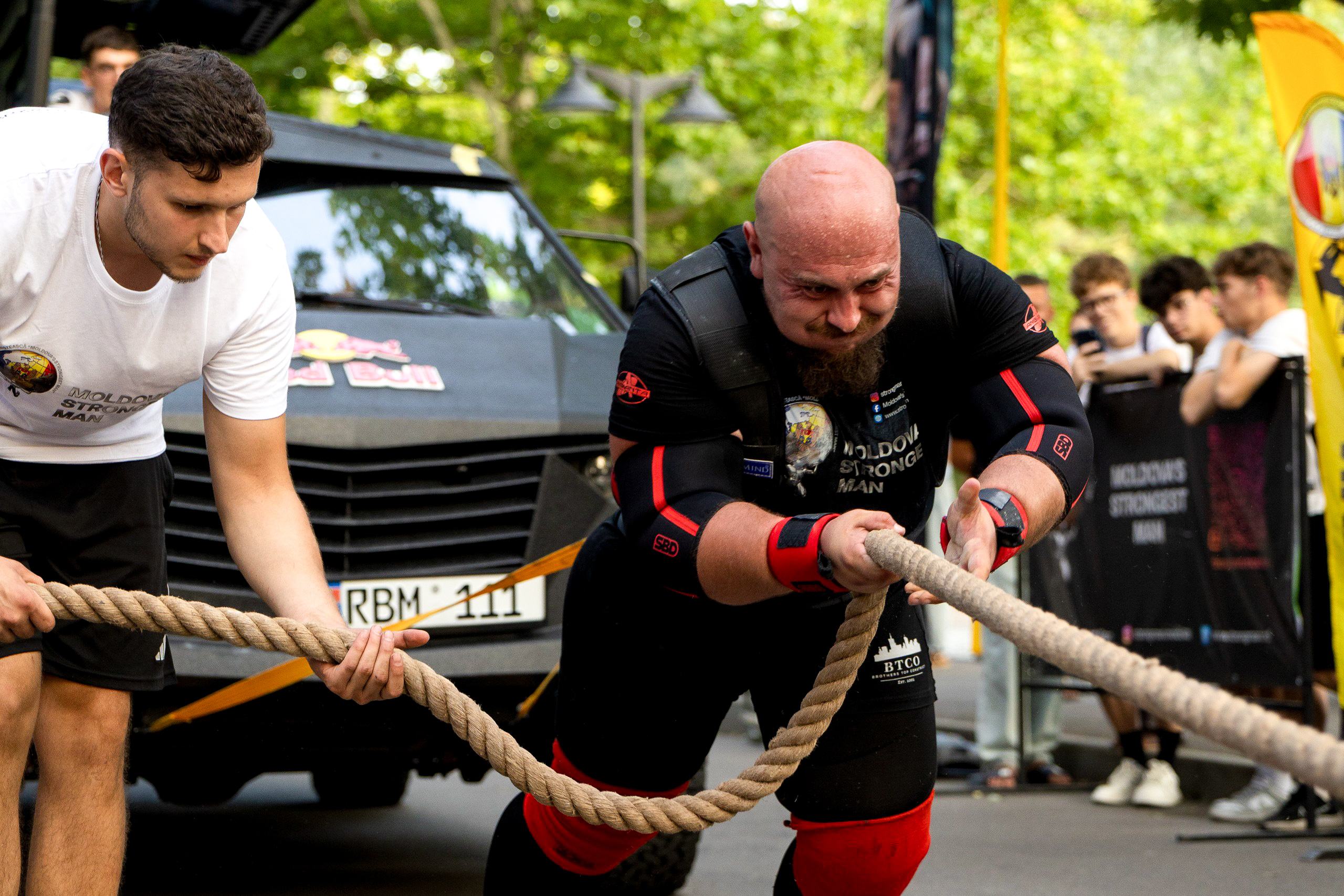
A champion is not built only for the next competition. A champion is built to keep competing, adapting and producing performance years later. In Strongman, this idea becomes essential because the sport demands very high strength, muscle mass, speed, technique, work capacity and tolerance to substantial mechanical loads at the same time. Longevity does not mean training less out of fear. It means knowing what deserves to be loaded, how much it deserves to be loaded and when the dose needs to change.
Research on masters athletes shows that aging inevitably brings declines in muscle mass, strength and power, but sustained physical activity can slow functional decline. Athletes who continue training are an important model of active aging.
1. Longevity is not the opposite of performance
There is a false choice between being extremely strong and having a long career. The issue is not intensity itself, but the relationship between stimulus, tissue capacity and available recovery. An athlete can use heavy loads for many years when exposure is dosed, progression is intelligent and periods of fatigue are followed by recovery and consolidation.
2. Tissue capacity must keep pace with performance
Muscle can become stronger faster than some structures that transmit and tolerate force. Tendons, insertions, joints and other tissues have their own rates of adaptation. Load-management literature emphasizes the difference between sport-specific capacity and local tissue capacity. Progressive loading can build capacity, while disproportionate increases beyond local tissue tolerance may increase injury risk.
3. You do not have to win every training session
One of the most expensive habits in a Strongman career is turning training into a constant test. PRs are useful, but an athlete who tries to prove something every session often accumulates unnecessary costs: fatigue, degraded technique, joint stress and longer recovery. Longevity requires distinguishing stimulus from demonstration.
4. Load management is a foundation of a long career
Volume, intensity, frequency, event exposure, competitions, psychological stress, travel and sleep all contribute to total stress. Sport consensus statements recommend monitoring training load and athlete status because responses are individual and change throughout the season.
A practical rule is to avoid unnecessary spikes. If an event has been absent for months, it should not instantly return at maximal volume. If an athlete has had poor sleep, travel or consecutive competitions, the same external load may create a much greater internal load.
5. Injury history becomes part of the program
Longevity is not built by ignoring the past. A previous injury, a repeatedly irritated area or an event that consistently produces symptoms should influence programming decisions. Prevention should reflect history, age, competition level and sport demands.
6. Recovery becomes more important as the career advances
Recovery is the ability to absorb the stimulus and return sufficiently prepared for the next one. The international recovery consensus emphasizes the relationship between stress, fatigue, recovery and performance and recommends systematic monitoring of these factors.
7. Sleep is a performance component
High-performance athletes are vulnerable to insufficient sleep, fragmented sleep and schedule disruption caused by training, competition and travel. The literature supports an individualized approach because sleep needs and responses vary between athletes.
For a Strongman, sleep matters even more because training combines high mechanical stress, metabolic demand and cognitive requirements.
8. Strength should be preserved, but methods can evolve
A long career does not mean abandoning heavy loads. It means using heavy exposure more intelligently. You can maintain relevant intensity with fewer repetitions, alternate variations that develop the same quality and reduce the frequency of very costly exposures when they are not necessary. Masters athletes who continue training preserve strength, muscle mass and physical function better than inactive people.
9. Power and speed should not be abandoned
Loss of power can become important with age. That does not mean turning every session into a speed contest. It means retaining appropriate exposure to fast movements and intent to accelerate, with dosage adapted to the athlete. A meta-analysis in older adults found benefits of power training for muscle power and functional performance tests.
10. Body mass should serve performance
In Strongman, body mass can contribute to force production and transfer, stability and performance in certain events. But mass should serve performance. Continuous weight gain can also increase costs for mobility, conditioning, sleep, joints and cardiovascular function. A longevity strategy seeks the best combination of muscle mass, strength, conditioning, mobility and recovery.
11. Aerobic work has a place in a Strongman's career
Aerobic training does not have to be the enemy of strength. Adequate aerobic capacity can support recovery between efforts, tolerance of training volume and general health. Research in masters athletes suggests that lifelong exercise can slow cardiovascular decline associated with aging.
12. Strength training can support long-term health
Epidemiological data do not prove that Strongman training itself extends life. However, observational evidence associates resistance training with lower mortality risk and musculoskeletal and functional benefits. A meta-analysis associated resistance training with lower all-cause mortality, while a large cohort of older adults found favorable associations between weight training and all-cause, cardiovascular and cancer mortality. These are associations, not proof of direct causation.
13. After 30, 40 or 50, should the program change?
There is no magic age at which an athlete must abandon methods that worked before. Age is only one variable. Training history, injuries, volume tolerance, sleep quality, external stress, competitive level and recovery capacity also matter. As the career advances, optimizing the stimulus-to-cost ratio becomes increasingly logical.
14. Availability becomes a performance metric
The strongest program is useless if the athlete cannot participate in it. Important questions are: How many consecutive weeks can you train without major interruptions? How quickly do you return after competition? How long can you maintain technical quality? How often do pains force program changes? Sometimes reducing one session by 20% today is exactly what allows you to complete 100% of the important session four days later.
15. Signs that the dose needs to change
There is no single perfect marker of longevity. The combination of performance, pain, sleep, mood, RPE, technical quality and recovery between sessions can provide valuable information. Load monitoring should be used to make decisions, not to collect numbers obsessively.
If performance falls persistently, technique deteriorates, pain repeatedly returns, sleep worsens and the same load feels unusually hard, the answer is not always more willpower. Sometimes the correct answer is to adjust dose, frequency or exercise selection and, when necessary, seek medical assessment.
16. Longevity does not mean permanent conservatism
An athlete who fears every heavy load does not necessarily build a long career. Tissues need loading to maintain and develop capacity. The problem is poorly progressed loading or inadequate recovery, not the simple fact that training is hard. Healthy longevity is repeated exposure to stresses large enough to stimulate adaptation and well dosed enough to be repeated.
17. What does a Strongman built for 10-20 years look like?
He has a large strength base, but does not depend on weekly maxes. He has solid technique, enough conditioning, the mobility required for his positions and a strategy for vulnerable areas. He monitors his response to load and changes methods without abandoning principles. He may use more volume in one phase, more specificity before a competition and more conservation after a hard contest.
18. Conclusion: the biggest PR is being able to continue
Longevity in Strongman does not mean choosing health instead of performance. It means building performance in a way that can survive the passage of time. Muscle, strength, technique and conditioning must evolve together with recovery capacity and tissue tolerance.
A true champion is not only the athlete who can lift an enormous weight today. It is the athlete who can return to training, build again, compete, learn from injuries and remain relevant after the years when the body responded most easily have passed.
Sports science supports a simple idea: aging is inevitable, but the performance trajectory is not completely fixed. Sustained physical activity can attenuate decline, while load management, recovery, prevention and program adaptation can turn a short career into a durable one.
Bibliography and sources
1. Hassani M, Renzini A, Nguyen L, Coletti D. Changes in physical performance with aging in master athletes and in the general population: an update. European Journal of Translational Myology. 2026. PMID: 42126593.
2. McKendry J, et al. Muscle morphology and performance in master athletes: A systematic review and meta-analyses. Ageing Research Reviews. 2018. PMID: 29715523.
3. Catapano M, Ahmed M, Breslow RG, Borg-Stein J. The aging athlete. PM&R. 2022;14:643-651. PMID: 35441493.
4. Gabbett TJ, et al. When progressing training loads, what are the considerations for healthy and injured athletes? British Journal of Sports Medicine. 2021;55:947-948.
5. Soligard T, et al. How much is too much? IOC consensus statement on load in sport and risk of injury. British Journal of Sports Medicine. 2016;50:1030-1041. PMID: 27535989.
6. Bourdon PC, et al. Monitoring Athlete Training Loads: Consensus Statement. International Journal of Sports Physiology and Performance. 2017;12:S2161-S2170. PMID: 28463642.
7. Kellmann M, et al. Recovery and Performance in Sport: Consensus Statement. International Journal of Sports Physiology and Performance. 2018;13:240-245. PMID: 29345524.
8. Walsh NP, et al. Sleep and the athlete: narrative review and 2021 expert consensus recommendations. British Journal of Sports Medicine. 2021. PMID: 33144349.
9. Saeidifard F, et al. The association of resistance training with mortality: A systematic review and meta-analysis. European Journal of Preventive Cardiology. 2019;26:1647-1665. PMID: 31104484.
10. Shailendra P, et al. Weight training and risk of all-cause, cardiovascular disease and cancer mortality among older adults. International Journal of Epidemiology. 2024;53:dyae074. PMID: 38831478.
11. Geard D, et al. Masters Athletes: Exemplars of Successful Aging? Journal of Aging and Physical Activity. 2017;25:490-500. PMID: 27768522.
12. Current Insights in the Age-related Decline in Sports Performance of the Older Athlete. 2021. PMID: 34000751.
More From The Journal
Training
The Science of Strongman Training - Episode X: Competition Programming
How to build a complete Strongman competition preparation block: calendar, events, volume, intensity, specificity, simulations, autoregulation, tapering and fatigue management.
Training
The Science of Strongman Training - Episode IX: Peaking
Peaking in Strongman: how to turn months of training into maximal competition performance by reducing fatigue, preserving adaptations and managing specificity.