
Training
Building a Champion - Episode 8: Competition Strategy in Strongman
September 4, 2026
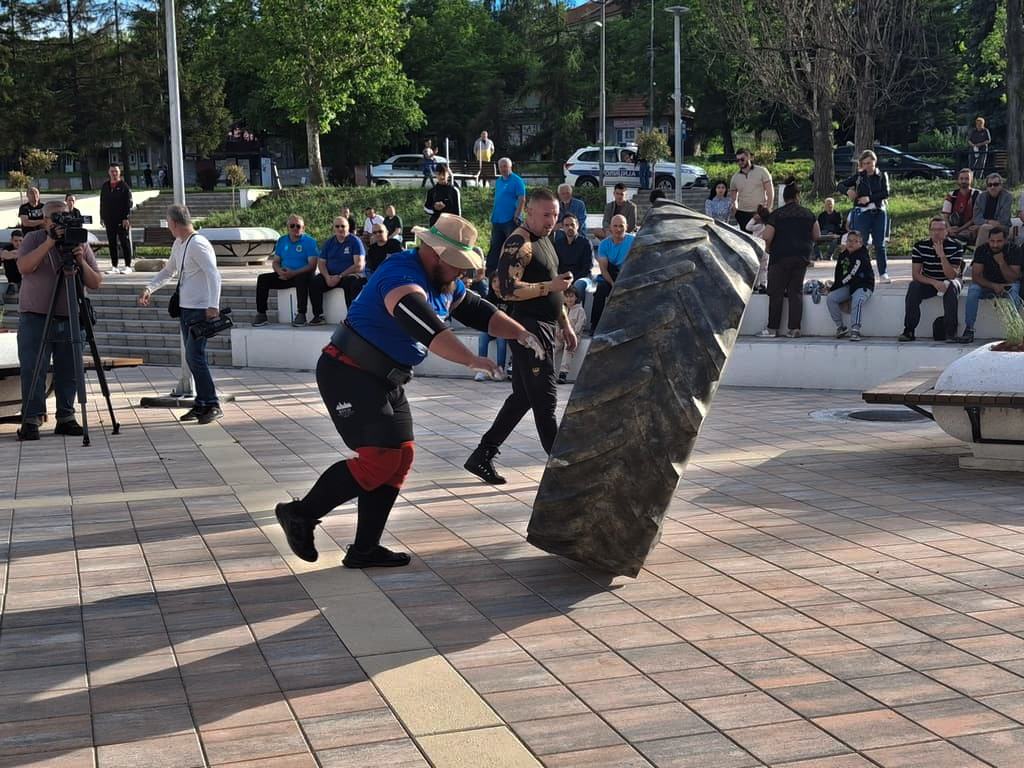
A Strongman competition is not a collection of independent events. Every result changes the value of the next decision. You can be the strongest athlete in one event and still lose the contest. Competition strategy transforms physical strength into points.
1. Read the contest before you compete it
Analyze the events, order, loads, distances, time limits, repetitions, heights, surface and rest periods. A maximal Deadlift requires a different approach from a Deadlift for reps, and a 20-meter Farmers Walk does not have the same strategy as a 40-meter carry.
2. You do not need to win every event
The objective is the overall ranking. A second-place finish can be excellent if it brings important points in a vulnerable event. After every event, ask what result you need for the final objective, not only what position you achieved.
3. Risk must be budgeted
Risk cannot be removed from Strongman, but it can be controlled. A heavy attempt because you need the points is strategy. A heavy attempt because you want to prove something is ego. In successive attempts, the first choice should provide a realistic base, while later attacks should depend on standings and probability of success.
4. Pacing can win points
In timed events, maximum speed is not always optimal speed. An explosive start followed by collapse can be slower than a controlled pace. In medleys, transitions can be enormously valuable. Pacing must be trained, not invented during competition.
5. The rest period between events is an invisible event
Food, hydration, breathing, temperature, light mobility and psychological arousal all influence the next performance. Strongman research shows that warm-ups are widely used in competition and are generally practiced in training. Do not turn the warm-up into a miniature training session.
6. Read your opponents, but do not copy them
Strategy is relative to the standings, but performance must remain anchored to your own capacity. If an opponent attacks a heavy load, you do not have to follow automatically. The correct question is: what result do I need?
7. When the plan breaks, build the next decision
You may miss an event or lose points in an event where you were the favorite. The mistake is trying to recover everything immediately. A long contest punishes emotional reactions. Accept the result, recalculate the standings and treat the next event as a new opportunity.
8. Fatigue changes strategy
The same event may require a different strategy at the beginning and end of a contest. Grip, breathing and technical precision change as fatigue accumulates. Specific preparation should sometimes include controlled exposure to events under fatigue.
9. Psychology: turn the engine on and off
You need activation for strength, but you cannot remain at maximum intensity all day. Some events require aggression, others patience and economy. Control of arousal should be practiced before competition.
10. The final 24 hours: protect your form
Before competition you are no longer building form. You are protecting it. Sleep, hydration, nutrition, travel, equipment and a familiar warm-up become part of strategy. Strongman tapering research supports reducing training volume before competition, while the exact duration and dose must be individualized.
11. After the contest, turn decisions into data
Analyze decisions, not only the final result. Record attempts, pace, transitions, warm-up and recovery. A competition journal becomes a personal database showing what works and where you lose points.
12. Conclusion: turn strength into points
The champion is not always the athlete who produces the biggest performance in one event. It is the athlete who expresses enough good performances, in the right order, at the right cost and with the right decisions. In Strongman, strength gets you to the table. Strategy can win the table.
More From The Journal

Training
The Science of Strongman Training - Episode X: Competition Programming
How to build a complete Strongman competition preparation block: calendar, events, volume, intensity, specificity, simulations, autoregulation, tapering and fatigue management.
Training
The Science of Strongman Training - Episode IX: Peaking
Peaking in Strongman: how to turn months of training into maximal competition performance by reducing fatigue, preserving adaptations and managing specificity.