
Training
Building a Champion - Episode 7: Nutrition in Strongman - Fuel for Strength, Size and Performance
September 4, 2026
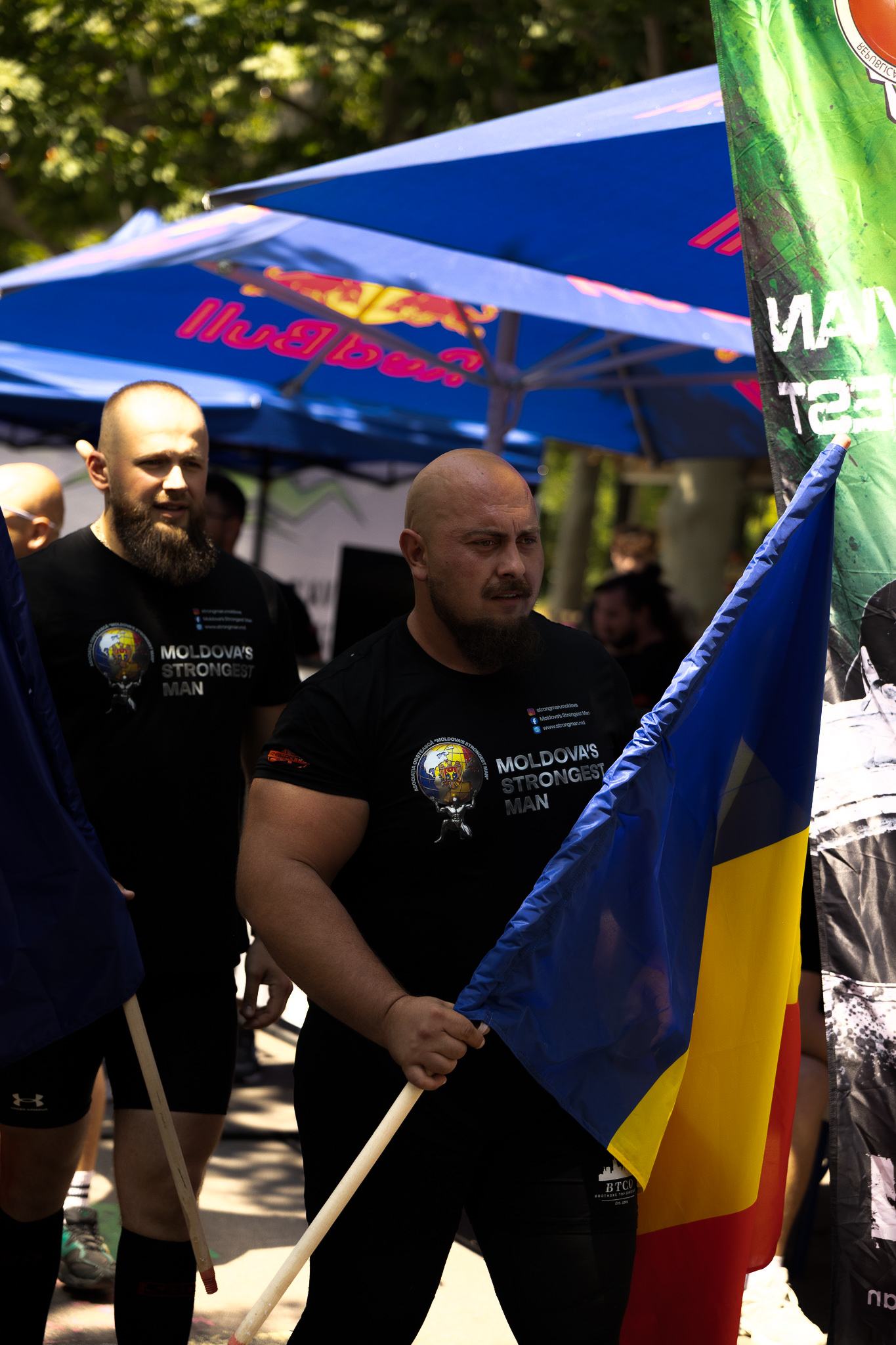
Across the first six episodes, we built the champion from biological potential toward structure, muscle mass, strength, technique, conditioning and recovery. Nutrition is the terrain on which all of those adaptations must be fueled. Training provides the stimulus, recovery allows the organism to respond, and nutrition supplies a major part of the resources required for that response to become adaptation.
For a Strongman athlete, food is not simply a calorie problem. It is a problem of energy availability, body mass, body composition, glycogen, protein, hydration, digestion and timing. In a sport where one day can demand maximal strength, power, carries, medleys and repeated efforts, the nutrition strategy must support the whole system rather than a single quality.
1. Nutrition Does Not Build the Champion Alone, But It Can Limit the Build
An excellent program can be undermined by inadequate nutrition. If energy availability is too low, an athlete may lose body mass, recover poorly and struggle to sustain training volume. At the other extreme, a very large energy surplus can increase body mass at a rate where fat gain outpaces the performance benefit.
Nutrition therefore needs to be viewed as a periodized variable. An off-season athlete does not have the same needs as an athlete in a strength block or in competition week. Modern sports nutrition recommendations emphasize this individualization according to goals, training load and competition context.
2. Energy: The First Fuel for Progress
For a large and powerful Strongman athlete, energy requirements can be substantial. But the important point is not to choose one universal calorie number. Requirements should be estimated and then checked through changes in body mass, performance, recovery, appetite and digestive tolerance.
During muscle-building phases, a moderate energy surplus can support increases in body mass, while maintenance phases can be useful when the goal is to consolidate strength without additional weight gain. During competition preparation, body mass management should account for the athlete's class, events and the relationship between body mass and performance.
The mistake is trying to solve everything with the same strategy: simply eat more. More food does not automatically mean more strength. The quality of progress depends on training, sufficient protein, macronutrient distribution, sleep, recovery and the athlete's ability to tolerate the food volume.
3. Protein: The Building Material
Protein is one of the most important components of nutrition for a strength athlete. Resistance training stimulates muscle protein synthesis, while dietary protein supplies the amino acids needed to maintain and build muscle tissue.
For most active people, the literature supports roughly 1.4-2.0 g of protein per kilogram of body mass per day, while higher intakes relative to lean mass can be useful for resistance-trained athletes during calorie restriction. There is no need to push every gram to an extreme. Total daily intake and sensible distribution are the priorities.
A practical approach is to distribute protein across several meals, roughly every three to four hours, using complete and well-tolerated sources. Exact per-meal needs should be individualized, but a commonly cited reference is about 0.25 g/kg or 20-40 g of high-quality protein per meal depending on the athlete and context.
4. Carbohydrates: Fuel for Work
In Strongman, carbohydrates have an importance that athletes sometimes underestimate. High-intensity and repeated efforts use muscle glycogen, and low carbohydrate availability can limit the ability to sustain large workloads and demanding sessions. Sports nutrition literature supports adapting carbohydrate intake to training load and goals rather than automatically removing it in the name of a 'clean' diet.
Before hard training, carbohydrate-containing meals can support energy availability, while post-training carbohydrates contribute to glycogen restoration. When multiple sessions or events occur on the same day, the issue becomes even more important: the athlete must replace what was used quickly enough to produce performance again.
This does not mean every Strongman athlete needs the same carbohydrate ratio. An athlete on an easy day, an athlete in a high-volume block and an athlete competing have different demands. Good nutrition follows the demand, not the trend.
5. Fats: Energy, Function and Balance
Dietary fats have important structural and physiological roles and contribute to total energy intake. They provide essential fatty acids and support absorption of fat-soluble vitamins. For an athlete with high energy needs, fats can also provide energy without requiring an impractical volume of food.
However, a very fatty meal immediately before training or competition can be difficult to digest. The simple principle is that the same food can be excellent at one time and poorly suited to another. Strategy must account for digestion as well as nutrients.
6. Timing: When You Eat Matters, But How Much You Eat Comes First
Modern sports nutrition does not reduce performance to one magical anabolic meal. Total daily intake remains the foundation. Timing then becomes the tool used to distribute energy and nutrients around training.
Before training, the goal is to have available energy without gastrointestinal discomfort. After training, quality protein and carbohydrates can support recovery and glycogen restoration. Between sessions, the same logic becomes a continuous recovery strategy.
7. Hydration: Performance Needs a Functional Hydraulic System
Hydration is often ignored precisely because it is not glamorous. In reality, fluid losses can affect exercise capacity and thermoregulation. During a long Strongman session, in a hot tent or on a competition day with multiple events, fluids and electrolytes become part of the performance plan.
There is no universal amount that fits everyone. Sweat rate, temperature, exercise duration, sodium intake and access to fluids change requirements. The goal is to limit excessive fluid loss while avoiding both dehydration and excessive water intake without electrolyte balance. Sports nutrition recommendations treat fluids and electrolytes as components of the same performance strategy.
8. Training Nutrition: Food Should Follow the Load
A highly useful principle is to periodize nutrition alongside training. On days with heavy events, medleys or high volume, energy and carbohydrate demand may be higher. On rest days, energy needs may fall while protein intake can remain relatively stable.
This flexibility allows the athlete to have fuel when production is required without turning every day into an eating contest. For strength-power athletes, the literature emphasizes supporting training and individual goals, while also noting that research specifically in Strongman remains more limited than in many other sports.
9. Body Mass: How Heavy Does a Strongman Need to Be?
There is no magical body weight. There is a body weight at which the combination of absolute strength, muscle mass, mobility, conditioning, technique and recovery works well for that athlete. More mass can help certain events, but it can also increase the energetic cost of movement or affect speed and conditioning.
Body mass therefore needs to be interpreted together with performance. Rapid weight gain is not automatically progress. Weight loss is not automatically loss of performance. What matters is the direction of strength, body composition, speed, work capacity and overall athlete status.
10. Nutrition in the Off-Season, Strength Block and Pre-Contest
In the off-season, the priority may be muscle growth and development of the energy base. There is more room for a controlled calorie surplus and gradual body-mass gain if it serves the objective.
During a strength block, nutrition must support intensity and recovery. As competition approaches, the strategy shifts toward maintaining performance, controlling digestion, stabilizing body mass and testing the foods that will actually be used on competition day.
During pre-contest preparation, one of the biggest mistakes is making radical dietary changes in the final days. Competition nutrition should be rehearsed in training so the athlete knows what is tolerated, how quickly it is digested and how the body responds to carbohydrates, fluids and sodium.
11. Competition Day: Nutrition Becomes Performance Logistics
On competition day, you are no longer eating only for health or muscle growth. You are eating for the next event. That means familiar foods, easy digestion, portions that do not make movement uncomfortable, and a fluid and carbohydrate strategy adapted to the time between events.
Between events, the goal is not to fill the stomach. The goal is to restore resources without creating digestive problems. In multi-event competitions, this difference can become enormous: an athlete who manages nutrition well can enter the final event with more usable resources available.
12. Supplements: Tools, Not the Foundation
Supplements have a place, but they cannot compensate for poorly constructed nutrition. Creatine monohydrate is one of the best-studied options for strength athletes, while protein powder can be a practical solution when meeting protein needs from whole foods is difficult. Every other product should be evaluated for effectiveness, safety, quality and anti-doping status.
The correct order is simple: sufficient energy, sufficient protein, carbohydrates matched to demand, adequate fats, hydration, micronutrients and only then supplements that provide a real benefit. Sports nutrition literature recommends an individualized and cautious approach to supplementation.
13. Digestion: The Invisible Part of Performance
A perfect nutrition plan on paper is useless if the athlete cannot digest it. Strongman athletes often reach large food volumes, and gastrointestinal tolerance becomes a real limiting factor. Very large meals, excessive fiber before exertion, high fat intake before competition or unfamiliar foods can turn available energy into discomfort.
That is why competition nutrition must be trained. You do not test the strategy for the first time on competition morning. You test it during training, simulations and sessions that reproduce the competition schedule as closely as possible.
14. What Does Good Nutrition Look Like for a Champion?
It does not look identical for everyone. But it shares several characteristics: it supports training, maintains recovery, allows body-mass control, is simple enough to execute consistently and can be adjusted when training load or objectives change.
A champion does not need the most complicated diet. He needs a diet he can execute for months and years. Consistency beats occasional perfection. When nutrition is connected to training and recovery, every meal becomes part of the construction process.
15. Conclusion: You Do Not Eat Just to Be Big, You Eat to Perform
Nutrition is the link between resources and adaptation. Without sufficient energy, the organism must prioritize. Without enough protein, tissue construction and repair become harder to support. Without adequate carbohydrates during demanding periods, work capacity can fall. Without fluids and electrolytes, performance can become vulnerable.
But nutrition should not become a religion of numbers. It is a system for managing resources. In high-level Strongman, the question is not 'how much can I eat?' but 'what does my body need so today's training can become tomorrow's performance?'
References and Sources
1. Jäger R. et al. International Society of Sports Nutrition Position Stand: Protein and Exercise. Journal of the International Society of Sports Nutrition, 2017. DOI: 10.1186/s12970-017-0177-8.
2. Kerksick C.M. et al. International Society of Sports Nutrition Position Stand: Nutrient Timing. Journal of the International Society of Sports Nutrition, 2017. DOI: 10.1186/s12970-017-0189-4.
3. Thomas D.T., Erdman K.A., Burke L.M. Position of the Academy of Nutrition and Dietetics, Dietitians of Canada, and the American College of Sports Medicine: Nutrition and Athletic Performance. Journal of the Academy of Nutrition and Dietetics, 2016.
4. Slater G., Phillips S.M. Nutrition guidelines for strength sports: sprinting, weightlifting, throwing events, and bodybuilding. Journal of Sports Sciences, 2011. DOI: 10.1080/02640414.2011.574722.
5. Gonzalez J.T. et al. International Society of Sports Nutrition Position Stand: Tactical Athlete Nutrition. Journal of the International Society of Sports Nutrition, 2022. DOI: 10.1080/15502783.2022.2086017.
More From The Journal

Training
The Science of Strongman Training - Episode X: Competition Programming
How to build a complete Strongman competition preparation block: calendar, events, volume, intensity, specificity, simulations, autoregulation, tapering and fatigue management.

Training
The Science of Strongman Training - Episode IX: Peaking
Peaking in Strongman: how to turn months of training into maximal competition performance by reducing fatigue, preserving adaptations and managing specificity.