
Training
Building a Champion - Episode 6: Recovery in Strongman - The Art of Turning Training Into Adaptation
September 4, 2026
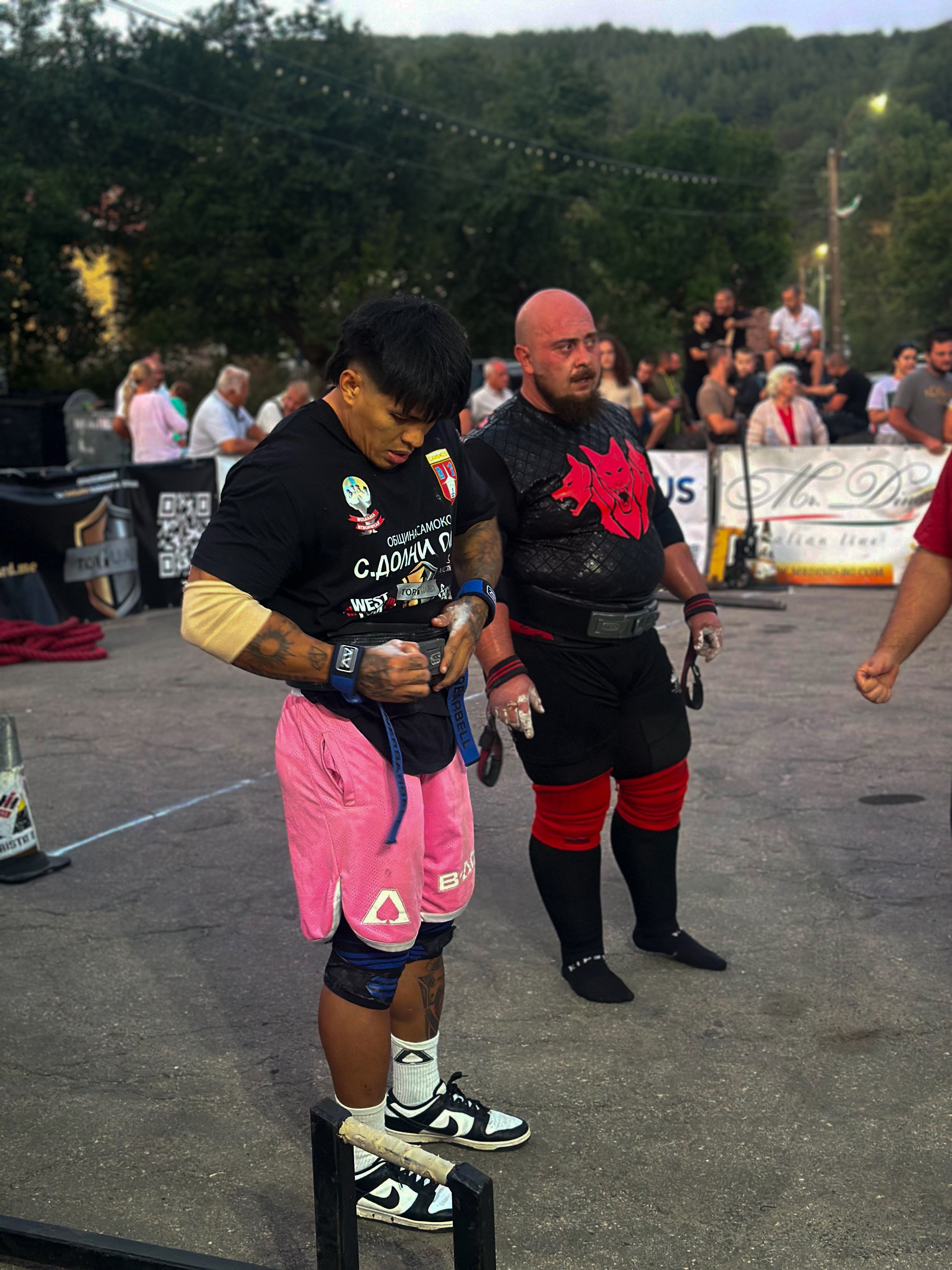
Across the first five episodes, we followed the construction of potential, structure, muscle mass, strength, neural adaptation, technique and conditioning. The next question is unavoidable: what does the athlete do with all those training stimuli after the session ends? Recovery is the point where training stress stops being only stress and begins to become adaptation.
In Strongman, recovery is not simply the absence of training. It includes tissue repair, restoration of energy resources, neuromuscular recovery, sleep and psychological recovery, and the management of fatigue so the next session can produce another high-quality stimulus.
1. Recovery Is Not Time Off. It Is Part of Training
Training is the stimulus, not the final result. A hard deadlift, log press, yoke, farmer's walk or stone session can create a strong stimulus, but adaptation occurs afterward, when the organism has enough time and resources to respond. Without adequate recovery, an athlete can keep adding stress without efficiently converting that stress into performance.
Fatigue Is Not the Opposite of Adaptation
Fatigue is a normal consequence of hard work. The problem begins when accumulated fatigue exceeds the athlete's ability to recover while maintaining training quality. A champion does not try to eliminate fatigue. He learns to dose it, interpret it and allow it to fall before it starts dictating the program.
2. Neuromuscular Recovery: More Than the 'CNS Fatigue' Myth
In gym language, almost every performance drop is sometimes blamed on the central nervous system. Reality is more complex. Performance depends on the interaction between the nervous system, muscle, connective tissues, energy availability, sleep, psychological stress and the demands of the previous session.
Local Fatigue and Systemic Fatigue
After high-volume carries, peripheral fatigue may be substantial in the forearms and shoulder girdle. After heavy deadlifting, hip extensors, trunk musculature and the ability to produce high force can all be affected. After an event session with repeated transitions, the cost is also metabolic, respiratory and cognitive. Recovery therefore has to be judged according to what was stressed, not simply by counting hours.
3. Sleep Is the Infrastructure of Recovery
Among recovery tools, sleep has a special position because it influences physiological, psychological and performance processes at the same time. Research in athletes indicates that interventions increasing sleep opportunity, including sleep extension, can improve some outcomes of performance and recovery. For a strongman handling heavy loads and high mechanical stress, sleep is not an administrative detail. It is part of the program.
Quantity, Quality and Regularity
Hours are not the only variable. Sleep continuity, schedule regularity, bedroom conditions and disruptions from travel, competition, work and training all matter. Stable sleep and wake times, enough time allocated for sleep, and addressing factors that fragment sleep are foundational strategies before any sophisticated recovery protocol.
4. Nutrition: Recovery Needs Raw Material
An athlete can have a strong program and good sleep, yet recovery remains limited when energy and nutrient availability do not support the workload. For a strongman, the diet must provide enough energy, adequate protein, carbohydrate to restore energy stores and appropriate hydration.
Protein Supports Tissue Remodeling
Meta-analyses show that protein supplementation can enhance lean mass and strength adaptations produced by resistance training, especially when total intake is insufficient or needs are higher. For a strength athlete, the key is the overall nutrition strategy, not the existence of one supposedly magic shake.
Carbohydrate and the Next Session
When conditioning and event work are high in volume, carbohydrate availability becomes important for glycogen restoration and repeated efforts. A strongman entering the next session with low energy availability can turn a nutrition problem into what looks like a strength or motivation problem.
5. Hydration and Electrolytes: Small Details, Large Effects
Dehydration can affect performance and perceived effort, while fluid and electrolyte losses rise according to temperature, exercise duration and individual sweat rate. In Strongman, where heavy sessions may take place in hot environments and with equipment that increases thermal discomfort, hydration has to be treated as preparation rather than an emergency response to extreme thirst.
6. Recovery Between Sessions and Between Events
Strongman programming cannot be built as a calendar in which every day is treated identically. A hard yoke or deadlift session can change how the next day should be designed. A demanding medley can require a different recovery window than a short maximal-strength session. Recovery is therefore also a problem of sequencing stimuli.
Competition Is a Test of Repeated Recovery
On competition day, an athlete does not recover from zero. He enters with the resources preserved by the preparation period. Between events, food, hydration, temperature regulation, easy movement, emotional control and simple movement economy can become practical differences. Competition tests not only how strong you are, but how much of that strength you can preserve across the day.
7. Volume, Intensity and Frequency: Controlling Fatigue
Recovery cannot be separated from programming. Volume creates a recovery cost, intensity increases neural and mechanical demands, and frequency determines how quickly a new stimulus is layered onto the previous one. There is no universal formula giving every strongman the same number of days between hard sessions.
Autoregulation: The Program Must Observe the Athlete
RPE, RIR and, in some contexts, movement velocity can help athletes and coaches adjust loading when readiness differs from the plan. Recent evidence suggests autoregulated approaches can be useful tools for maximal-strength development, while none of them replaces judgment about the full context.
A Deload Is Not Surrender
A reduction in training load can be used to allow accumulated fatigue to fall while maintaining exposure to important movements. A deload cannot repair a poorly designed program. But within a well-built program, it can help accumulated fitness become visible again through performance.
8. Recovery Methods: What Matters and What Belongs in Its Place
Massage, easy movement, heat, cold water, stretching and other modalities may influence perceived recovery, soreness or acute performance recovery. They cannot replace sleep, nutrition or load management. More importantly, their effects depend on the goal for which they are used.
Cold-water immersion is a good example. Meta-analyses show benefits for some forms of acute recovery and perceived soreness, but repeated use after resistance training may attenuate some strength adaptations. Newer literature also emphasizes that protocol, timing and exercise type matter. For a strongman chasing chronic strength adaptation, recovery should not mean erasing the training signal completely.
9. Recovery Across the Season
In the off-season, an athlete can tolerate more volume and more experimentation. In a strength-focused block, intensity can rise while unnecessary volume falls. In pre-contest preparation, specificity and event exposure increase while recovery costs need tighter control. In the taper, the goal is not to become dramatically stronger in a few days, but to reduce enough fatigue for accumulated readiness to be expressed.
10. How to Measure Recovery
No single measurement can fully tell us whether a strongman is recovered. Performance at submaximal loads, movement speed, RPE, sleep quality, soreness, mood, appetite and general freshness should be interpreted together. When several signals move in the same direction, the case for adjusting training becomes stronger.
The Best Indicator Is Functional Performance
An athlete may report feeling tired and still produce an excellent session. Another may feel perfect but show clear degradation in speed, technique or repeatability. For programming, the useful question is not only 'How do you feel?' but 'What can you produce today, and at what cost?'
11. At Champion Level, Recovery Becomes a Competitive Quality
At high level, differences in raw strength can be smaller than differences in the ability to repeat performance. The athlete who trains well today, recovers enough and can perform again tomorrow gains something extremely valuable: the availability to accumulate weeks and months of quality work.
Recovery is ultimately resource economy. You need to know where to spend, how much to spend and when to allow the organism to turn the cost into adaptation. A champion does not recover because he fears fatigue. He recovers because the next stimulus needs to matter.
Conclusion: Training Creates the Problem, Recovery Allows the Solution
The construction of a champion can be viewed as a simple chain: stimulus, fatigue, recovery, adaptation, then another stimulus. Breaking any link weakens the whole system. You can have good genetics, muscle mass, strength, technique and conditioning, but without recovery those qualities cannot be assembled consistently into performance.
In Strongman, recovery is not empty space between workouts. It is the mechanism that turns yesterday's work into tomorrow's ability to perform. And as the level rises, the ability to recover enough to keep building becomes part of strength itself.
References and Sources
Bonnar D, Bartel K, Kakoschke N, Lang C. Sleep Interventions Designed to Improve Athletic Performance and Recovery: A Systematic Review of Current Approaches. Sports Medicine. 2018;48:683-703. doi:10.1007/s40279-017-0832-x.
Morton RW, Murphy KT, McKellar SR et al. A systematic review, meta-analysis and meta-regression of the effect of protein supplementation on resistance training-induced gains in muscle mass and strength in healthy adults. British Journal of Sports Medicine. 2018;52:376-384. doi:10.1136/bjsports-2017-097608.
Malta ES, Saunders B, Pugh JKN et al. The Effects of Regular Cold-Water Immersion Use on Training-Induced Changes in Strength and Endurance Performance: A Systematic Review with Meta-Analysis. Sports Medicine. 2021. doi:10.1007/s40279-020-01362-0.
Choo HC, Lee M, Yeo V et al. The effect of cold water immersion on the recovery of physical performance revisited: A systematic review with meta-analysis. Journal of Sports Sciences. 2023;40:2608-2638. doi:10.1080/02640414.2023.2178872.
Grgic J. Effects of post-exercise cold-water immersion on resistance training-induced gains in muscular strength: a meta-analysis. European Journal of Sport Science. 2023;23:372-380. doi:10.1080/17461391.2022.2033851.
Autoregulated resistance training for maximal strength enhancement: A systematic review and network meta-analysis. Journal of Exercise Science & Fitness. 2025;23:360-369. doi:10.1016/j.jesf.2025.07.006.
Harris NK, Cronin JB, Hopkins WG et al. Acute Physiological Responses to Strongman Training Compared to Traditional Strength Training. Journal of Strength and Conditioning Research. 2016.
More From The Journal

Training
The Science of Strongman Training - Episode X: Competition Programming
How to build a complete Strongman competition preparation block: calendar, events, volume, intensity, specificity, simulations, autoregulation, tapering and fatigue management.
Training
The Science of Strongman Training - Episode IX: Peaking
Peaking in Strongman: how to turn months of training into maximal competition performance by reducing fatigue, preserving adaptations and managing specificity.