
Training
Building a Champion - Episode 10: From Athlete to Champion
September 4, 2026
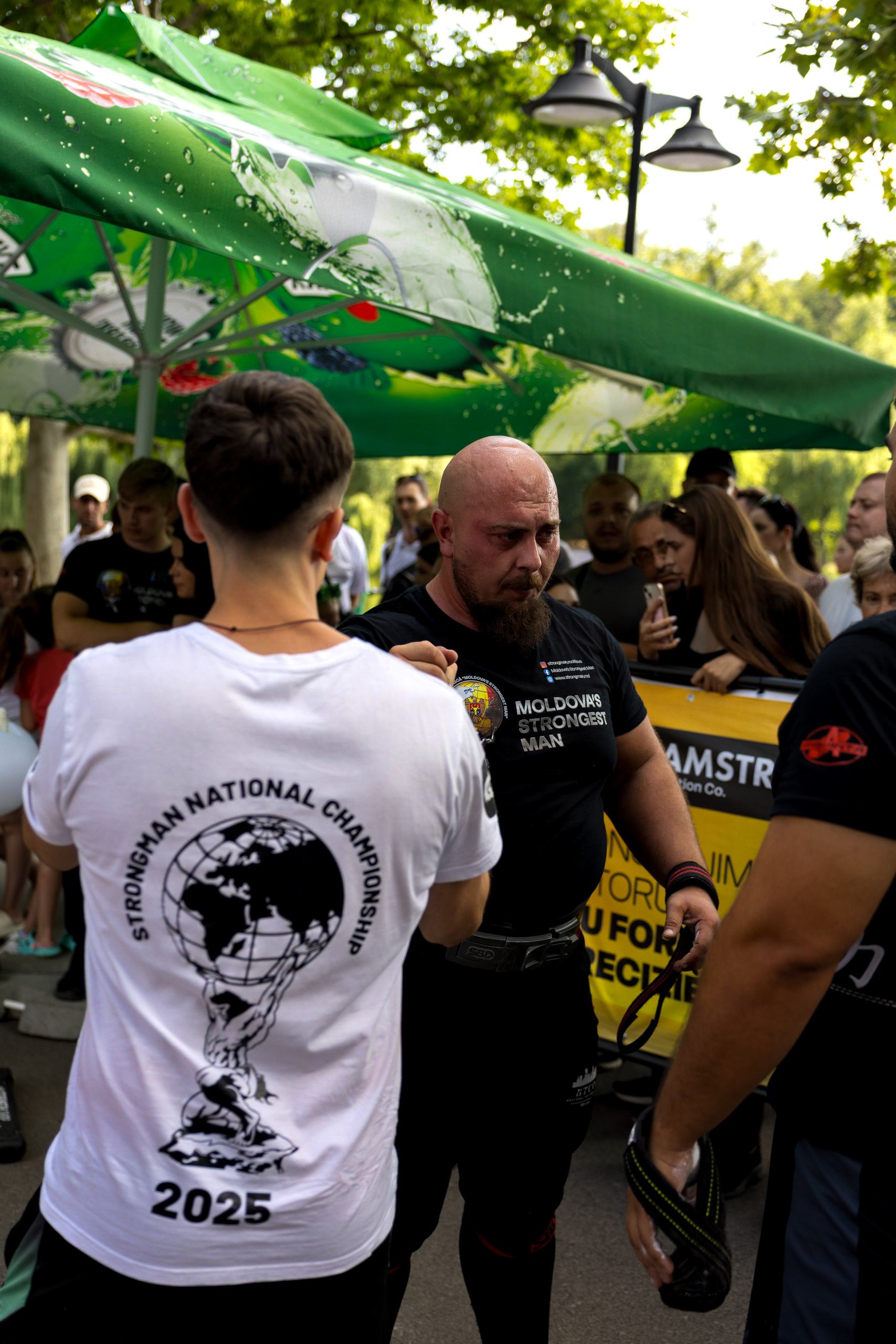
An athlete can be extremely strong, highly prepared and still not be a champion. The difference does not come from one hidden quality. It comes from how all qualities are integrated into a system capable of producing performance when it matters.
The Building a Champion series has so far followed biological potential, structural development and muscle mass, strength, technique, conditioning, recovery, nutrition, competition strategy and longevity. This final episode brings them together. A champion is the product of a construction process, not a single perfect day.
1. The athlete has qualities. The champion integrates them
An athlete may have an enormous deadlift, but if event technique is poor, points can disappear. An athlete may have excellent conditioning, but if effort is paced badly, conditioning does not automatically become placing. An athlete may have strong psychology, but without physical preparation the intended performance cannot be executed. A champion is the athlete whose qualities reinforce one another.
High-level performance is fundamentally an integration problem. Strength must reach the implement, technique must conserve resources, conditioning must allow repeated effort, recovery must allow adaptation, and strategy must turn capacity into points.
2. Talent opens the door, but it does not build the house
Genetic potential can influence body size, muscle architecture, training response and many other characteristics. But talent is not a complete development plan. Research on sports performance shows that practice and experience matter, while deliberate practice alone does not explain all differences among elite performers. Peak performance emerges from the interaction of many factors.
That is why a champion does not only ask, "How talented am I?" but also, "What can I build with what I have?"
3. Strength must be converted into performance
General strength is the foundation, but Strongman demands transfer. An athlete must express strength through unstable implements, awkward positions, different ranges of motion, carries, presses, pulls and combinations of events. As the level rises, the gap between the strength you possess and the strength you can use becomes increasingly important.
Building a champion means reducing that gap. Training must develop both capacity and its transfer to competition demands.
4. Technique turns strength into efficiency
At moderate loads, imperfect technique can be hidden. At very high loads and under fatigue, every positional loss costs energy and can change the result. Technique is not decoration around strength. It is the mechanism through which strength reaches the implement.
That is why a champion repeats movement enough for execution to become robust. In competition, you do not need the technique you can perform on a perfect day. You need the technique you can reproduce while breathing hard, tired and under pressure.
5. Consistency beats perfect days
A career is not built from isolated records. It is built from hundreds and thousands of sessions in which quality is good enough. A perfect training session is memorable. A hundred solid sessions are transformative.
Consistency does not mean doing the same thing forever. It means respecting principles while methods change. Sometimes progress is a heavier load. At other times it is better technique, faster recovery or completing a session without accumulating unnecessary fatigue.
6. The champion learns to manage fatigue
Fatigue is not evidence that training failed. It is part of the process. The problem appears when stress repeatedly exceeds recovery capacity. A champion learns to distinguish productive discomfort, normal fatigue and signals that require a program adjustment.
This becomes critical near competition. The goal is not to arrive with the greatest possible amount of accumulated fatigue. The goal is to arrive with the greatest available performance capacity.
7. Strategy turns capacity into points
Strongman is not only a collection of events. It is a game of points, event order, pacing, positioning, recovery and decisions. An athlete can be stronger than an opponent and still finish behind if resources are spent poorly or an event is approached without a strategy.
Strategy starts before competition: choosing pace, knowing strengths and weaknesses, preparing for competition conditions and setting realistic objectives for each event. On competition day, strategy becomes execution.
8. Competition psychology
As the stakes rise, the body is not the only system being tested. Attention, arousal, confidence, emotional control and the ability to remain focused influence execution. Recent research in strength sports indicates that psychological preparation and pre-performance routines can be relevant, while a 2026 study in strength athletes found an acute increase in deadlift velocity under a psyching-up condition compared with control.
A champion does not necessarily try to be calm. The goal is to find the mental state appropriate to the task. Sometimes activation is useful. At other times control and patience are.
9. What happens when something goes wrong?
This is one of the clearest differences between a good athlete and a champion. Real competitions do not respect perfect plans. You may miss a repetition, face an event that does not suit your style, encounter a technical problem or enter an event already fatigued.
A champion does not turn one bad event into a lost competition. The champion evaluates, adjusts and moves forward. Competitive resilience is the ability to limit the loss when circumstances do not follow the plan.
10. Adaptation: change the plan without losing direction
A good program is not a prison. It is a decision system. If the athlete's response changes, the dose must be able to change. If an event creates a problem, a variation can be modified without abandoning the quality being developed.
Recent elite-performance consensus emphasizes individualization, sport specificity, integration of multiple components and evidence-informed decisions rather than dogma. The champion and the team must know not only what works, but when it needs to change.
11. The team behind the athlete
At high level, performance becomes difficult to sustain entirely alone. Coaches, training partners, physiotherapists or physicians, nutrition professionals, family and people handling logistics can all contribute to continuity and decision-making.
Having a team does not mean giving up responsibility. It means using different areas of expertise for the same mission: making the athlete more prepared, healthier and more capable of performing.
12. The identity of a competitor
Early on, an athlete may define himself through numbers: how much he lifts, how much he weighs, what placing he achieved. As he develops, identity becomes deeper. A competitor knows who he is when in form, but also who he is when things go wrong.
Champion identity does not mean believing you are invincible. It means having clear standards for preparation, execution, behavior and response to difficulty.
13. Standards, responsibility and professionalism
At a level where differences are small, details become large. Arriving prepared, nutrition, sleep, warm-up, equipment, punctuality, session analysis and recovery do not look spectacular. Together, however, they create the environment in which performance can emerge.
Professionalism does not mean perfection. It means repeated responsibility. When you make a mistake, correct it. When you do not know, learn. When the body sends an important signal, take it seriously. When the plan does not work, modify it.
14. Championships are not won in a single day
Competition day is simply where part of the accumulated work becomes visible. Performance that day is influenced by months and years of preparation, injury management, technical quality, nutrition, sleep, conditioning and competition experience.
In a study of 132 strongman athletes, 94% reported using a competition warm-up, and preparation strategies included monitoring perceived exertion, perceived movement speed and training load. The important message is not the percentage itself, but that competition preparation can be practiced and refined before the stakes become real.
15. What separates a finalist from a champion?
Sometimes the difference is not a huge physical quality. It may be the ability to repeat performance, avoid costly mistakes, remain efficient under fatigue, make good decisions and produce enough in events where you are not the favorite.
A finalist may have a very high level. The champion adds consistency, strategy, adaptation and execution. The champion does not necessarily win every event. Instead, he builds a total that the others cannot surpass.
16. Building a champion has no finish line
After the first title, the questions do not disappear. Maintaining the level becomes harder. Opponents learn. The body changes. Rules and events change. New generations arrive.
A championship is therefore not a permanent destination. It is a temporary confirmation that your performance system worked better than the others in that context. The next challenge is to reproduce, adapt and exceed that level.
17. From athlete to champion
The path can be summarized simply. Potential provides the raw material. Structure and muscle mass build the body. Strength creates capacity. Technique directs it. Conditioning allows repeated effort. Recovery allows adaptation. Nutrition fuels the process. Strategy turns capacity into points. Longevity allows all of these things to be repeated for long enough.
But the champion appears when these components begin to function as one system. The champion is not simply the strongest athlete. It is the athlete who can turn preparation into execution, execution into results and results into repeatable performance.
Conclusion: the champion is built, then rebuilt
A champion is not a perfect version of an athlete. A champion is an athlete capable of learning, adapting, handling pressure, managing resources and repeating performance when conditions are not perfect.
The construction does not end when the first trophy is lifted. That is when a new stage begins. You must demonstrate that success was not accidental, understand why you won and prove that you can build it again.
In Strongman, the most impressive thing is not only how much a person can lift. It is how much preparation, discipline, intelligence, resilience and adaptation can be compressed into one decisive execution.
From athlete to champion there is no single leap. There are thousands of good decisions, repeated for long enough.
Bibliography and sources
1. Macnamara BN, Moreau D, Hambrick DZ. The Relationship Between Deliberate Practice and Performance in Sports: A Meta-Analysis. Perspectives on Psychological Science. 2016;11(3):333-350. PMID: 27217246.
2. Ericsson KA. Towards a science of the acquisition of expert performance in sports: Clarifying the differences between deliberate practice and other types of practice. Journal of Sports Sciences. 2020. PMID: 31718526.
3. Bangsbo J, et al. Consensus Statements - Optimizing Performance of the Elite Athlete. Scandinavian Journal of Medicine & Science in Sports. 2025.
4. Winwood PW, Pritchard HJ, Wilson D, Dudson M, Keogh JWL. The Competition-Day Preparation Strategies of Strongman Athletes. Journal of Strength and Conditioning Research. 2019;33(9):2308-2320. PMID: 31343547.
5. Cusimano K, Moran DJ, Tod DD, Freeman DP. The Effects of Psyching-Up on Deadlift Performance in Competitive Strongmen, Strongwomen, and Powerlifters. Journal of Strength and Conditioning Research. 2026;40(5):576-584.
6. Identifying the Psyching-Up Strategies Used in Strength Sports: A Concept Mapping Approach. Journal of Strength and Conditioning Research. 2025. PMID: 40030080.
7. Reardon CL, et al. Mental health in elite athletes: International Olympic Committee consensus statement. British Journal of Sports Medicine. 2019;53(11):667-699. PMID: 31097450.
8. Mental health in elite athletes: International Olympic Committee consensus statement. 2026 update. PMID: 42580854.
More From The Journal

Training
The Science of Strongman Training - Episode X: Competition Programming
How to build a complete Strongman competition preparation block: calendar, events, volume, intensity, specificity, simulations, autoregulation, tapering and fatigue management.
Training
The Science of Strongman Training - Episode IX: Peaking
Peaking in Strongman: how to turn months of training into maximal competition performance by reducing fatigue, preserving adaptations and managing specificity.