
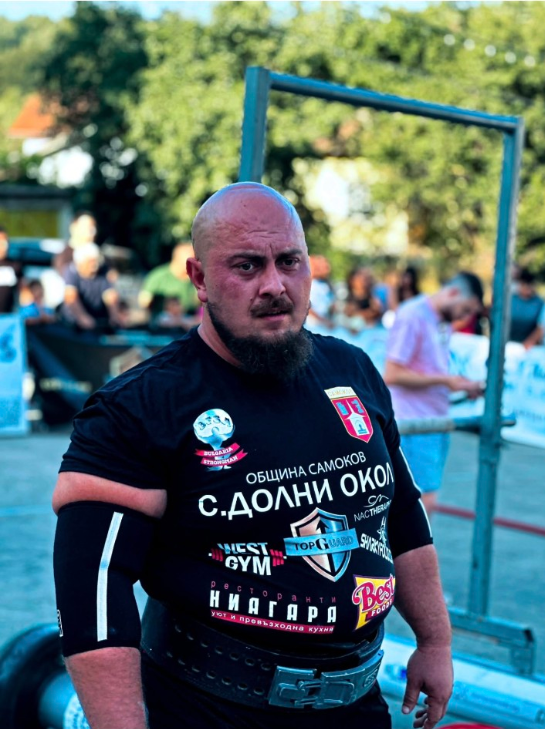
Equipment, Nutrition and Hydration Strategy for a Strongman Athlete on Competition Day
Physiological, Nutritional and Logistical Considerations for Optimizing Performance
Abstract
Strongman competition represents a particular form of athletic exertion characterized by the alternation of maximal strength events, strength-speed activities, local muscular endurance, anaerobic capacity, load carrying, and repeated high-intensity efforts performed with incomplete recovery. Unlike disciplines in which the athlete performs a single event, the strongman competitor must maintain neuromuscular and metabolic capacity throughout the entire competition day.
For this reason, competition preparation should simultaneously include four major components: technical equipment, clothing, nutrition, and hydration/electrolyte management, supplemented by the logistical organization of food and performance equipment.
The objective is not merely to achieve maximal performance in a single event, but to maintain a high functional capacity from the first event to the final one.
1. The Physiological Characteristics of a Strongman Competition
Strongman combines multiple energy systems and biomechanical demands.
During the same competition, an athlete may be required to perform:
- log press;
- axle press;
- circus dumbbell;
- deadlift;
- car deadlift;
- frame carry;
- farmer's walk;
- yoke walk;
- sandbag loading;
- Atlas Stones;
- truck pull;
- tire flip;
- keg toss;
- loading medley;
- stone medley;
- grip-endurance events;
- strength-speed events.
This variety creates a different physiological and nutritional challenge from powerlifting. In powerlifting, nutrition and hydration between attempts are important, but the competition structure generally allows relatively predictable recovery periods. In strongman, the order of events and the intervals between them can substantially alter the athlete's energy, fluid, carbohydrate, and electrolyte requirements.
Furthermore, some events primarily stress the phosphagen energy system, while others generate substantial metabolic stress and rely heavily on anaerobic glycolysis.
Therefore, the athlete should begin competition:
- adequately hydrated;
- with sufficient energy reserves;
- with a comfortable gastrointestinal state;
- with all equipment checked;
- with a fast and predictable fueling system;
- without depending on last-minute purchases.
2. The Fundamental Principle: Never Experiment on Competition Day
One of the most important nutritional principles is that the competition strategy should be tested beforehand during training.
The IOC recommends that hydration strategies used during competition be practiced during training under conditions similar to those expected in competition, including comparable exercise intensity and environmental temperature, and using the same beverages intended for competition. (bjsm.bmj.com)
The same principle should be applied to food.
Competition day is not the time to introduce:
- a new supplement;
- an unfamiliar pre-workout;
- a new energy drink;
- a very high-fiber meal;
- a very fatty meal;
- food that has never been tested;
- an improvised hydration strategy.
For a strongman athlete, the gastrointestinal tract is part of the competition equipment.
If the stomach feels heavy, bloated, or irritated, performance may be compromised even when muscular preparation is excellent.
3. Essential Equipment
3.1. Footwear
Footwear should be selected according to the specific events.
It is advisable for the athlete to have at least:
A. Footwear for Strength Events
Useful for:
- deadlift;
- log press;
- axle;
- squat, if included;
- static strength events.
Important characteristics include:
- stable sole;
- good contact with the ground;
- minimal lateral compression;
- secure foot fixation.
B. Footwear for Movement Events
May be useful for:
- truck pull;
- yoke;
- farmer's walk;
- frame carry;
- medleys;
- events requiring rapid movement.
The choice should always be made according to the competition rules and the characteristics of the competition surface.
4. Lifting Belt
A lifting belt is one of the most important equipment items for events in which it is permitted.
It may be used for:
- deadlift;
- squat;
- frame;
- some loading events;
- other events where permitted by the rules.
The belt should be checked before leaving for the competition:
- buckle;
- stitching;
- structural integrity;
- position on the body;
- ability to tighten and release quickly.
It should not be brand new on competition day.
5. Wrist Wraps and Joint Support
For pressing and overhead events, wrist wraps may contribute to wrist-joint stabilization.
They may be useful for:
- log press;
- axle press;
- circus dumbbell;
- strict press;
- other overhead events.
Again, the equipment should already be familiar to the athlete from training.
6. Straps
For a strongman athlete, straps are an essential logistical item.
The athlete should have:
- a primary pair;
- a backup pair.
Straps should be inspected before competition because a tear or fastening problem can compromise an entire event.
They are particularly relevant for:
- deadlift;
- frame;
- farmer's walk, where permitted;
- loading;
- other events involving substantial grip demands.
7. Chalk
Chalk should be treated as a basic consumable.
It helps improve friction between the hand and the implement and assists with controlling moisture from sweaty hands.
A sufficient amount should be prepared for the entire competition.
Ideally:
- primary chalk supply;
- backup supply;
- easily accessible chalk bag/container;
- towel for the hands.
During competition, essential items should be accessible within seconds.
8. Knee Sleeves, Elbow Sleeves and Other Support Equipment
Depending on the regulations, the athlete may need:
- knee sleeves;
- elbow sleeves;
- wrist wraps;
- lifting belt;
- neoprene supports;
- event-specific protective equipment.
The competition regulations should be checked before traveling.
It is not enough for equipment to be generally permitted. It must be confirmed that the equipment is allowed at the specific competition and, where applicable, in each individual event.
9. Competition Clothing
A strongman athlete should bring several changes of clothing.
Recommended:
- 2–3 T-shirts;
- 1–2 pairs of shorts/trousers;
- 2–3 pairs of socks;
- spare underwear;
- hoodie;
- long trousers;
- jacket;
- cap;
- towel.
The reason is simple: sweat.
A wet shirt can become uncomfortable, while wet clothing can negatively affect thermal comfort and recovery between events.
For outdoor competitions, weather conditions should be considered a performance factor.
10. Clothing Should Be Adapted to the Temperature
In hot conditions:
- breathable clothing;
- spare shirts;
- towel;
- cap;
- cold fluids;
- cooling options.
In cold conditions:
- hoodie;
- jacket;
- long trousers;
- dry clothing for periods between events.
In rainy conditions:
- waterproof jacket;
- spare clothing;
- waterproof bags for equipment.
Environmental temperature influences sweat rate, fluid loss, and electrolyte requirements. (bjsm.bmj.com)
11. Pre-Competition Nutrition
The pre-competition meal should be:
- easily digestible;
- rich in carbohydrates;
- moderate in protein;
- relatively low in fat;
- relatively low in fiber;
- familiar to the athlete.
Examples include:
Option 1
- white rice;
- chicken breast;
- a small amount of salt;
- banana;
- water/electrolytes.
Option 2
- white bread;
- honey/jam;
- banana;
- yogurt, if well tolerated;
- water.
Option 3
- rice;
- lean meat;
- easily digestible fruit;
- electrolyte beverage.
The goal is to provide readily available glucose without excessive gastrointestinal loading.
12. Carbohydrates During Competition
Carbohydrates become particularly important when the competition is long and consists of multiple events.
Traditional ACSM recommendations for intense exercise lasting more than approximately one hour indicate an intake of around 30–60 g of carbohydrate per hour, depending on the context. (pubmed.ncbi.nlm.nih.gov)
In strongman, however, this recommendation should not be applied mechanically.
A competition involving:
- five events;
- long rest periods;
- efforts lasting 10–30 seconds;
- extended waiting periods;
is physiologically different from continuous exercise lasting one hour.
Therefore, carbohydrate intake should primarily be determined by:
- total competition duration;
- number of events;
- time between events;
- environmental temperature;
- gastrointestinal tolerance;
- event intensity.
13. What Foods Should Be Available in the Competition Bag?
A practical strategy is to divide food into two categories.
Main Foods
- white rice;
- simple sandwiches;
- white bread;
- bananas;
- easily digestible fruit;
- lean meat;
- yogurt, if tolerated;
- plain biscuits;
- pretzels;
- tested cereal bars.
Rapid Carbohydrate Sources
- gels;
- honey;
- jam;
- sports chews/jellies;
- carbohydrate beverages;
- maltodextrin/dextrose, if already tested.
IOC guidance recognizes carbohydrate products as a practical method of providing energy when conventional food is difficult to consume around exercise. (pmc.ncbi.nlm.nih.gov)
14. What Should Be Avoided Before and Between Events?
Foods that may cause:
- reflux;
- bloating;
- nausea;
- slow digestion;
- major blood-glucose fluctuations
should be limited.
In practice, these may include:
- very fatty foods;
- fried foods;
- large quantities of fatty meat;
- very large meals;
- excessive fiber;
- large quantities of sweets consumed suddenly;
- alcohol.
Furthermore, a food that is perfectly tolerated on an ordinary day may become problematic when combined with competitive stress and high-intensity exercise.
15. Hydration: A Critical Component
Hydration should not be reduced to simply "drinking as much water as possible."
The objective is to maintain an appropriate hydration status without causing:
- excessive dehydration;
- excessive fluid intake;
- electrolyte disturbances;
- gastrointestinal discomfort.
ACSM recommends that athletes begin competition adequately hydrated and emphasizes that individual fluid requirements vary according to sweat rate and sweat composition. (pubmed.ncbi.nlm.nih.gov)
16. How Much Water Does a Strongman Athlete Need?
There is no universal quantity.
Two athletes competing in the same event may have completely different sweat losses.
Sweat rate is influenced by:
- body mass;
- environmental temperature;
- humidity;
- exercise intensity;
- exercise duration;
- clothing;
- acclimatization;
- individual physiology.
IOC guidance emphasizes that sweat rates can vary substantially between athletes and that, under certain conditions, fluid losses can exceed the gastrointestinal tract's capacity to absorb fluids. (bjsm.bmj.com)
Therefore, hydration should be individualized.
17. Determining Your Individual Sweat Rate
One of the most useful methods is weighing yourself before and after training.
A simplified formula is:
Fluid loss ≈ body mass loss + fluid consumed − urine produced
For example:
Body mass before: 140.0 kg
Body mass after: 139.0 kg
Fluid consumed: 1.0 L
Urine: 0 L
Approximate fluid loss:
1 kg + 1 L = approximately 2 L
If the training session lasted two hours:
Sweat rate ≈ 1 L/hour
This value can then be used to construct an individualized hydration strategy.
18. Water Versus Electrolytes
Water is essential, but during a long competition with substantial sweating, water alone is not always the optimal solution.
Sweat contains, among other electrolytes, significant amounts of sodium. IOC guidance emphasizes that substantial sweat losses are not necessarily best replaced with water alone and that athletes with high sweat losses or sodium-rich sweat may benefit from sodium replacement. (bjsm.bmj.com)
Therefore, the competition bag should contain:
- water;
- electrolyte beverage;
- optionally, tested electrolyte tablets/powder.
19. Sodium
Sodium plays an important role in:
- fluid balance;
- plasma-volume maintenance;
- neuromuscular function;
- fluid retention.
ACSM has recommended sodium inclusion in rehydration beverages in certain prolonged-exercise contexts, while modern recommendations emphasize individualization according to sweat losses. (pubmed.ncbi.nlm.nih.gov)
Therefore, the strategy should not be:
"The more salt, the better."
It should be:
"How much am I losing, and how much do I need to replace?"
20. Beverage Temperature
In hot conditions, cold beverages may be easier to consume and may promote greater fluid intake.
IOC guidance notes that cooled beverages, approximately within the 10–15°C range, can increase fluid consumption under certain conditions. (bjsm.bmj.com)
For an outdoor competition during summer, a good cooler can therefore become almost as important a piece of equipment as the athlete's straps bag.
21. What Should Be in the Cooler?
A practical setup includes:
- plain water;
- electrolyte beverages;
- carbohydrate beverages;
- bananas;
- sandwiches;
- yogurt, if tolerated;
- post-competition recovery food;
- ice;
- small towels that can be cooled.
Perishable foods must be kept at appropriate temperatures and should not be left for several hours in hot conditions.
22. Caffeine
Caffeine can have an ergogenic effect in certain circumstances and is one of the few supplements for which there is substantial evidence supporting effects on athletic performance. (pmc.ncbi.nlm.nih.gov)
For strongman, however, the question is not simply whether it works.
Important factors include:
- dosage;
- timing;
- individual tolerance;
- anxiety;
- heart rate;
- environmental temperature;
- competition duration;
- time of day;
- effect on subsequent sleep.
A strongman competition can last for many hours. A large caffeine dose taken very early may turn the final events into a compromise between stimulation and accumulated fatigue.
Therefore, caffeine should be strategically planned rather than consumed automatically.
23. Supplements
The fundamental principle should be:
food first; supplements only when they have a clear purpose.
IOC guidance emphasizes that only a relatively small number of supplements have strong evidence for performance benefits and warns about contaminated products and potential anti-doping risks. (pmc.ncbi.nlm.nih.gov)
Competition-day supplementation may include, if already tested:
- electrolytes;
- carbohydrates;
- caffeine;
- creatine as part of the athlete's regular strategy, rather than as a last-minute solution;
- gels;
- sports drinks.
Every product should have a specific purpose.
24. What Should NOT Be Done With Supplements?
Athletes should not introduce on competition day:
- a new pre-workout;
- a supplement purchased from a random stand;
- an unlabeled product;
- combinations of stimulants;
- experimental doses;
- products containing unknown ingredients.
There is also the issue of supplement contamination in competitive sport. IOC guidance recommends carefully evaluating both the necessity and the risks associated with supplement use. (pubmed.ncbi.nlm.nih.gov)
25. Recovery Between Events
The period between events should not be treated simply as "rest."
It is an active recovery period.
Stage 1: Physiological Recovery
- light walking;
- controlled breathing;
- cooling if the environment is hot;
- hydration.
Stage 2: Fueling
Depending on the time until the next event:
- carbohydrates;
- fluids;
- electrolytes;
- a small amount of protein if appropriate.
Stage 3: Preparation for the Next Event
- equipment check;
- straps;
- belt;
- footwear;
- chalk;
- event-specific warm-up.
26. If a Heavy Deadlift Event Is Coming Next
If deadlift follows an overhead event, the strategy should avoid a large meal.
A more appropriate approach may be:
- water/electrolytes;
- easily digestible carbohydrates;
- a small portion of solid food if sufficient time is available.
The objective is to maintain energy availability without creating a sensation of gastric fullness.
27. If an Overhead Event Is Coming Next
Before log, axle, or circus dumbbell:
- large amounts of fluid should not be consumed immediately beforehand;
- food should be light;
- carbohydrates may be useful if sufficient time remains between events;
- bloating should be avoided.
Abdominal pressure and breathing mechanics are important components of overhead performance, meaning excessive gastrointestinal distension can become highly uncomfortable.
28. If a Medley Is Coming Next
Medleys are different.
They may involve:
- running;
- carrying;
- lifting;
- rapid changes of direction;
- repeated efforts.
Therefore, carbohydrate and hydration requirements may be more important than they are for a short maximal-strength event.
29. Strategy for the Final Events
A poorly managed competition can create a paradox:
the strength is still there, but the available energy is no longer sufficient to express it.
For this reason, nutrition should be distributed throughout the competition.
The athlete should not consume all available calories during the first half of the day.
During a long competition, periodic fueling in small, well-tolerated amounts is generally more practical than consuming one enormous meal between two events.
30. The Ideal Strongman Competition Bag
Equipment
- lifting belt
- primary straps
- backup straps
- wrist wraps
- knee sleeves
- elbow sleeves
- chalk
- chalk bag
- towel
- primary footwear
- backup footwear
- athletic tape
- small scissors
- bandages
- phone charger
- power bank
Clothing
- 2–3 T-shirts
- 2 pairs of shorts/trousers
- 2–3 pairs of socks
- spare underwear
- hoodie
- long trousers
- jacket
- cap
- rain gear, if required
Nutrition
- rice/pasta/bread
- lean meat
- bananas
- easily digestible fruit
- sandwiches
- pretzels/plain biscuits
- honey/jam
- gels
- tested bars
- rapidly available carbohydrate source
Hydration
- water
- electrolytes
- carbohydrate beverage
- spare bottles
- cooler
- ice
Logistics
- competition regulations
- event schedule
- event weights
- competition number
- identification documents
- cash/card
- phone
- power bank
- venue address/map
- organizer contact
- accommodation reservation
- transportation
31. Recommended Strongman Competition Setup
For an athlete who competes frequently in multi-event competitions, the most efficient approach is to divide the equipment into five modules.
Module 1: PERFORMANCE
Everything directly involved in performing the events:
- belt;
- straps;
- wrist wraps;
- sleeves;
- footwear;
- chalk.
Module 2: NUTRITION
Contains:
- solid foods;
- rapid carbohydrates;
- gels;
- bars;
- fruit.
Module 3: HYDRATION
Contains:
- water;
- electrolytes;
- liquid carbohydrates;
- bottles;
- backup containers.
Module 4: RECOVERY
Contains:
- dry clothes;
- towel;
- warm clothing;
- recovery products;
- post-competition food.
Module 5: EMERGENCY
Contains:
- backup straps;
- additional chalk;
- athletic tape;
- bandages;
- charger;
- power bank;
- personal prescribed medications, if applicable;
- small items that may become essential in unexpected situations.
32. The "Two of Everything" Principle
For every critical item, the following principle should be applied:
If losing the item could compromise an event, have a backup.
Examples:
- straps → 2 pairs;
- T-shirts → multiple;
- socks → multiple;
- water → reserve;
- electrolytes → reserve;
- chalk → reserve;
- charger → power bank;
- footwear → ideally an alternative pair.
In strongman, redundancy is not paranoia. It is intelligent logistics.
33. Conclusions
Preparation for a strongman competition should be viewed as an integrated system involving physiology, nutrition, biomechanics, and logistics.
Equipment must allow the athlete to express strength.
Clothing must maintain thermal comfort and freedom of movement.
Nutrition must provide energy without compromising digestion.
Hydration must maintain fluid and electrolyte balance without causing gastrointestinal overload.
Logistics must eliminate as many uncontrolled variables as possible.
From a scientific perspective, there is no single universal strategy for all strongman athletes. Sweat rate, gastrointestinal tolerance, competition duration, environmental temperature, number of events, and individual characteristics all influence requirements. ACSM and IOC guidance therefore emphasizes individualized strategies that are tested beforehand during training. (pubmed.ncbi.nlm.nih.gov)
For a multi-event competition, the objective is not to be perfectly fueled and hydrated at one specific moment. The objective is to maintain performance from the first event through the final event.
In practical terms, the ideal competition bag should answer five questions:
Can I perform?
→ Equipment.
Can I keep going?
→ Carbohydrates and nutrition.
Can I maintain intensity?
→ Hydration and electrolytes.
Can I recover between events?
→ Fluids, carbohydrates, nutrition, and temperature management.
What happens if something goes wrong?
→ Backup equipment and consumables.
That is the difference between going to a competition with a bag and going to a competition with a performance system.
More From The Journal

Training
The Science of Strongman Training - Episode X: Competition Programming
How to build a complete Strongman competition preparation block: calendar, events, volume, intensity, specificity, simulations, autoregulation, tapering and fatigue management.
Training
The Science of Strongman Training - Episode IX: Peaking
Peaking in Strongman: how to turn months of training into maximal competition performance by reducing fatigue, preserving adaptations and managing specificity.