
Physiology
Bones, Tendons and Ligaments: Structures That Must Withstand Force - Episode 4: Collagen and Tissue Strength
September 6, 2026
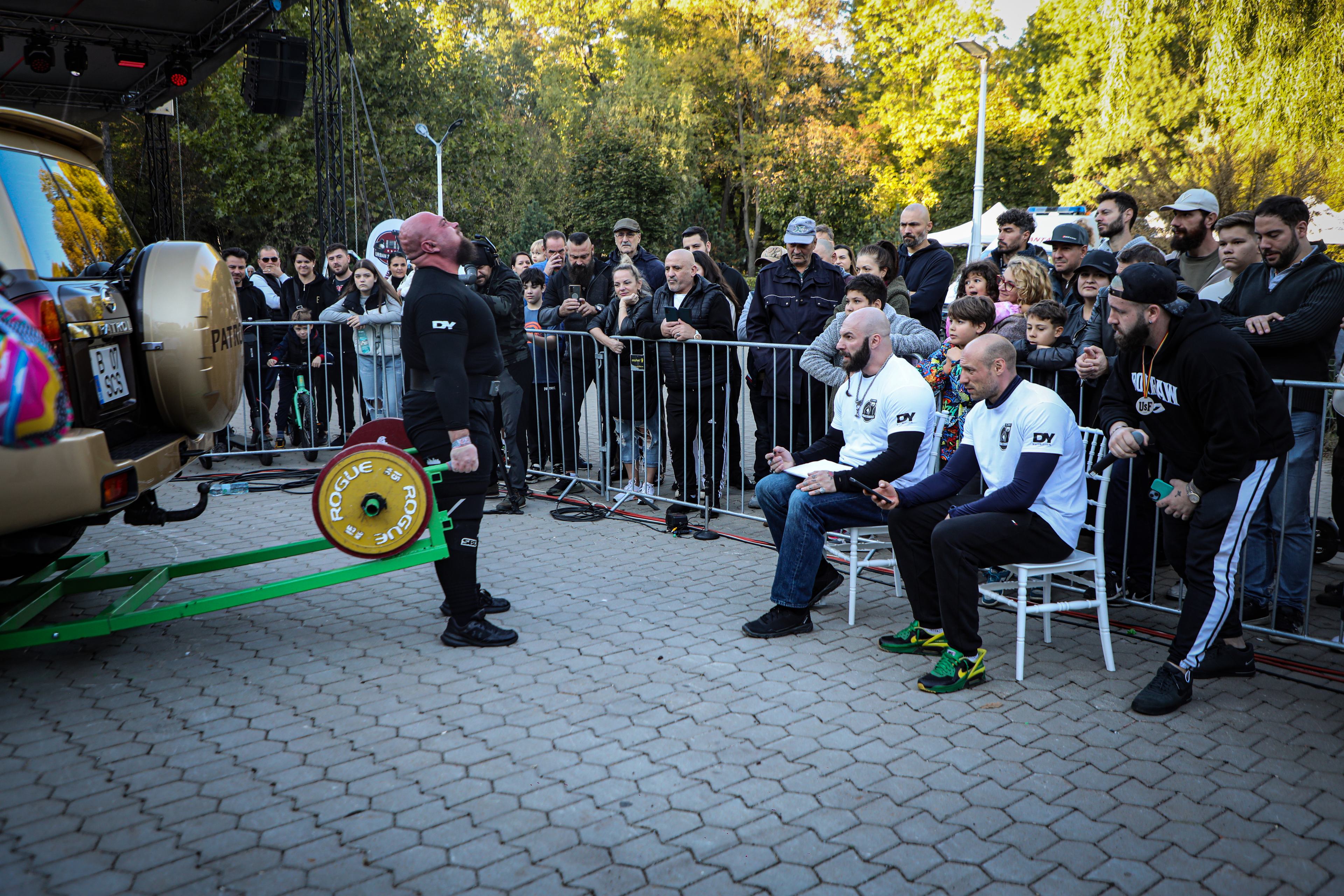
Introduction - collagen, the molecular framework of force-bearing tissues
When people hear the word collagen, they often think about skin, cosmetics, or supplements. For a strength athlete, collagen is much more important. It is a major structural protein family that organizes tendon, ligament, and many other connective tissues. In these tissues, collagen is not simply a raw ingredient. It is a molecular architecture that receives, distributes, and transmits repeated mechanical forces, sometimes at extreme magnitudes.
Tissue strength does not depend only on the amount of collagen. Collagen type, fibril alignment, diameter and distribution, cross-linking, proteoglycans, glycoproteins, hydration, cross-sectional area, geometry, and mechanical history all contribute. Two tissues rich in type I collagen can therefore behave differently. The final property emerges from the interaction of all these structural levels.
1. Type I collagen - the dominant structural fiber
Type I collagen is the main fibrillar collagen in tendon and a major component of ligament. Its molecules have a triple-helical structure and assemble into fibrils. Fibrils combine into fibers, fibers into fascicles, and fascicles into the macroscopic tendon or ligament. This hierarchy allows force to be transferred from molecular to organ scale.
1.1. Why molecular structure matters
The properties of collagen begin with its amino-acid sequence and are amplified by molecular packing and intermolecular interaction. Glycine, proline, and hydroxyproline contribute to the specialized geometry, while cross-links stabilize the fibrillar network. Tissue is therefore strong not merely because it contains collagen, but because collagen is organized into a structure capable of carrying tension.
2. From molecule to fibril - the first level of strength
A collagen fibril is far more complex than a single collagen molecule. Molecules are arranged in a repeating architecture that allows the fibril to carry load and transfer stress to neighboring structures. At this scale, nonlinear mechanical behavior and differences related to cross-linking become important.
As force rises, deformation is not distributed perfectly evenly. Some fibrils may carry more stress while others carry less, and the surrounding matrix helps distribute load. This organization lets the tissue function as an integrated system rather than a collection of independent fibers.
2.1. Fascicles and longitudinal alignment
In tendon, fascicles are organized predominantly along the main direction of force. From an engineering perspective, this makes sense because material is concentrated where tensile demand is highest. Ligaments have more complex orientation because joints may need control in several planes.
3. Collagen crimp and the beginning of deformation
Collagen fibers are not perfectly straight at rest. They display microscopic waviness known as crimp. As tendon is loaded, some of this waviness is straightened before the fibers become fully tensioned. This contributes to the initial toe region of the stress-strain curve. citeturn716924search4
Crimp matters because it permits some deformation at low loads and gives tendon a nonlinear response. As more fibers align, apparent stiffness rises. A biological tendon therefore behaves neither like a rigid cable nor like a simple elastic band.
4. Cross-linking - the bonds that stabilize the collagen network
Cross-linking forms bonds between collagen molecules that stabilize fibrils and the surrounding matrix. Normal enzymatic cross-links are important for collagen maturation and tissue mechanics. Without appropriate cross-linking, the matrix would have less structural integrity.
There are also non-enzymatic cross-links associated with glycation. These can accumulate with aging and some metabolic conditions. They may increase stiffness and change the way collagen handles energy and microdamage. Thus, “more cross-links” is not enough to define healthier tissue. The type and location matter.
4.1. Collagen aging
Aging changes matrix turnover and mechanical properties. Collagen can become less dynamic, while non-enzymatic cross-linking can alter elasticity. For a master athlete, the practical implication is that the same training load may require a longer adaptation period than it did in youth. This is not an argument against heavy training. It is an argument for appropriate dosing.
5. Collagen does not work alone - the extracellular matrix
Tendon and ligament contain proteoglycans, glycoproteins, elastin, water, and other non-collagenous components. These influence fibril organization, internal friction, hydration, and viscoelastic behavior. Reviews of the matrix show that these components, although present in smaller quantities than collagen, can have important mechanical effects.
This protects us from a common conceptual error: imagining tendon as a bag of collagen fibers. It is a hydrated, organized network in which interactions between components determine how effectively force can be transmitted.
6. Collagen synthesis - from amino acids to tissue
Collagen synthesis begins in cells, where precursor chains are produced, modified, and assembled. The molecules are then secreted into the extracellular matrix, where fibrils form, stabilize, and organize into larger structures capable of carrying tension. Vitamin C participates in reactions required for normal collagen biosynthesis.
The process is not instantaneous. Even when exercise stimulates collagen synthesis, changing the structural properties of the whole tendon requires repeated stimulation and time. Activating a biological pathway is not the same thing as immediately building a stronger material.
6.1. Glycine, proline, and hydroxyproline
The amino-acid profile of collagen reflects its structural role. Glycine is abundant, while proline and hydroxyproline help stabilize the triple helix. Dietary protein supplies amino acids, but the body regulates where and when they are used. Eating collagen does not mean that ingested molecules are deposited directly into a tendon.
7. Mechanotransduction - how cells know tendon is loaded
Tenocytes are embedded in the matrix and detect mechanical changes. Through integrins, the cytoskeleton, ion channels, and intracellular signaling pathways, matrix deformation becomes biological information. Cells can change gene expression and matrix synthesis or degradation.
This is the essence of connective-tissue mechanobiology: force becomes signal. Loading does not only stretch tissue; it changes what the tissue produces. Under favorable conditions, this supports adaptation. Under excessive or poorly distributed loading, the same system can accompany degradation and pathological remodeling.
8. How collagen responds to resistance training
Resistance training can increase collagen turnover and, over time, alter tendon mechanical properties. Adaptation may include increases in stiffness and changes in tendon dimensions. Systematic reviews and meta-analyses confirm that tendon responds to chronic loading, although the magnitude depends on dose and initial condition.
A crucial distinction is between acute signaling and chronic adaptation. A collagen-synthesis marker can rise after a session without the tendon instantly becoming stronger. Structural adaptation requires repeated exposure, recovery, and time for remodeling.
8.1. Muscle can improve faster than tendon
Muscle strength can increase rapidly through neural adaptation, coordination, and hypertrophy. Tendon remodeling is slower. An athlete can therefore become capable of producing more force before the connective tissue has developed a proportionate structural adaptation. This timing mismatch is fundamental to programming in strength sports.
9. Stiffness and strength are not the same property
Stiffness describes resistance to deformation, while strength describes the load the structure can tolerate before failure. They are related but not identical. Very stiff tissue can transmit force quickly, but it is not automatically superior at energy absorption or microdamage tolerance.
Strongman athletes need properties appropriate for function. The goal is not to maximize one mechanical variable, but to develop tissue that can transmit force and tolerate repeated loading.
10. Cross-sectional area - how large is the biological cable?
For the same external force, a tendon with larger cross-sectional area can distribute load over a larger region and lower average stress. Chronic loading can change tendon size and mechanical properties. Recent collagen research has examined tendon cross-sectional area and stiffness as outcomes.
Size still does not tell the entire story. A large tendon with poorly organized fibrils or altered matrix properties should not automatically be assumed superior to a smaller, well-organized tendon. Function emerges from the whole architecture.
11. Viscoelasticity - collagen also responds to time
Tendon is viscoelastic, meaning that its response depends on time and loading history. Creep describes increasing deformation under a constant load, while stress relaxation describes declining tension when length is held constant. These properties mean that the same force applied slowly or rapidly can produce different responses.
In sport, viscoelasticity matters because tendon is not loaded only once. It experiences cycles of stretch and relaxation, and short-term properties can change during a session as the tissue is warmed and repeatedly loaded.
12. Collagen and the tendon-bone interface
Force has to move from a collagen-rich, relatively compliant tissue into much stiffer mineralized bone. The tendon-bone insertion, the enthesis, is organized to reduce this mechanical discontinuity through a graded structure. Some insertions include fibrocartilaginous regions that help manage combined tension and compression.
This region is especially relevant in Strongman because implement position and joint angles can change local insertion loading. Tendon should therefore never be imagined as mechanically identical from one end to the other.
13. Ligament and collagen - same family, different function
Ligaments use the same broad collagen-matrix logic, but their function is different. They connect bone to bone and regulate joint movement. Their fibers are oriented according to the directions of expected loading, and the matrix is specialized for combinations of tension and changing force direction.
In a sport with very large loads, ligaments work with muscle and tendon to keep joints within functional ranges. A strong ligament cannot completely compensate for technique or joint positions that create unusual mechanical demands.
14. Microdamage and collagen remodeling
Connective tissues continuously experience small amounts of damage and repair. Collagen is degraded and replaced, while the matrix is reorganized. Problems develop when degradation or mechanical demand persistently exceed repair and adaptation. At that point, tissue organization can deteriorate and mechanical properties can change.
This is central to tendinopathy. A painful tendon should not be conceptualized simply as an inflamed tendon. Pathology can involve altered cells, collagen, matrix, and vascularity, while pain also reflects neurophysiological processes.
14.1. Volume matters as much as intensity
One large load may be tolerated, while hundreds of repeated cycles can create the problem. For a Strongman athlete, total repetitions of a movement pattern and weekly frequency can matter as much as the heaviest load.
15. Why loading rate matters
A force applied rapidly creates a different mechanical environment from the same force applied slowly. Viscoelasticity, fibril alignment, and tissue geometry make time a real variable. Biomechanical research shows that loading rate can influence the behavior and failure of collagen-rich tissues.
In Strongman, a new implement can change loading rate without the athlete explicitly programming it. An unstable object, different surface, or unfamiliar technique can alter how rapidly tendon is loaded. Familiarization is therefore part of tissue preparation.
16. Collagen and progressive loading
Progressive loading increases demand without systematically exceeding tissue capacity. For tendon, progression can occur through weight, volume, frequency, range of motion, velocity, or complexity. All variables do not need to rise at the same time.
A well-designed program exposes tendon to sufficient stimulus for adaptation while leaving enough time for remodeling. Progression is therefore not only a performance strategy, but a tissue strategy.
17. Why Strongman is a special laboratory for collagen
Strongman combines deadlift, squat, carries, stones, logs, axles, yokes, unstable objects, and joint positions that may vary from event to event. Collagen-rich tissues are therefore exposed to many mechanical patterns. A structure perfectly adapted to one movement may be less prepared for another.
Specificity must therefore be considered at tissue level, not only at muscle level. General strength does not automatically guarantee local connective-tissue capacity.
17.1. The implement changes geometry
The diameter of an axle, position of a log, center of mass of a sandbag, or shape of a stone changes grip and joint angles. When geometry changes, tendon deformation can change as well. For connective tissue, kilograms without context are an incomplete description.
18. Nutrition and collagen synthesis
Collagen synthesis requires amino acids, energy, and cofactors. Vitamin C is essential for normal biosynthesis. Beyond that, overall energy and protein availability affect the body's ability to remodel tissue. An athlete in a large energy deficit cannot assume a supplement will compensate for an unfavorable biological environment.
Protein intake should be considered as part of the entire diet. Dietary collagen has a different amino-acid profile from complete muscle proteins, so athletes still need sufficient overall protein and energy.
18.1. What do we know about gelatin and vitamin C?
A randomized trial published in the American Journal of Clinical Nutrition found that 15 g of vitamin C-enriched gelatin consumed before exercise increased a marker of collagen synthesis compared with placebo. This is mechanistically interesting, but the study was small and does not automatically demonstrate reduced injuries.
19. Collagen supplementation - from marker to tissue
More recent work in resistance-trained adults has examined hydrolyzed collagen before exercise and reported changes in collagen-synthesis markers, including dose-related effects in some protocols. A recent systematic review found evidence suggesting possible increases in tendon cross-sectional area and stiffness when collagen supplementation is combined with training.
But a marker, a structural change, and a clinical or performance outcome are not the same thing. An increase in a synthesis marker does not guarantee a proportional increase in failure strength or a reduction in rupture risk. Current evidence is promising but limited by small samples and short interventions.
20. Collagen and muscle performance - what should not be confused
A better-adapted tendon can influence force transmission and muscle-tendon mechanics. However, collagen supplements have not consistently shown direct increases in muscle strength. The recent systematic review found more promising evidence for some tendon properties than for strength.
For Strongman, collagen should therefore not be marketed as a strength pre-workout. Any plausible benefit is closer to tissue remodeling and tolerance of loading than to an acute surge in kilograms.
21. When collagen tissue becomes vulnerable - tendinopathy
Tendinopathy develops when the relationship between demand and tissue capacity becomes unfavorable. Changes may occur in collagen, matrix, vascularity, and cell behavior. Pain may appear before or after some structural changes and does not provide a direct measure of mechanical integrity.
The appropriate strategy is not necessarily to remove all loading. It is to adjust loading to symptoms and capacity, ideally within an individualized clinical framework when symptoms are significant.
22. Tendon rupture - failure of a hierarchical structure
A rupture is not simply the disappearance of “good collagen.” It is failure of a structure in which fibrils, fascicles, matrix, and insertion can no longer carry the applied demand. Failure can arise from an acute extreme load or from tissue whose material properties have been altered beforehand.
Loading rate, tendon length, joint angle, force direction, and loading history can all change risk. The same weight may be tolerated in one situation and cause failure in another.
22.1. Microcracks and failure propagation
Collagen is an architecture capable of distributing stress. Microcracks can develop and extend when local demand exceeds capacity. Fibril organization and cross-links influence how defects propagate through the tissue.
23. How should connective tissue development be programmed?
An advanced Strongman program should treat connective tissue as part of performance. Loading can progress through volume, intensity, and specificity, but changes should be distributed. When a new implement is introduced, technical familiarity should precede maximal exposures.
Local tendon loading must also be viewed cumulatively. Triceps, biceps, patellar, or Achilles tendons are not exposed only during the exercise that names the muscle group. Other movements in the same week contribute to the local dose.
23.1. What intelligent progression looks like
Intelligent progression means increasing one variable and observing the response before increasing several more. If weight, volume, frequency, and range all rise simultaneously, the true increase in tendon demand becomes difficult to estimate. The tissue, however, experiences the combined mechanical stress regardless of how it is labeled in the program.
24. Age, metabolism, and collagen resilience
Collagen properties change with age. Tissue turnover slows, cross-linking changes, and mechanical adaptation may become slower. Some metabolic conditions can further alter the matrix. For the master Strongman athlete, this argues for careful recovery and progression, not avoidance of training.
Adaptation remains possible in adulthood. The biological calendar simply changes. When programming respects that calendar, mechanical loading can remain a constructive stimulus.
25. Conclusion - collagen is architecture, not magic
Collagen is one of the most important structural materials of tendon and ligament, but tissue strength emerges from the whole architecture. Collagen type, fibril organization, cross-linking, extracellular matrix, hydration, cross-sectional area, and mechanical history combine to generate the final property.
For Strongman, the lesson is clear: muscle can become stronger quickly, while tendon and ligament operate on a slower biological timetable. Building durable connective tissue takes years of progressive loading and recovery. Gelatin or collagen supplementation may influence some remodeling processes, and recent evidence is interesting, but it does not justify absolute promises about injury prevention or direct strength gains.
Under the microscope, the body becomes a world of molecules. In the gym, it becomes kilograms. Between these scales is a vast architecture of organization. Collagen is one of the bridges between them. In the next episode we will move deeper into the ligament, the tissue that not only withstands force but also helps determine how much movement is allowed between bones.
Scientific bibliography
1. Wang JH-C. Mechanobiology of tendon. Journal of Biomechanics. 2006;39(9):1563-1582.
2. Kjaer M. Role of extracellular matrix in adaptation of tendon and skeletal muscle to mechanical loading. Physiological Reviews. 2004;84(2):649-698.
3. Magnusson SP, Narici MV, Maganaris CN, Kjaer M. Human tendon behaviour and adaptation, in vivo. Journal of Physiology. 2008;586(1):71-81.
4. Bohm S, Mersmann F, Arampatzis A. Human tendon adaptation in response to mechanical loading: a systematic review and meta-analysis. Sports Medicine. 2015;45:1531-1547.
5. Screen HRC, Berk DE, Kadler KE, Ramirez F, Young MF. Tendon functional extracellular matrix. Journal of Orthopaedic Research. 2015;33(6):793-799.
6. Cook JL, Rio E, Purdam CR, Docking SI. Revisiting the continuum model of tendon pathology. British Journal of Sports Medicine. 2016;50:1187-1191.
7. Shaw G, Lee-Barthel A, Ross MLR, Wang B, Baar K. Vitamin C-enriched gelatin supplementation before intermittent activity augments collagen synthesis. American Journal of Clinical Nutrition. 2017;105(1):136-143. PMID: 27852613.
8. Rehabilitation Nutrition for Tendon and Ligament Injuries: From Collagen Remodeling to Return-to-Activity and Sport. 2026 review. PubMed PMID: 42512652.
9. Collagen Supplementation on Tendon-Related Structural and Performance Outcomes: A Systematic Review. 2026. PubMed PMID: 41900537.
More From The Journal

Training
The Science of Strongman Training - Episode X: Competition Programming
How to build a complete Strongman competition preparation block: calendar, events, volume, intensity, specificity, simulations, autoregulation, tapering and fatigue management.

Training
The Science of Strongman Training - Episode IX: Peaking
Peaking in Strongman: how to turn months of training into maximal competition performance by reducing fatigue, preserving adaptations and managing specificity.