
Physiology
Bones, Tendons and Ligaments: Structures That Must Withstand Force - Episode 10: How Quickly Do Different Tissues of the Body Adapt?
September 6, 2026
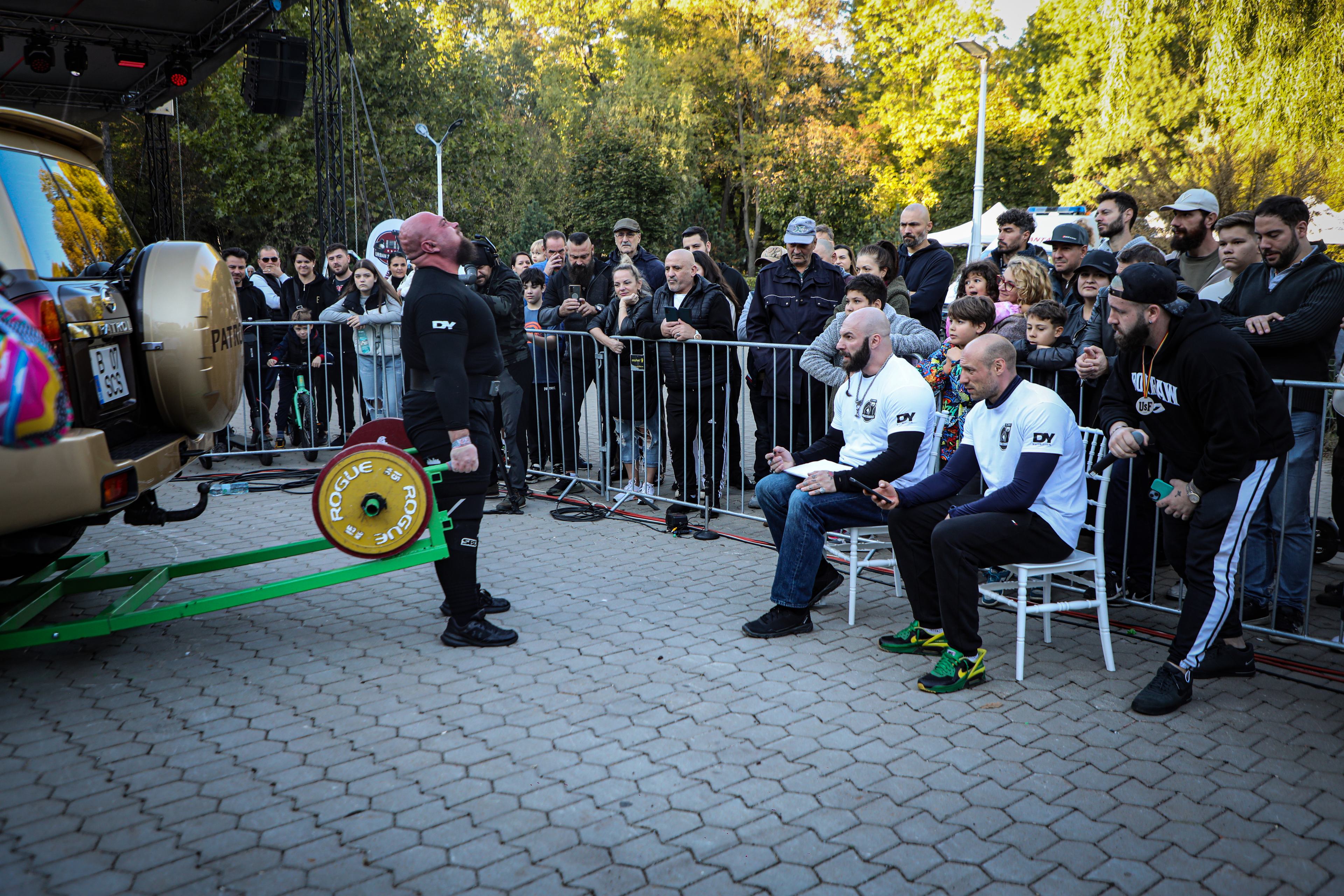
Episode 10: How Quickly Do Different Tissues of the Body Adapt?
The body does not respond to training as one material. Muscle can increase in capacity relatively quickly, the nervous system can rapidly change coordination and force production, while tendon, ligament, bone, and cartilage modify their structure and properties on different time scales. Some responses begin within hours or days, while others require weeks, months, or years. For a Strongman athlete, this difference in speed can become the difference between progress and a long recovery period.
There is no single adaptation time for a tissue. A tissue may change signaling within minutes, protein synthesis within hours, function over weeks, and architecture over months or years. When discussing adaptation, we must specify what is changing: function, metabolism, strength, stiffness, thickness, fiber organization, or load tolerance.
1. What does tissue adaptation actually mean?
Adaptation is the biological change through which tissue responds to a repeated stimulus to maintain function or become better suited to a demand. Mechanical loading is one of the major stimuli for locomotor tissues. Cells detect tension, compression, shear, and deformation, then convert these signals into biochemical responses through mechanotransduction.
This does not mean that more loading always produces more resilience. There is a range in which the stimulus is sufficient for adaptation, a range in which it is too small to drive meaningful change, and situations where the dose exceeds recovery capacity and contributes to pathology.
2. Why do tissues adapt at different rates?
Tissues differ in cellular density, vascularity, extracellular matrix, and mechanical role. Muscle is metabolically and contractilely dynamic. Tendon and ligament are dominated by collagen-rich extracellular matrix. Bone is mineralized and continuously remodeled by osteoblasts and osteoclasts. Articular cartilage has limited intrinsic repair capacity and low vascularity.
As a result, the same training session can generate a rapid response in muscle, a slower response in tendon, and much longer-term structural remodeling in bone or cartilage. The difference is a consequence of biology, not a defect in one tissue.
3. The first minutes and hours: the mechanical signal
Immediately after loading, cells can detect mechanical changes and activate signaling pathways. At this point we do not yet have a thicker tendon or denser bone. We have the beginning of a biological chain that can lead to later changes.
This is why the acute response should not be confused with chronic adaptation. A temporary increase in protein synthesis or molecular markers is a reaction to exercise, not proof that the tissue has already permanently changed its mechanical properties.
4. Muscle: one of the faster-adapting tissues
Skeletal muscle can change function quickly through neural and metabolic adaptations. The first weeks of resistance training can produce substantial performance gains before hypertrophy is the main driver. Intermuscular and intramuscular coordination, motor-unit recruitment, and technical learning can improve rapidly.
Structural hypertrophy is slower than the neural response, but it can still develop over weeks and months. From a Strongman perspective, this helps explain why an athlete can become dramatically stronger in a relatively short period while the structures that transmit and anchor that force are adapting on a different schedule.
5. The nervous system: the fastest functional adaptation
The nervous system is not connective tissue, but it is essential to the apparent speed of progress. Beginners can increase strength without a proportional rise in muscle size because the brain and spinal cord become more efficient at organizing motor output.
This adaptation is fast and can create a trap: the athlete sees performance rise quickly and assumes the entire musculoskeletal system has adapted at the same rate. It has not.
6. Tendon: slower than muscle
Tendon responds to loading through changes in extracellular-matrix synthesis and organization, stiffness, material properties, and in some conditions cross-sectional area. Systematic reviews show a robust response to chronic loading, but also substantial variability in the magnitude and timing of that response.
Mechanical and structural changes do not necessarily appear immediately. Some responses can emerge over weeks, while larger changes in size or properties may require longer exposure. Meta-analytic evidence suggests that loading magnitude plays an important role in tendon adaptation.
7. Ligament: an even more complicated adaptation
Ligaments guide and limit joint motion. They adapt to loading, but their response is strongly influenced by tissue-specific tension, joint position, and mechanical history. Like tendon, ligament depends heavily on collagen remodeling and the interaction between cells and matrix.
In practice, ligament capacity should not be judged by how quickly muscle strength returns. After ligament injury, the gap between functional recovery and structural recovery can be substantial.
8. Bone: slow, but highly adaptable
Bone is living tissue that continuously remodels. Osteocytes sense the mechanical environment and influence osteoblast and osteoclast activity. Bone adaptation is particularly responsive to dynamic loading and changes from habitual activity.
Changes in mineral density and architecture are generally slower than neural or muscle changes. A strength athlete can increase force production faster than bone has time to remodel its structure in response to a sudden rise in loading.
9. Articular cartilage: a special response
Articular cartilage responds to loading and has some capacity for functional adaptation, but spontaneous repair after major injury is limited. Chondrocytes and extracellular matrix respond to compression and shear, and the dose of loading can support homeostasis or become harmful.
For that reason, a joint should not be treated as an inert material that simply becomes accustomed to weight. Optimal loading depends on the tissue, region, history, and biological state.
10. Fascia and connective tissue
Fascia and other connective structures are biologically and mechanically active. They adapt to tension, movement, and use, but the exact time course is harder to quantify than for muscle or tendon. For practice, it is more useful to treat them as part of the force-transmission system rather than ignore them.
11. Capillaries and the cardiovascular system
Some cardiovascular adaptations appear relatively quickly. Plasma-volume changes can occur during the first days of training, while chronic cardiovascular adaptations develop over weeks and months. Again, the word adaptation contains several different time scales.
For Strongman, improved cardiovascular fitness can change tolerance to volume and recovery between events, but it does not automatically accelerate collagen maturation in a tendon.
12. Why metabolic adaptation appears before structural adaptation
It makes biological sense for the body to begin by changing how cells function before massively rebuilding tissue. Signaling, gene expression, protein synthesis, and enzyme activity can change faster than tendon geometry or bone density.
Therefore, an acute biological marker should not be presented as equivalent to a permanent mechanical change.
13. The practical rule: function can advance ahead of structure
One of the most important concepts for athletes is the gap between function and structure. Strength can rise before passive tissues have updated their mechanical capacity. Pain can fall before remodeling is complete. Mobility can return before tolerance to maximal loading.
This gap is not necessarily a failure of the body. It is a consequence of different systems operating on different time scales.
14. Adaptation at the beginning of a strength program
During the first weeks, progress can be large because technique and motor control improve. Muscle begins to increase capacity, while connective tissues receive repeated stimulus. But that stimulus may be insufficient to match a very rapid jump in external loading.
15. Why rapid progression can fool the athlete
Suppose an athlete adds weight every week and performance keeps rising. Muscle and the nervous system may support that increase for a while. Tendon, however, may still be remodeling. If the load continues to rise without enough time for adaptation, external demand can move ahead of the mechanical reserve of the tissues.
16. Loading rate matters almost as much as load magnitude
Introducing 100 kg gradually into a program is not the same biological situation as reaching 100 kg abruptly after underloading. Tissues respond to loading history, not an isolated number.
In strength training, progression should be analyzed through intensity, volume, frequency, range of motion, velocity, and fatigue, not just weight on the bar.
17. Weeks, months, or years?
There is no universal time scale. Neural adaptation can be observed within the first sessions. Muscle hypertrophy and many functional changes occur over weeks and months. Tendon adaptation is generally slower and variable. Significant bone remodeling and architectural change in some tissues can require months and long-term repeated exposure.
Years of training can produce important structural adaptations, including changes in tendon dimensions and bone architecture, but the response remains individual and load-dependent.
18. Why tissues do not stay adapted forever
Adaptation is dynamic. When the stimulus falls substantially or disappears, the body can reduce some structural investment. Without loading, muscle atrophies, bone loses mass, and tendon and other connective tissues can lose part of their load tolerance.
19. Complete rest can reset capacity
After a long period away from training, muscle strength can return relatively quickly, while passive-tissue tolerance may require progressive re-exposure. Returning after injury or a long layoff should therefore be treated as a new loading period rather than an immediate return to old weights.
20. Adaptation and age
Age affects the rate and magnitude of some adaptations, but adult tissues do not stop responding to loading. In general, older individuals may show slower or smaller remodeling responses in certain tissues, making progression management even more important.
21. Adaptation and training history
An experienced athlete and a beginner may respond differently to the same absolute load. The experienced body already has a loading history that changes its starting point. This is why a weight that is routine for an advanced athlete can be enormous for a beginner, even if the beginner's muscles can produce enough force to lift it once.
22. Why tendon does not need to mirror muscle perfectly
Tendon does not need to grow at exactly the same rate as muscle for the system to function. It has its own optimal range of stiffness and mechanical properties. Problems arise when muscle force and the loads imposed by the athlete increase much faster than tendon capacity to tolerate and distribute tension.
23. Proprioception and joint control
Sensory receptors and neuromuscular control also adapt to movement experience. An athlete who practices an event extensively becomes more efficient at anticipating and coordinating forces. In Strongman, familiarity with objects, grip, positions, and routes can dramatically change internal loading without changing external weight.
24. The event itself may require special adaptation
A tendon adapted to a predictable gym exercise is not automatically fully prepared for stone loading, yoke carries, farmer's walks, axle cleans, or other events with different mechanical and technical demands. Loading specificity matters.
25. Adaptation is not linear
Sometimes progress is fast and then slows. At other times, structural markers change little while function and load tolerance improve. The response is influenced by intensity, frequency, recovery, hormonal status, age, injury history, and genetic variation.
26. Why dynamic loading matters for bone
Bone is sensitive to change and to the dynamic character of the stimulus. Identical repetitive loading tends to produce progressively smaller responses, whereas sufficiently novel loading can reactivate adaptation pathways. This is a core idea in bone mechanobiology.
27. Why tendon responds to loading magnitude
Synthesis of the evidence indicates that loading intensity is an important determinant of tendon adaptation. This does not mean the heavier, the better; it means that sufficiently stimulative loading must be introduced at a dose the tissue can recover from.
28. Adaptation after injury differs from adaptation to training
Healthy tissue and healing tissue should not be loaded by the same rules. During injury, repair biology coexists with a temporary loss of mechanical capacity. Progression therefore has to respect the stage of healing and the treatment applied.
29. Why muscle hypertrophy can become an indirect risk
Larger muscle is not inherently dangerous. But if hypertrophy and neural performance rise rapidly in a program where tendons and joints receive too little progressive exposure, a capacity mismatch can develop. In that sense, a stronger muscle can ask more of its connective infrastructure.
30. Why Strongman amplifies the differences
Strongman combines maximal strength, unstable objects, acceleration, carries, asymmetric lifting, high volume, and repeated efforts. This variety can expose the same structure successively to tension, compression, shear, and rapid changes in muscle-tendon length.
A highly capable system is not only a system with strong muscles. It also requires tendons, ligaments, bones, joints, and motor control that are sufficiently adapted to the specific demand.
31. What adapts first to a new exercise?
Usually the earliest observable changes are coordination, technical familiarity, and neural and metabolic responses. More consistent muscular changes follow, while passive-tissue remodeling unfolds on a longer time scale.
32. Example: increasing the deadlift
An athlete may move from a 250 kg deadlift to a higher performance in a matter of months through technique, neural adaptation, hypertrophy, and repeated exposure. But the fact that the bar moves does not prove that every tissue involved has increased its capacity at the same rate.
33. Example: yoke and carries
During carries, load is influenced by position, step pattern, stability, range of motion, and time under tension. A strong athlete can move a heavy load before the stabilizing tissues are fully adapted to that specific combination of forces.
34. Sleep, energy, and adaptation rate
Adaptation is constrained by resources. Poor sleep, low energy availability, and inadequate recovery can alter the response to training. They do not change the basic biology of a tissue, but they can slow progress or make the applied dose exceed what can be recovered.
35. Nutrition and tissue remodeling
Amino acids, energy, micronutrients, and adequate food intake support synthesis and repair. Nutrition cannot replace the right mechanical stimulus or transform a tendon overnight. It provides the substrate and conditions that allow adaptation to occur.
36. Adaptation, sex, and hormonal status
Tissue responses are influenced by hormones and biological context. Some adaptations in muscle, bone, and tendon differ between sexes and can change under different hormonal states. Individual variability remains large, so programming should not be reduced to a single sex-based rule.
37. Why adaptation is not always visible
Some adaptations are functional and not visible in a photograph or simple measurement. Some structural changes are small but meaningful for mechanical behavior. Imaging and testing methods also have their own limitations.
38. Adaptation does not mean invulnerability
A well-trained tendon can still be injured if load exceeds capacity. An adapted bone can fracture under extreme mechanical demand. Adaptation increases reserve. It does not remove the boundary.
39. What should intelligent progression look like?
Intelligent progression gives multiple systems time to catch up. Volume can be increased before intensity, specificity can be introduced before maximal speed, or frequency can change separately from load. The key is not to change every major variable at once.
40. How deloads fit into adaptation
A deload does not mean adaptation disappears. It is a strategic reduction in loading that can allow recovery and consolidation. For slow-adapting tissues, periods of lower load can help manage the balance between stimulus and recovery.
41. Why the same weight can feel easier without major structural change
Improved technique, coordination, and perceived-effort regulation can make a weight feel and become less demanding for the whole system even before large structural changes occur. That is real adaptation, but it is not evidence that tendons and bones instantly became much stronger.
42. What does this mean for injury prevention?
Prevention starts with understanding different adaptation speeds. It is not enough to build strong muscles. Passive tissues must also be progressively exposed to the range of motion, tension, speed, and volume relevant to the sport.
43. What does this mean for rehabilitation?
After injury, the goal is not only to regain function. The tissue must gradually rebuild its mechanical properties and load tolerance, and return-to-sport criteria should be specific to both tissue and sport.
44. A practical hierarchy of adaptation speed
As a simplified model, think of a scale: neural control and metabolic responses begin very quickly; function and muscle hypertrophy change over weeks and months; tendon and ligament usually require longer for structural adaptation; bone remodels over longer time scales; cartilage has distinct characteristics and limited repair capacity.
This scale is useful for programming, but it is not a universal calendar. Studies show substantial variability, and response depends on loading dose and individual characteristics.
45. Why you should think in years, not only training blocks
Elite performance is the result of overlapping adaptations that do not happen simultaneously. A good program does not chase only next week's record. It builds the infrastructure that can withstand records over the next several years.
46. Strongman athlete checklist
Ask: what tissue is being loaded; how new is the stress; how quickly has the dose increased; how did the segment respond over the following 24 to 48 hours; how specific is the exercise to the event; and whether muscular progress has outpaced passive-tissue tolerance.
47. Conclusion
The body is a team of tissues that do not receive the message at the same time and do not respond at the same speed. The nervous system can rapidly change force control. Muscle can increase function and size over weeks and months. Tendon and ligament remodel more slowly. Bone adjusts its architecture over longer time scales. Cartilage has its own limitations and characteristics.
For Strongman, the most important lesson is simple: progress on the bar does not automatically represent progress of every tissue. An athlete can become strong enough to lift a weight before tendons, ligaments, joints, and bone have built the same reserve. Intelligent programming respects that gap. Instead of forcing every tissue to keep pace with muscle, it gives each tissue time, stimulus, and progression to adapt at its own rate.
Selected bibliography
1. Bohm S, Mersmann F, Arampatzis A. Human tendon adaptation in response to mechanical loading: a systematic review and meta-analysis of exercise intervention studies on healthy adults. Sports Medicine. 2015;45:1433-1445. DOI: 10.1007/s40279-015-0367-1.
2. Wiesinger HP, Kösters A, Müller E, Seynnes OR. Effects of increased mechanical loading on in vivo tendon properties: a systematic review. Medicine & Science in Sports & Exercise. 2016;48:1495-1505. DOI: 10.1249/MSS.0000000000000913.
3. Kjaer M. Role of extracellular matrix in adaptation of tendon and skeletal muscle to mechanical loading. Physiological Reviews. 2004;84:649-698. DOI: 10.1152/physrev.00031.2003.
4. Turner CH, Pavalko FM. Mechanotransduction and functional response of the skeleton to physical stress: the mechanisms and mechanics of bone adaptation. Journal of Orthopaedic Science. 1998;3:346-355. DOI: 10.1007/s007760050064.
5. Docking SI, Cook J. How do tendons adapt? Going beyond tissue responses to understand positive adaptation and pathology development. Journal of Musculoskeletal & Neuronal Interactions. 2019;19:300-310.
6. Matsushima T, Asahara H. Molecular mechanisms of mechanosensing and plasticity of tendons and ligaments. Journal of Biochemistry. 2024;176:263-269. DOI: 10.1093/jb/mvae039.
7. Mechanotransduction and its impact on regenerative medicine in orthopedic rehabilitation. Review. 2026.
More From The Journal

Training
The Science of Strongman Training - Episode X: Competition Programming
How to build a complete Strongman competition preparation block: calendar, events, volume, intensity, specificity, simulations, autoregulation, tapering and fatigue management.

Training
The Science of Strongman Training - Episode IX: Peaking
Peaking in Strongman: how to turn months of training into maximal competition performance by reducing fatigue, preserving adaptations and managing specificity.