
Physiology
Bones, Tendons and Ligaments: Structures That Must Withstand Force - Episode 7: Cartilage and Joint Wear
September 6, 2026
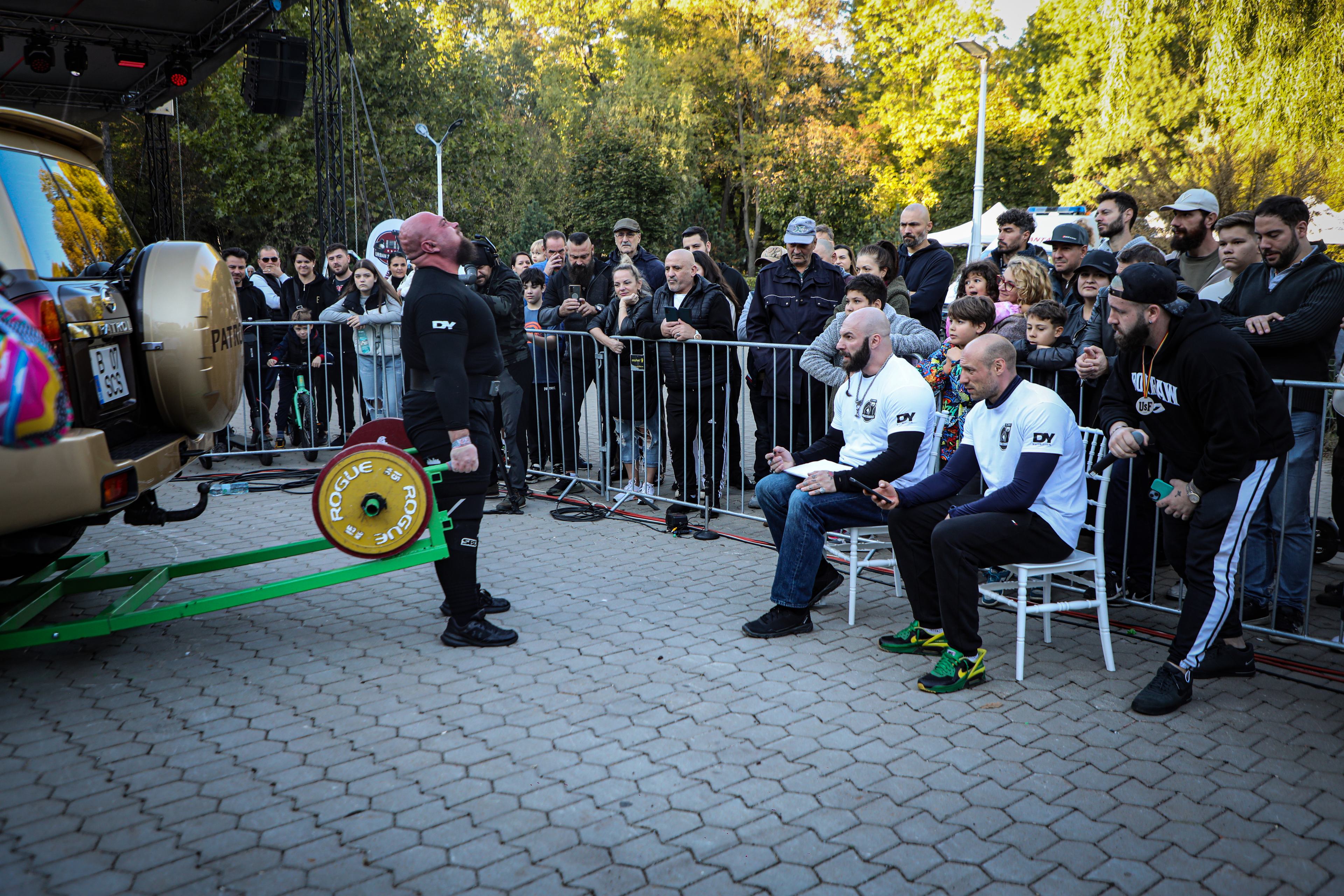
1. Introduction: cartilage, the surface that lets force move
Articular cartilage is one of the quietest structures in a strength athlete’s body. It does not produce movement, contract, or reveal itself during a squat or farmer’s walk, yet every repetition transmits force through joint surfaces covered by it. Hyaline articular cartilage forms a very low-friction interface and helps distribute load between bones. It is a specialized tissue whose extracellular matrix is rich in water, collagen, and proteoglycans and whose cell population is relatively sparse. The absence of blood vessels and low cellular density help explain its limited intrinsic repair capacity. Foundational literature describes cartilage as a sophisticated biological material that must resist compression, shear, and repeated loading at the same time.
2. Microscopic anatomy of articular cartilage
Mature articular cartilage has a layered organization. In the superficial zone, collagen fibers are oriented predominantly parallel to the surface, while cells and matrix are adapted to shear forces. In the middle and deep zones, collagen orientation changes and the matrix becomes increasingly specialized for compression. The calcified zone transitions toward subchondral bone. This architecture is not decorative. It is part of the mechanism that allows a relatively thin layer of tissue to tolerate substantial repetitive loading.
3. Water: the invisible component that carries part of the load
A major part of cartilage mechanics comes from the water held within its matrix. When the articular surface is loaded, fluid moves slowly through the matrix, contributing to poroelastic behavior and pressure distribution. Cartilage therefore should not be imagined as a passive sponge that is simply crushed. It is a material in which fluid pressurization, collagen, and proteoglycans work together.
4. Joint lubrication and extremely low friction
Cartilage does not work alone. The articular surface is part of a system in which synovial fluid, the synovial membrane, and the properties of the superficial layer help reduce friction. In a healthy joint, repeated contact occurs in an environment that permits movement with very little resistance. For the strength athlete, this means a joint can transmit high loads without every repetition producing mechanical damage proportional to the size of the external weight.
5. Pressure distribution: the same weight can create different joint stress
Two exercises performed with the same external weight can stress a joint differently because contact area, joint angle, speed, segment position, and muscular contribution all matter. Local pressure is not the same thing as the weight on the bar. Stable technique and effective load distribution can substantially change the mechanical environment of cartilage. This is why joint wear cannot be reduced to kilograms alone.
6. Cartilage adaptation to loading
Chondrocytes sense mechanical changes in the matrix and respond through mechanotransduction. Physiological loading can support matrix homeostasis, whereas excessive or unusual loading, especially in an inflammatory environment, can favor an imbalance between synthesis and degradation. This does not mean every pressure damages cartilage, nor that every load makes it stronger. Dose, frequency, recovery, trauma history, and biological joint status all matter.
7. What does joint wear actually mean?
In gym language, “wear” is often used for almost any pain or degenerative image. Clinically, osteoarthritis is a complex disease of the whole joint that may involve cartilage, subchondral bone, synovium, meniscus, ligaments, and surrounding muscle. Pain is not a simple readout of cartilage thickness. Imaging changes and symptoms therefore do not overlap perfectly, and diagnosis and treatment need to be linked to the clinical picture.
8. Osteoarthritis and strength sports: the simplistic myth
It is not correct to say that strength training automatically destroys joints. It is equally incorrect to say that strength always protects joints regardless of dose. Risk is influenced by previous trauma, alignment, body mass, loading pattern, technique, age, and individual factors. For a strongman, the realistic objective is load management, not load elimination.
9. The knee and cartilage: the Strongman laboratory
The knee combines articular surfaces, menisci, ligaments, and powerful musculature in a system that manages compression and shear. Squats, yoke walks, sandbag loading, and stair climbing can create very different loading contexts. Flexion depth should not be considered separately from movement control, load, and symptoms. The meniscus helps distribute load and maintain joint congruence, so a significant meniscal injury can change the mechanical environment of cartilage.
10. The ankle, hip, and shoulder
At the ankle, a history of sprains and chronic instability can alter how load is distributed. At the hip, individual geometry and mobility influence flexion and rotation positions. At the shoulder, glenoid cartilage and the labrum are part of a stability system in which arm position, traction, and compression change rapidly. There is therefore no single recipe for protecting every joint.
11. Trauma versus wear
A joint may develop degenerative changes after years of loading or after a major traumatic event. The two pathways can overlap. Ligament, meniscal, or osteochondral injuries can change joint mechanics, and an athlete may return to strength training with a joint that no longer distributes load exactly as before. That does not make a return impossible, but it does make individualized programming and medical evaluation important when symptoms persist.
12. Muscle strength as indirect protection
Muscle does not directly regenerate cartilage, but it can change the mechanical environment of the joint. Strength and coordination allow better segment control, load absorption, and dynamic stabilization. A knee supported by well-trained quadriceps and hip musculature exists in a different functional context from a knee with a severe strength deficit. Exercise is also a core treatment in modern osteoarthritis recommendations.
13. The hidden volume of a Strongman week
An athlete may count only the heavy working sets and forget the rest of the exposure. Farmer’s walks, yoke, carries, sandbags, stones, warm-ups, technical repetitions, and walking between events all contribute to mechanical exposure. Two heavy days placed close together can produce a different joint response than the same exercises separated by adequate recovery. A deload is not an admission of weakness, but a tool for controlling dose.
14. Warm-up and joint response
Progressive warm-up prepares more than muscle. It prepares motor control, tissue temperature, and tolerance to movement. The goal is not to literally “lubricate” cartilage, but to move from rest to training load through progressive increases in demand. For a strongman, ramp-up sets, technical variations, and moderate-load repetitions can make the transition to maximal effort more predictable.
15. Joint pain and the next-day response
Not every discomfort indicates structural damage, but not every pain signal should be ignored. A useful practical approach is to watch whether symptoms increase during the session, whether swelling appears, whether motion becomes progressively restricted, and whether the joint is worse later that day or the next morning. Repeated increases in symptoms can indicate that the current dose exceeds present tolerance and deserves adjustment.
16. Osteoarthritis biology: cartilage, bone, and synovium
Osteoarthritis is not only a cartilage problem. Subchondral bone can remodel, synovium can participate in inflammation, and the biochemical environment of the joint can change. Goldring and colleagues describe osteoarthritis as a disease of the whole joint rather than a simple mechanical disappearance of cartilage. This perspective explains why management must include more than trying to “save” the articular surface.
17. Exercise is not the opposite of joint health
One of the most useful concepts for an athlete is the difference between dosed loading and problematic overload. Osteoarthritis recommendations include structured exercise as a core treatment. This does not turn every powerlifting or Strongman program into therapy, and it does not mean a symptomatic knee should be pushed through pain. It means movement and physical capacity are generally part of the solution, while the dose must be individualized.
18. Strongman event specificity
Farmer’s walk combines axial loading with gait and frontal-plane trunk control. Yoke walking adds a large load transmitted through the skeleton while the athlete moves. Atlas stones, sandbag loading, and other loading events introduce flexion, extension, compression, and mechanical moments that do not occur identically in strictly vertical lifts. Joint preparation therefore needs to be event-specific, not merely weight-specific.
19. Training phases: base, specificity, and taper
During a base phase, the aim may be to increase general capacity and strength without accumulating unnecessary joint irritation. During the specific phase, exposure to competition events should rise progressively. Near competition, tapering can reduce volume without removing the stimulus completely. For cartilage, the central lesson is that joint health is managed across the accumulation of programming decisions, not in a single workout.
20. Nutrition, body mass, and joint tissues
Cartilage is metabolically active even though its intrinsic repair capacity is limited. For the athlete, energy availability, adequate protein and micronutrient intake, and management of body mass all matter. A larger body mass is not automatically pathological in a strongman, but total mechanical exposure to a joint also depends on the mass carried through every step and on movement volume. In osteoarthritis, guidelines recommend weight management when it is clinically relevant.
21. Supplements: where marketing ends and evidence begins
Glucosamine, chondroitin, collagen, and other products are often marketed as cartilage solutions. The problem is that a biologically plausible mechanism does not automatically prove a clinically meaningful effect. Some guidelines classify certain supplements as uncertain or inconsistently supported. For an athlete, a supplement should not replace intelligent loading, recovery, diagnosis, or rehabilitation when those are needed.
22. Programming mistakes that can irritate joints
Sudden jumps in volume, introducing several new events at once, deteriorating technique under fatigue, and repeating the same heavy exposure on closely spaced days can push a joint from a tolerated range into a symptomatic range. Sometimes the problem is not a “bad” exercise but the total amount and lack of progression. Programming should follow the joint’s response to load, not just progress on paper.
23. When medical evaluation is warranted
Persistent pain, repeated swelling, joint locking, instability, clear loss of range of motion, or rapidly worsening symptoms justify evaluation by a physician or rehabilitation professional. Imaging can be useful in selected contexts, but findings should be interpreted together with history and clinical examination. Modern osteoarthritis literature emphasizes that diagnosis is primarily clinical and that imaging should not automatically be used for every symptom.
24. Rehabilitation of a joint with degenerative changes
Good rehabilitation does not mean permanent immobilization. Depending on the joint and diagnosis, progression may begin with tolerated movement, isometrics, controlled strengthening, and eventually event-specific variations. The central idea is to gradually increase capacity. For an athlete, rehabilitation success is measured not only by lower pain but by restoration of the function required for competition.
25. Myths about cartilage and wear
The myth that “cartilage does not regenerate, so there is nothing you can do” confuses limited intrinsic repair with an absence of management options. Likewise, the idea that “more mobility automatically means less wear” ignores joint geometry, control, and symptoms. Another myth is that every popping or clicking sound means destroyed cartilage. Joint sounds need to be interpreted in the context of symptoms and function, not treated as a diagnosis by themselves.
26. The athlete’s practical model: load, response, adjustment
A simple way to think about joint health is to track three variables. First is external and internal load. Second is the joint’s response during and after training. Third is the adjustment made to the next exposure. When too many variables are changed at once, it becomes difficult to identify what caused the response. For advanced athletes, the principle of making one major change at a time can be extremely useful.
27. Cartilage is part of the whole joint
Articular cartilage is not an isolated part. It is mechanically and biologically connected with subchondral bone, synovium, meniscus, ligaments, and surrounding muscle. When an athlete says “my cartilage hurts,” the description may be intuitive, but joint pain can have many sources. Sound reasoning starts with the joint as a functional organ rather than one guilty structure.
28. Longevity in Strongman
Protecting joints does not mean avoiding heavy weights forever. It means building capacity, increasing exposure progressively, and not treating persistent warning signs as a test of character. An athlete can be extremely strong and still need adjustments in volume, technique, or exercise choice. Longevity is not the opposite of performance; it is one of its conditions.
29. Conclusion: cartilage is not consumable, but it is not invincible
Articular cartilage is a highly specialized biological material built for low-friction movement and load distribution. It is not a sponge that wears away in direct proportion to every kilogram, but it is not an indestructible surface either. How a joint responds to force depends on mechanics, biology, trauma, recovery, body composition, and programming. For strongman athletes, the most useful perspective is capacity management: enough exposure for performance, enough recovery for adaptation, and sufficiently early intervention when persistent signals appear. Modern osteoarthritis guidelines support structured exercise and individualized management, not universal rest.
Scientific bibliography
1. Sophia Fox AJ, Bedi A, Rodeo SA. The Basic Science of Articular Cartilage: Structure, Composition, and Function. Sports Health. 2009;1(6):461-468. doi:10.1177/1941738109350438. 2. Hunter DJ, Bierma-Zeinstra S. Osteoarthritis. The Lancet. 2019;393(10182):1745-1759. doi:10.1016/S0140-6736(19)30417-9. 3. Bannuru RR, et al. OARSI guidelines for the non-surgical management of knee, hip, and polyarticular osteoarthritis. Osteoarthritis and Cartilage. 2019;27(11):1578-1589. doi:10.1016/j.joca.2019.06.011. 4. McAlindon TE, et al. OARSI guidelines for the non-surgical management of knee osteoarthritis. Osteoarthritis and Cartilage. 2014. doi:10.1016/j.joca.2014.01.003. 5. Goldring MB, Goldring SR. Articular cartilage and subchondral bone in the pathogenesis of osteoarthritis. Annals of the New York Academy of Sciences. 2010. 6. Heinegård D, Saxne T. The role of the cartilage matrix in osteoarthritis. Nature Reviews Rheumatology. 2011.
More From The Journal

Training
The Science of Strongman Training - Episode X: Competition Programming
How to build a complete Strongman competition preparation block: calendar, events, volume, intensity, specificity, simulations, autoregulation, tapering and fatigue management.
Training
The Science of Strongman Training - Episode IX: Peaking
Peaking in Strongman: how to turn months of training into maximal competition performance by reducing fatigue, preserving adaptations and managing specificity.