
Nutrition
Series: Carbohydrates, Fuel for Strength - Episode 7: Pasta and Bread in the Athlete's Diet
September 10, 2026
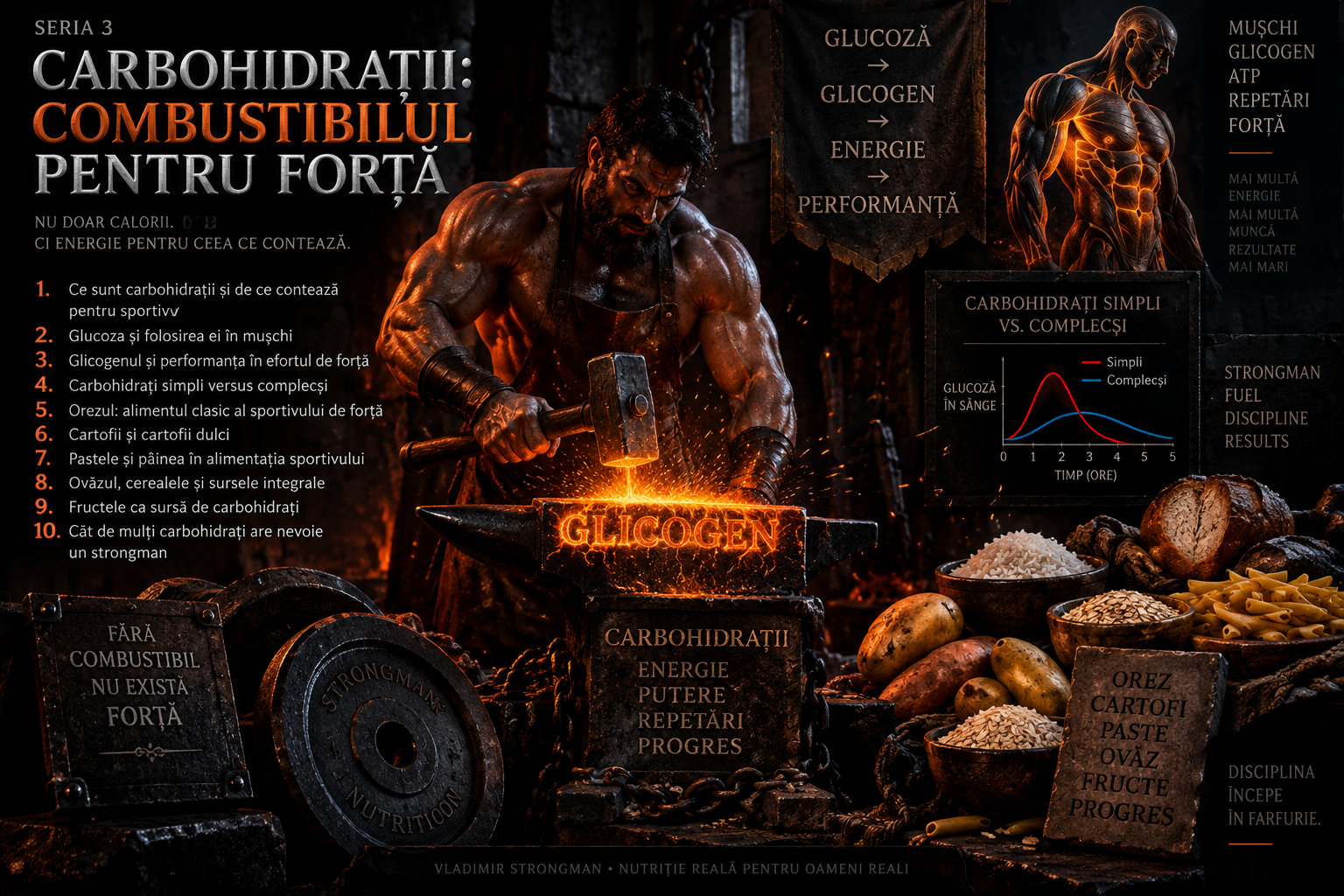
Pasta and bread are two of the oldest and most widespread ways humans consume grains. In fitness culture, however, they are often either praised as classic energy foods or blamed for weight gain. Metabolically, both are mainly vehicles for starch, and their effects depend on amount, preparation, context and the rest of the diet.
For strength athletes, pasta and bread can be extremely practical. They provide large amounts of carbohydrate in a manageable volume, can support glycogen restoration and combine easily with protein foods. At the same time, very high-fiber or oversized meals can be uncomfortable close to training.
This episode follows pasta and bread from wheat kernel to plate: starch, gluten, fiber, glycemic index, dough, fermentation, cooking and digestion. It explains why al dente pasta behaves differently from soft white bread, why whole grain is not automatically better at every moment, and how to choose according to training demands.
1. Pasta and bread begin with the same raw material: grains
Most pasta and bread are made from wheat, although rye, oats, corn, rice and legumes are also used. Energetically, the dominant component is usually starch, a chain of glucose units.
2. Wheat provides mostly starch, but also protein
Wheat flour is mainly carbohydrate with a moderate amount of protein. Its amino-acid profile differs from animal protein, but it still contributes to total daily protein intake.
3. Flour starch contains amylose and amylopectin
The ratio between amylose and amylopectin affects texture and digestibility. Amylopectin is highly branched and generally more accessible to digestive enzymes, while amylose forms more compact structures.
4. Digestion ultimately turns much of the starch into glucose
Amylases and intestinal enzymes progressively break starch down into absorbable glucose. From the muscle's perspective, glucose from pasta, bread or rice eventually enters the same metabolic pathways.
5. Gluten is a protein network, not a carbohydrate
Gluten is formed mainly from gliadin and glutenin proteins when flour is hydrated and mixed. This elastic network gives bread structure and pasta firmness.
6. Gluten is not a universal problem
In celiac disease, gluten triggers an autoimmune reaction and must be strictly avoided. For most people, however, eliminating gluten does not automatically improve health or performance.
7. Individual tolerance matters more than food fashion
Some people tolerate certain wheat products poorly because of gluten, fructans or simply large food volume. Digestive symptoms should be assessed individually rather than turned into universal rules.
8. Bread is produced through hydration, fermentation and baking
Flour is mixed with water, fermentation produces gas, and gluten traps it. Baking fixes the structure and gelatinizes much of the starch, making it more accessible to digestion.
9. Pasta has a denser food matrix
Durum-wheat pasta forms a compact structure in which starch remains trapped within a protein network. This matrix can slow enzyme access compared with many breads.
10. Durum wheat is the classic raw material for pasta
Durum semolina has properties that produce firm pasta that holds its shape during cooking. That structure contributes to pasta's characteristic texture and digestion pattern.
11. Al dente also has metabolic meaning
Al dente pasta retains a firmer structure and may be digested more slowly than very soft pasta. The effect is real but modest and should not be exaggerated.
12. White bread is usually easier to digest
Removing much of the bran and germ lowers fiber content. For an athlete, that can be useful before exercise when digestive comfort and rapid carbohydrate availability matter.
13. Whole-grain bread retains more of the grain
Whole-grain flour contains more bran and germ, increasing fiber and micronutrient content. In everyday eating, this can improve satiety and dietary quality.
14. Whole grain is not automatically better before competition
Large amounts of fiber close to an event can increase fullness, gas or bowel urgency. A simple white bread may be more practical than a dense whole-grain loaf near competition.
15. Whole-wheat pasta provides more fiber but also more digestive bulk
Whole-wheat pasta can be excellent in normal meals, especially when satiety and fiber intake matter. Before a demanding session, individual tolerance should guide the choice.
16. Bread and pasta do not have identical glycemic responses
Many white breads produce a relatively rapid glucose response, while pasta often produces a more moderate one because of its compact matrix. Values vary by product and preparation.
17. Glycemic index does not determine whether a food is appropriate
Glycemic index describes the glucose response to a standardized amount of carbohydrate, not the complete nutritional value of a food. Portion, timing and meal composition also matter.
18. Glycemic load also considers quantity
A large serving can deliver much more total carbohydrate than a small serving even when the glycemic index is identical. Portion size is therefore highly relevant in practice.
19. Protein and fat often slow a meal's glucose response
Pasta with meat, cheese or sauce does not behave exactly like pasta eaten alone. Protein, fat and fiber can slow gastric emptying and alter glucose appearance in blood.
20. Sauce may change the meal more than the pasta itself
Pasta with tomato sauce and lean meat can have moderate energy density, while the same pasta with large amounts of oil, cream and cheese can become highly caloric.
21. Bread does not cause fat gain through a special mechanism
Body fat increases when energy intake repeatedly exceeds expenditure. Bread can contribute to a surplus, but it has no unique fat-gaining property.
22. Pasta is not automatically cleaner than bread
Both can be simple, useful foods. The meaningful differences involve structure, portion, associated ingredients and tolerance, not moral labels such as clean and dirty.
23. Bread is carbohydrate-dense relative to volume
For large athletes who may need several hundred grams of carbohydrate per day, bread can be highly practical because it increases intake without enormous food volume.
24. Pasta also allows high carbohydrate intake
A large pasta serving can provide substantial carbohydrate and energy in a relatively compact form. For a strongman with high energy needs, this can be logistically useful.
25. Dry and cooked pasta weights are very different
Pasta absorbs water during cooking, increasing its weight without adding calories. Athletes should know whether meal-plan values refer to dry or cooked weight.
26. Bread also varies greatly in water content
A dense seeded loaf can have a different calorie density from an airy white loaf. Weighing bread is more precise than counting slices.
27. Fiber improves satiety but may limit intake in very large athletes
High satiety is useful during fat loss. For a 120-150+ kg athlete with very high energy needs, excessive fiber can make the required food volume hard to consume.
28. Sourdough fermentation can change digestibility
Long fermentation can modify dough structure and some fermentable carbohydrates. Some people tolerate sourdough better, although responses remain individual.
29. Sourdough bread is not automatically lower in calories
Fermentation changes flavor, texture and sometimes digestion, but total energy still depends mainly on flour quantity and added ingredients.
30. Cooling can modestly increase resistant starch
After cooking and cooling, some starch can retrograde into a form that is less accessible to digestion. The effect exists, but cold pasta is not carbohydrate-free or calorie-free.
31. Reheating does not completely erase starch retrogradation
Some retrograded starch may remain more resistant after reheating. The metabolic difference is modest and should not be treated as a fat-loss trick.
32. Pasta and bread can efficiently support glycogen restoration
After digestion, starch supplies glucose that can be used to rebuild muscle and liver glycogen. Total carbohydrate intake matters more than any single mandatory source.
33. Before training, digestibility becomes a priority
A few hours before exercise, well-tolerated carbohydrate can support energy availability. For some athletes, white bread or regular pasta is more comfortable than very high-fiber versions.
34. A gigantic pasta meal immediately before exercise can backfire
Large food volume, fatty sauces and slower digestion can cause heaviness and reflux. Effective fueling does not mean forcing the maximum possible carbohydrate into the final hour.
35. The closer the meal is to exercise, the more simplicity can help
In the final hour or two, lower-fat and lower-fiber foods are often easier to tolerate. Toast with honey or a simple sandwich may work better than a large mixed meal.
36. During training, bread and pasta are rarely the first choice
During a long session, carbohydrate drinks or foods that are very easy to chew and digest are usually more practical. Bread and pasta are generally better before, after or during longer breaks.
37. Between events, a simple sandwich can work very well
When enough time exists before the next event, white bread with a light protein source or carbohydrate topping can provide fuel with minimal logistical complexity.
38. After training, pasta pairs naturally with protein
A meal of pasta and lean meat can provide carbohydrate for glycogen and amino acids for tissue remodeling. Post-workout nutrition does not need to be complicated to be effective.
39. Bread can be equally useful after training
Sandwiches, toast or bread alongside a protein-rich meal can quickly raise post-training carbohydrate intake. Choosing bread, rice, pasta or potatoes is largely about tolerance and preference.
40. For a large strongman, variety can beat monotony
When carbohydrate needs are very high, eating only rice can become monotonous. Rotating pasta, bread and potatoes can make high-energy eating easier and more sustainable.
41. Bread allows fine portion control
When weighed, bread can be adjusted in small increments without extra cooking. This makes it useful for fine-tuning carbohydrate intake between training and rest days.
42. Pasta works well for meal prep, but portions need consistency
Cooked pasta stores well for later meals, but variable water absorption can complicate portion estimates. Weighing it dry before cooking provides better consistency.
43. Legume pasta has a different nutritional profile
Lentil, chickpea and pea pastas generally contain more protein and fiber than traditional wheat pasta. They can be useful but may be harder to tolerate before exercise.
44. Rye bread may provide greater satiety
Dense rye products tend to contain more fiber and a compact structure. They are useful everyday foods but may feel heavy before demanding yoke or deadlift sessions.
45. Seeded bread adds nutrients and calories
Seeds add fats, fiber and micronutrients, but they can also raise calorie density. A seeded label does not automatically mean lighter or better for fat loss.
46. Gluten-free products are not automatically more nutritious
Many gluten-free breads use rice, corn or tapioca starch and can be low in fiber. They are essential for people with celiac disease, but not an automatic nutritional upgrade for everyone else.
47. Bread and pasta can contribute meaningful sodium
Bread usually contains salt, while pasta sauces may add more sodium. This can be useful for athletes who sweat heavily, but total intake should still be considered in the context of health and blood pressure.
48. B vitamins and iron depend on flour type and fortification
Whole-grain products retain more natural grain components, while white flour is fortified in some countries. Micronutrient profiles therefore vary by product and region.
49. Bread and pasta should be judged within the whole diet
A strong diet may include white bread around training, whole-grain bread at other meals, regular pasta after exercise and plenty of fruit, vegetables and legumes throughout the day.
50. For performance, timing can matter as much as type
A refined, easy-to-digest product may be ideal close to training, while a whole-grain version may be more useful at dinner or on a rest day. No single version is optimal at all times.
51. Low-carb approaches in strength sports depend on training volume
An athlete performing only a few heavy sets may tolerate lower carbohydrate intake better than one doing medleys, carries and high-volume work. Eliminating bread and pasta is not required for weight control.
52. During a calorie deficit, bread can be easy to portion
Because bread can be weighed precisely and eaten in small portions, it does not need to be excluded from a fat-loss diet. Quantity matters more than prohibition.
53. During a calorie surplus, pasta can make eating easier
For an athlete struggling to consume enough energy, pasta with protein and some fat can raise calorie intake efficiently without enormous food volume.
54. Digestion should be rehearsed before competition
Competition meals should not be tested for the first time on event day. Athletes should learn during training how much bread or pasta they tolerate and at what timing.
55. Bloating does not automatically mean gluten intolerance
A large bread-heavy meal can cause bloating through volume, salt, fermentable carbohydrates or accompanying foods. A gluten disorder cannot be diagnosed from post-meal fullness alone.
56. Ultra-processed flour products are not equivalent to simple bread
Cookies, croissants and pastries can combine flour with large amounts of fat and sugar. Sharing wheat as an ingredient does not make them metabolically equivalent to basic bread.
57. Food form changes eating speed
Soft bread can be eaten quickly, while dense pasta or whole-grain bread may require more chewing. Eating speed can influence satiety and total intake.
58. Neither bread nor pasta is mandatory
Athletes can obtain sufficient carbohydrate from rice, potatoes, oats, fruit and other foods. Bread and pasta are valuable mainly because they are practical and accessible.
59. But excluding them without reason can complicate the diet
For people who tolerate them, bread and pasta are inexpensive, available and easy to combine. Removing them simply out of carbohydrate fear can reduce dietary variety without a clear benefit.
60. Conclusion: bread and pasta are tools, not dietary problems
For strength athletes, bread and pasta can provide predictable carbohydrate for energy and glycogen restoration. Refined versions may work well close to exercise, whole-grain versions can support fiber and satiety, and the right choice depends on timing, quantity and tolerance. Neither demonization nor idealization improves performance.
The first key point is that bread and pasta are primarily starch sources, and the resulting glucose enters the same metabolic pathways as glucose from rice or potatoes.
The second point is that food structure matters: pasta, especially al dente, is often digested differently from many soft white breads even though both are wheat products.
The third point is that whole-grain and refined versions have different advantages. Fiber supports everyday diet quality, while refined sources may be more practical close to training.
The fourth point is that gluten must be strictly avoided in celiac disease, but there is no universal reason for every athlete to remove wheat.
Finally, bread and pasta are highly practical tools for strength athletes: easy to find, easy to portion and capable of supplying substantial carbohydrate when training volume demands it.
Sources and recommended reading
1. Thomas DT, Erdman KA, Burke LM. Nutrition and Athletic Performance. Principles of carbohydrate intake and sports nutrition.
2. Burke LM and colleagues. Consensus literature on carbohydrate availability, glycogen and carbohydrate periodization in athletes.
3. Jenkins DJA and colleagues. Foundational work on glycemic index and metabolic responses to carbohydrate-rich foods.
4. Foster-Powell K, Holt SHA, Brand-Miller JC. Tables and reviews of glycemic index values, including cereal products.
5. Granfeldt Y and colleagues. Research on pasta structure, cooking and glycemic response.
6. Englyst HN and colleagues. Literature on rapidly digestible, slowly digestible and resistant starch.
7. FAO/WHO. Reference documents on carbohydrates, dietary fiber and diet quality.
8. USDA FoodData Central. Composition data for bread, pasta, whole-wheat flour and other cereal foods.
9. Lebwohl B, Sanders DS, Green PHR. Clinical literature on celiac disease, gluten and evidence-based indications for gluten exclusion.
10. Nelson DL, Cox MM. Lehninger Principles of Biochemistry. Starch digestion, glucose, glycogen and energy metabolism.
Editorial note: this article is educational. People with celiac disease, wheat allergy, gastrointestinal disorders or specific clinical recommendations should individualize nutrition with qualified healthcare professionals.
More From The Journal

Training
The Science of Strongman Training - Episode X: Competition Programming
How to build a complete Strongman competition preparation block: calendar, events, volume, intensity, specificity, simulations, autoregulation, tapering and fatigue management.

Training
The Science of Strongman Training - Episode IX: Peaking
Peaking in Strongman: how to turn months of training into maximal competition performance by reducing fatigue, preserving adaptations and managing specificity.