
Nutrition
Series: Carbohydrates, Fuel for Strength - Episode 6: Potatoes and Sweet Potatoes
September 10, 2026
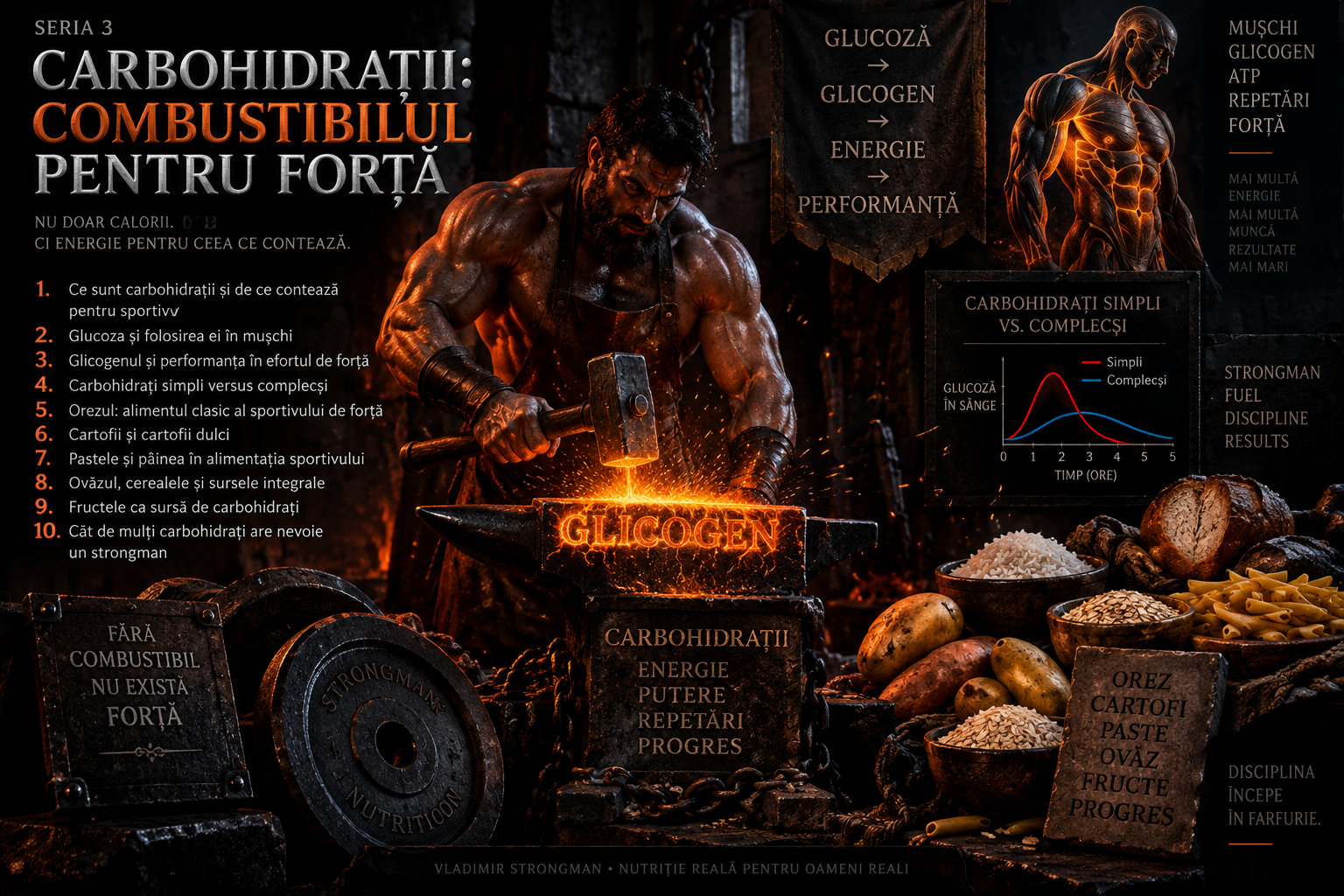
The potato is one of the most ordinary foods on the plate and, for that very reason, is often underestimated in sports nutrition. In reality, it offers a very practical combination of starch, potassium, water, vitamin C and satiety, making it an excellent primary carbohydrate source for strength athletes.
Sweet potato has an almost mythological reputation in fitness, sometimes presented as a “cleaner” or “healthier” version of the white potato. The real comparison is far less dramatic: both are nutritious foods, both provide useful carbohydrate, and each has specific advantages related to micronutrients, taste, tolerance and preparation.
This episode follows potatoes and sweet potatoes from composition and digestion to blood glucose, glycogen, satiety, cooking and their use before or after training. The goal is not to declare a winner, but to understand when and why each can be a good choice for the strength athlete.
1. Potatoes and sweet potatoes are not the same plant
The common potato belongs to the Solanaceae family, while sweet potato belongs to the Convolvulaceae family. Their similarity on the plate comes from the fact that both form carbohydrate-rich underground storage organs, but botanically they are different plants with distinct nutrient profiles.
2. Both are important sources of starch
Most digestible carbohydrate in potatoes comes from starch, which is made of chains of glucose. During digestion, these chains are progressively broken down into glucose that can be oxidized for energy or stored as glycogen.
3. Potatoes are not just “empty carbohydrate”
White potatoes provide potassium, vitamin C, vitamin B6 and other micronutrients in addition to starch. When the skin is eaten, they can also contribute more fiber and plant compounds. Describing them as little more than a starch mass does not reflect their actual composition.
4. Sweet potatoes have their own nutritional advantages
Sweet potatoes, especially orange varieties, can provide large amounts of beta-carotene, a precursor of vitamin A. They also supply potassium, vitamin C, fiber and various polyphenols. These advantages are real, but they do not automatically make common potatoes an inferior choice.
5. Flesh color reveals something about plant pigments
Orange varieties are rich in carotenoids, while purple potatoes can contain anthocyanins. White and yellow potatoes contain different combinations of pigments and phenolic compounds. Color diversity can improve dietary variety, but performance does not depend on one particular color.
6. Potassium is one of the major strengths of potatoes
Potatoes can provide substantial potassium, a mineral involved in nerve function, muscle contraction and fluid balance. For athletes who sweat heavily and consume large amounts of energy, regular food sources of potassium have practical value.
7. Vitamin C in potatoes is often overlooked
Fresh potatoes can contribute meaningfully to vitamin C intake. Cooking reduces some of this vitamin, but the remaining contribution may still be relevant. In populations that eat potatoes frequently, they can serve as an important nutrient source rather than only an energy source.
8. Fiber depends on variety, skin and preparation
Fiber content varies among varieties and may be higher when the skin is kept. Sweet potatoes are often perceived as dramatically richer in fiber, but the practical difference is not always large. Preparation method and serving size matter just as much.
9. Potatoes contain a great deal of water
Cooked potatoes have relatively moderate energy density because much of their weight is water. This separates them from dry carbohydrate sources such as bread, cereal or uncooked pasta and explains why a large serving can contain fewer calories than it appears to.
10. Potatoes can be highly satiating
Boiled or simply baked potatoes can produce high satiety relative to calories. Volume, water, starch and food structure all contribute. For an athlete trying to control energy intake without eliminating carbohydrate, this can be a major advantage.
11. Cooking method changes the food more than its name does
A boiled potato, baked potato and fried potato can have very different energy densities, largely because of added fat and water loss. Saying simply that “potatoes make you fat” ignores how dramatically cooking method can change the calorie content of the meal.
12. Frying adds energy quickly
The potato itself is naturally low in fat. Frying allows oil to be absorbed and sharply increases energy density. For a strongman deliberately eating in a surplus this may sometimes fit, but for weight control the difference between boiled and fried can be enormous.
13. Boiling keeps energy density lower
Boiled potatoes retain a great deal of water and require no added fat. The result is an easy-to-portion carbohydrate source with good satiety. During fat-loss or weight-class phases, this form can be particularly practical.
14. Baking concentrates flavor and changes starch texture
Baking removes more water than boiling and can create a drier, sweeter texture. Gelatinized starch becomes accessible to digestive enzymes, and the glycemic response can vary according to variety, temperature and degree of cooking.
15. Mashed potatoes can be digested very quickly
Mashing breaks physical structure and increases the surface area available to digestive enzymes. Very smooth mash made from thoroughly cooked potatoes may be absorbed faster than an intact cooled potato. In sport, this can be an advantage or disadvantage depending on timing.
16. The glycemic index of potatoes is not a fixed number
Glycemic index can vary substantially among varieties and preparation methods. Different potatoes contain different proportions of amylose and amylopectin, while boiling, baking, cooling and reheating alter starch accessibility. One number cannot describe every potato.
17. Sweet potato does not always have a low glycemic index
The reputation of sweet potato as an automatically low-GI food is too simple. Glycemic response varies with variety and preparation, and some forms can be digested rapidly. Its advantages should not be reduced to the idea that it always raises blood glucose more slowly.
18. Glycemic load also depends on serving size
Glycemic index describes the relative speed of the response to a standardized carbohydrate amount, but it does not tell you how much food you eat. A small and a huge serving of the same food create different glycemic loads. For athletes, the real portion is often more relevant than an isolated label.
19. Protein and fat change the response to the meal
Potatoes are rarely eaten alone. Meat, fish, eggs, dairy, vegetables and added fats can alter gastric emptying and the glycemic response. A meal containing potatoes and meat may therefore behave very differently from potatoes eaten in isolation.
20. Cooling can increase resistant starch
After cooking and cooling, some starch can retrograde and become less accessible to digestive enzymes. This resistant starch behaves partly like fiber and may reduce the glycemic response of the meal. Reheating does not necessarily eliminate the effect completely.
21. Resistant starch does not turn potatoes into a carbohydrate-free food
Cooling changes part of the starch, not the entire carbohydrate content. Cooled potatoes remain an energy source and still count toward total intake. Resistant starch is metabolically interesting, but it does not erase calories or completely transform the food.
22. Potatoes can replenish muscle glycogen
After digestion, potato starch supplies glucose that can be used for glycogen resynthesis. For strength athletes with high-volume sessions or closely spaced workouts, potatoes can fulfill the same broad energy role as rice, pasta or bread.
23. Sweet potatoes can replenish stores effectively too
Sweet potatoes provide starch and naturally occurring sugars in varying proportions. After digestion, available glucose can contribute to restoring muscle and liver glycogen. From the standpoint of energy storage, the body does not award bonus points for a food's fitness reputation.
24. For one maximal repetition, potatoes are not the direct fuel
A maximal deadlift lasting only a few seconds relies mainly on stored ATP and phosphocreatine. Potatoes do not directly power that repetition at the instant it occurs. Their role is broader: supporting warm-ups, repeated sets, assistance work, successive events and recovery.
25. In longer sets, potato carbohydrate becomes more relevant
As a set lasts longer, glycolytic contribution increases. Sets of 5-10 repetitions, hypertrophy work and strongman events lasting tens of seconds use more glycogen than a single maximal repetition. This is where daily carbohydrate intake becomes increasingly important.
26. Yoke, farmers and medleys benefit from adequate stores
Carrying events combine enormous muscular tension with locomotion and repeated contractions. Even when they last less than a minute, the energy cost is substantial. Potatoes can be one of the foods used to maintain glycogen before these demanding sessions.
27. Potatoes can be excellent after training
After exercise, a meal combining potatoes with an adequate protein source provides carbohydrate for glycogen restoration and amino acids for tissue remodeling. Post-workout nutrition does not need to be exotic: lean meat, potatoes and vegetables can cover the basic goals very effectively.
28. Before training, digestive tolerance matters
Potatoes can be easy to digest for many people, but very large portions, heavy added fats or large amounts of fiber may cause discomfort. The closer a meal is to exercise, the more sensible it becomes to keep it relatively simple and easy to tolerate.
29. Simple mashed potatoes can work well before exercise
A mash prepared with little added fat and without heavy ingredients can provide relatively easy-to-consume carbohydrate before a session. Once loaded with butter, cream and cheese, however, its digestive and caloric profile changes dramatically.
30. French fries are not nutritionally equivalent to boiled potatoes
The difference is not merely flavor. Frying introduces substantial fat and can turn a moderate portion of potatoes into a very energy-dense food. In discussions about weight control, it is important to distinguish the tuber itself from the preparation method.
31. Sweet potato fries can become just as calorie-dense
The label “sweet potato fries” does not neutralize cooking oil. When fried, sweet potatoes can become highly energy-dense just like ordinary potatoes. The amount of absorbed fat and the serving size matter more than which tuber was used.
32. Sweet potatoes taste sweeter without being “full of sugar”
Their sweetness comes from natural composition and changes in starch during cooking. Some varieties become very sweet when baked, but they remain primarily carbohydrate-rich whole foods. Sweet taste is not synonymous with an industrial dessert.
33. Beta-carotene is a real advantage of orange varieties
Beta-carotene can be converted to vitamin A, which is important for vision, immune function and cell differentiation. Carotenoid absorption can be improved by a moderate amount of fat in the meal. This is a reason for dietary variety, not for giving sweet potato a monopoly.
34. Purple potatoes provide anthocyanins
Purple and blue pigments come largely from anthocyanins, polyphenolic compounds also found in berries. Colored varieties can add phytochemical diversity to the diet, but they should not be treated as mandatory for performance.
35. The skin can be eaten when clean and appropriate for the variety
The skin contributes fiber and plant compounds, but digestive preference matters. Some athletes tolerate skin-on potatoes perfectly, while others prefer them peeled before exercise. There is no metabolic virtue in keeping the skin if it causes gastrointestinal discomfort.
36. Green potatoes require caution
Light exposure can cause greening and may be associated with higher concentrations of glycoalkaloids such as solanine and chaconine. Heavily green, bitter or extensively sprouted potatoes are poor choices for consumption, and affected portions should be avoided.
37. Proper storage matters
Potatoes are best kept in a cool, dark and well-ventilated place. Light encourages greening, while excessive moisture can accelerate spoilage. Food organization may seem mundane, but for athletes preparing large quantities it affects cost, quality and safety.
38. Cooked potatoes should be cooled and stored safely
Meal prep is useful, but cooked food should not remain at room temperature for many hours. Prompt cooling, refrigeration and appropriate reheating reduce microbiological risk. Performance gains from an efficient meal plan disappear quickly if food safety is neglected.
39. Potatoes are easy to portion
For athletes tracking carbohydrate and calories, weighing potatoes is straightforward. The important point is to use the same method consistently, raw or cooked, because water changes weight. Inconsistent weighing can create larger errors than differences among varieties.
40. Raw and cooked weights are not directly interchangeable
Boiling can increase or preserve water content, while baking removes water. Two portions with the same cooked weight do not necessarily contain the same amount of dry matter. For precise tracking, athletes should use a consistent weighing system and matching nutrition database entries.
41. For a very large strongman, food volume can become a problem
An athlete weighing 120-150+ kg may need large amounts of energy and carbohydrate. Potatoes are filling and water-rich, which is excellent for weight control but sometimes inconvenient during very high-calorie phases. Rice, bread or pasta may then provide carbohydrate in a smaller food volume.
42. In a calorie deficit, their satiety becomes a major advantage
When an athlete needs to reduce body mass, boiled or simply baked potatoes can provide large portions with manageable energy intake. Carbohydrates do not have to be eliminated to create a calorie deficit; choosing more satiating sources and controlling added fats may be enough.
43. In a calorie surplus, toppings can completely change the equation
Butter, oil, cheese and sauces can quickly turn potatoes into a very energy-dense meal. For an athlete intentionally trying to gain weight, this can be used strategically. The key is to understand that the extra energy comes largely from the additions, not from some unique property of the potato.
44. Sodium and potassium should not be treated as enemies
Potatoes provide potassium, while added salt provides sodium. Both minerals are involved in fluid balance and neuromuscular function. For athletes who sweat heavily, the useful goal is not to demonize one electrolyte but to maintain adequate intake in the context of diet and sweat losses.
45. Potatoes do not prevent cramps through one mineral alone
Exercise-associated cramps have complex causes, and potassium intake alone is not a guarantee against them. Hydration, sodium, neuromuscular fatigue, exercise intensity and individual history all matter. Potatoes can contribute electrolytes, but they are not a universal cramp remedy.
46. Sweet potatoes can contain oxalates
For people predisposed to certain kidney stones, dietary oxalate intake can become relevant. For most healthy people, sweet potatoes can be eaten normally as part of a varied diet. Individuals with a history of kidney stones should follow personalized medical guidance rather than generic internet rules.
47. Diabetes does not automatically make potatoes forbidden
With diabetes, carbohydrate amount, preparation, portion size and meal composition should be integrated into an individual plan. Some potato preparations can produce rapid glycemic responses, but universal bans are too simplistic. Monitoring and personalized medical advice are more useful than absolute labels.
48. White potatoes are not inferior because they are not orange
Orange sweet potatoes excel in beta-carotene, while white potatoes provide their own combination of potassium, vitamin C and carbohydrate. Nutrition is not a podium where one food wins every event. Dietary variety covers needs better than obsessively choosing a single “champion” food.
49. Sweet potato is not mandatory in an athlete's diet
Years of bodybuilding culture created the classic chicken-and-sweet-potato image, but performance does not depend on that combination. If an athlete prefers white potatoes, rice, pasta or other starches and meets energy and micronutrient needs, no mysterious metabolic advantage is being lost.
50. White potatoes are not mandatory either
An athlete can perform very well without potatoes if carbohydrate and micronutrient needs are met elsewhere. Their value is practical: they are affordable, versatile, satiating and nutritious. They are an excellent tool, not a biological requirement for strength development.
51. Digestive tolerance can decide the choice better than theory
A food that looks perfect on paper is useless before training if it causes bloating, reflux or heaviness. Some athletes tolerate peeled white potatoes better, some prefer sweet potatoes, and others do best with rice. Good sports nutrition accounts for the real athlete, not just nutrient tables.
52. Texture affects how easy it is for an athlete to eat enough
Mash, baked potatoes, wedges and boiled cubes differ in texture and eating volume. A strongman who needs many calories may prefer softer, easier-to-eat forms, while an athlete in a calorie deficit may deliberately exploit volume and texture to increase satiety.
53. Seasonings can create variety without changing the carbohydrate base
Paprika, garlic, rosemary, pepper, herbs and other seasonings can make the same potato base taste very different. For athletes repeating similar foods for weeks, palatability and variety can improve adherence without requiring dramatic changes in the nutritional plan.
54. Potatoes combine easily with protein sources
Meat, fish, eggs, dairy or legumes can form complete meals alongside potatoes. Carbohydrate supports energy restoration while protein provides amino acids for tissue remodeling. The simplicity of this combination helps explain its long-standing popularity among athletes.
55. On competition day, familiarity can matter more than theoretical perfection
Competition day is a poor time for digestive experiments. If an athlete already knows that potatoes sit well before exercise, they can work well; if potatoes are rarely eaten before training, there is little reason to introduce them merely because they are considered healthy. Familiarity reduces surprises.
56. Between events, solid potatoes may be too bulky
In a contest with short breaks, potatoes may be less practical than carbohydrate drinks, fruit or other compact rapid sources. A food that is excellent in daily meals does not automatically become the best choice in the middle of competition.
57. After competition, potatoes can return to the center of the plate
Once the events are over and digestion speed is no longer the only priority, a meal with potatoes, protein, vegetables, salt and fluids can help restore carbohydrate, electrolytes and energy. It is a simple and predictable recovery meal after a demanding day.
58. White versus sweet can often be decided by preference
When carbohydrate, energy and micronutrient needs are covered, taste, cost and availability can make the decision. Sweet potatoes do not need to be chosen out of fear of white potatoes, and white potatoes do not have to win simply because they are cheaper. Both can rotate easily in the diet.
59. The whole diet matters more than the tuber selected
One food cannot rescue an unbalanced diet and cannot ruin a good one by itself. Total protein, energy intake, vegetables, fruit, fats, hydration and meal distribution matter more than the debate between white and sweet potatoes.
60. Conclusion: two different tubers, the same basic usefulness
Potatoes and sweet potatoes are nutritious, flexible carbohydrate sources. Their differences in fiber, carotenoids, taste and glycemic behavior are worth understanding, but neither owns the monopoly on performance. For strength athletes, their real value comes from portion size, preparation, tolerance and integration into a diet matched to the work being performed.
The first key point is that both white and sweet potatoes are valuable sources of starch and micronutrients, and their differences are more about nutritional profile than absolute quality.
The second point is that preparation dramatically changes energy density and digestion: boiled, baked, mashed and fried potatoes are not metabolically or calorically identical.
The third point is that glycemic index is not fixed. Variety, temperature, texture, cooling and the rest of the meal can all modify the response.
The fourth point is that for strongman and other strength sports, potatoes are useful mainly as carbohydrate sources that support glycogen maintenance and restoration, not as magical ingredients for maximal strength.
Finally, choosing white or sweet potatoes can come down to tolerance, preference, cost, calorie goals and dietary variety. Both have a legitimate place in sports nutrition.
Sources and recommended reading
1. USDA FoodData Central. Composition data for potatoes, sweet potatoes and different cooking methods.
2. FAO. Literature on potatoes and sweet potatoes as dietary sources of starch, micronutrients and energy.
3. Atkinson FS, Foster-Powell K, Brand-Miller JC. Research and databases on the glycemic index of foods.
4. Raigond P and colleagues. Research on potato starch, resistant starch, processing and cooling effects.
5. Hargreaves M, Spriet LL. Reviews of carbohydrate, glycogen and energy metabolism during exercise.
6. Thomas DT, Erdman KA, Burke LM. Nutrition and Athletic Performance. Principles of carbohydrate fueling for athletes.
7. Kerksick CM et al. ISSN Position Stand: Nutrient Timing. Glycogen restoration and nutrient timing around exercise.
8. Holt SHA and colleagues. Classic work on the satiety index and responses to carbohydrate-rich foods.
9. EFSA and food-safety authorities. Assessments of glycoalkaloids in potatoes and safe-consumption practices.
10. Nelson DL, Cox MM. Lehninger Principles of Biochemistry. Starch digestion, glucose, glycogen and bioenergetics.
Editorial note: this article is educational. Carbohydrate needs, digestive tolerance and food choices vary according to sport, training volume, goals and medical context. People with diabetes, kidney disease, a history of kidney stones or other clinical recommendations should individualize nutrition with qualified healthcare professionals.
More From The Journal

Training
The Science of Strongman Training - Episode X: Competition Programming
How to build a complete Strongman competition preparation block: calendar, events, volume, intensity, specificity, simulations, autoregulation, tapering and fatigue management.

Training
The Science of Strongman Training - Episode IX: Peaking
Peaking in Strongman: how to turn months of training into maximal competition performance by reducing fatigue, preserving adaptations and managing specificity.