
Nutrition
Series: Carbohydrates, Fuel for Strength - Episode 5: Rice, the Classic Food of the Strength Athlete
September 10, 2026
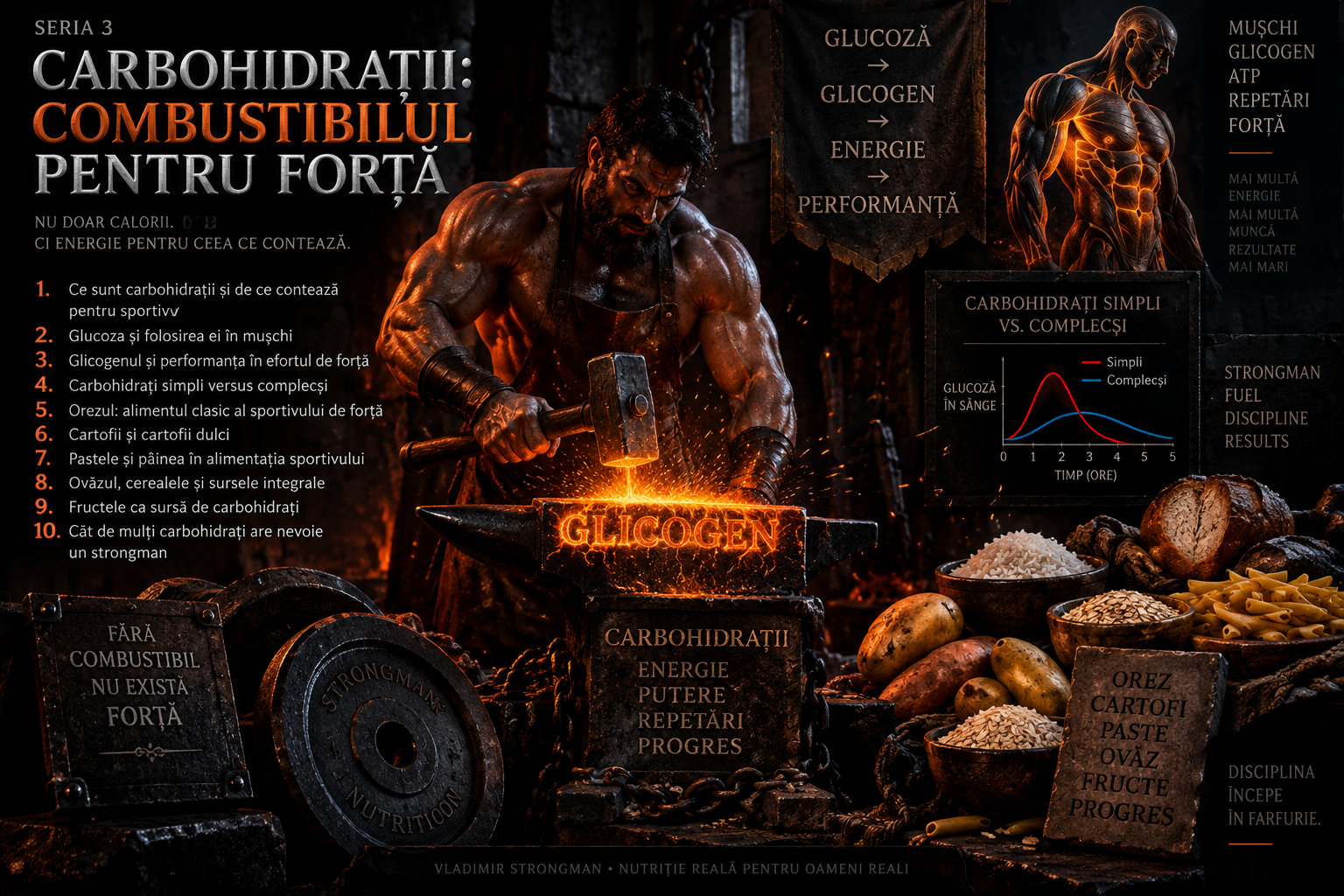
Rice is probably one of the most recognizable foods on a strength athlete's plate. The classic image is almost ritualistic: rice, meat, a few vegetables, then the same combination repeated several times a day. Its popularity does not come from a special anabolic property, but from a very practical combination of starch, digestive tolerance, cost, predictability and easy portion control.
For a strongman or powerlifter who may need large amounts of energy without turning every meal into a gastrointestinal endurance event, those qualities matter enormously. White rice can be very easy to digest before or after training, while whole-grain versions can contribute more fiber and micronutrients in meals farther away from exercise.
This episode follows rice from grain structure and starch types to digestion, blood glucose, glycogen, portioning and use around training. It explains why white rice is not an 'empty' food, why brown rice is not automatically superior and why, in sport, the right food is often the one that can be digested, measured and repeated without sabotaging performance.
1. Rice is first and foremost a starch-rich grain
Rice is the seed of species in the Oryza genus and is a staple food for a large share of the world's population. For athletes, its relevance comes mainly from its high carbohydrate content as starch, which after digestion provides glucose that can be used for energy and glycogen restoration.
2. The whole grain contains endosperm, bran and germ
In whole-grain rice, the starch-rich endosperm remains accompanied by the outer bran layers and germ. These components provide fiber, vitamins, minerals and lipids. Refining removes the bran and germ, leaving mainly the starchy endosperm recognized as white rice.
3. Most of the energy in rice comes from carbohydrate
Dry rice is highly carbohydrate dense, whereas cooked rice contains a large amount of water and therefore provides less energy per 100 grams. Nutritional values can look dramatically different depending on whether rice is measured dry or after cooking.
4. Rice starch is built from amylose and amylopectin
The two major components of starch are amylose, which is more linear, and amylopectin, which is highly branched. Their proportions differ among rice varieties and influence texture, stickiness and how quickly the starch can be digested. Higher amylose content is generally associated with somewhat slower digestion.
5. Cooking gelatinizes starch and makes it more accessible to enzymes
In the presence of water and heat, starch granules absorb water, swell and lose part of their ordered structure. This process is called gelatinization and makes starch more accessible to digestive amylases. Well-cooked rice is therefore generally easier to digest than undercooked grain.
6. Cooling can increase part of the resistant starch
After cooling, some gelatinized starch can reorganize into structures that digestive enzymes access less easily, a process called retrogradation. This modestly increases resistant starch. The effect is real, but it does not turn rice into a carbohydrate-free food or erase the meal's total energy.
7. Digestion of rice largely produces glucose
Starch is progressively broken down by amylases and intestinal enzymes into absorbable units. Much of it ultimately appears as glucose, which can enter the circulation, be oxidized for ATP or be stored in liver and muscle as glycogen.
8. Glycemic response differs among types of rice
Not all rice varieties produce the same rise in blood glucose. Amylose content, processing, cooking time, temperature, serving size and the foods eaten with rice all change the response. The generic label 'rice' therefore hides meaningful metabolic diversity.
9. White rice contains less fiber than whole-grain rice
Removing the bran lowers fiber and some naturally occurring micronutrients. That can be a disadvantage if the entire diet is fiber-poor, but it can become a practical advantage before training or competition when lower intestinal bulk and simpler digestion are useful.
10. Brown rice retains more of the original grain
Brown rice retains the bran and germ, increasing fiber and the amount of certain micronutrients. It can be an excellent everyday choice. However, texture, cooking time and digestive tolerance lead some athletes to prefer white rice closer to exercise.
11. White versus brown is not a battle between bad and good
Brown rice provides more fiber, while white rice is generally easier to digest. The choice depends on the rest of the diet and timing. An athlete eating adequate vegetables, fruit and other fiber sources does not automatically become deficient because white rice is used around training.
12. Basmati is valued for texture and predictability
Basmati rice has a long grain, distinctive aroma and often a higher amylose proportion than very sticky varieties. In many cases it produces a moderate glycemic response and remains separate after cooking, which makes it easy to portion and combine with protein.
13. Jasmine rice is usually softer and more aromatic
Jasmine rice is popular for flavor and soft texture, but it may produce a faster glycemic response than some basmati varieties. For an athlete, that is not automatically a problem. Closer to exercise, faster digestion may even be useful when portion size and tolerance are appropriate.
14. Parboiled rice undergoes a different processing method
During parboiling, the grain is treated with water and heat before milling. This can alter starch structure and move some micronutrients toward the interior of the grain. The result is firm rice that resists overcooking and often produces a more moderate glycemic response.
15. Short-grain and sticky rice have a different starch structure
Very sticky varieties generally contain more amylopectin and less amylose. That structure explains their compact texture and can facilitate rapid digestion. Once again, the property is neither good nor bad by itself; usefulness depends on timing and the goal of the meal.
16. Glycemic index is useful, but it does not describe the whole meal
Glycemic index compares blood-glucose responses to a standardized amount of available carbohydrate. In real life, athletes rarely eat rice alone under laboratory conditions. Serving size, protein, fat, fiber and physical activity all modify the final response.
17. Glycemic load brings serving size into the equation
A food can have a relatively high glycemic index, but the effect of a meal also depends on how much carbohydrate is actually consumed. For a strongman, portions can be very large, so total carbohydrate load may be more practically relevant than an abstract classification of the food.
18. Fat generally slows gastric emptying
Rice eaten with large amounts of oil, rich sauces or very fatty meat behaves differently from plain rice. Fat can slow gastric emptying and make the meal feel heavier. Close to an event, an athlete may prefer a simpler, lower-fat combination.
19. Protein changes the response to a rice meal
Rice is rarely the only food on the plate. Adding a protein source changes digestion, satiety and the hormonal response to the meal. For athletes, rice plus protein works well because it addresses two needs at once: restoring energy stores and supplying amino acids for tissue remodeling.
20. Rice is not a major source of electrolytes
Compared with potatoes, fruit or some legumes, plain rice is not especially rich in potassium and does not provide much sodium. Athletes who sweat heavily need to build electrolyte intake from the rest of the diet and, when appropriate, from fluids used around exercise.
21. Micronutrient content depends on variety and enrichment
Whole-grain rice retains more naturally occurring vitamins and minerals, while white rice may be fortified or enriched in some countries. Saying that white rice contains 'nothing' except carbohydrate is therefore too simplistic. Still, rice should not be the only plant food in the diet.
22. Low fiber can be an advantage close to training
Fiber is important for health, but not every meal needs to maximize it. Before a heavy deadlift, yoke or medley, large intestinal bulk and fermentation can become uncomfortable. White rice provides carbohydrate with relatively little digestive residue.
23. Cooked rice is much less energy dense than dry rice
During cooking, rice absorbs water and its weight increases substantially. The same amount of carbohydrate is therefore spread through a heavier food mass. For athletes trying to eat very large amounts, volume can become limiting; for those seeking satiety, it can be an advantage.
24. Confusing dry and cooked weights can create major tracking errors
One hundred grams of dry rice and one hundred grams of cooked rice are not nutritionally equivalent portions. The dry amount contains far more starch and energy because it has not yet absorbed cooking water. For dietary tracking, athletes should choose one method and use it consistently.
25. Portion consistency is one of rice's greatest advantages
Rice can be weighed easily, cooked in large batches and divided into nearly identical portions. For athletes tracking carbohydrate or total energy, this predictability reduces improvisation. It is not glamorous, but repeatable logistics are extremely valuable in sports nutrition.
26. Rice is effective for glycogen restoration
After digestion, glucose derived from rice starch can be used for muscle and liver glycogen synthesis. Rice does not have a unique mechanism compared with other carbohydrate sources, but it is practical because large amounts of carbohydrate can be consumed in a simple and predictable form.
27. Before training, simplicity can matter more than nutritional perfection
A few hours before a hard session, a meal containing rice, a relatively lean protein source and moderate fat can provide energy without excessive digestive discomfort. The exact amount should match time until exercise, body size, workload and individual tolerance.
28. During exercise, solid rice is usually less practical than carbohydrate fluids
During a long workout or competition, digestion of solid foods can become difficult. Rice can work between events when enough time is available and the athlete tolerates it, but liquids or easy-to-chew carbohydrates are often more practical for rapid fueling.
29. After training, rice is a simple carbohydrate vehicle
A post-training rice meal can provide carbohydrate for glycogen restoration and can be paired easily with meat, fish, eggs or other protein sources. When the next session is 24 hours away, total daily intake matters more than the idea of a tiny minute-by-minute recovery window.
30. On competition day, digestive tolerance beats theory
Strongman competitions can last many hours across warm-ups, events and awards. Rice can be useful when it has already been tested in training. Competition day is not the time for culinary experiments: familiar food, a familiar portion and predictable digestion are more valuable than a theoretically perfect choice.
31. A very large athlete may need large absolute amounts of rice
When energy and carbohydrate requirements are high, portions that look enormous to a sedentary person may be normal on a hard training day. Still, quantity should be matched to activity and goals rather than gym culture. Eating a lot of rice is not, by itself, proof that a diet is well designed.
32. Rice scales easily from a small meal to a very large one
The same food base can provide 40, 80 or more than 120 grams of carbohydrate simply by changing the portion. For athletes, that flexibility makes periodization straightforward: more rice on high-volume days and less on rest days or when energy intake needs to be reduced.
33. Digestive tolerance explains much of its popularity
Plain rice is well tolerated by many people and does not contain large amounts of fermentable fiber. For an athlete who needs to eat a lot and then move hundreds of kilograms on the back or in the hands, avoiding bloating can matter more than a small micronutrient difference.
34. Plain rice is generally a low-FODMAP option
Plain rice is low in fermentable carbohydrates from the FODMAP group and may be tolerated well by people who react to certain grains or legumes. Digestive symptoms remain individual, however, and sauces or added ingredients can completely change the tolerance of the meal.
35. Rice is naturally gluten-free
For people with celiac disease or medically evaluated sensitivities, rice can be an important gluten-free carbohydrate source. For someone who tolerates gluten, however, this does not make rice automatically superior to bread or pasta. Gluten-free is a property, not a nutritional medal.
36. Cooked rice requires attention to food safety
Spores of Bacillus cereus can survive cooking and multiply if rice is left for too long at favorable temperatures. The issue is not rice itself but improper cooling and storage. For meal prep, rapid cooling and correct refrigeration are essential.
37. Reheating does not always fix poor storage
Some bacterial toxins can resist heat. The idea that any rice left out for hours becomes safe simply because it is reheated thoroughly is therefore wrong. Food safety begins with storage time and temperature, not with the microwave.
38. Sauces can radically change a serving of rice
Plain rice contains little fat and sodium. Rice prepared with butter, oil, sweet sauces or soy sauce can have a completely different energy density and sodium content. For dietary tracking, the entire plate matters, not only the rice.
39. Pairing rice with lean protein is popular for practical reasons
Chicken and rice has almost become a bodybuilding caricature, but the combination makes sense: it is easy to measure, relatively simple to digest and allows separate control of carbohydrate and protein. It is not mandatory and is not nutritionally complete on its own, but it is a very manageable base.
40. Vegetables complete what rice does not provide
Vegetables add fiber, potassium, vitamins, carotenoids and other bioactive compounds. In meals farther from training, rice combined with protein, vegetables and an appropriate fat source creates a much more complete plate than rice treated as an isolated food.
41. Processed rice forms digest differently
Puffed rice, rice cakes, expanded cereals and rice flour have a different physical structure from intact grain. Processing can increase starch accessibility and digestion speed. These products can be useful around exercise but usually provide less satiety.
42. Rice flour is a concentrated and versatile starch source
Grinding rice produces flour that can be used in porridges, baked foods or thicker drinks. Athletes who become full from large servings of cooked rice may find ground forms easier when high carbohydrate intake is required.
43. Cream of rice is popular largely because it is easy to digest
Porridge made from rice flour or similar products can deliver carbohydrate in a soft texture with controllable volume. Before training it is often paired with a protein source. Its popularity comes from convenience and tolerance, not from special biochemistry.
44. Rice drink is not nutritionally equivalent to rice
Rice-based plant drinks are mainly sources of water and carbohydrate, with usually low protein content. Some are fortified with calcium and vitamins. They can have a place in a diet but should not be confused with a protein source comparable to dairy milk.
45. Rice contains protein, but that is not why strength athletes value it
Rice contains some protein, but the amount and amino-acid profile do not make it a primary protein source for strength athletes. In a mixed diet, rice protein contributes to the daily total, but the food's central role remains carbohydrate delivery.
46. Arsenic is a real issue, but it needs context
Rice can accumulate inorganic arsenic from soil and water more readily than many other grains. Concentrations vary substantially by region and product. For people eating large amounts of rice every day, varying grain sources and using preparation methods that can reduce exposure are reasonable precautions without turning food into a source of panic.
47. Rinsing and cooking in excess water can reduce some arsenic
Rinsing rice and cooking it in a larger volume of water that is then drained can reduce part of the inorganic arsenic, although some water-soluble nutrients may also be lost. This strategy is more relevant for very frequent, high intake than for an occasional serving.
48. Rice does not improve performance through a unique mechanism
Muscle does not know whether the glucose reaching glycogen came from rice, potatoes or bread. Foods differ in digestion, satiety, micronutrients, tolerance and logistics. Rice is popular because it performs well across many of these practical criteria, not because it has a special metabolic status.
49. Potatoes, pasta and bread can serve the same carbohydrate role
If an athlete prefers potatoes, pasta, bread, oats or other grains, there is no obligation to eat rice. A high-performance diet can be built from many carbohydrate sources. Variety can improve micronutrient intake and reduce dietary monotony.
50. Palatability matters when you need to eat a lot
A very large athlete may have energy requirements that make huge food volumes difficult to consume. Rice has a neutral flavor and can be seasoned in many ways, making it easy to repeat. Extreme monotony, however, can reduce enjoyment and dietary variety.
51. During a gaining phase, rice allows controlled increases in energy
During weight gain, rice portions can be increased gradually to add carbohydrate and calories without radically changing the menu. If food volume becomes too large, energy density can also be increased through fats or other sources rather than building ever-larger mountains of rice.
52. Rice can stay in the diet during a calorie deficit
Fat loss does not require eliminating rice. Portions can be reduced to create an energy deficit while a greater share of carbohydrate is retained around important training sessions. White versus brown can be chosen according to satiety and tolerance rather than absolute rules.
53. Insulin released after rice is not a defect of the food
The rise in blood glucose after starch digestion stimulates insulin secretion. This is a normal physiological response that helps nutrient uptake and storage. In a healthy person, the fact that a rice meal produces insulin is not a reason to avoid it.
54. Metabolically, starch and sugar partly converge on the same pathways
Rice starch is broken down into glucose, and glucose enters the same metabolic pathways whether it came from a starch chain or a simple sugar. Food differences still matter because of matrix, digestion, fiber, micronutrients and serving size.
55. Brown rice does not automatically cause fat loss
Fiber can increase satiety and help some people control energy intake, but simply replacing white rice with brown rice does not guarantee fat loss. Total energy balance remains the main driver of changes in body fat.
56. White rice is not an 'empty food' when the rest of the plate is well built
A meal containing white rice, meat, vegetables and an appropriate fat source can provide protein, vitamins, minerals, fiber and energy. Evaluating one ingredient in isolation from the total diet often produces misleading conclusions. Diet quality is built at the level of the whole pattern.
57. Dietary variety still matters even when rice works well
A food can be highly practical without becoming the only carbohydrate in the diet. Rotating rice with potatoes, oats, bread, pasta, fruit and legumes adds different textures, micronutrients and fibers. Performance does not require permanent food monotony.
58. Rice intake can be periodized with training load
On days containing yoke, farmers, medleys and volume deadlifts, carbohydrate needs may be higher than on rest days. Rice makes portion adjustment simple. Periodization means matching fuel to work rather than eating the same amount regardless of context.
59. In practice, the best rice is the one you digest and can use consistently
For everyday meals, choose according to taste, cost and fiber needs. Around exercise, digestibility may take priority. Weigh rice consistently dry or cooked, store it safely, adjust portions to the day's workload and do not turn small differences among varieties into nutritional dogma.
60. Conclusion: rice is a classic because it is useful, not because it is magical
Rice became emblematic in strength sports because it is rich in starch, easy to portion, versatile, affordable and often very well tolerated. It can support glycogen restoration and energy intake, but not through any secret mechanism. Its real value is as a simple, robust and predictable tool in a well-designed diet.
The first key point is that rice mainly provides starch, much of which is digested into glucose that can support energy production and glycogen restoration.
The second point is that white and brown rice have different strengths: brown rice provides more fiber, while white rice is often easier to digest close to exercise.
The third point is that variety, amylose content, preparation and meal composition influence digestion and glycemic response more than the generic label 'rice'.
The fourth point is logistical: rice is easy to batch-cook, weigh and adjust precisely between heavy and light training days.
Finally, rice is neither mandatory nor anabolic by itself. It is simply one of the most efficient food platforms for delivering carbohydrate in a performance diet.
Sources and recommended reading
1. USDA FoodData Central. Composition data for white rice, brown rice and other rice-based foods.
2. Thomas DT, Erdman KA, Burke LM. Nutrition and Athletic Performance. Guidance on carbohydrate intake and athlete fueling.
3. Burke LM and colleagues. Consensus literature on carbohydrate, glycogen and periodization of carbohydrate availability in sport.
4. Hargreaves M, Spriet LL. Research on carbohydrate, glucose and glycogen metabolism during exercise.
5. Atkinson FS and colleagues. International Tables of Glycemic Index and Glycemic Load Values. Data on variation in glycemic responses among foods and rice varieties.
6. Kerksick CM and colleagues. ISSN Position Stand: Nutrient Timing. Carbohydrate timing in relation to exercise and recovery.
7. FAO. Literature on cereals, starch, rice processing and the nutritional quality of staple foods.
8. U.S. Food and Drug Administration. Information on inorganic arsenic in rice and approaches to reducing exposure.
9. EFSA. Assessments of dietary exposure to inorganic arsenic and considerations related to rice products.
10. Food-safety guidance on Bacillus cereus. Principles for cooling, storing and reheating cooked starchy foods.
Editorial note: this article is educational. Carbohydrate needs, digestive tolerance and food choices vary according to sport, training volume, goals and medical context. People with diabetes, celiac disease, digestive disorders or specific clinical recommendations should individualize nutrition with qualified healthcare professionals.
More From The Journal

Training
The Science of Strongman Training - Episode X: Competition Programming
How to build a complete Strongman competition preparation block: calendar, events, volume, intensity, specificity, simulations, autoregulation, tapering and fatigue management.

Training
The Science of Strongman Training - Episode IX: Peaking
Peaking in Strongman: how to turn months of training into maximal competition performance by reducing fatigue, preserving adaptations and managing specificity.