
Psychology
The Mental Architecture of Strength - Episode VIII: Attention, Focus and the Art of Executing What Matters
September 1, 2026
Abstract
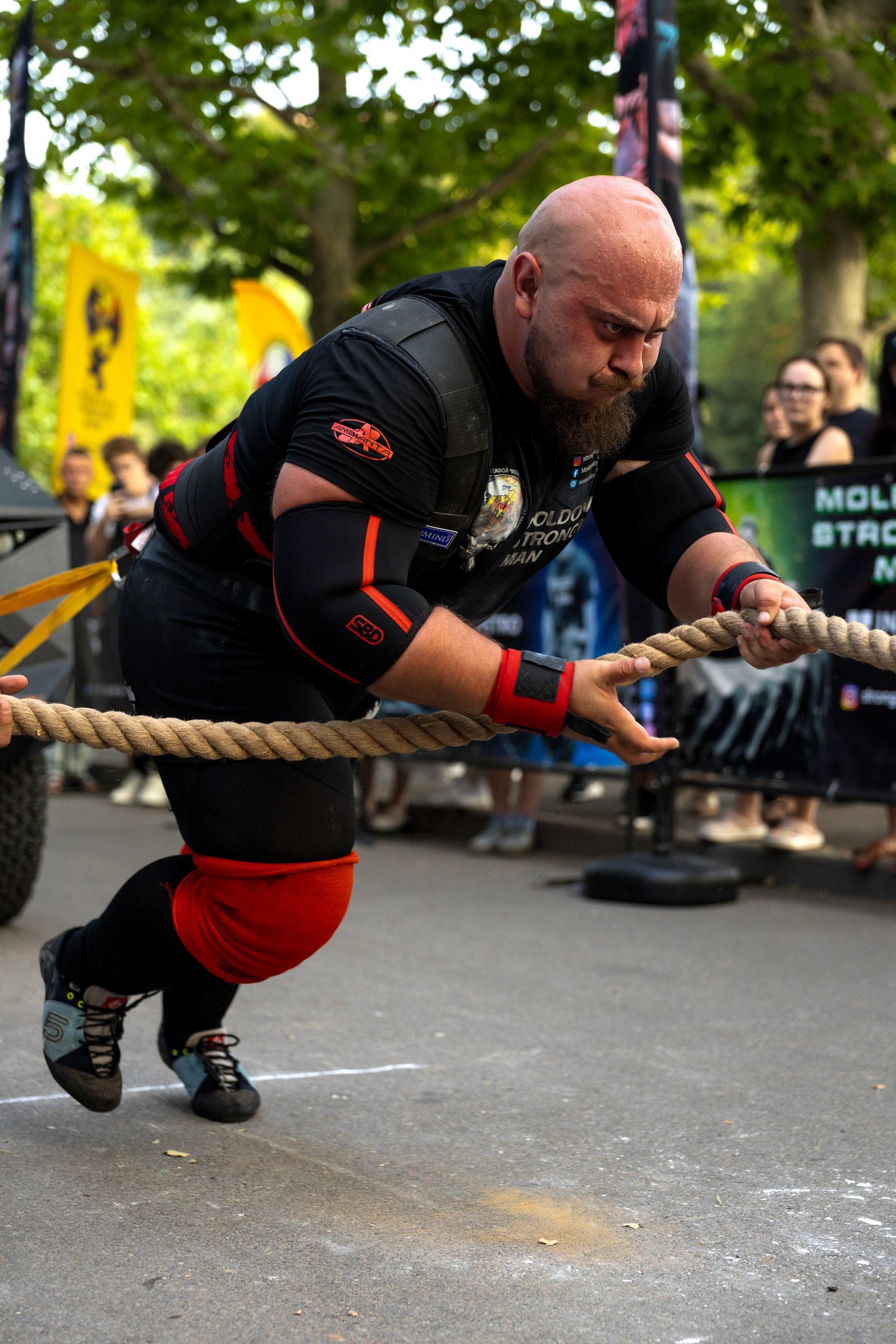
In strongman, physical strength is never expressed in a cognitive vacuum. The athlete must inspect the object, understand the event requirement, select relevant information, ignore distractions and execute within a window in which error may cost the attempt. Attention is therefore a functional component of performance rather than a decorative psychological concept.
Sport psychology research shows that attention is influenced by anxiety, pressure, experience and the type of attentional instructions used during execution. Research on attentional focus in weightlifting and on the quiet-eye phenomenon suggests that the way athletes organize attention can influence movement efficiency and performance. In strongman, these principles must be adapted to complex events, fatigue and rapidly changing competitive contexts.
1. Attention Does Not Mean Thinking About More Things
In ordinary language, concentration sounds like a state in which the mind is simply «100% present». Cognitively, the picture is more precise. Attention involves selecting information and prioritizing it in relation to a goal. An athlete cannot consciously process every sound, movement, sensation and instruction occurring at once. Performance depends on deciding what deserves cognitive resources.
For a strongman, this selection can be critical. Before an event there may be spectators, officials, opponents, noise, time pressure, implements, order of events and internal sensations. If all become priorities, attention fragments. Effective concentration does not mean noticing everything. It means noticing what matters for the next action.
2. Why Pressure Steals Attention
Competitive pressure can change how cognitive resources are allocated. Attentional control theories propose that anxiety can increase the influence of threat-related, stimulus-driven information and reduce the efficiency of goal-directed control. The athlete may still perform, but at a higher cognitive cost.
In strongman, the threat can be immediate and concrete: the weight looks enormous, a previous attempt failed, an opponent has lifted more, or the crowd reacts loudly. The mind begins monitoring information that does not directly contribute to execution. The result can be scattered attention precisely when precision is needed.
3. Internal and External Attentional Focus
Attentional-focus research commonly distinguishes internal focus, directed toward the body or components of movement, from external focus, directed toward the effect of movement on the environment. In weightlifting research, external focus has been associated in several contexts with more efficient execution and acute force production.
This does not mean that a strongman should completely avoid bodily sensations or technical cues. During skill acquisition, technical correction and internal feedback can be necessary. The important point is not to turn every repetition into a long list of conscious commands. When execution begins, too many instructions can become noise.
4. The Problem of Over-Control
An experienced athlete may execute certain motor sequences with a high degree of automaticity. Under pressure, however, he may try to consciously control every detail. This return to excessive deliberate control can interfere with a skill that previously functioned more automatically.
The phenomenon is relevant in events where the time between preparation and execution is short. If an athlete repeats ten technical corrections, calculates every scenario and analyzes every sensation before the lift, the cognitive system may already be overloaded before movement begins. Sometimes the best instruction is one clear instruction.
5. Quiet Eye and the Moment Before Execution
The quiet-eye concept broadly describes a relatively stable period of visual fixation before movement initiation. A meta-analysis of 27 studies found substantial associations between quiet-eye characteristics, expertise and successful performance, while intervention studies provided evidence that training this component can improve performance in certain tasks.
In strongman, the concept should not be copied mechanically from precision sports. The broader principle is still useful: before a heavy attempt there is a window in which attention can be stabilized. Gaze, posture, breathing and one relevant cue can create a clear transition between environmental noise and the movement itself.
6. Concentration Before the Event
Concentration does not begin when the referee gives the signal. It can be prepared through a short, repeatable routine. A good routine reduces improvised decisions and gives the brain familiar cues that execution is approaching.
For strongman, the routine may include checking the implement, positioning, breathing, a visual cue, one technical intention and initiation. The purpose is not ritual for its own sake. The purpose is to create a sequence that separates analysis from action.
7. When Attention Becomes Too Broad
Before a competition, an athlete may try to anticipate everything: what the opponent will do, how much he needs to lift, what happens if he misses, how the next event will be affected and what final placing might result. Some of this information is useful for planning, but not all of it is useful during execution.
A useful strategy is to separate phases. Before the event, analyze. During the attempt, execute. After the attempt, evaluate. When all three processes overlap, the athlete may analyze while he should be acting and react to the result before the action is complete.
8. Attention and Fatigue
Strongman adds a major difficulty: attention must be maintained inside a body accumulating fatigue. After several events, bodily sensations become stronger, frustration tolerance may decrease and irrelevant information can become harder to ignore.
Concentration therefore cannot be separated completely from recovery. Sleep, nutrition, hydration, load management and rest between events influence the environment in which attention operates. A fatigued athlete does not only need more willpower. He may need a simpler attentional strategy.
9. Pain and Attentional Capture
Pain and discomfort naturally attract attention. This is one reason the tolerance of discomfort discussed earlier in the series must be connected to attentional control. An athlete may notice a sensation without allowing it to occupy the entire cognitive field.
There is, however, an essential limit. Attention should never be used to hide medical warning signals. Ignoring pain through concentration is not necessarily psychological performance. Sometimes it means suppressing information that is trying to protect the athlete. A mature system distinguishes competitive discomfort from signals that require stopping or assessment.
10. Social Distractions
Opponents, spectators, cameras, comments and reactions from the side can become powerful stimuli. For an athlete concerned with social evaluation, these can consume resources before the event begins. The greater the identity stake, the harder it may be to ignore how others are watching.
The solution is not to pretend the crowd does not exist. It is to reduce its functional relevance. The useful question is not «What do they think?», but «What information do I need for the next action?». This shifts attention from social evaluation to execution.
11. Attention After a Mistake
A mistake can capture attention for the next attempt. The athlete mentally replays the miss, searches for its cause in real time and tries to prevent every possible variation at once. The memory of the previous event then competes with the information needed for the next execution.
A simple protocol is: acknowledge the mistake, extract one piece of information, formulate one adjustment and return to the present. This does not deny the failure. It compresses it into usable information so that the past does not occupy the mental space required for the next attempt.
12. Attention and Attempt Selection
In strongman competitions, concentration extends beyond execution. Attempt selection requires information about standings, opponents, conditions and probability of success. Attention must be broad enough for strategy and narrow enough for execution.
This suggests different cognitive modes. The strategic mode asks, «Which attempt makes sense?». The execution mode asks, «How do I execute now?». Experienced athletes do not confuse the two. Once the decision is made, continued mental negotiation can become interference.
13. Concentration Is Not Permanent
No one can maintain the same intensity of attention for hours. Concentration is better understood as a sequence of activation and recovery periods. In competition this matters because there are intervals when the athlete does not need to remain in maximum-performance mode.
Relaxing between events can be a performance strategy. If the athlete remains hyperactivated throughout the entire competition, resources are consumed before they are needed. Attentional control includes the ability to broaden, narrow and rest attention.
14. Training Attention
Attention can be trained through situations in which the athlete must select relevant information and execute without cognitive overload. Examples include time limits, controlled noise, changes in event order, short instructions or scenarios in which the first attempt does not produce the desired outcome.
The goal is not to create permanent stress. The goal is transfer. If every execution occurs in a perfectly quiet, predictable and pressure-free environment, competition may demand a cognitive system that has never practiced adapting to uncertainty.
15. Key Words
Many athletes use short words before execution: «drive», «push», «fast», «lock», «go». Their value does not come from the word itself, but from reducing informational complexity. One cue can organize attention more efficiently than a thirty-second technical explanation.
The cue must fit the learning stage and the event demand. An athlete may use a technical cue in training and a simpler cue in competition. The important thing is that it triggers the desired behavior rather than opening another cycle of analysis.
16. Attention and Confidence
Confidence and attention can influence each other. When an athlete trusts his ability to execute, cognitive resources may remain more easily directed toward the task. When doubt rises, attention can migrate toward consequences, comparisons and failure scenarios.
This is one of the links to Episode V. Confidence is not only an abstract belief. It has a cognitive expression: where does the mind go when movement begins? A confident athlete is not emotionless, but he may be more capable of returning to relevant information after distraction.
17. Attention and Strongman Identity
When the result becomes proof of personal worth, every event can become a judgment about identity. Attention is then naturally pulled toward outcome and social perception. If sport remains important without becoming the only definition of the person, attention has more room to remain task-focused.
This is one of the deeper connections in the series. Mindset is not only what an athlete tells himself before a lift. It is the architecture through which he decides what deserves cognitive energy. An athlete who separates identity from a single result can enter execution with greater freedom.
18. A Practical Concentration System
A simple system can use five stages: observe, select, simplify, execute, reset. Observe the context. Select the relevant information. Simplify the message into one cue. Execute without renegotiating every detail. Then reset attention for the next action.
The system is flexible enough for training and competition. Training can contain more feedback and analysis. Competition requires cleaner execution. After the event, analysis returns. Alternating these cognitive modes is more realistic than trying to remain maximally focused all the time.
19. What Elite Concentration Looks Like
Elite concentration does not necessarily look dramatic. It does not require a permanently aggressive facial expression or an elaborate ritual. It means that the athlete can return quickly to the task after attention is disrupted. Resetting may be more important than eliminating every distraction.
In an unpredictable sport, perfect environmental control is impossible. Useful control is control of the response. The crowd may shout. The referee may delay. The opponent may lift. The first attempt may fail. Elite attention says: «notice, adapt, return to the task».
20. Conclusions - The Strength to See What Matters
Attention is one of the invisible infrastructures of performance. It connects emotion to execution, strategy to action and experience to automaticity. Research on attentional focus in strength, attentional control under anxiety and the quiet-eye phenomenon points toward a common principle: how attention is organized can change how athletes use their available resources.
For strongman, the lesson is not to become an athlete who is never distracted. It is to become an athlete who knows how to return. Look at the implement, select the information, reduce the noise and execute. Strength creates potential. Attention determines how much of that potential reaches movement at the critical moment.
References
Neumann, D. L. (2019). A Systematic Review of Attentional Focus Strategies in Weightlifting. Frontiers in Sports and Active Living, 1, 7. DOI: 10.3389/fspor.2019.00007.
Grgic, J., Mikulic, I., & Mikulic, P. (2021). Acute and Long-Term Effects of Attentional Focus Strategies on Muscular Strength: A Meta-Analysis. Sports, 9(11), 153. DOI: 10.3390/sports9110153.
Pompa, D., Carson, H. J., Beato, M., di Fronso, S., & Bertollo, M. (2024). Attentional Focus Effects on Lower-Limb Muscular Strength in Athletes: A Systematic Review. Journal of Strength and Conditioning Research, 38(2), 419-434.
Lebeau, J.-C., Liu, S., Sáenz-Moncaleano, C., et al. (2016). Quiet Eye and Performance in Sport: A Meta-Analysis. Journal of Sport & Exercise Psychology, 38(5), 441-457. DOI: 10.1123/jsep.2015-0123.
Wilson, M. (2008). From Processing Efficiency to Attentional Control: A Mechanistic Account of the Anxiety-Performance Relationship. International Review of Sport and Exercise Psychology, 1(2), 184-201. DOI: 10.1080/17509840802400787.
Liștea, R., Ducrocq, E., Siminiceanu, A., & Visu-Petra, L. (2017). Getting the Butterflies to Fly in Formation: A Review on the Modulating Effect of Attentional Control on Motor and Visual Aspects of Sports Performance Under Pressure. Cognition, Brain, Behavior, 21(4), 249-274. DOI: 10.24193/cbb.2017.21.16.
More From The Journal

Training
The Science of Strongman Training - Episode X: Competition Programming
How to build a complete Strongman competition preparation block: calendar, events, volume, intensity, specificity, simulations, autoregulation, tapering and fatigue management.

Training
The Science of Strongman Training - Episode IX: Peaking
Peaking in Strongman: how to turn months of training into maximal competition performance by reducing fatigue, preserving adaptations and managing specificity.