
Psychology
The Mental Architecture of Strength - Episode VII: Resilience, Failure and the Art of Bouncing Back
September 1, 2026
Abstract
Resilience is one of the most important and most misunderstood components of performance. In strongman, adversity can take the form of a missed event, injury, lost competition, prolonged plateau or an external decision that changes the result. Contemporary sport psychology increasingly describes resilience as a dynamic process of adaptation rather than a fixed personality trait.
For the athlete, the question is not whether adversity will occur, but what happens after it occurs. Resilience does not mean pretending that failure does not hurt, continuing through serious injury signals, or turning every setback into a test of character. It means absorbing information, regulating the emotional response, rebuilding the plan and returning to purposeful action.
1. What Is Resilience, Really?
In sport psychology, resilience is associated with the capacity to withstand and adapt after adversity. Research does not support a simple picture in which the resilient athlete is permanently tough, optimistic and unaffected. Resilience is influenced by psychological, physiological, social and contextual factors, and it can look different across situations.
A major systematic review of sport resilience proposed sporting resilience as an interaction between adversity and a filter of protective factors. These factors may include confidence, motivation, focus and social support. The implication for strongman is important: there is no single psychological muscle called resilience. There is a system that helps an athlete adapt.
2. Resilience Is Not the Same as Mental Toughness
Resilience and mental toughness are often treated as synonyms, but the literature distinguishes them. Mental toughness is commonly associated with perseverance and maintaining direction under difficult conditions. Resilience emphasizes adaptation after a stressor and the restoration of functional behavior. A strongman can be highly persistent and still need to change strategy after adversity.
The distinction becomes critical when sporting culture glorifies suffering. If every pause is interpreted as weakness, an athlete may confuse resilience with stubbornness. Mature resilience allows a plan to change. Sometimes bouncing back means working harder. Sometimes it means reducing load, accepting recovery or consulting a qualified professional.
3. The First Impact of Failure
After a missed attempt, psychological reactions can appear quickly. The athlete may feel anger, shame, disappointment, anxiety or emptiness. In the first moments, the interpretation of the event may matter more than the event itself. A mistake can become either information about execution or a global conclusion about the athlete's value and future.
This is where the earlier episodes of the series meet. Emotional control creates distance between reaction and decision, while discipline supports the next action when motivation drops. Resilience adds a time dimension: not only how you respond in the minute after failure, but how you rebuild functioning over the following days and weeks.
4. Failure Must Not Become Identity
One of the most damaging interpretations is turning a result into a personal label. “I missed the deadlift” describes an event. “I am a weak athlete” is an identity conclusion. The second statement expands a specific outcome into the entire self and can create a spiral of shame, avoidance and reduced self-efficacy.
An adaptive perspective keeps the result specific. What happened? Under what conditions? What part was technical, physical, strategic or emotional? What information can be used? Failure then remains an event containing data rather than a verdict on the person.
5. Resilience Begins With Accurate Appraisal
Not all adversity has the same weight. A missed event, a lost competition, a three-month plateau and a serious injury require different responses. A robust psychological system classifies the problem before reacting. If every problem is treated as a catastrophe, resources are wasted.
Appraisal should distinguish between what is controllable, influenceable and uncontrollable. This logic is familiar in sport, but becomes especially powerful after disappointment. You cannot always control judging, event order or an opponent's performance. You can control preparation, strategy, communication and your response.
6. After Failure: Observation Before Story
The mind creates stories very quickly. “I am not good today.” “I lost everything.” “I cannot do this.” “All that work was pointless.” Such statements are easy to believe when emotion is high, but they contain little useful information. The first stage of recovery is separating facts from automatic interpretations.
A simple protocol is: what happened, why do I think it happened, what evidence do I have, what can I change, and what is the next action? This structure turns rumination into analysis. It does not erase disappointment, but it gives disappointment a more useful function.
7. Rumination: When Analysis Becomes a Trap
Analysis is useful when it produces a decision. Rumination repeats the same question without generating a solution. An athlete may replay a missed attempt, a judging decision or a competition moment dozens of times and believe that he is processing the experience. Sometimes he is simply reactivating the emotional response.
A practical test is the outcome of the thinking. If analysis produces a concrete change in technique, strategy or preparation, it is useful. If it produces only more anger and the same unanswered question, it is time to stop. Resilience also includes knowing when to close the mental file after the useful information has been extracted.
8. Adversity Can Change Confidence
Self-efficacy is the belief that one can organize and execute the actions required for a task. Repeated failure can damage this belief, particularly when failure is interpreted as evidence that ability is gone. Recovery therefore requires more than “being positive.” It requires rebuilding credible evidence of competence.
Rebuilding often begins with goals that are demanding enough to matter but controllable enough to produce success. A technically solid submaximal lift, a consistent training week or a good return to movement can become evidence supporting a new perception of capability.
9. Resilience and Injury
Injury is distinctive because it simultaneously affects the body, athletic identity, routine and expectations about the future. For a strongman, time away from training may mean temporarily losing access to movements that define the sport. Psychologically, this can produce frustration and fear of losing progress.
Recent systematic evidence suggests that resilience may be associated with better outcomes during recovery after sports injury, while evidence for preventing injury is much less consistent. Resilience should therefore never be used to justify ignoring pain or returning too early. Psychological adaptation must work alongside medical assessment and rehabilitation.
10. Losing a Competition
In performance sport, there are moments when you do many things correctly and still do not win. This is one of the hardest lessons for a result-oriented athlete. Resilience does not require pretending that placement does not matter. It requires acknowledging its importance without allowing the result to define the entire process.
A lost competition can be decomposed into preparation, loading choices, execution, strategy, recovery, conditions and external factors. Once the result is divided into variables, room for improvement appears. “I lost” becomes “here is where I lost points, and here is what I can do with that information.”
11. Resilience Under Fatigue
An athlete is not tested only when rested. In strongman, accumulated fatigue can alter attention, frustration tolerance, decision-making and perceived effort. After several events, a poor result may feel far more serious than it would have in a fresh state.
Resilience must therefore be understood within recovery. An overloaded system cannot be repaired with speeches about character. Sleep, nutrition, load management and recovery periods are part of the psychological infrastructure of bouncing back. Adaptation is biopsychosocial, not purely mental.
12. Social Support Is Not Weakness
Sport resilience literature identifies social support as an important protective factor. In very hard sporting cultures, asking for help may be misread as vulnerability. In reality, a strong support network can reduce isolation, provide perspective and help an athlete make better decisions.
Coaches, teammates, family and professionals can serve different functions. A coach may help rebuild the plan. A teammate may normalize the experience. A qualified professional may address issues beyond the team's expertise. Resilience does not mean recovering alone. It means using available resources intelligently.
13. When Motivation Disappears
After major disappointment, an athlete may say that he no longer feels like training. This does not automatically mean that he has lost his sporting identity. Motivation fluctuates with context, rewards, fatigue, results and the meaning attached to goals.
The discipline discussed in Episode IV becomes a bridge here. You do not need maximum motivation to perform one small, correct action. Recovery may begin with a modest session, an evaluation, a sleep routine, a walk or a conversation with a coach. Action can sometimes precede motivation.
14. Acceptance Is Not Surrender
Accepting reality is one of the most useful skills in recovery. If an injury requires time, time cannot be negotiated through anger. If a competition has ended, it cannot be restarted mentally. Acceptance reduces the fight against what has already happened and releases resources for what can still be done.
An athlete can accept a result while remaining intensely ambitious. Acceptance says, “this is the starting point.” Ambition says, “this is what I build from.” The two are not opposites.
15. Growth After Adversity Requires Caution
People sometimes say that every adversity makes you stronger. Science is more cautious. Not every adversity produces growth, and excessive pressure can create psychological and physical costs. Telling an athlete that he should be grateful for an injury or failure can invalidate the actual experience.
If growth occurs, it may appear later as better strategy, more realistic awareness of limits, stronger relationships, a more flexible identity or better regulation. Growth is possible, not mandatory. Resilience means functional adaptation, not turning every wound into an heroic story.
16. Building a Recovery System
A resilient athlete does not rely on one motivational sentence. He has a system. It may include short-term goals, periodic review, sleep routines, load monitoring, emotional regulation strategies, trusted people and a clear post-competition analysis process.
After a difficult event, a practical protocol can be: stop the impulsive reaction, stabilize the state, collect the facts, identify controllable variables, speak to the right people, build a plan and execute the first step. Resilience becomes repeated behavior rather than a slogan.
17. Exposure to Adversity in Training
Athletes can practice uncertainty through controlled training situations: time limits, competition order, unexpected loads, attempt rules or scenarios in which the first execution fails. The purpose is not permanent chaos. It is to practice responding to change.
This fits the dynamic model of resilience. Adaptation develops through experience. If every training session is perfectly predictable, competition can create a larger shock when something changes. Intelligent preparation includes moments when the athlete must think, adjust and continue.
18. What Does It Mean to Come Back Smarter?
Bouncing back does not have to mean returning as exactly the same athlete with exactly the same strategy. Sometimes the best comeback is an adjusted version. Technique, programming, competition choices, goals or the interpretation of pressure may all need to change.
This is the difference between recovery and adaptation. Recovery can restore previous functioning. Adaptation can change the system so that the next adversity is handled differently. In high-level sport, that flexibility may be more valuable than the simple ability to endure.
19. Resilience on the Day You Do Not Feel Strong
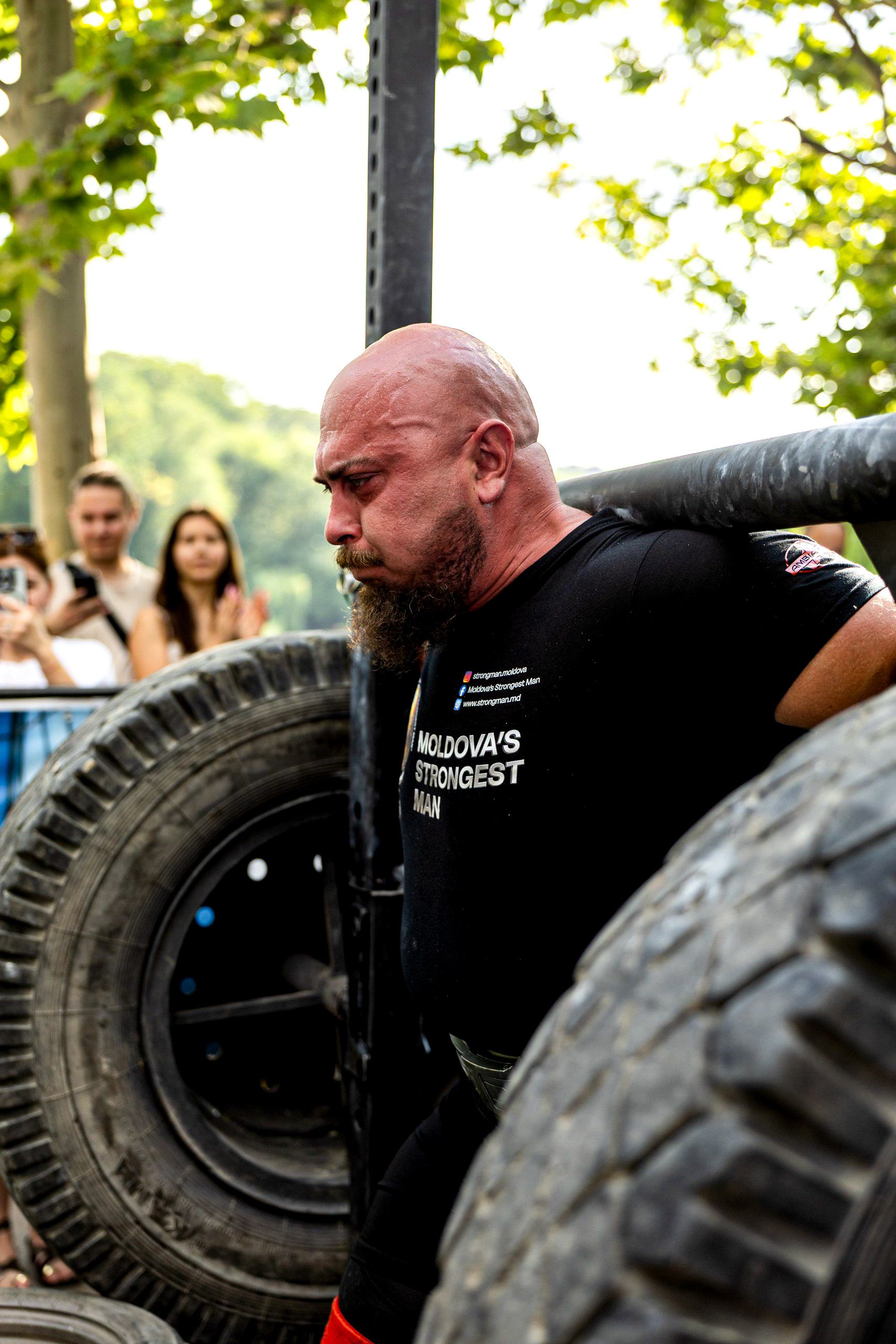
The popular image of a strongman is continuous strength: massive body, enormous weights, controlled expression and victory. Real resilience is often visible in less spectacular moments. It appears when an athlete accepts that today is not his day, completes recovery, studies the mistake and returns tomorrow.
That does not necessarily produce spectacular images. It produces continuity. Elite performance is built from continuity: hundreds of days in which things are imperfect but direction is maintained.
20. Conclusions - The Strength That Remains After the Hit
Resilience in strongman is not the ability to remain unaffected. It is the ability to be affected without becoming permanently stuck there. Failure can create emotion, but emotion does not have to become a verdict. Injury can require a pause, but the pause does not have to become an identity. Losing a competition can hurt, but the result does not have to consume the entire process.
Research describes sporting resilience as a dynamic process supported by protective factors and shaped by context. For strongman, the lesson is simple and demanding: you cannot control every hit you receive, but you can build the system through which you respond. A mature mindset does not say, “I will never fall.” It says, “If I fall, I will know how to get back up.”
References
Sarkar, M., & Fletcher, D. (2014). Psychological resilience in sport performers: a review of stressors and protective factors. Journal of Sports Sciences, 32(15), 1419-1434. DOI: 10.1080/02640414.2014.901551.
Gupta, S., & McCarthy, P. J. (2022). The sporting resilience model: A systematic review of resilience in sport performers. Frontiers in Psychology, 13, 1003053. DOI: 10.3389/fpsyg.2022.1003053.
Den Hartigh, R. J. R., et al. (2022). Resilience in sports: a multidisciplinary, dynamic, and personalized perspective. International Review of Sport and Exercise Psychology. DOI: 10.1080/1750984X.2022.2039749.
Kegelaers, J. (2023). Are we really studying resilience in sport? A critical review of adopted methodologies. Frontiers in Psychology, 14, 1270887. DOI: 10.3389/fpsyg.2023.1270887.
Lai, G., et al. (2026). Psychological resilience and sports injury among athletes: a systematic review of injury incidence, recovery processes, and psychological correlates. BMC Psychology, 14, 1003. DOI: 10.1186/s40359-026-04905-8.
More From The Journal

Training
The Science of Strongman Training - Episode X: Competition Programming
How to build a complete Strongman competition preparation block: calendar, events, volume, intensity, specificity, simulations, autoregulation, tapering and fatigue management.
Training
The Science of Strongman Training - Episode IX: Peaking
Peaking in Strongman: how to turn months of training into maximal competition performance by reducing fatigue, preserving adaptations and managing specificity.