
Psychology
The Mental Architecture of Strength - Episode II: Fear of Failure in Strongman
September 1, 2026
Abstract
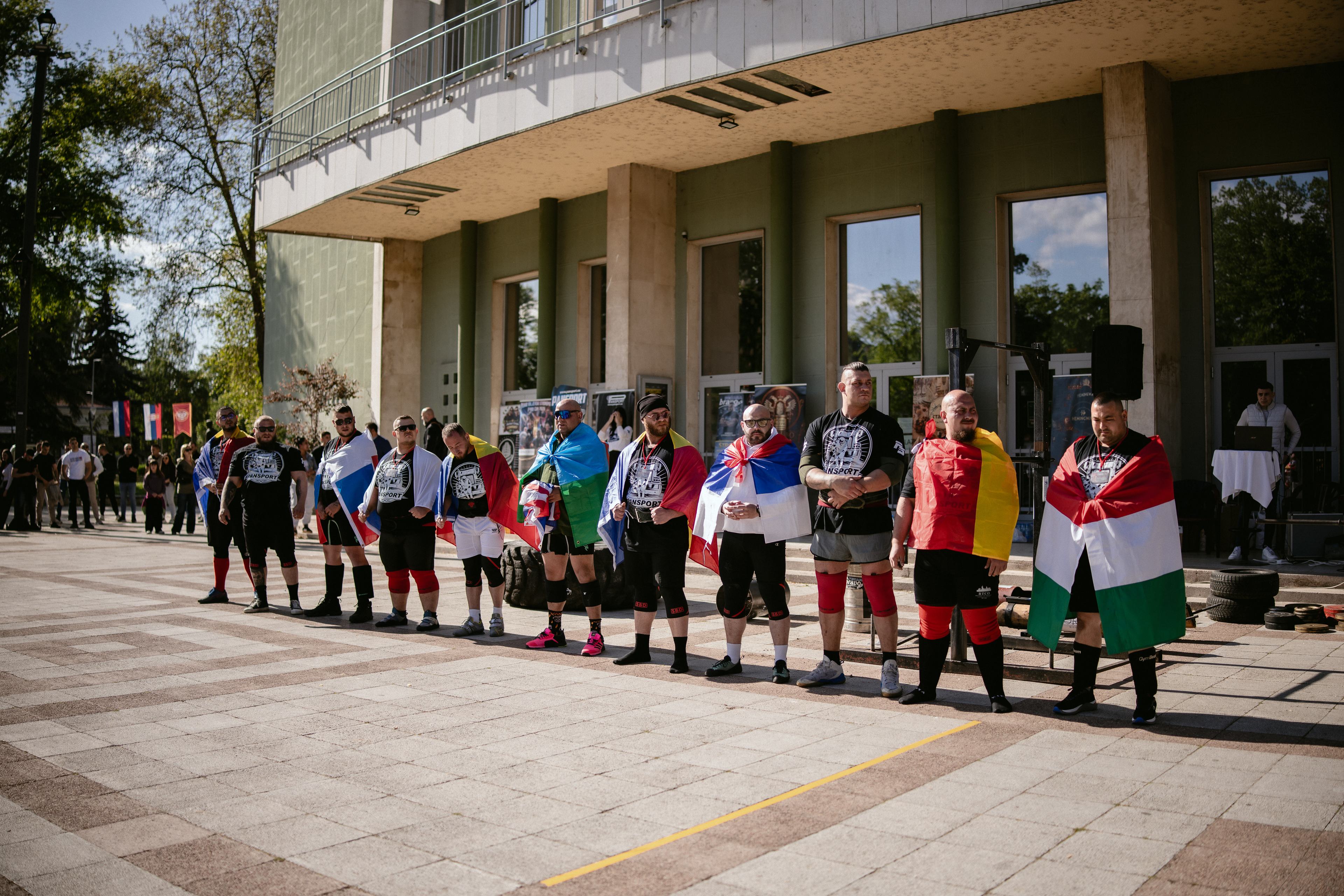
Failure is an unavoidable component of elite sport, but anticipating failure can become a distinct psychological experience. Fear of failure is not simply dislike of losing. It emerges when athletes anticipate aversive consequences associated with failure, including shame, diminished self-worth, loss of status, disappointment of others, or the feeling that previous effort was meaningless. In strongman, where performance is public, measurable and often decided by a single attempt, these consequences may acquire particular psychological weight.
This article examines fear of failure through the lens of sport psychology and applies the evidence cautiously to strongman. It addresses competitive anxiety, self-efficacy, achievement goals, social evaluation, self-talk, avoidance behavior, perfectionism, and the distinction between objective failure and the psychological interpretation of failure. Research indicates that fear of failure can be associated with psychological stress and burnout, while psychological interventions can reduce competitive anxiety. A 2026 Bayesian network meta-analysis including 46 trials and 2,049 participants found promising effects of psychological interventions, while emphasizing uncertainty for several comparisons.
1. Introduction - When the Weight Becomes a Verdict
There is a moment before a strongman attempt when the weight stops being only a weight. It becomes a question. Can you do it? Did you prepare enough? What happens if you fail? What will others think? What will you think about yourself?
For a spectator, a failed attempt lasts seconds. For the athlete, it may begin long before the implement is touched and continue long after it has been put down. Anticipation is the invisible psychological part of failure. In that space between possibility and outcome, fear of failure emerges.
2. What Is Fear of Failure?
Fear of failure is more complex than fear of obtaining a poor result. In psychological research, it is connected to anticipating negative consequences of failure. One athlete may tolerate losing a placing but fear the shame attached to it. Another may accept a missed attempt but fear being judged as unprepared.
Research with young elite athletes found that perceived aversive consequences include diminished self-perception, lack of achievement, and the emotional cost of failure. Among 258 high-level adolescent athletes, fear of experiencing shame and embarrassment was associated with perceived psychological stress and a burnout dimension.
3. Objective Failure and Psychological Failure
A result can be objective while its meaning is subjective. If an athlete misses 400 kg, the fact that the weight was not lifted is objective. The meaning can be radically different. One athlete may interpret it as evidence that 400 kg remains above current capacity. Another may interpret it as proof of personal inadequacy. A third may see it as precise information about what must change.
4. Why Fear of Failure May Be Salient in Strongman
There is not enough evidence to claim that strongmen generally experience more fear of failure than athletes in other sports. Such a conclusion would require direct comparative research. There are, however, characteristics of strongman that make failure highly visible: individual competition, public attempts, heavy loads, cumulative rankings and variable implements.
In a multi-event competition, one failed attempt can alter tactics for the rest of the day. The athlete must process the emotion of failure and continue competing. Rapid psychological reset therefore becomes a practical performance skill.
5. Competitive Anxiety
Competitive anxiety may include cognitive and somatic components. Thoughts can become dominated by outcome, evaluation and consequences. The body may respond with increased activation, tension and changes in breathing. These responses are not automatically harmful. The issue is how the athlete interprets them and whether they interfere with execution.
A systematic review and meta-analysis of interventions for performance anxiety in athletes and performing artists included 20 controlled studies and found beneficial effects on state performance anxiety, with smaller effects on trait anxiety.
A 2025 meta-analysis based on 24 studies and 853 athletes also reported significant reductions in state anxiety following psychological interventions.
6. Shame and Social Evaluation
Sometimes the athlete is not afraid of the weight. The athlete is afraid of what missing it will mean in the eyes of others. That distinction can change the entire experience. A difficult weight can be approached as a challenge. The same weight, when loaded with the belief that everyone expects success, can become a threat.
7. Self-Efficacy and Fear of Failure
Self-efficacy refers to the belief that one can organize and execute the actions required for a task. In strongman it is highly task-specific. It is not enough to believe that you are strong. You need to believe that you can execute this event, under these conditions.
8. Achievement Goals: Mastery Versus Comparison
An athlete can enter an event asking, “How do I compare with everyone else?” or “How well can I execute what I know?” The first is comparison-oriented. The second is task-oriented.
A 2024 systematic review and meta-analysis of 30 studies and 8,708 participants found small positive relationships between task orientation and sport performance. The evidence supports a cautious interpretation: achievement goals matter, but they do not independently explain performance.
9. Avoidance and Self-Handicapping
Fear of failure does not always lead to quitting. It can produce subtle avoidance: choosing excessively conservative attempts, delaying action, avoiding evaluation, or creating explanations that protect self-image. Research in young elite athletes has linked fear of failure with self-handicapping and avoidance-oriented achievement goals.
10. Self-Talk Before the Attempt
Before an attempt, internal dialogue can become compressed into short commands: “Do not miss.” “You have to make it.” “You cannot lose.” Outcome-focused phrases may keep attention on the unwanted result. In some situations, an action-oriented cue is more useful: “First movement.” “Hold position.” “Breathe and execute.”
A meta-analysis of self-talk interventions included 32 studies and 62 effect sizes and found a moderate positive effect on sport performance, with differences depending on task demands and type of self-talk.
Research on goal-directed self-talk also indicates cognitive, motivational and emotion-regulation functions.
11. From “Do Not Miss” to “What Do I Do Now?”
A simple psychological shift is to move attention from consequence to action. “Do not miss” is outcome-oriented. “Execute the first phase” is process-oriented. The latter gives the athlete a concrete task and can reduce unnecessary monitoring of the final result.
12. Pressure Can Help or Hurt Performance
Pressure is not uniform. For some athletes, a certain level of pressure increases focus and mobilization. For others, it produces rigidity, rushing or excessive conscious control. Sport psychology literature identifies fear of failure, social evaluation, perceived lack of readiness and loss of control as important sources of stress.
13. Fear of Failure and Perfectionism
Perfectionism can be productive when it means high standards and attention to detail. It becomes problematic when personal worth depends on meeting standards that cannot consistently be maintained. Then each mistake becomes a threat and competition may shift from pursuing performance to avoiding shame.
14. Failure After Success
Fear of failure can increase after success. Once an athlete becomes a favorite, every result can feel like confirmation or threat to status. Instead of competing to execute, the athlete may compete to defend a reputation.
15. Accepting the Possibility of Losing
Accepting failure does not mean giving up ambition. It means recognizing that the final outcome is never completely controllable. Acceptance can free attention from “What if I lose?” and redirect it toward “What can I do now?”
A 2026 Bayesian network meta-analysis found that Mindfulness-Acceptance-Commitment interventions had the largest point estimate for reducing competitive anxiety among the compared approaches, although uncertainty remained substantial for several intervention comparisons.
16. Resetting After a Miss
In strongman, failure is often not the end of the day. Rapid reset therefore matters. A useful sequence is to identify the fact, extract the information and return to the next task. “I missed the start” is a fact. “I need to change my position” is information. “The next event starts now” is orientation.
17. The Coach's Role
Coaches influence how failure is interpreted. An environment where every mistake is ridiculed can increase image protection. An environment where failure is analyzed can encourage learning. Standards do not need to be lowered; feedback can simply target behavior and process rather than identity.
18. Training the Response to Failure
Psychological preparation can be integrated into training through single-attempt simulations, time limits, unusual event orders, controlled missed attempts and deliberate reset routines. Self-talk and imagery can also be rehearsed. The key is practice: psychological strategies should not be invented for the first time on competition day.
Evidence suggests competitive anxiety is modifiable. Systematic reviews have reported effects ranging from small to large depending on the type of anxiety and intervention, while more recent meta-analysis confirms significant reductions in state anxiety.
19. What Resilience Is Not
Ignoring fear is not the same as managing it. Hiding emotion is not regulation. Continuing through a genuine injury is not automatically mental toughness. Competing despite a real risk can be recklessness rather than courage.
20. A Psychological Model of Failure in Strongman
A simplified model is: task → appraisal → anticipated consequences → activation → attention → execution → outcome → interpretation → adaptation. Fear of failure is especially relevant before the outcome, when the athlete anticipates its consequences. If those consequences are perceived as threats to identity, pressure may increase.
21. Conclusions
Fear of failure is one of the most complex psychological experiences in performance sport. In strongman, it may be amplified by the public nature of competition, individual events, the symbolic weight of records and immediate visibility of results. Yet there is not enough evidence to claim that strongman inherently produces more fear of failure than other sports.
The important question is not whether the athlete feels fear, but what the athlete does with it. One competitor interprets anxiety as evidence of unreadiness. Another interprets it as activation before an important task. One focuses on losing. Another focuses on the first controllable action.
Competitive mental strength does not mean the absence of fear. It means maintaining direction while fear is present. The strongman cannot always control the implement, opponent, judge or outcome. He can control preparation, routine, attention, self-talk and the interpretation of what just happened.
Failure is not the opposite of performance. In an elite career, it is part of the mechanism by which performance is built. The psychological problem begins when “I failed an attempt” becomes “I am a failure.” The first statement describes an event. The second attacks identity. Between them lies one of the most important distinctions in performance psychology.
22. Fear of Failure as a Threat to Identity
For an athlete who builds an important part of identity around strength, failure can acquire a meaning beyond the immediate result. A missed attempt may become, in the athlete's interpretation, evidence that the self-image built around strength is no longer valid. This is one of the most delicate forms of fear of failure: identity threat.
The interpretation can create a difficult loop. The more important the result is to identity, the more threatening failure becomes. The more threatening failure becomes, the greater anticipatory pressure can be. The greater the pressure, the more attention can be pulled toward consequences rather than execution. In this model, the problem is not the weight itself but the meaning attached to it.
23. Status, Reputation and the Favorite Effect
As an athlete becomes more successful, success can create a new source of pressure. A favorite may feel that every result must confirm the image built around him or her. A poor placing can feel like a loss of status, and a missed lift can seem more serious when spectators expected success.
The paradox is important. Success is the goal of sport, yet repeated success can turn the expectation of success into a psychological obligation. An athlete who allows the possibility of losing can compete to win. An athlete who believes losing is unacceptable may compete primarily to avoid perceived disaster. The external objective is identical, but the psychological state is not.
24. The Memory of Failure
A missed attempt can remain psychologically relevant after competition ends. The memory may become a reference point for the next similar situation. If the athlete remembers only the shame, the next event may be anticipated with anxiety. If the athlete remembers the technical mechanism and conditions that produced the miss, the memory becomes a resource for adaptation.
Post-competition analysis therefore has an important psychological function. Immediately after an event, emotion may be too intense for complete evaluation. Later, the athlete can separate outcome, causes and lessons. A useful analysis does not search for villains. It searches for controllable variables.
25. Shame, Guilt and Disappointment
These emotions are related but not identical. Guilt tends to concern behavior: “I did something wrong.” Shame can be more global: “Something is wrong with me.” Disappointment often reflects the gap between expectation and outcome. These distinctions matter because each emotion can direct behavior differently.
A behavior-focused interpretation allows correction. A global interpretation of the self can produce withdrawal, avoidance or excessive self-criticism. Language after an event therefore matters. “I executed poorly” leaves room for change. “I am weak” turns a result into an identity.
26. Fear of Failure and Tactical Decisions
In strongman, fear can influence not only emotion but tactics. An athlete may choose a lighter attempt to avoid the possibility of a zero. Sometimes this is excellent strategy. At other times it is disguised avoidance. The difference can be found in the real reason behind the decision.
A rational decision is based on probabilities, ranking, capacity and risk. A fear-dominated decision is based on avoiding the shame of failure. The two can look identical from the outside. Psychologically, however, they are different. A mature athlete must be able to accept calculated risk without confusing it with recklessness.
27. Training Under Pressure
One practical preparation method is the controlled introduction of pressure into training. Single-attempt formats can be used for selected events. Time limits can be added. Competition order can be simulated. The athlete can occasionally be required to perform after a poor previous result.
The purpose is not to turn every training session into a contest. Excessive stress can impair learning. The objective is for the athlete to encounter pressure often enough that it is not completely novel when it matters. Familiarity can reduce psychological surprise.
28. Breathing and Arousal Regulation
Breathing is one of the physiological processes an athlete can voluntarily influence immediately before an attempt. It does not eliminate fear or guarantee performance, but it can be part of a regulation routine. Before an event, an athlete may use breathing to reduce unnecessary agitation or organize rhythm.
The routine should be individualized. Not every breathing strategy is appropriate at every moment, and a complex technique should not be tested for the first time in competition. Its value comes from familiarity and integration into the pre-performance sequence.
29. When Fear Becomes Information
Fear does not always need to be treated as an opponent. Sometimes it provides information about how the athlete is appraising the situation. If an event produces unusually high anxiety, legitimate questions may follow: Is the load too ambitious? Is experience missing? Is there a technical issue? Is social pressure driving the reaction?
This is more productive than trying to suppress the emotion. The athlete notices the reaction, identifies its source and decides whether something should be changed. If not, attention can return to execution. Fear becomes a signal for appraisal rather than a command to withdraw.
30. Fear of Failure and Sporting Longevity
Over time, the athlete's relationship with failure may influence longevity. An athlete who interprets every poor result as an identity crisis can accumulate substantial psychological load. An athlete who treats results as information may maintain a more flexible relationship with competition.
This does not mean becoming indifferent. Ambition, frustration and the desire for redemption can all be useful energies. The difference is whether those emotions are integrated into the process or begin to control it. A long career requires the ability to lose, recover and compete again without allowing each episode to rewrite the entire self-image.
31. A Simple Competition-Day Protocol
A psychological protocol can be built around five questions: What is under my control? What is not? What is the first action? What will I do if I miss? How do I return to the next event? The questions are simple, but they reduce ambiguity and turn diffuse fear into prepared responses.
Before an event, the athlete can use a short breathing routine, one technical cue and one self-talk phrase. After the event, regardless of outcome, one objective observation can be recorded. Competition then becomes a source of psychological data rather than only a verdict.
32. Synthesis
Fear of failure becomes especially problematic when the result is perceived as a threat to identity, status or personal worth. It can increase anxiety, pull attention toward consequences and encourage avoidance. Yet the same emotion can also be used as a signal for preparation and appraisal.
For strongman, the solution is not to eliminate fear. That would be unrealistic. The solution is to build a functional relationship with it. The athlete must be able to feel pressure without becoming its prisoner, to lose without losing identity, and to analyze a missed attempt without turning it into a sentence.
References
Beenen, K. T., Vosters, J. A., & Patel, D. R. (2025). Sport-related performance anxiety in young athletes: a clinical practice review. Translational Pediatrics, 14(1), 127-138.
Hardy, L. (1992). Psychological stress, performance, and injury in sport. British Medical Bulletin, 48(3), 615-629
Li, L., Wang, J., Li, Q., & Fu, Q. (2026). The Effect of Different Psychological Interventions on Athletes' Competitive Anxiety: A Systematic Review and Bayesian Network Meta-Analysis. Sports Medicine - Open.
Lochbaum, M., & Sisneros, C. (2024). Situational and Dispositional Achievement Goals and Measures of Sport Performance: A Systematic Review with a Meta-Analysis. Sports, 12(11), 299.
Sagar, S. S., & Jowett, S. (2007). Why young elite athletes fear failure: consequences of failure. International Journal of Sport and Exercise Psychology.
Sagar, S. S., Busch, B. K., & Jowett, S. (2016). Fear of failure, psychological stress, and burnout among adolescent athletes competing in high level sport. Scandinavian Journal of Medicine & Science in Sports.
Theodorakis, Y., et al. (2011). Self-Talk and Sports Performance: A Meta-Analysis. Perspectives on Psychological Science.
More From The Journal

Training
The Science of Strongman Training - Episode X: Competition Programming
How to build a complete Strongman competition preparation block: calendar, events, volume, intensity, specificity, simulations, autoregulation, tapering and fatigue management.
Training
The Science of Strongman Training - Episode IX: Peaking
Peaking in Strongman: how to turn months of training into maximal competition performance by reducing fatigue, preserving adaptations and managing specificity.