
Psychology
The Mental Architecture of Strength - Episode I: The Strongman Mindset
September 1, 2026
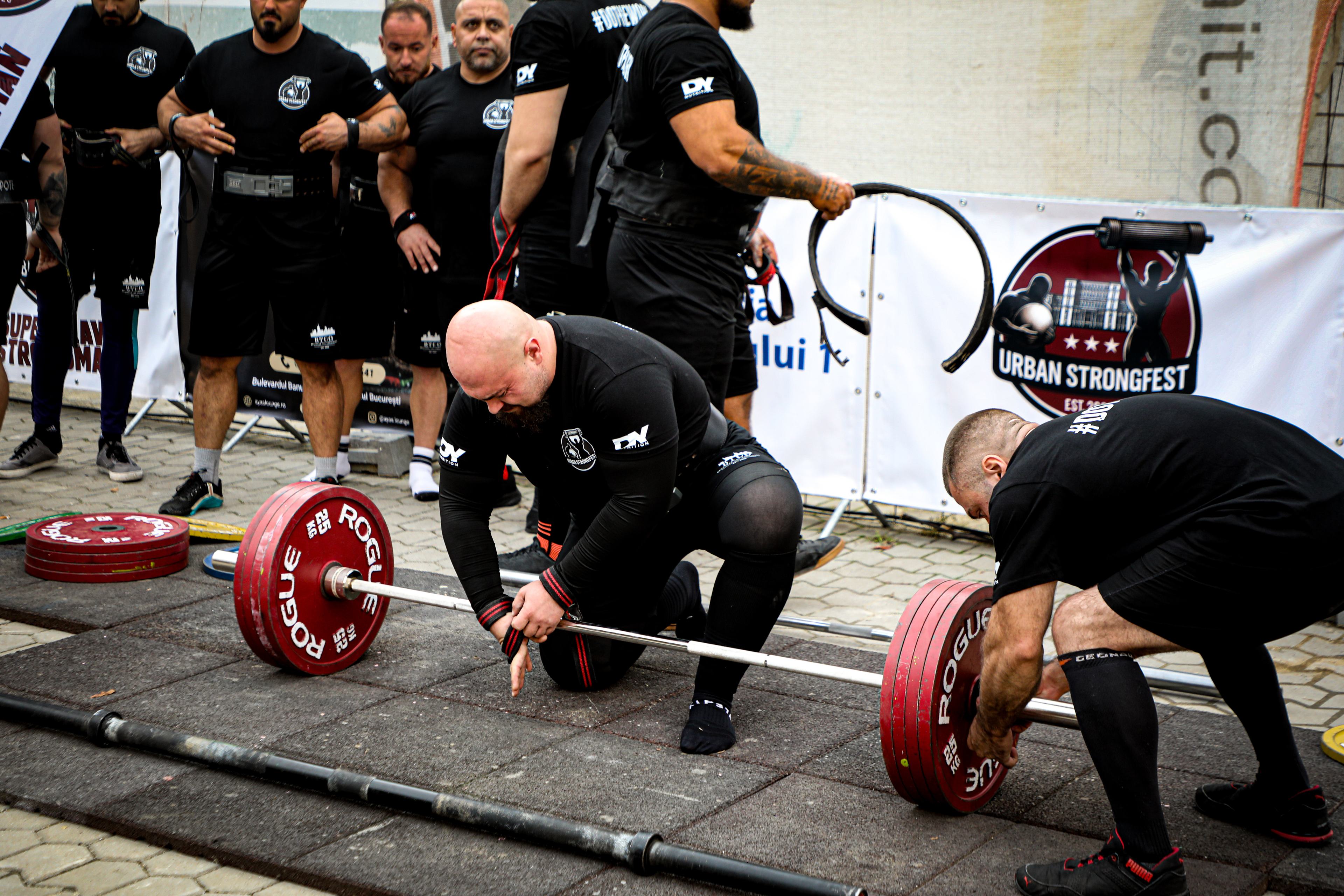
The Mental Architecture of Strength
Episode I - The Strongman Mindset: the psychology of performance under pressure, discomfort and uncertainty
Abstract
Strongman is a sport of force expressed under complexity. Unlike disciplines in which performance is reduced to standardized movements, strongman requires athletes to produce force through objects with different shapes, centers of mass, grips and technical demands. Performance therefore depends not only on physiology, but also on psychological processes including self-efficacy, arousal regulation, attention, motivation, discomfort tolerance, emotional regulation and adaptation.
This article examines the strongman mindset through the lens of sport psychology and performance science. It treats mental toughness not as a mystical quality or a synonym for aggression, but as a collection of psychological competencies that help an athlete remain functional under pressure. Recent strength-sport research suggests that psyching-up strategies can influence deadlift performance, while broader meta-analytic work supports the value of imagery and psychological skills in athletic performance. citeturn0search1turn0search0
1. What does it mean to think like a strongman?
The popular image of a strongman is simple: a powerful athlete stands in front of a very heavy object and lifts it. The image is accurate, but incomplete. Before the lift comes anticipation. Before anticipation comes evaluation. Before evaluation comes experience. Between what the athlete perceives and what the athlete does lies a psychological system.
A strongman can possess the physiological capacity to complete a task and still fail to express it in competition. The issue may be excessive arousal, disrupted attention, poor decision-making, uncertainty or a maladaptive interpretation of the task. The opposite is also important: psychology cannot compensate indefinitely for insufficient strength, technique, recovery or preparation. Psychology interacts with physiology; it does not replace it.
2. Strongman as a psychological problem
Strongman creates a particularly interesting psychological environment because the athlete must repeatedly adapt. A competition can move from maximal strength to overhead work, carrying events, repetitions, speed or endurance. Objects may differ in shape and balance, and the athlete may have limited prior exposure to the exact implement.
This variability introduces uncertainty. The athlete must not only be strong, but adaptable. Relevant psychological capacities include tolerance of uncertainty, arousal regulation, attentional control under fatigue, self-efficacy, failure management, flexibility, impulse control and the ability to maintain a plan when conditions become uncomfortable.
3. Self-efficacy: the difference between believing and knowing
Self-efficacy, in Bandura's framework, refers to the belief that one can organize and execute the actions required to produce a particular outcome. It is not the same as general self-esteem. An athlete may believe that he or she is a good athlete while remaining uncertain about a specific lift in a specific context.
In strength sports, successful prior performances are an important source of efficacy information. Research in experienced weightlifters has shown that previous performance is strongly related to subsequent maximum-strength performance, reminding us that confidence is not a substitute for experience and physical capacity. The more useful form of confidence is calibrated confidence: an informed expectation that the athlete can perform the task and respond effectively if conditions change.
4. Mental toughness: science or slogan?
Few terms in sport are used as broadly as mental toughness. In everyday language it can mean persistence, pain tolerance, aggression, concentration or the ability to perform under pressure. Scientific work is more cautious. Recent reviews find positive associations between mental toughness and sport performance, but also emphasize methodological limitations and the multifactorial nature of performance.
For strongman, the concept becomes more useful when it is decomposed into observable processes: how the athlete regulates arousal, responds to a missed attempt, estimates capability, handles discomfort, maintains attention and changes strategy.
5. The athlete does not have to stop feeling
A common misconception is that a psychologically strong athlete does not feel fear, anxiety, pain or doubt. That is not a useful scientific definition. The relevant skill is the ability to function while those experiences are present.
Fear is a normal biological response. Competitive anxiety is common. Excitement can increase before a lift. Pain and fatigue alter perception and behavior. Mental strength therefore involves interpretation and regulation rather than emotional absence.
6. Arousal: more is not always better
Strongmen often use music, shouting, breathing routines, physical stimulation, visualization or short verbal cues before a lift. These behaviors can be understood as attempts to regulate psychophysiological activation. Recent research involving 200 competitive strength athletes, including strongmen, strongwomen and powerlifters, found higher bar velocity under a psyching-up condition than under control and estimated an approximately 4.3% difference in predicted 1RM. The result does not mean that maximum activation is optimal for everyone. It suggests that activation strategies are individual.
7. Controlled aggression
Strongman culture often associates performance with aggression. Yet aggression is not synonymous with performance. Some activation may increase readiness for maximal effort, while excessive activation can disrupt precision. Many strongman events require coordination, timing, positioning and technical control. The useful form of aggression is therefore directed energy, not uncontrolled anger.
8. Pain, discomfort and the psychological limit
Athletes often develop greater tolerance to pain and discomfort than non-athletes, but this should not be interpreted as an absence of pain. The psychologically mature athlete learns to discriminate between expected exertional discomfort and signals that may indicate injury or excessive risk.
This distinction is critical in strongman. Resilience is not the inability to stop. Sometimes the most difficult decision is to terminate an attempt. The relevant question is not whether the athlete can endure more, but whether continuing is compatible with the objective of long-term performance.
9. Failure as information
A missed lift can become a verdict on identity or a source of information. The process-oriented athlete asks what happened, where performance was lost and what can be changed. Failure remains emotionally meaningful, but it becomes usable feedback rather than a final judgment.
10. Motivation and invisible discipline
Strongman demands years of repetition. Motivation can come from competition, records, progress, belonging or curiosity about personal limits. Discipline appears on the days when motivation is low. Performance is accumulated rather than created by a single heroic session.
11. Attention, imagery and routines
Competition contains hundreds of stimuli. Attention is limited, so routines reduce unnecessary decisions and preserve cognitive resources. Imagery can complement physical practice by representing position, trajectory, breathing, rhythm and successful execution. A 2025 multilevel meta-analysis of 86 studies and 3,593 athletes found favorable effects of imagery practice on athletic performance, including muscular strength, with promising results when imagery was combined with other psychological training methods. citeturn0search0
12. Athlete identity
When sport becomes part of identity, commitment can increase, but the psychological cost of failure can also rise. A strong athlete can be deeply invested in the sport without making a single result the measure of personal worth. This distinction becomes particularly important during injury, stagnation and retirement.
13. A working definition of the strongman mindset
The strongman mindset can be defined as the set of cognitive, emotional and behavioral processes through which an athlete regulates task appraisal, arousal, attention, motivation and responses to discomfort and uncertainty in order to produce effective performance under high physical and psychological demand.
Its principal components include self-efficacy, arousal regulation, attentional control, discomfort tolerance, flexibility, emotional regulation and the ability to integrate failure.
14. Strongman as decision-making under stress
In competition, the athlete is constantly making decisions: attempt selection, pacing, effort allocation, technical adjustments and responses to feedback. Experience provides a library of situations from which the athlete can recognize patterns quickly. This is one reason competition experience matters beyond simply adding more kilograms to a training log.
15. Uncertainty and psychological flexibility
Psychological flexibility means preserving the goal while changing the means when circumstances change. If an implement behaves differently, technique may need adjustment. If the competition schedule changes, warm-up and recovery may need to change. If the first event goes badly, the next event must be treated as a new task rather than as an automatic continuation of failure.
16. Social pressure and the audience
Competition takes place in a social environment. Spectators, opponents, coaches, reputation and social media can add meaning to a single attempt. A useful psychological boundary is to separate performance from personal worth. The result matters, but it is not the whole person.
17. From mental toughness to psychological competence
Calling an athlete mentally tough does not explain why the athlete performs. More useful questions are behavioral: how is arousal regulated, how is a missed attempt interpreted, how accurately is capability estimated, what happens when pain appears, how is attention maintained and how quickly is strategy adapted?
18. What should a coach train?
Psychological preparation can be integrated into ordinary training. Coaches can simulate time limits, unusual event orders, unfamiliar implements and situations in which the first attempt fails. The purpose is not to manufacture anxiety, but to build the ability to function when the perfect plan disappears.
19. Extended conclusion
The strongman mindset is not a test of who can suffer the most. It is a system of self-regulation. The athlete evaluates the task, regulates arousal, directs attention, interprets bodily sensations, makes decisions and learns from feedback. Sometimes that system produces intensity and aggression. At other times it produces calm and economy. The key is whether the response fits the situation.
Recent research supports this multifactorial view. Strength-sport studies indicate that psyching-up can influence performance, while broader evidence supports imagery and psychological skills as useful components of athletic preparation. The strongest interpretation is not that psychology magically creates strength, but that psychological regulation can affect how effectively physical capacity is expressed. citeturn0search1turn0search0
Physical strength remains the foundation of strongman. But in competition, strength must be organized by attention, decision-making and control. The mindset is therefore the invisible architecture through which physical capacity becomes observable performance.
References
Bandura, A. (1997). Self-Efficacy: The Exercise of Control. W. H. Freeman.
Cusimano, K., Freeman, P., Moran, J., & Yamaguchi, M. (2024). Differences in approach and avoidance motivation sensitivities predicting participation and performance in strength sport. Journal of Strength and Conditioning Research, 38(1), 180-184.
Cusimano, K., Freeman, P., & Moran, J. (2025). Identifying the Psyching-Up Strategies Used in Strength Sports: A Concept Mapping Approach. Journal of Strength and Conditioning Research, 39(5), 553-561.
Cusimano, K., Moran, D. J., Tod, D. D., & Freeman, D. P. (2026). The Effects of Psyching-Up on Deadlift Performance in Competitive Strongmen, Strongwomen, and Powerlifters. Journal of Strength and Conditioning Research, 40(5), 576-584.
Liu, Y., Zhao, S., Zhang, X., Zhang, X., Liang, T., & Ning, Z. (2025). The Effects of Imagery Practice on Athletes' Performance: A Multilevel Meta-Analysis with Systematic Review. Behavioral Sciences, 15(5), 685.
Wells, C. M., Collins, D., & Hale, B. D. (1993). The self-efficacy-performance link in maximum strength performance. Journal of Sports Sciences, 11(2), 167-175.
More From The Journal
Training
The Science of Strongman Training - Episode X: Competition Programming
How to build a complete Strongman competition preparation block: calendar, events, volume, intensity, specificity, simulations, autoregulation, tapering and fatigue management.
Training
The Science of Strongman Training - Episode IX: Peaking
Peaking in Strongman: how to turn months of training into maximal competition performance by reducing fatigue, preserving adaptations and managing specificity.