
Training
The Anatomy of a Strongman - Episode VI: The Hand and Fingers - The Interface Between Athlete and Force
September 1, 2026
The Anatomy of a Strongman - Episode VI: The Hand and Fingers
The interface between athlete and force
Introduction
In Strongman, the force produced by the entire body must ultimately pass through a relatively small area: the hand. A grip that gives out can instantly stop force transfer to the implement. The hand and fingers are therefore the mechanical interface between athlete and object.
1. Hand anatomy
The hand contains 27 bones: 8 carpals, 5 metacarpals and 14 phalanges. Together they combine stability with mobility and allow the hand to adapt to very different implement diameters, shapes and surfaces.
2. Fingers and grip
The fingers work with the flexors, tendons and ligamentous structures to close and stabilize the grip. The thumb has a distinct role through opposition and its ability to lock an object against the other fingers.
3. Forearm flexors
Flexor digitorum profundus and flexor digitorum superficialis transmit force from the forearm to the fingers through long tendons. Strongman requires these tissues to produce and sustain tension, not merely create a brief squeeze.
4. Grip specificity in Strongman
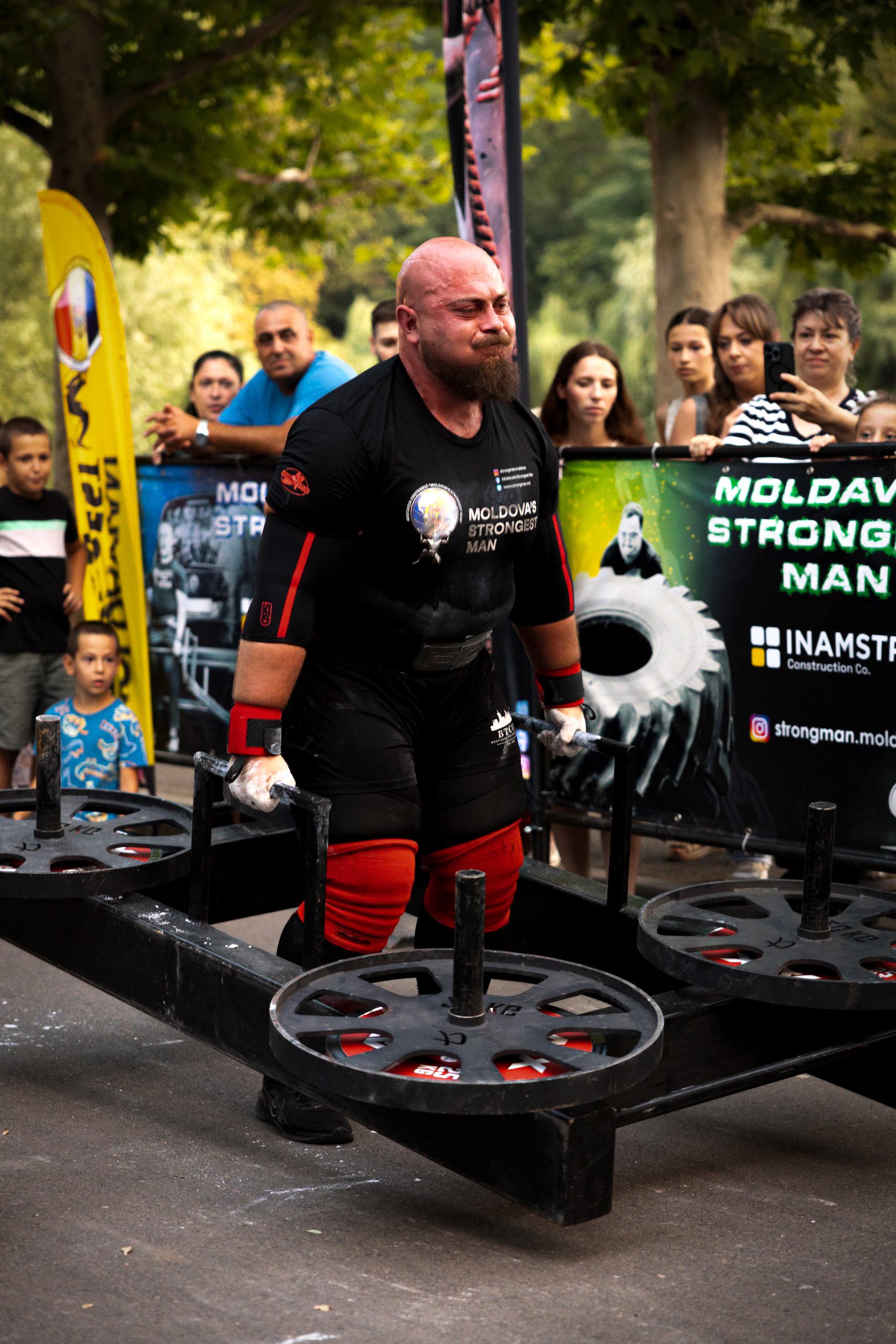
A standard-bar deadlift, axle deadlift, farmer's walk and irregular-object events stress the hand differently. Implement diameter changes finger position, pressure distribution and the ability to fully close the grip. The thicker the object, the more visible the grip limitation becomes.
5. Different forms of grip
Crush grip, supportive grip, pinch grip and isometric endurance are different qualities. An athlete can be excellent at squeezing and still lose a long carry or struggle with a thick implement. Exercise specificity matters.
6. The hand in deadlifts and carries
During a deadlift, the hand maintains the bar while force travels from the ground through the legs, hips and trunk. In a farmer's walk, the demand is dynamic and each step produces small changes in tension. Fatigue resistance can therefore be as important as maximal strength.
7. Skin and calluses
Palm skin must tolerate friction, pressure and repeated shear. Calluses can protect the hand, but excessive or torn calluses can become a real limitation. Hand care is part of Strongman performance management.
8. Thick bars
On an axle, the fingers cannot create the same closing geometry as on a standard bar. Finger-flexion demand increases while the advantage of a fully closed grip decreases. Thick-handle training is therefore a valuable and highly specific Strongman stimulus.
9. Tendons and progression
Tendons adapt more slowly than muscle. Sudden increases in grip volume or intensity, especially with thick implements, can exceed recovery capacity. Progression should account for frequency, volume and intensity, as well as the indirect hand loading created by back and posterior-chain training.
10. Intelligent hand training
Effective programming can combine holds for supportive strength, carries for endurance and control, pinch work for the thumb and fingers, thick-handle work for specificity, and finger-extension exercises. Grip volume should be coordinated with the whole training program rather than added blindly on top of every pulling session.
Conclusion
The hand and fingers are the final link in the force chain. In Strongman, grip is not merely the ability to squeeze, but the ability to transmit and maintain force for the exact form and duration demanded by the implement. When the hand stays connected, the force of the whole body reaches the object. When it fails, the chain breaks.
More From The Journal

Training
The Science of Strongman Training - Episode X: Competition Programming
How to build a complete Strongman competition preparation block: calendar, events, volume, intensity, specificity, simulations, autoregulation, tapering and fatigue management.

Training
The Science of Strongman Training - Episode IX: Peaking
Peaking in Strongman: how to turn months of training into maximal competition performance by reducing fatigue, preserving adaptations and managing specificity.