
Training
The Anatomy of a Strongman - Episode V: The Elbow and Forearm - The Links Between Strength, Grip and Control
September 1, 2026
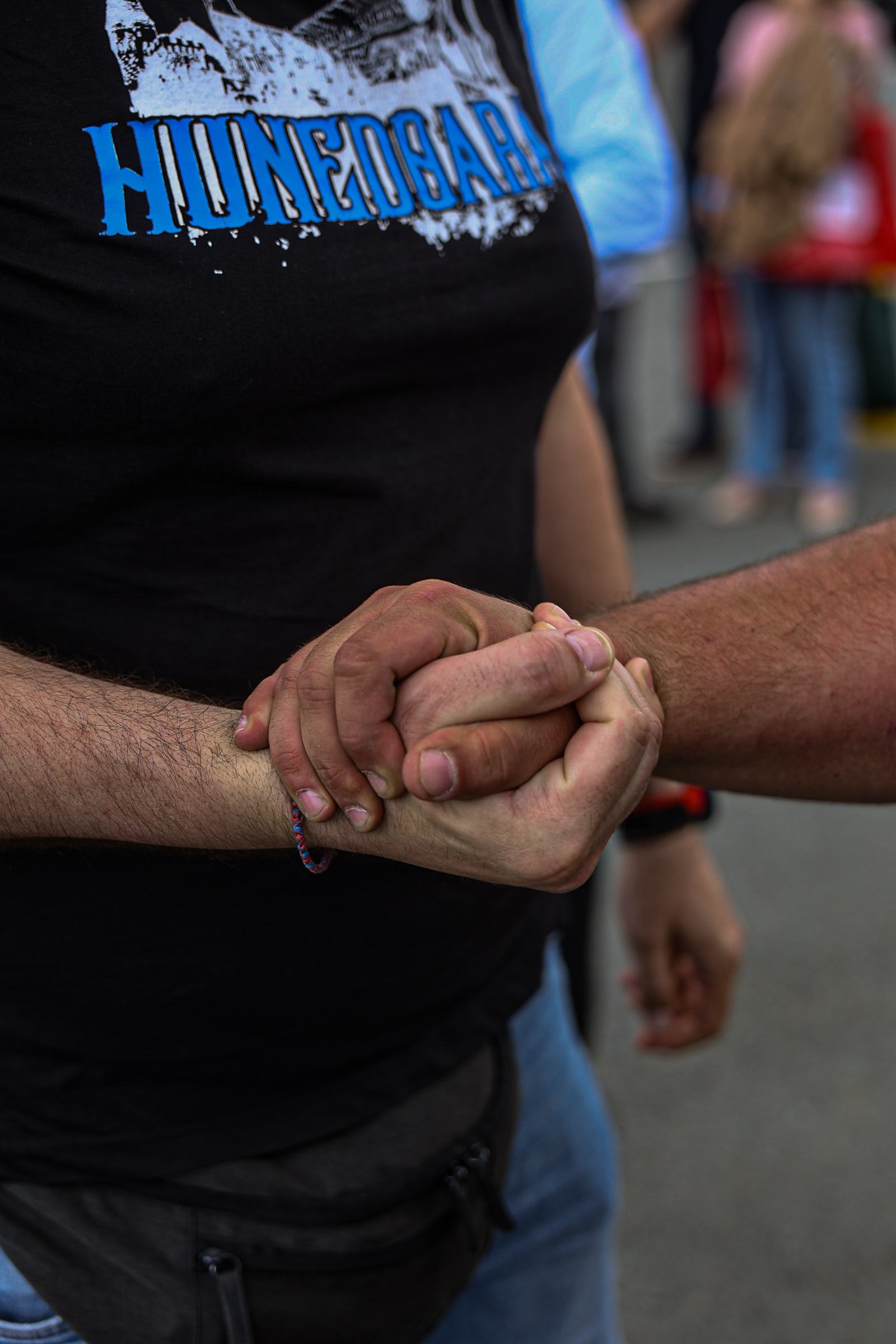
The Anatomy of a Strongman - Episode V: The Elbow and Forearm - The Links Between Strength, Grip and Control
In the analysis of a Strongman's body, the elbow and forearm may appear secondary compared with the hips, spine, knees or shoulders. In reality, they are one of the most important links between the athlete and the implement. However much force the legs and trunk can produce, it cannot reach the object if the hand, forearm and elbow cannot create and maintain the required mechanical connection.
In Strongman, this connection is tested in very different ways. Farmer's walk requires the athlete to maintain massive weights in the hands. Deadlift requires force transmission through arms that must remain stable. Axle and log change hand and elbow positions. Dumbbells introduce rotational and asymmetrical components. Loading events challenge the forearm through the capture and guidance of bulky objects. Each event changes the problem slightly, but all depend on the same reality: the arm is the link through which the body contacts the load.
1. The Elbow - A Joint Built for Force Transmission
The elbow is formed primarily by the relationships among the humerus, ulna and radius. The humeroulnar joint provides a stable structure for flexion and extension, while the proximal radioulnar joint permits forearm pronation and supination. Together, these components allow the arm to position the hand and transmit forces in multiple directions.
For Strongman, this architecture is interesting because many implements demand more than flexion and extension. An axle, for example, can alter forearm position through handle diameter and the way the palm wraps around it. A dumbbell permits additional rotation. Carries place the elbow in a position where it must repeatedly resist forces generated by walking and load oscillation.
Elbow stability comes from bony geometry, the capsule and ligaments, as well as the muscles crossing the joint. Under very high loads, this combination allows the arm to function as a force-transmitting structure rather than merely as a moving segment.
2. Biceps and Brachialis - More Than Muscles That Bend the Elbow
The biceps brachii contributes to elbow flexion and plays an important role in forearm supination. The brachialis is a powerful elbow flexor regardless of forearm position. In Strongman, these functions appear in many contexts, but their contribution should not be reduced to simple «arm strength».
In a loading event, elbow flexion can help bring an object toward the body and change its position. In a curl or accessory exercise, the same musculature can be trained directly. In a deadlift, however, the technical objective is not to pull the bar with the biceps. The arms must remain stable while the legs and hips produce extension.
This distinction is essential. A muscle can be strong in an isolated movement while playing a different role in a complex event. Strongman demands integration of functions, not merely their separate development.
3. Triceps - The Engine of Extension and Pressing
The triceps is the principal extensor of the elbow and has an obvious contribution to pressing. In log press, axle press, dumbbell press and other overhead movements, elbow extension allows the implement to reach the final position. Yet the triceps does not work independently of the shoulder and trunk.
As the implement rises, the relationship between shoulder and elbow contribution changes. Near lockout, elbow extension can become decisive for completing the repetition. If the triceps cannot produce the required force, an athlete with very strong shoulders may still stall in the final portion of the movement.
For Strongman, however, triceps training must be considered within total volume. Specific pressing already provides a substantial stimulus. Assistance exercises can address an identified limitation, but they should not turn every week into an endless accumulation of elbow extensions.
4. Pronation and Supination - The Freedom to Orient the Hand
One of the forearm's defining features is its ability to pronate and supinate. The radius rotates relative to the ulna, allowing the palm to face different directions. This capability has direct consequences for grip and for how force is transmitted into an implement.
An object may require a neutral, pronated or supinated grip, or a combination that changes during movement. With a dumbbell, the hand can control the object's rotation. With a bulky object, the forearm must adapt to its shape. During carries, hand orientation influences elbow and shoulder position.
The forearm is therefore not merely an extension of the hand. It is the mechanism that allows the hand to orient itself relative to the object. For a Strongman, this freedom can be the difference between an efficient grip and one that wastes resources.
5. The Forearm - The Muscular Density Behind Grip
The forearm contains numerous muscles responsible for flexion and extension of the wrist and fingers, as well as individual finger control. For Strongman, this functional density is essential because grip is not a single quality.
Grip force, resistance to hand opening, the ability to hold an object, wrist control and tolerance to a thick grip are distinct components. An athlete may have a very strong squeeze on a thin bar and still lose an axle or farmer's handle quickly. Implement geometry changes the mechanical problem.
During carries, the finger flexors must produce and maintain tension while the body moves. The wrist must remain sufficiently stable to avoid losing position. Strongman grip is therefore better understood as a system for producing and sustaining force than as a simple squeezing measurement.
6. The Wrist - The Platform Between Forearm and Implement
Wrist position can substantially change the efficiency of force transmission. In pressing, excessive wrist extension can alter alignment among the hand, forearm and implement. In carries, wrist flexion or extension can change how the load is supported.
A stable wrist does not necessarily mean a wrist that is rigid in every situation. Functional stability means the ability to maintain or modify position when external forces change. With a dumbbell, for example, the hand must control rotation. In a loading event, position may change as the object moves toward the platform.
This perspective helps explain a common situation: what appears to be a grip problem can sometimes be partly a wrist-position or forearm-control problem.
7. Farmer's Walk - The Ultimate Laboratory for Elbow, Forearm and Grip
The farmer's walk is one of the events in which the relationship among hand, forearm, elbow, shoulder and trunk becomes especially clear. The load creates a traction force at the hand, and the athlete must maintain it while walking. Every step produces small changes in implement position and center of mass.
In a short and extremely heavy event, the limiting factor may be maximal grip strength. In a longer event, local forearm endurance and tolerance to accumulating fatigue become important. In both cases, the wrist and elbow must maintain a configuration that does not waste energy.
Handle diameter changes pressure distribution in the palm and the demand on the fingers. Texture, shape and handle position can also change strategy. Therefore, farmer's walk training cannot be reduced to «more squeezing strength». Implement specificity matters.
8. The Deadlift - Why the Arms Must Transmit Without Becoming the Weak Link
In the deadlift, the arms primarily function as links between the hands and trunk. The elbows are held in a relatively fixed configuration, and the hands must transmit force to the bar. If grip fails, the force produced by the legs and hips can no longer be expressed completely.
Double-overhand, mixed grip and hook grip alter mechanics and tissue demands. Mixed grip can change rotational loading between the arms, while hook grip increases contact between fingers and bar through a specific thumb position. Grip choice is therefore both a technical decision and a question of individual tolerance.
One principle remains constant: the elbow must remain controlled. Actively trying to bend the elbow under a maximal deadlift load can unnecessarily increase biceps loading and does not solve the fundamental problem of force production from the lower body.
9. Axle and Log - When the Implement Changes the Elbow and Forearm
Axle and log are excellent examples of how implement geometry changes the functional anatomy of movement. A thick handle can reduce the ability to wrap the fingers fully and increase demand on the hand flexors. The log's shape can alter elbow and hand positions in the rack.
During an axle or log clean, the forearm must rapidly accept a change in implement position. During the press, the elbow must move through a configuration that permits force production and then lockout. An athlete may be very strong in a barbell press and still struggle with an axle because of differences in grip and geometry.
This matters for programming: when competition uses an unusual implement, exposure to that implement must be sufficient for technical adaptation. General strength is the foundation, but the object dictates the details.
10. Loading Events - The Forearm When the Object Has No Handle
Loading events can represent one of the most demanding forms of grip because the object does not always provide a clear handle. A sandbag must be captured and compressed, a keg may require a combination of gripping and supporting, and a stone may require the forearms and palms to contact an irregular surface.
In these situations, the forearm does more than flex the fingers. It contributes to wrist positioning, object control and force transmission between the arm and trunk. The object may slip, rotate or change its center of mass during the lift.
For this reason, loading develops a form of grip that cannot be fully reproduced by one gym exercise. Specific practice remains essential.
11. The Elbow Under Fatigue - When Stability Begins to Cost More
Fatigue changes how an athlete controls the arm. After substantial carry volume, the forearm flexors may become locally fatigued, and maintaining an efficient grip can require progressively greater effort. In pressing, fatigue of the triceps and shoulder musculature can change elbow position and bar path.
In competition, these changes matter because events are linked. A heavily taxed grip in a farmer's walk can affect the next deadlift. A difficult loading event can leave the forearm fatigued before a pressing event. Competition strategy must therefore consider accumulated fatigue between events.
Training can reproduce this through medleys and realistic event order, but progressively. The aim is not to exhaust the forearm permanently, but to develop the ability to produce and maintain force when resources are already partially depleted.
12. Elbow and Forearm Tendons - Adapting to Load
Tendons are essential components of force transmission from muscle to bone. In a sport where grip and the arms are repeatedly exposed to high loads, tendon tissues receive substantial mechanical stress.
Adaptation to loading depends on dose, time and training history. A sudden increase in carries, curls, extensions, axle work or other forearm demands can exceed tissue capacity. This does not mean loading should be avoided. It means progression should be gradual enough for the system to adapt.
For a Strongman, monitoring total volume is more informative than isolating one exercise. A program can contain far more elbow loading than it appears to at first glance because every carry, deadlift and loading event contributes.
13. The Elbow and Technique - Why Position Matters More as Load Increases
As load increases, small positional changes can alter external moments at the joints. In a press, elbow position relative to the implement influences force direction. In a carry, excessive relaxation or progressive loss of position can change how the load is distributed toward the shoulder and trunk.
Efficient technique should not be confused with one rigid form that is identical for everyone. Forearm length, humeral proportions, wrist mobility and implement shape influence individual position. An efficient path is one that allows the athlete to produce and transmit force at an acceptable mechanical cost.
Video analysis can therefore be useful, but it must be interpreted in context. An elbow position that looks unusual in one frame may be perfectly functional for that athlete and implement.
14. How to Train a Strongman Elbow and Forearm
Training these regions should begin with the demands of the sport. Carries, deadlifts, axle, log, loading events and other events already provide highly specific stimulus. Assistance work can be used to strengthen a component that is actually limiting performance.
Grip can be developed through thick grips, holds, carries, deadlift variations and other forms of sustained loading. Forearm flexors and extensors can be trained directly when there is a clear reason. Biceps and triceps can be developed through strength and hypertrophy exercises that complement specific work.
The basic principle is simple: more is not automatically better. If grip is already limited by a high volume of carries and deadlifts, adding a huge amount of isolated work can compromise recovery without producing a proportional gain.
15. Grip Strength Versus Grip Endurance - Two Qualities That Must Not Be Confused
Maximal grip strength and grip endurance are distinct qualities. An athlete can produce enormous force for a few seconds and still lose the same load rapidly as duration increases. Conversely, an athlete can have good endurance at moderate loads without having a high maximal level.
Strongman requires both. A maximal deadlift can emphasize peak strength. A long farmer's walk may test endurance more heavily. A medley combines both dimensions, and event order can completely change the result.
Programming should reflect this. There is no single grip exercise that solves every requirement. The stimulus should be selected according to the duration, load, diameter and grip type required in competition.
16. Elbow and Forearm Pain - A Cautious Interpretation
Pain at the elbow or forearm can have many causes and cannot be correctly identified simply by location. Load, volume, technique, training history, trauma and other factors can contribute. Popular labels such as tennis elbow or golfer's elbow describe clinical syndromes, not a universal explanation for every local pain.
For an athlete, a persistent or worsening symptom should be considered in relation to loading and function. Pain that limits strength, movement or grip, or follows acute trauma, warrants professional assessment. Temporarily reducing a provoking load may sometimes be useful, but the decision should be individualized.
17. Conclusion - The Small Link That Can Limit the Large Chain
The elbow and forearm do not have the size of the hips or the apparent strength of a Strongman's back, but their role is disproportionately important. They are the connection between body and implement. Through them pass forces produced by the legs, hips and trunk, while the hand is the final point of contact with the load.
A complete Strongman needs a stable elbow, a forearm capable of producing and sustaining tension, a controllable wrist and grip adapted to the implement. He needs both maximal strength and endurance. He needs the ability to control pronation and supination and to adapt arm position to object geometry.
Ultimately, the value of this region should not be judged by forearm circumference or biceps size. In Strongman, the real criterion is the ability to preserve the mechanical connection between athlete and object when the load becomes heavy enough for every weak link to reveal itself.
References
Neumann, D. A. (2017). Kinesiology of the Musculoskeletal System: Foundations for Rehabilitation. 3rd ed. Elsevier.
Standring, S. (Ed.). (2021). Gray's Anatomy: The Anatomical Basis of Clinical Practice. 42nd ed. Elsevier.
Hindle, B. R., Lorimer, A., Winwood, P. W., & Keogh, J. W. L. (2019). The Biomechanics and Applications of Strongman Exercises: A Systematic Review. Sports Medicine - Open, 5, 49.
Kibler, W. B., Sciascia, A., & Wilkes, T. (2012). Scapular dyskinesis and its relation to shoulder injury. Journal of the American Academy of Orthopaedic and Sports Medicine, 20(6), 364-372.
Schleip, R., Findley, T. W., Chaitow, L., & Huijing, P. A. (Eds.). (2012). Fascia: The Tensional Network of the Human Body. Elsevier.
More From The Journal
Training
The Science of Strongman Training - Episode X: Competition Programming
How to build a complete Strongman competition preparation block: calendar, events, volume, intensity, specificity, simulations, autoregulation, tapering and fatigue management.
Training
The Science of Strongman Training - Episode IX: Peaking
Peaking in Strongman: how to turn months of training into maximal competition performance by reducing fatigue, preserving adaptations and managing specificity.