
Training
Anatomy of a Strongman - Episode IX: Injuries - The Anatomy of Injury in Strength Sports
September 1, 2026
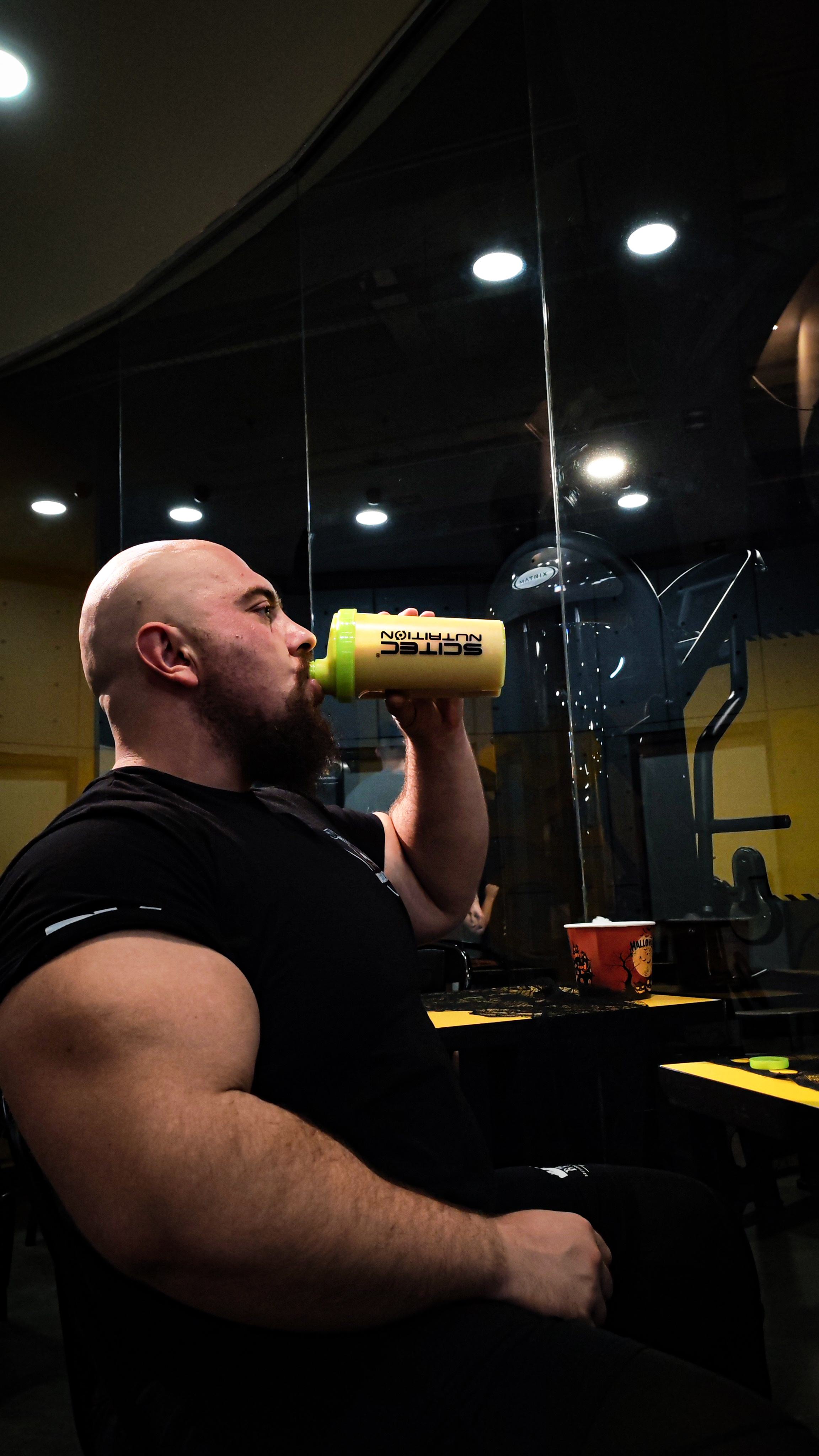
Anatomy of a Strongman - Episode IX: Injuries - The Anatomy of Injury in Strength Sports
In strength sports, injury is not simply the moment when a tissue fails. Behind a muscle tear, tendon injury, low-back problem, or shoulder disorder lies an interaction between load, tissue capacity, technique, fatigue, exposure, and recovery. Strongman makes this equation more complex because it combines heavy loads with unstable implements, unusual positions, carrying, acceleration, and maximal efforts.
A retrospective epidemiological study of 213 Strongman athletes reported that 82% experienced at least one injury during the year studied, with approximately 5.5 injuries per 1,000 training hours. The most frequently reported regions were the lower back (24%), shoulder (21%), biceps (11%), and knee (11%).
1. What Is an Injury, Exactly?
Some studies count only problems that force an athlete to stop or modify training. Others include any pain or dysfunction affecting performance. Consequently, similar populations can produce different injury estimates.
An updated systematic review published in 2024 found approximately 2.4-3.3 injuries per 1,000 training hours in weightlifting and 1.0-4.4 per 1,000 hours in powerlifting, while emphasizing that different definitions and methods make direct comparisons difficult.
2. Why Strongman Is Biomechanically Different
In a conventional squat or deadlift, the implement has relatively predictable geometry. In Strongman, the object may be a sandbag, stone, keg, yoke, frame, or implement with a shifted center of mass. Object shape changes its distance from the body, moment arms, and joint positions.
There is also a locomotion component. Every step introduces a new mechanical configuration, and some events combine strength with speed or repeated efforts under fatigue. Injury therefore needs to be understood as a load-exposure phenomenon rather than merely the consequence of one repetition.
3. Muscle Tissue - Length, Force, and Tearing
During eccentric contraction, muscle produces force while lengthening. Demand can become substantial when muscle length, velocity, and force are simultaneously high. In Strongman, the biceps are relevant because awkward-object lifting can combine high force with variable elbow and shoulder positions.
A specific position does not automatically tear a muscle. Mechanical demand can rise when required force and muscle length increase together, especially under fatigue or insufficiently progressed exposure.
4. Tendons - The Force-Transmitting Tissues
A tendon connects muscle to bone and transmits force to the skeleton. It has viscoelastic properties and adapts to loading. Progressive exposure can produce adaptations, while rapid increases in demand may exceed current adaptive capacity.
Pain and structural changes are not perfect synonyms for rupture. Imaging abnormalities do not automatically mean that a tendon is about to tear, and normal imaging does not guarantee the absence of pain.
5. The Lumbar Spine - Compression, Shear, and Moment
During lifting, the lumbar spine may experience compression, shear, and moments generated by the distance between the load and the body. These demands are influenced by trunk position, anthropometry, load, and muscular activation.
In Strongman, carrying and unusual implements can change these moments. The lower back is among the most frequently injured regions in Strongman and powerlifting.
6. The Shoulder - The Joint That Must Be Strong and Mobile
The shoulder has extraordinary mobility and high biomechanical complexity. The humeral head must be controlled relative to the glenoid while the scapula moves with the thorax. The rotator cuff, deltoid, pectorals, latissimus dorsi, and scapular musculature contribute to movement and stabilization.
In Strongman, retrospective data identified the shoulder in approximately 21% of reported injuries. In weightlifting and powerlifting, the shoulder also appears consistently among frequently affected regions.
7. The Knee - When Force Must Be Controlled in Motion
The knee transmits force between hip and ankle, permits flexion and extension, and controls rotational components. In squats, yoke walks, carries, tire flips, and loading events, its demands change continuously. The classic Strongman epidemiological study reported the knee in approximately 11% of injuries.
8. Mechanism - How Does an Injury Occur?
An injury mechanism can be acute or cumulative. In an acute event, a large load or rapid movement exceeds the tissue's momentary capacity. In a cumulative scenario, tissue is repeatedly exposed to stress while recovery and adaptation fail to keep pace.
The two mechanisms can combine. A tendon may be loaded repeatedly for weeks, followed by an unusually heavy repetition that triggers rupture. The final repetition is the trigger, but the biological context was built over time.
9. Fatigue - When Technique Starts to Change
Fatigue changes how the neuromuscular system controls movement. Trunk position, implement trajectory, coordination, and rhythm may change. In Strongman, a technique that is acceptable on the first repetition can become much less efficient on the eighth.
10. Absolute Load and Relative Load
The same absolute load can represent very different relative demands for two athletes. Muscular capacity, body mass, experience, technique, and training history change the response to load. In the retrospective Strongman study, athletes above 105 kg had more competition injuries than athletes at or below 105 kg. This is an epidemiological association, not proof of direct causation.
11. Technique - Cause or Only One Part of the Equation?
It is tempting to say injuries occur because of bad technique. Reality is more complex. A different technique can alter load distribution, but a particular position is not automatically pathological. Many movements have multiple strategies capable of producing performance.
The problem emerges when the chosen strategy exceeds the athlete's capacity or changes abruptly under fatigue and heavy loading. In Strongman, technique must be evaluated relative to the task and implement.
12. Why Perfect Form Does Not Guarantee No Injury
A technically excellent movement can still cause injury if the load dose is too high for current capacity. Tissues respond to force, strain, velocity, repetition count, and recovery time. Conversely, a movement that looks imperfect does not automatically cause injury.
13. Recovery - Tissue Needs Time, but Also Load
For many musculoskeletal conditions, recovery involves progressive return to loading rather than permanent avoidance. For Strongman, return should gradually recreate the real demands of the sport: strength, speed, range of motion, stability, carrying, and awkward implements.
14. Prevention Does Not Mean Avoiding Heavy Loads
Strongman is a sport of heavy loads. Prevention cannot mean eliminating load; it means managing it. Progression, controlled variation, recovery, and monitoring meaningful persistent changes in pain or performance can reduce unnecessary exposure.
The literature does not support the idea that all strength sports are extremely dangerous. Weightlifting and powerlifting generally have injury rates comparable with other non-contact sports and lower than contact sports. Strongman appears to have higher rates than some strength disciplines, but its literature is more limited and methods vary.
15. The Most Important Anatomical Regions in Strongman
The lower back, shoulder, biceps, and knee deserve particular attention based on available data. Forearm, elbow, hand, hip, and ankle problems can also occur depending on the event and implement.
The distribution has biomechanical logic: the lower back supports and transmits load, the shoulder manages large ranges of motion and external loads, the biceps contribute to pulling and elbow flexion, and the knee transmits force between hip and ankle.
16. Acute Injury Versus Persistent Pain
A traumatic rupture and progressively developing pain should not be treated as the same phenomenon. A rupture may have a clear event, while persistent symptoms can fluctuate with volume, intensity, sleep, stress, and recovery.
Pain alone cannot identify the exact structure involved. Diagnosis requires appropriate clinical assessment, and imaging should be interpreted in the context of symptoms and examination.
17. What Can a Strongman Do to Reduce Risk?
The practical principles are gradual load progression, controlled exercise variation, task-specific technique, sufficient recovery, progressive exposure to implements, and attention to persistent changes in pain or performance.
Avoid introducing several forms of stress simultaneously. A large increase in weight, volume, frequency, and number of Strongman events in the same week produces a much larger change in exposure than it appears when each variable is considered separately.
18. Conclusion - Injury Is Part of Load Biology, Not a Lottery
Strength sport cannot be separated from loading, and loading cannot be separated from tissue adaptation. Injury occurs when demand and capacity are no longer compatible, either during an acute event or after accumulated exposure.
Strongman adds another layer: awkward implements, very high loads, carrying, speed, and fatigue. There is no single guilty muscle and no single posture responsible for every injury.
A high-performing Strongman is not an athlete who is never injured. He is an athlete who builds the capacity to tolerate load, recognizes important changes, progresses intelligently, and returns wisely after a problem. True strength is not only the ability to lift a lot. It is the ability to keep lifting a lot for years.
Scientific References
1. Winwood PW, Hume PA, Cronin JB, Keogh JWL. Retrospective injury epidemiology of Strongman athletes. Journal of Strength and Conditioning Research. 2014;28(1):28-42. DOI: 10.1519/JSC.0b013e3182986c0c. PMID: 23669816.
2. Tung MJY, Lantz GA, Lopes AD, Berglund L. Injuries in weightlifting and powerlifting: an updated systematic review. BMJ Open Sport & Exercise Medicine. 2024;10(4):e001884. DOI: 10.1136/bmjsem-2023-001884. PMID: 39650568.
3. Keogh JWL, Winwood PW. The Epidemiology of Injuries Across the Weight-Training Sports. Sports Medicine. 2017;47:479-501. DOI: 10.1007/s40279-016-0575-0. PMID: 27328853.
4. Aasa U, Svartholm I, Andersson F, Berglund L. Injuries among weightlifters and powerlifters: a systematic review. British Journal of Sports Medicine. 2017;51:211-219. DOI: 10.1136/bjsports-2016-096037. PMID: 27707741.
5. Which resistance training is safest to practice? A systematic review. 2023. PMID: 37046275.
More From The Journal
Training
The Science of Strongman Training - Episode X: Competition Programming
How to build a complete Strongman competition preparation block: calendar, events, volume, intensity, specificity, simulations, autoregulation, tapering and fatigue management.
Training
The Science of Strongman Training - Episode IX: Peaking
Peaking in Strongman: how to turn months of training into maximal competition performance by reducing fatigue, preserving adaptations and managing specificity.