
Training
The Anatomy of a Strongman - Episode IV: The Shoulder and Scapular Girdle - The Architecture of Mobility and Strength
September 1, 2026
The Anatomy of a Strongman - Episode IV: The Shoulder and Scapular Girdle - The Architecture of Mobility and Strength
Among the joints of the human body, the shoulder may be the clearest demonstration of the compromise between mobility and stability. It can move through an extraordinary range of directions, position the hand in almost any location around the body, and participate in actions requiring speed, precision or force. Yet that freedom of movement has a consequence: the shoulder cannot rely on bony shape alone for stability. A large part of its control depends on muscles, tendons, the labrum, the capsule and the coordinated movement of the scapula across the thorax.
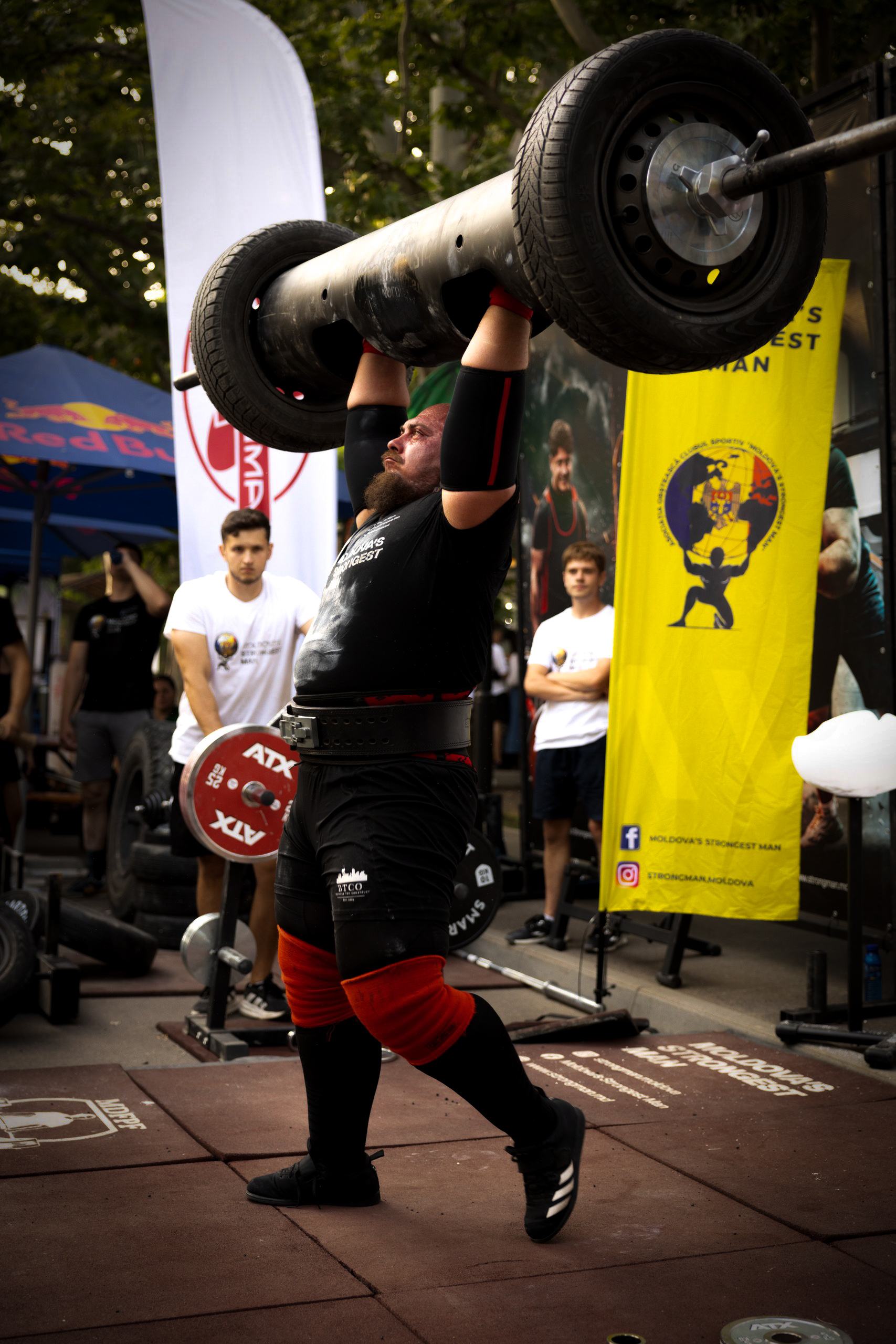
In Strongman, this architecture is challenged in a distinctive way. Log press, axle press, dumbbell press, viking press, carries, loading events, throwing events and even the stabilization demands of a yoke involve the shoulder and scapular girdle in different combinations. Sometimes the arm must produce force overhead. Sometimes it must resist a load pulling the limb downward. In other situations, it must control an unstable object whose direction of force changes continuously.
Therefore, a strong Strongman shoulder is not simply a large shoulder. It is a complex capable of combining range of motion, force, control and load tolerance. Understanding the region begins with anatomy, but inevitably leads to biomechanics and event-specific demands.
1. Shoulder Anatomy - More Than One Joint
When we say shoulder, we are actually referring to a complex of joints and functional connections. The glenohumeral joint is the best known, but shoulder movement also depends on the acromioclavicular joint, sternoclavicular joint and the functional movement of the scapula over the thorax. The clavicle connects the upper limb to the axial skeleton, while the scapula provides a mobile platform for the attachment and action of numerous muscles.
The glenohumeral joint is a ball-and-socket synovial joint in which the humeral head articulates with the glenoid cavity. The socket is relatively shallow compared with the humeral head, favoring a large range of motion. The glenoid labrum contributes to deepening the articular surface and supporting stability. The capsule and ligaments provide passive stability, while the rotator cuff and scapular musculature provide essential active control.
This combination explains why the shoulder can be both extraordinarily capable and sensitive to changes in loading and technique. Such a mobile system must constantly control the position of the humeral head relative to the glenoid. In Strongman, the problem becomes more complex because external forces are large and implements do not always behave like standardized barbells.
2. The Scapula - The Mobile Platform for Force Production
The scapula is often described simply as a flat bone located on the posterior thorax. Functionally, however, it is far more important. It can elevate and depress, protract and retract, rotate upward and downward, and make adjustments in tilt and rotation that alter the orientation of the glenoid. Through these movements, the scapula allows the arm to operate through a large space without forcing the glenohumeral joint to solve the entire mechanical problem alone.
The serratus anterior, upper, middle and lower trapezius, rhomboids and other structures contribute to scapular control. There is no single correct scapular position that must be maintained at all times. Depending on the task, it needs to move. During an overhead press, for example, upward rotation of the scapula is a normal component of raising the arm overhead.
This matters because popular strength-training advice sometimes treats scapular movement as something that should be locked down. In reality, permanent fixation would remove one of the mechanisms through which the shoulder distributes movement. For Strongman, the goal is not an immobile scapula, but a controllable one.
3. The Rotator Cuff - Active Stability Around the Humeral Head
The supraspinatus, infraspinatus, teres minor and subscapularis form the rotator cuff. These structures are important not only for rotating the arm. One of their major functions is contributing to centering and controlling the humeral head within the glenoid during movement.
In a Strongman, the rotator cuff can be challenged in very different situations. During a heavy press it helps control the joint as the arm moves overhead. During a carry it manages the traction produced by the load. During a loading event it may have to control rapid changes in the position of a bulky object.
This creates an important distinction between global shoulder strength and control capacity. The deltoid can generate substantial force, but if centering and coordination are insufficient, movement can become inefficient. A high-performing shoulder requires cooperation between large muscles, smaller control muscles and passive structures.
4. The Deltoid - The Visible Engine of the Shoulder
The deltoid is one of the principal force-producing muscles of the shoulder. The anterior fibers contribute importantly to flexion and horizontal flexion, the middle fibers to abduction, and the posterior fibers to extension and horizontal abduction. In practice, all three portions work together across many movements.
During an overhead press, the anterior and middle portions contribute strongly to elevating the arm, while the triceps contributes to elbow extension. During carries and overhead support, the deltoid has more of a support and control role. During loading events, demands may alternate rapidly between force production and stabilization.
Shoulder training in Strongman should therefore be viewed in relation to total pressing volume. An athlete performing substantial log, axle and dumbbell work is already providing a large stimulus to the deltoids. Assistance work should complement the program rather than ignore the load accumulated through events.
5. The Overhead Press - Why the Shoulder Must Produce Force in a Difficult Position
The overhead press is one of the events in which shoulder anatomy becomes especially visible. As the implement rises, the arm moves through a large range and the scapula must contribute through upward rotation. The trunk and pelvis provide a sufficiently stable base for force transfer, particularly in techniques that allow meaningful contribution from the lower body.
The log adds a particular challenge. Unlike a barbell, the log is bulky and can change arm and elbow position. An axle can require a different grip and hand position. A dumbbell introduces asymmetry and additional freedom. Consequently, the same athlete can display very different pressing capacity depending on the implement.
Efficiency does not mean forcing the arm into an arbitrary path. It means creating a configuration in which the implement's center of mass, shoulder, elbow and trunk can work together. In a maximal event, a few centimeters can substantially change external moments at the joints.
6. Serratus Anterior and Trapezius - The Mechanics of Scapular Rotation
Upward rotation of the scapula is a normal part of raising the arm. The serratus anterior and upper and lower trapezius contribute to this coordination. If the shoulder is viewed only through the glenohumeral joint, an essential part of the mechanics is lost.
In Strongman, the ability of the scapula to rotate and adapt is important during pressing, overhead movement and some loading situations. There is no general reason to treat protraction or scapular rotation as errors. In many situations, they are exactly the movements required to allow the arm to reach an efficient position.
Lack of control, however, can be problematic. A scapula that moves without coordination with the humerus can alter shoulder mechanics. This is why serratus and trapezius work should not be selected only for the aesthetic appearance of the upper back, but also for their contribution to scapular function.
7. The Shoulder in Carries - When the Load Pulls the Arm Down
Farmer's walks and other carries create a different problem from pressing. Instead of pushing an implement upward, the athlete must resist a force pulling the upper limb downward and sometimes backward or laterally. The shoulder, scapula and trunk must maintain a configuration that permits locomotion.
During a heavy farmer's walk, scapular depression can appear as part of the control strategy, but the athlete does not need to hold the shoulders in a rigid and artificial position. Walking produces oscillations and the implements move. An experienced athlete allows controlled motion and avoids progressive loss of position.
As distance increases, endurance becomes part of the problem. The shoulder must not only tolerate the load for a few seconds, but manage it while the legs and trunk produce hundreds of small adjustments. This connects anatomy with conditioning: a shoulder can be very strong for one repetition and insufficiently resistant during a long carry.
8. Loading Events - The Shoulder as the Transfer Point Between Athlete and Object
Loading events are among the most interesting Strongman situations for studying the shoulder because the object is not standardized. A sandbag, keg or stone can be bulky, soft, rigid, slippery or asymmetric. The athlete must bring it toward the body, lift it, and then place or project it onto a platform.
During the initial lift, the arms and shoulder can act primarily as fixation elements. As the object rises, elbow and shoulder positions change. At the final stage, the arms may guide the object more than they produce the primary force. This change in role matters: not every moment of an event is shoulder strength in the same sense.
An efficient Strongman uses the whole body. The legs produce force, the hips contribute extension, the trunk transfers energy, and the shoulder and arms position the object. The farther the object moves from the body, the greater external moments on the shoulder can become. Keeping the object close to the center of mass is therefore often mechanically efficient.
9. Mobility Versus Stability - The False Conflict of the Shoulder
Strength training sometimes presents athletes with a choice between mobility and stability. For the shoulder, that opposition is largely artificial. A high-performing joint needs sufficient range of motion and the ability to control that range.
A Strongman needs to position the arm for an overhead press, reach an object, pull it toward the body and stabilize it. If range is insufficient, other regions may compensate. If range exists but control is poor, different problems can arise. Mobility therefore needs to be evaluated against the demands of the sport rather than as an abstract number.
This is also why mobility exercises should not be prescribed identically to every athlete. One athlete may need more thoracic mobility, another a particular glenohumeral range, and another may primarily need control at the end of the available range. Functional assessment should precede the solution.
10. The Thorax and Thoracic Spine - The Foundation on Which the Scapula Moves
The scapula does not float in a vacuum. It moves over the thorax, and the shape and position of the thoracic spine influence how that movement occurs. An efficient thoracic position can support a favorable relationship between scapula and humerus, while limitations in extension or rotation can alter strategy.
The relationship is obvious in pressing. The trunk provides a base for force transmission, while the scapula participates in elevating the arm. With a log press, implement shape can amplify the demand. With a unilateral dumbbell press, trunk control becomes even more important because the load creates an asymmetric moment.
Thus, what looks like a shoulder problem can sometimes be partly a thoracic problem, while what looks like a thoracic limitation can be influenced by the hips and trunk. The body functions as a connected system. Regional anatomy is useful, but performance analysis must remain global.
11. The Elbow and Wrist - The Links That Complete the Press
The shoulder cannot produce an efficient press if distal segments cannot transmit force. The elbow and wrist influence implement position and force direction. In a heavy press, the arm must form a sufficiently efficient structure to transfer force into the object.
The axle and log can alter this relationship. Handle diameter, hand position and grip width change elbow and shoulder angles. A dumbbell permits additional rotational freedom and therefore a different strategy. This is one reason transfer between gym exercises and Strongman events is never perfectly one-to-one.
A good program should develop general strength while maintaining enough specificity for the competition implement. The more unusual the object, the more important technical adaptation becomes.
12. Asymmetry - Dumbbells, Carries and Objects That Ignore Perfect Geometry
The human body is not required to work symmetrically simply because a bar is straight. In Strongman, many implements introduce real asymmetries. Unilateral dumbbell pressing, one-handed carries and bulky objects can create rotational moments through the trunk and scapular girdle.
These situations challenge scapular musculature and the trunk differently from bilateral pressing. The obliques, serratus anterior, trapezius and shoulder musculature must control the tendency of the body to rotate or lean. This capacity can have direct competition value.
Asymmetry is not automatically a defect. In many cases, it is a feature of the event. The issue is lack of control or the development of symptoms. Training can use asymmetry progressively without turning every exercise into a maximal challenge.
13. Scapular Fatigue - When Technique Begins to Change
In a Strongman competition, pressing does not always occur in isolation. It may follow deadlifts, carries, medleys or events that have already taxed grip and back musculature. Fatigue can alter scapular position, force production speed and the ability to maintain an efficient path.
This has an important practical implication. Training should not develop only a maximal press while fresh, but also the ability to produce force when the system is already fatigued. Specificity can be introduced progressively through event order, medleys and controlled manipulation of rest periods.
Fatigue, however, should not become a permanent excuse for poor technique. Movement quality remains important. The goal is to teach the athlete to maintain control under realistic conditions, not to repeatedly practice the same degraded movement without control.
14. Tendon Adaptation and Managing Pressing Volume
Tendons and periarticular tissues adapt to loading, but adaptation is not instantaneous. A Strongman can rapidly increase force-production capacity through neural and muscular adaptations while tissue tolerance may evolve at a different pace.
The problem is not that heavy pressing is inherently harmful. The problem appears when total loading rises faster than the capacity to adapt. Log press, axle press, dumbbell work, bench press, incline press and shoulder accessories can collectively create substantial volume.
Intelligent programming therefore looks at the total. The intensity of one session tells only part of the story. Frequency, volume, range of motion, velocity, number of events and recovery between sessions must be considered together.
15. Building a Strongman Shoulder - Strength, Control and Specificity
A strong shoulder is built through progressive exposure to the movements the athlete needs to perform. Heavy pressing develops force production. Carries develop load tolerance and dynamic control. Rotator cuff and scapular exercises can address specific limitations.
There is no need for every session to contain an arsenal of shoulder exercises. If an athlete already performs substantial log, axle and dumbbell work, much of the relevant stimulus is present. Assistance work should be economical and directed at an identified need.
Progression can occur through load, repetitions, distance, time under load, range of motion or implement complexity. In Strongman, sometimes the most important progression is not another kilogram, but the ability to perform the same event more efficiently and repeatably.
16. Shoulder Pain - Why Anatomy Should Not Become a Diagnosis
Shoulder pain is multifactorial. It can be influenced by loading, sleep, stress, training history, rapid changes in volume, technique, trauma and many other variables. A single position observed in a video does not reliably identify a lesion.
For the athlete, it is more useful to track symptom progression and its relationship with loading. Pain that repeatedly occurs, intensifies, limits movement or follows acute trauma deserves professional assessment. Anatomy can explain structures and mechanisms, but it cannot replace a clinical examination.
17. Conclusion - The Strongman Shoulder Is Not Just an Engine, but a Control System
The shoulder is one of the most sophisticated regions of a Strongman's body. Its extraordinary mobility must be supported by active and passive stabilization capable of managing very high loads. The scapula must move, but remain controlled. The rotator cuff must center and stabilize. The deltoid must produce force. The trapezius and serratus must coordinate the scapula. The trunk must provide the base.
In the overhead press, these components meet in a movement where a few degrees of position can change mechanics. In carries, the shoulder must resist traction and oscillation. In loading events, it must adapt to an object without standard geometry. In dumbbell and other asymmetric events, it must control rotation and lateral movement.
Therefore, shoulder anatomy should not be studied as a list of muscles. It should be understood as the architecture through which a Strongman converts whole-body strength into action on an object. A high-performing shoulder is not one that never moves, but one that knows when to move, how far to move, and how to control that movement under load.
References
Neumann, D. A. (2017). Kinesiology of the Musculoskeletal System: Foundations for Rehabilitation. 3rd ed. Elsevier.
Ludewig, P. M., & Reynolds, J. F. (2009). The association of scapular kinematics and glenohumeral joint pathologies. Journal of Orthopaedic & Sports Physical Therapy, 39(2), 90-104.
Escamilla, R. F., Yamashiro, K., Paulos, L., & Andrews, J. R. (2009). Shoulder muscle activity and function in common shoulder rehabilitation exercises. Sports Medicine, 39(8), 663-685.
Kibler, W. B., Ludewig, P. M., McClure, P. W., Michener, L. A., Bak, K., & Sciascia, A. D. (2013). Clinical implications of scapular dyskinesis in shoulder injury: the 2013 consensus statement. British Journal of Sports Medicine, 47(14), 877-885.
Cools, A. M., Dewitte, V., Lanszweert, F., et al. (2007). Rehabilitation of scapular muscle balance: which exercises to prescribe? American Journal of Sports Medicine, 35(10), 1744-1751.
Hindle, B. R., Lorimer, A., Winwood, P. W., & Keogh, J. W. L. (2019). The Biomechanics and Applications of Strongman Exercises: A Systematic Review. Sports Medicine - Open, 5, 49.
More From The Journal
Training
The Science of Strongman Training - Episode X: Competition Programming
How to build a complete Strongman competition preparation block: calendar, events, volume, intensity, specificity, simulations, autoregulation, tapering and fatigue management.
Training
The Science of Strongman Training - Episode IX: Peaking
Peaking in Strongman: how to turn months of training into maximal competition performance by reducing fatigue, preserving adaptations and managing specificity.