
Training
The Anatomy of a Strongman - Episode III: The Knee - The Joint Between Strength, Stability and Movement
September 1, 2026
The Anatomy of a Strongman - Episode III: The Knee - The Joint Between Strength, Stability and Movement
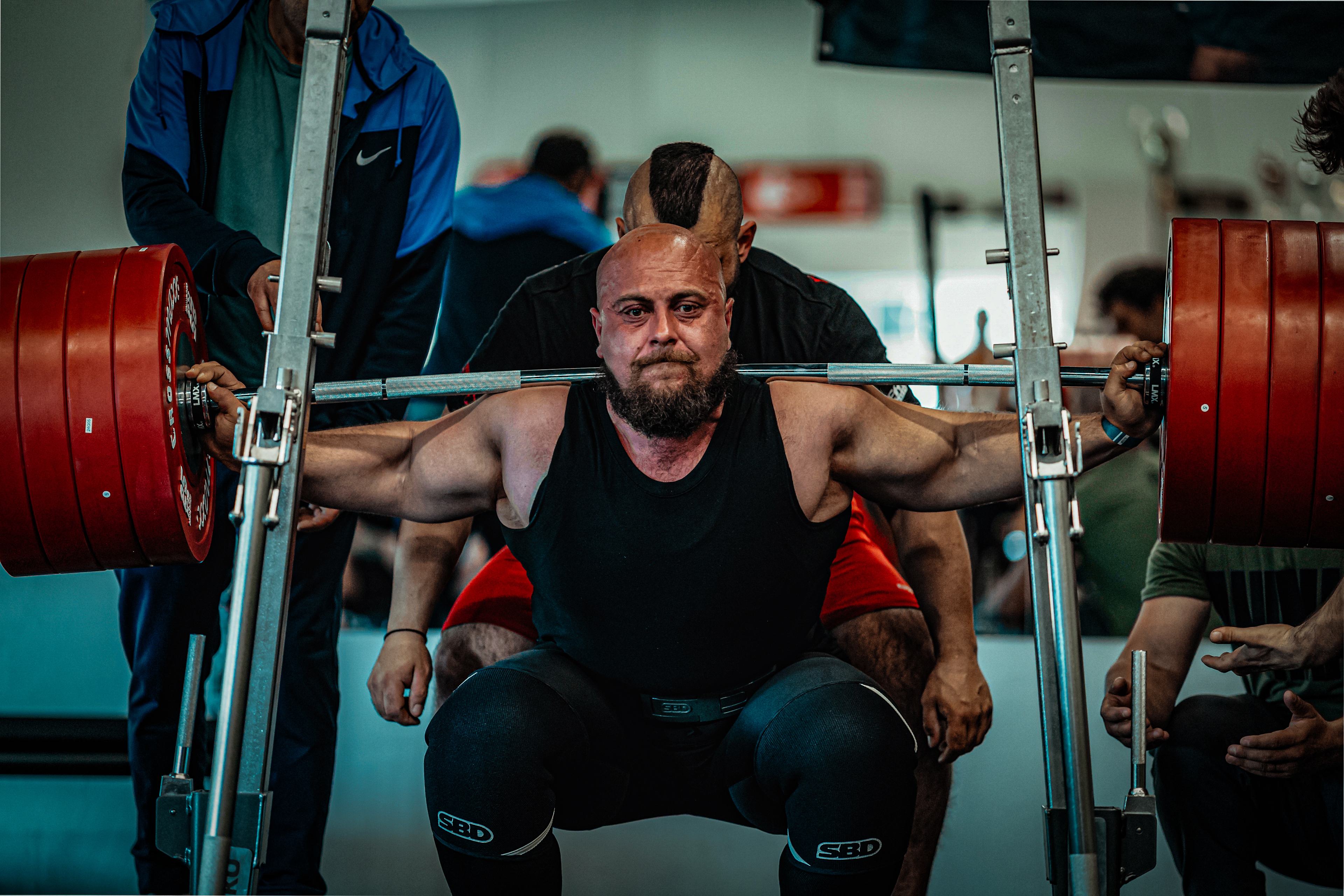
The knee is one of those joints an athlete notices most when something stops working and least when everything works well. In Strongman, however, the knee is loaded almost continuously: when lifting an implement from the floor, squatting, dipping during a press, taking every step in a yoke walk or farmer's walk, and whenever the body must absorb or redirect force.
Anatomically, the knee is more than a simple hinge joint. It is a complex formed primarily by the tibiofemoral and patellofemoral joints, supported by ligaments, menisci, capsule, tendons, and muscle. Functionally, it must allow enough movement for walking, running, descending, and rising while also tolerating very large forces when the body is loaded with hundreds of kilograms.
In Strongman, this contradiction is constant. The athlete needs mobility but also control. They need powerful extension but also the ability to absorb flexion. They need stability, but not a completely rigid joint. Understanding the knee begins here: performance is not the elimination of movement, but the control of movement.
1. Knee Anatomy - A Joint Built for Movement and Load
The femur, tibia, and patella form the bony foundation of the knee. Articular surfaces are covered by cartilage, while the menisci contribute to load distribution and joint congruence. The collateral and cruciate ligaments contribute to controlling translation and rotation, while the capsule and musculotendinous structures complete the stabilization system.
This architecture allows the knee to operate through a wide range of movement. Extension has its own locking and stabilization characteristics, while the relationship between femur, tibia, and patella changes during flexion. For a Strongman, these changes matter because a deep squat, a deadlift start, and a loaded step do not stress the joint in exactly the same way.
Articular cartilage and the menisci are not merely passive components. They contribute to contact management and load distribution. At the same time, ligaments are not solely responsible for stability. In a healthy joint, stability emerges from the interaction of bony geometry, passive structures, and neuromuscular control.
2. Quadriceps, Hamstrings, and Knee Extension
The quadriceps is the primary engine of knee extension. In Strongman, this function appears in squats, rising from the floor, the extension phase of a clean, and every step in which the body must rise and push against the ground.
But the knee does not work in isolation. The hamstrings contribute to knee flexion and hip extension, and their relationship with the quadriceps influences joint control. The gastrocnemius also crosses both the knee and ankle, making it relevant to force transfer between the two joints.
In a heavy squat, the quadriceps must produce force to extend the knee while the hip contributes substantially through its extensor musculature. The relative contribution changes with depth, trunk position, foot position, and athlete anthropometry. There is no single squat that is correct for every Strongman, only principles that must be adapted.
3. The Patella and Patellar Tendon - The Small Structures That Change Knee Mechanics
The patella acts as a sesamoid bone integrated into the extensor mechanism. It changes the quadriceps moment arm and helps transmit force through the patellar tendon to the tibia. For a strength athlete, this geometry is essential: the knee extensors would not operate mechanically in the same way without the patella.
The patellar tendon and quadriceps tendon transmit force between the extensor mechanism and the skeleton. Their adaptation to loading is gradual. Rapid increases in volume, intensity, or frequency can exceed tissue adaptation capacity, especially when there is already substantial squat, jumping, carrying, or other repeated knee flexion and extension.
4. The Knee in the Squat - Flexion That Must Be Controlled Before Extension
The squat is one of the best ways to see the knee as part of a system. During descent, the knee flexes and the musculature controls the movement. During ascent, knee extension contributes to raising the center of mass. Throughout the movement, the hip, ankle, and trunk alter the distribution of joint moments.
A knee moving forward over the toes is not, by itself, proof of poor technique. Depending on ankle mobility, body proportions, and squat style, this position can be entirely compatible with efficient movement. The relevant question is whether the athlete can control the position and whether it suits the task.
Squat depth also changes the demands. Greater flexion can increase range of motion and the loading of certain structures, but the exact effect depends on technique and load. In Strongman, where the squat may appear both in training and competition, depth should be considered in relation to the competition standard and the athlete's ability to maintain control.
5. The Knee in the Deadlift - When Extension Happens With the Hip
The deadlift is not primarily a knee exercise, but the knee has an essential role during the initial pull. The starting knee angle influences pelvis and trunk position and therefore the relative contribution of the quadriceps and hip extensors.
As the bar rises, the knee extends while the hip continues to extend. If the knees move away too early, the athlete can abruptly change the geometry and increase the demand on the hip and trunk. If they remain too far in front of the bar, the path may become less efficient. Again, the goal is not a rigid position but coordinated sequencing.
6. Yoke Walk, Farmer's Walk, and the Knee in Loaded Locomotion
In carries and yoke walks, the knee becomes a joint for repeated transfer and control. Each step involves accepting the load on one limb, moving the center of mass, and producing a new impulse. Instead of a single repetition, there is a sequence of cycles in which the same joint must function without losing control.
Here, not only quadriceps strength matters, but also frontal-plane and rotational control of the lower limb. The knee must maintain a controlled relationship with the hip and foot, while the pelvis must move enough to permit walking. An athlete who tries to make every step completely rigid may use more energy than one who allows controlled movement.
As the load becomes very heavy, step speed can decrease and strategy changes. In the yoke, implement inertia can create additional perturbations. In the farmer's walk, the implements may oscillate independently. The knee must absorb these changes without the foot losing its base of support.
7. Ligaments - Passive Stability in a Sport With Enormous Loads
The cruciate and collateral ligaments limit certain translations and rotations of the tibia and contribute to knee stability. Under normal conditions, they work together with muscles and joint geometry. Ligamentous stability should not, however, be confused with an absence of movement.
In strength sports, loads can be very high without ligaments necessarily being the primary limiting structures. When technique is controlled, musculature can absorb a substantial portion of mechanical demands. Problems become more likely when high load combines with unfavorable position, uncontrolled rotation, fatigue, or an acute traumatic event.
8. Meniscus and Cartilage - Managing Load Distribution
The menisci contribute to load distribution and adaptation between joint surfaces. In Strongman, this matters because forces are not always perfectly vertical or symmetrical. A load can create compression, shear, and rotation simultaneously.
Articular cartilage allows low-friction movement and distributes contact between surfaces. Adaptation to loading depends on the dose of stress and the ability of tissues to remodel. It is not accurate to treat cartilage as a part that inevitably simply wears out because an athlete lifts heavy. Tissue biology is more complex, and individual context matters.
9. Lower-Limb Alignment - The Knee Does Not Work Alone
The knee sits between the hip and ankle, and its position is influenced by both. Pelvic control, femoral rotation, ankle mobility, and foot position can alter the knee's path. Therefore, analysis of a knee moving inward or outward should include the entire lower limb.
Dynamic valgus should not automatically be interpreted as an injury in progress. Movement must be considered in context: the magnitude of deviation, speed, load, symptoms, ability to control the position, and repeatability. In a complex sport such as Strongman, a brief deviation under maximal load can have a different meaning from progressive loss of control across every repetition.
10. The Knee Under Fatigue - When Control Matters More Than Raw Strength
Fatigue changes the problem. A knee may tolerate a very large load in a fresh repetition but respond differently after several events. Reduced force, altered coordination, and changes in movement strategy can increase stress on some structures or make technique less efficient.
In a medley, for example, an athlete may reach a squat or loading event with already-fatigued quadriceps. In a fast yoke, fatigue can reduce step control. In repeated deadlifts, the knees may begin to move differently from one repetition to the next. This is why conditioning and technique are connected to anatomy: tissue does not function in a sterile laboratory, but in a fatigued organism.
11. Tendons and Adaptation to Training
Tendons adapt to loading, but adaptation is slower and different from muscle adaptation. An athlete can become capable of producing more force before all involved tissues have had time to adapt to the same extent. This is one reason progressive loading matters.
For the knee, abrupt changes are often more relevant than the existence of a single hard session. Increasing load, volume, frequency, and specific event work simultaneously can greatly increase total stress. Intelligent programming does not avoid loading. It doses it.
12. Building a Strong Knee for Strongman
A high-performing knee is the result of a system, not a single exercise. The quadriceps must produce force. The hamstrings and hip musculature must contribute to control. The ankle must allow the required position. The foot must provide a stable base. The trunk and pelvis must control the position of the entire limb.
Squats, split squats, step-ups, reverse sled drags, lunges, carries, and deadlift variations can play different roles. Selection depends on the athlete's needs and what appears in competition. If a Strongman already has a very large volume of yoke and carries, there is not necessarily a reason to add enormous amounts of additional knee-specific work.
At the same time, if a clear weak link exists, it can be trained specifically. The important point is that the exercise should solve an identified problem, not be added simply because it is popular. Anatomy becomes useful exactly here: it helps formulate the right question.
13. Knee Pain - Between Signal and Interpretation
Pain is not synonymous with a serious structural injury, and absence of pain does not guarantee that every tissue is perfect. For an athlete, it is more useful to track onset, location, intensity, progression, relationship to loading, and impact on function. New or progressive pain, substantial swelling, locking, instability, or acute trauma warrants medical assessment.
In an article about sports anatomy, this boundary matters: anatomy and biomechanics can explain mechanisms, but they cannot replace clinical diagnosis. A painful knee must be assessed in the context of the person, not labeled from a single movement pattern seen on video.
14. The Strongman Knee - The Joint Between Force Production and Control
The knee is often viewed as a joint that must be protected from heavy loads. In Strongman, the more useful approach is to view it as a joint that must be prepared for heavy loads. The distinction matters. Tissues adapt to loading when loading is progressive and managed.
In the squat, the knee contributes to force production. In the deadlift, it contributes to the extension sequence. In yoke and carries, it controls loaded locomotion. In loading events, it absorbs and produces force in rapid succession. In every case, the knee is part of a larger system including the foot, ankle, hip, pelvis, and trunk.
A complete Strongman does not seek a knee that never moves. They seek a knee that moves when it should, stabilizes when it should, and can repeat this process under high loads and fatigue.
That is, ultimately, applied anatomy in performance: not merely knowing which structures exist in the knee, but understanding why they must work together so an athlete can turn contact with the ground into movement, lifting, or projection of a heavy implement.
References
Neumann, D. A. (2017). Kinesiology of the Musculoskeletal System: Foundations for Rehabilitation. 3rd ed. Elsevier.
Escamilla, R. F. (2001). Knee biomechanics of the dynamic squat exercise. Medicine & Science in Sports & Exercise, 33(1), 127-141.
Escamilla, R. F., Fleisig, G. S., Zheng, N., Barrentine, S. W., Wilk, K. E., & Andrews, J. R. (1998). Biomechanics of the knee during closed kinetic chain and open kinetic chain exercises. Medicine & Science in Sports & Exercise, 30(4), 556-569.
Hindle, B. R., Lorimer, A., Winwood, P. W., & Keogh, J. W. L. (2019). The Biomechanics and Applications of Strongman Exercises: A Systematic Review. Sports Medicine - Open, 5, 49.
Hindle, B. R., Lorimer, A., Winwood, P. W., & Keogh, J. W. L. (2020). A systematic review of the biomechanical research methods used in strongman studies. Sports Biomechanics, 19(1), 90-119.
More From The Journal
Training
The Science of Strongman Training - Episode X: Competition Programming
How to build a complete Strongman competition preparation block: calendar, events, volume, intensity, specificity, simulations, autoregulation, tapering and fatigue management.
Training
The Science of Strongman Training - Episode IX: Peaking
Peaking in Strongman: how to turn months of training into maximal competition performance by reducing fatigue, preserving adaptations and managing specificity.