Training
The Anatomy of a Strongman - Episode II: The Hips and Posterior Chain - The Engine of Extension and Strength
September 1, 2026
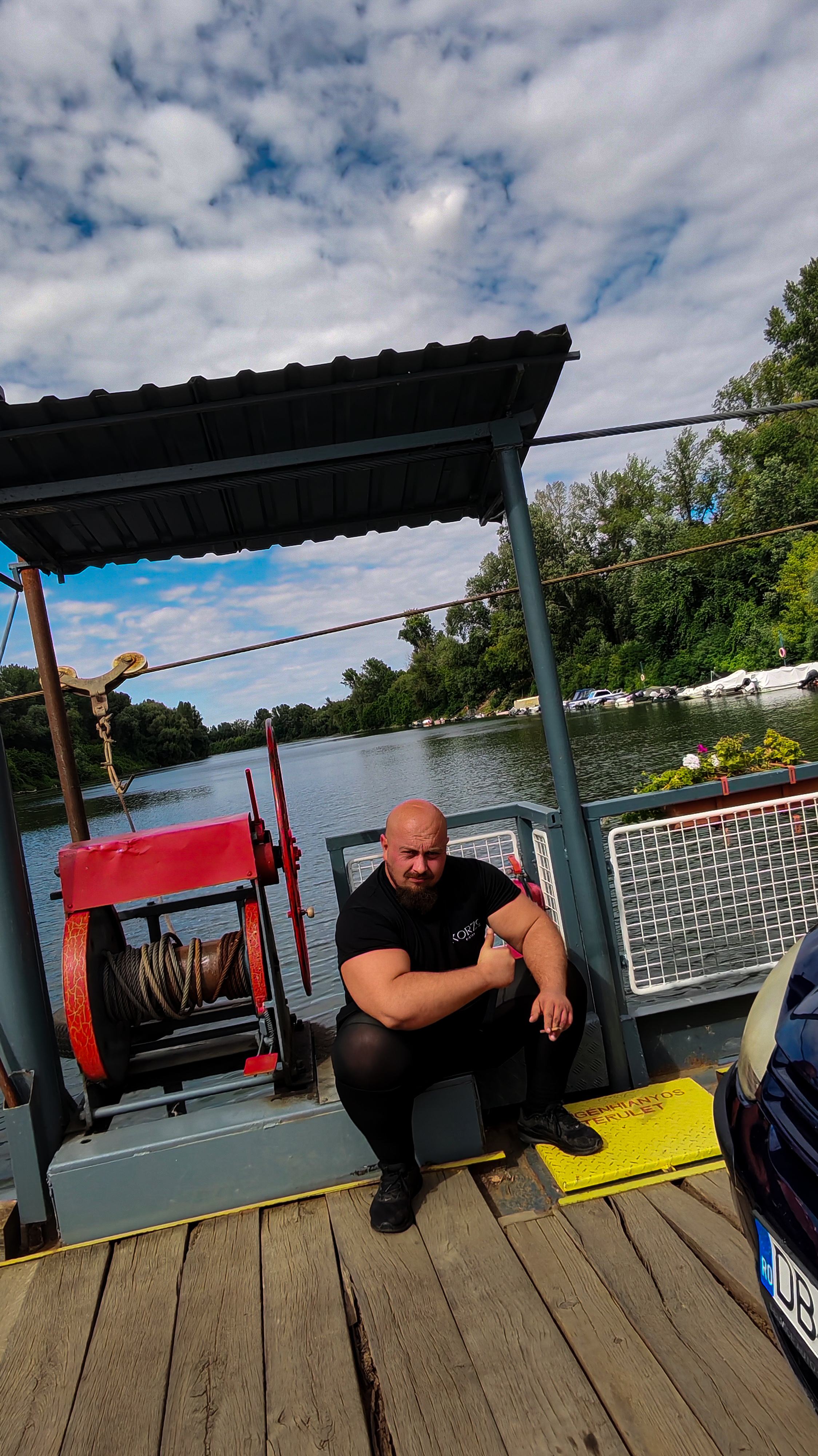
The Anatomy of a Strongman - Episode II: The Hips and Posterior Chain - The Engine of Extension and Strength
If the first episode examined the spine and trunk as the center of force transmission and control, the next logical step is to move down toward the hips and posterior chain. In Strongman, very few major movements can be understood without this region. Deadlifts, stone lifts, loading events, carries, yoke walks, sled pulls, and many squat variations depend on the body's ability to produce and control hip extension.
The phrase posterior chain is used so frequently that it can become a label without much meaning. In reality, it describes a family of structures that contribute to hip extension, knee function, pelvic control, and trunk stabilization. The gluteus maximus, hamstrings, adductor magnus, spinal erectors, and deeper pelvic musculature are not one imaginary muscle. They are a coordinated system whose relative contribution changes from one event to another.
1. The Hip - The Joint Around Which Extension Is Organized
The hip is a ball-and-socket joint designed to combine mobility with the ability to tolerate high forces. The femoral head articulates with the acetabulum, while bone, capsule, and surrounding musculature allow flexion, extension, abduction, adduction, and rotation. For Strongman, one of the most important functions is hip extension because it allows the pelvis to move from a flexed relationship toward extension and contributes directly to lifting a load.
Hip extension is not produced by one muscle. The gluteus maximus is a major extensor, but the hamstrings and portions of the adductor group contribute as well. Their contribution changes with joint angle and knee position. In a deadlift, this distribution changes continuously as the athlete moves from the start position toward lockout.
This is why strong hips do not simply mean large glutes. They mean the ability to produce an extension moment in the positions relevant to the event, control the pelvis, and coordinate hip extension with the knee and trunk.
2. Gluteus Maximus - The Major Hip Extensor
The gluteus maximus is one of the most important muscles for producing hip extension. Its size and architecture give it considerable force-producing capacity. In Strongman, this becomes relevant whenever the pelvis must move from flexion toward extension: deadlifts, stone lifts, loading, squats, and many forms of carrying.
Its role depends on joint position. A muscle does not produce identical force and torque at every angle. Length-tension relationships, moment arms, and the position of neighboring joints all influence effective output. This helps explain why an athlete can be very strong in a hip thrust and still not automatically display the same performance in a deadlift or stone lift.
Glute development therefore has two components. The first is increasing general muscle capacity through hypertrophy and strength. The second is learning to express that capacity in the positions required by the event. A strong muscle that cannot be integrated into an efficient movement sequence cannot express its full potential.
3. The Hamstrings - More Than Knee Flexors
The hamstrings are often introduced as the muscles that flex the knee. For Strongman, that definition is incomplete. Because they cross both the knee and hip, the hamstrings can contribute to hip extension and pelvic control. The biceps femoris, semitendinosus, and semimembranosus have different anatomical orientations and their behavior changes with joint position.
In the deadlift, the hamstrings contribute to hip control while the knee and hip extend. During sprinting and some carrying tasks, they must also produce and absorb force rapidly. During loading events, they operate while the external moment can change as the implement moves. Their versatility is why hamstrings should be trained through both hip-extension and knee-flexion patterns when those qualities are relevant.
A strong hamstring is therefore not simply one that produces a high isolated contraction. It is tissue capable of producing and controlling force at different lengths and velocities while coordinating with the glutes and trunk.
4. Adductor Magnus and the Deep Hip Musculature
Adductor magnus is an excellent example of a structure that cannot be reduced to one function. Important portions of the muscle contribute to hip extension, particularly from flexed positions. In heavy movements, the adductors also contribute to pelvic control and lower-limb stability.
For Strongman, this matters in wider stances, squats, deadlifts performed with different stances, and events in which the center of mass shifts. Frontal- and transverse-plane control can become as important as pure sagittal-plane strength.
The deep hip muscles contribute to femoral-head orientation and rotational control. They should not be presented as secret performance muscles. Their importance is better understood as part of the collective control of the joint and lower limb.
5. The Posterior Chain as a System - From Ground to Implement
Force produced by the posterior chain does not stop at the hip. It must travel through the pelvis and trunk toward the implement. This connects directly with the first episode. A Strongman may have exceptionally strong glutes and hamstrings, but if the trunk loses position, some of that capacity is spent changing body configuration instead of efficiently transferring force.
In a deadlift, the legs push against the ground, the knee extends, the hip extends, and the trunk controls the relationship between pelvis and implement. In a stone lift, the object is brought close to the body and raised through coordinated hip, knee, and trunk motion. In a farmer's walk, the posterior chain does not perform one single extension but contributes to every step and to pelvic control.
This is why the word chain is useful. Not because every structure contracts identically, but because performance depends on mechanical continuity between segments. A weak or poorly coordinated link can alter the demand placed on the others.
6. The Deadlift - The Laboratory of Hip Extension
The deadlift is one of the clearest expressions of posterior-chain capacity. The load begins on the ground and the athlete must create sufficient hip and knee moments to raise it. Starting position, arm length, femur length, bar height, and deadlift style all change the mechanical problem.
In Strongman, the situation becomes even more interesting because the bar may be lifted from platforms, racks, an axle, or other implements. Each variation changes the starting distance between the load and the joints and therefore changes the external moments. There is no single Strongman deadlift from a biomechanical perspective.
As the load leaves the floor, coordination between knee and hip extension determines the trajectory. As the athlete rises, hip-extension demands become increasingly apparent. At lockout, the glutes and trunk contribute to the final erect position, but lockout should not be reduced to simply squeezing the glutes. It is the result of coordinated extension across the system.
7. Stones and Loading Events - When the Object Must Stay Close
Stones and loading events create a different mechanical problem from a conventional barbell. The implement is not rigid and does not have a single contact surface. The athlete must pull it toward the body, lift it, and then move it onto a platform. The posterior chain works with the arms and trunk in a sequence in which the object can shift substantially.
Keeping the implement close generally reduces the external moment arm and can improve mechanical efficiency. But object proximity is not only an arm problem. It depends on hip flexion and extension capacity, thoracic mobility, arm strength, and trunk control.
The posterior chain therefore has to produce force while the object's center of mass is changing continuously. Efficient technique is not a static photograph. It is a sequence of positions in which the athlete keeps the object close enough and creates extension without losing balance.
8. Squat, Carry, and Sled - Hip Extension in Other Forms
The squat is often described as a quadriceps exercise, but that classification is too narrow. As the hip descends and rises, hip extension becomes an important component. The balance between knee and hip contribution depends on technique, anthropometry, depth, and load.
In carries, the posterior chain has a less obvious but continuous role. The glutes and hamstrings help control the pelvis while walking, and repeated hip extension contributes to forward progression. Biomechanical research on the farmer's walk has associated performance with stride length, stride rate, and ground-contact time, illustrating that hip force must be converted into locomotion rather than merely expressed as static strength. citeturn0search0
In sled pulling, the demand becomes even more dependent on the posterior chain. The athlete must create horizontal force, maintain trunk position, and produce repeated steps against resistance. Hip extension therefore has to be understood as the capacity to produce force through space, not merely as the ability to lift a weight vertically.
9. Individual Anatomy and the Strongman's Hips
Body proportions alter hip mechanics. Femur length, torso length, and arm length change joint positions and the distance between the load's center of mass and the hip joint. As a result, two athletes with similar absolute strength can experience the same event very differently.
An athlete with long arms may have an advantage in certain deadlift variations because the required range of motion can be reduced. Another athlete may be better suited to different positions. In squats and stone loading, femur length can influence trunk angle and hip-extension demands.
Mobility is part of the same equation. A hip that cannot enter a sufficiently flexed position may force compensation through the spine or a change in knee position. But mobility without control does not automatically create performance. For Strongman, useful mobility is mobility that the athlete can control under load.
10. Building the Posterior Chain - Strength, Muscle, and Specificity
Posterior-chain development should combine three goals: increasing force-producing capacity, developing muscle mass when useful, and transferring that capacity to events. Hip thrusts, Romanian deadlifts, good mornings, back extensions, leg curls, squats, deadlifts, and carries can each have different roles. No single exercise represents the entire posterior chain.
Recent research supports the idea that resistance training can produce meaningful gluteus maximus hypertrophy and that loaded hip-extension exercises can contribute to that process. Hypertrophy, however, is not identical to Strongman performance. A larger glute may increase force-producing potential, but the athlete still has to express that capacity in deadlifts, stones, carries, and other events.
Hamstring development should likewise be viewed through both of their joint functions. Hip-extension exercises and knee-flexion exercises can provide complementary stimuli. Recent literature on posterior-chain force testing shows several methods for assessing isometric hamstring and gluteal force, while also highlighting the need for better standardization.
For Strongman, the final principle is straightforward even if its application is not: the posterior chain must be strong enough for the absolute loads, resilient enough for the specific volumes, and coordinated enough to turn hip extension into efficient movement. Strength without coordination can remain trapped in the gym. Specificity without a sufficient force base can remain limited by muscular capacity. Performance appears at the intersection of both.
The hips and posterior chain are one of the major sources of Strongman force. The glutes, hamstrings, adductors, spinal musculature, and deeper pelvic structures do not work as independent pieces. They form a system that produces extension, controls the pelvis, and transmits force toward the trunk and implement.
In the deadlift, this system raises the load. In stones, it brings the implement close and drives it upward. In carries, it converts force into locomotion. In sled pulling, it produces horizontal force. In squats and loading, it helps the athlete return from flexed positions toward extension. The same anatomy is solving different mechanical problems.
A Strongman does not simply need a large posterior chain. The athlete needs a posterior chain that can work under heavy loads, at different velocities, in different positions, and under fatigue. Anatomy becomes performance only when muscular strength is converted into controlled movement.
11. Hip Extension Moments - Why Position Changes Everything
Muscle force is not identical to the joint moment it can produce. In biomechanics, joint moment depends on force and moment arm. At the hip, this means that the same muscular contraction can have different mechanical consequences depending on the position of the femur, pelvis, and external load. In Strongman, moving an implement only a few centimeters can change the problem solved by the posterior chain.
This is why technique is not cosmetic. When an athlete keeps a bar or implement closer to the body, the distance between the load and the hip joint can decrease. The external moment changes, and the muscles must create an appropriate internal moment. This does not mean that bringing every load closer automatically makes a lift easy, but it explains why geometry matters so much in strength events.
For the posterior chain, the best position is not necessarily the one in which the muscles look most contracted. It is the position in which the athlete can produce sufficient moment, control the load, and maintain an efficient trajectory. In a deadlift, starting position is a compromise between knee, hip, and trunk demands. In a stone lift, the compromise is different because the implement cannot be held at the same distance as a barbell.
12. Glutes and Hamstrings - Cooperation Rather Than Competition
Strength training often asks whether an exercise is for the glutes or for the hamstrings. Functionally, that separation is too rigid. In many movements both groups contribute simultaneously, but in different proportions. Gluteus maximus is a major hip extensor, while the hamstrings cross both knee and hip and can contribute to hip extension and knee flexion. Their interaction changes with joint angles and load.
A hip thrust, for example, emphasizes hip extension while the knee remains relatively fixed. A Romanian deadlift loads the hamstrings as the hip flexes under control. A leg curl shifts the emphasis toward their knee function. These exercises are not competitors. They expose the tissues to different demands.
For Strongman, exercise selection should therefore follow the deficit. If the problem is extension capacity near lockout, one family of exercises may be useful. If the problem is controlling the hip from a flexed position, another may be more appropriate. Good programming does not search for the single best exercise in the abstract. It searches for the exercise that addresses the current performance problem.
13. Slow Strength and Fast Strength of the Posterior Chain
Strongman is dominated by heavy loads, but not every event is slow. A maximal deadlift may involve a very low bar velocity, while a competitive farmer's walk requires acceleration, rapid steps, and reduced ground-contact time. A sled pull requires repeated horizontal force production. The posterior chain therefore has to produce force across a broad range of velocities.
This is the difference between force capacity and force expression. A muscle may have a high force-producing potential, but if the athlete cannot apply that force quickly enough in a carry, performance can remain limited. Conversely, an athlete who is fast but lacks absolute strength will struggle when the implement approaches maximal loads.
Programming should reflect this reality. Heavy sets develop the capacity to produce large forces. Dynamic movements and event work develop the ability to apply force in a specific time and rhythm. They are not identical qualities, but neither should be treated as completely separate worlds.
14. Posterior-Chain Fatigue - When the Engine Starts Losing Power
The posterior chain is involved in so many movements that fatigue can accumulate without immediately being perceived as a single local problem. Deadlifts, squats, good mornings, Romanian deadlifts, stones, carries, and yoke walks can all stress the same region through different mechanisms. If total loading is accumulated without regard to the full program, recovery can become the main limiting factor.
Fatigue can change technique before an athlete feels a dramatic loss of strength. Pelvic position may shift, trunk inclination may increase, steps may shorten, or lockout may slow. These are useful signals because they show that the system is no longer operating under the same conditions as at the beginning of the session.
In Strongman preparation, the goal is not to eliminate fatigue. Competition will produce it. The goal is to develop enough capacity to preserve technique and force output when fatigue is present. Exposure must still be controlled because high-quality training and recovery remain more valuable than accumulating fatigue for its own sake.
15. Posterior Chain and Adaptation - Between Strength and Overload
Tissues adapt to loading, but adaptation requires time. Hamstrings, glutes, tendons, and joints receive repeated stimuli, and their tolerance can improve when progression is gradual. Problems become more likely when demand increases faster than the ability to recover and adapt.
This is why strengthening the posterior chain should not be confused with constantly adding heavier weights. An athlete can become more capable through greater force production, but also through improved control, tolerance to volume, and the ability to repeat effort without technical degradation.
The Strongman biomechanics literature also highlights an important limitation: the evidence base remains smaller than in traditional resistance exercises. The systematic review by Hindle and colleagues identified only a limited number of biomechanical Strongman studies and emphasized the need for more quantitative work on specific events. citeturn0search0
16. Why Strongman Requires a Different Posterior Chain
An athlete who trains only standardized exercises can become highly efficient at solving a repeated mechanical problem. Strongman changes the object, height, shape, distance, and sometimes the primary direction of force. The posterior chain must therefore be not only strong, but adaptable.
A sandbag can conform to the body. A stone can have a different surface. A yoke can move laterally. A sled can behave differently depending on the surface. In each situation, the athlete must rapidly adjust pelvic position and force production. This adaptability is one of the characteristics that separates Strongman from a simple collection of strength exercises.
General exercises remain the foundation, but event work is the laboratory in which that foundation is tested. A Romanian deadlift can build valuable muscular capacity. A stone-loading event can reveal whether that capacity can be used in a real movement problem. A hip thrust can increase hip-extension strength. A carry can show whether that strength can be integrated into a moving system.
17. What Does Strong Hips Actually Mean?
In gym language, strong hips can mean almost anything. From a performance perspective, the term needs to be unpacked. Hip strength can mean maximal extension force, rapid force production, control in flexion, frontal-plane stability, rotational control, repeated-effort endurance, and the ability to coordinate all of these with the knee and trunk.
An athlete with an enormous deadlift demonstrates one combination of these qualities. A strong yoke specialist demonstrates another. A stone specialist may show a different combination. There is no single test that completely describes a Strongman's hip capacity.
This is also the limitation of reducing anatomy to isolated tests. A test can be useful, but performance remains an integrated phenomenon. Recent research on isometric posterior-chain testing shows several possible methods while also emphasizing the need for standardized procedures and better understanding of what each method actually measures. citeturn0search4
18. The Hip as the Link Between Strength and Technique
Efficient technique is not simply about having a correct back position. In many events, the key relationship is between pelvis, femur, and implement. If the hip can produce extension from a favorable position, the posterior chain can convert more of its muscular capacity into useful movement.
In a deadlift, this may mean finding a start position in which the athlete is neither excessively squat-like nor excessively hinged. In stones, it may mean bringing the implement close before extension. In sled pulling, it may mean finding a posture that permits powerful steps without losing trunk position. In carries, it may mean using a rhythm that allows the hip to keep producing force without turning each step into excessive braking.
Anatomy provides possibilities, but technique determines how those possibilities are used. This is why an athlete can possess excellent structural characteristics for an event and still perform poorly if the movement strategy prevents those characteristics from being expressed.
19. Synthesis - The Posterior Chain as a Strongman Foundation
Viewed separately, gluteus maximus is a muscle. The hamstrings are a muscle group. Adductor magnus is a multifunctional structure. Viewed together, these components become one of the major platforms for producing Strongman force.
The posterior chain must be able to initiate force against the ground, organize it around the hip, transmit it through the trunk, and apply it to the implement. At the same time, it must absorb force, control motion, and repeat effort under fatigue.
This is the difference between anatomy from a textbook and the anatomy of a Strongman. A textbook can tell us where gluteus maximus is. Biomechanics tells us what moment it can produce. Training tells us how we can develop it. The event tells us whether that potential has been converted into performance.
In that sense, the hips are not simply an important joint. They are one of the major intersections of the entire strength system. When the hips, posterior chain, and trunk work together, the athlete can turn raw force into organized, efficient, and repeatable movement.
Concluzie - motorul din spatele forței
Șoldurile și lanțul posterior reprezintă una dintre marile surse de forță ale Strongman-ului. Gluteii, hamstringii, adductorii, musculatura lombară și structurile profunde ale bazinului nu lucrează ca piese independente. Ele formează un sistem care permite corpului să producă extensie, să controleze pelvisul și să transmită forța către trunchi și obiect.
În deadlift, acest sistem ridică sarcina. În stones, o apropie și o proiectează. În carries, transformă forța în locomoție. În sled pull, produce forță orizontală. În squat și loading, contribuie la revenirea din poziții flexate către extensie. Aceeași anatomie este pusă la lucru în probleme mecanice diferite.
Un Strongman nu are nevoie doar de un posterior chain mare. Are nevoie de un lanț posterior capabil să lucreze sub sarcini mari, la viteze diferite, în poziții diferite și în condiții de oboseală. Asta înseamnă că anatomia devine performanță abia atunci când forța musculară este transformată în mișcare controlată.
Referințe bibliografice
Hindle, B. R., Lorimer, A., Winwood, P. W., & Keogh, J. W. L. (2019). The Biomechanics and Applications of Strongman Exercises: A Systematic Review. Sports Medicine - Open, 5, 49. doi:10.1186/s40798-019-0222-z.
Winwood, P. W., Cronin, J. B., Brown, S. R., & Keogh, J. W. L. (2014). A biomechanical analysis of the farmers walk, and comparison with the deadlift and unloaded walk. International Journal of Sports Science & Coaching, 9(5), 1127-1143.
Fahey, J. T., et al. (2026). Single joint posterior chain isometric testing using force plates: A systematic review of the methodologies and reliability of testing methods. Journal of Sports Sciences. doi:10.1080/02640414.2025.2606621.
McGill, S. M., McDermott, A., & Fenwick, C. M. J. (2009). Comparison of different strongman events: trunk muscle activation and lumbar spine motion, load, and stiffness. Journal of Strength and Conditioning Research, 23(4), 1148-1161.
More From The Journal
Training
The Science of Strongman Training - Episode X: Competition Programming
How to build a complete Strongman competition preparation block: calendar, events, volume, intensity, specificity, simulations, autoregulation, tapering and fatigue management.
Training
The Science of Strongman Training - Episode IX: Peaking
Peaking in Strongman: how to turn months of training into maximal competition performance by reducing fatigue, preserving adaptations and managing specificity.