
Training
The Anatomy of a Strongman - Episode I: The Spine and Trunk - The Command Center of Strength
September 1, 2026
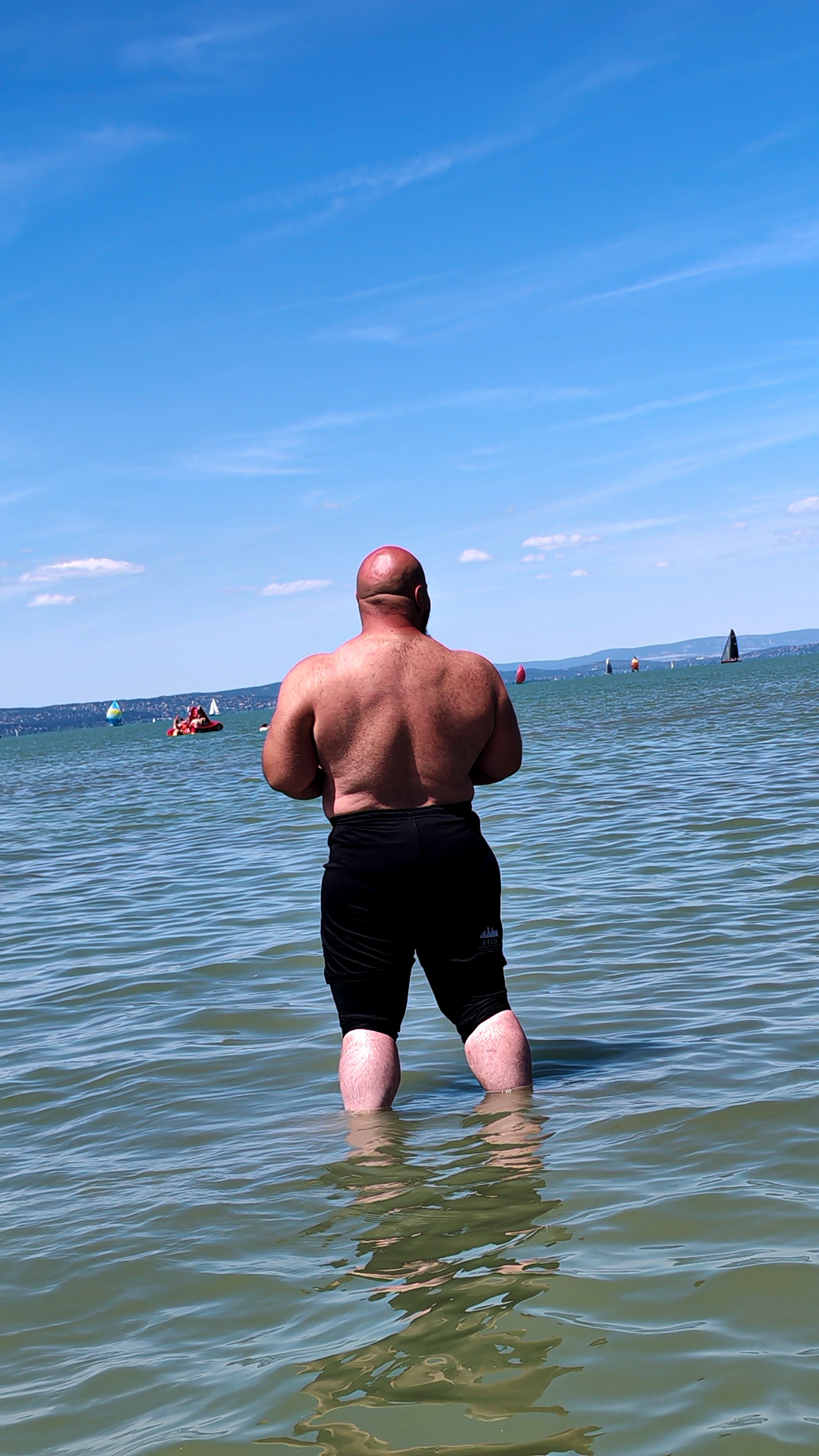
The Anatomy of a Strongman - Episode I: The Spine and Trunk - The Command Center of Strength
In Strongman, strength is never simply what one muscle can produce. A load can be moved only when multiple body segments work together in an order and position that allow force to be transmitted. At the center of this system is the trunk. Between the legs pushing against the ground and the arms gripping the implement lies a complex, mobile structure capable of developing very high levels of stiffness: the spine and the musculature surrounding it.
For a Strongman, the spine is not merely a structure that must be protected. It is an active component of performance. It must allow enough movement to position the body relative to the implement while resisting compression, shear, flexion, extension, and rotational moments created by heavy and often asymmetric loads. In events such as deadlifts, farmer's walks, yoke walks, sandbag carries, and loading events, the difference between an efficient and costly execution can be determined by only a few centimeters of load position relative to the body.
This episode does not treat the spine as a fragile structure that must be protected from all movement, nor the trunk as a simple collection of abdominal muscles. It is examined as a biological system capable of adapting to load, producing stiffness when needed, and allowing movement when the event requires it. From this perspective, anatomy becomes directly connected to technique, and technique becomes an expression of functional anatomy.
1. The Spine - The Architecture That Must Support Force
The vertebral column contains regions with different roles. The cervical region supports and orients the head, the thoracic region is closely integrated with the rib cage, and the lumbar region is designed to handle and transmit a substantial portion of the loads between the pelvis and trunk. The sacrum connects with the pelvis, and the entire system behaves as an articulated structure rather than a rigid rod.
Intervertebral discs, facet joints, ligaments, and muscles contribute together to spinal behavior. A disc is not simply a shock absorber, and vertebrae do not work independently. Load is distributed through a system in which position, movement, and muscle contraction continually change tissue demands.
The physiological curves of the spine also have mechanical relevance. Lumbar lordosis and thoracic kyphosis are not defects that should be eliminated in pursuit of an abstract idea of a “straight back.” In strength movement, the goal is not to erase natural anatomy, but to control position relative to the load and maintain a configuration that allows the body to produce and transmit force.
For Strongman, this is essential because implements continually change the problem. A conventional barbell, axle, yoke, or sandbag does not place mass in the same location. The body must adapt, and the spine is part of that adaptation.
2. The Trunk - The System That Turns the Body Into One Unit
Reducing the trunk to the abdominals is one of the greatest possible simplifications. Stability emerges from interaction among the abdominal wall, erector spinae, multifidus, thoracic musculature, diaphragm, and structures controlling the pelvis and hip. These components do not work one at a time. They act together at different levels depending on the task.
The erector spinae contribute to control of spinal position and extension. Multifidus and other deep muscles contribute to segmental control. The abdominal musculature can limit unwanted motion and participate in force transmission. The diaphragm, through respiration and its relationship with intra-abdominal pressure, contributes to the overall stabilization strategy.
During a heavy deadlift, for example, the trunk does not need to “lift” the implement in the same sense as the hip extensors. Its role is to maintain a sufficiently rigid configuration so that force produced by the lower limbs and hips can be transmitted to the bar. In a farmer's walk, the same principle becomes more complex because the trunk must remain stable while the body moves and the load moves with it.
This provides a useful definition of a strong trunk: not a trunk that never moves, but one capable of controlling movement and producing stiffness exactly when stiffness is mechanically advantageous.
3. Bracing and Intra-Abdominal Pressure - How the Body Builds Stability
Bracing is often explained with a single instruction: “brace your abs.” Physiologically and mechanically, the situation is more complex. Trunk stabilization involves coordinated muscle activation and changes in internal pressure while the thorax, abdomen, and pelvis form a system that can resist deformation under load.
Intra-abdominal pressure should not be viewed as a magic shield that removes spinal loading. Research shows that the relationship between intra-abdominal pressure, muscle activation, and spinal loading is complex and dependent on position and task. In some situations, increased pressure may contribute to stability and reduce certain loading components, while the muscular contraction required for bracing can simultaneously increase other internal forces.
In Strongman, bracing should therefore be understood as a strategy. Before a maximal deadlift, the athlete may use an inhalation and controlled breath hold to create a rigid base. During a long carry, that strategy must change to permit repeated breathing. During a yoke walk, stability must be maintained while the trunk carries the load and the body produces successive steps.
This is why good bracing does not look identical in every event. A strategy that is effective for a maximal single is not automatically optimal for a long set or medley. The anatomy is the same, but the functional demand changes.
4. The Spine Under Load - Compression, Shear, Flexion, and Rotation
Any external load creates forces on the body. At the spine, these can include axial compression, shear forces, and moments produced when the load is positioned at a certain distance from the joints. These components are not inherently harmful. Biological tissues are designed to tolerate loading, and adaptation to loading is one of the premises of strength training.
The practical issue is dose and load distribution. If an implement moves farther from the body, the moment arm increases. If the trunk inclines, the external moment on the spine can change. If the load is asymmetric, rotational and lateral-bending components appear. The body must generate internal moments to control these tendencies.
In Strongman, these forces are often less predictable than in a standardized gym exercise. A sandbag can deform and change position. A yoke can sway. A keg can have a different mass distribution. Therefore, the trunk's ability to control variability is as important as its static strength.
Biomechanical literature on Strongman events indicates that some events can produce substantial trunk muscle activation and spinal loading. Systematic reviews also emphasize that the evidence base remains limited, and findings should not be mechanically extrapolated to every implement and every performance level.
5. Deadlift, Carries, and Yoke Walk - One Spine, Different Mechanical Problems
The deadlift is perhaps the clearest demonstration of the trunk's role in force transmission. During the lift, the body must maintain the relationship between the external bar and the hip and spinal joints. As the bar moves farther from the body, mechanical demands can increase. Starting position, arm length, body proportions, and technique can therefore substantially change how an athlete experiences the same load.
The farmer's walk creates a different problem. The loads are held at the sides, and the athlete must maintain trunk position while producing locomotion. Every step changes force distribution. If the implements oscillate, the musculature must continually correct position. Biomechanical research on Strongman events has reported substantial trunk muscle activation during farmer's and yoke walks, supporting the idea that these events are not simply tests of legs and grip.
The yoke walk changes the problem again. The load is placed on the body, and the center of mass of the athlete-implement system shifts. The athlete must produce steps that are fast enough to advance but controlled enough to avoid turning every step into a large oscillation. Here, the trunk becomes a platform that must remain functional while moving.
Sandbag carries and loading events add asymmetry and contact with deformable implements. The geometry is not always fixed. The object can move against the body, slide, or change the external moment during the lift. A strong trunk must be able to respond to this variability.
6. Individual Anatomy - There Is No Single Strongman Body
Two people can have the same body mass and general strength yet perform the same event differently. Arm length, femur length, torso-to-limb proportions, pelvic width, ankle and hip mobility, and thoracic structure influence the positions the body can adopt.
An athlete with long arms may have a mechanical advantage in one deadlift variation, while another athlete may find a more favorable position in a squat or carry. There is no universal anatomy that automatically produces a good Strongman. There are different bodies that must be understood and trained according to their characteristics.
This principle also applies to the trunk. A longer torso can change external moments in certain positions. A larger thorax can influence how a log or front-loaded implement is positioned. Hip mobility can determine how easily an athlete can descend while maintaining an efficient configuration.
Anatomy is not destiny, but anatomy is context. Intelligent programming does not attempt to turn every athlete into a standard model. It finds the positions and exercises through which an individual's structure can produce performance.
7. Stability Does Not Mean Immobility
One persistent myth in strength training is that a high-performing spine must remain completely motionless. Reality is more nuanced. The spine is a mobile structure. It contributes to movement, and sport cannot completely eliminate flexion, extension, rotation, or lateral bending.
For Strongman, the realistic goal is control. At certain moments, a more rigid position may be efficient. At other moments, movement is necessary to position the body or implement. The ability to move between these states without losing control is more useful than permanent rigidity.
8. Trunk Adaptation to Strongman Training
Years of training can produce substantial changes in trunk musculature. Hypertrophy of the spinal erectors, development of the abdominal wall, improved coordination, and greater force production can all contribute to performance. But adaptation is not simply a story about larger muscles.
The nervous system learns to coordinate tension. Connective tissues adapt to loading. The athlete learns to find position under implements that are not perfectly standardized. The athlete becomes more efficient at anticipating implement movement and correcting deviations without losing rhythm.
This adaptation helps explain why an experienced Strongman can appear calm under a load that would destabilize an untrained athlete. Gravity has not become kinder. The organism has learned to organize force and manage perturbations.
9. When Anatomy Becomes Performance
Anatomy becomes relevant to Strongman when it begins to explain a concrete performance problem. If an athlete loses a deadlift because the bar moves away from the body, the problem is not simply “a weak back.” It may be a combination of positioning, anthropometry, mobility, posterior-chain strength, and trunk control.
If an athlete loses a yoke through excessive oscillation, it is not enough to say that more abdominal strength is needed. Step rhythm, load position, pelvic stability, trunk control, and the athlete's response to implement movement must be considered.
10. The Spine and Trunk on Competition Day
In competition, anatomy is placed inside fatigue. A trunk that can maintain excellent position in a fresh single must still function after a farmer's walk, a previous deadlift, or a pressing event. As fatigue rises, motor strategy can change and the margin for error becomes smaller.
This is why Strongman preparation cannot be reduced to building a “strong spine.” The athlete must build the ability to use the trunk under repeated stress. Competition can demand strength, isometric endurance, dynamic control, reaction to oscillation, and the ability to maintain position while breathing becomes difficult.
11. The Pelvis, Hip, and the Connection to the Spine
The lumbar spine cannot be understood independently of the pelvis and hip. In almost every strength event, the pelvis forms the interface between the lower limbs and the trunk. Its position influences spinal orientation, external moments, and the way the hip and trunk musculature contribute to movement. For Strongman athletes this relationship is especially important because many events begin from low positions or require simultaneous extension of the knee and hip.
In the deadlift, the pelvis must allow the hip to contribute strongly to extension without forcing the trunk into an inefficient configuration. If the hips start too low, the athlete may shift the task toward the knee. If they start too high, the hip and trunk moments may become more demanding. There is no universal hip height. There is a position in which the athlete's proportions, the implement, and the available force production meet in a favorable mechanical arrangement.
The same relationship becomes visible in loading events. Lifting an object from the floor requires the athlete to bring the implement closer to the body, extend the hip, and progressively change joint angles. The trunk must adapt as the center of mass of the object rises. An athlete may have exceptionally strong spinal erectors, but if the pelvis and hip cannot provide an effective mechanical base, part of that muscular capacity remains difficult to express.
For this reason, Strongman anatomy does not begin at the vertebrae and end at the ribs. The spine is one component of a chain that includes the pelvis, hips, and lower limbs. What coaches often call lower-back strength is frequently the product of interaction among spinal extensor capacity, pelvic control, gluteal strength, hip mobility, and motor strategy.
12. Spinal Erectors, Multifidus, and the Deep Trunk
The spinal erectors are among the most visible features of a Strongman trunk, but their appearance tells only part of the story. The erector system contributes to spinal extension and control, while multifidus and other deep structures contribute to segmental control. Under heavy loading, these systems interact with the abdominal wall to resist unwanted movement.
This is where the distinction between hypertrophy and function becomes important. A larger muscle has the potential to produce more force, but performance does not depend on cross-sectional area alone. Timing of recruitment, coordination between segments, muscle length, joint position, and the duration for which tension must be maintained all matter.
In a maximal deadlift, the spinal extensors help maintain trunk configuration while the hips and legs provide the main movement. In a yoke walk, the requirement becomes dynamic. The trunk must support the load while absorbing the small perturbations produced by each step. In a farmer's walk, the system manages bilateral loading, locomotion, and possible differences between implements.
This diversity explains why Strongman trunk training should not be reduced to one exercise. Extensions, carries, anti-rotation work, isometrics, and event-specific loading can develop different aspects of control. Exercise selection should follow the competitive demand rather than popularity.
13. The Rib Cage and Diaphragm - The Upper Part of the Stabilizing System
The trunk is often discussed as though stabilization begins below the ribs. The rib cage and diaphragm are also part of the system. The diaphragm is primarily a respiratory muscle, yet its activity and position interact with postural demands. Breathing and stabilization are therefore not completely separate processes.
During a heavy lift, the athlete must balance the need to create pressure with the need to breathe. A maximal single can support a very different breathing strategy from a medley lasting several tens of seconds. In the latter case, a prolonged breath hold can become incompatible with the metabolic requirements of the event.
Rib-cage position also matters for front-loaded implements. A log, keg, or sandbag changes the relationship between the thorax and the load. The athlete must preserve a configuration that permits both breathing and force transmission. Stability is therefore not merely a lumbar problem. It is a property of the entire trunk.
14. Asymmetry in Strongman - When the Load Refuses to Sit in the Middle
Many gym exercises are relatively symmetrical. Strongman is less predictable. Kegs, sandbags, carries, front-loaded objects, and implements that sway can create lateral and rotational moments. The body must control these forces without losing the overall direction of the task.
A unilateral carry, for example, creates a tendency toward lateral flexion and rotation. The obliques, quadratus lumborum, spinal musculature, and hip stabilizers contribute to resisting these tendencies. In Strongman, this capacity has direct value because asymmetry often appears spontaneously rather than as a deliberately selected exercise.
Asymmetry should not automatically be labeled poor technique. A capable athlete can accept and control an asymmetric position. The issue is whether the deviation remains controllable and whether repeated exposure under fatigue produces a loading pattern the athlete cannot tolerate. Technical analysis should therefore consider not only static position, but the ability to recover from perturbation.
15. The Trunk in Motion - From Static Stability to Dynamic Control
One of the major differences between traditional strength lifts and Strongman is that many Strongman events require locomotion. The athlete does not merely lift the load; the athlete transports it. This changes the trunk requirement profoundly. Instead of maintaining one position during a single repetition, the athlete must preserve control across repeated steps.
During a farmer's walk, every step produces acceleration and deceleration. The pelvis moves, the center of mass shifts, and the implements can oscillate. The trunk must be rigid enough to transmit force and adaptable enough to permit walking. This is dynamic stability rather than a simple static contraction.
During a yoke walk, the problem becomes even more sensitive because the load is supported above the body and may have substantial inertia. A long step, sudden acceleration, or loss of rhythm can amplify oscillation. An experienced athlete does not necessarily attempt to eliminate every movement; the goal is to keep movement within a controllable range.
From a training perspective, this supports the use of progressive event-specific exposure. A plank can develop the ability to resist a position, but it does not reproduce the complete demand of a yoke. A light carry reproduces locomotion but not the same load magnitude. The most useful training sits between general capacity and specific competition demand.
16. Fatigue and the Loss of Trunk Control
A trunk is not truly tested when the athlete is fresh. In competition it must function after grip has been taxed, heart rate has risen, the legs are tired, and attention is divided between technique and outcome. Fatigue can alter recruitment, coordination, and the ability to maintain an efficient motor strategy.
In a high-repetition deadlift, the first repetitions may look nearly identical while later repetitions show a different trunk position and a bar that gradually drifts away from the body. During a carry, steps may shorten and implement oscillation may increase. These changes do not necessarily mean that the athlete has suddenly become weak. They indicate that the same system is now operating under a different physiological constraint.
The ability to preserve technical control under fatigue therefore deserves gradual training exposure. Every session does not need to become a survival test. Excessive fatigue can create degraded technique and reduce the quality of subsequent work. The objective is to teach the athlete to remain organized as demand rises, not to make exhaustion the main training stimulus.
17. Building a Strongman Trunk in Practice
A strong Strongman trunk is developed through a combination of general strength and specific exposure. Deadlifts, squats, carries, yoke work, and loading events already provide substantial trunk loading. Supplemental exercises should address what is missing rather than simply adding more of the same stress.
For an athlete who loses lumbar position in the deadlift, the first questions should concern bar position, starting configuration, hip-extension capacity, and bracing before adding large amounts of isolated trunk work. For an athlete who leans during a unilateral carry, lateral flexion control and pelvic stability may be more relevant. For an athlete who loses the yoke through oscillation, footwork and implement control deserve attention.
Training volume must also be considered in the context of the entire program. A Strongman may already accumulate hundreds of seconds of trunk loading through carries and yoke work, together with heavy deadlifts and squats. Adding a very large amount of additional extension and isometric work may produce little extra benefit relative to its recovery cost.
Progression should follow the same logic as strength training elsewhere: gradually increase load, duration, distance, complexity, or specificity. There is no physiological requirement to attack the trunk every day. Adaptation depends on an appropriate relationship between stimulus and recovery.
18. Anatomy, Technique, and Individualization
An anatomical approach forces us to abandon the idea that one technique fits every body. Two athletes can solve the same mechanical problem through different strategies. Long arms may make one deadlift configuration favorable, while another athlete may find a different hip position more effective. In carries, body proportions can influence step length, implement position, and rhythm.
Individualization does not mean every technique is equally good. Certain principles remain useful: control the load, manage external moments, keep the implement close when mechanically advantageous, and preserve a position from which force can be expressed. What changes is how each athlete achieves those objectives.
This becomes especially important in Strongman because implements differ between competitions. An axle has different geometry from a standard bar. A sandbag can be soft or firm. A yoke can have different width and height. The ability to adapt one's anatomy and motor strategy to the implement is therefore part of competitive skill.
19. From Anatomy to Performance - What Should Remain After the Textbook Is Closed
Anatomy has value in Strongman only when it explains what happens under load. Knowing the name of a muscle is not enough. We need to understand what movement or mechanical tendency must be controlled, which structures can contribute, and how the problem changes when the object, speed, distance, or fatigue changes.
The spine and trunk are an ideal example. The same anatomical region can perform very different functions in a deadlift, yoke walk, farmer's walk, or loading event. Sometimes rigidity dominates. Sometimes dynamic control dominates. Sometimes the load is symmetrical. Sometimes it is unpredictable and asymmetric.
A complete Strongman therefore does not seek a trunk that never moves. The goal is a trunk that can be controlled. That is the distinction between rigidity and stability, between isolated strength and integrated function.
Ultimately, the spine is not an obstacle between strength and the implement. It is one of the structures through which strength becomes usable. The legs push, the hips extend, the trunk organizes, the arms transmit, and the implement responds. When this sequence works efficiently, anatomy becomes performance.
For Strongman, this is the central lesson of trunk anatomy: do not build a structure that merely survives weight. Build a system that can produce, transmit, and control force under conditions that change from one event to the next.
Conclusion - The Command Center of Strength
The spine and trunk are among the most important structures of a Strongman because they connect almost every major mechanical problem in the sport. They must tolerate load, control movement, permit breathing, and transmit force between the limbs.
A high-performing trunk is not defined by how rigid it can become, but by how well it regulates rigidity. In a deadlift, it can act as an almost fixed platform. In a farmer's walk, it must stabilize while the body moves. In a yoke walk, it must manage oscillation. In a sandbag carry, it must adapt to an implement that changes shape and position.
This is the functional anatomy of Strongman: not anatomy treated as a list of structures, but anatomy placed into motion. The spine, diaphragm, abdominal wall, spinal erectors, pelvis, and hips become part of one architecture. When that architecture functions efficiently, the force produced by the body can reach the implement with minimal loss of position and control.
In a sport built around loads that can greatly exceed the athlete's body mass, the trunk is not merely where the “core” is located. It is the command center of the entire strength system.
References
Hindle, B. R., Lorimer, A., Winwood, P. W., & Keogh, J. W. L. (2019). The Biomechanics and Applications of Strongman Exercises: A Systematic Review. Sports Medicine - Open, 5, 49. doi:10.1186/s40798-019-0222-z.
McGill, S. M., McDermott, A., & Fenwick, C. M. J. (2009). Comparison of different strongman events: trunk muscle activation and lumbar spine motion, load, and stiffness. Journal of Strength and Conditioning Research, 23(4), 1148-1161.
McGill, S. M., Cholewicki, J. (2001). Biomechanical basis for stability: an explanation to enhance clinical utility. Journal of Orthopaedic & Sports Physical Therapy, 31(2), 96-100.
Cholewicki, J., Juluru, K., & McGill, S. M. (1999). Intra-abdominal pressure mechanism for stabilizing the lumbar spine. Journal of Biomechanics, 32(1), 13-17.
Hodges, P. W., & Richardson, C. A. (1997). Feedforward contraction of transversus abdominis is not influenced by the direction of arm movement. Experimental Brain Research, 114, 362-370.
Stokes, I. A. F., Gardner-Morse, M., & Henry, S. M. (2011). Abdominal muscle activation increases lumbar spinal stability: analysis of contributions of different muscles and movements. Clinical Biomechanics, 26(5), 472-477.
Kraemer, W. J., & Ratamess, N. A. (2004). Fundamentals of resistance training: progression and exercise prescription. Medicine & Science in Sports & Exercise, 36(4), 674-688.
More From The Journal

Training
The Science of Strongman Training - Episode X: Competition Programming
How to build a complete Strongman competition preparation block: calendar, events, volume, intensity, specificity, simulations, autoregulation, tapering and fatigue management.
Training
The Science of Strongman Training - Episode IX: Peaking
Peaking in Strongman: how to turn months of training into maximal competition performance by reducing fatigue, preserving adaptations and managing specificity.