
Nutrition
Series: Strongman Foods - Episode 6: Potato: An Ordinary Food with Surprising Nutritional Value
September 11, 2026
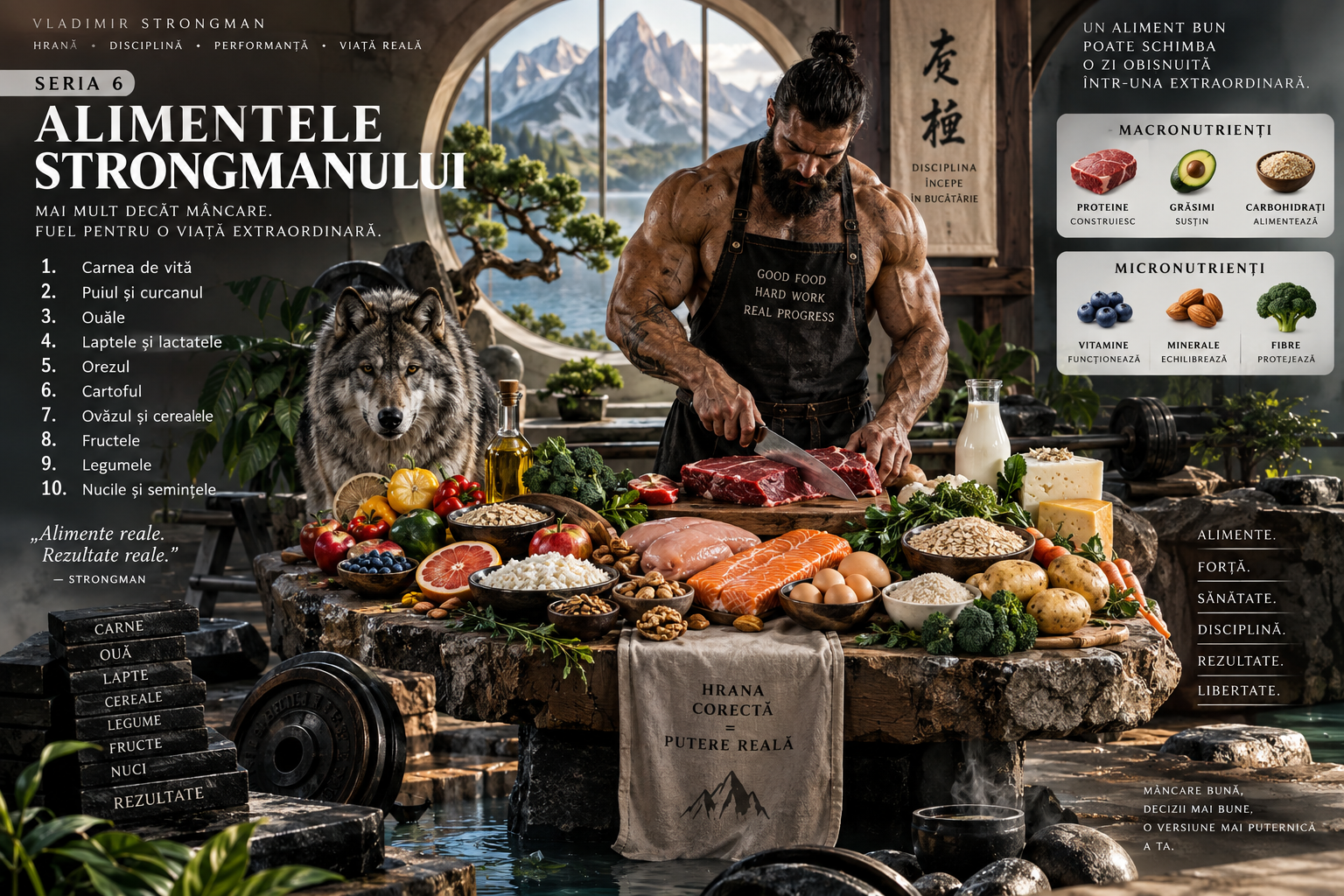
The potato is one of the most ordinary foods on the table, and that ordinariness hides its value. For a strength athlete, it can provide easy-to-use carbohydrate, potassium, vitamin C, water and fiber in a food that is inexpensive, versatile and highly satiating.
In strongman, where nutrition has to support large body mass, recovery and hard training at the same time, potatoes can play very different roles. They can be a high-volume carbohydrate in a calorie deficit, a solid post-workout starch source or the base of more energy-dense meals during gaining phases.
This episode looks at the potato as a dietary tool rather than just a source of starch. We cover glycogen, potassium, vitamin C, satiety, the skin, cooking methods, white versus sweet potato, resistant starch, food safety and practical use before and after training.
1. The potato is not an empty carbohydrate
Most of the energy in potato comes from starch, but the food also supplies potassium, vitamin C, vitamin B6 and useful amounts of fiber, especially when the skin is retained. Calling it empty carbohydrate is therefore too simplistic.
For athletes, the advantage is that these micronutrients come together with a food capable of supplying substantial carbohydrate. Potato is not a vitamin supplement, but it is more nutrient-dense than its reputation as a plain side dish suggests.
2. High water content changes calorie density
Cooked potatoes contain a lot of water, which reduces energy density relative to food volume. A large plate of boiled potatoes can occupy substantial stomach space without providing as many calories as a similar volume of pasta, pastries or chips.
That makes potatoes very useful in a calorie deficit, but sometimes less convenient during aggressive gaining. A strongman who must eat enormous amounts may prefer denser preparations or add fats and sauces.
3. Starch becomes glucose and can then become glycogen
Potato starch is made of chains of glucose. Digestion breaks those chains down, glucose enters the circulation and can be oxidized for energy or stored as glycogen in muscle and liver.
For strongman, glycogen matters most during repeated efforts and high-volume sessions. A single maximal deadlift relies mostly on the phosphagen system, but training full of sets, carries, medleys and repetitions increasingly depends on carbohydrate metabolism.
4. Potassium is one of the potato's major strengths
Potatoes are an important food source of potassium. This mineral is the major intracellular cation and contributes to membrane potential, neuromuscular excitability and fluid balance.
For an athlete who sweats heavily and consumes a lot of sodium, a diet that includes consistent potassium sources is useful. Potato does not replace a hydration and electrolyte strategy, but it can make a meaningful daily contribution.
5. Vitamin C is the surprise many people do not associate with potatoes
Potatoes provide vitamin C, although the amount varies with variety, storage and cooking. Vitamin C participates in collagen synthesis, antioxidant metabolism and non-heme iron absorption.
For athletes who think of vitamin C only in citrus fruit, potatoes are a useful reminder that ordinary foods can be underestimated. They are not the most concentrated source possible, but large servings can contribute meaningfully.
6. Vitamin B6 supports amino-acid and glycogen metabolism
Potatoes also contribute vitamin B6, a cofactor involved in numerous reactions of amino-acid and carbohydrate metabolism. In a high-protein diet with major energy demands, those pathways are constantly active.
That does not make potato an anabolic food, but it shows why a simple tuber can provide both energy and micronutrients within a performance diet.
7. The skin adds fiber and some micronutrients
Some fiber and micronutrients are found in and just beneath the skin. Eating well-washed potatoes with the skin can increase fiber intake and change the texture and satiety of the meal.
Still, the skin should not become a purity test. Some athletes digest peeled potatoes more comfortably before training. Context and tolerance matter.
8. Potatoes are remarkably satiating
Boiled potatoes ranked very high in classic satiety research. Their water content, food volume and starch structure probably contribute to a strong feeling of fullness relative to energy intake.
During a calorie deficit, that can be extremely useful. A large serving of boiled or baked potatoes may make dieting easier than much more energy-dense carbohydrate sources.
9. Potatoes and rice solve different problems
Rice is usually denser in carbohydrate and easier to consume in large amounts, while potatoes provide more volume and satiety. Neither is universally superior.
In practice, a strongman may use rice when energy intake needs to climb and potatoes when greater food volume is useful, especially during body-weight control.
10. White potatoes and sweet potatoes are closer than fitness culture suggests
Sweet potatoes are often marketed as the cleaner choice, while white potatoes are treated as inferior. Nutritionally, both can be excellent foods. They differ in micronutrients, taste and texture rather than moral value.
Orange sweet potatoes provide beta-carotene, while white potatoes can provide substantial potassium and remain an excellent starch source. Choice can be based on preference and tolerance.
11. Cooking method can completely change the plate
A boiled potato and French fries come from the same tuber, but they are no longer the same food energetically. Water loss and added fat can greatly increase calorie density.
Athletes should count the final product rather than the generic idea of potato. Preparation can move it from a filling side dish to a highly energy-dense food.
12. Boiled potatoes are excellent for controlling energy intake
Boiling keeps energy density relatively low and makes potatoes easy to portion. For a calorie deficit or a high-volume meal, it is one of the simplest preparations.
The downside is that a very large athlete may need an enormous food volume to obtain enough carbohydrate. Body size and goals determine whether boiling is ideal.
13. Baked potatoes can balance taste and moderate energy density
Baking evaporates more water than boiling and may slightly concentrate energy per gram, but potato remains a relatively simple carbohydrate source when it is not loaded with large amounts of added fat.
For many athletes, baked potatoes are more palatable and easy to integrate into large meals. They can be paired with lean meat, yogurt, cheese or vegetables, and calories can be adjusted through toppings.
14. Mashed potato shows how much the recipe matters
Mashed potato can be simple with a little milk, or become very energy-dense through butter, cream and cheese. The same potato can produce two meals with completely different calorie values.
For a strongman in a gaining phase, richer mash can be useful when calories are difficult to reach. During a deficit, the same recipe can undermine energy control without looking dramatically larger.
15. French fries and chips are a different practical category
Frying reduces water and introduces fat, greatly increasing calorie density. Chips take this even further by concentrating energy into a small, highly palatable volume.
That does not make them forbidden foods, but they should not be confused with plain potatoes when discussing satiety and calorie intake. Preparation changes the role of the food.
16. Before training, potatoes can work very well
A few hours before training, boiled, baked or simply mashed potatoes can provide carbohydrate without an enormous fat load. Many athletes tolerate them well when portions and toppings are moderate.
A meal of potatoes, lean protein and modest fat may be more comfortable before yoke, deadlift or loading than a very fatty meal. Individual tolerance still needs to be tested in training.
17. After training, potatoes help restore carbohydrate
After a hard session, carbohydrate contributes to glycogen restoration. Potatoes can fill this role very well and can be paired with protein for a complete recovery meal.
If the next session is far away, maximal refueling speed is not critical. If the athlete trains again the same day or early the next morning, total carbohydrate intake becomes more important.
18. High training volume makes carbohydrate more important
A strongman doing only a few maximal lifts has different needs from one combining pressing, deadlift repetitions, farmers walks and medleys in the same session. As volume rises, carbohydrate contribution becomes more relevant.
Potatoes can support that volume without automatically bringing large amounts of fat. This lets the athlete control protein and fat separately according to the goal.
19. During gaining, satiety can become the problem
Potatoes can be so filling that an athlete with very high calorie needs may struggle to eat enough if they are used as the dominant carbohydrate source.
In that situation, portions can be combined with oil, butter, cheese, fattier meat or denser carbohydrate sources. The goal is not to prove you can eat enormous volumes, but to reach the required energy intake.
20. During a calorie deficit, potatoes become one of the most useful carbohydrate sources
Their volume, water content and satiety make potatoes especially useful when calories are limited. A large plate can be built without consuming the entire daily energy budget.
For an athlete trying to retain muscle while reducing body fat, this practical advantage may matter more than small differences among carbohydrate sources.
21. On competition day, potatoes are not always the most convenient option
During competition, time between events may be short, appetite can fall and large food volume can become uncomfortable. Potatoes may work well in a pre-start meal but are not always ideal between events.
At those moments, more compact and easy-to-consume carbohydrate sources may be more practical. Competition nutrition should be tested before the event rather than improvised on the day.
22. Cooling can increase the proportion of resistant starch
After cooking and cooling, some potato starch can retrograde and become more resistant to digestion. A larger fraction can then reach the colon and behave partly like fermentable fiber.
This is metabolically interesting, but it does not turn potato salad into a miracle food. For athletes, the effect is modest compared with total carbohydrate, energy intake and digestive tolerance.
23. The glycemic index of potatoes is not a constant
Variety, cooking, mashing, cooling and combination with protein, fat and fiber can all alter the glycemic response. A single number assigned to potato can therefore be misleading.
For a healthy athlete, the glycemic impact of a complete meal should be interpreted in context. Around training, relatively rapid digestion can even be useful.
24. Green and heavily sprouted potatoes deserve caution
Potatoes contain natural glycoalkaloids such as solanine and chaconine. Levels may rise in green, damaged or heavily sprouted areas, and high exposure can cause gastrointestinal and neurological symptoms.
Storing potatoes in a cool, dark place, discarding very green or bitter potatoes and using good-quality produce are simple food-safety measures.
25. Conclusion: the potato's ordinariness is part of its strength
Potatoes do not need exotic marketing. They provide starch, potassium, vitamin C, water, fiber and substantial satiety in an accessible and adaptable food.
For strongman, they can be post-workout fuel, a hunger-control tool during a deficit or the base of higher-calorie meals during gaining. Their value lies not in a secret property, but in flexibility.
Selected bibliography
U.S. Department of Agriculture, FoodData Central: nutrient composition of potatoes. National Institutes of Health, Office of Dietary Supplements: Potassium, Vitamin C and Vitamin B6 Fact Sheets. Thomas DT, Erdman KA, Burke LM. Nutrition and Athletic Performance. Academy of Nutrition and Dietetics, Dietitians of Canada and ACSM. Holt SHA et al. A Satiety Index of Common Foods. European Food Safety Authority: risk assessment of glycoalkaloids in potatoes and potato-derived products.
More From The Journal

Training
The Science of Strongman Training - Episode X: Competition Programming
How to build a complete Strongman competition preparation block: calendar, events, volume, intensity, specificity, simulations, autoregulation, tapering and fatigue management.

Training
The Science of Strongman Training - Episode IX: Peaking
Peaking in Strongman: how to turn months of training into maximal competition performance by reducing fatigue, preserving adaptations and managing specificity.