
Nutrition
Series: Strongman Foods - Episode 4: Milk and Dairy: Protein, Calcium, Hydration and Versatility
September 11, 2026
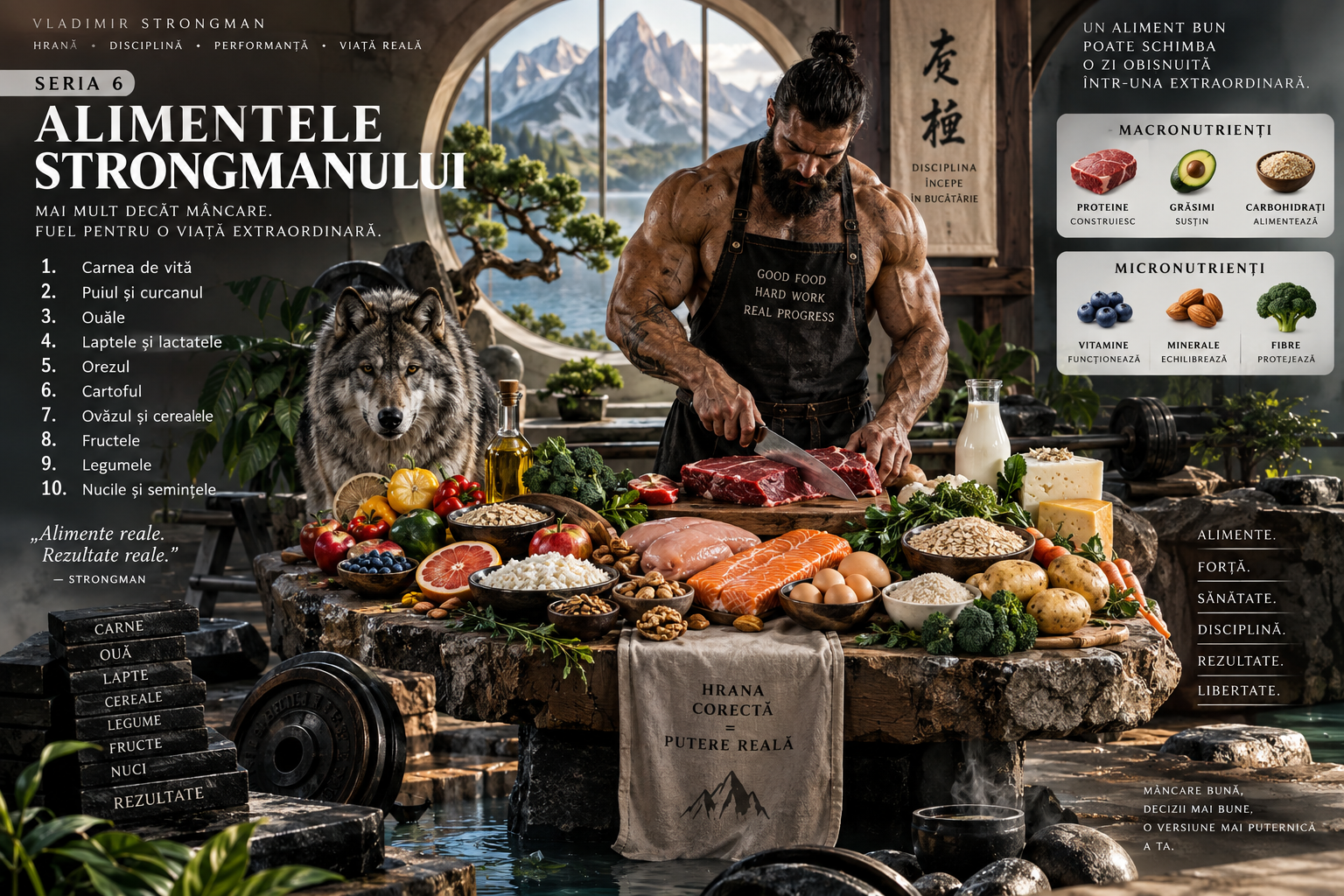
Milk and dairy occupy a special place in strength-sport nutrition. From the same food family can come a hydrating drink, a high-protein snack or an energy-dense food, depending on the product and how it is processed.
For a strongman, that versatility is extremely useful. A large athlete may have days when easy-to-drink calories are valuable, days when energy must be controlled precisely and moments when digestion before training matters more than calorie density.
This episode follows milk, yogurt, kefir, skyr, cheese, whey and casein through protein quality, leucine, lactose, calcium, phosphorus, hydration, fermentation, fat, digestive tolerance and their practical use in a strength diet.
1. Dairy is a family of foods, not a single product
A glass of milk, Greek yogurt, aged cheese and a scoop of whey all come from the same raw material, yet they are not nutritionally equivalent. Processing changes water, protein, fat, lactose, sodium and micronutrient content.
The useful question is not whether dairy is good or bad, but which dairy product serves the current goal. Milk can raise energy intake, skyr can provide protein with relatively few calories and cheese can concentrate a great deal of energy into a small serving.
2. Milk combines water, protein, carbohydrate and fat
Milk is mostly water, but it also contains protein, lactose, minerals and, depending on the product, more or less fat. That is why it can contribute simultaneously to hydration, protein intake and energy intake.
For the athlete, the advantage is practical: one drink can provide fluid and nutrients without the chewing volume of a solid meal. The downside is that liquid calories can be easy to overshoot, while lactose may cause symptoms in sensitive people.
3. Milk protein is complete
Dairy proteins contain all essential amino acids required for muscle-protein synthesis. Milk, yogurt and derived protein products can therefore contribute efficiently to daily protein targets and to distributing protein across several meals.
Protein quality does not replace training. Hypertrophy still depends on mechanical tension, training volume, adequate energy, total protein intake, sleep and recovery. Dairy provides building material, but it does not build the structure by itself.
4. Whey is the faster fraction of dairy protein
Whey is the soluble protein fraction separated during milk processing. It is rich in essential amino acids and leucine and is digested relatively quickly compared with slower proteins.
That makes it convenient after training or whenever a solid meal is impractical. Its real advantage is convenience and amino-acid quality, not the idea of a tiny window in which muscle suddenly loses the ability to use protein.
5. Casein is the slower fraction of milk protein
Casein makes up most of the protein in cow's milk. In the acidic environment of the stomach it forms a structure that slows digestion and amino-acid release compared with whey.
That is why it is often used in the evening or before longer periods without food. It is not mandatory, however. A mixed solid meal can digest slowly as well, and the overall daily diet matters more than one specific product.
6. Leucine explains part of the value of dairy proteins
Whey is particularly rich in leucine, an essential amino acid involved in signaling muscle-protein synthesis. A sufficient serving can provide both the leucine signal and the other essential amino acids required to build new proteins.
Leucine is not a magic switch. The muscle response also depends on total protein, training, energy availability and recovery status. Dairy is useful because leucine arrives inside a complete protein matrix.
7. Milk can be useful after training
After training, milk can provide protein, carbohydrate, fluid and electrolytes at the same time. That combination makes it a simple recovery option when it is well tolerated and when its calorie content fits the athlete's goal.
It does not have to be consumed immediately. If the athlete eats a complete meal within a reasonable period, practical differences may be small. Milk is valuable mainly because it combines several recovery needs in one product.
8. Lactose is the natural carbohydrate in milk
Lactose is a disaccharide made from glucose and galactose. It contributes to the energy content of milk and some dairy foods, while its amount falls in certain fermented or aged products.
For a strongman who needs carbohydrate, lactose is not inherently a problem. It becomes relevant when digestion is poor, portions are large or several dairy foods are consumed within a short period.
9. Milk contributes to hydration and provides electrolytes
Its high water content, together with sodium, potassium and other solutes, means milk contributes to hydration. After exercise, fluid retention depends on many factors, and nutrient-containing drinks may be retained differently from plain water.
That does not mean milk should replace water. For athletes who sweat heavily, hydration strategy still needs enough fluid and, when appropriate, enough sodium. Milk can be one piece of the plan, not the entire plan.
10. Calcium and phosphorus make dairy valuable for the skeleton
Dairy foods are important sources of calcium and phosphorus, minerals essential to bone structure and normal muscle and nerve function. For an athlete handling very heavy loads, skeletal health is directly connected to performance.
Calcium does not work alone. Vitamin D, energy intake, protein, hormones and mechanical loading influence bone remodeling. Dairy can provide a useful foundation, but it cannot compensate for severe energy deficiency or an otherwise poorly structured lifestyle.
11. Dairy also provides B12, riboflavin and iodine
Beyond calcium, many dairy foods contribute vitamin B12, riboflavin and, depending on the food system and product, iodine. These micronutrients participate in blood formation, energy metabolism and thyroid function.
Exact amounts vary among products, and fortification may further change the profile. That is why labels remain useful. In performance nutrition, the details of composition matter more than the general reputation of the food category.
12. Whole and skim milk serve different goals
Whole milk provides more fat and calories, which can be useful during a gaining phase. Reduced-fat or skim milk keeps the protein and much of the micronutrient value while lowering total energy intake.
There is no universally superior version. The choice depends on calorie needs, the rest of the diet, digestive tolerance and preference. For a strongman struggling to eat enough, whole milk may be practical; during weight loss, a leaner version may fit better.
13. Yogurt changes texture and digestion, not just flavor
Fermentation transforms part of the lactose and changes the structure of the food, which is one reason yogurt may be better tolerated than milk by some people. At the same time, it retains high-quality protein and important minerals.
Yogurts vary enormously in fat, added sugar and protein content. A plain yogurt and a dessert-style yogurt can have completely different nutritional profiles. Athletes should choose by label and objective rather than by the word yogurt alone.
14. Greek yogurt and skyr are useful high-protein tools
Through straining or concentration, Greek yogurt and skyr can reach high protein concentrations. Low-fat versions are useful when an athlete wants a lot of protein for relatively few calories, while full-fat versions can raise energy density.
They are also easy to combine with fruit, cereal, honey or nuts. Depending on the additions, the same base can become a cutting snack or a very energy-dense meal. That fine control is valuable in strongman nutrition.
15. Kefir adds fermentation and a different microbial matrix
Kefir is produced by fermentation with a more complex community of microorganisms than many standard yogurts. The process can reduce some lactose and may change both flavor and digestive tolerance.
The word probiotic should not be treated as a universal guarantee. Effects depend on strains, dose, product and person. For athletes, kefir's main practical advantage remains the combination of protein, fluid and fermentation in an easy-to-consume food.
16. Lactose intolerance is about digesting milk sugar
Lactose intolerance occurs when lactase activity is insufficient for the amount consumed. Undigested lactose reaches the colon, where it can cause bloating, gas, cramps or diarrhea. Severity varies greatly among individuals.
Intolerance is not the same as allergy and does not automatically mean all dairy must be eliminated. Tolerated dose, distribution across the day and choosing fermented or lactose-free products can change the digestive response considerably.
17. Lactose-free products retain almost the same nutritional value
In lactose-free milk, the enzyme lactase splits lactose into glucose and galactose. The taste may therefore seem slightly sweeter, but protein, calcium and most other nutrients remain broadly comparable with regular milk.
For athletes who digest lactose poorly, this can be a simple practical solution. There is no need to abandon the entire dairy category when the actual problem is digestion of one carbohydrate.
18. Milk-protein allergy is a different problem
Milk-protein allergy involves the immune system and reactions to proteins such as casein or whey proteins. It should not be confused with lactose intolerance, which is a problem of carbohydrate digestion.
With a genuine allergy, choosing lactose-free milk does not solve the issue because the proteins remain present. Medical assessment is important, especially when reactions are rapid or systemic.
19. Cheese concentrates nutrients, calories and sodium
By removing much of the water, cheese can concentrate protein, calcium, fat and sodium. A small serving can contain far more energy than expected, especially in aged and higher-fat varieties.
For a strongman in a gaining phase, that density can be useful. During a calorie deficit, the same property requires tighter portion control. Cheese is not automatically good or bad; context and amount determine its role.
20. Cottage cheese and quark sit between food and supplement
Cottage cheese, quark and similar products can provide a large amount of protein in a solid form, with fat content varying by product. They work well as snacks or light meals and can support satiety.
Compared with a shake, their texture and volume may be more filling during a diet. Compared with many aged cheeses, they can offer a more favorable protein-to-calorie ratio. Labels matter more than assumptions based on product names.
21. Whey concentrate and whey isolate are not the same product
Whey concentrate usually retains more lactose and somewhat more fat, whereas isolate contains a higher proportion of protein and fewer non-protein components. That difference can matter for digestion and calorie control.
For most athletes who tolerate dairy well, concentrate may be entirely adequate and more economical. Isolate becomes useful when a very lean protein dose is desired or when even small amounts of lactose create problems.
22. Casein before sleep can be useful, but it is not mandatory
A protein-containing meal before sleep can increase amino-acid availability overnight, and casein is popular because of its slower digestion. For athletes who struggle to distribute protein across the day, it can be a simple solution.
The effect does not depend on one product. Greek yogurt, skyr, cottage cheese or a mixed meal can also provide sufficient protein. Consistency of daily intake matters more than loyalty to a nighttime ritual.
23. During gaining, dairy can make calories easier to consume
Whole milk, higher-fat yogurts, cheese and whey-based shakes can raise energy intake quickly without requiring enormous food volume. For a very large strongman, that can make the difference between a sustainable diet and one that feels like constant eating.
Liquid calories are also easy to underestimate. A shake with whole milk, whey, nut butter and fruit can become an extremely energy-dense meal. During gaining that may be ideal; during weight control it can undermine the plan if it is not counted.
24. During cutting and on competition day, digestive tolerance becomes the main criterion
During a calorie deficit, foods such as skyr, low-fat Greek yogurt, skim milk and cottage cheese can keep protein high at a moderate calorie cost. On competition day, however, even a good food may be unsuitable if it causes bloating or uncomfortable fullness.
A strongman should not test large amounts of milk, kefir or shakes between events for the first time in competition. Contest nutrition should be rehearsed during long training sessions. Predictable digestion is more valuable than theoretically perfect food selection.
25. Conclusion: the value of dairy lies in versatility
Few food families allow so many adjustments without completely changing the structure of the diet. Milk and dairy can provide fluid, fast protein, slow protein, carbohydrate, fat, calcium and products with dramatically different calorie densities.
For strongman, that means flexibility. There is no mandatory dairy food, only products suited to different goals. When digestion is good and the product is chosen intelligently, dairy can cover an important share of protein, energy, micronutrients and recovery needs.
Selected bibliography
Jäger R et al. International Society of Sports Nutrition Position Stand: Protein and Exercise. Journal of the International Society of Sports Nutrition. Phillips SM, Tang JE, Moore DR. The role of milk- and soy-based protein in support of muscle protein synthesis. Tang JE et al. Ingestion of whey hydrolysate, casein or soy protein isolate: effects on mixed muscle protein synthesis. National Institutes of Health, Office of Dietary Supplements: Calcium, Vitamin B12 and Iodine Fact Sheets. U.S. Department of Agriculture, FoodData Central: milk and dairy nutrient composition. Thomas DT, Erdman KA, Burke LM. Nutrition and Athletic Performance.
More From The Journal

Training
The Science of Strongman Training - Episode X: Competition Programming
How to build a complete Strongman competition preparation block: calendar, events, volume, intensity, specificity, simulations, autoregulation, tapering and fatigue management.

Training
The Science of Strongman Training - Episode IX: Peaking
Peaking in Strongman: how to turn months of training into maximal competition performance by reducing fatigue, preserving adaptations and managing specificity.