
Nutrition
Series: Strongman Foods - Episode 3: Eggs: Protein, Fat and Micronutrients in One Food
September 11, 2026
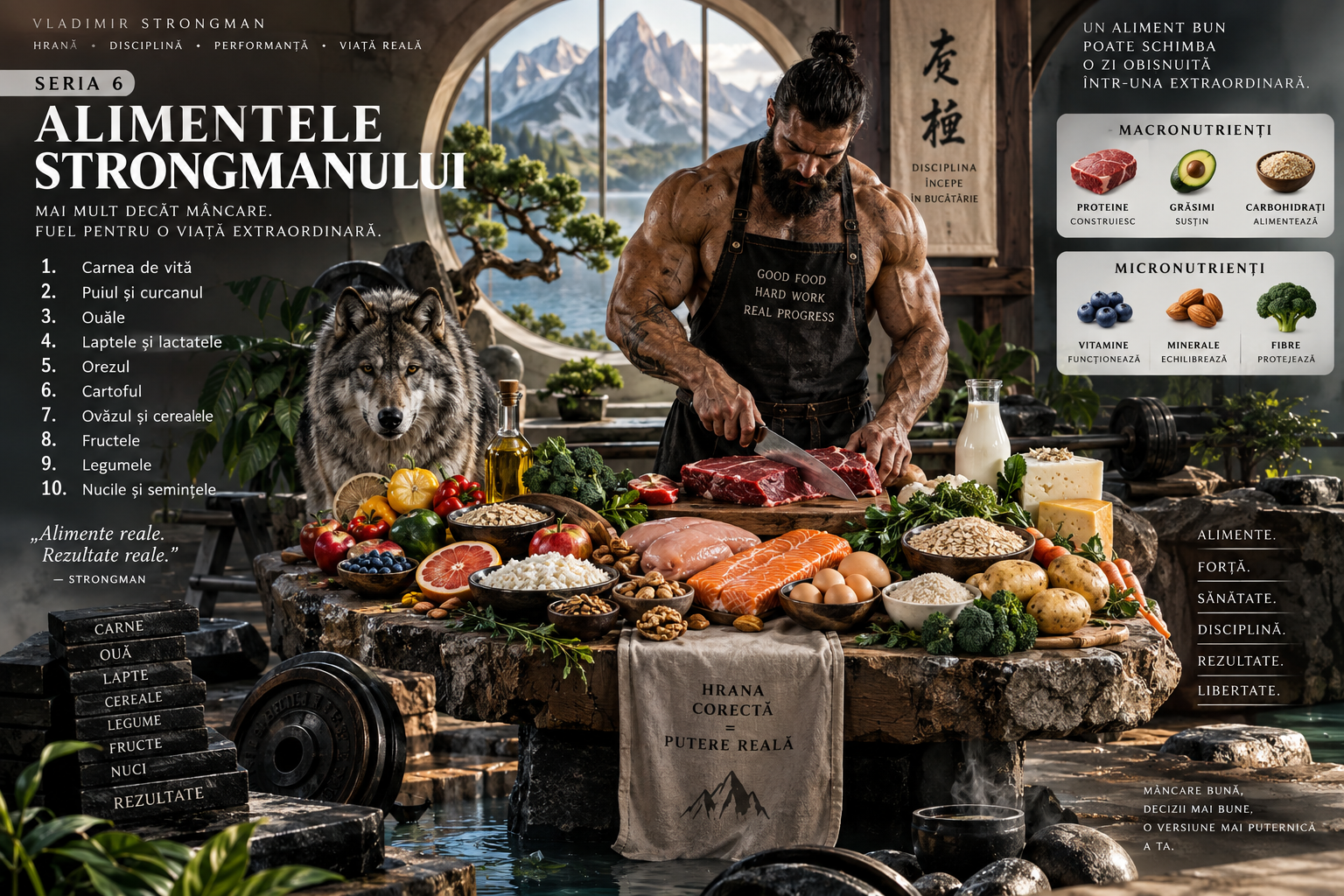
Eggs are almost the definition of a compact food. Inside one shell are complete protein, fat, phospholipids, choline, fat-soluble vitamins and several minerals. For strength athletes, this combination is useful because it provides more than protein alone.
In bodybuilding, powerlifting and strongman, eggs have appeared for decades at breakfast, in gaining diets and during cutting phases. Sometimes they are treated as nearly perfect, while in other diets the yolk is removed because of fat or cholesterol. The reality is more nuanced: the white and yolk do different jobs.
This episode examines the egg as a whole food: protein quality, the role of the yolk, choline, vitamins, fat, dietary cholesterol, satiety, digestion and how eggs can be used differently during gaining, cutting and around training.
1. The egg contains two nutritionally different compartments
Egg white is dominated by water and protein, while the yolk contains most of the fat, cholesterol, phospholipids and many micronutrients. Removing the yolk does more than remove fat. It changes the nutritional profile of the food.
2. Egg protein is complete
Egg protein provides all essential amino acids required by the body. For a strongman, eggs can contribute effectively to daily protein intake, although portion size matters because a single egg contains much less protein than a large serving of meat.
3. Leucine matters, but total protein still matters more
Eggs provide leucine and the other essential amino acids involved in muscle-protein synthesis. For a large athlete, several eggs may be an excellent part of a meal, while additional egg whites can raise protein without adding many calories.
4. The yolk is not the 'bad' part of the egg
The yolk contains fat and cholesterol, but it also concentrates choline, phospholipids and many micronutrients. Removing it lowers calories but also lowers the nutrient density of the meal.
5. Egg fat increases energy density
Fat in the yolk makes whole eggs more calorie dense than egg whites. That can be useful during a gaining phase. During a calorie deficit, the same feature can be controlled by adjusting the number of yolks and added cooking fats.
6. Choline is one of the yolk's major strengths
Eggs are an important source of choline, a nutrient involved in phospholipid metabolism, liver function and acetylcholine synthesis. These processes matter for normal neurological and muscular function even though choline does not feel like a stimulant.
7. Fat-soluble vitamins are concentrated largely in the yolk
Egg yolks can provide vitamins A, D, E and K in varying amounts. The exact profile depends partly on the hen's diet and the product, but the key point is that many of the egg's most nutrient-dense components are found in the yolk.
8. Eggs also provide B vitamins
Eggs provide riboflavin, vitamin B12, biotin and other micronutrients involved in energy metabolism and cellular function. These vitamins do not create energy, but they support the pathways that allow food energy to be used normally.
9. Dietary cholesterol needs context
Egg yolks contain cholesterol, but dietary cholesterol and blood cholesterol are not the same thing. Individual responses vary, and cardiovascular health depends on the whole dietary pattern, saturated fat intake, fiber, body weight, physical activity, genetics and individual biomarkers.
10. More eggs do not automatically mean more testosterone
Because steroid hormones are synthesized from cholesterol, eggs are sometimes promoted as a direct testosterone booster. Endocrine physiology is far more complex. Eggs can support a well-fed diet, but they are not a pharmacological hormone enhancer.
11. Satiety is a practical advantage
The combination of protein and fat makes eggs filling for many people. During cutting, a meal built around eggs, vegetables and a controlled carbohydrate source can be easy to manage. During aggressive gaining, that same satiety can sometimes make very high calorie intake harder.
12. Whole eggs or egg whites? The goal decides
Whole eggs are useful when nutrient density and energy are desired. Egg whites are useful when protein needs to rise with minimal added calories. Many strength athletes combine the two to keep some yolks while increasing total protein precisely.
13. Digestion differs from athlete to athlete
Eggs are well tolerated by many people, but a very large, high-fat omelet can feel heavy before training. More yolks, added oil, cheese or fatty meat can slow digestion and increase total energy substantially.
14. Eggs work well at breakfast, but they are not a morning-only food
The connection between eggs and breakfast is mainly cultural and practical. They are easy to prepare and pair well with bread, potatoes, oats, vegetables and dairy. Metabolically, they can be eaten at any meal that fits the athlete's plan.
15. In strongman, the compact energy density is useful
For a very large athlete, eating enough energy without making every meal enormous can be difficult. Whole eggs help through energy density, while egg whites offer the opposite tool: high protein with very few calories. That flexibility is unusually useful.
16. Raw eggs offer no performance advantage
The image of athletes drinking raw eggs remains part of popular culture, but there is no practical performance advantage. Cooking improves protein utilization and reduces microbiological risk, which matters far more to a competitive athlete.
17. Cooking method can change the meal more than the eggs themselves
Boiled or poached eggs are easy to track. Frying eggs in large amounts of oil or butter, or adding cheese and processed meat, can rapidly increase the calorie density of the meal.
18. On competition day, portion size and timing matter
A large meal with many whole eggs can be filling and relatively slow to digest. On competition morning it may work if the athlete tolerates it and has enough time before the first event. Between events, lighter foods and carbohydrates are often more practical.
19. Eggs should not become the only protein source
Eggs are nutrient dense, but dietary variety still matters. Meat, fish, dairy, legumes and other protein sources contribute different micronutrient and fatty-acid profiles. A performance diet is stronger when it does not depend on one food.
20. Conclusion: the egg is a compact nutritional package, not a magic food
Eggs appear so often in strength-sport diets because they solve several problems at once: complete protein, fat, choline, vitamins, minerals, satiety and simple preparation. For strongman, the real advantage is flexibility, especially the ability to combine whole eggs and whites to fine-tune protein and calorie intake.
Selected bibliography
U.S. Department of Agriculture, FoodData Central: nutrient composition of whole eggs, egg whites and egg yolks. National Institutes of Health, Office of Dietary Supplements: Choline Fact Sheet for Health Professionals. Jäger R et al. International Society of Sports Nutrition Position Stand: Protein and Exercise. Dietary Guidelines for Americans: dietary cholesterol within overall dietary patterns. Fuller NR et al. Research on high-egg diets and cardiometabolic risk factors.
More From The Journal

Training
The Science of Strongman Training - Episode X: Competition Programming
How to build a complete Strongman competition preparation block: calendar, events, volume, intensity, specificity, simulations, autoregulation, tapering and fatigue management.

Training
The Science of Strongman Training - Episode IX: Peaking
Peaking in Strongman: how to turn months of training into maximal competition performance by reducing fatigue, preserving adaptations and managing specificity.