
Nutrition
Series: Strongman Foods - Episode 2: Chicken and Turkey: Easy-to-Control Protein
September 11, 2026
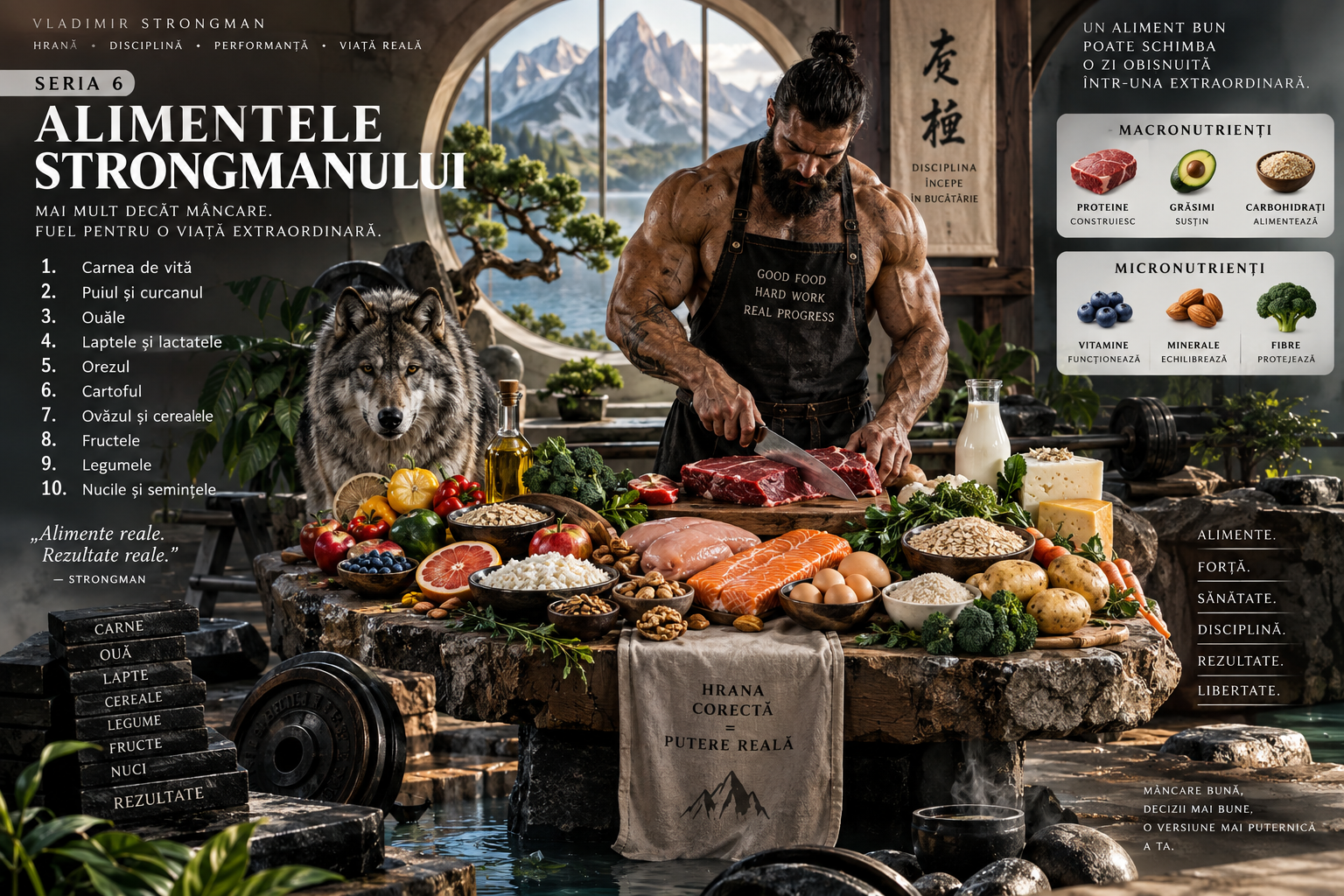
If beef is the symbolic food of strength, chicken and turkey are precision foods. They carry less cultural theatre, but that is exactly what makes them useful: they allow an athlete to add a large amount of protein without automatically adding large amounts of fat and calories.
For a strongman, that control matters. In a diet of 4,000, 5,000 or more kilocalories, the challenge is not simply eating a lot. It is deciding where those calories come from. Chicken and turkey separate protein from the rest of the equation, allowing carbohydrate and fat to be adjusted independently.
This episode looks at chicken and turkey not as stereotypical diet foods, but as flexible tools for strength athletes. We examine protein quality, leucine, breast versus thigh, digestion, satiety, meal prep, peri-workout use, food safety and why poultry remains useful in almost every phase of preparation.
1. Why chicken and turkey are control foods
Their main practical advantage is the protein-to-energy ratio. Skinless chicken or turkey breast provides a large amount of protein for relatively few calories. This helps an athlete reach high protein targets without every serving bringing a large fat load.
In planning terms, it is almost like having a separate dial for protein. If more calories are needed, they can come from carbohydrate and fat. If energy must be reduced, protein can remain high while other sources are cut.
2. The protein is complete and high quality
Chicken and turkey provide all essential amino acids required for muscle-protein synthesis. They are complete protein sources that fit easily into diets aimed at hypertrophy, muscle retention and recovery.
Protein quality matters, but only within context. Muscle does not grow because a food is labelled clean. Growth depends on training stimulus, adequate energy, sufficient total protein and a reasonable distribution of protein across the day.
3. Leucine helps trigger muscle-protein synthesis
Like other high-quality animal proteins, poultry provides leucine. This essential amino acid contributes to signaling pathways that initiate muscle-protein synthesis, particularly after training and within a protein-rich meal.
Leucine does not work alone. It acts more like an ignition signal, while the other essential amino acids provide the building material. Chicken and turkey provide both in the same serving.
4. Breast and thigh are not the same food
When people say chicken, the difference between breast and thigh matters. Skinless breast is very lean, while thigh generally contains more fat and therefore more calories. Both provide complete protein, but they serve different goals.
During cutting or strict calorie control, breast is extremely efficient. During gaining, thighs can improve palatability and raise calorie intake without dramatically increasing food volume.
5. Turkey is not simply a bigger chicken
Turkey has a protein profile comparable with chicken, but different cuts offer different combinations of fat and micronutrients. Turkey breast is very lean, while darker meat may provide somewhat more fat, iron and zinc.
In practice, turkey adds variety without changing the basic architecture of the diet. For an athlete eating repetitive meals, that variation can help both taste and long-term adherence.
6. Calorie density is easy to adjust
By changing the cut, skin and cooking method, poultry can move from extremely lean to much more calorie dense. Grilled skinless breast and skin-on thighs cooked with added fat may belong to the same food category but have very different energy values.
That makes poultry useful in strongman because the athlete can keep a familiar protein source while total energy intake changes across the season.
7. Less fat can mean easier digestion
Dietary fat slows gastric emptying. A meal of lean chicken, rice and a modest amount of fat may therefore be easier to tolerate before training than a very high-fat meal.
That does not make poultry a universally fast food, but it can make digestion more predictable. Before yoke, farmers, deadlift or medley work, predictability may matter more than small micronutrient differences.
8. Satiety is useful during a calorie deficit
Protein is highly satiating. A large serving of lean poultry can provide substantial food volume and help control hunger while an athlete reduces calories but tries to preserve muscle mass and performance.
During an aggressive gaining phase, however, the same satiety can become a disadvantage. If calorie needs are enormous, relying only on very lean foods may make the diet unnecessarily bulky.
9. Chicken and turkey leave room for carbohydrate
Carbohydrate is important in strongman for glycogen restoration and repeated high-volume work. Using a lean protein source leaves more of the calorie budget available for rice, potatoes, pasta, bread, fruit and other carbohydrate sources.
This becomes especially useful on long training days or multi-event sessions, when carbohydrate availability may matter more for repeated performance than adding a large amount of fat to the same meal.
10. Meal prep is a major reason for their popularity
Chicken and turkey are easy to cook in bulk, portion and combine with almost any carbohydrate source. For athletes preparing ten, fifteen or twenty meals ahead of time, that simplicity has real value.
In performance sport, logistics influence adherence. A good protein source that is difficult to buy, cook or transport will be used less often than one that is accessible, repeatable and easy to weigh.
11. Cost and availability matter in a large diet
Compared with many premium cuts of beef or some types of fish, chicken can be a more affordable protein source. For an athlete eating large amounts of protein every day, cost per serving becomes important.
Turkey may be somewhat more expensive depending on the market, but it remains easy to integrate. A performance diet has to work in the real world, not only in a perfect spreadsheet.
12. Micronutrients are present even if they are not the headline
Chicken and turkey provide B vitamins, selenium, phosphorus, zinc and other micronutrients, with amounts varying by cut. Darker meat tends to have a somewhat different micronutrient profile from very lean breast meat.
Still, their main advantage is macronutrient control. They should not become the only foods in the diet. A complete eating pattern needs variety, plant foods, other protein sources and useful fat sources.
13. Chicken does not need to be dry to be 'fitness food'
One of the classic caricatures of sports nutrition is dry chicken breast beside bland rice. There is no metabolic advantage in making food miserable. Seasoning, marinades, sensible sauces and proper cooking can dramatically improve adherence.
The important point is to count the additions. A very lean chicken breast can become a high-calorie meal when fried in large amounts of oil or covered with energy-dense sauces.
14. Around training, simplicity is an advantage
A meal built around lean chicken or turkey and easily digested carbohydrate can be standardized before training. The athlete learns the amount he tolerates, the digestion time and how the meal feels under heavy effort.
This predictability is particularly useful before events that heavily compress the trunk or require major intra-abdominal pressure, including yoke, squat, deadlift and loading work.
15. On competition day, large portions may become uncomfortable
Even lean meat can be difficult to eat in large quantities when adrenaline is high and time between events is short. In many competitions, full meat-based meals fit better before the start or after the contest, while lighter foods dominate between events.
There is no universal rule. Competition nutrition should be tested during long training sessions and simulations rather than invented on contest morning.
16. Food safety is non-negotiable
Raw poultry can carry pathogenic bacteria, and cross-contamination in the kitchen is a real risk. Separate utensils, hand washing, adequate cooking and proper refrigeration are essential.
For an athlete, food poisoning before competition can erase months of preparation. Basic hygiene matters more than marginal nutritional optimization.
17. Monotony is the main practical risk
Because chicken and turkey are so easy to control, they can end up dominating the diet. If every meal becomes chicken and rice, micronutrient variety and eating enjoyment can suffer.
A very good food can still produce a poor diet when used as the only answer to every meal. Rotating beef, fish, eggs, dairy, legumes and other protein sources makes the plan more robust.
18. During gaining, very lean can sometimes be too lean
A very large strongman may struggle to eat enough calories if every protein source is extremely lean and every meal is bulky. In those situations, thighs, skin, sauces or added fats can have a practical role.
The goal is not to eat as lean as possible. It is to choose the energy density that matches the goal. Control means being able to raise or lower calories without losing the structure of the diet.
19. During cutting, precision becomes a major advantage
In a calorie deficit, keeping protein high helps support muscle retention. Chicken and turkey breast make this easier because they provide substantial protein for relatively few calories.
That explains their popularity in fat-loss diets. They do not burn fat and have no special metabolic magic. They simply make the nutritional mathematics easier.
20. Conclusion: chicken and turkey are fine-adjustment tools
Chicken and turkey appear so often in strength-sport diets because they make protein easy to control. They provide complete protein, adjustable calorie density, simple portioning, relatively predictable digestion and easy pairing with carbohydrate-rich foods.
For strongman, their value lies in precision rather than spectacle. The same food can anchor a cutting meal, a maintenance meal or a high-calorie meal by changing the cut, portion and sides. They are tools, not doctrine, and that flexibility is exactly why they remain so useful.
Selected bibliography
Jäger R et al. International Society of Sports Nutrition Position Stand: Protein and Exercise. Journal of the International Society of Sports Nutrition. Morton RW et al. A systematic review, meta-analysis and meta-regression of protein supplementation and resistance training. British Journal of Sports Medicine. U.S. Department of Agriculture, FoodData Central: nutrient composition of chicken and turkey cuts. Thomas DT, Erdman KA, Burke LM. Position of the Academy of Nutrition and Dietetics, Dietitians of Canada and ACSM: Nutrition and Athletic Performance. U.S. Department of Agriculture guidance on safe handling and cooking of poultry.
More From The Journal

Training
The Science of Strongman Training - Episode X: Competition Programming
How to build a complete Strongman competition preparation block: calendar, events, volume, intensity, specificity, simulations, autoregulation, tapering and fatigue management.

Training
The Science of Strongman Training - Episode IX: Peaking
Peaking in Strongman: how to turn months of training into maximal competition performance by reducing fatigue, preserving adaptations and managing specificity.