
Nutrition
Series: Strongman Foods - Episode 1: Beef and Why It Appears So Often in Strength Athletes' Diets
September 11, 2026
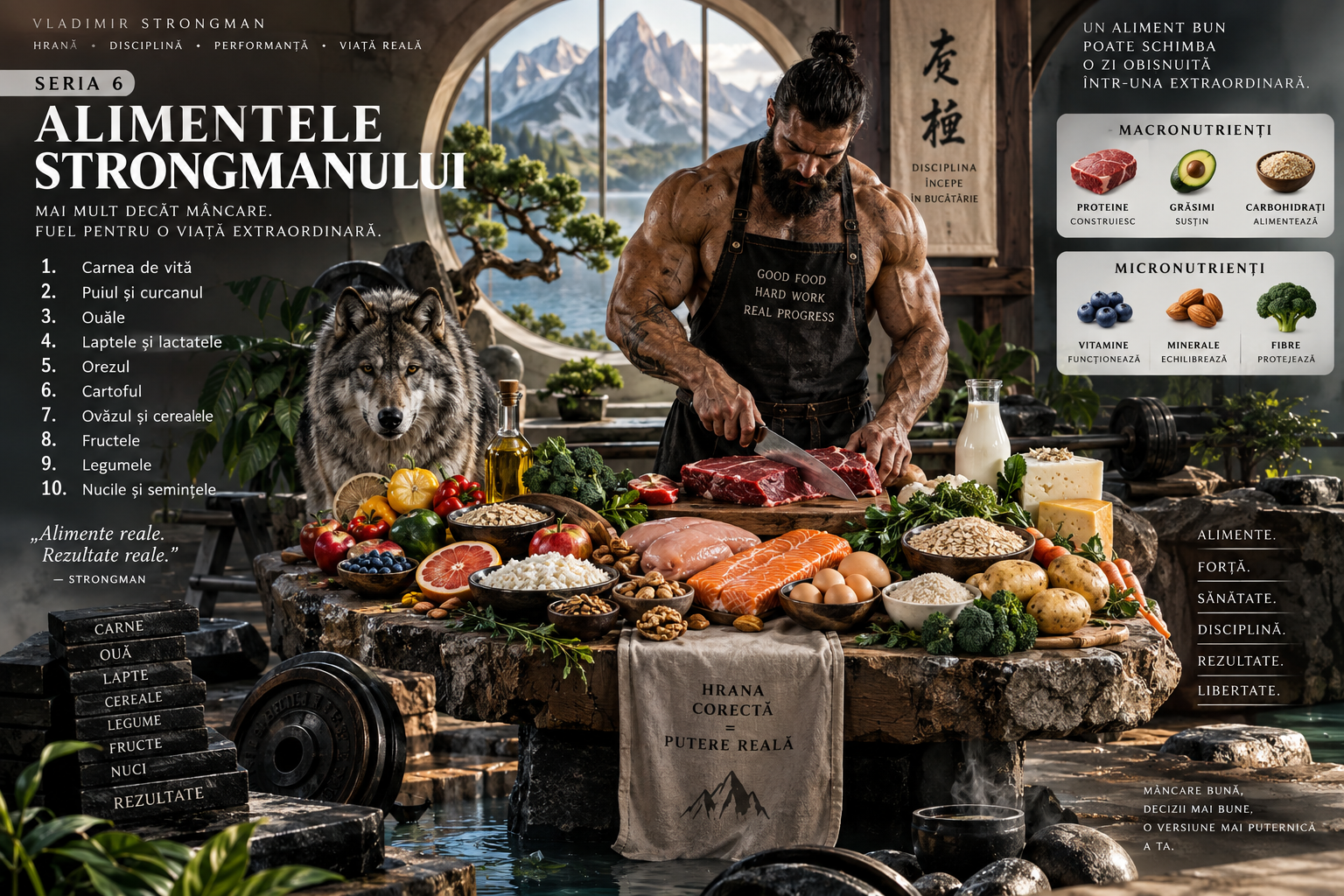
Few foods are as strongly associated with strength sports as beef. From old bodybuilding photographs showing steak beside eggs and potatoes to the enormous meals of modern strongmen, beef appears again and again. The explanation is often reduced to the slogan that meat makes you strong. The reality is more interesting: beef contains no secret molecule of strength, but it combines several things a large athlete may need in substantial amounts.
A serving of beef can provide high-quality protein, essential amino acids, leucine, creatine, heme iron, vitamin B12, zinc, selenium and, depending on the cut, useful amounts of fat and energy. For an athlete who must eat enough to support 100, 120 or 150 kilograms of body mass and demanding training, this nutritional density is practical.
This episode does not assume that beef is mandatory or that unlimited intake is beneficial. The question is more precise: why has beef remained so common in strength-athlete diets, what advantages does it offer compared with other protein sources, what limitations should be recognized, and how can it fit into a diet designed for both performance and long-term health?
1. Beef is more than protein
When an athlete says he eats beef for protein, he is describing only part of the story. Protein matters, but the food matrix also supplies micronutrients and compounds involved in oxygen transport, energy metabolism, neurological function and tissue repair. This combination helps explain why beef can be convenient in a performance diet.
Beef is also easy to portion and quantify. A steak, a serving of ground beef or a burger made from plain meat delivers a fairly predictable amount of protein, while the chosen cut allows fat and calorie intake to be adjusted without changing the food category entirely.
2. Complete protein and amino-acid profile
Beef protein contains all essential amino acids in proportions favorable to human tissue. For athletes, this simplifies reaching daily protein targets and distributing protein across several meals. Every food does not need to be perfect, but complete protein sources make planning easier.
In resistance training, protein quality matters together with total intake, sufficient energy and mechanical stimulus. Beef does not create hypertrophy without training, but it supplies the amino-acid material required to repair and remodel muscle proteins.
3. Leucine and muscle-protein synthesis signaling
Leucine is one of the essential amino acids involved in signaling muscle-protein synthesis. Beef provides leucine as part of a complete protein, alongside the other amino acids required to actually build new proteins.
This creates an important distinction: leucine can act as a signal, but the signal alone does not build the wall. Muscle-protein synthesis requires all essential amino acids, and beef delivers them together in an ordinary food.
4. Creatine is one of beef's distinctive advantages
Beef naturally contains creatine. Human muscle stores creatine primarily as free creatine and phosphocreatine, and the phosphagen system plays a major role in rapidly regenerating ATP during short, very intense efforts. This makes creatine especially relevant to powerlifting, strongman and sprinting.
The amount found in food is much smaller than the amount typically used in creatine monohydrate supplementation. Therefore, beef's creatine content is a real nutritional advantage, but a steak is not equivalent to a standard supplemental dose.
5. Heme iron and oxygen transport
Iron is required for hemoglobin, myoglobin and many enzymes. Beef provides heme iron, which is generally absorbed more efficiently than non-heme iron from plant foods. For athletes, adequate iron status supports normal hemoglobin production and oxygen transport.
This does not mean that more iron automatically produces better performance. In an athlete without deficiency, unnecessary iron supplementation offers no magical advantage and can create problems. Beef's benefit is that it provides iron in a food matrix with good bioavailability.
6. Vitamin B12, blood and the nervous system
Vitamin B12 participates in DNA synthesis, normal red-blood-cell formation and neurological function. Animal foods, including beef, are important natural sources. In a well-planned omnivorous diet, beef can make a consistent contribution to B12 intake.
For the strength athlete, B12 is not an energy drink in vitamin form. Its role is deeper: it permits normal metabolic and neurological processes. Correcting deficiency can dramatically change how a deficient person feels, while taking more than needed does not automatically create additional strength.
7. Zinc connects nutrition, immunity and repair
Beef is a useful source of zinc, a mineral involved in the activity of many enzymes, protein synthesis, cell division, immune function and wound healing. For an athlete who continually creates muscular microdamage and stresses connective tissues, maintaining adequate zinc intake has clear biological relevance.
Zinc is sometimes marketed as a testosterone booster. Physiology needs to be separated from advertising. Severe deficiency can impair endocrine function, but excessive intake in someone who already has enough zinc does not turn the mineral into an anabolic agent. Beef helps because it provides zinc in a highly usable food source, not because of hormonal magic.
8. Energy density can help a very large athlete
Strongmen often have very high energy requirements. Eating enough can become a job in itself. Fattier cuts of beef can concentrate protein and calories into a relatively modest food volume, which is useful when satiety and stomach volume begin to limit intake.
The same characteristic can become a disadvantage during weight loss. A heavily marbled ribeye and a leaner cut can differ substantially in calorie content. Beef is not one fixed nutritional number, so cut selection should follow the athlete's goal.
9. Beef can be adapted for gaining or cutting
One practical advantage is the wide range of available cuts. Higher-fat ground beef may fit a gaining phase, while leaner cuts can preserve high protein intake with fewer calories.
This flexibility helps explain why beef persists across very different diets. There is no single strongman diet. The same food can be modified through the cut, portion size and cooking method.
10. Taste and dietary adherence matter
A nutrition plan works only if it can be sustained. Many athletes value beef for its taste, texture and ability to make a meal feel substantial. In a high-calorie diet where meals repeat every day for months, palatability becomes a practical consideration.
Adherence is not a minor concept. A theoretically perfect diet that cannot be followed is less useful than one that is slightly simpler, well structured and repeatable. For many strength athletes, beef combines nutrient density with eating satisfaction.
11. Preparation can be simple and scalable
Beef can be cooked in bulk, portioned and combined easily with rice, potatoes, pasta, vegetables or bread. Ground beef is especially common because it can lower cost and preparation time compared with premium steaks.
In performance sport, food logistics matter. An athlete who works, trains for two hours and must eat four or five meals does not build a diet from biochemistry alone. What can be bought, cooked, transported and eaten consistently matters too.
12. Strength-sport culture amplified beef's role
There is also a cultural layer. For decades, the image of the strong athlete has been associated with steak, eggs, milk and large meals. Bodybuilding magazines, stories about powerlifters and later social media reinforced beef as an emblem of strength.
Culture is not physiology, but it shapes habits. A food can be selected because it is nutritious, familiar, traditional and symbolic at the same time. Beef's persistence in strength sports probably comes from all these layers rather than from one isolated mechanism.
13. Beef is not required to become strong
No nutrient important for strength exists only in beef. Protein can come from poultry, fish, dairy, eggs, pork or well-planned plant combinations. Creatine can be supplemented. Iron, B12 and zinc can be obtained from other foods or corrected when a genuine need exists.
Beef's advantage is the combination. It puts several useful pieces on the same plate. That makes it efficient and convenient, not indispensable. A vegetarian athlete or someone who simply does not eat beef can still build a high-performance diet by covering the same needs elsewhere.
14. Unprocessed and processed meat should be separated
A plain cut of beef cooked at home is not the same product as sausages, cured meats and other heavily processed products. Differences in sodium, additives, preservation methods and overall dietary context matter when health effects are discussed.
For athletes, this distinction matters because the phrase “I eat a lot of meat” can hide two very different realities: many meals built around plain meat and whole foods, or many highly processed, calorie-dense and salty products. They should not be evaluated as though they were nutritionally identical.
15. Saturated fat depends on the cut and the whole diet
Saturated-fat content varies substantially among beef cuts. Very lean beef and heavily marbled beef do not have the same profile. When beef intake is high, cut selection and the rest of the diet influence total saturated-fat and calorie intake.
Long-term cardiovascular health depends on the broader dietary pattern: fiber intake, fruits and vegetables, fish, unsaturated-fat sources, body weight, physical activity and individual risk factors. Turning one steak into the entire explanation is as simplistic as turning it into a miracle food.
16. Cooking method changes the context
Repeated charring and very high-temperature cooking are not equivalent to moderate preparation in a pan, oven or grill. From a long-term health perspective, avoiding heavily burned surfaces and varying cooking methods is a sensible approach.
There is also a practical sports issue: a very fatty, slowly digested cut eaten too close to training can cause discomfort. Sports nutrition is not only about what a food contains, but also when it is eaten.
17. Before training, digestion may matter more than tradition
A very large meal of fatty beef can remain in the stomach for a long time. Before heavy yoke, deadlift or loading work, that may be uncomfortable. Some athletes tolerate such meals several hours beforehand, while others perform better with leaner protein and easier-to-digest carbohydrate.
There is no physiological requirement to eat steak immediately before lifting in order to become stronger. Muscle adaptation responds to daily protein intake, meal distribution, total energy and training. Timing should serve digestion and performance rather than ritual.
18. On competition day, familiarity beats experimentation
A strongman contest often means heat, adrenaline, stress and limited time between events. A large serving of meat can be difficult to eat or digest. For many athletes, substantial beef meals fit better before the competition day or afterward, while lighter foods and carbohydrates dominate between events.
The practical rule is simple: competition nutrition should be tested in training and simulation days. A food that works perfectly in everyday life may be poorly suited to a moment when the digestive system is under pressure.
19. Food safety matters when preparing large quantities
Athletes who meal-prep large quantities should treat beef as a perishable food. Refrigeration, adequate cooking, rapid cooling and proper storage matter more than marginal nutritional details. Foodborne illness can ruin a week of training or an entire competition.
20. Why beef appears so often in the strongman's diet
Beef is common not because it contains a secret molecule reserved for strong people, but because it solves several practical problems at once: complete protein, natural creatine, heme iron, B12 and zinc, adjustable calorie density depending on the cut, substantial satiety and easy pairing with carbohydrate-rich foods.
For a strongman, that makes beef an efficient dietary tool. It is not a religion, it is not mandatory, and it cannot compensate for a monotonous diet, poor sleep or weak programming. But inside a well-built diet, beef remains one of the most compact and practical foods for supporting muscle mass, recovery and the nutritional demands of a large strength athlete.
Selected bibliography
Jäger R et al. International Society of Sports Nutrition Position Stand: Protein and Exercise. Journal of the International Society of Sports Nutrition. Kreider RB et al. International Society of Sports Nutrition Position Stand: Safety and Efficacy of Creatine Supplementation in Exercise, Sport, and Medicine. National Institutes of Health, Office of Dietary Supplements: Iron, Vitamin B12 and Zinc Fact Sheets for Health Professionals. U.S. Department of Agriculture, FoodData Central: nutrient composition of beef cuts. World Cancer Research Fund/American Institute for Cancer Research: recommendations concerning red and processed meat within overall dietary patterns.
More From The Journal

Training
The Science of Strongman Training - Episode X: Competition Programming
How to build a complete Strongman competition preparation block: calendar, events, volume, intensity, specificity, simulations, autoregulation, tapering and fatigue management.

Training
The Science of Strongman Training - Episode IX: Peaking
Peaking in Strongman: how to turn months of training into maximal competition performance by reducing fatigue, preserving adaptations and managing specificity.