
Sports Medicine
Series: STRONGMAN INJURIES: FROM TRAUMA TO RETURNING TO COMPETITION - Episode 3: Biceps Ruptures and Tendon Injuries
October 12, 2026
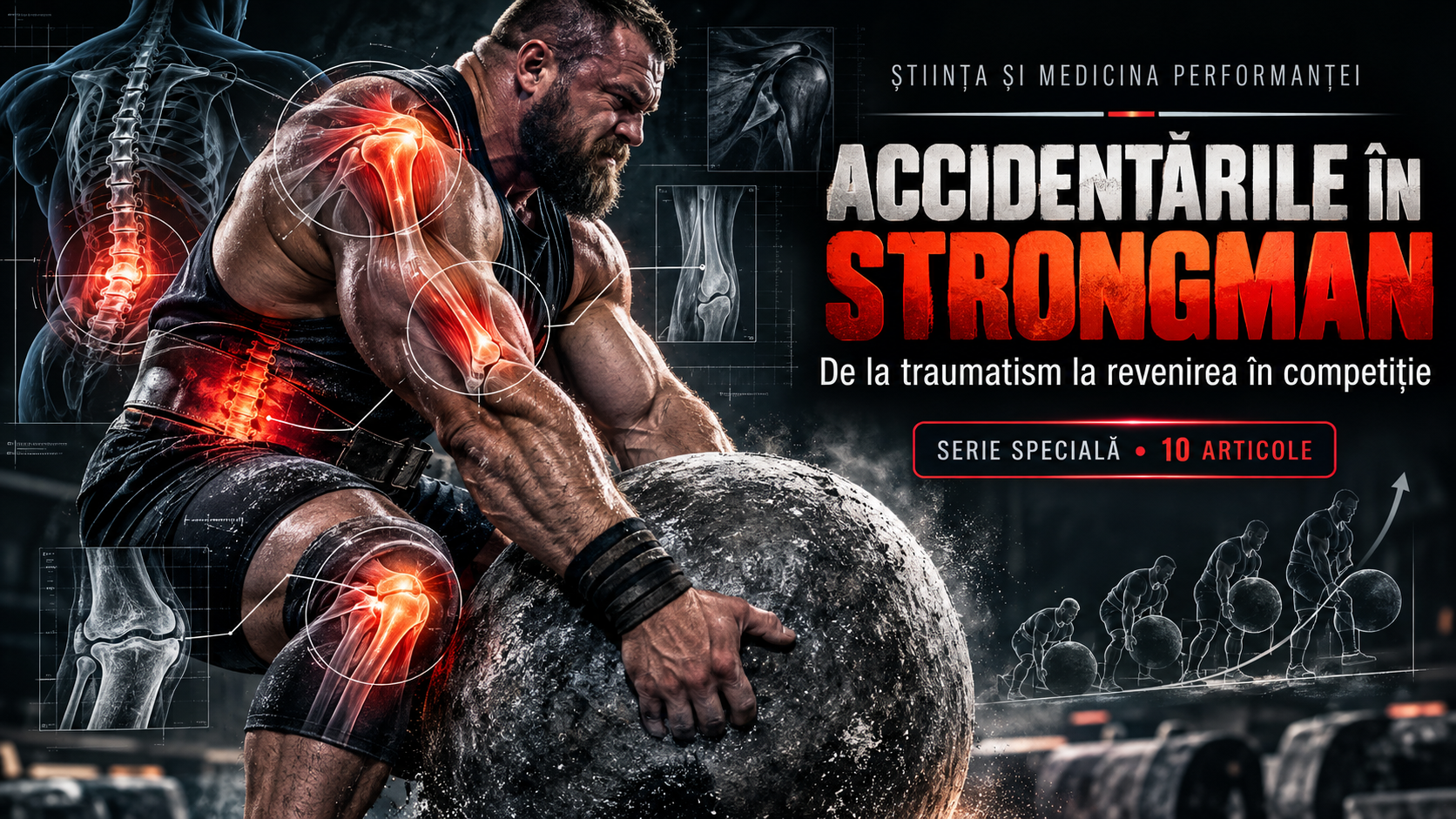
In strongman, a tendon can become the centre of an athlete's career within seconds. A stone leaves the ground, a tyre begins to turn, a sandbag slips out of an embrace, and the athlete instinctively tries to retain control. Sometimes the movement continues without incident. At other times, there is a sharp sound, sudden pain at the front of the elbow, and the sensation that the arm has lost strength. Public discussion commonly reduces such events to “a torn biceps.” Medically, that expression conceals the decisive questions. What exactly tore: muscle or tendon? Is the injury near the shoulder or the elbow? Is it partial or complete? What function has been lost, what treatments are possible, and what would it mean to return to events involving hundreds of kilograms? A dramatic image does not answer these questions. Anatomy, clinical assessment, and understanding of sporting demands are required.
This third episode of “Strongman Injuries: From Trauma to Returning to Competition” examines biceps ruptures and other tendon injuries from a wider perspective than the spectacular accident. We will also consider gradually developing pain, partial tears without obvious deformity, the differences between proximal and distal tendons, treatment options, and the limitations of promises about rapid return. Atlas stones, tyre flips, loading medleys, farmers walks, deadlifts, and overhead work will feature throughout, but plausible biomechanical mechanisms will be distinguished from statistically demonstrated risks. Not every movement that challenges the biceps causes frequent tears. Not every rupture results from technical error, and not every athlete with elbow pain has a tendon about to fail. Medical language should be accessible without reducing complex tissue behaviour to a simplistic story about “too much strength.”
Why does the biceps deserve particular attention in strongman? In a retrospective study by Winwood and colleagues, 213 athletes reported injuries that caused them to miss or modify training or competition during a 12-month period. Approximately 11% of reported injury locations involved the biceps, while tendon injuries across the body accounted for approximately 23% of recorded injury types [1]. These figures do not mean that 11% of all strongman participants sustain a complete distal biceps rupture every year, nor do they establish that most reported biceps injuries were confirmed with imaging. The research relied on retrospective self-reporting and broad anatomical categories. Nevertheless, it identifies a relevant issue for coaches, clinicians, and athletes. Together with clinical observations and documented cases, it provides a sound reason to examine how tendons transmit force during the unusual demands of this sport.
There is a deeper reason for caution: “tendon injury” is not one diagnosis. Tendons can become painful without tearing, develop partial structural damage, or undergo complete avulsion from bone. Their course and treatment can differ fundamentally. With a complete distal rupture, early assessment may influence available treatment options, especially for people who require substantial forearm supination and elbow-flexion strength [2]. Gradually developing tendinopathy more often calls for evaluating load exposure and functional capacity, not assuming that surgery is inevitable. Rupture of the proximal long-head tendon can have consequences different from detachment at the elbow. Treating all three situations identically confuses anatomical location, diagnosis, and the patient's functional objectives.
Biceps Anatomy and Tendon Biology: Where Force Comes From
Biceps brachii has two proximal heads, the source of its name. The long head originates near the supraglenoid region and superior shoulder labrum, passing through an intra-articular portion before reaching the bicipital groove. The short head begins at the scapular coracoid process. These components join to form the muscle belly and contribute to the distal tendon inserting on the radial tuberosity. Near the elbow lies the bicipital aponeurosis, or lacertus fibrosus, a fibrous expansion of functional and clinical significance. This architecture explains why an athlete may have a “biceps problem” at the front of the shoulder, in the arm, or near the elbow without each complaint representing the same condition. Precise symptom location and the demand that reproduces symptoms matter in assessment.
Biceps function is not limited to elbow flexion, although this is what most people associate with curls. The distal tendon is particularly important for supination, the rotation of the forearm that turns the palm upwards. Supination is more than turning a key or screwdriver; it also contributes to controlling grips when implements rotate or change the forearm's position. Other muscles can flex the elbow and partially compensate after tendon injury, explaining why someone may retain apparently good movement despite a detached tendon. Preserved movement, however, does not mean preserved strength and endurance, especially during supination. This distinction matters enormously to athletes whose performance depends on handling exceptional loads [2,3].
Brachialis is another powerful elbow flexor, while brachioradialis contributes to flexion in particular forearm positions. The ability to bend the elbow after an incident therefore does not rule out a complete distal biceps rupture. Athletes may instead notice reduced resisted supination, a change in muscle contour, pain, or bruising at the front of the elbow. The extent of these changes varies, and an intact bicipital aponeurosis can influence visible muscle retraction. This is why photographs are unreliable as standalone diagnostic tests. A heavily muscled arm may conceal changes in contour, while an unusual appearance may have causes other than an acute tear. Competent assessment considers the full pattern of findings.
A tendon is not an inert rope attached to a muscle. It is living connective tissue with a collagen architecture, specialised cells, and adaptable mechanical properties. It transfers force to bone and participates in energy transfer during movement. Repeated loading can stimulate adaptation, but responses vary between individuals and tendons. Training history, age, health status, contraction type, and loading dose matter. The familiar claim that “muscles grow quickly while tendons always lag behind” captures at most part of the problem. Tendons do adapt, but the rate and outcome depend on context. Tendon integrity cannot be inferred solely from muscle size or the weight of a personal record.
Structural tendon changes and pain do not follow a simple linear relationship. An athlete may have painful tendinopathy under moderate loads without a complete tear, whereas another may have imaging changes with relatively few symptoms. Collagen organisation, tissue biology, nociceptive processes, and present loading contribute differently to clinical experience. Even the word “degeneration” in an imaging report should not be understood as an inevitable sentence. It describes observations rather than perfectly predicting future capacity. The practical sports-medicine questions are whether tissue and function support the desired activity, which findings warrant prompt assessment, and how capacity can be rebuilt when there are no contraindications.
The proximal long-head tendon has a close relationship with shoulder mechanics. Its disorders can coexist with rotator cuff problems, labral lesions, or instability of the structures that guide its course. A broad 2023 review illustrates the variability of long-head anatomy, function, and clinical pathology [4]. The lesson is straightforward: anterior shoulder pain after log pressing should not automatically be labelled “biceps tendinitis,” just as anterior elbow pain following atlas stones does not necessarily indicate rupture. Each region has its own differential diagnosis. Precise descriptions of tendon function prevent the mistake of treating the name of a muscle as a sufficient diagnosis.
The same region can be loaded through different mechanisms during strength training. Curls visibly challenge the elbow flexors, but the biceps may also help control an object during loading, stabilise the forearm as grip changes, and resist movement imposed by an external load. In a controlled gym exercise, athletes often choose the speed and path. With a heavy irregular object, part of the movement may be dictated by the implement. The distinction between intended effort and unexpected external force helps explain some traumatic mechanisms. Nevertheless, it does not prove that every rupture follows the same sequence or that every positional adjustment creates imminent danger. Anatomy explains possibilities; it does not generate injury statistics automatically.
A final anatomical point concerns the relationship between function and goals. An adult performing ordinary tasks may tolerate some loss of supination strength without major limitations, whereas a strongman or manual worker may find the same deficit unacceptable. Medical decisions therefore involve more than asking whether someone can bend the elbow. Strength, endurance, occupational tasks, personal activities, and intended competitions all matter. Anatomy becomes truly useful when connected to the person's life rather than remaining a diagram in a textbook.
Epidemiology of Rupture: What Research Measures and What Remains Unknown
A distal biceps rupture is relatively uncommon in the general population, but “uncommon” does not mean unimportant to those affected. A population study by Safran and Graham, published in 2002, estimated an incidence of 1.2 ruptures per 100,000 people per year in its population [5]. Most cases involved middle-aged men, and the authors found an important association with smoking. However, the research included a small number of cases in a specific population and cannot provide an exact probability for a 25- or 40-year-old strongman. An event that is rare across society may matter more to a group frequently exposed to intense contractions, but the difference must be measured rather than assumed. No international registry tells us how many distal ruptures occur per thousand atlas stone attempts.
Epidemiological findings depend heavily on definitions. A study counting only surgically confirmed complete ruptures will capture a different population from one including partial tears, tendinopathy, and pain episodes without imaging. In strongman media, the phrase “torn biceps” can appear before a confirmed diagnosis is available. Organiser or athlete accounts help document context but do not automatically turn the event into a clinically verified case meeting standardised criteria. This is why the figures from Episode 1 cannot be converted into the incidence of complete tears. The 11% figure concerns reported biceps injury locations, not one diagnostic subtype [1]. Sound research must distinguish affected tissue, anatomical level, severity, and exposure.
A 2024 systematic review of factors associated with distal rupture examined evidence involving thousands of patients. Mean age was approximately 46.8 years, men accounted for 96.7% of described patients, and heavy lifting was frequently involved in the reported mechanism [6]. But such proportions often come from people who have already sustained a rupture. They describe cases rather than relative risk compared with matched, uninjured individuals. Finding that many patients were physically active does not demonstrate that everyone participating in strength sports is at high risk. We would also need to know how many equally active people remained uninjured. The distinction between “how many patients with tears train” and “how many trainees will tear a tendon” is fundamental to epidemiology.
Smoking appears repeatedly in discussions of tendon health. In Safran and Graham's classic study, tobacco use was associated with an estimated 7.5-fold higher risk, but the estimate came from a limited number of ruptures and must be interpreted cautiously [5]. This does not mean every smoker will rupture a tendon or that nonsmokers are protected. It does support including smoking history in general health assessment rather than imagining tendon outcomes are dictated exclusively by lifting technique. Systemic, vascular, and metabolic factors may interact with mechanical demand. Such information matters for long-term health and rehabilitation, but cannot prove the cause of one athlete's injury.
Anabolic-androgenic steroid use is sometimes presented as the automatic explanation for every tendon rupture involving an exceptionally strong athlete. The evidence is more complex. Some research has found associations between anabolic-androgen exposure and tendon injury, while a 2024 review of distal rupture risk factors highlights the lack of robust evidence demonstrating a statistically significant increase in this particular outcome across its included studies [6]. Uncertain exposure definitions, incomplete reporting, unknown dosages, and patient selection limit conclusions. It is legitimate to discuss medical concerns about substance use and the importance of disclosing it to clinicians. It is not legitimate to claim knowledge of a competitor's drug history from muscle size or an injury video.
Body mass, diabetes, metabolic conditions, and previous tendon problems are also discussed as potentially relevant variables. Findings differ, however, and an association must not be confused with demonstrated causation. In strongman, body mass can simultaneously reflect strength level, competition category, event selection, and years of preparation. If heavier athletes report more problems, that does not prove that adiposity or weight itself caused them. Meaningful comparisons need prospective data, individual characteristics, and measured loading exposure. Responsible medical interpretation neither dismisses health factors nor uses them to stigmatise athletes.
Research also tends to represent surgically treated patients more thoroughly than those managed without operations. A 2022 meta-analysis comparing operative and nonoperative outcomes after distal rupture included 2,481 cases, but only 79 came from nonoperative groups [7]. This imbalance makes fair comparisons difficult. Those undergoing surgery may differ in objectives, severity, or resources from those who do not. A favourable mean outcome remains relevant but must be interpreted with consideration of patient selection and study quality. Evidence-based medicine means understanding how a percentage was produced, not merely repeating it.
Women and other age groups remain underrepresented in much distal biceps literature. In a 2025 meta-analysis of return to sport after tendon repair, approximately 99% of over one thousand participants were men [8]. The findings cannot be assumed to apply with identical precision to all strongwomen or juniors. Underrepresentation does not mean treatments are ineffective; it means confidence in predictions for these groups is lower. In an increasingly diverse strength sport, the gap deserves acknowledgement and further research.
Epidemiology ultimately maps the questions rather than issuing an individual verdict. Distal tears are uncommon in the general population, frequently occur in demanding physical contexts, and the biceps is an important region in strongman injury reporting [1,5,6]. What remains unknown is the precise probability of rupture in each event and how that changes with technique, tacky use, or the competition calendar. With those limits acknowledged, biomechanical mechanisms can be discussed without presenting them as infallible predictions.
Injury Mechanisms in Strongman Events: When the Implement Changes the Movement
The classic mechanism described for many distal ruptures is powerful eccentric loading of an active biceps while the elbow is forced towards extension against the athlete's attempt to keep it flexed [2,5]. “Eccentric” means a muscle produces force as it lengthens; it does not mean the movement is inherently wrong or dangerous. Eccentric contractions are normal and indispensable for controlling loads. Under particular conditions, however, a very large load, sudden positional change, and tendon characteristics may combine to exceed the tissue's capacity at that moment. This is a plausible mechanical explanation, not proof that every tear arises exclusively this way. Nor can the exact force experienced by a tendon be calculated simply by watching a strongman incident without additional measurement.
Tyre flipping is an instructive example. Initially, the athlete tries to break the tyre away from the ground, usually generating substantial force through the legs and hips. The arms transfer force to the implement and maintain contact. As the tyre rises, hand position and function change, sometimes rapidly switching from pulling to pushing. If the implement slows, changes trajectory unexpectedly, or the athlete tries to save it from an unfavourable position, demanding forces can arise. A 2022 clinical case report describes a 39-year-old strongman competitor who sustained a distal biceps rupture during tyre-flip training and later underwent rehabilitation after surgical repair [9]. The case shows that such an event can occur during this task; it does not tell us how often compared with other movements.
Atlas stones change the relationship between body and load because of their spherical shape. There are no standard handles; athletes must establish contact around the object and move it close to the trunk. Arm position changes between the floor pick, lap phase, and final platform loading. Some competitors may strongly flex the elbows at certain moments, although much of the overall movement may come from the hips and lower limbs. If an arm is suddenly required to resist movement imposed by a shifting stone, biceps-related loading can rise. This is a plausible explanation for some incidents, not evidence that every flexed-elbow position is unsafe. Countless stones are lifted successfully using comparable movement patterns, and uneventful exposures also belong in any assessment of risk.
Tacky changes the friction between the athlete and a stone. Better adhesion may aid control, yet may also allow sustained high forces in situations where contact would otherwise be lost. Robust research has not established the net effect on injuries. It would therefore be wrong to claim either that tacky definitively protects the biceps or that it inevitably causes rupture. Athletes should become familiar with the actual competition conditions, including stone weight, diameter, platform height, and grip rules. The important question is not only whether someone can hold the stone, but whether the entire movement can be controlled at the required speed and intensity. An accessory cannot substitute for progressive loading and technical preparation.
A loading medley adds speed and repeated changes of implement. A competitor may lift bags, barrels, and other objects with different centres of mass, with little time to reset posture or breathing between them. If an object slips, the instinct to catch it before it falls can impose unplanned arm movement. There are no data proving that every loading medley increases distal rupture risk, but relevant public cases exist. At the 2021 World's Strongest Man, organisers confirmed that Luke Richardson sustained a left distal biceps tendon rupture during the Loading Medley and withdrew [10]. This is a documented event involving one athlete and one contest, not a percentage applicable to the whole discipline.
Farmers walks involve a different mechanical scenario: heavy implements are carried in the hands while the elbows remain relatively extended. The biceps may contribute to upper-limb control, but its main challenge differs from a heavy curl. The initial lift, walking acceleration, foot contact, and implement oscillation alter the task. During a race, shoulder and elbow positions can change as grip fatigues. Yet it would be unjustified to call farmers walks a common cause of distal rupture simply because the arms support massive loads. Meaningful analysis needs information about forced elbow movement, forearm position, rapid changes in load, and how many similar exposures occurred without injury.
Conventional deadlifting is often linked in popular imagination with biceps tears, particularly when mixed grip is used with one palm facing forward and the other backward. On the supinated side, the biceps experiences a different mechanical context than with a pronated grip, and deliberately flexing the elbow against a very heavy bar may create unwanted demands. However, mixed grip alone does not make rupture inevitable or permit calculation of an exact risk. Many powerlifters and strongman athletes use it for years without such injuries. Straps, double-overhand grip, and other variations can change forearm demands, but choices depend on competition rules and training goals. No single grip type has been established as guaranteed protection against tendon rupture.
Log and axle presses are commonly described as shoulder and triceps events, yet the arms also contribute to the clean, implement stabilisation, and corrections during the lift. A clinical report in Orthopedics described a competitor sustaining simultaneous supraspinatus and distal biceps tendon ruptures during an axle press attempt, demonstrating that complex injury is possible in this movement family [11]. But a case report is not proof that overhead pressing is a leading cause of biceps rupture in strongman. It illustrates how tissues interact and why comprehensive assessment matters. An attempt can injure shoulder and elbow simultaneously; focusing only on the most painful area may cause a second lesion to be overlooked.
In the Hercules Hold, load passes through grip, forearm, and shoulder complex while the athlete attempts to maintain the position. The static element is obvious, but implements can oscillate and posture may change under fatigue. During a truck pull, the arms may handle a rope or traction system while much of the force comes through the legs and trunk. In Fingal's Fingers, implement rotation and the transition between lifting and pushing change the demands through each phase. These events show how the label “arm effort” conceals very different mechanical patterns. Without event-specific injury data, we cannot rank them by frequency of biceps rupture. We can identify plausible loading scenarios and variables worth monitoring.
Absolute mass is only one parameter. Object size, weight distribution, grip diameter, speed, time under tension, surface conditions, and athlete experience may all alter the demand. Two 150-kilogram stones may feel very different because of diameter and texture. A 120-kilogram sandbag with shifting contents does not behave like a rigid keg of the same mass. A large tyre can have an unpredictable balance point and rotational moment. Tendon force cannot always be calculated from the displayed weight. Without such information, claims that one event is “twice as dangerous” as another are unsupported.
Fatigue can change how athletes move, but should not become a universal explanation. Some ruptures occur during early attempts, others after prolonged exertion. One competitor may approach the final stone exhausted and under time pressure; another may be injured during an isolated attempt after preparation and rest. An individual event cannot establish whether fatigue was decisive. It is more useful to monitor changes in technique, persistent symptoms, and the relationship between specific training and current capacity. Preparing for repeated effort is necessary in strongman, but not every training session must be maximal to build that capacity.
The biomechanical lesson is not to prohibit atlas stones, tyre flips, or loading races, but to prepare adequately for their demands. Athletes with excellent deadlift strength but little experience with stones need to learn the implement; general strength does not automatically become specific control. After a tendon problem, progression must respect diagnosis and medical restrictions rather than the simple feeling that heavy weights are possible again. Good technique may improve efficiency and control, but no execution style has been shown to eliminate rupture risk. Strongman remains demanding; the aim is intelligent exposure management.
Proximal and Distal Tears, Tendinopathy, and Partial Injury: Different Diagnoses
Rupture of the long-head biceps tendon near the shoulder is not equivalent to distal rupture at the elbow. With proximal rupture, athletes may notice a change in muscle contour, sometimes called a “Popeye” deformity, and may experience a pop or pain around the shoulder. Some retain relatively good function because the short head and other muscles continue to contribute to movement. By contrast, complete distal rupture can markedly affect supination and flexion, which matter when handling heavy implements. Treatment depends on anatomical level, age, symptoms, demands, and preferences. Telling athletes that “all biceps tears are alike” ignores both anatomy and functional goals.
Long-head biceps tendinopathy may cause pain at the front of the shoulder, often during lifting or pulling. Symptoms overlap with rotator cuff, labral, and glenohumeral conditions. A 2024 scoping review of physical therapy interventions for long-head tendinopathy identified many studied treatment approaches but also substantial evidence gaps for nonoperative management [12]. There is therefore no basis for promising that one resistance-band exercise or passive procedure cures all cases. Assessment should examine the likely diagnosis, loading history, and functional capacity. In sport, the goal extends beyond freedom from tenderness to tolerating meaningful tasks without deterioration.
Distal tendinopathy may be felt near the front elbow crease, sometimes particularly during resisted supination or elbow flexion. Not every symptom in this region represents a tear. Some individuals have tendon changes, local irritation, or bicipitoradial bursitis near the insertion. Clinical differentiation can be difficult because several disorders produce similar complaints. Persistent pain or marked strength loss warrants specialist assessment rather than repeated maximal attempts to “see whether it still holds.” Examination may indicate ultrasound or MRI, depending on the question and functional impact rather than pain intensity alone.
A partial tear affects only part of the tendon, leaving some continuity intact. It may produce persistent symptoms without dramatic deformity, making confusion with ordinary tendinopathy easy. A 2022 clinical review highlights diagnostic difficulties and notes that smaller lesions can sometimes be managed conservatively, whereas extensive lesions may lead to discussion of surgery [13]. A threshold around 50% tendon involvement is sometimes used as a clinical guide, but not as an absolute rule for every patient. Symptoms, activity demands, response to treatment, and goals influence management. In a sport demanding strong gripping and supination, the phrase “only a partial tear” can underestimate functional consequences.
A complete distal tear may be accompanied by a pop, acute pain, bruising, swelling, and a change in arm contour. Loss of supination strength is particularly relevant even when other muscles preserve the ability to bend the elbow. Signs can be subtle early on or obscured by muscular size, pain, or an aponeurosis limiting retraction. Reliance solely on a Popeye-type deformity is inappropriate. The American Academy of Orthopaedic Surgeons explains that a complete tear managed without surgery may leave substantial loss of strength, especially in supination, despite preserved ability to perform many everyday tasks [2]. For a strongman, this difference can profoundly influence discussions about treatment.
Chronic or older tears present additional challenges. Over time the tendon may retract and surrounding tissues may change, making direct repair more difficult in selected cases. This does not mean every chronic rupture is untreatable, but it can change available surgical techniques and rehabilitation expectations. An individual specialist determines appropriate timing based on lesion and patient factors. An athlete who suspects a complete tear should not defer assessment for months on the assumption that it is just a strain. Panic is unnecessary, but some treatment options are time-sensitive. Repeated heavy testing and self-diagnosis can delay clarity.
Muscle injuries must be distinguished from tendon ruptures. A strain or tear within the muscle belly or musculotendinous junction differs anatomically and clinically from avulsion of a tendon from bone. Sports reporting may apply the same popular label even though rehabilitation time and available treatments differ. Some muscle injuries are managed conservatively with gradual progression, whereas selected complete distal tendon avulsions in active athletes may warrant surgical repair. The distinction cannot be inferred from pain intensity or the inability to finish an event. A spectacular-looking incident is not necessarily structurally more severe than one with subtle external signs.
Other tendons can be injured in strongman, and their assessment must reflect specific tasks. The pectoralis major tendon may be challenged in pressing; triceps transmits elbow-extension force; hamstring and quadriceps tendons contribute to acceleration, support, and lifting; and patellar and Achilles tendons play different roles in extension and locomotion. Extreme loads do not mean all these tissues have the same probability of rupture. Anatomy, speed, posture, history, and loading differ. This episode concentrates on biceps problems and uses other tendon injuries to illustrate general principles of force transmission and rehabilitation, not to imply the existence of exhaustive event-specific statistics.
Clinical differentiation also matters in everyday communication. “Inflamed,” “torn,” “detached,” “strained,” and “irritated” are not interchangeable words. Clinicians may use different terms after examination and imaging, and an initial diagnosis may be revised. Giving everyone the same advice, whether “rest for two weeks” or “have surgery immediately,” risks missing the actual condition. Responsible education explains which questions distinguish disorders and which findings warrant prompt assessment without implying readers can independently establish a complete diagnosis.
Symptom duration does not automatically indicate severity. Tendinopathy can cause months of discomfort without complete tendon rupture, while pain after a complete tear may diminish after the acute phase even though strength deficits persist. Athletes who equate the absence of pain with full structural healing can be misled. Good assessment considers symptoms, functional capacity, and anatomy when that information changes treatment. For someone handling massive objects, loss of function remains important even when pain is minimal.
Diagnosis and Warning Signs: Distinguishing Pain From Rupture
Assessment begins with a careful account of the event. Was there a distinct pop? Was the elbow unexpectedly forced towards extension while the athlete tried to hold an implement? Did pain begin immediately or gradually over weeks? Did muscle contour change, bruising develop, or strength drop suddenly? These questions do not establish a diagnosis on their own, but they help distinguish possible acute rupture from overuse-related complaints. Previous operations, pre-existing symptoms, medication, and relevant health conditions also matter. In strongman, the event must be described precisely: an unexpected transition during a tyre flip differs from pain that slowly increased during curls. Clinicians need to understand the actual movement rather than its name alone.
Examination may include inspection, palpation of the distal tendon, range-of-motion assessment, and comparison of elbow-flexion and supination strength. Clinicians may use tests such as the Hook test, in which a trained examiner assesses the distal tendon under controlled conditions. This is not an invitation for athletes to attempt forceful self-testing, nor is any test perfectly accurate in every scenario. In a 2022 study, combining the Hook test with a biceps-contour measurement achieved strong diagnostic performance for acute complete tears in the population investigated [14]. Results still depend on disease prevalence, examiner skill, and patient characteristics. A negative test does not automatically exclude a partial tear or another tendon disorder.
Partial tears can present less dramatically. Athletes may retain elbow flexion and experience only pain during certain supination, pulling, or lifting tasks. Research evaluating clinical tests for partial lesions suggests combinations of examination manoeuvres can be useful, but distinguishing tears from tendinopathy or bursitis may require imaging [15]. The practical conclusion is not that every painful elbow needs an MRI; persistent symptoms that significantly restrict training may warrant further assessment. Clinicians choose tests according to whether their findings are likely to change management.
Musculoskeletal ultrasound may provide information about tendon continuity, retraction, and selected distal changes. Advantages include availability and dynamic assessment, but interpretation depends on operator skill and the anatomically challenging insertion. MRI can characterise structures in greater detail, especially when a partial tear is suspected or a surgeon needs additional information. Some protocols use the FABS position, with the elbow flexed, shoulder abducted, and forearm supinated, to visualise the distal tendon [13,15]. Readers need not memorise every technical detail; imaging is selected to answer a clinical question. Identifying a structural change does not automatically establish the cause of pain or optimal treatment.
After acute trauma, radiographs may be appropriate when bone injury or avulsion is suspected. Ordinary X-rays, however, do not characterise tendons in the way ultrasound or MRI can. A normal X-ray therefore does not establish that the biceps tendon is intact. Conversely, finding no complete rupture does not automatically permit maximal training when important pain persists. Every investigation has a defined role and must be interpreted alongside history and function. Good sports medicine does not mean ordering every available test; it means choosing investigations that clarify decisions.
Early assessment matters because complete distal tears may be more straightforward to repair within a suitable time window. With delay, tendon retraction and tissue changes can complicate some options, although chronic cases vary. Athletes seeking high levels of strength should reasonably obtain timely orthopaedic advice when a substantial tear is suspected [2]. This does not mean everyone requires surgery or that any delay inevitably destroys function. It means that information and timing may influence the choices available. Dismissing a rupture because acute pain subsided after several days can be misleading.
Neurological signs also deserve attention. Persistent numbness, weakness not explained by pain, loss of sensation, or circulatory changes in the hand should not be dismissed as a simple strain. Some injuries can involve nerves or blood vessels, making prompt evaluation a priority. When these signs accompany major deformity, severe pain, or inability to use the limb, athletes should not continue competition merely to finish the event. A general article cannot assess the severity of such an incident remotely. Its purpose is to explain why certain warning signs require qualified care regardless of experience or pain tolerance.
Anterior elbow pain also has a broader differential diagnosis, including brachialis muscle problems, nerve irritation, disorders involving other tendons, and joint lesions. Pain near the distal biceps attachment does not prove that the tendon is the only structure involved. Self-diagnosis from a video or isolated provocative test can therefore confuse more than clarify. Clinicians integrate the character of symptoms, movements that reproduce them, examination, and investigations when appropriate. The goal is not to find the most elaborate label but to establish appropriate management.
Functional assessment in strongman must reflect the athlete's actual baseline. A competitor may retain elbow-flexion strength that looks extraordinary compared with the general population yet represents a substantial decline from personal capacity. Comparing arms can be informative, but symmetry does not automatically guarantee readiness for tyre flips or loading medleys. A controlled clinical test measures one aspect of function; competition integrates grip, whole-body movement, speed, and fatigue. This difference matters both for diagnosis and return-to-sport decisions.
After assessment, athletes should understand both what is known and what remains uncertain. Is a complete tear, partial tear, tendinopathy, or another condition likely? Which further information might change management? What are the risks of delay and which movements should be modified temporarily? Clear communication helps avoid two extremes: ignoring serious injury and panicking over every post-training symptom. A good sports-medicine diagnosis supports better decisions rather than merely sounding impressive.
Treatment: When Exercise Helps and When Surgery Changes the Outlook
Treatment starts with a distinction that cannot be ignored: tendinopathy, partial rupture, and complete distal rupture do not require identical strategies. For overuse-related symptoms, temporary activity modification, active rehabilitation, and progressive load management may be important. For complete distal ruptures, particularly in active individuals seeking high supination strength, surgery may offer meaningful functional advantages but carries risks and requires careful rehabilitation [2,7]. For partial tears, either approach may be reasonable in selected cases [16]. There is no universal “biceps treatment”; there is a plan built around anatomy, severity, history, goals, and patient preferences. Such individualisation matters in strongman because demands may greatly exceed ordinary daily activities.
For tendinopathy, one aim is finding an activity dose that maintains capacity without persistently worsening symptoms. Temporarily reducing provocative movements may be necessary, while modified exercises may be retained in other cases. Indefinite absolute rest is not a universal cure, but continuing unchanged maximal training is not one either. Range, load, speed, frequency, and repetitions can be adjusted according to diagnosis and response. A strongman preparing for stones might retain lower-body training and other tolerated work instead of repeatedly testing a painful tendon every day. These are general principles, not personal prescriptions for someone with a potentially undiagnosed rupture.
Rehabilitation programmes for tendinopathies often use progressive resistance exercise, but the ideal contraction type, dose, and speed for every biceps disorder remain uncertain. Literature on the proximal long head shows heterogeneous interventions and limited evidence that any one protocol is clearly superior [12]. Attempting to solve every painful tendon with the same three sets of fifteen repetitions is more routine than personalised science. An exercise may be appropriate at one stage and poorly tolerated at another. Clinicians should track function and symptom response over time, with progression reflecting actual capacity and sporting goals.
Partial distal tears occupy a more complex middle ground. When some tendon continuity remains, nonoperative treatment may suit selected cases, particularly when function is good and symptoms respond. If persistent pain, strength loss, or lesion extent makes conservative recovery inadequate, surgery may be discussed. A 2024 systematic review examined thirteen studies involving approximately 290 patients managed operatively or nonoperatively [16]. It found good clinical outcomes with both approaches, alongside relevant differences in strength and complications. Small samples and varying study quality limit generalisation. Decisions cannot be reduced to one MRI percentage; patient activities and functional response matter.
Surgical repair of a complete distal rupture aims to reattach the tendon to the radial tuberosity. Single-incision and double-incision approaches exist, along with fixation methods such as cortical buttons, anchors, and other systems. Choice depends on anatomy, surgeon experience, lesion characteristics, and individual circumstances. A general article cannot responsibly declare one implant or approach ideal for every strongman competitor. Comparative studies assess outcomes and complications, but often involve people with demands below those of elite sport. The meaningful questions for athletes are which capacities may be restored, what risks exist, and how realistic a return to competition may be.
A 2022 meta-analysis encompassing 62 studies and 2,481 cases associated surgery with better average elbow-flexion strength, supination strength, and endurance than nonoperative management [7]. Estimated between-group differences were approximately 25.7 percentage points for flexion strength and 27.6 for supination strength in the relevant comparisons, with patient-reported outcomes also favouring surgery. Nevertheless, only 79 cases came from nonoperative groups, so imbalanced numbers and patient selection weaken certainty. The result does not mean every unoperated patient loses exactly one-quarter of strength, or every operated patient returns to 100% of previous performance. Group averages are not individual forecasts.
Another meta-analysis reported average supination-strength recovery near 89% of the uninjured limb after surgery compared with around 63% without surgery, along with differences in flexion strength [17]. These estimates help explain why athletes requiring powerful supination may seriously consider repair. Yet they come from studies with varying quality, methods, and sporting demands. Restoring 89% of strength on a standardised test does not automatically mean a strongman can lift the same stone or match a previous medley time. Integrated performance depends on several structures and tolerance of repeated effort.
Surgery carries risks. Reported complications include irritation or injury to nerves, sensory disturbance, heterotopic bone formation, restricted forearm rotation, infection, and, less commonly, rerupture. Published meta-analyses document different complication frequencies in their studied populations [17], but these are not precise personal predictions for every technique or surgeon. Athletes should discuss risks in relation to their own circumstances rather than choose procedures based on promotional videos. A technically successful operation can require months of rehabilitation, while sensory changes may affect implement gripping. Potential benefits must be considered alongside recovery time, costs, and procedural risks.
Nonoperative management of a complete tear may be reasonable for selected patients, especially when full strength is not required or surgery entails substantial risk. Care may include symptom control, restoring movement, and developing function through remaining muscles, with realistic acknowledgement of possible deficits [2]. Choosing conservative care does not demonstrate weak ambition, just as undergoing surgery is not automatically a test of courage. Decisions should reflect goals, resources, comorbidities, and available evidence. For a competitor pursuing elite events, the potential impact on supination may carry greater weight than for someone with lower daily physical demands.
Proximal long-head ruptures are managed differently. Some can be tolerated well without surgery, while selected patients with persistent symptoms or special demands may discuss procedures such as tenodesis or other interventions depending on associated shoulder pathology. Strength figures for distal repair must not be transferred to proximal treatment. They involve different locations, functions, and procedures. An athlete diagnosed with a proximal rupture should not automatically expect the same loss of supination as someone with complete distal avulsion. Literature on the long head emphasises its complex relationship with the shoulder and the many possible clinical presentations [4].
Pain-relieving and anti-inflammatory medicines may sometimes help symptoms, but they do not reattach a completely avulsed tendon or guarantee healing of a partial lesion. Repeated unsupervised use can carry gastrointestinal, kidney, or cardiovascular risks depending on the medicine and individual health. Temporary pain relief should not be confused with restored structural integrity. An athlete who feels better after a few days may be tempted to test heavy loads before the diagnosis is clarified. That strategy may delay appropriate care. Medication and rehabilitation decisions should involve qualified clinicians when substantial injury is suspected.
Injections and treatments marketed as regenerative also deserve critical appraisal. Protocol and evidence differ among tendons and diagnoses; research on shoulder tendinopathy cannot simply be transferred to a complete distal avulsion. A procedure that relieves pain does not prove the tendon can again tolerate maximal tyre-flip forces. No injectable intervention can currently be recommended as a universal safe substitute for indicated repair of complete avulsion in high-demand patients. Pursuing unvalidated treatments merely to avoid a rehabilitation period may waste valuable time. Asking for diagnosis-specific evidence and meaningful functional outcomes is more useful than choosing the treatment with the most impressive marketing.
Good shared decision-making should discuss likely outcomes for ordinary living, general training, and competitive return. These are three different levels. A treatment may be sufficient for everyday life yet leave a troublesome deficit during a loading medley. Surgery may substantially restore function without guaranteeing a previous record. Understanding the distinction helps prevent unrealistic disappointment and decisions driven solely by fear of an operation. Informed consent involves alternatives, uncertainty, and the person's real priorities. In strongman, those priorities may include athletic identity and the psychological importance of competition.
Whatever treatment is chosen, rehabilitation remains an active process. A surgeon can reattach a tendon but cannot instantly provide the strength, endurance, and coordination needed for competition. Physiotherapists can plan progression, but athletes must communicate symptoms and actual sporting demands. Coaches can adapt preparation but should not independently override postoperative restrictions. Collaboration matters especially with extreme loads and techniques unfamiliar to many clinicians. Responsible rehabilitation is not a race against biology; it is the gradual reconstruction of capacity for specific objectives.
Recovery After Distal Rupture: From Protecting the Repair to Returning to Competition
Rehabilitation after distal tendon repair begins not with “How much can I lift?” but with understanding the healing structure and the surgical team's instructions. Early protection may require restrictions on certain movements and loads, sometimes with a brace or procedure-specific precautions. Details vary across techniques and patients, so no general article can establish a mandatory timeline. Minimal pain a few weeks after surgery does not demonstrate readiness for heavy implements. Tissue healing, strength recovery, and tolerance of complex sporting tasks are related but distinct processes. Rushing a stage simply to meet a competition date may undermine longer-term goals.
Controlled movement is introduced relatively early in some protocols, while resisted flexion and supination progress according to healing and surgical guidance. Other protocols use different precautions, making mechanical comparisons inappropriate. Athletes should not choose whichever internet protocol permits heavier weights sooner and substitute it for their surgeon's instructions. The goal is a progression that protects the repair while gradually restoring function. For very strong individuals, vague phrases such as “light weight” can be especially misleading: what is light for a strongman may be demanding for an ordinary patient. Clinicians therefore need concrete communication informed by the athlete's previous capacity.
A 2022 case report by Daniel Lorenz in the International Journal of Sports Physical Therapy is particularly valuable because it describes rehabilitation of an actual strongman competitor. The 39-year-old athlete ruptured his distal biceps during a tyre flip and underwent surgical repair [9]. Loading progression was developed around the athlete's previous strength and sporting demands rather than a uniform template. At 16 weeks, isokinetic testing showed an approximately 11% deficit in elbow-flexion strength at the tested speed; at six months, the measurement was symmetrical and the athlete was advised to introduce implements progressively while obtaining medical clearance [9]. The case is instructive, but it remains one person's experience, not a guarantee that every repair achieves symmetry after six months.
The case also explains why functional testing is more useful than vague return-to-lifting language. Telling an athlete who previously deadlifted hundreds of kilograms to “resume light weights” gives no meaningful information about allowable tendon loading. Rehabilitation can monitor movement, flexion and supination strength, exercise tolerance, and post-session responses. Isokinetic testing can provide standardised data, but it is not available in every clinic and cannot reproduce a loading race completely. Other reproducible measures can be used while acknowledging limitations. Observable, consistent improvement is more informative than the feeling of readiness after one successful session.
Return of resisted elbow flexion does not automatically establish restoration of supination. This matters in strongman because forearm position affects grip and implement control. Rehabilitation may progressively reintroduce relevant loading under medical restrictions without relying solely on traditional curls. Isolated exercises still have value in building capacity under controlled conditions. There is no need to choose between conventional gym work and implements as though they were incompatible: general work can develop capacity and specificity can be introduced later. Timing depends on diagnosis, surgical procedure, and the individual's course.
When medically authorised, reintroducing strongman events can begin with simplified components. For tyre flips, athletes may need to rebuild control of arm position and force transfer before attempting very heavy tyres. With atlas stones, handling lighter objects and rehearsing phases may be more appropriate than immediately entering a timed loading race. Farmers-walk distance and load can be progressed separately, while deadlift grip and load may be modified according to restrictions. These examples are not a universal post-rupture protocol; they illustrate gradual increases in demand and monitoring the response.
The ability to complete one repetition differs from tolerance of a set and from readiness for five events in a contest. In controlled training, athletes select rest periods and weights; during competition, time pressure and event sequence may reduce the freedom to adjust. For a tendon recovering from rupture, that distinction can be essential. Later return phases may consider repeated effort, implement changes, and sport-specific fatigue without turning every session into a maximal test. Return-to-sport decisions should be based on capacity and risk in context, not merely on a calendar date.
A 2025 systematic review included 42 studies covering 1,093 patients after distal biceps repair. Approximately 91.5% returned to sport and 85.2% to their previous level or higher, at a mean of 6.3 months [8]. These findings are encouraging but require careful interpretation. Most participants were middle-aged men, and both sports and return criteria varied. Returning to sport does not necessarily mean lifting 180-kilogram stones or winning a professional strongman contest. The 6.3-month average is not an individual timetable and should not be used to force return.
Tissue healing, strength symmetry, and psychological confidence are not the same thing. After rupture, athletes may feel apprehensive when an object rotates or when the arm approaches the position associated with injury. That reaction is not a moral weakness and should not be managed by demanding an immediate personal record. Progressive exposure, clear information, and repeated controlled tasks may help rebuild confidence when medically appropriate. Psychological readiness can progress differently from measured physical strength. Athletes, coaches, and clinicians should discuss goals openly without confusing caution with cowardice or courage with ignoring risk.
Recovery success should be defined with the patient. For one person, resuming work and daily life without pain is the central goal. For another, entering a local contest is a significant achievement. A professional strongman's return to previous records may require preparation far beyond basic rehabilitation. All goals are legitimate but not interchangeable. A report stating “complete return” without specifying activity level can mislead. Actual function achieved and remaining limitations are more informative.
Realistic rehabilitation also includes plateaus. Strength does not always increase linearly and symptoms may vary between weeks. Persistent pain, progressive strength loss, or a new functional change may require reassessment. Not every discomfort means another rupture, just as one successful session does not justify doubling the weight. A good plan uses measurable goals and permits adjustments. In strength sport, patience does not mean abandoning ambition; it means placing ambition within a clinically realistic timeline.
Return to competition should ultimately be an informed decision, not a declaration based on a calendar date. Athletes need to understand their injury, treatment, restored capacities, remaining restrictions, and acceptable risks. Surgeons may evaluate healing, rehabilitation professionals track progression, coaches integrate event demands, and athletes contribute information about symptoms and goals. No single person holds every piece of information. Combining these perspectives supports more coherent and responsible decisions.
Understanding distal tendon rehabilitation requires distinguishing maximal strength, muscular endurance, and implement control. Maximal strength describes the highest force generated during an attempt; endurance concerns the capacity to maintain or repeat effort; implement control additionally requires balance, coordination, and anticipation. An athlete may achieve an excellent isolated elbow-flexion test without being ready to load five stones in succession. Conversely, good handling technique with light implements does not establish that maximal force has returned. Rehabilitation objectives therefore need several levels of assessment. Measuring one parameter can be valuable, but it does not fully describe performance or competitive readiness.
Symmetry testing can be useful, but interpretation requires knowledge of the athlete's previous baseline. Many people naturally have a stronger dominant side, and the uninjured arm may also change during rehabilitation because training is modified. If both limbs become weaker, apparent symmetry may conceal a substantial overall decline. Previous records, earlier measurements where available, and observed functional capacity therefore matter. In strongman, a dynamometry result should not be confused with clearance to carry enormous loads. It contributes to a decision alongside clinical assessment, exercise tolerance, and the demands of planned competition events.
Another dimension is rebuilding trust in a movement now associated with trauma. Someone injured while tyre flipping may perform light curls comfortably but feel apprehensive as a tyre approaches the transition point. Such a response can be a normal part of recovering from a significant incident, not proof that the athlete lacks determination. Graduated exposure to relevant tasks may support readaptation where diagnosis and medical restrictions permit. However, rehabilitation should never become a staged demonstration of courage involving premature maximal attempts. Functional confidence needs to develop alongside genuine physical capacity rather than replace it.
Accumulated competition fatigue differs from fatigue within a single gym set. A competitor may finish a farmers walk before a loading event, wait in cold or heat, and then handle stones at a pace dictated by the clock. Mechanics in that setting are not identical to those of a fresh, controlled exercise. Later-stage preparation may progressively expose athletes to some features of event order and duration without needlessly recreating every extreme of competition. This is a sport-specific progression, not a universal medical protocol. Research cannot yet specify how much fatigue is safe after each type of tendon repair, and procedure-specific restrictions remain essential.
Grip and hand function are frequently overlooked. An athlete whose distal tendon has recovered sufficient elbow-flexion strength may still feel discomfort gripping an unusually thick handle or when the forearm must rotate under load. Biceps does not function alone: forearm muscles, wrist structures, and the shoulder help control an implement. This interdependence explains why isolated rehabilitation may eventually need a broader functional integration stage. Equally, not every postoperative grip complaint originates from the repaired tendon; other structures or mechanisms may be involved. Assessment should remain open to differential diagnoses instead of blaming one tissue automatically.
Rehabilitation often creates temptation to add procedures in the hope of accelerating progress. Some interventions may have complementary roles, but their use should be justified by the intended outcome and evidence. Lorenz's case report describes an approach tailored to the patient; it is not a randomised trial demonstrating the independent effectiveness of each programme component [9]. If one technique is credited with a single athlete's recovery, we should ask what other factors contributed and which comparison is missing. Progressive loading, time, lesion characteristics, and professional collaboration may all influence outcomes. A compelling story does not replace comparative evaluation in sports medicine.
A further risk is confusing immediate tolerance with recovery capacity. An athlete may successfully complete a heavy session but experience persistent pain or deteriorating function over the next few days. In other circumstances, mild transient discomfort may be compatible with progression, depending on diagnosis. No universal pain score establishes what is safe after every operation or for every tendinopathy. A log that records loads, symptoms, function, and next-day response can provide useful information to the treating team. Repeatedly disproportionate reactions suggest that training progression may need adjustment.
Competition return can create pressure to ignore symptoms for a single sporting opportunity. Athletes may face travel expenses, sponsorship commitments, or the chance to improve a ranking. These pressures deserve recognition rather than caricature. Nevertheless, competitive pressure does not change restrictions protecting a recently repaired tendon. A mature decision may involve modified participation, adjusted goals, or postponement. Clinicians and coaches should explain relevant risks, while the athlete understands possible consequences. Transparent discussion before a contest is preferable to improvisation when symptoms appear in front of an audience.
Athletes recovering from surgery may become preoccupied with comparisons against healthy competitors. Comparison can motivate but can also lead to rushed decisions. Rather than focusing solely on what a rival lifts, the athlete can compare current tolerance with personal earlier measurements, medical goals, and progress over recent weeks. Celebrity rehabilitation does not establish an individual timetable: two injuries carrying the same label may differ in retraction, tissue quality, treatment, and context. Progress that appears slow compared with a video may be appropriate for one particular lesion. The meaningful measure is capacity rebuilt with informed risk management, not the satisfaction of social comparison.
Well-managed rehabilitation can sometimes preserve training components that do not directly challenge the protected region. Once medical restrictions are clear, athletes can discuss lower-body exercises, conditioning, or tolerated activities that maintain routines without compromising the tendon. Yet even these exercises may involve the arms indirectly: a squat can require upper-limb positioning, and moving equipment around the gym can create unexpected loads. The programme must be considered as a whole. The goal is not to prove someone can train under every circumstance, but to preserve as much useful capacity as treatment permits.
Beginners may struggle to understand why tendon rehabilitation sometimes includes tasks that look nothing like their favourite event. Simple exercises can develop measurable elements of strength, while implements later add complexity. Neither phase invalidates the other. Problems arise when general exercises are treated as the final goal for a competitor who needs to return to events, or when implements are reintroduced before sufficient capacity exists. Progression should connect clinical function to sporting demand. This is the meaning of specificity, not an invitation to perform maximal lifts as soon as pain fades.
Access to rehabilitation professionals familiar with strongman varies widely. A physiotherapist may possess excellent expertise in distal tendon care without ever having coached an athlete through atlas stones or yokes. Dialogue with coaches and clear information about event demands can complement clinical expertise. Video of normal technique can help explain the task but cannot replace patient examination. Athletes should not expect a clinician to authorise a weight simply because a famous competitor used it during recovery. Combining medical competence with sport-specific knowledge is more productive than treating them as opposing forms of expertise.
Future research should measure not only whether athletes return to sport, but the level at which they continue across two or three further seasons. Do they return to the same weight class? Avoid certain events? Require lasting modifications? Experience recurring symptoms or new injuries? Studies that stop at the first post-surgical competition may miss much of the recovery story. Strongman careers depend on continuity of training over many years. Multi-season prospective research could more accurately describe long-term consequences of tendon ruptures and the usefulness of different return strategies.
Public comeback stories also remind us that spectacular returns are selected for attention. Athletes who do not immediately regain previous performance may receive less coverage even though their experiences are equally relevant to medicine. Their outcomes deserve investigation, including why some stop competing while continuing to train. Choosing recreational strength work may be an excellent functional result for someone whose priorities have changed. Respect for athletes means not imposing one definition of success on everyone. Medicine offers information and choices; selecting a goal also depends on personal values.
These dimensions show why rehabilitation cannot be judged only by how quickly an athlete returns to a loaded bar. A good clinical outcome includes restoring meaningful capacity, understanding risk, and enabling long-term participation in valued activities. For a strongman that may involve logs, stones, farmers carries, and other events; for someone else it may mean physical work, unrestricted daily living, or recreational sport. Competitive ambition and medical caution need not contradict each other when both support a well-understood objective.
Risk Factors and Long-Term Prevention: Beyond Simplistic Explanations
A tendon injury is rarely explained satisfactorily by one cause observed after the incident. When a stone slips or a tyre stops halfway through a flip, the final movement is visible and memorable, but tendon capacity reflects training history, biological health, and earlier exposure. A video cannot reconstruct all these variables. Useful prevention begins by acknowledging multifactorial risk. This does not automatically mean prohibiting difficult events; it means understanding demands and planning progressive preparation. Some challenge is inherent in strongman because competitors handle extreme loads. The realistic aim is reducing avoidable risks, developing capacity, and responding appropriately when problems arise.
Load progression means more than adding kilograms. Frequency, duration, repetitions, speed, proximity to failure, carry distance, and technical difficulty matter. An athlete may retain the same tyre weight but double the number of flips or greatly shorten rest periods. Biological exposure changes even though implement mass does not. With atlas stones, moving from a few separate lifts to a timed loading race changes demands on the arms and cardiovascular system. Sensible planning considers total workload, not just the number written on an object. No validated weekly percentage increase guarantees protection of every strongman's distal tendon.
Event-specific preparation is essential but needs integration with general training. A powerlifter with an enormous deadlift may be a novice at stone loading; a superb log presser may have little tyre-flipping experience. General strength is a foundation but cannot replace familiarity with grips, centres of mass, and movement transitions. Introducing every new task at maximal weight removes the opportunity to learn object control. Conversely, exclusively light training cannot fully prepare an athlete for elite competition. The balance between progression and specificity should reflect experience, schedule, and goals.
Technique matters for efficiency and control, but should not be surrounded by myths. Multiple movement strategies are possible with irregular objects, influenced by arm length, torso dimensions, implement size, and experience. Coaches may notice repeated unstable paths, failing grip, or attempts to pull almost entirely with the arms when the lower body could contribute more. Such observations may justify adjustment. Yet no specific palm, elbow, or scapular position has been shown to prevent distal biceps rupture absolutely. Technical advice should address movement control and sporting function rather than become an automatic mechanical diagnosis.
Warm-ups can prepare movement and help athletes assess how an implement behaves before heavy attempts. With stones, gradual practice with lighter loads allows assessment of contact, transitions, and trajectory. With tyre flipping, technical phases can be rehearsed using an appropriate implement. Yet even an excellent warm-up cannot guarantee injury prevention, and it is wrong to conclude automatically that an injured competitor “didn't warm up enough.” At the same time, beginning an unfamiliar task at maximal demand removes a useful chance for familiarisation. Warm-ups prepare effort; they are not insurance against every lesion.
Sleep, nutrition, smoking, and metabolic health provide important biological context. No particular food or supplement guarantees tendon protection, and a single poor night's sleep cannot be established as the cause of a rupture. Nevertheless, recovery and general health may influence the ability to sustain training. Athletes with demanding jobs, frequent travel, or tightly spaced competitions can accumulate stresses not reflected in gym logs. Monitoring this context is more responsible than assuming identical recovery under all conditions. A good programme adapts to stressful periods rather than working only in an ideal week.
Anabolic steroid exposure and tendon health require informed discussion rather than labels. Some studies suggest connective-tissue concerns in certain exposure settings, yet distal-rupture evidence does not allow observers to attribute an individual's injury to a substance based on appearance. Athletes should tell clinicians accurately about prescribed medicines and products used without supervision because systemic risks and interactions may matter. Recommendations about dosing or pharmacological “tendon protection” should not be constructed from unverified anecdotes. Risk assessment needs better data and individual care, not moral assumptions or drug shortcuts.
Equipment changes loading but is not magical armour. Straps can modify grip demands in a deadlift, tacky changes stone adhesion, and thick handles affect forearm position and effort. Evidence does not show that any accessory eliminates the risk of biceps rupture. Equipment may sometimes enable handling of greater loads, which itself changes total demand. Choices should reflect rules, technique, and training goals. After surgery, some accessories may be introduced or restricted according to medical advice without imagining that they instantly alter tissue healing.
Organisers have an often overlooked preventive role. Slippery surfaces, damaged bags, unexpected routes, or poorly communicated implement dimensions can alter execution. Equipment checks, clear event descriptions, defined safety zones, and medical support reduce avoidable surprises, even though trials have not quantified each measure's specific effect on biceps rupture. Strength cannot always compensate for logistical failure. Responsible competitions need clear stopping rules when an object becomes uncontrolled or serious injury is suspected. Safety is a shared responsibility, not an attribute of an athlete alone.
Sporting culture can support or obstruct prevention. If every symptom is treated as weakness, athletes may conceal pain until function becomes severely impaired. If every unusual sensation is framed as imminent rupture, unnecessary fear of movement develops. A mature approach permits reporting problems without stigma and distinguishes ordinary exertion from meaningful change. Not all symptoms are emergencies, but sudden strength loss, new deformity, or pain after trauma deserves assessment. High-performing athletes can be courageous and informed simultaneously. Seeking a diagnosis when significant signs appear does not diminish achievement.
For coaches, prevention does not mean removing every exercise involved in a public injury. Tyre flipping, atlas stones, and deadlifting are legitimate events, and their exact biceps rupture risks are poorly quantified. More useful is progressive skill preparation, understanding athletes' histories, monitoring exposure, and distinguishing capacity-building sessions from repeated limit testing. Sometimes a lighter session, reduced volume, or temporary implement modification supports progress better than another maximal attempt. These are programming decisions, not treatment for an existing rupture.
Prospective data collection is a major future goal. Researchers need to know how long athletes spend on each event, which loads and volumes they use, how injuries are defined, and which symptoms precede or follow events. Such work could identify real associations, distinguish acute trauma from gradual tendinopathy, and test preventive measures. Without comparable data, claims such as “stones are the most dangerous biceps event” remain community impressions rather than verified rankings. Research does not replace practical experience; it provides a way to test its assumptions.
Documented Cases: Athletes, Injuries, and Lessons Without Speculation
Individual cases have a persuasive force that epidemiological tables rarely match. A well-known athlete suddenly stopping an event makes the consequences of trauma immediately tangible. Yet narrative power can distort risk perception: filmed incidents are more visible than thousands of uneventful lifts. Individual cases should therefore illustrate possibilities and clinical decisions, not calculate population injury frequencies. Where a source reports only that a biceps “appeared to give way,” that impression must not become a confirmed diagnosis. Where a medical report exists, its terminology and limits deserve careful preservation.
Luke Richardson's case was documented by the World's Strongest Man organisers. In 2021, the young British competitor sustained a left distal biceps tendon rupture in the opening Loading Medley and was forced to withdraw [10]. The setting matters: a major contest, implements handled against the clock, and an injury ending participation before later events. But the official report cannot establish the precise elbow posture, the microscopic condition of the tendon beforehand, or the relative contributions of training history and other factors. Building a definitive technical explanation from the tear alone would be unjustified. The case is valuable because both a specific diagnosis and its competitive consequence were documented.
During the same edition, Terry Hollands withdrew after aggravating a pre-existing left biceps problem. Organisers reported worsening during familiarisation and the Loading Medley [10]. This differs from a newly confirmed acute distal rupture in tissue previously considered healthy. Previous symptoms matter clinically and epidemiologically: should the episode count as a new injury, a recurrence, or worsening of an existing condition? Without common rules, statistics become difficult to compare. The case also illustrates the psychological weight of withdrawal at a major contest. Outside observers can recognise the consequences without pretending to judge every decision in the absence of a complete medical record.
Another example comes from the 2024 Europe's Strongest Man contest. In the official Giants Live account of the final Castle Stones event, organisers wrote that Oleksii Novikov appeared to pull his right biceps while attempting the last stone [18]. The word “appeared” must be preserved. It describes an observation at the contest, not an imaging-confirmed complete distal rupture or operative diagnosis. It is relevant to stone mechanics and the consequences of an incident during a decisive event, but does not justify inventing injury severity. Responsible writing should never be more certain than its source.
In its account of the 2025 Strongman Classic, Giants Live stated that Spenser Remick appeared to injure his biceps near the end of the Frame Carry and did not continue the competition [19]. Again, the wording conveys the available level of certainty; the public account does not establish the precise tissue or severity. The case illustrates that upper-limb incidents can occur during carries even though those events are not centred on elbow flexion. It would be wrong to use one case to claim frame carries frequently cause distal ruptures, just as it would be wrong to dismiss the possibility because elbows are relatively extended.
Daniel Lorenz's report of a 39-year-old competitor injured during a tyre flip differs in its level of documentation [9]. It addresses not only the injury event but also treatment and load progression following tendon repair. Isokinetic testing, adapting exercises to previous strength, and dialogue among athlete and clinician provide an example of rehabilitation built around real sporting demands. One patient's success cannot guarantee the same result for every rupture. The methodological lesson, however, is powerful: assessing strongman recovery requires criteria relevant to personal function rather than merely asking whether a light object can be lifted.
A clinical report by Michael S. George in Orthopedics described a 38-year-old strongman who sustained simultaneous full-thickness supraspinatus and distal biceps tendon ruptures during an approximately 136-kilogram axle press attempt [11]. The case required assessment of two anatomical regions and surgical treatment. At later follow-up, the athlete had returned to ordinary activity and weight training but not strongman competition. This distinction matters. “Return” may refer to pain-free daily living, recreational training, or previous competitive performance, and these are not interchangeable goals. The case demonstrates that concomitant lesions are possible, not how often they occur in overhead pressing.
These stories should not be used to glorify trauma. A tendon tear is not a moral medal, and returning quickly is not automatically superior to a more cautious decision. Competitors differ in goals, obligations, and resources. For some, the next event carries enormous value; for others, long-term health or their occupation may be more important. Scientific writing should not judge those priorities from outside. It can explain what information should influence decisions and why uncertainty remains. Respect for athletes means reporting facts accurately, including when rehabilitation outcomes are not spectacular.
Media selection creates another problem. Major competitions are filmed and injuries to well-known athletes circulate rapidly. Tendon problems affecting an amateur may never enter any registry, particularly when the athlete modifies training without seeing a clinician. Looking only at publicised cases may exaggerate the apparent frequency of severe incidents while overlooking chronic burdens. Representative research should include several competitive levels, record all relevant episodes, and measure exposure. Celebrity cases help make anatomy and recovery understandable; they cannot support rankings based on popularity.
For coaches, practical value lies in discussing scenarios: what happens if a stone slips, a tyre unexpectedly stops, an athlete feels a pop at the front of the elbow, or symptoms develop before competition? The response should not be improvised diagnosis, but clear decisions about stopping activity, seeking medical assessment, and communicating. Preparing for unexpected situations does not make them more likely; it supports responsible action. In strongman, where implements may have unusual forms, organisers and coaches can reduce confusion with procedures understood before competition.
Translation of public reports also requires care. English expressions such as “pulled his biceps” or “tore his biceps” may be colloquial and fail to distinguish strain, muscle tear, and tendon avulsion. Overconfident translation into another language can transform suspicion into a medical assertion. When a source explicitly documents a confirmed distal rupture, that detail can be reported. Where it describes only appearance or withdrawal, the limitation must remain. Editorial rigour can depend on one verb: “appeared to injure” is more accurate than “completely ruptured the tendon” when confirmation is absent.
Case reports and clinical studies must also be connected carefully. A case report may describe a rehabilitation method and one possible outcome; a systematic review may estimate average patterns across several studies; an epidemiological questionnaire may measure reported problems in a sample. Each answers a different question. Used together without confusion, they provide a useful picture for general readers and professionals. Treated as interchangeable proof of causation, they undermine scientific accuracy.
Other Tendon Injuries in Strongman and What They Share With Biceps Tears
Distal biceps rupture is only one of the injuries affecting force transmission in strongman. The pectoralis major, triceps, quadriceps, patellar tendon, hamstrings, and Achilles tendon can all experience high demands, but in different movements and positions. There is no sufficiently detailed registry to rank their injury risks across every event with certainty. Still, comparing their anatomy is useful: all transfer muscle tension to bone, and relevant structural loss can impair function. Conversely, not every tendinopathy develops into rupture and not every painful episode represents the same disorder. Good sports education should avoid the blanket label “torn tendons” for such diverse problems.
The pectoralis major tendon contributes to pressing and controlling the arm in selected positions. Bench pressing and some pushing tasks may place considerable tension on it, but the mechanism of rupture cannot be deduced from kilograms alone. Some injuries occur during lowering, when the muscle lengthens under load; others have different contexts. Athletes alternating strongman with powerlifting may sustain injuries during conventional training, complicating attribution to a single discipline. Pectoral rupture should not be confused with ordinary shoulder tendinopathy or routine post-exercise soreness. Examination and sometimes imaging matter when sudden weakness or altered muscle contour appears.
The distal triceps tendon may be challenged during elbow extension, including overhead events. For a strongman athlete, loss of reliable lockout strength during a log or giant dumbbell press can have major competitive consequences. Posterior elbow pain has several possible causes, however, and a complete tear requires different assessment from tendinopathy. Poor performance after a period of pain is not itself a diagnosis. History, location, resisted extension, and imaging where indicated are relevant. A very strong triceps does not confer immunity from trauma, and chronic pain does not inevitably predict rupture.
The knee extensor apparatus, including quadriceps and patellar tendons, transfers the forces needed for knee extension and stabilisation. In strongman these structures contribute to yokes, squats, push-driven log presses, tyre flips, and locomotion. Severe rupture can prevent active knee extension and weight-bearing. Such injuries should not be confused with biceps problems merely because both can occur on camera. Anatomy, function, and treatment differ. During an overhead event, knee structures can be injured while the arms remain intact. The event name does not determine the injured anatomical region.
Hamstring tendons participate in hip and knee movement, and pulling or carrying events can expose athletes to combinations of force, speed, and fatigue. A posterior-thigh muscle strain is not equivalent to a proximal tendon avulsion, and diagnosis affects return decisions. The Achilles tendon and ankle structures are also challenged during walking, sprinting, and pushing heavy objects. Once again, maximal effort alone cannot identify which tissue has been affected when symptoms appear. Across these regions, history and examination take priority over explanations based solely on how an event looks.
Tendon injuries differ in healing and rehabilitation demands. A protocol appropriate after distal biceps repair should not be mechanically copied after quadriceps rupture or Achilles tendinopathy. Movement restrictions, loading tolerance, and return criteria depend on tissue and treatment. Nevertheless, useful common principles include accurate diagnosis, professional communication, tailored progression, function monitoring, and gradual reintegration of sport-specific tasks. These are not exercise prescriptions, but the framework for individual decisions.
Another common feature is the imperfect relationship between symptoms and structural integrity. A tendon can become less painful without being ready for maximal loads, and imaging abnormalities can exist without major functional limitations. This does not make imaging useless or pain irrelevant. It means no single indicator completely describes performance capacity. Strength athletes need assessment of relevant strength, specific movement, and training consequences. Successful rehabilitation is defined through function and realistic goals, not merely absence of tenderness.
Commercial use of the term “prevention” is particularly common around tendons. Supplements are sometimes promoted as guaranteed protection from ruptures, while exercises are marketed as universal ways to “strengthen ligaments and tendons.” Clinical evidence does not support such sweeping promises for strongman. Adequate nutrition, general health, and progressive training matter, but no product replaces diagnosis of a complete rupture or rehabilitation after surgery. Interventions should reflect evidence and athlete needs. Product price and routine popularity are not measures of preventive efficacy.
Athletes with histories of multiple tendon injuries deserve whole-person assessment rather than repeated attention to isolated body parts. Training organisation, medical conditions, medication, recovery, and frequently practised events may all matter. Nevertheless, there is no simple way to discover a hidden cause behind every past incident. Some events are unpredictable and coincidences occur. Medical care should identify treatable problems and modifiable risks without promising complete explanations in every case. Such caution protects athletes both from neglecting genuine factors and from unnecessary treatments based on speculation.
These tissues also show why one article cannot supply full protocols for every tendon in the body. The emphasis here remains on biceps problems and documented strongman examples, while companion episodes on the shoulder, knee, and muscle injuries examine other regions more deeply. A coherent editorial series builds understanding progressively rather than repeating superficial advice. The goal is for athletes to recognise when assessment matters, what research contributes, and how they can participate in responsible rehabilitation.
An injury also has costs that never appear in an MRI report: working days lost, rehabilitation appointments, travel, missed contests, and changes to family life. Many strongman competitors are not full-time professionals with permanent medical support, so a tendon rupture may create considerable financial and social consequences beyond the physical lesion itself. Access to a suitable surgeon, rehabilitation provider, transport, and time away from employment can influence how feasible different care pathways are. These practical considerations deserve discussion without becoming reasons to avoid necessary treatment or rush a return. Shared decisions should consider both the desired future function and the athlete's genuine capacity to follow the recommended rehabilitation process. A medically reasonable plan that ignores work, income, and family responsibilities may prove difficult to complete, however convincing it looks on paper.
Future research should also measure this wider burden. Injury counts and return-to-sport rates are useful, but they do not describe treatment expenditure, months of modified preparation, the effect on employment, or reasons why an athlete may leave competition permanently. Anonymous registries following health, training exposure, function, and participation across several seasons could provide a more complete picture. They could also help distinguish athletes who return to the gym from those who return to professional-level events, and those who continue recreationally after changing their goals. Until such data exist, current statistics should inform decisions rather than support absolute predictions about an individual athlete's future. Scientific honesty includes recognising valuable outcomes that are not captured by a medal, a record, or a single clinic-based strength measurement.
Collecting these data also requires medical confidentiality and informed athlete consent. Injury registries should not turn an individual's medical history into publicly searchable material without permission. Aggregated findings can benefit the whole sporting community while identities, medical records, and sensitive disclosures remain protected. This matters particularly in small competitive circuits where a description of one contest might otherwise make a supposedly anonymous athlete identifiable. Clear governance, proportionate data collection, and secure handling should be planned from the beginning, not added only after a privacy problem appears. Good research seeks more reliable information while respecting the people who provide it; athlete trust is part of the long-term viability of any surveillance project.
Conclusions: Exceptional Performance Requires Understanding Tendons, Not Mythologising Them
Biceps rupture holds a special place in strongman's public imagination because one moment can end an event, a contest, or a substantial phase of a career. Yet fascination with spectacular accidents must not obscure the real diversity of tendon disorders. Long-head shoulder pain, distal tendinopathy, partial tears, and complete elbow avulsions are different conditions with different implications. Anatomy changes the questions we ask: “my biceps hurts” is not enough without knowing where, when, during which movement, and with what loss of function. This precision is not an academic luxury. It can influence assessment timing, investigation choices, and the prospects for return.
Strongman research identifies the biceps as an important region among reported injuries, but provides neither a personal rupture probability nor a definitive ranking of events [1]. Reports involving tyre flips, atlas stones, loading medleys, and frame carries help illuminate situations where incidents may occur. Yet footage does not reveal a tendon's previous biological condition or prove a particular angle or technique caused failure. Without prospective data, plausible biomechanics must remain distinct from demonstrated causation. Accessible medical writing becomes more rigorous, not less, when it explains that boundary clearly.
Early assessment of complete distal rupture may matter because treatment options and repairability can depend on lesion characteristics and time elapsed [2]. If exertion produces a pop at the front of the elbow accompanied by bruising, altered contour, or obvious strength loss, repeatedly testing the arm with heavy attempts is not a sensible response. Qualified assessment is more useful. This does not mean every elbow pain is a rupture or every lesion requires surgery. It means some decisions are time-sensitive and diagnosis cannot be inferred from pain intensity alone.
Treatment involves options with different benefits and costs. Meta-analyses suggest better average measures of strength after surgical repair of complete distal ruptures, but studies are heterogeneous and include relatively few nonoperative patients [7,17]. For partial tears, both conservative and surgical approaches may produce good outcomes in selected circumstances, requiring individual decisions [16]. Tendinopathy care cannot be copied automatically from complete-avulsion surgery. Universal recipes ignore diagnosis, functional capacity, age, overall health, and sporting goals.
Return-to-sport research offers grounds for informed optimism. A 2025 review found high return rates after distal repair, but averages and percentages do not guarantee an individual outcome [8]. Particularly in strongman, returning to the gym, entering a competition, and regaining previous competitive performance are different outcomes. Clinical elbow flexion does not reproduce control of a heavy stone, a loading medley, or a tyre-flip transition. Rehabilitation must progressively build these demands while respecting medical restrictions. Successful return is not a race; each stage should provide information about actual capacity.
Collaboration among professionals is central. Surgeons and physicians manage the lesion and relevant restrictions, rehabilitation clinicians assess functional recovery, coaches understand event demands, and athletes communicate their symptoms and goals. Without dialogue, vague advice such as “don't lift heavy” can mean radically different things to a recreational lifter and someone handling hundreds of kilograms. Lorenz's case report illustrates the value of individualised measurement and progression without demonstrating that its method is the only valid approach [9]. The lesson is not to copy that patient's weights, but to adapt decisions to the person's functional reality.
For prevention, the most important step is avoiding invented certainty. No accessory, grip, warm-up routine, or supplement has been shown to eliminate tendon rupture risk in strongman. Progressive strength development, learning specific movements, monitoring total loading, and checking equipment remain reasonable measures. Athletes can report symptoms without stigma, while organisers can establish clear stopping and assistance procedures. None makes the sport risk-free; together, such practices can reduce avoidable surprises and support better decisions.
Public athlete stories show that tendon rupture can end a contest, require surgery, and temporarily or permanently change training. They also reveal how little can be inferred from dramatic appearance alone. Luke Richardson's case includes a publicly confirmed distal rupture; other reports describe only a possible biceps injury. Clinical reports provide more diagnostic and rehabilitation detail but cover very small populations. That distinction between documentation and assumption must remain clear. Respect for athletes means not inventing diagnoses, drug histories, or injury causes for the sake of a more spectacular article.
There is also a message for readers outside strength sport: exceptional performance does not confer biological immunity, but impressive weights do not prove the body is inevitably being destroyed. Tendons are living, adaptable, sometimes vulnerable tissues, and sport involves a continuing relationship between demand and capacity. Responsible writing can admire strength without glorifying suffering and discuss injury without portraying athletes as inherently reckless. Medical research replaces snap judgements with questions that can be answered through verifiable evidence.
This episode does not promise that biceps rupture can be prevented under every condition. It offers a way to understand what may happen, recognise important signs, and approach recovery through functional criteria rather than tales of invincibility. The next episode will address the lumbar spine, another major strongman concern where distinguishing pain, structural injury, and performance will be equally important. Strength careers are built across thousands of hours of preparation. Protecting the possibility of continuing to train is not abandoning ambition; it is one of its mature expressions.
References and Documentary Sources
[1] Winwood, P. W., Hume, P. A., Cronin, J. B., & Keogh, J. W. L. (2014). Retrospective injury epidemiology of strongman athletes. Journal of Strength and Conditioning Research, 28(1), 28–42. DOI: 10.1519/JSC.0b013e3182986c0c. https://pubmed.ncbi.nlm.nih.gov/23669816/
[2] American Academy of Orthopaedic Surgeons. Biceps Tendon Tear at the Elbow. OrthoInfo, clinical and patient education resource covering anatomy, complete rupture, supination strength, and treatment options. https://www.orthoinfo.org/diseases--conditions/biceps-tendon-tear-at-the-elbow
[3] Sutton, K. M., Dodds, S. D., Ahmad, C. S., & Sethi, P. M. (2010). Surgical Treatment of Distal Biceps Rupture. Journal of the American Academy of Orthopaedic Surgeons, 18(3), 139–148. DOI: 10.5435/00124635-201003000-00003. https://doi.org/10.5435/00124635-201003000-00003
[4] Diplock, B., Hing, W., & Marks, D. (2023). The long head of biceps at the shoulder: a scoping review. BMC Musculoskeletal Disorders, 24, 232. DOI: 10.1186/s12891-023-06346-5. https://pmc.ncbi.nlm.nih.gov/articles/PMC10044783/
[5] Safran, M. R., & Graham, S. M. (2002). Distal biceps tendon ruptures: incidence, demographics, and the effect of smoking. Clinical Orthopaedics and Related Research, 404, 275–283. https://pubmed.ncbi.nlm.nih.gov/12439270/
[6] Which risk factors are involved in a distal biceps tendon injury? A systematic review (2024). Systematic review of reported distal-rupture risk factors and the limitations of interpreting tobacco, sporting activity, and anabolic-steroid exposure. https://pubmed.ncbi.nlm.nih.gov/39530845/
[7] Operative vs. nonoperative treatment of distal biceps ruptures: a systematic review and meta-analysis (2022). Journal of Shoulder and Elbow Surgery. Analysis of 62 studies and 2,481 cases evaluating strength, endurance, and patient-reported functional outcomes. https://pubmed.ncbi.nlm.nih.gov/34999236/
[8] Boufadel, P., Daher, M., Lopez, R., et al. (2025). Return to Sport After Distal Biceps Tendon Repair: A Systematic Review. American Journal of Sports Medicine, 53(7), 1769–1778. DOI: 10.1177/03635465241295618. https://pubmed.ncbi.nlm.nih.gov/39836380/
[9] Lorenz, D. (2022). Progressive Loading in a Strongman Following Distal Biceps Repair: Re-Thinking Load Progression – A Case Report. International Journal of Sports Physical Therapy, 17(7), 1430–1441. DOI: 10.26603/001c.39796. https://ijspt.scholasticahq.com/article/39796-progressive-loading-in-a-strongman-following-distal-biceps-repair-re-thinking-load-progression-a-case-report
[10] World's Strongest Man (June 16, 2021). The Daily Strongman – June 16, 2021. Official reporting on Luke Richardson's and Terry Hollands' withdrawals and published information about their biceps injuries. https://www.theworldsstrongestman.com/news/the-daily-strongman-june-16-2021/
[11] George, M. S. (2010). Simultaneous acute rotator cuff tear and distal biceps rupture in a strongman competitor. Orthopedics, 33(4), 268–270. DOI: 10.3928/01477447-20100225-28. https://pubmed.ncbi.nlm.nih.gov/20415310/
[12] Physical therapy interventions used to treat individuals with biceps tendinopathy: a scoping review (2024). Brazilian Journal of Physical Therapy, 28(1), 100586. DOI: 10.1016/j.bjpt.2023.100586. https://pmc.ncbi.nlm.nih.gov/articles/PMC10825607/
[13] Partial tear of the distal biceps tendon: Current concepts (2022). Clinical review of anatomy, testing, FABS imaging, and management of partial distal tendon tears. https://pmc.ncbi.nlm.nih.gov/articles/PMC9111923/
[14] Zwerus, E. L., et al. (2022). Distal Biceps Tendon Ruptures: Diagnostic Strategy Through Physical Examination. American Journal of Sports Medicine, 50(14), 3956–3962. DOI: 10.1177/03635465221129874. https://pubmed.ncbi.nlm.nih.gov/36349931/
[15] Evaluation of clinical tests for partial distal biceps tendon ruptures and tendinitis (2022). Journal of Shoulder and Elbow Surgery, 31(3), 532–536. DOI: 10.1016/j.jse.2021.10.012. https://www.sciencedirect.com/science/article/pii/S1058274621007631
[16] Decreased Strength, Complication Rate and Higher Satisfaction in Conservative Treatment of Partial Distal Biceps Tendon Rupture Compared to Surgical Treatment: A Systematic Review (2024). Review comparing management strategies for partial distal tears. https://pmc.ncbi.nlm.nih.gov/articles/PMC11246196/
[17] Operative Versus Nonoperative Management for Distal Biceps Brachii Tendon Lesions: A Systematic Review and Meta-analysis (2021). Comparison of function, strength, range of motion, and complications. https://pubmed.ncbi.nlm.nih.gov/34734095/
[18] Giants Live (April 14, 2024). Stoltman Secures Second European Title! Official account of the Castle Stones event and the observed incident involving Oleksii Novikov. https://giants-live.com/news/stoltman-secures-second-european-title/
[19] Giants Live (2025). Back from Extinction! The T-Rex Reigns Supreme at Strongman Classic. Official account of the observed incident involving Spenser Remick during the Frame Carry. https://giants-live.com/news/back-from-extinction-the-t-rex-reigns-supreme-at-strongman-classic/
Editorial and medical note: References [1], [3]–[9], and [11]–[17] are scientific studies, research reviews, or clinical reports; [2] is educational material from a professional orthopaedic organisation; and [10], [18], and [19] are organiser accounts used only for public-case context. Where sources describe an apparent injury, this article does not present it as a confirmed tear. The material is educational and does not replace individual medical assessment, particularly after trauma with sudden strength loss, deformity, or neurological symptoms.
More From The Journal

Training
The Science of Strongman Training - Episode X: Competition Programming
How to build a complete Strongman competition preparation block: calendar, events, volume, intensity, specificity, simulations, autoregulation, tapering and fatigue management.

Training
The Science of Strongman Training - Episode IX: Peaking
Peaking in Strongman: how to turn months of training into maximal competition performance by reducing fatigue, preserving adaptations and managing specificity.