
Sports Medicine
Series: STRONGMAN INJURIES: FROM TRAUMA TO RETURNING TO COMPETITION – Episode 1: The Epidemiology of Strongman Injuries
October 12, 2026
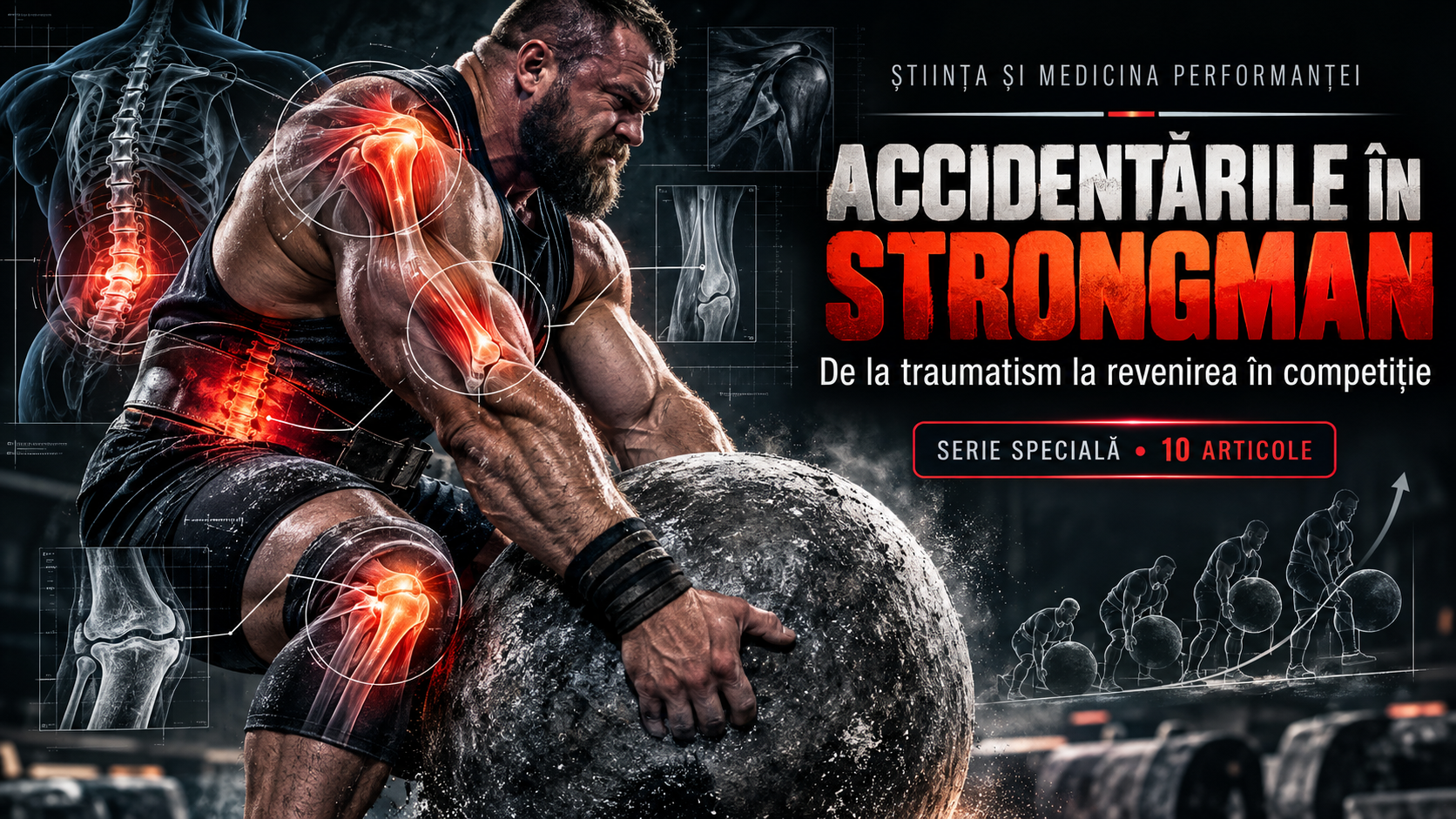
In strongman, strength is not expressed through a single movement repeated under almost identical conditions. An athlete may press a massive metal log overhead, carry a frame weighing several hundred kilograms across the shoulders, race with heavy implements in both hands, load stones onto platforms, or pull enormous vehicles. Each situation presents the muscles, tendons, joints, and nervous system with a different problem. Sometimes maximal strength is decisive; at other times speed, stability, coordination, or the ability to sustain demanding exertion matters most. This variety is precisely what makes strongman spectacular, but it also complicates medical analysis. When discussing injuries, it is not enough to focus on the most dramatic incident captured during a competition. We need to investigate how many injuries occur, where they occur, how severe they are, what activities preceded them, and how long they disrupt the athlete's life. This is the purpose of epidemiology: to turn individual stories into as accurate a picture of the overall phenomenon as possible.
A tendon rupture occurring before an audience is memorable. Low-back pain that develops gradually over six months, by contrast, rarely produces a viral clip or a press release. Yet both may compromise a season, alter technique, reduce training volume, and require medical care or considerable expense. Spectators witness the second when a lift goes wrong; researchers also investigate the months of preparation that came before it. This difference in perspective is essential. If we form opinions exclusively from videos of spectacular accidents, we may overestimate the frequency of catastrophic injuries while underestimating persistent conditions that never completely stop an athlete. Conversely, if we listen only to champions who have remained at the highest level for decades, we risk the opposite error: we see those who stayed in the sport but not those who left because of pain, limited time, or mounting costs.
In a discipline where lifting extraordinary weights has become part of athletes' public identities, speaking about injuries can sometimes be mistaken for an admission of weakness. In reality, it is a conversation about sustained performance. The winner is not necessarily the person capable of the heaviest single repetition on a particular afternoon, but often the person who preserves the ability to train, compete, and improve over many years. A tendon does not become immune to stress because its owner is a champion, and a joint does not suspend its anatomy in front of an enthusiastic crowd. Nevertheless, an impressive load is not automatically harmful or an inevitable assault on the body. Human tissue adapts to mechanical loading, and sport itself is possible because of this biological property. The relevant question is not whether intense exertion should disappear, but how to understand the difference between a challenge for which the body is prepared and one that exceeds its capacity at that particular moment.
This first installment is neither a catalogue of diagnoses nor a treatment manual. Its purpose is to establish the foundation for the following episodes, which will explore the shoulder, biceps, lumbar spine, knee, muscle injuries, persistent pain, and progressive return to competition. We will explain what research actually measures, examine the available evidence on strongman participants, and discuss why a deadlift, yoke carry, log press, or atlas stone loading event can stress the body's tissues in different ways. We will also consider public cases involving well-known competitors, without treating them as statistical evidence or pretending that a diagnosis can be established from video footage. A single incident can show what is possible; only appropriately designed research can begin to tell us how likely it is.
One methodological warning will remain important throughout this article: scientific research specifically devoted to strongman injury epidemiology is still limited. The landmark investigation by Paul Winwood and colleagues was a significant step precisely because it attempted to quantify injuries in a population of strongman athletes [1]. But one study cannot fully describe every generation, weight class, level of experience, and current form of the sport. Competitions have evolved, new events have emerged, training approaches have changed, and women's participation and the development of amateur circuits deserve separate investigation. The available numbers are a starting point, not a definitive verdict. A responsible scientific article can be precise even when it acknowledges what remains unknown.
What Does It Actually Mean to Measure an Injury?
In everyday conversation, the word “injury” can describe almost anything: a painful muscle after heavy training, an inflamed area, an imaging-confirmed muscle tear, or a condition that prevents someone from walking upstairs. In research, however, the definition must be established before information is collected. If one study counts only conditions that cause athletes to miss training, while another includes any pain lasting at least a day, their results will differ even if the athletes' health is otherwise similar. This problem is fundamental and explains why eye-catching comparisons between sports must be read cautiously. The International Olympic Committee consensus on injury surveillance recommends transparent definitions of health problems, differentiation between training and competition exposure, and reporting effects on participation and performance [4]. This is not mere bureaucracy: if we do not know what was counted, we cannot know what a percentage actually represents.
One frequently used concept is the “time-loss injury”: a health problem that prevents an athlete from participating in their normal sporting activity. The idea sounds straightforward, but strongman complicates it. An athlete may stop overhead pressing because of shoulder pain while continuing to squat, perform light farmers walks, or train the lower body. Another may never miss a gym session but remove all heavy loading and lose three months of specific preparation. If we reduce the outcome to “did they attend training or not?”, these two cases may be recorded differently even though both athletes have substantially changed their activity. In the strongman study, Winwood and colleagues included conditions that caused participants either to miss or to modify a training session or competition [1]. This choice matters because it captures functional losses that do not necessarily result in complete absence.
Another useful measure is prevalence: the proportion of athletes who have experienced at least one injury within a specified period. If 80 of 100 athletes report at least one problem over the previous 12 months, annual prevalence is 80%. This does not mean that each of the 80 athletes was injured only once, that all suffered severe trauma, or that 80% of training attempts are dangerous. The same group may contain athletes with no problems, athletes with one brief episode, and athletes with several recurring difficulties. Prevalence tells us how many people were affected, not how frequently injuries occurred, how severe they were, or how much function was lost. It helps describe how widespread a problem is, but it is not enough on its own to compare training programmes, events, or phases of a competitive season.
Incidence refers to the occurrence of new events over a period or in relation to exposure. In sport, it is often expressed as injuries per 1,000 training hours. This approach forces us to recognise an obvious but often overlooked fact: someone training two hours a week does not experience the same duration of exposure as someone training 20 hours. If ten injuries occur during 2,000 combined training hours, the rate is five injuries per 1,000 hours. This figure is not the exact probability that a given individual will be injured during any particular hour. It is an aggregate rate, useful for comparison when populations and definitions are similar. Strongman presents an additional complication: two hours of technique work at light loads and two hours of near-maximal yoke testing are not equivalent mechanical challenges. Exposure time is a convenient measurement, not a perfect measure of tissue stress.
Severity can be described by the number of days lost, the need for treatment, restrictions on movement, or the impact on performance. No single indicator tells the whole story. A contusion can produce intense pain for several days yet resolve without lasting consequences. Tendinopathy may allow an athlete to attend training for months while repeatedly reducing intensity and experiencing poorer quality of life. Someone who competes despite a longstanding problem does not automatically become healthy simply by finishing the event. Modern research therefore considers the overall burden of health problems, not merely the number of cases. Questionnaires developed by the Oslo Sports Trauma Research Center can capture symptoms, changes in participation, and impaired performance even when an athlete never stops completely [4]. In strongman, where continuing through discomfort is a strong cultural expectation, this approach may reveal experiences that would otherwise remain invisible.
It is also important to distinguish acute-onset injuries from problems that develop gradually. A tendon rupture associated with a clearly identifiable movement is a classic example of an acute event. Pain that emerges progressively after weeks of overhead work, pulling, or loaded carrying may reflect a more complex interaction between loading, recovery, tissue sensitivity, and medical history. The distinction is useful descriptively, but it should not become an oversimplified opposition. An acute event may occur against a background of slowly developing changes, while chronic pain may suddenly flare during a single attempt. At the epidemiological level, classification depends on how athletes remember and describe the onset. At the clinical level, establishing causes and appropriate management requires individual assessment. Confusing these two levels contributes to many hurried interpretations of injury statistics.
A further difficulty is distinguishing a new injury from a recurrence or an exacerbation. Imagine an athlete who develops pain in the right shoulder, reduces training volume for six weeks, returns to heavy loads, and then experiences similar pain two months later. Should these be counted as two separate injuries or as manifestations of the same condition? The answer depends on the adopted definition, whether full recovery occurred between episodes, and the way data were collected. Inconsistent recording can artificially increase or decrease reported rates. In a discipline where symptoms are often managed by substituting exercises rather than stopping entirely, this distinction is particularly relevant. Counting every painful day as a new injury would be misleading, but so would ignoring months of restricted function simply because the original diagnosis had not changed.
Finally, statistical association must be kept separate from causation. If heavier athletes report more injuries during competition, that does not automatically mean body mass caused those injuries. Weight may correlate with competitive level, higher absolute loads, event selection, the number of contests entered, or variables that were not measured. Likewise, if younger athletes report more incidents, it does not follow that youth itself is pathological. Competitive habits, exposure, experience, or sample characteristics may offer alternative explanations. Good epidemiology does not confuse a signal with an explanation. It identifies patterns worth investigating and, through further research, can help test whether proposed mechanisms actually hold up.
What Does the Landmark Strongman Study Tell Us?
In 2014, Paul W. Winwood, Patria A. Hume, John B. Cronin, and Justin W. L. Keogh published one of the most important investigations of strongman injuries in the Journal of Strength and Conditioning Research. Using a four-page retrospective questionnaire, they collected information from 213 strongman athletes about the preceding 12 months [1]. The term “retrospective” is critical: a medical team did not follow participants every day, independently verify every diagnosis, or record each hour of exposure in real time. Instead, athletes described the problems they could remember after the fact. This approach is practical in a geographically dispersed sport without centralised medical reporting, but estimates depend on participants' memories, their interpretation of questions, and their willingness to disclose health problems. The study matters not because its methodology was perfect, but because it brought systematic measurement to an area previously dominated by assumptions.
The athletes' characteristics deserve the same attention as the injury figures. Mean age was approximately 31.7 years, average height 181.3 centimetres, and mean body mass around 113 kilograms. Participants reported an average of 12.8 years of general resistance-training experience but approximately 4.4 years of training with strongman implements [1]. In other words, these were not 213 complete beginners encountering heavy equipment for the first time. They were individuals with considerable strength-training histories, although their familiarity with strongman events varied. Averages cannot tell us how heavy each athlete was, how experienced the most seasoned competitors were, or what proportion competed at elite level. Furthermore, athletes weighing 105 and 160 kilograms may prepare in very different environments, using different loads and pursuing different goals. Generalising the results to all strongman subgroups would therefore be a mistake.
The headline result is the 82% figure: roughly four out of five respondents reported at least one injury during the period studied [1]. That is substantial and deserves serious attention. But its meaning must be stated accurately. It does not establish that 82% of all strongman athletes sustain a catastrophic rupture each year, that 82% of beginners eventually require hospital treatment, or that every participant faces an 82% annual injury probability under any conceivable medical definition. Rather, 82% of respondents reported at least one problem meeting the study's inclusion criteria, namely an injury that caused them to miss or modify training or competition. This is a finding about a particular sample over a particular period, not a universal law of human physiology.
Participants reported an average of 1.6 training-related injuries and 0.4 competition-related injuries per athlete per year, with substantial variation between individuals [1]. These numbers do not prove that competition is necessarily safer than training. Athletes spend vastly more time preparing than performing on competition platforms, so training may account for more events even when risk per hour differs. Moreover, exposure within a contest is not evenly distributed: one competitor may complete five or six events across two days, including warm-ups, waiting periods, and maximal attempts, while another withdraws after the opening event. When injuries are expressed relative to time, researchers must specify exactly which activities that time includes. Without such context, the numbers can easily mislead.
The study estimated an average rate of 5.5 injuries per 1,000 training hours, with considerable variation among athletes [1]. Although this expression can seem abstract, it relates events to actual time spent participating. If a comparable group accumulated 10,000 training hours at the same rate, this would correspond to approximately 55 injuries under the study's definition. It would not mean that everyone faced the same experience or that an individual injury could be predicted after a fixed number of sessions. The rate describes a population, not a personal forecast. An important distinction often lost in popular summaries is that the cited figure concerns training injuries, rather than a combined rate covering both training and competitions. That distinction must be preserved in later comparisons.
The anatomical distribution is perhaps more informative for athletes than incidence alone. Approximately 24% of reported injury locations involved the lower back, 21% the shoulder, 11% the biceps, and 11% the knee [1]. These percentages describe the distribution of reported injury sites, not necessarily the proportion of athletes who experienced each condition. “Twenty-four per cent of injuries involved the lower back” is not interchangeable with “twenty-four per cent of athletes had a back injury.” The first formulation corresponds to the study summary. Such precision matters because changing the denominator changes the meaning of the statistic. Still, the pattern makes functional sense: the trunk, shoulder complex, elbow-flexor apparatus, and knees participate extensively in the major events of strongman.
Regarding tissue types, muscle strains and tears were commonly reported, accounting for approximately 38% of injuries, while tendon-related problems represented around 23% [1]. These figures do not prove that muscle tissue is always more vulnerable than tendons. Diagnostic practices, self-reporting, and classification may differ between cases. An athlete who feels pain near a tendon attachment may call it a “muscle strain”; another may report a diagnosis established with imaging. Without systematic medical verification of every incident, categories describe reported experiences rather than a perfect pathological registry. Nevertheless, they can help guide preventive education towards tissues involved in force transmission, deceleration, and segmental stabilisation.
Approximately 68% of the injuries were classified as having acute onset, while around 47% fell into a moderate-severity category [1]. These results challenge the idea that strongman injuries are exclusively spectacular or catastrophic. An acute event might involve a relatively limited strain with temporary consequences, not necessarily a complete tendon rupture. Conversely, an injury classified as moderate may be extremely consequential for an athlete whose only major contest that year is just days away. Clinical severity and competitive impact do not always move together. A condition requiring several weeks of adjustment in an off-season block may be manageable, yet the same condition appearing ten days before a major contest could derail months of preparation. Injury severity must therefore be understood in relation to the calendar, the athlete's goals, and realistic recovery options.
Perhaps the most instructive result concerns traditional resistance exercises versus strongman-specific implement work. Although approximately 54% of injuries were associated with traditional exercises, accounting for exposure suggested that athletes were about 1.9 times more likely to be injured during strongman implement training [1]. Without considering time spent in each activity, it would be easy to conclude incorrectly that conventional exercises were more dangerous simply because many reported injuries happened during them. Yet an athlete might spend five days each week in a gym and just one short session handling stones, logs, or yokes. Adjusting for exposure changes the interpretation. Even so, “1.9 times” should not be treated as a universal multiplier applicable to every athlete, event, or load. It is an association estimated in one particular sample, subject to the study's limitations.
In practice, separating conventional from strongman-specific training is less straightforward than the labels suggest. A deadlift performed with a standard barbell is a traditional gym exercise, yet may also be a direct competition event. An axle deadlift, tyre deadlift, or elevated pulling variation changes the geometry and force distribution. Log press uses a distinctive implement but includes phases recognisable from weightlifting and conventional strength training. Farmers walk combines lifting an object from the floor, stabilising it, and moving with it. When activities are classified only by name, crucial variables disappear: handle height, diameter, straps, centre of mass, route length, and accumulated fatigue can all change the challenge. Future injury registries should record not merely the name of an event but the circumstances in which it was performed.
The researchers also found statistical differences between certain subgroups. Athletes aged 30 or younger reported more competition injuries per person annually than those over 30, while participants weighing over 105 kilograms reported more than their lighter counterparts [1]. The average absolute differences were modest, roughly 0.5 versus 0.3 injuries per athlete per year, even when statistically significant within the sample. It would be unreasonable to turn this into the rule that people over 105 kilograms are biologically predisposed to injury. Heavier athletes may lift different absolute loads, compete in different events, or follow different schedules. Age is equally nuanced: experience, intensity management, and selection into competitions may influence the results. These are associated variables, not the outcome of an experiment isolating one causal factor.
How athletes managed their injuries reveals another medical and cultural issue. Many respondents reported self-treatment, approximately 54%, whereas around 41% reported receiving care from healthcare professionals [1]. These proportions need to be considered in light of the questionnaire and the possibility of multiple responses, but they suggest that much injury management occurs outside continuous clinical supervision. For amateurs, barriers may be financial or geographical. Experienced competitors may believe they already know what is wrong, lack time for investigations, or worry that reducing load will undermine an important goal. The study did not establish the reasons behind each decision; these are plausible real-world explanations, not deductions from a percentage. From a public-health perspective, the findings raise questions about how many conditions remain medically undocumented and how difficult it would be to build a complete injury registry.
Retrospective surveys can overestimate certain problems while underestimating others. Dramatic injuries may be recalled vividly; everyday pain can be forgotten or regarded as normal. Athletes who choose to answer may differ from those who do not. Perhaps injured athletes are more motivated to respond, or perhaps those most affected have already left the sport. Such selection issues cannot be corrected simply by writing stronger conclusions. The 2014 research was not a prospective registry of every strongman competitor worldwide, and its findings cannot automatically be applied to women, new divisions, or every modern form of the sport. It is best regarded as a valuable snapshot of a particular sample at a particular moment. A photograph can capture reality remarkably well, but it is not an entire film.
Taken together, Winwood and colleagues' findings support three important observations: injuries that modify training were common in the sample, the lower back and shoulder deserve particular attention, and training with strongman implements may have a different injury profile from conventional resistance work [1]. They do not show that any particular exercise inevitably causes a particular lesion, nor can they calculate the precise personal risk faced by an individual reader. Between group statistics and individual decisions lie anatomy, history, preparation, recovery, equipment, technique, and context. Coaches can use epidemiology to identify areas worth monitoring; clinicians can use it to understand common complaints; athletes can use it to ask better questions. None should turn it into a sentence of inevitable injury.
The Anatomy of Injuries: Lower Back, Shoulder, Biceps, and Knee
The lumbar region occupies a central place in strongman injury epidemiology not only because it is involved in many events, but because it contributes to nearly every major transfer of force between the lower body and an implement. In the deadlift, the spinal extensor muscles and passive structures of the trunk help maintain a sufficiently stable position to transmit force generated at the hips and knees. During atlas stone lifting, an object positioned in front of the body can create a substantial moment arm and require changes in spinal curvature throughout the movement. In the yoke carry, large axial loads and the oscillations of walking demand continuous stabilisation. In the sandbag carry, hugging the implement changes the combined centre of mass of the athlete and load. These biomechanical observations explain why the lower back warrants attention; they do not demonstrate that each event causes structural damage or that an ideal technique can remove every risk.
Low-back pain identifies a symptom and a location, not a single diagnosis. It may accompany a muscle strain, irritation of joint structures, a nerve-root problem, or occur without a specific lesion identifiable through routine investigation. Degenerative changes on MRI do not automatically explain every episode of pain, just as the absence of a dramatic imaging abnormality does not make the athlete's symptoms imaginary. Epidemiological studies often depend on self-reported location rather than imaging-confirmed diagnoses. When reading the approximately 24% lower-back figure in the strongman study [1], we should not imagine it as a registry of disc herniations, fractures, or muscle ruptures. It is a broad anatomical category encompassing different mechanisms and degrees of severity. This is why dedicated episodes about the spine must distinguish between pain, functional impairment, and confirmed pathology.
The biomechanics of a heavy deadlift are often explained too simply: if the back rounds, the movement is dangerous; if it stays perfectly straight, it is safe. Reality is more complicated. The spine is not a rigid rod, and athletes use differing degrees of flexion depending on anatomy, technique, bar type, limb proportions, and experience. Tissue loading depends on forces, moments, repetitions, fatigue, and individual capacity. Technique may change during a near-maximal attempt even in highly trained lifters. It is therefore unjustified to attribute every episode of pain mechanically to a single posture. Watching execution consistency, tolerance of exertion, and reactions during the following days can be useful, but visual inspection should not be turned into diagnosis. Research directly investigating injury mechanisms in strongman is still too limited to establish universal biomechanical rules.
The shoulder was the second major region identified by Winwood and colleagues, accounting for approximately 21% of reported injury locations [1]. The glenohumeral joint allows extraordinary mobility, but this freedom requires sophisticated muscular and neuromotor control. During the log press, the athlete must bring a thick and often awkward implement from floor to chest and then overhead. With a giant dumbbell, the load may be asymmetrical and demand unilateral stabilisation at lockout. In overhead medleys, rapid changes of implement and pace create further technical challenges. In each case, the shoulder works in concert with the scapula, thorax, trunk, and lower limbs. If pain develops, its origin may be local or involve the broader movement chain. Saying that “the shoulder gave out” is not enough to identify the affected tissue.
Terms such as “rotator cuff,” “labrum,” “biceps tendon,” “acromioclavicular joint,” and “instability” refer to different structures and clinical situations. The rotator cuff is a group of muscles and tendons that helps centre and control the humeral head; the labrum is a fibrocartilaginous structure contributing to shoulder-socket function; the long-head biceps tendon passes through a complex area of the shoulder. Symptoms can overlap, and video footage of a failed repetition cannot reliably distinguish these diagnoses. Moreover, tendinopathy is not identical to an acute rupture, and pain during movement does not necessarily imply irreversible damage. An editorial responsibility follows: when discussing publicly reported athlete injuries, we should reproduce credibly documented medical information rather than filling gaps with invented diagnoses.
The biceps accounted for approximately 11% of locations in the reference study [1], and it has particular importance because it features in so many memorable strongman injury stories. Biceps brachii contributes to elbow flexion and forearm supination, while the distal tendon transfers these forces to the radius. During loading events, an athlete may grab an object that begins to move, accelerate, or rotate relative to the body. In the tyre flip, the starting position and the transition phase can place the arm under challenging loads; in atlas stone lifting, grip and implement geometry differ markedly from a barbell. Nevertheless, evidence is insufficient to claim that either event automatically causes distal biceps ruptures. We can describe plausible mechanical demands and review documented incidents, but cannot derive precise causal injury rates without studies specifically measuring exposure.
An often overlooked distinction concerns the force an athlete deliberately produces in a controlled movement and the forces arising when an implement suddenly dictates a change of position. During a loading race, a bag, keg, or stone may slip, prompting the hand to react reflexively to prevent a fall. Irregular objects can distribute force asymmetrically between the arms. Under fatigue, grip and coordination may change, but it would be incorrect to claim that fatigue alone causes a rupture. The final event generally reflects an interaction between loading, position, tissue history, and immediate demand. Clinicians distinguish partial from complete ruptures and proximal from distal lesions; these differences matter for examination and management. In an epidemiological questionnaire, however, a generic response such as “biceps injury” may conceal all of these distinct conditions.
The knee is another important region, representing approximately 11% of reported locations [1]. During yoke and farmers carries, the knee participates in absorbing and transmitting force with every step. In squats, repeated extension under large loads requires substantial muscular and tendon capacity. During log press, the dip-and-drive of a push press or jerk involves rapid knee flexion and extension. During truck pulls, joint angles and traction change as the athlete and vehicle move. Distinguishing the tissues involved is essential: the quadriceps and patellar tendons form part of the extensor mechanism, whereas the menisci and ligaments perform different functions. Two incidents causing anterior knee pain need not represent the same lesion. Anatomical injury statistics tell researchers where to look, but they cannot substitute for full clinical diagnosis.
The hip, groin, hamstrings, calves, forearms, and hands may receive less attention in study summaries, but they remain important. During loaded carries, the hip generates much of the propulsive force; in heavy deadlifts, the posterior chain manages large moments; in the Hercules Hold, grip strength may be the limiting factor; during throws over a bar, lower-limb and shoulder coordination differ substantially from slow lifting. The absence of a region from the top four in an injury ranking does not make it irrelevant. Individual risk depends on the events being trained and an athlete's particular repertoire. A competitor who excels at deadlift but avoids overhead work because of shoulder pain may have an entirely different distribution of loading from someone who specialises in log press.
Another important distinction is between the structure that hurts and the structure that limits movement. During complex lifting, the body acts as a system of interconnected segments. Restricted ankle mobility may change knee positioning in a squat, while lower-body fatigue can alter the strategy used to press a log. These interactions are biomechanically plausible, but they do not justify pronouncing that “your shoulder hurts because your ankle is stiff.” Such relationships require investigation, not deduction from a popular social-media diagram. Responsible practice begins with symptoms, the history of the event, clinical examination, and appropriate functional testing. Technique and mobility are parts of a larger puzzle, not universal explanations for every injury.
The anatomical map should therefore be complemented by a map of consequences. An athlete with a moderate muscle tear may temporarily give up one event while keeping other parts of training. A shoulder problem could simultaneously restrict log press, giant dumbbell, sandbag loading, and even stabilisation under a yoke. Persistent low-back pain may limit most movements that transfer force between pelvis and trunk, without making every one of those movements intrinsically dangerous. For training design, functional consequences matter at least as much as the anatomical label. Traditional epidemiology counts injury locations; a coach also needs to know which activities can no longer be performed normally, for how long, and at what cost to performance.
Persistent pain and pain sensitisation deserve a separate discussion and will be examined in a later episode. Not every lasting symptom represents progressive structural deterioration, but it should never be dismissed with the phrase “it's all in your head.” Pain arises from interacting biological processes, protective mechanisms, previous experiences, stress, sleep, and sporting context. In strongman, athletes may learn to endure the intense discomfort associated with demanding effort, but tolerance of that discomfort is not a reliable diagnostic tool. Being able to carry 300 kilograms does not mean someone can distinguish a benign symptom from a condition requiring evaluation without help. This article does not encourage ignoring pain; it encourages understanding symptoms in the context of the whole athlete.
At the other end of the spectrum are acute injuries requiring prompt medical assessment: visible deformity, sudden loss of strength accompanied by a popping sensation or significant swelling, inability to bear weight, worsening numbness, progressive neurological deficits, or severe systemic symptoms. These cannot be resolved through statistics, determination, or simply substituting another exercise. Epidemiology informs us about frequency; clinical decisions concern the person being assessed. Serious medical problems may be relatively uncommon in research precisely because they are rare. Low frequency does not diminish the consequences of a severe event when it does occur. This is a fundamental lesson of sports medicine: probability and severity are distinct dimensions of risk.
Why Strongman Events Place Different Demands on the Body
In the deadlift, the primary challenge is generating sufficient force to move an implement against gravity while maintaining adequate control of the trunk and lower limbs. Yet “deadlift” describes a family of tasks, not one completely standardised movement. An Olympic barbell, a thick axle, a tyre deadlift, or a variation with side handles changes the starting height, body position, and sometimes the contribution of grip strength. A single maximal lift differs from a series of fast repetitions performed within a minute, where breathing, local fatigue, and pacing become increasingly important. These differences do not mean that one version is automatically safe and another dangerous. They demonstrate why specific preparation should match the actual competition demands. If an athlete trains with one bar type for months and then encounters a markedly different implement at a contest, their load tolerance may be challenged in an unfamiliar way. This is a reasonable biomechanical hypothesis, not an experimentally established injury rate.
As the bar leaves the floor, the arms transfer force to the implement while the legs and hips generate much of the movement. With increasingly heavy loads, athletes seek a familiar strategy that permits an efficient path. Good preparation aims for technical consistency and gradual progression, but cannot remove all human variability. Sometimes fatigue leads to visible changes in tempo or positioning; on other occasions a lift that looks awkward causes no problem at all. An uneventful repetition does not establish that the technique carries no risk, just as one athlete's injury does not prove that the movement is inappropriate for everyone. Injury epidemiology requires hundreds or thousands of exposures before coincidence can begin to be separated from consistent patterns.
Log press is perhaps the clearest illustration of strongman's distinctive demands. The implement is thick, uses internal handles, and distributes mass differently from a standard barbell. First, the athlete must move it from floor to chest in a clean, then drive it overhead. The clean can involve substantial contact with the trunk, changes in the effective grip position, and close coordination between hip extension and arm movement. During the overhead phase, the athlete must control not only the log's mass but also any oscillations created by an unstable path. Near maximal intensity, there may be little capacity left to correct an unfavourable position. This explains the mechanics of the challenge, but it does not prove that shoulder injuries are caused exclusively by log pressing. Athletes can develop shoulder problems through many other exercises and non-sporting factors.
A giant dumbbell adds another challenge to overhead lifting: asymmetry. One arm manages the implement, while the other contributes to balance or a support position; the trunk must limit unwanted rotation as the athlete accelerates the weight and reaches lockout. A camera can capture the moment the dumbbell reaches overhead, but cannot show exactly how much stress the shoulder, elbow, or thoracic spine tolerated during acceleration. Anthropometric differences mean that two competitors can use distinct techniques that are both effective for their bodies. It would be wrong to assume that one elbow or trunk position is universally safe. More useful questions concern whether unilateral loading has been introduced progressively, whether the athlete can control submaximal weights, and whether the total pressing volume matches current capacity.
In the yoke carry, an implement is not simply lifted and lowered without movement; it must be supported while the athlete walks. The large load is transmitted through the axial system, and every step produces small changes in acceleration, deceleration, and pressure distribution through the lower limbs. Oscillations may turn an implement that feels stable at rest into a difficult challenge during acceleration or changes of direction. The important variables extend beyond kilograms: frame height, bar width, structural rigidity, surface, course length, and speed all matter. A 300-kilogram yoke moved slowly with frequent stops does not load the body exactly as the same mass carried in a sprint. These observations support gradual introduction to carrying events and equipment familiarisation, although research cannot yet provide validated percentages identifying which variation causes the most injuries.
Farmers walk combines grip, the initial lift from the floor, trunk stabilisation, and locomotion under load. In a biomechanical study of six experienced competitors, Winwood and colleagues compared loaded farmers walking with deadlifting and unloaded walking [7]. They identified differences in force, step frequency, and contact time with the ground. These results help explain why a farmers walk is not merely “a deadlift followed by walking” but a distinct dynamic task. Nevertheless, a biomechanical experiment involving six participants cannot establish rates of tendon ruptures, strains, or joint injuries. Determining whether a particular farmers-walk technique is associated with more injuries would require following a much larger athlete population, recording exposure, and applying consistent clinical definitions. Biomechanics describes forces and movement; it does not independently determine medical outcomes.
During a farmers walk, much of the result may depend on forearm preparation and the ability to maintain the handles. As grip begins to fail, an athlete might slow down, subtly adjust hand position, or put the implements down. These are not injuries but control strategies. There can be a temptation to force a few more steps with a deteriorating grip, especially when the finish line is close. Competitive ambition should be distinguished from sensible assessment of whether the implement remains secure relative to the athlete and nearby personnel. Coaches and organisers influence the setting through clearly marked routes, safe drop zones, reliable stopping procedures, and checked equipment. Such precautions are defensible even without research calculating precisely how many injuries each measure prevents.
Atlas stones demonstrate why implement shape matters. A spherical stone provides no standard handle, may be smooth or rough, and must be kept near the trunk through a combination of arm force, body contact, and hip position. The movement commonly includes a floor pick, stabilisation on the thighs, and loading onto a platform, although platform height, stone diameter, and competition rules change the task. During the transition from lap to platform, the demands on the biceps and shoulder differ from those in most barbell lifts. This observation should not be transformed into a claim that stones produce more biceps ruptures than other events. To answer that question, researchers would need injury records by event and the total number of attempts performed. Until then, we can discuss mechanics and sensible precautions, not establish definitive epidemiological rankings.
Some contests permit tacky, a sticky substance that improves contact with stones, whereas others require athletes to lift without it. This changes gripping conditions and may alter how the forearms are used. Again, there is no simple equation stating either that greater adhesion always improves safety or that it necessarily increases risk. Better contact might reduce some accidental slips, while the ability to continue applying very high pulling forces could create different loading conditions. Establishing the net effect on injury occurrence would require comparable studies accounting for stone mass, experience, and movement type. For athlete education, the practical principle is to learn the technique in conditions similar to competition and not assume that an accessory can replace progressive preparation.
Tyre flipping can look like simply turning over a large tyre, but it combines forceful leg drive, hip and knee extension, transitions in hand placement, and control of a massive object's trajectory. The movement from lifting the tyre to pushing it past its balance point demands precise coordination. If the hands remain in an unfavourable position or the tyre loses momentum, the athlete must rapidly change strategy. In a sport where seconds decide placings, control may unintentionally be sacrificed for speed. Yet describing a plausible injury mechanism does not prove that it occurs frequently. This is one of the most important intellectual distinctions in applied biomechanics: a convincing account of how something might happen is different from measuring how often it happens.
Sandbag loading and carrying introduce a different factor: deformability. The bag may change shape under pressure, sit differently against the body, and slip at different moments from a rigid stone or cylinder. Athletes must control not only weight, but the shifting distribution of material inside the bag. Very large bags may limit the field of vision or stride length, while high platforms change the final loading phase. In races, several bags of different weights may be handled in succession, often after another demanding event. These variations are important enough that future research should distinguish carrying from loading, rigid from deformable objects, and single lifts from timed sequences. Without such detail, “loading” remains too broad a category for identifying dominant injury mechanisms.
Truck pulling and sled dragging shift the focus from lifting towards towing or pushing, but introduce their own variables. Surface friction, gradient, harness design, body posture, and the implement's acceleration all alter the relationship between effort and movement. Two vehicles with identical mass can be dramatically different to start moving, and dry tarmac does not provide the same conditions as a wet surface. Vehicle mass alone is therefore not an adequate measure of true intensity. In sport, conversation often focuses on how many tonnes were moved; exposure research should also record actual resistance where measurable, ground conditions, duration, and weather. Risks are not limited to the athlete: organisers must manage routes and areas occupied by spectators and staff. Competition safety cannot be reduced to individual preparation.
Events such as the Hercules Hold, Fingal's Fingers, kettlebell throw, and keg toss illustrate why the label “strength sport” covers remarkably different activities. Some challenges emphasise sustained tension, others explosiveness, technical transitions, mobility, or coordination with massive objects. An athlete may be exceptional in static events and relatively weak in rapid carries without that difference directly reflecting their health. When we calculate discipline-wide injury rates, we combine heterogeneous exposures. A contest featuring two overhead events, two loading events, and a deadlift is mechanically different from one dominated by yoke, farmers, truck pull, and squat. Consequently, the injury data from one contest or organiser do not automatically describe strongman as a whole. Research should record not only participating athletes, but the precise nature of the events they perform.
Switching events within a single day creates another distinctive situation. The athlete warms up for a maximal lift, waits for results, performs, cools down somewhat, and then must prepare for a fast loaded carry or repeated loading event. Well-run competitions allow appropriate preparation, clear judging, and suitable equipment. More improvised settings may offer less consistent conditions. We lack robust data showing how much injury risk can be attributed to scheduling changes, delays, or event order, but these factors deserve investigation. Athletes can control certain aspects of preparation, while organisers control the timetable, equipment dimensions, routes, and competence of support personnel. Prevention is therefore a responsibility shared across a system, not merely a test of personal discipline.
These examples show why injury risk cannot be deduced from the displayed weight or the event name alone. Two attempts with equal mass may differ in speed, position, and duration. Two athletes may perform the same event with different capacities and histories. The same person may be well prepared for a task on Monday morning but insufficiently recovered after a tiring journey, poor sleep, or another injury. Epidemiology seeks patterns beyond this variability. Yet strongman's diversity shows exactly why studies must record more than a tick beside the word “injured”.
Where Risk Comes From: Preparation, Exposure, Fatigue, and Context
When people discuss injuries, there is a powerful temptation to identify one culprit. One coach blames technique, another excessive weight, while athletes point to poor warm-ups or fatigue. Rarely can we demonstrate retrospectively that a single factor caused an incident. Sports injuries arise within a system combining individual characteristics, the tissues' current capacity, loading history, movement demands, and the conditions of execution. Some variables may contribute causally, others merely correlate, and many cannot be measured accurately. It is often more productive to ask what the athlete has done over recent weeks and months, how the body tolerated the workload, whether symptoms were present, and what happened during the incident than to blame one supposed “mistake.” This perspective does not eliminate personal responsibility; it makes decisions more informed.
Progressive loading is among the most widely discussed principles in athletic preparation. The ability to produce force improves through repeated exposure, but the pace of adaptation differs across biological systems and individuals. Muscles may relatively quickly improve neural coordination and working capacity, while structural changes and tendon tolerance can follow different patterns. This should not be reduced to the popular claim that “tendons are inevitably months behind muscles,” because adaptation depends on the tissue, age, load, and athletic history. A more defensible principle is to avoid abrupt increases in demand beyond what an athlete has practised. The International Olympic Committee consensus on sporting load emphasises gradual progression and monitoring individual responses [6]. However, most research behind these general recommendations comes from other disciplines: there is no validated formula stating exactly how many kilograms each strongman can safely add next week.
Training volume and intensity are often discussed as though they meant the same thing. Volume may refer to sets, repetitions, metres covered, total tonnage, or time spent under load. Intensity may refer to percentage of one-repetition maximum, speed, perceived difficulty, or proximity to failure. In strongman, several dimensions must be considered together. Ten moderate log lifts do not equate to ten near-maximal attempts, and five short farmers-walk runs are not mechanically identical to one very long carry. A week spent many hours in the gym may involve modest intensities, while a short weekend session can concentrate exceptional mechanical demands. Monitoring can therefore combine a training log, weights, distances, perceived exertion, and symptoms rather than relying only on a total tonnage figure.
Specific-event training must also be interpreted alongside the rest of the weekly programme. Someone performing heavy deadlifts on Tuesday, Romanian deadlifts on Thursday, demanding rows on Friday, and atlas stones or yoke on Sunday may accumulate significant stress in overlapping tissues even if every session seems reasonable in isolation. That does not make the programme automatically wrong; an advanced athlete may tolerate it well. But the distribution of loading across days and weeks matters more than the title of each workout. Injuries may be blamed on the final repetition even though the broader context includes accumulated fatigue or a major increase in exposure. Without prospective strongman-specific data we cannot calculate the precise contribution of these factors. Nevertheless, the case for a coherent training diary and recovery-aware planning is stronger than the case for constant improvisation.
Fatigue is both a condition athletes must prepare for and a potential component of risk. Strongman competitors need to learn to perform after previous events, sometimes under pressure and with limited time. Expecting every lift to occur in a perfectly fresh state would be unrealistic. On the other hand, not every workout needs to recreate the most demanding day of the season. If fatigue repeatedly undermines control of an implement or prevents an athlete from attaining a familiar position, that may indicate the session has become more demanding than intended. It is not a diagnosis or a validated predictor of a specific injury, but it is useful information for adjusting the work. The important distinction is between deliberately training tolerance to fatigue and accumulating fatigue without a clear purpose.
Sleep, nutrition, general health, and psychological stress can change how exertion feels and how the body recovers. The same athlete may lift an identical weight in consecutive weeks but experience it very differently when one week involved adequate rest and the next involved travel, demanding work, or personal difficulties. We cannot claim that every poor night of sleep causes an injury, but consistently ignoring recovery makes training planning harder. The IOC perspective treats sporting load broadly, including stressors outside training [6]. This matters particularly in strongman because many competitors are not full-time professionals: they have jobs, organise their own travel, spend hours on the road, and may enter contests close together. Their bodies do not categorise fatigue according to whether it came from employment or from the gym.
Body mass deserves attention not simply as a number, but as an element of biomechanics and general health. Very heavy athletes may benefit from substantial muscle mass and greater stability in certain tasks, yet must move their own bodies during dynamic events and support high energy expenditure. Some health problems are associated with greater body mass, but research cannot identify a universal individual threshold above which body weight becomes the principal cause of injury in strongman. The association involving athletes over 105 kilograms in Winwood's study cannot replace information about body composition, preparedness, and exposure [1]. A mature approach neither stigmatises body size nor encourages extreme weight changes based on one epidemiological percentage. It assesses body mass in relation to performance, mobility, recovery, and health.
Experience can operate in opposing directions. Athletes with many training years generally know their implements better, understand how to select attempts, and recognise changes in their technique. At the same time, they may have accumulated previous injuries, use heavier loads, and compete more often. Beginners may handle lower absolute weights yet lack essential movement skills or overestimate their readiness. Consequently, “beginner” and “advanced” do not establish who faces greater risk. Researchers should capture event-specific experience, not merely years spent in a gym. Someone may have an outstanding deadlift after a decade of powerlifting and still be a novice at atlas stones. Adapting to new implements and unfamiliar tasks takes time even when the underlying muscles are exceptionally strong.
Previous injury is important information, but should not be treated as a permanent sentence. An athlete who experienced shoulder problems may return to high performance, and someone with a treated tendon rupture may compete again. Understanding the relevant risk requires knowing the exact injury, the treatment undertaken, the functional capacities restored, and whether symptoms persist. Two people who say “I tore something” may have entirely different medical histories. In statistics, a history-of-injury category is useful when consistently defined. In training practice, it calls for communication between athlete, coach, and clinical professionals. Rather than labelling someone permanently damaged, the goal is to rebuild capacity to meet the actual demands of their sport.
Supportive and protective equipment can be a sensitive subject because its usefulness depends on the purpose. Belts, sleeves, knee wraps, straps, and footwear may change comfort, perceived stability, and performance in particular movements. Yet simply wearing an item does not establish that injury risk falls. Equipment may also allow athletes to handle greater loads, changing overall mechanical demands. Demonstrating a preventive effect would require studies with comparable groups, exposure, and outcome definitions. Until better evidence becomes available, equipment should form part of sound technique and planned preparation rather than being presented as a guarantee of invulnerability. Practical support felt by the athlete and clinically demonstrated protection are different claims.
Competition surfaces and implement configurations may seem like secondary variables until they become decisive. A yoke on a slippery floor, a route with uneven patches, a sandbag with damaged seams, or an inadequately checked log can alter an event substantially. Organisers of well-prepared competitions try to minimise such surprises through equipment checks, training of volunteers, and clear communication of rules. Robust epidemiological estimates of how many injuries arise from each logistical failure are not available, but controlling the environment is a basic safety principle. This responsibility cannot be transferred entirely to athletes by telling them to “be careful.” Individual vigilance has limits when equipment and surfaces behave unpredictably. Organisational responsibility is part of sports health.
Special pressures can arise near a competition: the pursuit of a personal record, obligations to sponsors, travel costs, and anxiety about losing a position in the standings. Someone who has invested months in preparation may be tempted to ignore symptoms and attempt one more repetition. Such behaviour should not be caricatured as simple recklessness. Decisions are shaped by identity, social groups, ambition, and the value athletes attach to their results. A responsible system therefore includes clear stopping rules, access to medical assessment, and communication without stigma. Psychological factors may influence behaviour and symptom interpretation, but it would be unfair to assume that every injury occurred because someone “failed to listen to their body.” Many events occur without an easily recognisable warning.
Prevention should never be confused with an impossible promise to eliminate every injury. Progressive preparation, sufficient sleep, equipment checks, and assessment of persistent symptoms are reasonable recommendations, but none provides absolute protection. Performance sports necessarily expose people to demands that everyday life rarely reproduces. Protecting health means reducing avoidable risks, identifying problems when possible, and responding appropriately when they arise. It is a long-term strategy, not a one-page formula. Claiming that a simple protocol can make strongman injury-free replaces science with marketing. Claiming that injuries are inevitable and prevention pointless abandons responsibility. In between lies informed sporting practice.
For amateurs, one major difficulty may be the absence of a permanent medical team. For professionals, the challenge may be the opposite: high performance, intense competition schedules, and public attention exert constant pressure to return. Both groups need clear information, not frightening slogans. Epidemiology helps establish priorities: if the lower back, shoulder, biceps, and knee appear frequently in research, coaches and clinicians should pay proportionate attention to these regions without neglecting others. If specialised implements have a distinctive injury profile, preparation with them should be planned seriously rather than treated as an occasional weekend novelty. Better practice does not require absolute certainty, but it does require awareness of where certainty is lacking.
Real Cases: What Can Injuries to Elite Strongmen Teach Us?
A publicly documented injury attracts attention because it turns mechanics into a human event. But a famous athlete's experience is not an epidemiological study and cannot be generalised to an entire population. Champions often work with weights, training frequencies, and competition strategies that amateurs do not reproduce. Public accounts usually highlight decisive moments rather than complete medical histories. Responsible use of these examples therefore requires source verification, separating athletes' statements from confirmed diagnoses, and avoiding invented causal explanations based on video footage. The following cases are included not for spectacle but to show how injuries can affect careers, how uncertainty and recovery interact, and why statistical figures should be connected to real-world situations. None of the available public information permits complete clinical reconstruction of every case.
In March 2022, Jean-François Caron suffered a serious injury at the Arnold Strongman Classic during a log press attempt. Public reports describe bilateral failure of the knee extensor apparatus, followed by a fall and withdrawal from the competition [9]. A profile published by Giants Live refers to bilateral quadriceps tendon ruptures, while other news accounts describe patellar tendon ruptures [9,10]. This difference cannot responsibly be resolved by watching competition video: these structures are functionally related but anatomically and diagnostically distinct. The safest conclusion for this article is that Caron sustained severe tendon injuries involving both knees, with major functional consequences. The episode reminds us that an event regarded primarily as a test of shoulder and triceps strength can become critical for the lower limbs when support or balance is disrupted.
Early reports following Caron's injury expressed uncertainty about whether he would return to competition. Some headlines presented it as a potential career-ending incident. Yet the competition database Strongman Archives lists subsequent appearances, including in 2023 and 2025 [11]. This contrast between early predictions and later events offers a lesson. An injury may be extremely severe without making the athlete's future entirely predictable during the first few weeks. Prognosis depends on diagnosis, treatment, complications, rehabilitation, goals, and individual response. Equally, entering a competition again does not automatically prove complete restoration of function or freedom from pain. We can document that the athlete competed again, not every detail of his medical recovery. Responsible writing should prefer the factual statement “he returned” to absolute tales of miraculous healing or inevitable career destruction.
Caron's case also illustrates an epidemiological recording problem. If the incident enters a database, what counts as the injury: one at the left knee and another at the right, a single traumatic event with two lesions, or one broader extensor-mechanism category? The choice can change the final number of recorded injuries. On television the event is unmistakable; in a research table it requires predefined classification rules. This is why injury reports cannot be reliably compared without knowing how multiple injuries are counted and what constitutes a new episode. An extraordinary incident may dominate public perception for years, but the overall distribution of injuries is built from many events, spectacular and ordinary alike.
At the 2021 World's Strongest Man, Luke Richardson sustained a distal rupture of the left biceps tendon during the opening Loading Medley and withdrew from the competition. This information was published by the event's official organisers [8]. The case is relevant because it connects a specific publicly reported diagnosis with a documented sporting context. A Loading Medley is not one identical lift repeated in perfectly reproducible positions; implements differ, athletes accelerate, and grips are reconfigured several times. Nevertheless, publicly available information does not establish which exact mechanical component caused the lesion. Without detailed medical and biomechanical evaluation, we cannot claim that a particular arm position or technical error ruptured the tendon. What we can say is that a biceps injury occurred during that event and was serious enough to end participation.
At the same 2021 edition, Terry Hollands withdrew after aggravating an existing problem with his left biceps, according to the official competition report [8]. This raises a different issue. The athlete did not necessarily encounter a completely new problem in previously symptom-free tissue; he entered the contest with a complicated history. Epidemiologically, the question is whether the aggravation should be recorded as a new injury, a recurrence, or continuation of an earlier episode. For coaches and medical practitioners, it raises questions about judging loading tolerance when competing carries considerable personal value. It is not for outside observers to condemn an athlete's decision based on a few images. The lesson is that medical history and successive competition demands belong to the wider context of exposure.
Brian Shaw, four-time World's Strongest Man, publicly discussed a pectoral injury sustained during the 2023 Shaw Classic after a standing chest press event. BarBend reported a consultation that identified a high-grade partial tear affecting pectoral and clavicular fibres [12]. The word “partial” matters and should not be omitted to make a headline more dramatic. Shaw continued competing and finished the contest successfully, but the outcome does not show that the injury was insignificant or that loading injured tissue is appropriate advice for others. Public information indicates that he sought a medical assessment; it does not provide enough detail to turn his decisions into a general treatment protocol. His experience illustrates the varied consequences of pectoral injury and the need to use diagnostic terms carefully.
Reports from the same 2023 Shaw Classic also mentioned a hamstring injury involving Mitchell Hooper [12]. Two injuries at one competition may make the day seem exceptionally demanding, but they cannot establish incidence or prove that the event format was more dangerous than another. Researchers would need the total number of competitors, complete exposure data, consistent definitions, and a record of all medical problems, including those that never made the news. Selective media coverage is a major trap in interpreting elite injury patterns. When a famous athlete is injured, the whole community hears about it; when a regional competitor experiences persistent pain, there may be no public record at all. Neither the presence nor the absence of headlines offers a dependable measure of risk.
Laurence Shahlaei offers the perspective of someone who has publicly discussed a history of multiple injuries. In an interview with ShortList, he mentioned tears affecting his triceps, latissimus dorsi, quadriceps, hamstrings, and biceps, describing a triceps injury during the Norse Hammers event at the 2015 World's Strongest Man as particularly difficult [13]. The following year, he won Europe's Strongest Man. This sequence is not an experiment demonstrating the effectiveness of any one rehabilitation method, but it shows that a severe medical event can coexist in an athlete's career with a subsequent return to elite performance. From outside, we see two landmarks: the injury and the victory. Between them lie months of decisions, adaptations, and possibly uncertainty that cannot be reduced to a motivational slogan.
In a later public conversation, Shahlaei discussed how pressure to return quickly and compensatory movement strategies seemed, in his experience, to connect with further problems during his career [14]. His testimony is valuable, but it does not constitute an epidemiological demonstration of causality. Athletes can identify meaningful patterns in retrospect and offer insights into the pressure to compete. Without examining medical documentation and exposure data, however, we cannot quantify the contribution of each factor. This is exactly why athlete interviews can complement academic literature without replacing it. They remind us that behind every statistic are difficult decisions, anxiety about athletic identity, and personal costs associated with rehabilitation.
Hafþór Júlíus Björnsson tore his left pectoral muscle in April 2023 during a 252.5-kilogram bench press attempt at a powerlifting competition in Iceland. He discussed the incident publicly, underwent surgery, and subsequently announced his return to strongman [15,16]. This is relevant to a strongman's career, but the sporting setting must be classified accurately: the injury occurred during powerlifting, not a strongman contest. Labelling it a “strongman competition injury” would distort the epidemiology this article aims to explain. Many strength athletes alternate conventional gym work, specialised events, and participation in other disciplines. Their medical histories cross these boundaries, but exposure records must distinguish them.
Björnsson's case also illustrates the temptation to assign causation exclusively to absolute weight. A 252.5-kilogram bench press attempt is remarkable, so observers may assume that the load alone explains the injury. Without a comprehensive evaluation, however, we do not know every relevant variable: specific preparation, muscle history, position during the lowering phase, tendon characteristics, fatigue, and other possible influences. Inventing a definitive explanation merely because the rupture was filmed is not useful. A better lesson is that elite performance does not suspend medical risk and that switching between disciplines requires careful adaptation to the demands and movements of each. Returning later does not turn the incident into a model of acceptable risk for everyone.
These stories tend to provoke two extreme reactions. The first is that strongman inevitably destroys the body, that every event is inherently pathological, and that injury is the unavoidable price of performance. The second is the glorification of injury: the more severe the trauma and the more spectacular the comeback, the more admiration the athlete supposedly deserves. Neither serves medical education. Respect for achievement does not require romanticising suffering, while concern for health does not require demonising the sport. The experiences of Caron, Richardson, Hollands, Shaw, Hooper, Shahlaei, and Björnsson instead demonstrate how varied injuries are: different anatomical regions, sporting settings, severities, and outcomes that cannot be predicted merely from footage of an incident.
There is another reason for selecting and discussing these stories cautiously. In public reporting, a diagnosis may evolve as an athlete receives further medical assessment, and early articles may use imprecise anatomical terminology. In Caron's case, for example, different sources named different tendons. Flagging that discrepancy is more responsible than claiming a certainty the available material cannot support. In other accounts, an athlete may speak of a “tear” without specifying its degree. Automatic translation of medical terminology can introduce further mistakes. A serious presentation separates reported medical facts, journalism, and biomechanical interpretation. That commitment to accuracy helps make accessible writing credible to both general readers and specialists.
When discussing incidence and prevalence, we established that an individual story cannot serve as the denominator for an entire population. After considering these cases, the point becomes tangible. We do not know how many strongman athletes completed thousands of injury-free sessions that attracted no news coverage, and we do not know how many mid-level competitors quietly retired because of chronic conditions. A useful registry would need to capture both experiences. Documented cases can inspire questions about tendons, rehabilitation, medical decisions, and competition rules. Answers about frequency must come from systematically collected data. We show greater respect for athletes' experiences when we do not use them to support conclusions beyond their reach.
Is Strongman More Dangerous Than Powerlifting or Weightlifting?
One of the most common questions is whether strongman produces more injuries than other sports involving heavy weights. It seems like a natural comparison. Powerlifting focuses on the squat, bench press, and deadlift; Olympic weightlifting centres on the snatch and clean and jerk; strongman combines lifts, carries, loading tasks, and other events using varied implements. Spectators may assume that greater variety and very large weights automatically increase risk. Scientifically, however, such a claim requires comparable populations, identical injury definitions, similarly measured duration and type of exposure, and reasonably matched training levels. When these conditions are not met, differences in reported rates may reflect research methods more than actual differences between sports. A credible ranking cannot be built from impressions or the number of dramatic clips available from each discipline.
A systematic review by Keogh and Winwood examined research on injury epidemiology across weight-training sports, including Olympic weightlifting, powerlifting, bodybuilding, and strongman [2]. The authors emphasised that the disciplines have different rules, categories, and competitive standards and that available studies use inconsistent definitions and methods. Another systematic review, conducted by Aasa and colleagues, reported incidence estimates of approximately 2.4–3.3 injuries per 1,000 training hours in weightlifting and around 1.0–4.4 in powerlifting across the studies they analysed [5]. These ranges provide useful context, but they are not a direct statistical contest with the 5.5 estimate reported among one sample of strongman athletes. Differences in inclusion criteria, athletic level, period, and methodological quality can substantially influence the results.
In 2023, Serafim and colleagues published a systematic review examining the safety of different types of resistance training [3]. Among the 28 included studies, 17 investigated high-intensity functional training or CrossFit, three examined powerlifting, three traditional resistance training, three Olympic weightlifting, one strongman, and one compared two activities. The authors concluded that traditional resistance training appeared safest and strongman least safe in the available aggregate evidence. Their conclusion deserves to be reported, but also read alongside their warning about the small number of high-quality studies and the heterogeneity of the evidence. A sport represented by only one study cannot reasonably receive a definitive comparative risk assessment. Such a ranking is, at most, a provisional interpretation of the literature available at that time.
Repeating a review's headline without examining its evidence can create false certainty. If one strongman study reports an annual prevalence of 82%, while studies in other disciplines used different thresholds for reporting injuries, combining them does not make the results automatically comparable. Research that records every training session modified because of pain will capture more problems than a study that counts only medically confirmed injuries or absences exceeding a week. Likewise, a sample of advanced competitors cannot be assumed equivalent to recreational gym participants. Real differences between sports may exist, but current research cannot separate them from methodological effects with sufficient precision. It is more accurate to say that some strongman injury estimates are high than to claim that every strongman participant demonstrably faces the greatest injury risk of all strength sports.
Comparisons with contact sports introduce a further challenge. In rugby, American football, or combat sports, exposure includes collisions, opponents, and variables outside the athlete's direct control. In strongman, opponents may be time, weight, or repetition count, while event organisation and implement control also matter. Injuries per 1,000 hours can suggest differences, but those hours do not contain equal densities of activity or similar patterns of mechanical stress. An hour of competition may involve only a few minutes of maximal exertion; an hour of weight training may include long rests between relatively few repetitions. Exposure time remains useful when measured consistently, but it should not be the only risk indicator. Injuries per participation or per attempt may provide complementary information in some investigations.
Another mistake is equating high prevalence with high severity. A sport that records many minor problems can have high prevalence but relatively few days lost per injury. Conversely, a sport with fewer incidents but severe tendon ruptures may impose a considerable burden on health. Mature comparisons should therefore report incidence, prevalence, duration of restrictions, recurrence, and effects on performance together. Tendinopathy that permits attendance but reduces training capacity for two months may be invisible to a time-loss-only system. A registry based solely on hospital admissions or surgery would miss most gradual-onset conditions. Safety cannot be reduced to one number.
Classifying a strongman athlete also presents difficulties. A competitor might enter a few strongman events each year while spending most preparation hours in a conventional gym. If they sustain an injury during bench pressing, should that count within strongman epidemiology because it is their competitive identity, or should it be attributed to conventional resistance training exposure? Winwood's study attempted to distinguish traditional exercises from strongman implements [1]. A review that compares sporting labels alone may lose this information. Competition movements are more standardised in some other disciplines, making exposure easier to define. Strongman's diversity is part of its appeal and simultaneously a challenge for researchers. This is an argument for more detailed data collection, not against the sport.
Much of the well-known strongman evidence also comes from periods in which the competition landscape differed from the present. International calendars, equipment access, coaching professionalisation, and event popularity have changed. Women are increasingly prominent, and weight classes and age divisions are more varied than the traditional image of one open-category contest for exceptionally heavy men. Statistics from a historical sample cannot simply be transferred to all these contemporary groups. A fair comparison should include current data from local, national, and international competitions, lighter and heavier divisions, both sexes, and multiple age groups. Without such work, rankings remain vulnerable to selection effects and confounding.
When someone asks “Is my sport too dangerous?”, the answer should not begin with an absolute label. It should begin with goals, preparation, exposure, and the extent to which the environment can be controlled. An adult performing moderate farmers carries under supervision faces a different situation from an elite competitor attempting a record in a six-event contest. Treating these as identical risk exposures is no more accurate than comparing recreational running with an ultramarathon while ignoring distance, experience, and conditions. Epidemiology describes populations, while the decision to participate concerns individuals. We can acknowledge strongman's substantial demands without unnecessarily discouraging people who wish to practise it responsibly.
One common feature across strongman, powerlifting, and weightlifting is that the lower back, shoulder, and knee appear repeatedly in the injury literature [1,3,5]. This overlap does not prove that the underlying mechanisms are identical. All these sports use the trunk and limbs to generate and transfer force, but specific movements, speeds, and implement characteristics differ. Research from one discipline can inspire hypotheses and monitoring approaches in another without justifying the wholesale adoption of treatment protocols. Rehabilitation for a weightlifter with shoulder pain may share elements with that of a strongman, but return to log pressing, sandbag loading, and farmers walking will require adjustments that reflect those events' demands. Generalisation needs restraint.
The most rigorous comparative conclusion is less dramatic than a ranking: available studies indicate that injuries are not rare among participants in weight-training sports, but precise ordering of risk between disciplines remains restricted by differences in definitions, samples, and methods. For strongman, the evidence presents a signal worth monitoring, not a final label. From the standpoint of athletic health, the aim is not to win an argument over which discipline is toughest. It is to understand what can be measured and improved. Well-organised competitions, thoughtful preparation, and a mature medical culture do not diminish strength. They give athletes better opportunities to demonstrate it repeatedly.
What Needs to Change: Surveillance, Prevention, and Future Research
If we accept that current injury data in strongman are valuable but incomplete, the next question is how to improve them. A first step would be prospective surveillance: following athletes as training and competitions occur, rather than asking them to recall everything that happened in the past year. Such a registry should capture both injuries that stop participation and conditions that cause programme modifications or impair performance. Common definitions are needed, simple enough for coaches and recreational athletes to apply, yet precise enough to support comparisons between seasons. The International Olympic Committee's methodological recommendations provide a useful framework [4]. Strongman would need to adapt that framework to implements, event formats, and preparation settings not typically found in the same form in other sports.
An effective registry would begin with basic information: age, sex, weight class, general training history, specific experience with strongman events, previous injuries, and competitive level. It would then describe exposure: hours or sessions completed, attempts made, distances covered, loads used, implement types, competition frequency, and training phases. When a problem occurred, the record would include anatomical site, date, context, onset, effect on training, medical assessment, and subsequent course. These data require appropriate protection, especially when they include sensitive health information, and athletes' participation must respect clear standards of consent and confidentiality. Small clubs do not need to build laboratories. Standardised digital forms and cooperation with federations or clinicians could provide a realistic starting point.
To understand competition injuries, recording the number of registered athletes would not be enough. Researchers should also know event order, actual attempts, weights, exertion time, surface, weather, and schedule changes. Someone who withdraws after the opening event is not exposed to the same demands as a competitor who completes six events. A well-spaced two-day contest differs from a rushed competition even when the number of events is identical. Implements may also be unique to their organisers: logs of different diameter, yokes with different mass distribution, and bags of different shapes. Without describing these details, comparisons between contests remain crude. Prospective research could help competitors and organisers identify logistical or preparation problems currently discussed mainly through anecdotes.
A surveillance system should pay particular attention to persistent conditions. Many injuries have no spectacular starting point; they emerge over successive days as athletes gradually reduce loading, remove exercises, or alter technique. A registry recording only events that cause complete absence would miss much of this experience. Surveillance tools that assess symptoms and functional consequences can complement traditional time-loss reporting [4]. This approach could be especially valuable in strongman for lower-back and shoulder problems that sometimes permit modified participation. For the patient, what matters is whether they can lift, carry, sleep, and function normally. For the researcher, it is important that those experiences can be translated into comparable information.
Practical prevention begins with a modest but important distinction: we can identify reasonable ways of reducing avoidable risks without claiming to know exactly what percentage of injuries they will prevent. Exercise progression, event-specific technical preparation, matching loads to current capacity, equipment checks, and assessment of persistent symptoms are consistent with sports-medicine principles. Their precise effects on strongman injury epidemiology still require dedicated research. For a beginner, the first goal may be learning implement control and building a general strength foundation. For an advanced competitor, the emphasis may shift towards distributing loading, managing peak periods, and integrating recovery. No single protocol suits every weight class or competitive level.
A healthy preventive culture does not mean banning heavy attempts or avoiding demanding effort indefinitely. Personal records and competition are legitimate parts of the sport. The objective is for exposure to very high loads to follow deliberate preparation rather than becoming a repeated surprise. During accumulation phases, training may develop underlying capacities; before competition, event specificity can increase; near a major contest, volume and fatigue may be managed around the athlete's objectives. This is a general planning model, not a medical prescription or a prevention system with guaranteed outcomes. When symptoms appear or worsen, programmes should be adapted individually and qualified professionals involved when appropriate. The ability to adjust a plan is a sporting skill, not a sign of weakness.
After injury, returning to training and returning to performance are not necessarily the same thing. An athlete may resume light exercises well before tolerating maximal competition demands, and one successful session does not establish that every capacity has been restored. Decisions should account for the diagnosis, symptoms, strength, movement control, loading tolerance, and the demands of target events. Certain conditions require specific medical treatments and rehabilitation protocols that cannot responsibly be prescribed in a general article. Epidemiology tells us that problems exist and where they commonly occur; clinical medicine determines what is appropriate for each patient. This distinction is essential to safety. Later episodes will examine functional recovery and progressive return-to-sport criteria in greater detail.
At local competitions, some of the most practical improvements may be clear procedures: inspecting implements before the event, keeping routes free of unexpected obstacles, training staff to handle heavy objects, communicating timetable changes, and ensuring appropriate medical support. Not all these measures have been individually tested in randomised strongman trials, but they reflect general risk-management principles. Organisers cannot control every competitor's medical history, yet they can control much of the environment in which athletes perform. Competitors, in turn, can disclose relevant symptoms, follow the rules, and avoid attempts in clearly unsafe conditions. Safety arises from several complementary responsibilities rather than one person's decisions alone.
A central research goal should be to clarify the differences between injuries during conventional resistance exercises and those associated with strongman-specific implements. The observation in the 2014 study about exposure and injury frequency warrants testing in newer populations [1]. Loaded carries, overhead events, pulls, and loading tasks should be investigated separately, with relevant mechanical variables recorded. Studies involving women, junior athletes, masters competitors, and lighter weight classes would also be valuable. Otherwise, sports medicine risks defining strongman solely through the image of the extremely heavy open-class champion. The discipline is more diverse, and medical recommendations should reflect the range of people who practise it.
An international competition-day registry could be equally useful, allowing organisers to report medical incidents anonymously using standard definitions. Such data might support comparisons between five-event and six-event contests, single-day competitions and multi-day tournaments, and different surfaces or implements. Researchers should not assume in advance that one format is more dangerous than another. Their task is to determine whether robust associations exist and what factors explain them. Parallel tracking of chronic conditions could show how athlete health changes across seasons and how many competitors leave the sport for medical reasons. The latter group is often invisible in studies recruiting only currently active participants.
For the general reader, the most important lesson is not memorising an injury percentage, but reading every percentage alongside the definition, population, and time period from which it came. For athletes, preparation must be judged not only by what they can lift today but also by how well progress can be sustained. For coaches, epidemiology identifies areas to monitor without supplying universal recipes. For clinicians, it suggests potentially common conditions and sporting contexts worth exploring during assessment. For organisers, it underscores the importance of recording incidents and creating controlled environments. These perspectives reinforce one another. Together they can build a performance culture in which research and practical experience continually inform and correct each other.
Strongman should be portrayed neither as a sport without consequences nor as a biological death sentence. Available evidence shows that training-modifying injuries were common in the population studied by Winwood and colleagues and that the lower back, shoulder, biceps, and knee featured prominently in the reported distribution [1]. Systematic reviews call attention to possible risks but also to serious limitations in the evidence base [2,3]. Public cases involving champions illustrate the diverse forms injuries can take and the unpredictability of recovery. Between these three levels, statistics, mechanisms, and personal stories, lies the space in which sports medicine can support performance. A strong sporting culture is not one that ignores the body, but one that learns enough about it to respect its limits while developing its capacities.
This is the starting point for the series “Strongman Injuries: From Trauma to Return to Competition.” The following episodes will move from the broad picture to specific joints, tendons, muscles, and clinical decisions, consistently distinguishing established scientific findings from hypotheses. We will explore mechanisms that might explain particular injuries without turning biomechanics into a pseudoscience of blame; discuss rehabilitation without miraculous promises; and treat return to sport as a process of rebuilding capacity. Until then, one thought is worth keeping in mind: the most impressive lift lasts only a few seconds, but a strongman career is built from thousands of hours of preparation. Understanding injuries matters precisely because those hours deserve protection.
References and Documentary Sources
[1] Winwood, P. W., Hume, P. A., Cronin, J. B., & Keogh, J. W. L. (2014). Retrospective injury epidemiology of strongman athletes. Journal of Strength and Conditioning Research, 28(1), 28–42. DOI: 10.1519/JSC.0b013e3182986c0c. https://pubmed.ncbi.nlm.nih.gov/23669816/
[2] Keogh, J. W. L., & Winwood, P. W. (2017). The epidemiology of injuries across the weight-training sports: A systematic review. Sports Medicine. DOI: 10.1007/s40279-016-0575-0. https://pubmed.ncbi.nlm.nih.gov/27328853/
[3] Serafim, T. T., et al. (2023). Which resistance training is safest to practice? A systematic review. Journal of Orthopaedic Surgery and Research. DOI: 10.1186/s13018-023-03781-x. https://pmc.ncbi.nlm.nih.gov/articles/PMC10099898/
[4] Bahr, R., Clarsen, B., Derman, W., et al. (2020). International Olympic Committee consensus statement: Methods for recording and reporting of epidemiological data on injury and illness in sport 2020. British Journal of Sports Medicine, 54, 372–389. DOI: 10.1136/bjsports-2019-101969. https://pmc.ncbi.nlm.nih.gov/articles/PMC7146946/
[5] Aasa, U., Svartholm, I., Andersson, F., & Berglund, L. (2017). Injuries among weightlifters and powerlifters: A systematic review. British Journal of Sports Medicine, 51, 211–219. DOI: 10.1136/bjsports-2016-096037. https://bjsm.bmj.com/content/51/4/211
[6] Soligard, T., Schwellnus, M., Alonso, J.-M., et al. (2016). How much is too much? Part 1: International Olympic Committee consensus statement on load in sport and risk of injury. British Journal of Sports Medicine, 50, 1030–1041. DOI: 10.1136/bjsports-2016-096581. https://pubmed.ncbi.nlm.nih.gov/27535989/
[7] Winwood, P. W., Cronin, J. B., Brown, S. R., & Keogh, J. W. L. (2014). A Biomechanical Analysis of the Farmers Walk, and Comparison with the Deadlift and Unloaded Walk. International Journal of Sports Science & Coaching, 9(5). DOI: 10.1260/1747-9541.9.5.1127. https://journals.sagepub.com/doi/10.1260/1747-9541.9.5.1127
[8] World's Strongest Man (2021). The Daily Strongman, June 16, 2021. Official report on Luke Richardson's and Terry Hollands' withdrawals, including information about biceps injuries. https://www.theworldsstrongestman.com/news/the-daily-strongman-june-16-2021/
[9] Giants Live. Jean-François Caron: athlete profile and account of the injury at the 2022 Arnold Strongman Classic. https://giants-live.com/athlete/jean-francois-caron/
[10] Le Journal de Québec (2023). News report about Jean-François Caron's bilateral knee injury and planned return to competition. https://www.journaldequebec.com/2023/04/21/lhomme-fort-jean-francois-caron-fera-un-retour-a-la-competition-un-peu-plus-dun-an-apres-une-effrayante-blessure
[11] Strongman Archives. Jean-François Caron: competition appearances and results. https://strongmanarchives.com/viewAthlete.php?id=69
[12] BarBend (2023). Brian Shaw Suffered a Torn Pec at the 2023 Shaw Classic. Reporting on the pectoral injury and Mitchell Hooper's hamstring injury. https://barbend.com/news/brian-shaw-torn-pec-2023-shaw-classic/
[13] ShortList (2017). Power and Pain: The incredible loneliness of being superhumanly strong. Interview with Laurence Shahlaei about past injuries and returning to competition. https://www.shortlist.com/news/laurence-shahlaei-europes-strongest-man-2017
[14] Shaw Strength Podcast (2026). Episode 97: A Life-Changing Accident, featuring Laurence Shahlaei. Personal account of injuries, rehabilitation, and return-to-sport decisions. https://www.listennotes.com/podcasts/shaw-strength/97-a-life-changing-accident-2tGfHY-yhB3/
[15] Breaking Muscle (2023). Hafthor Björnsson Says His Pec Injury Will Likely Require Surgery. Report concerning the injury sustained during powerlifting. https://breakingmuscle.com/hafthor-bjornsson-pec-injury-bench-press/
[16] BarBend (2023). Hafthor Björnsson Will Return to Strongman in Three Contests in 2024. Reporting on rehabilitation and the announcement of a return to competition. https://barbend.com/news/hafthor-bjornsson-return-to-strongman-2024/
Editorial note: Sources [1]–[7] are scientific studies and methodological documents. Sources [8]–[16] are organiser reports, results databases, interviews, and journalism used exclusively to provide context for individual cases. The latter are not clinical studies and cannot be used to estimate injury frequency in the wider strongman population. Details about trauma, diagnosis, and recovery should be interpreted within the limitations of publicly available documentation. This article is intended for information and education and does not replace individual medical assessment.
More From The Journal
Training
The Science of Strongman Training - Episode X: Competition Programming
How to build a complete Strongman competition preparation block: calendar, events, volume, intensity, specificity, simulations, autoregulation, tapering and fatigue management.
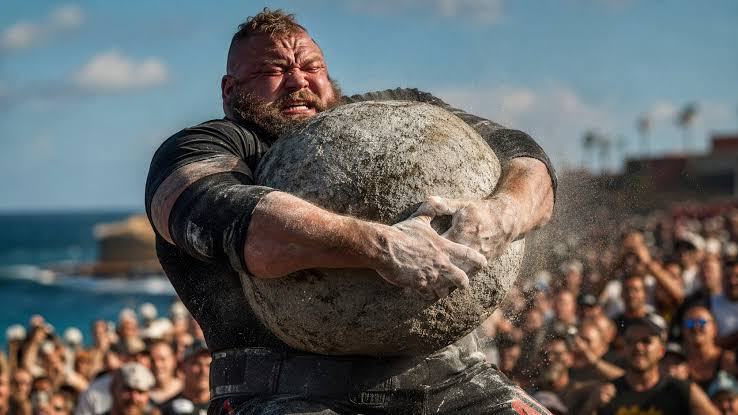
Training
The Science of Strongman Training - Episode IX: Peaking
Peaking in Strongman: how to turn months of training into maximal competition performance by reducing fatigue, preserving adaptations and managing specificity.