
2019
World's Strongest Woman
Daytona Beach, Florida; 2nd of 10 behind Donna Moore.
Runner-up
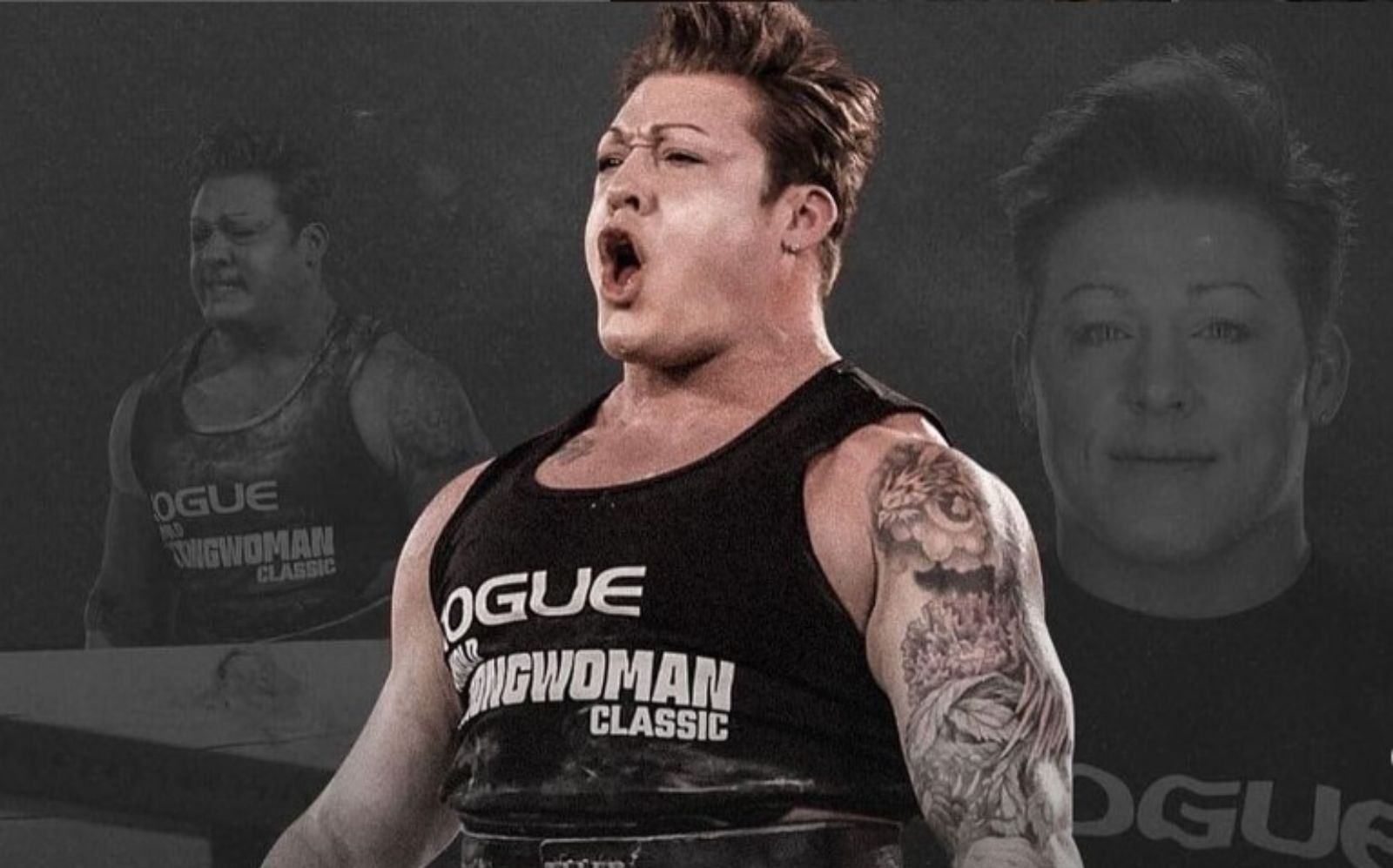
Iron Archives
Two-time Arnold champion and two-time America's Strongest Woman
Retired athlete
Victoria Long is a retired American elite strongwoman whose brief career produced one of the most dominant runs of her generation. She won the 2022 Arnold Pro Strongwoman, the 2023 Arnold Strongwoman Classic, America's Strongest Woman in both 2021 and 2022, and the 2022 Shaw Classic Open, following a silver-medal debut at the 2019 World's Strongest Woman. In 2023 she lifted 295 kg on the Elephant Bar, sharing the event world record at the time with Tamara Walcott. She announced her retirement in March 2024 after a hamstring injury at the Arnold Strongwoman Classic. Her legacy is defined by exceptional versatility, decisive event wins, and a powerful contribution to women's strength sport.
Victoria Long holds a distinctive place in modern American strongwoman history. Between her documented international debut in 2019 and her retirement announcement in March 2024, she assembled a record that many competitors would struggle to match over a considerably longer period: two Arnold titles in consecutive formats, two America's Strongest Woman championships, and victory at the women's Shaw Classic Open. Strongman Archives lists eight notable contests, six victories, and a World’s Strongest Woman silver medal. Those figures explain the scale of her achievement but not the whole story. Long was not simply an athlete capable of winning one event built around her preferred lift. She could accumulate decisive points in maximum-strength challenges, overhead pressing, carries, loading events, and complex medleys. Her career showed how broad athletic competence can matter more than dominance in a single exercise. The combination of versatility, consistency, and exceptionally high performance across different implements makes her competitive legacy unusually substantial for a career lasting only a few years.
Strongwoman competitions are decided by points accumulated across varied tasks, not by the largest number displayed on one barbell. An athlete who excels in the deadlift may lose ground in a timed carry, a loading challenge, or an overhead medley. Long repeatedly avoided that imbalance. At the 2022 America's Strongest Woman contest, she won all five events. The same complete sweep appeared at the 2022 Shaw Classic Open. At the 2023 Arnold Strongwoman Classic, the situation was more complicated: a difficult first day forced her to recover, and she secured the overall title by winning the final three events in succession. These examples reveal an athlete who could produce different kinds of victories. Sometimes she controlled an entire contest from beginning to end; at other times, she had to respond to a deficit. Neither outcome can be explained by brute strength alone. Both demanded competitive judgement, practical command of specialized implements, and the ability to deliver under pressure.
Specialist coverage describes Long as having pursued bodybuilding before moving into competitive strongwoman. That transition offers a useful way to understand the different demands of the two disciplines. Bodybuilding assesses muscular development and presentation, with emphasis on proportions, conditioning, and control over physical appearance. Strongwoman measures completed tasks: how much weight is lifted, how quickly an object travels, how far a load moves, or how many repetitions satisfy a specific rulebook. Converting an athletic background into this very different environment requires technical adaptation and a change in competitive priorities. Reliable public material does not, however, establish every date, bodybuilding competition, training block, or result from Long's earlier years. A professional biography should therefore acknowledge that background without inventing a complete pre-strongwoman chronology. What is beyond dispute is the speed with which her later results became exceptional. Once Long appeared on the major strongwoman circuit, she reached a level ordinarily associated with athletes who had already spent years refining the event-specific details of the sport.
On November 3, 2019, Long finished second at World's Strongest Woman in Daytona Beach, Florida, in a field of ten athletes. Britain's Donna Moore won the title, leaving the American newcomer with a world-level silver medal at her first recorded appearance on that stage. Such a debut is notable because major strongwoman contests reward adaptability rather than familiarity with a single movement. They bring together athletes with different strengths and considerable experience. Later reporting by BarBend, drawing on Long's discussion with Laurence Shahlaei, added an intriguing psychological detail: she did not initially know every famous opponent or approach established champions as figures who could not be beaten. The point should not be exaggerated into a claim that she felt no pressure. It does help explain why she may have competed with fewer preconceived expectations. More importantly, the final standings provide concrete evidence. In 2019, before her run of championship victories, Long had already proved that she could challenge the leading women in the sport.
The details of Long's first world-level appearance show that her strengths extended well beyond maximum lifting. At the 2019 World's Strongest Woman, she won Power Stairs, Carry & Drag, and Farmer's Walk. Strongman Archives records 42.73 seconds for twelve steps in the Power Stairs, 62.03 seconds for the combined carry-and-drag challenge, and 19.90 seconds for Farmer's Walk. She placed second in Axle Press with five repetitions, fourth in Viking Press with eleven repetitions, and fifth in the Deadlift Ladder after completing four implements in 24.50 seconds. This distribution is analytically important. She did not win every event, nor did she possess an automatic advantage in every strength test. Rather, she produced decisive speed-based results while remaining competitive on the pressing and deadlifting tasks. Her later victories would build on the same combination. A reader studying the beginning of her career can already see the outlines of a formidable all-round competitor: strong enough to contend in static lifts, but particularly effective when heavy objects had to be moved.
The interval following the 2019 final is less completely documented than Long's championship seasons. Public competition records do not amount to a complete account of her employment, family life, coaching meetings, training cycles, or every smaller contest she may have entered. An accurate biography should resist the temptation to create a convenient narrative of exact weekly programs or dramatic changes in bodyweight. What the subsequent evidence does show is a marked improvement in performance on technically demanding equipment. By 2021, Long could complete heavy lifting ladders efficiently, handle large stones, and move loaded objects with speed. This pattern is consistent with substantial development in event-specific skill, although the public sources available do not reveal the precise training plan responsible. In strength sport, much of the meaningful work happens outside the camera's view. Long's record is a reminder that one can document outcomes carefully while remaining modest about unseen processes. The next clear landmark was the Rainier Classic Pro-Am in Washington.
At the women's Rainier Classic Pro-Am in Federal Way, Washington, Long finished first among nine competitors. Her event results make the victory especially informative. She completed three repetitions with a 150-kilogram stone over bar and won that event. She took first place in a medley involving a yoke, keg, and sandbag, completing the recorded sequence in 30.16 seconds. She also won a five-implement Deadlift Ladder progressing from approximately 181 to 272 kilograms, finishing in 56.35 seconds. There were areas in which other athletes outperformed her: ten repetitions with a 100-kilogram axle gave her third place, as did a sandbag throw measuring 7.24 meters. The overall win therefore demonstrates something more nuanced than a perfect event sweep. Long could absorb a third-place result without losing control of the contest because she was reliably excellent elsewhere. This ability to produce a high floor across the whole program was central to her competitive identity.
Long won America's Strongest Woman in Orlando, Florida, on October 9, 2021, finishing first in the Open division against five other competitors. According to Strongman Archives, she won all five individual events. In a deadlift sequence involving a 184-kilogram bar, a 202-kilogram bar, and a 227-kilogram axle, she completed the challenge in 10.39 seconds. She also won the sandbag toss, the yoke-and-sandbag medley, and Farmer's Walk, with a recorded 13.91-second effort in the latter. Her maximum log lift reached 116 kilograms. Winning a national title with a clean sweep changed the meaning of her 2019 silver medal. She was no longer merely a promising newcomer who had produced a surprising result. She had become a competitor capable of controlling an entire elite program. The breadth of these wins is as important as their number: pressing, throwing, carrying, and rapidly switching deadlift implements all required different skills, yet each produced maximum points.
In March 2022, at the Arnold Sports Festival in Columbus, Ohio, Long captured the Arnold Pro Strongwoman title. She scored 54.5 points across six events and finished first among ten athletes. The competition included Wheelbarrow Carry, Viking Press, maximum Hummer Tire Deadlift, Sandbag Toss, Yoke Ladder, and Stone Over Bar. Long won the wheelbarrow, sandbag, and yoke events, placed second in the press and deadlift, and remained competitive on the stone. This was not simply a victory produced by one extraordinary lift. It was a demonstration of consistency across a long, demanding program in which a single poor result could have changed the rankings. Her success at the Arnold gave her broader international recognition and placed her firmly among the leading strongwomen of the period. It also established an important part of her legacy: she could earn major titles without requiring the organizers to select one particularly favorable set of events.
The 2022 Arnold results are particularly revealing when the equipment is identified accurately. Long lifted 347 kilograms in the Hummer Tire Deadlift, finishing second in that event. That number must never be reported as an ordinary conventional deadlift: tire height, loading geometry, and event conditions differ from a standard barbell pull. In Viking Press, she completed fourteen repetitions. She successfully tossed a 26-kilogram sandbag over a height of approximately four meters. On the Yoke Ladder, she moved implements weighing 272, 318, and 363 kilograms over six meters each, completing the sequence in 34.61 seconds and winning the event. Her Wheelbarrow Carry time was 41.44 seconds across progressively heavier segments, and she moved a 147-kilogram stone over the bar. Taken together, these results demonstrate very high force production, but also grip management, acceleration, balance, and smooth transitions between implements. The event-specific context is essential to understanding how strong she was and how she used that strength.
At the women's Shaw Classic Open in Loveland, Colorado, in August 2022, Long finished first in a field of ten athletes. More remarkably, she won every event recorded in the program. Her victories covered the fourteen-inch deadlift for repetitions, Super Yoke, Sandbag Toss, Log Lift, and Frame Carry. These tests placed different demands on maximum strength, repeated effort, movement efficiency, and overhead mechanics. Completing such a sweep is difficult because a multidiscipline competition gives specialists several opportunities to challenge the eventual champion. Long denied them that advantage. Her performance also broadened the public understanding of her strengths. She was not limited to the heavy pulls for which she would later become famous. She could win events requiring rapid steps under a large yoke, controlled movement with a frame, and repeated overhead work. Shaw Classic provided one of the clearest pieces of evidence for the argument that Long was among the most versatile elite strongwomen of her era.
The individual Shaw Classic figures are worth preserving rather than summarizing as another routine victory. Long recorded 16.31 seconds in Super Yoke and 13.12 seconds in Frame Carry. She cleared a six-bag sandbag-toss series over approximately 4.57 meters, completed nine log-lift repetitions, and performed fourteen repetitions in the fourteen-inch deadlift. Each result belongs to its particular event setup. None should be treated as directly interchangeable with a gym lift or a record achieved under a different rulebook. Yet the combination reveals how effectively she could sustain output in contrasting tasks. The farmer-style grip of a frame, the pressure of a heavy yoke, and the respiratory demands of repeated deadlifts impose distinct constraints. Long succeeded in all of them during the same contest. Her result at Loveland was therefore not merely dominant on the scoreboard. It illustrated a practical mastery of the competitive elements that separate a complete strongwoman from a specialist in one lift.
On December 16-17, 2022, Long returned to America's Strongest Woman and successfully defended her title in Las Vegas. Five women competed: Long, Olga Liashchuk, Inez Carrasquillo, Gabi Dixson, and Sumer Johnson. Long won all five events and collected the maximum available total of 25 points. Liashchuk finished second with 17 points, while Carrasquillo took third with 13.5. Those figures matter because they establish the quality and completeness of the win. Long did not merely edge her opponents in a final event. She claimed maximum points in the log lift, deadlift medley, carry medley, power stairs, and maximum sandbag load. The program combined static power with complex movement and repeated work. The result ranks among the most decisive performances of her short elite career. For anyone researching her sporting achievements, this competition is a particularly useful reference because the full scorecard documents not only the overall title but also the specific physical performance behind it.
In the maximum log lift, Long raised 136 kilograms, approximately 300 pounds, to win the event. She completed fifteen repetitions in a deadlift medley involving 181-, 227-, and 272-kilogram trap-bar implements. Her carry medley required a 120-kilogram sack, a 118-kilogram farmer's implement, and a 136-kilogram duck walk, completed in 38.13 seconds. In Power Stairs, she moved 136-, 147-, and 159-kilogram implements up four steps each in 28.04 seconds. The maximum sandbag load ended with a successful 160-kilogram result. All five efforts led their respective fields. It is especially significant that no single movement pattern explains the sweep: pressing above the head, lifting a flexible object, moving heavy loads, and repeating demanding trap-bar pulls each reward different physical qualities. This competition stands as a concise description of Long's competitive identity. She could produce headline-worthy maximum lifts while preserving the speed and control necessary to earn maximum points on the clock.
The log lift occupies a central place in strongman because the implement itself changes the movement. A thick cylindrical log with internal handles must be brought from the floor into the rack position before being driven overhead. Its handling demands cannot be equated directly with those of an Olympic barbell used in a conventional push press. Long's 136-kilogram log lift at the 2022 America's Strongest Woman therefore deserves to be named precisely. Strongman Archives records the lift among her major competition personal records. It also matters because it prevents her biography from becoming a story about deadlifting alone. Her ability to win a maximum overhead event against elite opponents demonstrates a more complete strength profile. A careful archive should avoid describing the 136 kilograms as an all-time world record unless that separate claim is verified. It is already an exceptional and securely documented official performance without needing an exaggerated label.
An important historical distinction separates Long's Arnold victories. She won the Arnold Pro Strongwoman championship in 2022. In 2023, the Arnold Strongwoman Classic was officially staged alongside the men's Arnold Strongman Classic, with five corresponding event types adapted for the women. Consequently, archives may place her two achievements under slightly different organizational labels. Reporting that she won two consecutive Arnold women's titles is accurate in the broader festival context, provided the formal names and transition are explained. Equally, the 2023 championship can be described as the inaugural event in the new Arnold Strongwoman Classic format. These formulations refer to related but not identical institutional histories. Long's back-to-back titles connected the established professional women's competition to a larger and more visible stage. The distinction is not pedantic: it helps future readers understand how the sport was changing and why the Arnold results from 2022 and 2023 should be celebrated together without pretending that the event names and structures were unchanged.
The 2023 Arnold Strongwoman Classic took place in Columbus, Ohio, on March 3-4 and brought together ten elite women. The five events were Wheel of Pain, American Oak, Elephant Bar Deadlift, Steintossen, and Timber Carry. Long eventually won with 40.5 points, ahead of Rebecca Roberts on 38 and Andrea Thompson on 36. Olga Liashchuk finished fourth and Inez Carrasquillo fifth. These margins show that the contest was genuinely competitive. Long was not leading comfortably after the first day. Indeed, her initial results created a situation in which she needed to make up substantial ground. The final outcome would depend on her ability to win events against opponents who possessed their own world-class skills. Arnold 2023 is therefore best understood as a comeback rather than a procession. It provides one of the strongest examples in her career of how high-level strongwoman scoring rewards the athlete who can respond to changing circumstances rather than the athlete who starts with the best single performance.
Long finished seventh in Wheel of Pain after moving the apparatus 14.33 meters. Rebecca Roberts won that event with 28.27 meters, creating an early points gap. In the American Oak, Long achieved two repetitions with the 122-kilogram implement and placed fourth. Andrea Thompson completed five repetitions at the heavier weight and won the overhead event. These details are important because they challenge the misleading image of an unbeatable athlete who automatically dominated everything she attempted. Strongwoman includes tasks in which mechanical leverage, energy systems, and technical specialization can change the order of finish dramatically. Long lost valuable points on the opening day, and her position demanded a difficult recovery. What followed was impressive precisely because the deficit was real. The account of this championship should retain the initial setbacks alongside the victories; without them, readers cannot appreciate either the competitive pressure or the scale of the turnaround.
On the second day at Arnold 2023, Long lifted 295 kilograms in the women's Elephant Bar Deadlift, tying Tamara Walcott for first place. Their performances established a shared event world record at that time. Andrea Thompson followed with 293 kilograms. It is crucial to identify the apparatus: the Rogue Elephant Bar is longer and behaves differently under load from a conventional powerlifting bar. A world record under this specialized event should not automatically be presented as an unrestricted deadlift world record. Within its proper context, however, Long's performance was historically significant. It placed her among the strongest deadlifters on the international strongwoman circuit and supplied the first of three decisive event wins on the final day. That record has since been surpassed, notably through Lucy Underdown's subsequent performance in 2024, but a later improvement does not erase the significance of the earlier achievement. In March 2023, Long and Walcott had moved the recognized benchmark for the Elephant Bar event.
Long followed her record-sharing deadlift with victory in Steintossen, a stone-throwing challenge rooted in Swiss sporting tradition. Her best measured distance was 3.31 meters, enough for first place. She then won Timber Carry, transporting an approximately 230-kilogram frame over eleven meters in 6.36 seconds. The two results completed a remarkable sequence: three wins in all three events contested on the final day. That run propelled Long to the overall championship by 2.5 points ahead of Rebecca Roberts. The significance lies in the contrast between the tasks. A maximum deadlift, a stone throw for distance, and a fast loaded carry do not reward identical movement skills. Long mastered each one at the moment when her overall placing depended on immediate execution. The 2023 Arnold finish became one of the defining performances of her career because it combined competitive recovery with an unusually broad demonstration of elite strength.
Accounts of Long's strength sometimes blur together three impressive but distinct results. At the 2023 Arnold Strongwoman Classic, she lifted 295 kilograms with the Elephant Bar. At the 2023 Kaos Classic Record Breakers, she successfully deadlifted 297 kilograms in a different, conventional-bar context. At the 2022 Arnold Pro Strongwoman, she achieved 347 kilograms in the Hummer Tire Deadlift. These are not interchangeable personal records. The lifting height, bar or apparatus, and event rules are relevant to any responsible comparison. An athlete profile that simply reports a 347-kilogram conventional deadlift would distort Long's documented achievements. Likewise, recording 297 kilograms as the 2023 Elephant Bar championship result would be incorrect. The three figures are striking enough when described honestly. Together they show an athlete capable of producing large forces under multiple conditions. Their value increases, rather than decreases, when an archive identifies exactly where and how each lift was made.
In July 2023, Long appeared at the Kaos Classic Record Breakers with the ambition of challenging the conventional deadlift world record. She completed a successful lift of 297 kilograms, just three kilograms below the 300-kilogram benchmark then associated with Lucy Underdown. According to Fitness Volt's account, Long elected to attempt approximately 317.5 kilograms, the symbolic 700-pound mark, rather than taking a smaller increase. She did not complete that heavier lift and suffered a hamstring injury during the attempt. This episode deserves careful separation from the injury she would sustain at Arnold in 2024. The Kaos result adds depth to the story because it illustrates her ambitions beyond multi-event championships. Once she had collected major titles, she also pursued individual records near the absolute limits of women's strength. The unsuccessful 700-pound attempt was not a personal record; the completed 297-kilogram lift is the result that belongs in her documented career statistics.
Long's personal life forms part of her public story, but it should not be reconstructed through guesswork. Her Instagram profile identifies her as married to Dennis Long, who is also associated with strength sports through his public account. Their shared connection with strongman has featured in the community's understanding of the athlete. In discussing her retirement, Long also referred to a desire to redirect attention toward family and other professional commitments. Beyond these confirmed elements, reputable public sources provide limited information about her childhood, schooling, complete date of birth, family history, and daily private life. Numerous generic biography websites supply contradictory heights, weights, ages, or personal details, sometimes apparently mixing different individuals named Victoria Long. Such claims should not be presented as verified facts. A serious sporting biography can be interested in the whole person without violating this principle. The most respectful account distinguishes between details that Long has chosen to share and personal information that remains outside the reliable public record.
A distinctive element of Long's retirement story involves her professional interests outside strongwoman. BarBend, drawing on her public statements and an interview with Laurence Shahlaei, reported that opportunities in law enforcement influenced her decision to leave the competitive circuit. The same reporting makes clear that the decision cannot be explained solely by a single injury. Long was considering a different distribution of professional and personal responsibilities after several years of athletic success. It would be inappropriate, however, to assign her an exact position, rank, department, employer, or employment start date without reliable documentation. The available sources do not establish those details. What they do establish is the presence of another serious career direction at a critical moment. This dimension matters because elite strength athletes do not exist solely as names on competition scoreboards. Their sporting decisions often interact with work, family, and the future they want to build after the last contest.
Long returned to the Arnold Strongwoman Classic in March 2024 for what became the final contest of her career. Strongman Archives records a 288-kilogram Elephant Bar Deadlift and third place in that event. During the deadlift portion of the contest she suffered a significant hamstring injury and subsequently withdrew. Her final classification was eleventh among twelve entrants, a placing shaped by the withdrawal rather than by a full five-event performance. Reporting from BarBend stated that she described two hamstring tears requiring surgical repair. It was a painful conclusion to a career so strongly associated with winning. A responsible account should neither conceal the injury nor use the final overall placing to imply that Long had simply fallen to the bottom of the competitive field. Her result at the time of withdrawal still showed exceptional pulling strength. Days later she announced that she would no longer compete professionally in strongwoman. The final chapter was abrupt, but it did not erase the achievements preceding it.
In her conversation with Laurence Shahlaei for Talking Strongman, Long described a career that had been organized around a roughly five-year plan developed with her coach. According to BarBend's account, she had accomplished nearly everything she had intended, apart from the way her final contest unfolded. She also discussed earlier hamstring trouble, another serious injury at Arnold, and professional opportunities outside sport. Long did not wish to continue competing simply to preserve a presence in a Masters category. Her decision therefore combined injury, timing, and conscious personal priorities. This interpretation avoids two oversimplifications: that she stopped only because her body failed, or that the injury played no meaningful role. The evidence supports a more complex conclusion. A successful athlete reached the end of a planned competitive period at the same moment that a significant injury and other life possibilities made retirement both immediate and understandable.
Long's public retirement statement was not merely a catalogue of regrets about her last performance. She expressed admiration for the women who had shared the competition stage with her, acknowledging the sacrifices, discouragement, and criticism encountered by female strength athletes. She also encouraged them to keep advancing the sport. This emphasis is significant within the larger history of strongwoman. Women's competitions have worked to secure visibility, strong event organization, broadcasting, and recognition alongside men's contests. Long should not be credited with every change in that process, and the history of the movement extends far beyond one competitor. Nevertheless, her presence as a dominant champion coincided with an increasingly prominent international platform for women's events. Her closing message placed achievement within the context of shared professional experience rather than treating competitors simply as opponents to be defeated. The result is a sporting legacy defined both by records and by public respect for the women who continue competing.
Long's results show two recurring strengths: substantial maximum-lifting capacity and the ability to transport or manipulate heavy objects efficiently. The 347-kilogram Hummer Tire Deadlift, 295-kilogram Elephant Bar lift, and 136-kilogram log lift establish her extraordinary ability in demanding strength events. Victories in Yoke Ladder, Timber Carry, Farmer's Walk, and numerous medleys show how effectively she translated force into movement. Heavy carries require posture, footwork, grip stability, and breathing control under intense loading. A successful competitor must often sustain these qualities while fatigued and execute transitions without hesitation. Long's official performances indicate that she excelled at those combined demands. This is a technical interpretation of competition data, not a claim that a particular secret program or coaching method produced her achievements. The value of the evidence lies in its clarity: she repeatedly won both the events associated with raw strength and those in which that strength had to be expressed at speed.
Two results help complete Long's strength profile beyond the headline deadlifts. At America's Strongest Woman in 2022, she won the maximum sandbag load with 160 kilograms. At Rainier Classic in 2021, she managed three successful repetitions with a 150-kilogram stone over bar. Neither challenge behaves like a well-balanced barbell. A sandbag changes shape as it is gripped and lifted; a large stone imposes a different relationship between arm position, trunk tension, and lifting height. Long's performances demonstrated the ability to adapt to irregular implements under competitive conditions. The description must preserve the event rules: her 150-kilogram stone result came in a specific stone-over-bar repetition challenge, not necessarily an unrestricted one-repetition Atlas Stone maximum. This distinction is not a minor detail. Strongman history becomes more useful when every performance is attached to the apparatus and standard under which it occurred. Long's achievements are impressive without removing any of those qualifications.
The 2023 Arnold is remembered for an extraordinary comeback and a shared Elephant Bar world record. Yet 2022 arguably offers the clearest measure of Long's sustained competitive supremacy. She won Arnold Pro Strongwoman in March, Shaw Classic Open in August, and America's Strongest Woman in December. Each event featured a different selection of competitors and a different combination of challenges. Her repeated success makes it difficult to explain the season as a fortunate match with a single set of implements. By the end of the year she had demonstrated elite maximum strength, efficient carries, strong overhead pressing, and exceptional consistency across entire contests. The sequence formed part of six consecutive recorded wins between her 2019 silver medal and the 2023 Arnold title. This is the statistical foundation for descriptions of her as a dominant athlete. It does not require subjective claims that every contemporary rival was weaker in every event; the recorded results already make the case convincingly.
Long's standing becomes clearer when considered alongside Donna Moore, Andrea Thompson, Rebecca Roberts, Olga Liashchuk, Inez Carrasquillo, Tamara Walcott, and Lucy Underdown. Moore defeated her at World's Strongest Woman in 2019. Roberts and Thompson completed the Arnold podium behind her in 2023 and remained close enough to make the final events decisive. Walcott tied her at 295 kilograms on the Elephant Bar, while Underdown later pushed the record beyond their shared mark. These are not incidental names but major competitors with their own achievements and specialized strengths. Long earned her titles in that environment. Any debate about an all-time greatest strongwoman depends on the criteria chosen, including championships, era, event selection, records, and longevity. Such a debate cannot be settled by declaring one athlete superior without qualification. What can be stated firmly is that Long belongs among the outstanding strongwomen of her competitive generation, supported by titles, scorecards, and documented performances rather than reputation alone.
Long's career offers several useful lessons for athletes and readers interested in strength sports. The first is that a contest is won through total points, so maximizing performance across different events may matter more than one impressive personal record. The second is that elite preparation must address movement, grip, overhead work, loading, and repeated effort alongside absolute strength. The third is that records are meaningful only when apparatus and rules are described precisely. Comparing an Elephant Bar, a Hummer Tire setup, and a conventional deadlift without context produces misleading conclusions. Finally, her decision to retire demonstrates that sporting careers take place within a larger life shaped by injuries, relationships, and professional priorities. These observations are editorial conclusions drawn from the evidence, not motivational quotations attributed to Long. They remain valuable because her documented contest history provides concrete examples for each one.
An athlete archive should apply the same care to information that judges apply to determining whether a lift is valid. Long's full date of birth, exact height, reliable competition bodyweight, detailed childhood history, current professional title, and named coach are not sufficiently established by the strongest sources consulted here. Several generic biography pages circulate conflicting numbers or appear to confuse her with other people. Leaving those fields unfilled is more accurate than transforming an unsupported estimate into a permanent biographical claim. Her titles, placings, and competition lifts, by contrast, can be checked against Strongman Archives, specialist reports in BarBend and Fitness Volt, and event material from Rogue Fitness. Distinguishing well-supported facts from reasonable interpretation helps keep her profile both readable and trustworthy. It also creates room for future corrections when Long herself, an official organizer, or another authoritative record provides additional information. Precision, rather than sheer volume of unsupported claims, is the foundation of a useful sporting biography.
Long was one of the most visible champions during a period in which elite strongwoman competition received growing attention through major events, professional scorekeeping, and broadcast coverage. Her achievements gave audiences concrete reasons to appreciate the range of women's strength: a 136-kilogram log lift, a 295-kilogram Elephant Bar deadlift, a separate 297-kilogram conventional deadlift result, fast heavy carries, and championships won across varied events. She did not single-handedly build the modern sport; countless athletes, organizers, coaches, and supporters contributed to its development. Her particular contribution was to set a consistently high competitive standard in front of an international audience. A champion who repeatedly wins without relying on only one physical quality becomes a useful reference point for the level of the entire field. Long's retirement did not diminish that function. Her name remains associated with two Arnold crowns and a remarkable collection of decisive multi-event performances.
The story of Victoria Long is not a simple upward curve in which every contest was easier or every record automatically exceeded the previous one. She began with a world-level silver medal, won a remarkable sequence of titles, chased extreme individual lifts, experienced significant injuries, and eventually chose a future beyond professional strongwoman. That sequence makes her career more instructive than an uncomplicated list of trophies. High-performance sport demands repeated physical risk, sacrifice, and a willingness to adapt as goals change. Long left the competitive stage with two Arnold titles, two America's Strongest Woman championships, a Shaw Classic Open crown, a Rainier Classic title, and a World's Strongest Woman silver medal. These achievements are verifiable and historically meaningful in their own right. Few competitors have concentrated so many successes across such a wide range of strongwoman events into a period so short. That is the enduring basis of Victoria Long's place in the sport.
A chronological review of Long's competitive career should include all eight major or regional appearances recorded by Strongman Archives, rather than only the championships most frequently mentioned in press reports. Her November 2019 debut at World's Strongest Woman produced a second-place finish. In 2021 she won both the Rainier Classic Pro-Am and America's Strongest Woman. Three victories followed in 2022: Arnold Pro Strongwoman, Shaw Classic Open, and America's Strongest Woman. She captured Arnold Strongwoman Classic in 2023. In March 2024, an injury interrupted her final Arnold appearance, leaving her eleventh in the overall standings. This sequence contains six wins between two non-winning results: the first at her world-level debut and the last affected by withdrawal. It does not prove that she won literally every smaller local competition she ever entered, because databases document a defined collection of results. It does demonstrate an extraordinary ratio of victories to recorded appearances. Historical comparisons must consider the number and status of contests as well as the circumstances of a withdrawal. Without that context, a winning percentage can be impressive but misleading.
Long's runner-up finish at World's Strongest Woman in 2019 carried significance beyond the silver medal itself. Donna Moore, the winner, occupied an established position within international strongwoman, while Andrea Thompson was another important athlete of the period. Long entered a field where experience with particular implements and rules could make a decisive difference. Her results revealed a striking advantage in movement events: she won Power Stairs, Carry & Drag, and Farmer's Walk. Fifth place in the Deadlift Ladder, however, shows that her profile at that stage differed from the image created later by her maximum deadlift performances. This distinction is normal in a discipline that rewards event-specific technical development. It would be misleading to project the fully developed athlete of 2023 backward onto the newcomer of 2019. Her career began not with universal domination, but with a distribution of points strong enough to challenge the best and reach a world podium. That competitive foundation made the later sequence of titles possible and helps explain why the improvement was so consequential.
The 2021 Rainier Classic provides an excellent illustration of the difference between winning a contest and winning every individual event. Long was the overall champion while finishing third in Axle Press and Sandbag Toss for distance. She made up the difference through victories in the medley, Deadlift Ladder, and Stone Over Bar. The practical lesson is that a relatively weaker event need not destroy a title bid when an athlete is consistently excellent elsewhere. The medley involved a 272-kilogram yoke, a 113-kilogram keg, and a 104-kilogram sandbag, forcing changes in grip, body position, and movement strategy. The Deadlift Ladder imposed a different problem: five progressively heavier implements had to be completed without wasting energy or time on the early stages. Three repetitions with the 150-kilogram stone presented another challenge altogether, requiring control of a heavy, awkward object rather than a balanced barbell. Long handled these distinct tasks well enough to win. The contest highlights her ability to solve successive athletic problems while managing the clock and the overall score.
Two results separated by a little over a year illustrate Long's progress in the log lift. At America's Strongest Woman in 2021, she won the maximum log event with 116 kilograms. In December 2022, she raised her official competition result to 136 kilograms. The nominal improvement of 20 kilograms is considerable, although any comparison requires context. Competitions may use implements with different dimensions, slightly different judging standards, and attempt strategies shaped by the field. A recorded winning lift does not necessarily reveal the maximum the athlete could achieve during training. Even with these qualifications, both numbers were registered at significant events and demonstrate a genuine increase in her achieved competition standard. A successful heavy log press requires an efficient clean, stable trunk positioning, controlled transfer of force from the lower body, and a secure overhead lockout. Changes in performance can reflect several technical and physical factors. Without a verified training log, the improvement should not be attributed to one exercise, coach, or secret method. The competition evidence is sufficient to document the scale of the progress.
Yoke Ladder is demanding because it transforms a single loaded carry into a sequence of mechanically different tasks. The load increases while the athlete must move efficiently over short distances, where time spent getting underneath the apparatus and initiating each segment becomes especially important. At the 2022 Arnold Pro Strongwoman, Long transported frames weighing 272, 318, and 363 kilograms over six meters each, completing the full sequence in 34.61 seconds. She won the event. This should not be described as a continuous eighteen-meter carry with 363 kilograms, because the heaviest frame was used only for the final segment. The result instead illustrates how quickly she adapted as the load increased. Effective yoke technique depends on trunk stiffness, control of oscillation, stable steps, and the ability to accelerate immediately after changing implements. Body proportions, load distribution, and technical choices interact strongly in this event. Long was capable not only of finishing the increasingly heavy segments but of doing so quickly enough to beat the field. The performance supplies further evidence of functional strength expressed under time pressure.
In strongwoman records, the term deadlift can refer to movements with very different mechanical demands. A conventional deadlift uses a relatively standardized bar and starting position. The Elephant Bar is longer and has a distinctive response under load. A Hummer Tire Deadlift uses a large tire-loaded apparatus with its own geometry. Fourteen-inch deadlifts start from a raised height, while deadlift medleys require multiple bars and weights. Long produced exceptional results across these categories, but directly comparing the weight values without equipment information would create a false hierarchy. Her 347 kilograms in 2022 were achieved with Hummer Tires, not in the same configuration as the 295-kilogram Elephant Bar lift in 2023. Fourteen repetitions in a raised deadlift at Shaw Classic cannot be converted rigorously into a one-repetition conventional maximum. To preserve sporting history accurately, each effort should be categorized by apparatus, lifting height, event format, and rules. This method does not diminish the athlete's achievements; it protects them from the kind of exaggeration that makes published records less useful to serious readers.
In Long's carrying events, the difference between an excellent performance and a winning one was often measured in seconds rather than kilograms. At the 2023 Arnold Strongwoman Classic, she covered eleven meters with an approximately 230-kilogram timber frame in 6.36 seconds. At Shaw Classic in 2022, she won Frame Carry with 13.12 seconds and Super Yoke with 16.31 seconds. Those times involve different courses and equipment, so they cannot be used to calculate a directly comparable absolute speed across competitions. They do reveal a repeated pattern: Long excelled when she had to lift a loaded implement, move rapidly, maintain direction, and avoid costly stops. In a strongwoman carry, the time spent setting the grip, raising the object, and stabilizing the first steps can determine the result. An exceptionally strong athlete who hesitates during a transition may lose to a more efficient competitor. Long repeatedly converted physical strength into fast execution. That ability was a crucial component of her dominant overall scores and is one reason her achievements should not be assessed through static lifts alone.
Evaluating Long's historical importance requires attention to the evolution of women's strength competitions. Event names, field sizes, rules, equipment, and the availability of broadcast coverage have changed over time. Long won Arnold Pro Strongwoman in 2022 and the following year's Arnold Strongwoman Classic, staged alongside the principal men's competition. Both victories belong to the Arnold tradition, but they did not use identical programs. Likewise, the Elephant Bar record belongs in a comparison with Elephant Bar results, not every deadlift ever completed under any rules. Better competition archives have made cross-generational research easier, but they cannot remove every difficulty. Some champions competed for significantly longer periods; others collected more world titles, while specialists advanced particular maximum lifts to higher levels. Long's historical position rests on the exceptional efficiency of her winning years, not on a need to dismiss every other era or athlete. Her career is strongest as evidence of concentrated, multidiscipline excellence within a clearly identified competitive context.
The 2023 Arnold Strongwoman Classic ended with Long on 40.5 points, Rebecca Roberts on 38, and Andrea Thompson on 36. Understanding those figures makes her final-day comeback more meaningful. She began with seventh place in Wheel of Pain and fourth in American Oak, losing ground to several rivals. In the final three events, she tied Tamara Walcott for first in the Elephant Bar Deadlift, then won Steintossen and Timber Carry outright. Because the deadlift victory was shared, Long received 9.5 points for that event; the other two wins were individual first places. The comeback should not be described vaguely as beating everyone at all times. More precisely, Long exploited three consecutive events in which she had a clear competitive advantage, recovering enough ground to finish 2.5 points ahead of Roberts. That relatively small margin demonstrates how little room for error remained. A slip or a slower carry could have changed the final order. This close arithmetic is one reason Arnold 2023 stands among the most compelling results of her career.
The period from 2023 to 2024 illustrates the inherent risks of extreme strength events, although it does not permit retrospective medical diagnosis. In March 2023, Long's 295-kilogram Elephant Bar success gave her a shared world record. In July, she completed a separate 297-kilogram deadlift at Kaos Classic and then attempted roughly 317.5 kilograms without success, reportedly sustaining a hamstring injury. At Arnold in March 2024, another serious hamstring injury ended her participation. These incidents took place under different circumstances. Public reporting does not provide sufficient evidence to determine their complete medical causes or to blame a particular training method. Nor is it possible to claim confidently that one adjustment would have prevented the injuries. High-performance strength sport involves constant choices involving maximum ambitions, fatigue, recovery, and biological limits. Long's extraordinary strength did not exempt her from those realities. Her decision to retire also highlights the importance of considering long-term health alongside competitive goals, without inventing a detailed medical history unavailable to the public.
Reporting about the five-year plan Long had developed with her coach adds an important dimension to the career. In many sports, retirement is automatically framed as personal defeat, while competing indefinitely is treated as the only evidence of ambition. Long's conversation with Laurence Shahlaei suggests that she had established objectives within a defined competitive period. She won major national championships, two Arnold titles, Shaw Classic, and contributed to a prominent event world record. She also indicated that continuing solely to remain on the circuit in a Masters division was not a priority. This does not imply that older athletes should retire or that extended careers are less valuable. It means Long used her own definition of success. Injury influenced the circumstances of her final appearance but did not create the idea of retirement from nothing. A sporting career can be complete even when it is short. Long's case is particularly instructive because her goals and her record align more closely than the disappointing ending of her last contest might suggest.
A newcomer to strongwoman may encounter the sport through a photograph of a huge loaded frame or a brief clip of a maximal overhead lift. Long supplied many such memorable moments, but her sporting value cannot be understood without the scorecards. At America's Strongest Woman in 2022, the 136-kilogram log lift was only one of five victories. At Arnold in 2023, the 295-kilogram Elephant Bar deadlift alone would not have secured the title without the following wins in Steintossen and Timber Carry. Strongwoman contests assign meaning to every repetition, second, and kilogram according to the rules and opponents of a particular event. A serious biography should therefore combine compelling narrative with precise numerical documentation. Photographs show what the achievement looked like; scores explain why it mattered competitively. Long deserves to be remembered not simply as a visually imposing athlete, but as a champion who mastered the full structure of the contests she entered.
When assembling a lengthy athlete profile, there is a temptation to add a date of birth, estimated age, height, bodyweight, or hometown taken from an unspecialized website. For Long, accessible generic biographies sometimes contradict one another or appear to confuse her with people sharing the same name. A professional archive must resist that impulse. Her American nationality and public connection with Dennis Long are supported, but an exact family chronology, educational history, or detailed employment record cannot be presented with equal confidence. Competition footage also cannot establish someone's precise body measurements. Respect for the athlete means distinguishing reliable information from private details she has not publicly confirmed. If future interviews or official records establish additional facts, they can be included. Until then, leaving a field blank is a responsible editorial choice, not an indication that the research was careless. In a database intended to remain useful for years, unsupported precision is often more damaging than an openly acknowledged gap.
When Long discussed her retirement, she referred not only to the consequences of injury but also to a life less dominated by the demands of competitive preparation. Coverage based on her public statements mentioned opportunities in law enforcement and a wish to devote more attention to family and professional responsibilities. These details provide a mature context for the decision, but they do not justify inventing an employer, police department, rank, or specific domestic episode. Dennis Long, whom she identifies on her Instagram profile, is himself connected to strength sports, creating a genuine shared sporting context. Competition, however, is not the only possible identity for a person. For someone who spent years pursuing demanding athletic goals, changing priorities can be a deliberate choice rather than a sign of diminished ambition. Her biography gains depth when that choice is understood in relation to the titles she had already achieved, while allowing the less public parts of her personal life to remain private.
Long's importance to strongwoman extends beyond the total number of medals. In a sport whose women's competitions have gained visibility through athletes, organizers, broadcasters, and local communities, successful champions provide recognizable reference points for the public. Long's record is particularly convincing because it rests on contest results rather than publicity alone. Six victories across eight archived appearances, including repeated Arnold and America's Strongest Woman titles, form a substantial statistical basis for her reputation. Her retirement message, which expressed admiration for fellow competitors, adds another dimension. It would be inaccurate to portray her as the sole creator of modern strongwoman visibility; that would neglect previous generations and her contemporaries. She can, however, be recognized as one of the athletes who most clearly demonstrated the level the discipline had reached in the early 2020s. Her place in the history of strength sport is supported by both the trophies and the quality of her performances across different kinds of challenges.
A sporting record belongs to a specific date and rulebook, rather than existing outside time. Long's 295-kilogram Elephant Bar lift at Arnold in 2023 was a shared event world record with Tamara Walcott when it occurred. Other competitors later surpassed that figure, notably Lucy Underdown in 2024. There is no contradiction between saying that Long held a record and recognizing that the mark is no longer current. There would be an error, however, in presenting 295 kilograms as the standing world record in 2026. The same distinction applies throughout competition archives: the contest, date, event, implement, and subsequent developments all matter. This attention to context separates history from mythology. Long helped raise the standard of a famous strength challenge at a particular moment, then became part of the sequence of performances through which later athletes advanced the sport. A trustworthy archive can celebrate each stage of that progression without treating the sport's records as permanently frozen.
Long's last competition ended in withdrawal after injury. For someone who sees only the 2024 final standings, eleventh place might create an inaccurate impression of her level. This was not a full contest in which she performed poorly across every event. Her participation ended after a hamstring injury in the Elephant Bar Deadlift, where she had already lifted 288 kilograms and placed third in that individual challenge. Across the six recorded victories preceding it, Long had repeatedly demonstrated the ability to dominate multiple categories of effort. Retirement closed that competitive period; it did not erase those results. A balanced biography should neither hide the injury nor allow it to overshadow her whole career. Her legacy is constructed from verified performances, championship results, and the decision to move toward a life in which sport remains a major achievement without remaining the only priority. Viewed in that fuller context, Victoria Long's career stands as one of the most concentrated demonstrations of elite strongwoman excellence in her generation.
Competition statistics and record claims are supported by the following sources. Interpretive passages are editorial analysis rather than statements attributed directly to the athlete.
Strongman Archives: athlete, contests and performances
Rogue Fitness: 2023 Arnold event history
Rogue Fitness: 2023 Elephant Bar coverage
BarBend: 2024 retirement and interview
Fitness Volt: 2022 Arnold Pro Strongwoman results
Fitness Volt: 2022 America's Strongest Woman results
Iron Hall data
297 KG
Conventional deadlift · Kaos Classic Record Breakers, 2023; successful lift, not the overall world record.
Verified
295 KG
Elephant Bar deadlift · 2023 Arnold Strongwoman Classic; event world record at the time, tied with Tamara Walcott.
Verified
347 KG
Hummer Tire deadlift · 2022 Arnold Pro Strongwoman; Hummer Tire apparatus, not a conventional deadlift.
Verified
136 KG
Max log lift · 2022 America's Strongest Woman; event winner.
Verified
160 KG
Max sandbag load · 2022 America's Strongest Woman; event winner.
Verified
150 KG
Stone over bar · 2021 Rainier Classic Pro-Am; 3 repetitions.
Verified
363 KG
Yoke ladder, final implement · 2022 Arnold Pro Strongwoman; 272/318/363 kg, 6 m each; 34.61 s overall.
Verified
230 KG
Timber carry · 2023 Arnold Strongwoman Classic; 11 m in 6.36 s.
Verified
2019
Daytona Beach, Florida; 2nd of 10 behind Donna Moore.
Runner-up
2021
Federal Way, Washington; 1st of 9 in the Open division.
Winner
2021
Orlando, Florida; 1st of 6; won all five events.
Winner
2022
Columbus, Ohio; 54.5 points; 1st of 10 across six events.
Winner
2022
Loveland, Colorado; 1st of 10; swept all five events.
Winner
2022
Las Vegas; perfect 25/25 points; won all five events.
Winner
2023
Columbus, Ohio; 40.5 points; 1st of 10; three event wins on day two.
Winner
2024
Columbus, Ohio; hamstring injury during Elephant Bar Deadlift; the end of her competitive career.
11th, withdrew after injury