
2013
European Amateur Strongman Championships
Won in Vilnius, first of 16 athletes; a key result in his transition toward the professional level.
Champion
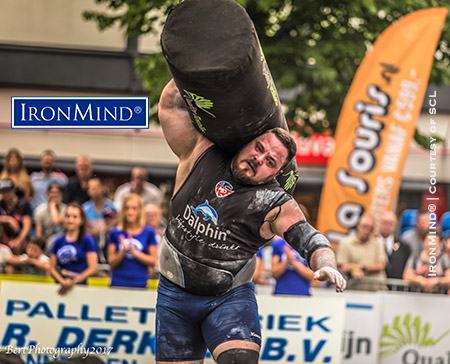
Iron Archives
2017 Strongman Champions League champion and World's Strongest Man finalist
Active athlete
Matjaž Belšak is a Slovenian professional strongman from Medvode and one of the defining Central European strength athletes of the past decade and a half. The 2017 Strongman Champions League overall champion, 2017 Arnold Europe winner, two-time World's Strongest Man finalist and seventh-place finisher at WSM 2018 built his reputation on elite static strength, outstanding overhead power, a 400-plus-kilogram deadlift and unusual all-round ability across classic strongman events. After undergoing a total right hip replacement in June 2021, he made a remarkable return, winning Slovenia's Strongest Man in 2022, 2023 and 2024, the Strongman Eurocup in 2024, 2025 and 2026, and PSL Fitparade in 2025. Strongman Archives lists him in 2026 at 185 cm, roughly 152 kg, with 82 international contests and 23 international wins.
Matjaž Belšak, the profile of a champion who refused to disappear. In recent European strongman history, some athletes are defined by one title, one record, or a handful of peak seasons, while others reveal their value through the length and variety of an entire career. Matjaž Belšak belongs to the second category. The Slovenian from Medvode began competing exceptionally young, progressed from Central European regional contests to World's Strongest Man, the Arnold Strongman Classic, Giants Live and Strongman Champions League, became the 2017 SCL overall champion, reached two World's Strongest Man finals and recorded his best world-level finish, seventh place, in 2018. Then, when a long-standing hip problem appeared capable of ending his career, he underwent a total right hip replacement in June 2021 and accomplished something that looked almost incompatible with elite strongman for an athlete weighing well over 140 kilograms: he returned and continued winning. In 2022 he came back directly with the Slovenia's Strongest Man title, then added further national victories, Strongman Eurocup wins and, in 2025, a Premium Strongman League victory at Fitparade. On 25 July 2026, at age 33, he won the Strongman Eurocup in Novi Kozarci again. Strongman Archives lists him, at the time of this profile's September 2026 update, as active from 2011 through 2026, with 82 international contests, 23 international victories and four World's Strongest Man appearances, two of them finals. Those figures should not be read merely as statistics. They describe an athlete who crossed several generations of the sport, from the years when Žydrūnas Savickas and Brian Shaw set the global standard through the eras of Hafþór Björnsson, Martins Licis, Oleksii Novikov and the increasingly professional modern European circuits. Belšak was not simply present for that transformation. During his best seasons, he was one of the men everybody else had to beat.
Identity, origins and physical data. Matjaž Belšak was born on 23 September 1992 and comes from Medvode, a town northwest of Ljubljana that appears consistently in Slovenian interviews and press coverage about him. Sources are not completely uniform regarding his height and bodyweight, which is normal in strongman, where mass can change substantially across a preparation cycle and over a long career. Strongman Archives currently lists him at 1.85 metres and roughly 152 kilograms, while in a 2019 interview with Fitness.com.hr Belšak described himself as 187 centimetres tall and 145 kilograms. A two-centimetre discrepancy is more likely a matter of measurement or rounding than anything sportingly meaningful, and bodyweight naturally shifted with competitive goals, injuries and the post-surgery comeback. VladimirStrongman uses 185 cm and approximately 152 kg as the current reference values because those are the figures in the contemporary Strongman Archives entry. Belšak competes in the Open division with no upper bodyweight limit. He is not among the tallest athletes to have competed at world level, yet the combination of a compact frame, an exceptionally strong torso, powerful legs and very effective overhead mechanics became a major part of his competitive identity. In pressing and deadlift variations, a relatively compact build can help convert raw force efficiently into implement movement. In moving events, a lower centre of mass can offer stability even if stride length is shorter than that of athletes over two metres tall. His career demonstrates that those anatomical trade-offs never prevented him from becoming a complete competitor. In interviews, Belšak rarely talks about his body in aesthetic terms. Bodyweight, food and recovery make sense insofar as they serve a task: pressing a log, pulling a truck, carrying a frame, surviving a Hercules Hold, or remaining effective through five or six events in one day. That functional orientation is one of the clearest cultural distinctions between strongman and physique-based sports.
The beginning: fitness, powerlifting and fascination with strongman. Belšak has explained in several interviews that he entered weight training very young. In Serbian press coverage he summarized the route as a progression from fitness to powerlifting and then to strongman. In the 2019 Fitness.com.hr interview, he said that his first strongman competition came near the end of his seventeenth year, roughly half a year after his first powerlifting meet. The important point is that strongman already fascinated him before he competed. He followed international contests online and was drawn to the variety of the events, to the idea that strength was not measured through one standardized movement but through the ability to solve radically different physical problems. His friend Gregor Stegnar, a former Slovenia's Strongest Man and one of the most significant Slovenian competitors of the previous generation, organized a novice strongman contest. Belšak had only a small amount of specific strongman practice before entering. He finished second on equal points with the winner, with the result decided by event placings. For a teenager, that was a powerful signal. In an interview with 24ur, he later explained that the desire to become one of the strongest men on the planet did not arrive as a single revelation. It grew from contest to contest as he began standing beside athletes he had previously known only from internet broadcasts. This psychological progression matters. There is rarely one instant in which an anonymous teenager becomes a professional. There is a chain of confirmations: the first event win, the first podium, the first trip abroad, the first time an established name treats you as a genuine opponent. Belšak moved through those stages unusually early. Starting before age eighteen gave him years of competitive learning before most strongmen reach full physical maturity. It also exposed him very early to the accumulated mechanical cost of heavy events, a factor that would become relevant later in his career.
Powerlifting as the foundation. Although Matjaž Belšak's public identity is overwhelmingly associated with strongman, powerlifting was one of the technical foundations of his career. OpenPowerlifting records his appearance at the GPC World Championships in Slovakia on 17 September 2012, when he was still 19 years old and competed in the 140 kg class at a bodyweight of roughly 131 kg. He totaled 875 kg, with a 360 kg squat, 190 kg bench press and 325 kg deadlift, winning the division in which he was entered. Those numbers are impressive without any additional context, but they become more meaningful when treated as a starting point rather than a peak. Belšak would later move his strongman deadlift beyond 400 kg to 410 kg, while publicly reporting a squat around 400 kg. After the 2012 GPC competition, he did not build a parallel powerlifting career. He focused on strongman, where the same foundational qualities had to be transformed. The squat was no longer only a depth-judged barbell lift but could become a repetition event in a strange apparatus; the deadlift could be conventional, axle, tire, car, frame, block or Elephant Bar; and the bench press, central to powerlifting, lost relevance in favour of logs, axles, dumbbells, kegs and other overhead implements. Belšak himself explained the difference simply: squat and deadlift remain vital, bench is effectively replaced by overhead pressing, and then many more event-specific movements must be added. This transition helps explain his later versatility. He was neither an athlete who learned strongman objects without a foundation of maximal strength nor a powerlifter rigidly trying to impose barbell technique on a more chaotic sport. Instead, he used powerlifting as an alphabet and then learned the much more complicated language of strongman.
The first international years, 2011–2013. Strongman Archives begins Belšak's international chronology in 2011 with the Slavic Cup in Žilina, where he finished sixth in a field of eighteen. For an 18-year-old, merely appearing in such a contest represented a rapid acceleration. In 2012 he became substantially more competitive. He finished second at the Strongman Eurocup in Novi Kozarci and second again at the Slavic Cup, while also placing fifth at Sword of Matúš Čák. In 2013, Belšak won Sword of Matúš Čák in Považská Bystrica and again finished second at the Slavic Cup. The most important result of that year came at the European Amateur Strongman Championships in Vilnius, where Strongman Archives lists him first in a field of sixteen. That victory was one of the steps that transformed a young regional talent into an athlete capable of entering established professional circuits. Strongman has no completely standardized development pathway. There is no single junior league from which promotion happens automatically. Athletes navigate national competitions, regional cups, qualifiers and invitations. For Belšak, Central and Eastern Europe served as a competitive laboratory. Slovakia, Serbia, Lithuania, Austria and then larger tours gave him the mix of opponents and events needed to accelerate his education. A pattern already becomes visible in this period: Belšak could travel frequently and compete often. Later, in Strongman Champions League, that ability became essential because SCL demanded not merely one peak weekend but resilience across a long season in different countries, climates and event formats. Those early years developed more than muscle and technique. They taught the logistics and psychology of a professional: flights, long drives, improvised meals, imperfect recovery, unfamiliar equipment and quickly changing rules.
2014, the year he entered the conversation around major professional contests. If 2011–2013 were years of accumulation, 2014 was the point at which Matjaž Belšak's results began to carry weight on established professional stages. He won European Giants in Spielberg, Austria. A few weeks later, at Giants Live Hungary in Budapest, he finished second in a contest that placed him directly inside the qualification ecosystem and the pool of names associated with World's Strongest Man. Strongman Archives then records a very busy Strongman Champions League season: fifth at FIBO, fourth in Croatia, third in Hungary, fifth at the SCL stop in Sibiu, Romania, third at the Savickas Classic and an appearance at the SCL World Finals in Kuala Lumpur. He also won the Slavic Cup in 2014. That volume matters when defining Belšak's style. An athlete with one exceptional quality can surprise in a contest whose events happen to suit him, but staying near the top across successive competitions is difficult if major weaknesses exist. Belšak was already showing the opposite. He did not need every event to be perfect. He could compensate. Sources cataloguing his performances from this period show strong results in car deadlift, overhead events and moving events. Giants Live Hungary is also associated with memorable stone-to-shoulder performances. At the same time, the season exposed the brutal reality of professional strongman. Podiums were not guaranteed. He could finish top three one week and closer to the middle of the standings at another. That variability is characteristic of the sport, where a technical mistake, a failed grip or an implement that does not suit an athlete's biomechanics can cost many points. For Belšak, 2014 was the transition from highly promising young athlete to genuine professional. From then on, his name was no longer appearing accidentally among veterans. He was becoming one of them.
2015, the first World's Strongest Man. In 2015 Belšak made the step that nearly every elite strongman considers one of the ultimate validations of a career: he competed at World's Strongest Man. The contest took place in Putrajaya, Malaysia, and the Slovenian was placed in Heat 5. Strongman Archives lists him third of six, not enough to advance to the final but an outstanding result for a 22-year-old debutant. He showed in the group events that the stage did not intimidate him. In Atlas Stones he loaded four stones and finished third in the heat. The same year included fifth place at Europe's Strongest Man, one of the strongest competitions on the European calendar. There, Belšak pulled 400 kg in the max deadlift event and scored competitively in a field containing athletes at the peak of their era. The 2015 Strongman Champions League season produced a long sequence of strong finishes: second at SCL FIBO, podiums in Austria and Martinique, solid results in Bulgaria, Croatia, Poland and the Savickas Classic, followed by fifth at the SCL World Finals in Turkey. He also won European Giants again. The event results there illustrate his competitive profile particularly well: first in arm-over-arm pull, keg press and wheelbarrow carry, with another strong finish in the Bavarian Lift. What was emerging was a far more complete athlete than the simple label of overhead specialist would suggest. He possessed pulling power, enough speed in moving events and the ability to generate high repetitions under fatigue. The 2015 season also made his relationship with dumbbell pressing increasingly visible. At several SCL contests he won or placed near the top in pressing events, turning that family of movements into one of his signatures. His first WSM did not produce a final, but it gave him a precise map of the distance remaining. One year later, he closed that distance.
2016, the first World's Strongest Man final. World's Strongest Man 2016 in Botswana became one of the major confirmations of Belšak's career. In his qualifying group, the Slovenian won Dumbbell Press with ten repetitions, finished second in Squat Lift and Loading Race, and third in Fingal's Fingers and Atlas Stones. That distribution of placings shows exactly why he advanced: he was not dependent on one event. He accumulated points in overhead pressing, leg strength, loading and moving implements. In the ten-man final he finished ninth. The raw placing may seem modest compared with podium positions, but the context is essential. Belšak was 23 years and 332 days old, and Strongman Archives places him among the youngest WSM finalists in history. In the final he pulled 400 kg in the max deadlift and finished fifth in Plane Pull, again confirming that pulling strength and deadlift power were genuine weapons. The 2016 season was also exceptionally rich in Strongman Champions League. He finished second in Norway, at FIBO and in Bulgaria, third in Serbia and third at the World Finals in Dubai. At SCL Norway he won Boat Pull and produced fifteen repetitions in the Viking Press. At FIBO he won Atlas Stones and Conan's Wheel; in Bulgaria he won Conan's Wheel and Log Lift. Those results broaden the image of the athlete. If dumbbell and deadlift are the easiest events to associate with Belšak, 2016 shows a competitor able to win strength-endurance events, circular carries and vehicle pulls as well. In less than six years from his teenage debut, he had become a WSM finalist and one of the most consistently dangerous athletes on the SCL circuit. The next season would convert that consistency into dominance.
2017, the defining season and the Strongman Champions League title. The 2017 season remains the central landmark of the first half of Matjaž Belšak's career. In Strongman Champions League he did not simply have one great weekend. He constructed an entire season. He won SCL FIBO in Cologne, SCL Holland in Lichtenvoorde, SCL Serbia in Zlatibor and SCL Finland in Vaasa, while finishing second in Canada. In November, at the World Finals in Chetumal, Mexico, he closed the season with the victory that secured the overall championship. MLO Nutrition's report on the final described him as dominating most of the disciplines, with event wins in dumbbell, carry and drag, bus pull and medley. In the dumbbell event he completed fourteen repetitions with 95 kg in sixty seconds, presented by the organizers as a world record for that configuration. The final standings placed Belšak first with 83.5 points, ahead of Canadian Jean-François Caron and Latvian Dainis Zageris. Beyond the numbers, the final illustrates one of the Slovenian's essential qualities at his peak: he could combine explosiveness with work capacity. Dumbbell for repetitions requires fast cleans and lockouts, bus pull demands full-chain coordination and specific conditioning, and a medley punishes slow transitions. Winning all of those event types in one contest means more than maximal strength. In 2017, Belšak became champion of a tour designed to reward versatility and consistency. Strongman Champions League involved events throughout the year, international travel and an enormous variety of implements. The overall title therefore carried a different meaning from one isolated contest win. It confirmed that Belšak could repeatedly be excellent, not merely exceptional once. For an athlete from a country with a much smaller strongman scene than Britain, the United States or the Nordic nations, the championship also carried symbolic weight. Slovenia now had an overall world tour champion in a sport where its international presence had previously been comparatively limited.
2017 beyond SCL: Arnold Europe, European Giants and a 200 kg axle. Belšak's season cannot be reduced to his Strongman Champions League championship. At Arnold Europe in Barcelona he won the qualifier, further establishing himself within the Arnold system. At European Giants in Spielberg he earned another victory. At Europe's Strongest Man in Leeds he finished sixth in a field that included Eddie Hall, Hafþór Júlíus Björnsson, Terry Hollands and other top-tier athletes. There, Belšak pressed a 200 kg axle, a performance Strongman Archives still lists among the major axle press marks in its record database. Although absolute records advanced later, a 200 kg axle remains extraordinary because the movement is less efficient than a standard barbell press: the thick bar complicates the grip, the clean places enormous demand on the torso, and the axle diameter alters the rack position. For Belšak, 200 kg also expresses his clearest specialization. Across his career, overhead pressing was probably the event family in which he most consistently converted strength into major points. Log, axle, dumbbell and Viking press repeatedly appear among his event wins. At 2017 SCL FIBO, Strongman Archives lists a 195 kg log lift, one of the biggest contest lifts it records for him. In a later interview, Belšak stated a personal best of 200 kg on the log in another competitive setting. The difference between 195 and 200 is not a meaningful contradiction; not every contest and every attempt is archived equally. The larger point is the profile. During 2016–2019, if a contest included a heavy overhead event or pressing for repetitions, Belšak was rarely an athlete opponents could afford to ignore. The 2017 season was the moment when that reputation joined overall championship-level results. He was not merely one of the strongest pressers. He was a complete strongman who could win an entire season.
World's Strongest Man 2017, a final missed by a narrow margin. Paradoxically, one of the best overall seasons of Belšak's career did not produce a WSM final. At World's Strongest Man 2017 in Gaborone, Botswana, the Slovenian finished third in his group. Under that year's qualification format, third place was not enough to advance, so Belšak remained outside the final even though his form across the rest of the season was exceptional. The episode is useful for understanding how dependent strongman can be on format. An athlete can be a season-long tour champion and, within another competition, miss a final because of group distribution, event selection or one weak moment. World's Strongest Man has used many qualification systems over the years, some more forgiving of a poor event, others extremely punitive. For Belšak, 2017 became a perfect example of the difference between season-long value and the result inside one competitive window. It did not change his status on the circuit. He continued winning SCL stages and ended the year as overall champion. More importantly, missing the final did not cause him to abandon the approach that had brought success: a high contest volume, constant exposure to varied events and the ability to remain competitive across successive weekends. That philosophy can also be questioned because a heavily loaded calendar accelerates wear and narrows recovery windows. Yet in that era it was also one of the ways an athlete from a small market could build visibility, relationships with promoters and deep competitive experience. Belšak chose volume and consistency. The result was a career with dozens of international appearances, but also a body that, by the end of the decade, was beginning to pay the price of accumulating extreme loads.
2018, his best World's Strongest Man result. In Manila, Philippines, Matjaž Belšak recorded the highest WSM placing of his career in 2018: seventh in the final. Strongman Archives confirms the position, while Slovenian press treated the result as one of the country's significant international strength-sport achievements. Seventh may look distant from the podium, but the 2018 field was extraordinary. Hafþór Júlíus Björnsson won the title, followed by Mateusz Kieliszkowski and Brian Shaw, during a period when the density of world-class strongman talent was immense. For Belšak, reaching the final again and improving on ninth place from 2016 confirmed genuine development. The same year he finished sixth at the Arnold Strongman Classic in Columbus, one of the heaviest maximal-strength competitions in the sport. He was second at Arnold Europe, fourth at Arnold Australia and fourth at the Giants Live World Tour Finals. Those results show that the WSM performance was not an isolated spike but part of a complete season at a very high level. In Strongman Champions League he won in Abu Dhabi, Finland and Serbia. He also won Slovenia's Strongest Man in Ljubljana and captured the Strongman Eurocup in Novi Kozarci. Taken as a whole, 2018 may represent his strongest combination of results across different ecosystems: seventh in the WSM final, top six at the Arnold, Arnold Series podiums, SCL victories and a national title. If 2017 was the year of the SCL championship, 2018 was the year Belšak demonstrated most clearly that the same level could be transferred to every major international strongman environment.
2018 and the anatomy of versatility. What stands out in Belšak's results from this period is not only the number of podiums but the differences between the contests themselves. Strongman Champions League often favoured combinations of dynamic events, repetitions and traditional objects; Giants Live emphasized recognizable crowd-friendly disciplines such as deadlift, log and stones; the Arnold Strongman Classic became famous for extremely heavy implements and raw maximal difficulty. An athlete who performs well across all three must possess a technical toolbox far wider than simple maximal strength. Belšak could produce fast dumbbell repetitions but also carry enormous farmer's handles. He could deadlift 400 kilograms, yet also pull vehicles, rotate a Conan's wheel and survive multi-object medleys in which transition speed mattered almost as much as strength. That versatility explains why he accumulated so many international wins. Not every victory came at the most prestigious contest on earth, but their density demonstrates an athlete who could adapt. In strongman, adaptation is a form of sporting intelligence. The bar and the implement do not behave identically, surfaces change, distances change, and promoters can alter details late in the process. The best athletes learn principles rather than only movements: how to brace, how to reduce wasted steps, how to breathe under compression, when to sacrifice speed for control and when tenths of a second matter. Belšak was not publicly known as a theorist, but his results across so many formats indicate deep practical understanding. At his peak, he could enter a competition with several unfavourable events without having the entire weekend collapse. That is one of the clearest differences between an event specialist and a genuine overall strongman.
2019, the peak of static strength. If 2017 and 2018 were the years of Belšak's strongest overall competitive results, 2019 produced some of the most impressive raw-strength numbers of his career. At the Arnold Strongman Classic in Columbus he finished fifth, his best placing at the main Arnold contest. There, databases credit him with a 404 kg Elephant Bar deadlift. The Elephant Bar is longer and more flexible than a standard bar, changing the timing of the break from the floor and demanding control over the oscillation of the load. A few months later at Arnold Africa, Belšak pulled 410 kg, the heaviest contest deadlift Strongman Archives lists for him and a mark widely cited as a Slovenian national strongman record. At Arnold Australia he finished second, one of the most valuable podiums of his career in the Arnold Pro Strongman World Series. He was fourth at Arnold South America and continued competing across multiple Arnold stops. These results show a season in which Belšak remained relevant not because of reputation but because he could still produce maximal performances while global standards were rising rapidly. By 2019 a 400 kg deadlift was no longer unprecedented among elite strongmen, but 410 kg still separated strong international competitors from the truly elite static pullers. Belšak achieved it without being an athlete built exclusively around deadlifting. That distinction matters. In overall strongman, every extra kilogram of maximal strength has a recovery cost and must be balanced against the need to remain fast in carries, medleys and loading. The fact that he could reach 410 kg and remain competitive in full contests during the same season says a great deal about his preparation.
2019, the national title, WUS Dubai and international continuity. In October 2019, Belšak won Slovenia's Strongest Man in Ljubljana. Strongman Archives records a 450 kg frame deadlift at that contest, won by the Slovenian, along with victory in a medley combining a frame, sack and keg. The 450 kg frame deadlift matters because it illustrates how different a strongman record can be from a conventional deadlift. Handle height, grip position and apparatus geometry radically alter the mechanical demand, so the number cannot be compared directly with a floor deadlift. It nevertheless demonstrates the enormous hip and knee extension strength Belšak possessed at the time. At World's Ultimate Strongman in Dubai he finished ninth of fourteen. He pulled 400 kg in the max deadlift, placed fourth in the log lift with three repetitions and sixth in a medley combining yoke and shield carry. Those results are a miniature summary of the athlete: heavy deadlift, strong overhead, competitive carrying. The same year he won the Strongman Eurocup in Novi Kozarci and Austria's Strongest Man, an open national contest whose inclusion of a Slovenian also reflects the cross-border nature of the Central European scene. Belšak continued appearing in Canada, Spain, Africa, Australia, Brazil and the Middle East. Such a calendar is remarkable geographically. Professional strongman at that level means time zones, long flights, temperature changes, limited equipment access, food that does not always fit a plan and fragmented recovery. Belšak accepted that lifestyle for years. His career is therefore also a story of logistical resilience, not only muscular force.
Overhead pressing, Belšak's technical signature. If one event family defines him best, it is overhead pressing. The 200 kg axle at Europe's Strongest Man 2017, a log in the 195–200 kg range, strong Viking press results and repeated dumbbell victories create an unusually complete overhead profile. These implements are not cosmetic variations. The log forces the athlete to roll a thick cylinder up the torso before stabilizing it in a rack position that already compromises breathing. The axle's diameter complicates both grip and clean. A strongman dumbbell demands one-arm stability, lateral control and efficient transfer of force from the legs. Viking press uses a fixed lever system with a completely different path. Belšak excelled across all of them, suggesting far more than powerful shoulders. It implies strong triceps, a stable torso, sufficient mobility, coordination and excellent use of leg drive. At World's Strongest Man 2016 he won the dumbbell press in his heat with ten repetitions. At the 2017 SCL World Final in Mexico he produced fourteen repetitions with a 95 kg dumbbell in sixty seconds, presented by the organizer as a world record for that setup. In other competitions he achieved nine repetitions with a 102 kg dumbbell and accumulated numerous first places in overhead medleys. Even at the 2020 Arnold Strongman Classic, when physical problems were increasingly limiting his overall performance, he pressed a 127 kg Cyr Dumbbell and finished fourth in that event. That continuity shows overhead pressing was not merely a youthful advantage. It remained a weapon even as other parts of his body began to restrict total contest volume. For opponents, a heavy pressing event in the program meant Belšak had a genuine chance to take major points.
Deadlift, squat and foundational strength. Belšak's documented and publicly stated bests describe a world-class static base: 410 kg deadlift, 404 kg Elephant Bar deadlift, 450 kg frame deadlift and approximately 400 kg in a raw squat with wraps. In powerlifting at age nineteen he had already squatted 360 kg and deadlifted 325 kg in competition. The later progression shows how much strength he added to an already exceptional foundation. More importantly, those numbers translated into strongman events. Belšak was not only a max-deadlift athlete. He repeatedly performed well in car deadlift for repetitions, tire deadlift and other variations where resistance to fatigue matters almost as much as a single maximum. Some sources credit him with sixteen repetitions on a car-deadlift apparatus around 340 kg in 2014, though such figures must always be interpreted through the mechanics of the apparatus rather than the nominal mass of the vehicle. His powerlifting background also gave him technical confidence in squat events, and at WSM 2016 he finished second in the squat event of his heat. Static strength, therefore, was integrated into a broader ability to repeat force. That distinction separates an impressive gym lift from strongman points. A contest may ask for five repetitions at a heavy weight after a truck pull two hours earlier. The nervous system, grip and posterior chain are no longer fresh. Belšak had enough reserve strength for submaximal loads to remain manageable and enough competitive experience to pace them. This reserve helps explain why he was effective across very different programs. When a contest favoured static strength, he could fight directly for points. When the program was more dynamic, his strength base gave him the margin to move objects without turning every repetition into a maximum effort.
Pulling events, carries and strength endurance. Belšak has often been introduced to the general public through spectacular footage of truck pulls and aircraft-moving demonstrations, especially in Slovenian media. Beyond spectacle, truck pull is technical. The athlete must establish the correct body angle, maintain constant tension through the harness, coordinate the arms without disrupting leg rhythm and manage rapidly accumulating fatigue. Belšak won major vehicle-pull events and was highly competitive in arm-over-arm, bus pull and boat pull. At SCL Norway 2016, Strongman Archives records his victory in Boat Pull, while secondary record lists cite a time of 16.68 seconds while pulling a roughly three-ton boat for twenty-five metres in winter conditions. At European Giants 2016 he won a truck pull involving a vehicle of approximately 7.7 tonnes. His carrying results varied more depending on the implement, but he recorded enough high placings in farmer's walk, frame events and medleys to remain a complete athlete. Conan's Wheel was another discipline in which he could excel, winning it at multiple SCL events. The event attacks the abdomen, back, breathing and pain tolerance in a uniquely strongman way because the load rests on the forearms and compresses the torso while the athlete attempts to travel as many degrees around a circle as possible. For an athlete weighing 145–152 kg, the conditioning required for those events is often underestimated. It is not cardiovascular fitness in the conventional endurance-sport sense, but the ability to continue generating force while breathing is compromised and local muscular fatigue becomes extreme. Belšak built his prime career in an era when that form of strength endurance was fundamental, particularly on the SCL circuit where contests often involved six or seven events in a single day.
Atlas Stones, loading and the relationship with awkward objects. In strongman, Atlas Stones are often the final event and therefore the place where hours of competition can be decided. Belšak was not primarily known as an absolute stone specialist in the way some legendary competitors were, but he was good enough that the event rarely became a structural weakness. At WSM 2015 he loaded four stones in his heat; at WSM 2016 he finished third in his qualifying group on stones. At SCL FIBO 2016 he won a 140–180 kg stone series, a performance later referenced in some databases as an event benchmark for that setup. In the Fitness.com.hr interview he stated a personal best of 220 kg on an Atlas Stone. That figure fits the level of his strength but should be separated from fully archived competition results because not every contest or attempt was recorded in the same way. Beyond maximum stone weight, Belšak's loading ability is visible in medleys involving sacks, kegs and other irregular implements. Those events demand more than back strength. Picking up a 120–140 kg sandbag, running with it and loading it onto a platform requires synchronized hip extension, arm control and breathing, while the implement itself deforms unpredictably. Years of exposure made Belšak efficient in transitions. Strongman technique does not always look elegant. Sometimes the fastest solution is asymmetric, involves a rapid regrip or uses a body position no barbell manual would recommend. Belšak developed in a competitive environment that rewarded exactly this adaptability. His stone and loading results therefore make the most sense as part of the whole career: he did not win every stone run, but he was generally strong enough to prevent the final event from becoming a collapse in points.
How Matjaž Belšak trained. The clearest public information about his preparation comes from interviews during his peak years. In 2019 he explained that training was continually adapted to the next competition or to the contest considered most important in a given phase of the season. Strongman's variety makes it impossible to train every discipline in every session. In broad terms, he described two weekly sessions dedicated to strongman events, one day built around deadlift and assistance work, one pressing day, and another squat-focused day with supplementary exercises. Volume and intensity changed according to the distance from competition so that strength and form could peak on contest day. In a Slovenian interview published by Svet24, Belšak described a demanding training day that could include roughly three hours of strength work, stretching, massage and five quality meals distributed through the day. That picture shows that a professional strongman schedule is not merely a list of sets and repetitions. Recovery becomes a second training session. Mobility, massage, sleep and food must be organized around mechanical load. For an athlete above 140 kg, fatigue is not only muscular. Connective tissue, joints and the cardiovascular system absorb enormous stress. Belšak also competed very frequently, meaning a significant part of preparation likely involved managing fatigue and preserving already-developed qualities rather than endlessly chasing gym records. His own statements reveal a pragmatic method: the contest events dictate training. Truck pull coming up means specific pulling work. Log for repetitions changes overhead volume. A max deadlift changes the peak. That flexibility is one of strongman's unwritten rules. There is no universal program because every competition changes the problem.
Nutrition: fuel for a 145–152 kg body. In 2019 Belšak stated that during contest preparation he consumed roughly 5,500–7,000 kilocalories per day. By his own description, he did not follow a rigid menu that was identical every day; instead, he had a food system he knew and tolerated, designed to support performance. Foods he mentioned included beef and pork, eggs, rice, potatoes, peppers, zucchini, tomatoes, Greek yogurt and orange juice. The sample day he gave in the interview was typical of a heavyweight strongman: eight eggs, ham and rice for breakfast; salmon, rice and a banana as another meal; a large portion of meat with roughly half a kilogram of potatoes and vegetables at lunch; orange juice or a carbohydrate drink around training; then meat, rice and vegetables again later in the day. In a 2023 24ur feature, Belšak also recalled periods in which breakfast could reach ten eggs with ham, followed later by several toasted sandwiches with ham and cheese. Such menus attract attention because the quantities are unusual, but their role needs context. A body above 140 kg that trains for hours and attempts to preserve enormous muscle mass has a very high energy demand. Quantity alone, however, is not enough; digestion becomes a performance variable. Too much food before yoke, stones or truck pull can severely impair breathing and comfort, so heavyweight athletes distribute meals and learn which carbohydrate and protein sources they tolerate best. Belšak also repeatedly emphasized recovery, meaning food cannot be separated from sleep, massage and training organization. After his hip replacement and as his career matured, his needs and bodyweight likely changed, but without precise public data it would be incorrect to project the exact 2019 diet onto the 2022–2026 period. This profile therefore treats the menu as a documented snapshot of one phase, not as a permanent diet or a recommendation.
Professional activity, coaching and public identity. In the later years of his career, Belšak has also used his experience in coaching, with the name Belsak Power Coaching appearing in his public communication and social media. Public information does not justify presenting a detailed business structure, income figures or a claimed number of clients, so this profile stays with what can be supported: Belšak has positioned himself as a coach and source of strength-sport expertise. The evolution is logical. A strongman with more than a decade of international competition accumulates knowledge that cannot be obtained from textbooks alone: how a yoke feels when it begins to oscillate, how a different log diameter changes the clean, how footwear behaves on wet pavement, how to warm up when an organizer changes an event time, and how much energy to save before Atlas Stones. Slovenian media have also shown athletes seeking his help with strongman technique. A 2020 24ur feature on another athlete preparing for a strength competition mentioned training with Belšak to learn specific movement skills. His main public social-media identity is built around @belsakstrongman, where training, competition and his post-surgery return have been documented. Unlike some strongmen who turned social media into a large entertainment persona, Belšak's public image has remained comparatively direct: training, competition, recovery and the people around the sport, without an elaborate theatrical character. That tone matches his interviews. He usually speaks concretely about preparation, food, results and goals. In the history of Slovenian strength sport, his public role therefore extends beyond medals. He helped make strongman more visible in a country where the discipline remains relatively niche, and his continuity has given younger Slovenian athletes a local example of a route all the way to WSM and the Arnold.
Personal life and the proper limits of a public biography. There is far less verified information about Matjaž Belšak's private life than about his sporting career, and that imbalance should be respected rather than filled with speculation. Press coverage and Belšak's own comments have emphasized the importance of family and the people close to him. In a Serbian interview after a Strongman Eurocup victory, he said that much of the credit for his success belonged to his family and the people around him. That statement supports discussion of a strong support network, but it does not justify inventing or aggressively aggregating information about a partner, children, relatives or their occupations. In a serious sporting biography, the absence of data is preferable to manufactured intimacy. What can safely be said is that a professional strongman calendar like Belšak's carries an unavoidable personal cost. Dozens of international trips, long training sessions, the need for sleep and scheduled meals, injuries and rehabilitation all reduce the space available for ordinary life. Between roughly 2014 and 2020, Belšak entered an exceptionally high number of competitions across several continents. A career like that is not sustained only by the athlete's will; it also depends on tolerance and assistance from the people closest to him. The 2021 hip replacement made that reality even clearer. For a period, an athlete accustomed to moving hundreds of kilograms had to rebuild basic movements progressively and accept temporary dependence on a medical and rehabilitation process. Public updates from the post-operative period conveyed optimism but also fatigue and limitation. His later return cannot be fully separated from the support he received, even if the details remain private. This profile therefore treats personal life at the level the evidence permits: it acknowledges family and close support when Belšak himself has done so, but it does not convert his discretion into space for speculation.
2020, the last major season before the medical break. In March 2020, Belšak returned to the Arnold Strongman Classic in Columbus and finished tenth. The overall result was below the standard of previous editions, yet the contest still contained a performance demonstrating that one of his defining qualities remained intact: a 127 kg Cyr Dumbbell, enough for fourth place in the event, in a field where Mateusz Kieliszkowski, Hafþór Björnsson and Oleksii Novikov produced some of the greatest dumbbell performances of the era. At the same contest, however, Belšak failed to record a successful Elephant Bar Deadlift and lost many points in Timber Carry and Trial by Stone. Shortly before, at the Arnold USA event in Santa Monica, he had withdrawn from some events and finished very low overall. Retrospectively, those results take on greater meaning once the seriousness of his hip problems is known. Strongman punishes the hip joint almost everywhere: deadlift, squat, yoke, farmer's walk, stones, sandbags, truck pull and nearly every clean require extension, stabilization or rotation under load. An athlete may compensate for months or even years through technique and pain tolerance, but mechanics eventually impose a limit. In October 2020, Belšak still won the Strongman Eurocup in Novi Kozarci, demonstrating that he could produce a complete winning contest. At the same time, the COVID-19 pandemic disrupted the international schedule, reduced event opportunities and complicated travel. For Belšak, the global interruption overlapped with a personal physical problem that could no longer be ignored. From the outside, 2020 looks mixed: a difficult Arnold, an Eurocup victory and then disappearance from major international competitions. Inside the career, it was the beginning of a transition toward surgery.
The total hip replacement in 2021. On 24 June 2021, Matjaž Belšak underwent a total right hip replacement. The athlete communicated the operation publicly, and later biographical sources describe it as the consequence of a long-standing problem that had produced roughly two years of significant pain and limitation. For a professional strongman, a total hip replacement is one of the most radical orthopedic interventions imaginable. The hip is a mechanical centre for almost every strength event. It transfers force between the torso and lower body, absorbs compression in squat and yoke, generates extension in deadlift and stones, and must remain stable under rotation, acceleration and deceleration. A total replacement substitutes the damaged joint surfaces with artificial components and permanently changes an athlete's relationship with risk. The standard medical objective after such surgery is pain-free daily function and, for many patients, a return to moderate physical activity. A return to competitive strongman is not ordinary and should never be generalized. Belšak reported shortly after surgery that the procedure had been successful, that he had taken his first steps the next day and that, although exhausted, he was optimistic about the future. This phase represents perhaps the sharpest narrative break in his career. Until then, progress had been measured in kilograms, points and placings. After surgery, progress initially had to be measured in walking, range of motion, control, tolerance to loading and the absence of severe pain. For an athlete whose identity had been built around extreme strength, that recalibration required psychological patience as well as physical discipline. Moving too quickly could compromise recovery; excessive fear could delay the return of useful capacity. Belšak navigated between those extremes well enough that roughly one year later he was back on a strongman competition floor.
Rehabilitation and the 2022 return. The rehabilitation period was not publicly documented day by day with the detail of a medical diary, and this profile does not invent protocols or timelines. What is known is that Belšak remained active and, in 2022, even appeared at the Slovenian armwrestling championship, an activity that allowed him to compete in a format with entirely different demands on the hip. The decisive moment came at Slovenia's Strongest Man 2022. Strongman Archives lists him first in the contest. It was his first strongman competition after the total right hip replacement, and he won roughly one year after surgery. The symbolic value is greater than the size of the field. Belšak did not need to prove immediately that he could defeat ten WSM finalists. He needed to prove that the new joint, reconditioned musculature and rebuilt confidence could tolerate the structure of a full strongman contest again. Training can be stopped at any moment, a load can be reduced, and an exercise can be selected. Competition removes much of that control. The athlete must perform the events chosen by the organizer, in the prescribed order, under time pressure and with limited recovery. Winning on his return demonstrated that rehabilitation had produced more than ordinary mobility; it had restored genuine sporting function. At the same time, a comeback does not mean his body became identical to what it had been in 2018. A mature strongman with a hip prosthesis must manage volume, loading type and contest frequency differently from a 23-year-old. The most interesting element of Belšak's return is that he did not need to pretend the operation had never happened. He built a second competitive phase with different priorities, in which national and regional victories coexisted with the need to preserve the ability to continue.
2023 and 2024, confirmation that the return was not a one-off. A single post-operative win can be interpreted as a favourable moment. Consecutive successful seasons change the conclusion. In 2023 Belšak won Slovenia's Strongest Man in Logatec in a field of twelve. In 2024 he won the same national contest again, also in Logatec, against ten athletes. Strongman Archives lists him as champion in both editions. Those results extended a national run that had begun before surgery with titles in 2018 and 2019 and resumed after the operation. In 2024 Belšak also won the Strongman Eurocup in Novi Kozarci, Serbia. Novi Kozarci has special significance in his career: he competed there as early as 2012, when he finished second, returned repeatedly through the years, and turned the event into one of the recurring landmarks of his competitive life. To win there again in 2024 meant that the same athlete who had arrived as a young man could return more than a decade later, after WSM, Arnold, an SCL championship and a hip replacement, and still leave as champion. Media narratives naturally focus on the dramatic image of surgery followed by victory, but the real sporting achievement is more ordinary and more difficult: repetition. Training week after week without pain again becoming dominant, preserving muscle mass, adjusting technique, accepting weaker days and continuing to show up. Belšak demonstrated that continuity. At the same time, the absence of a sustained post-2021 return to WSM or the main Arnold stage requires an important distinction between returning successfully to competitive strongman and returning to exactly the same absolute global level he occupied in 2017–2019. His second career is remarkable without needing romantic exaggeration.
2025 and 2026, the veteran continues to win. In 2025 Belšak won the Strongman Eurocup in Novi Kozarci again and then added a significant Premium Strongman League victory at Fitparade in Budapest. Strongman Archives lists him first of ten athletes at Fitparade, ahead of Jan Lacina and Zsolt Molnár. Across the events he won the log lift for repetitions, finished second in the front hold and sandbag toss, and accumulated enough points for the overall victory. Later, at the PSL Final in Székesfehérvár, he finished sixth of nine, showing that at age 33 and after years of accumulated wear he could still remain competitive in a professional league. On 25 July 2026, the Strongman Eurocup again became the site of a major result. Belšak won the Novi Kozarci contest in a nine-man field. The event-by-event placings are revealing: third in super yoke, first in Hercules Hold, second in log lift, first in farmer's walk and second in a truck pull of roughly thirteen tonnes. That is not the profile of an athlete winning through one favourable event. It is the profile of a competitor who leaves almost no major weakness. The farmer's walk victory is particularly relevant to the discussion of his hip because heavy carries demand lateral stability, rapid steps and control under compression. Hercules Hold requires grip and pain tolerance, while truck pull combines the lower body with conditioning. In 2026 Belšak was not competing at the absolute WSM peak, but he was not appearing ceremonially for nostalgia either. He was winning real events and real contests. Strongman Archives therefore continues to list his active years through 2026 and credits him with 23 international wins. Longevity itself has become one of the central achievements of the career.
Belšak's place in Slovenian and European strongman. Slovenia does not possess the population, infrastructure or media tradition of countries that have produced entire waves of strongman champions, although it had capable competitors before Belšak, including Gregor Stegnar and other athletes who helped build a domestic scene. What differentiates Belšak's career is its international breadth. Strongman Archives credits him with dozens of contests across several continents and an international win total far beyond what earlier Slovenian competitors documented in the same database achieved. He reached World's Strongest Man four times, in 2015, 2016, 2017 and 2018, with two finals and a best finish of seventh. He competed at Europe's Strongest Man, reached the Arnold Strongman Classic and numerous Arnold Pro Strongman World Series events, won the SCL World Finals and the overall season title, recorded Giants Live podiums and collected victories at European Giants, Slavic Cup, Strongman Eurocup and other competitions. That record makes him a bridge between regional and global strongman. For a young athlete in Slovenia, the Belšak example demonstrates that the route to the top does not necessarily have to begin inside a large national system. It can start at regional contests, continue through tours such as SCL and reach WSM through consistent results. At the same time, his story also warns about the cost. Longevity in strongman carries wear, and a career with such a high contest volume can accelerate joint degeneration. A hip replacement at age 28 is a harsh biological reality. The fact that he returned does not make the operation trivial and should not be used to suggest that the risks of the sport are small. Instead, Belšak's case contains both faces of elite strongman: the extraordinary capacity to build strength and performance, and the biological price of spending years under extreme loads.
Sources, method and editorial conclusion. This profile was built by comparing several categories of source rather than allowing one database to become an unquestioned authority. Strongman Archives was used as the principal reference for competition chronology, placings, active years, event results and documented records. OpenPowerlifting was used for the official 2012 powerlifting result, where the 875 kg total can be checked through individual attempts and category data. For personal context, the beginnings of his career, training structure, food intake and athlete-stated personal records, the 2019 Fitness.com.hr interview and Slovenian media including 24ur and Svet24 were consulted. For the 2017 Strongman Champions League title and details of the Mexico final, the MLO Nutrition report documents standings, points and Belšak's multiple event wins. World's Strongest Man results were cross-checked through official and historical result archives. For the recent period, Strongman Archives provides results through 2026, including the Eurocup victory of 25 July 2026 and the PSL results of 2025. Where sources differ, the profile keeps the discrepancy visible: Strongman Archives lists 185 cm and 152 kg, while Belšak stated 187 cm and 145 kg in 2019; the competition database lists 195 kg on the log at SCL FIBO while the athlete stated a 200 kg personal best elsewhere. Rather than arbitrarily selecting one value and presenting it as certainty, the difference is explained. The same principle applies to private life: only supported public information is included. The resulting portrait is more interesting than any simple mythology. Matjaž Belšak began before age eighteen, built strength through powerlifting, mastered dozens of implements, travelled international circuits for years, reached two WSM finals, deadlifted beyond 400 kg, axle-pressed 200 kg, won a world tour championship, underwent a total hip replacement and returned strongly enough to keep winning through 2026. His legacy is ultimately one of adaptation: teenager to professional, powerful specialist to complete competitor, contender to champion, then patient to active veteran.
Contest tactics and the art of collecting points. An overall strongman does not win only through personal records. He wins by managing risk in every event. Belšak's career offers many examples of that reality. In a max deadlift, an athlete must decide how early to enter the event and whether an extra attempt is worth the fatigue for a handful of points. The same problem appears in max log or axle, where weight selection matters. In a medley, a perfect transition can be worth more than another five kilograms of absolute strength. In a carry, one dropped implement can turn second place into eighth. Belšak built strong overall results because, during many seasons, he limited those catastrophic losses. Strongman Archives contains contests in which he won no events but still finished high through a series of third-, fourth- and fifth-place performances; in other contests he attacked his strongest disciplines and accepted controlled losses in weaker ones. That kind of strategy is learned through experience. Young athletes are often tempted to treat each event as an independent record attempt and spend resources on a local victory that does little for the final standings. Veterans learn that the objective is the sum. During the 2017 SCL season, this way of thinking was essential. Belšak needed not only to win stages but to accumulate results across a long year and arrive healthy enough for the final in Mexico. At the World Final, multiple event victories showed that he still possessed sufficient physical reserve, but also that he knew when to push the pace. At WSM, where qualification formats could eliminate an athlete after a single group, the margin for error was even smaller. His third-place heat finish in 2017 demonstrates how brutal the format could be. From this perspective, Belšak's two WSM finals and dozens of high international placings were not merely products of strength but of competitive intelligence developed through repetition.
Wear, injury and the boundary between resilience and sacrifice. Belšak's career is an important lesson in how elite strongman loads the body. Not every injury arrives as a dramatic tear in front of an audience. Some appear as slow degradation: cartilage loss, recurring irritation and compensatory mechanics that transfer stress from one joint to another. In Belšak's case, the hip problem became severe enough to require a total replacement before age thirty. That fact does not permit identification of one single cause. Without his medical records, it would be irresponsible to claim that a particular event or exercise created the damage. What can be observed is that his sport involves years of extreme compression and shear forces. Heavy yoke, squat, deadlift, carries, stones and explosive cleans repeatedly load the hip at levels almost never encountered in ordinary life. Large body mass also increases joint loading away from training. Belšak competed exceptionally often from 2014 through 2020, sometimes at short intervals and on different continents. Such a schedule can reduce the time available to fully resolve small problems before the next contest. His return after surgery also demonstrates what modern orthopedics and disciplined rehabilitation can make possible in an exceptional case. It is important not to turn that outcome into general medical advice. The fact that Belšak returned to strongman after a hip replacement does not mean every patient can or should lift hundreds of kilograms. He is an exceptional athlete with unusual muscular development and years of technical experience. The case is valuable precisely because it is rare. Biographically, the operation changes the meaning of strength. In the first half of his career, strength meant a 410 kg deadlift or a 200 kg axle. After 2021, it also meant accepting a phase in which a short walk represented progress and rebuilding without allowing the identity of a champion to overrule recovery.
Belšak's generation and the exceptional standard of the 2010s. To evaluate his fifth-, sixth-, seventh- or ninth-place finishes fairly, it is necessary to consider the athletes around him. He entered World's Strongest Man while Brian Shaw and Žydrūnas Savickas still represented the absolute standard, Hafþór Júlíus Björnsson was developing toward a world title, Eddie Hall was building toward his WSM victory and 500 kg deadlift, and Mateusz Kieliszkowski was emerging as one of the most extraordinary dynamic athletes in the sport. Jean-François Caron, Martins Licis, Terry Hollands, Laurence Shahlaei and other veterans made a top-ten finish extremely difficult. Later, Oleksii Novikov and a new generation raised the speed and density of competition again. Belšak did not find an easy historical window in which to reach the elite. Seventh at WSM 2018 came in a final won by Björnsson with Kieliszkowski and Shaw on the podium. Fifth at the 2019 Arnold Strongman Classic came in a contest famous for extreme implements and a field built from the strongest static athletes in the world. The 2017 SCL championship was won against competitors such as Jean-François Caron, Dainis Zageris, Aivars Šmaukstelis and Krzysztof Radzikowski. Context should not be used to turn every placing into a moral victory. Results remain results. But it explains the standard required to be seventh in the world in that era. Belšak spent years living inside that dense elite, and his prime overlapped with a generation that repeatedly redefined the sport's records.
Arnold Schwarzenegger and the cultural dimension of the Arnold circuit. One episode Belšak recounted in Slovenian media offers a glimpse away from the competition floor. After one of his Arnold appearances, he said that Arnold Schwarzenegger invited several strongmen to his home for dinner. Belšak described the encounter without grandiosity: Schwarzenegger was friendly and polite, and the house contained photographs and objects connected to his films and books. For an athlete who had begun as a teenager watching international strongmen online, access to such a circle symbolized the distance travelled. The Arnold Sports Festival is not simply a competition. It is an enormous sporting and cultural event built around a figure who connected bodybuilding, cinema and the promotion of strength sports. Strongman at the festival became, particularly during the 2010s, one of the two defining landmarks of the season alongside World's Strongest Man, but with a different identity: more maximal strength, gigantic objects and events designed to push raw limits. Belšak fit that environment well enough to reach the Columbus final repeatedly and to win Arnold Europe. His runner-up finish at Arnold Australia 2019 and fifth place at the Arnold Strongman Classic the same year were major career moments. The dinner anecdote adds no points to his competitive record, but it reveals the status he had earned inside the strength community. He was no longer a spectator in Medvode watching famous athletes online. He had become part of that international world himself.
The Romanian connection and the regional circuit. Belšak's career also has a direct point of contact with Romanian strongman history. On 20 September 2014, Strongman Champions League held a stage in Sibiu, Romania, and Belšak finished fifth in an eleven-man field. It may look like one line in a results table, but it is relevant to understanding how European strongman functioned in that era. Tours such as SCL connected cities and markets that did not necessarily have Britain's or the Nordic countries' long-established strength-sport traditions, bringing the same international athletes to Romania, Bulgaria, Serbia, Croatia, Poland, Austria, Germany, Latvia and Portugal before continuing outside Europe. Belšak was one of the most consistent travellers within that network. For local spectators, the presence of an athlete who would soon become a WSM finalist and SCL champion provided direct access to international level. For the athlete, each stop offered points, experience and relationships with promoters. Romania has produced competitive strongmen, but the infrastructure for major international events has fluctuated over time. SCL Sibiu 2014 belongs to a period when Central and Eastern Europe frequently hosted strong international fields. Belšak, coming from the same broader region, benefited from geographic proximity during his early years and then converted that foundation into a global career. His connection with Serbia became even stronger, particularly through the Novi Kozarci Strongman Eurocup, where he returned repeatedly over more than a decade. Regional contests are sometimes undervalued next to WSM or the Arnold, but they form the living tissue of the sport: they create rivalries, test young athletes, keep veterans active and develop organizers.
Strongman Champions League as a school of endurance. To understand why the 2017 SCL title matters so much in Belšak's biography, it is necessary to understand the tour format. Unlike a single championship, Strongman Champions League operated as an international series with multiple stages, often in rapid succession. Athletes accumulated results, and the season final added further pressure. Events could change radically from city to city: log and deadlift one week, Conan's Wheel, loading and truck pull the next, followed elsewhere by dumbbell, front hold or a medley. Travel became part of the sport. Belšak was almost built for this structure through versatility and willingness to compete. In 2014 and 2015 he learned the circuit through a mixture of podiums and mid-table results. In 2016 he moved consistently closer to the top and finished third at the World Final in Dubai. In 2017 he converted experience into control: wins at FIBO, Holland, Serbia and Finland, second in Canada, then victory in the Mexico final. In 2018 he continued winning stages in Abu Dhabi, Finland and Serbia even as his focus was divided with Arnold and WSM. That progression is more revealing than one sudden explosion of talent. Belšak learned how to be good over time. SCL rewarded exactly the quality that retrospectively defines his career: the ability to return. After a flight, after a weak event, after a minor injury, after a weekend in which nothing was perfect, he had to show up again. Years later, the same capacity to return would be tested on a much larger scale by his hip replacement.
Arnold 2019 and the events that show a complete athlete. Belšak's fifth place at the 2019 Arnold Strongman Classic was built in a format that tested radically different qualities. Competition archives include the Elephant Bar Deadlift, Wheel of Pain, Húsafell Stone and other events designed to separate even the strongest men. Belšak pulled 404 kg on the Elephant Bar. On the Wheel of Pain, a gigantic apparatus requiring continuous driving force around a circular path, he travelled far enough to collect valuable points. In the Húsafell-style carry, secondary result sources credit him with moving an implement of roughly 186 kg for more than fifty-five metres, demanding grip, torso-compression tolerance and pacing. These events are illustrative because they cannot be prepared for through powerlifting alone. Wheel of Pain attacks the legs, trunk and conditioning from a nearly continuous forward-driving position. A Húsafell carry requires embracing a heavy metal replica without convenient handles while the object crushes the chest and breathing becomes increasingly restricted. Elephant Bar deadlift changes the timing of the pull. Belšak was adaptable enough to finish fifth in a contest where one major weakness can destroy the entire standings. The result did not come from absolute domination of one event; it came from a package of sufficiently strong performances. His 410 kg deadlift at Arnold Africa and second place at Arnold Australia during the same period confirm that Columbus was not an anomaly. The 2019 season became the last complete year in which Belšak could combine the Arnold circuit, national competition, WUS and regional events without a major medical interruption.
What Belšak's return means in a changing sport. Strongman in 2026 is not identical to the sport in which the Slovenian began around 2010–2011. Athletes now have broader access to sophisticated programming, video analysis, specialized physiotherapy, structured nutrition and a much larger market for strongman-specific equipment. At the same time, competitive standards have risen. Deadlifts beyond 400 kg are more common at international level, world log-press marks have moved beyond thresholds that once looked almost impossible, and heavyweight athletes are increasingly fast in medleys and carries. In that context, Belšak continuing to win does not mean he remained unchanged. It means he adapted sufficiently. The veteran no longer needs to demonstrate that he can defeat every WSM finalist in every event set. He needs to select competitions intelligently and use experience to maximize what his body can still produce. The 2026 Eurocup victory captures that maturity: it was not built around one maximal record but around excellent placings in yoke, hold, log, farmer's walk and truck pull. He won through completeness. For the history of the sport, this second career may be as instructive as the first. The first shows how a teenager from Medvode can reach WSM. The second shows how a champion negotiates the inevitable loss of physical invulnerability. Strength athletes are often photographed in ways that suggest indestructibility, yet the reality is the opposite: because they work so near the body's mechanical limits, vulnerability is always present. Belšak made that vulnerability visible without allowing it to become the ending. As of September 2026, the story remains open. It would be wrong to predict when his last contest will come. What can be said is that more than fifteen years after his first international appearances, after a world tour championship, two WSM finals and a total hip replacement, Matjaž Belšak still appears on start lists as an opponent, not merely as a legend invited for nostalgia.
A career built without a large domestic strongman machine. Another important dimension of Belšak's story is the environment from which he emerged. Slovenia has produced internationally competitive athletes across many sports, but strongman has never had the same commercial scale there as it has in Britain, Iceland, Poland or the United States. That matters because elite development is easier when athletes have regular access to specialized implements, experienced training partners, domestic contests and promoters capable of connecting them with international events. Belšak's early career developed through a more fragmented system. He trained, learned from the existing Slovenian community around figures such as Gregor Stegnar, entered powerlifting, then sought increasingly difficult contests abroad. Central Europe effectively became his extended training ground. Serbia, Slovakia, Austria, Hungary, Croatia, Lithuania and Germany offered opportunities that no single domestic calendar could provide. This geography shaped him. He learned to arrive at unfamiliar venues and solve unfamiliar equipment quickly. He became comfortable competing in different languages, climates and organizational cultures. He also had to make his reputation through results rather than through a large home media market. That may partly explain why Belšak's career can look less famous internationally than its statistical substance suggests. Twenty-three international victories, an SCL overall championship, an Arnold Europe win, two WSM finals and repeated Arnold appearances represent a very substantial body of work. Yet he never occupied the same English-language media space as several British, American or Icelandic contemporaries. For a historical profile, that difference between achievement and visibility is worth preserving. Strongman history is not only the history of the athletes with the largest online audiences. It is also the history of competitors who spent years travelling through smaller venues, earning invitations through performance and making international circuits possible by repeatedly showing up. Belšak belongs firmly to that category. His career demonstrates how a strongman from a small national scene can construct an international identity one contest at a time.
The difference between records and competition value. Belšak's listed personal records are impressive, but strongman careers are often misunderstood when reduced to isolated maximums. A 410 kg deadlift, a 200 kg axle, a roughly 200 kg log and a 220 kg stone provide a useful sense of his ceiling, yet none explains by itself why he won so many complete contests. Strongman scoring rewards relative performance. If ten athletes can deadlift a given weight, the difference between first and sixth may be decided by repetitions, speed or the strategic choice of attempts. An athlete with a slightly lower absolute maximum can still score more points if he is fresher, technically more efficient or better across the rest of the program. Belšak's best seasons illustrate this repeatedly. His championship value came from being difficult to expose. Heavy overhead usually offered him a chance at event wins. Deadlift and squat were strong enough that he rarely hemorrhaged points. Vehicle pulls and Conan's Wheel could become strengths. Carries, loading and stones were generally competitive enough to preserve the overall position. Even when one event went badly, he often had multiple ways to recover. This is why his 2017 SCL title is more representative of his athletic identity than any single number in a records table. A season championship asks the athlete to solve changing problems rather than perfect one test. The same principle explains his successful return in the 2020s. He did not need to reproduce every prime-era personal record to win Eurocup or PSL contests. He needed to remain strong enough in the right places, efficient enough in movement and experienced enough in pacing to beat the field across the complete event set. In that sense, Belšak's career is a useful case study for understanding what the word strongman actually means. The strongest athlete in one lift is not automatically the strongest competitor. The sport rewards a moving target: maximal force, repeated force, speed under load, grip, tolerance of awkward objects, conditioning, tactical judgment and the ability to perform all of those qualities while fatigued.
Competition experience as a form of technical capital. By 2026, Belšak had accumulated a volume of contest experience that very few active athletes can match. Strongman Archives lists more than eighty international competitions, and that number does not fully capture every local appearance, exhibition or smaller event. Each contest adds information that cannot be simulated perfectly in training. Athletes learn how tacky behaves in cold or humid weather, how a farmer's handle swings differently from the equipment at home, how an axle rotates during a continental clean, how pavement changes yoke footwork, and how a judge's cadence affects repetition rhythm. They also learn emotional pacing. A bad first event can tempt an athlete to force the second; a surprise event win can lead to reckless confidence; waiting for a late heat can create more fatigue than the event itself. Belšak's long career gave him thousands of such micro-lessons. This technical capital becomes especially valuable as maximal physical advantages narrow with age or injury. A younger athlete may be faster or possess a higher raw ceiling, but a veteran can gain seconds through setup, eliminate unnecessary steps, choose safer attempts and recognize when a small technical adjustment matters more than aggression. His 2026 Eurocup performance is a clear example. The overall victory came through multiple high placings rather than one spectacular all-or-nothing result. First in Hercules Hold and farmer's walk, second in log and truck pull, third in yoke: the pattern is that of an athlete repeatedly solving each event well enough. It is tempting to describe veteran success vaguely as experience, but the word should be made concrete. Experience is stored decision-making. It is knowing where to put the belt, when to chalk, how long to warm up, which rep to stop chasing, where to turn in a carry and how much energy remains for the final event. Belšak spent fifteen years accumulating that knowledge under competition conditions. His post-surgery phase shows how valuable it can become when the body no longer grants unlimited room for error.
An unfinished legacy. As of the end of September 2026, Matjaž Belšak's career cannot yet be written entirely in the past tense. He remains listed as active, and his most recent season includes another international victory. That makes the word legacy slightly unusual: the record is already substantial enough to evaluate historically, but it is not closed. Several elements are already secure. He is the 2017 Strongman Champions League overall champion. He won Arnold Europe. He reached two World's Strongest Man finals and finished seventh in 2018. He competed repeatedly at the Arnold Strongman Classic and reached fifth place there in 2019. He developed one of the strongest overhead profiles of his generation, paired with deadlifting above 400 kg and a wide range of moving-event skills. He became the central Slovenian strongman figure of his era. He then underwent a total right hip replacement in 2021 and returned not only to demonstrations or recreational lifting but to full contests, winning national and international events from 2022 through 2026. None of those achievements needs exaggeration. Their significance comes from the combination. Many athletes reach world level briefly. Others build long regional careers. Some produce extraordinary records. A much smaller group combines world-final appearances, a major circuit championship, more than a decade of international competition and a medically complicated comeback. Belšak's biography sits at that intersection. It also resists the simple rise-and-fall shape that sports stories often prefer. His career rose, peaked, was interrupted, then changed form rather than ending. The second phase is not identical to the first, and that is precisely why it is meaningful. Longevity in strength sport is not the preservation of a frozen peak. It is the ability to keep finding a viable version of performance as the athlete, the sport and the body change. Until Belšak chooses to close the competitive chapter himself, the appropriate final line is therefore provisional: one of Slovenia's greatest strongmen remains an active competitor, still capable of turning experience and strength into victories.
Beyond strongman: armwrestling and contact with MMA. Belšak's athletic life has not existed in a completely sealed strongman bubble. During his post-hip-replacement rehabilitation period, he competed at the 2022 Slovenian armwrestling championship, a discipline that shifts the emphasis away from moving heavy implements toward arm strength, grip, shoulder positioning and table technique. More recently, in a July 2026 appearance on Podcast Inkubator, Belšak spoke about having two MMA victories and about training with Slovenian fighter Jakob Nedoh. The information comes from Belšak's own public discussion and is treated here as part of his broader sporting experience, not as an attempt to retroactively construct a major professional mixed-martial-arts career. The sources consulted do not provide an MMA record documented with the same depth as his strongman archive, so this profile does not invent opponents, dates or organizations that cannot be confirmed. The episode is nevertheless relevant. Strongmen develop an unusual combination of force, grip, stability and body control, and contact with armwrestling or combat sports demonstrates athletic curiosity beyond the narrow task of lifting implements. In Belšak's case, these experiences add another dimension to the portrait of a competitor who, even after major surgery in 2021, continued to seek forms of competition and train alongside athletes from other disciplines. They do not change the centre of his biography, which remains strongman, but they show that his sporting identity is somewhat broader than the WSM, Arnold and SCL results table alone.
Iron Hall data
410 KG
Max Deadlift · 2019 Arnold Africa; Slovenian national record listed by strongman databases
Verified
404 KG
Elephant Bar Deadlift · 2019 Arnold Strongman Classic
Verified
450 KG
Frame Deadlift · 2019 Slovenia's Strongest Man
Verified
200 KG
Axle Press · 2017 Europe's Strongest Man
Verified
200 KG
Log Press · Performance stated by Belšak in a Fitness.com.hr interview; contest databases separately list 195 kg at 2017 SCL FIBO
Verified
127 KG
Cyr Dumbbell Press · 2020 Arnold Strongman Classic; fourth in the event
Verified
400 KG
Squat · Raw with wraps; publicly stated by the athlete
Verified
220 KG
Atlas Stone · Personal best stated by Belšak in 2019
Verified
2013
Won in Vilnius, first of 16 athletes; a key result in his transition toward the professional level.
Champion
2014
One of the first major Giants Live podiums of his career.
2nd place
2014
International victory in Spielberg, Austria.
Champion
2015
European top-five finish at one of the season's strongest fields.
5th place
2015
WSM debut; narrowly missed the final after taking third in his qualifying group.
3rd in heat
2016
First qualification for a WSM final, at only 23 years old.
9th in final
2016
Podium at the SCL World Finals in Dubai.
3rd place
2017
Won Arnold Europe, strengthening his position in the Arnold qualification circuit.
Champion
2017
The defining season of his career: multiple tour victories followed by victory at the World Finals in Chetumal, Mexico.
Overall champion
2017
Won the competition in Spielberg, Austria.
Champion
2018
Career-best WSM finish in Manila, Philippines.
7th in final
2018
Arnold final in Columbus against an elite field.
6th place
2018
Podium in Barcelona in the Arnold Pro Strongman World Series.
2nd place
2018
National title won in Ljubljana.
Champion
2019
Career-best placing at the Arnold Strongman Classic.
5th place
2019
Major podium in the Arnold Pro Strongman World Series.
2nd place
2019
Won the national title and recorded a 450 kg frame deadlift.
Champion
2019
Competed in one of the season's strongest international fields.
9th place
2020
Returned to the Arnold final in Columbus; pressed 127 kg in the Cyr Dumbbell event.
10th place
2022
First strongman contest after his total right hip replacement; victory roughly one year after surgery.
Champion
2023
Retained his national supremacy at Logatec.
Champion
2024
Third consecutive national victory after his post-surgery comeback.
Champion
2024
Victory in Novi Kozarci, Serbia.
Champion
2025
Won the Strongman Eurocup again in Novi Kozarci.
Champion
2025
Premium Strongman League victory in Budapest.
Champion
2026
Won in Novi Kozarci in a nine-man field; first in Hercules Hold and Farmer's Walk.
Champion